
There’s a version of Africa that most safari-goers never see. Not because it’s hard to reach — it’s a straightforward charter flight from Maun — but because it looks nothing like what they came for. No lush delta, no big trees, no thick bush. Just white. A vast, shimmering, ancient white that stretches to the horizon in every direction and makes you feel simultaneously very small and very lucky to be standing in it.
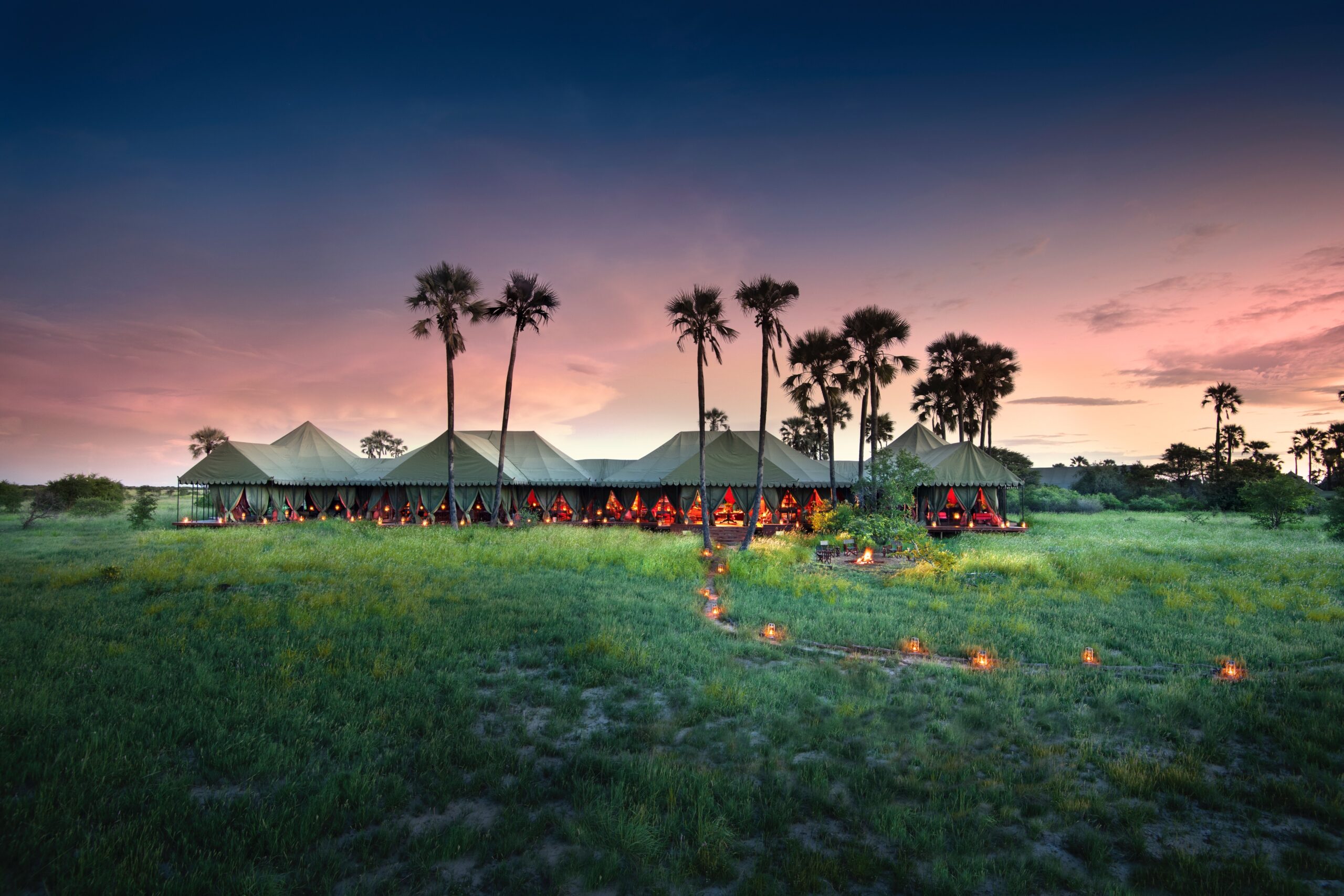
The Makgadikgadi Pans are the remnants of one of the largest lakes ever to exist on earth. When it dried up — roughly ten thousand years ago — it left behind a salt crust the size of Switzerland and a silence that is genuinely difficult to describe to someone who hasn’t heard it. Jack’s Camp sits on its edge, and has done so, in one form or another, since 1993.
The camp itself is a deliberate act of personality. Nine green canvas tents furnished with Persian rugs, brass fittings, copper basins, and natural history cabinets curated by owner Ralph Bousfield — a man who has spent his life collecting interesting things from interesting places. The mess tent houses a 36-seater dining table that served as an officer’s mess in the 1820s. There’s an antique billiard table. A library. A cabinet of curiosities that rewards a slow afternoon of browsing. It looks and feels like the kind of place an eccentric explorer would have set up if he’d had excellent taste and an unlimited budget, which is essentially what happened.


The activities are where Jack’s really earns its reputation for being unlike anywhere else. The meerkats alone justify the trip — a habituated group that emerges each morning from their burrows and treats guests with complete indifference, using them as convenient elevated platforms from which to scan for predators. It is, objectively, one of the more charming wildlife interactions available on the continent.

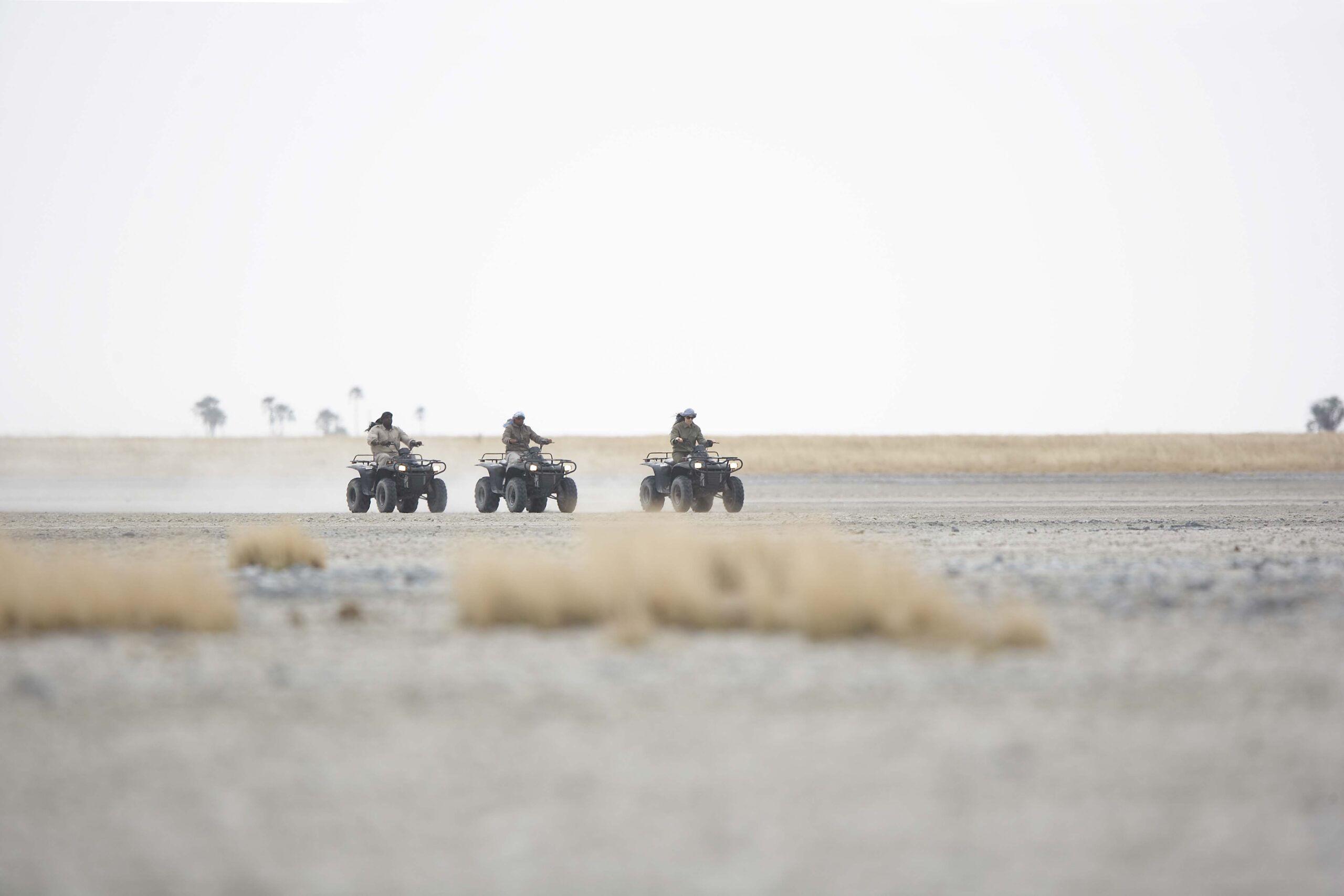
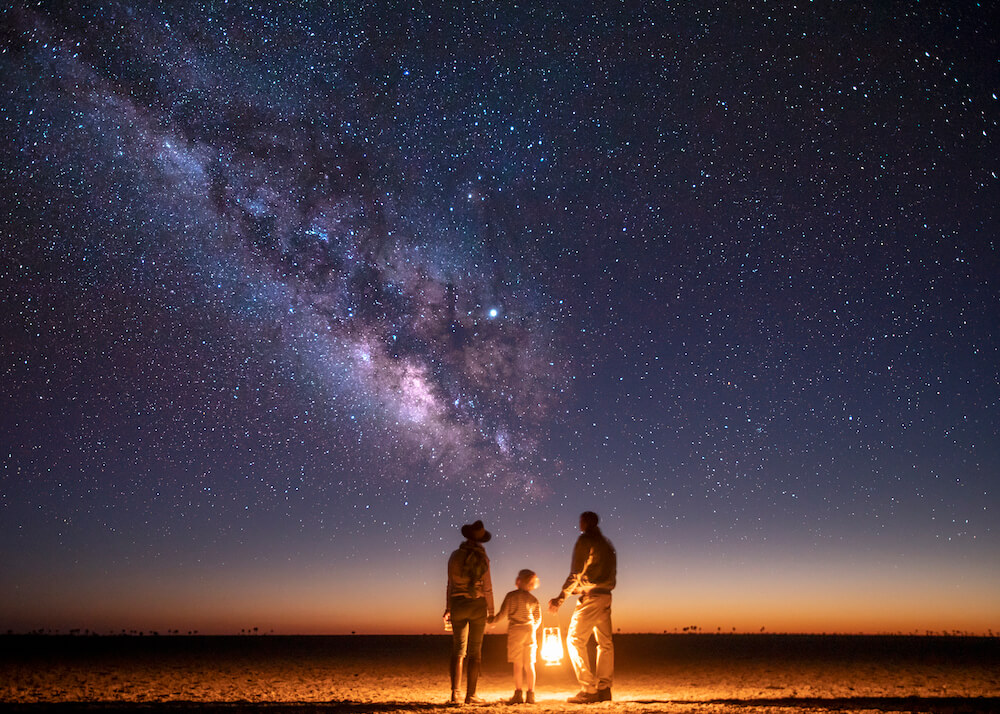
Then there’s quad biking across the salt flats — not a gentle pootle, but a proper sunrise run across a landscape so flat and featureless that you lose all sense of speed and distance. Walking with the San Bushmen, who have lived in and around the Kalahari for tens of thousands of years, brings a human dimension to the experience that most safaris simply don’t offer. And sleeping out on the bare pans under a sky with zero light pollution — the Milky Way so dense it looks almost architectural — is the kind of night that makes everything else feel slightly ordinary by comparison.
The wildlife is different too. Forget the Big Five checklist. Jack’s is brown hyena, Kalahari lion, oryx, aardvark, bat-eared fox. During the green season, the zebra migration — Africa’s second largest — brings tens of thousands of animals onto the grasslands surrounding the pans, followed closely by the predators that track them.
A word of honest advice: if your idea of a perfect safari is maximum game density and a different species every ten minutes, Jack’s Camp is probably not your place. But if you want something that genuinely couldn’t exist anywhere else on earth, and that you’ll find yourself struggling to explain properly when you get home — this is it.