
In the late 1990s, the land that is now Kwandwe was nine farms — ostrich, goat, a patchwork of fencing that had carved the Great Fish River valley into smaller and smaller parcels of agricultural use. It had been farmed for generations. By most practical measures, it had stopped being wild a long time before anyone thought to wonder whether it might become wild again. There is a particular kind of optimism required to look at degraded farmland and see a game reserve, and an even rarer kind required to actually attempt it.
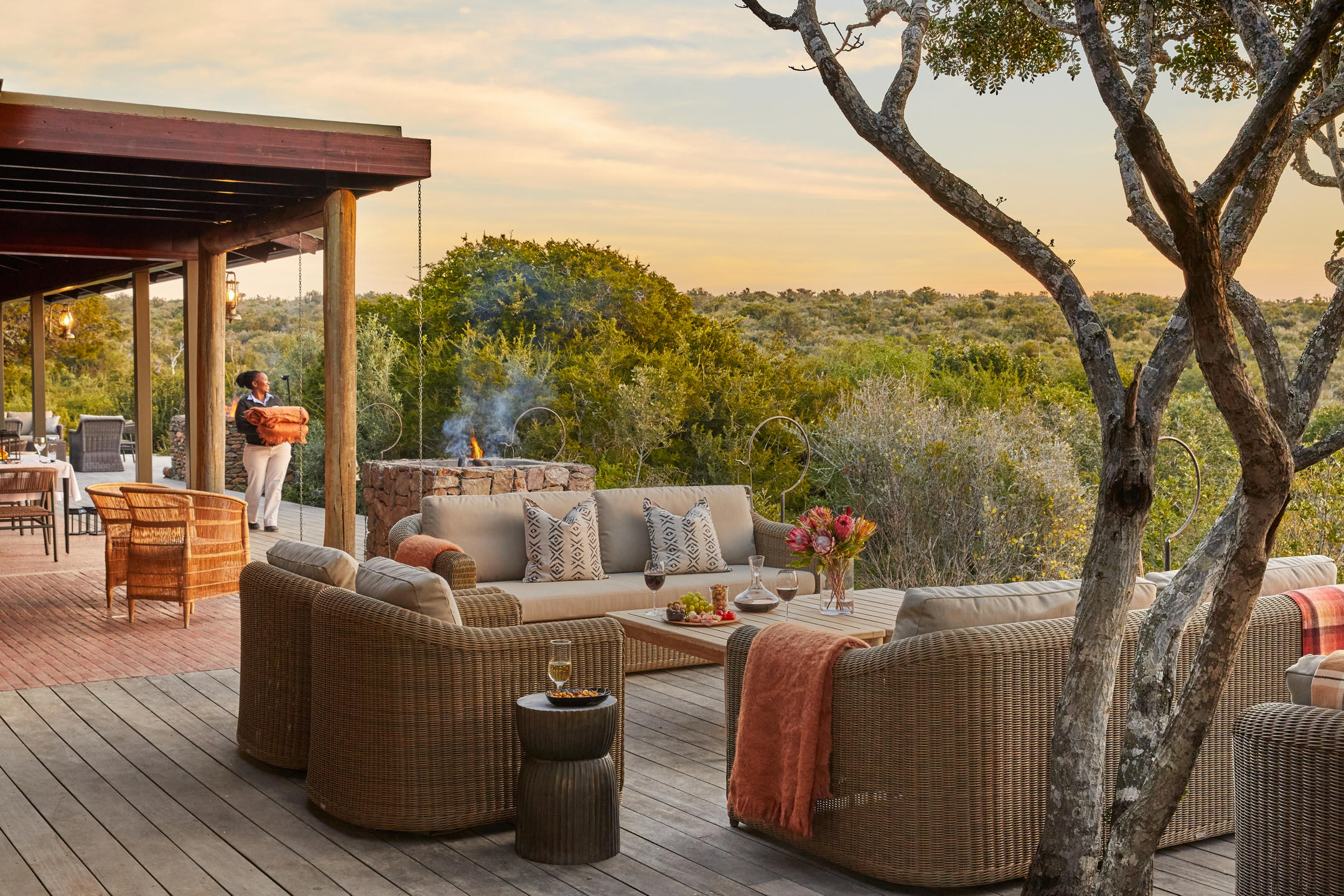
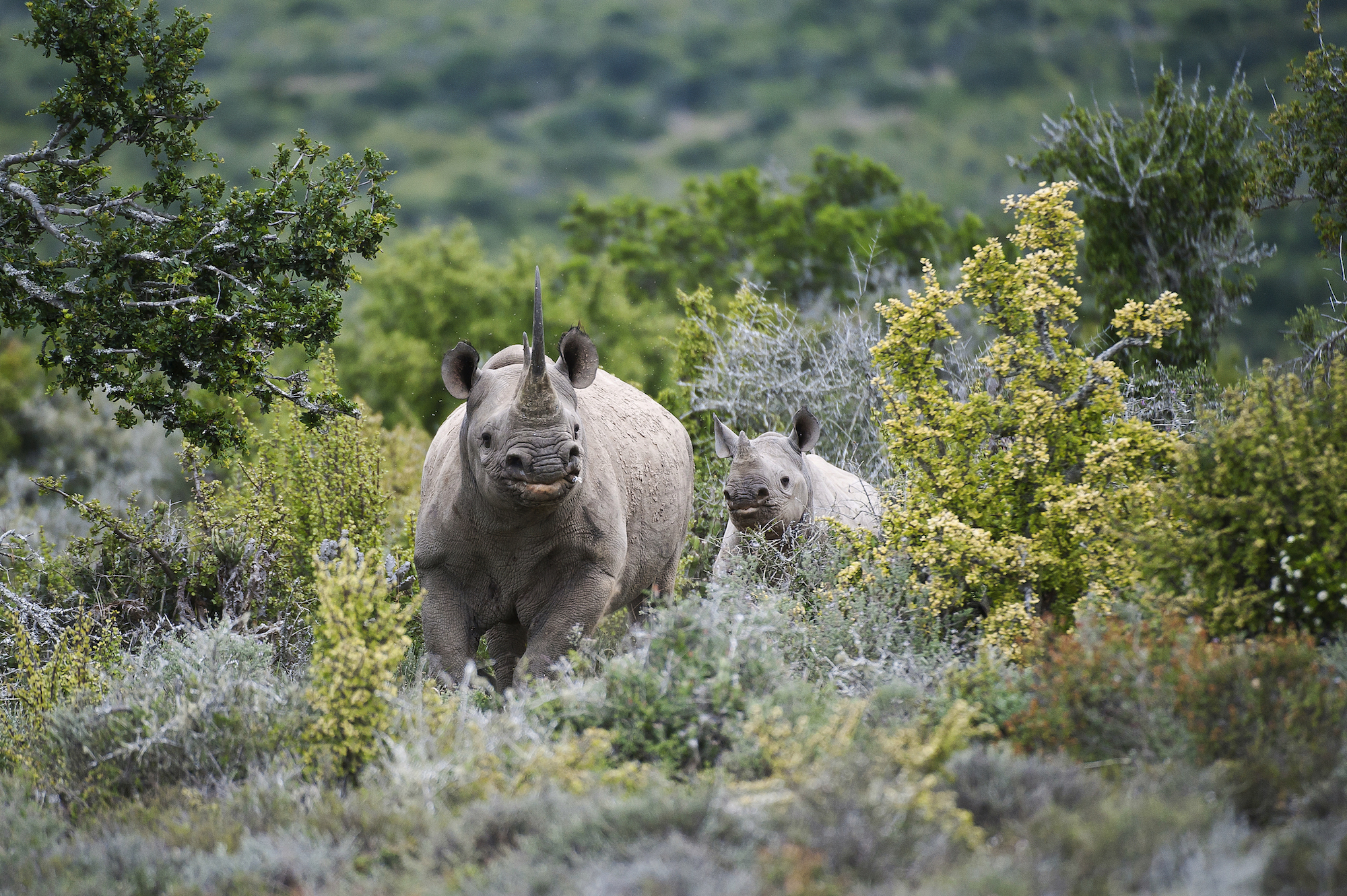
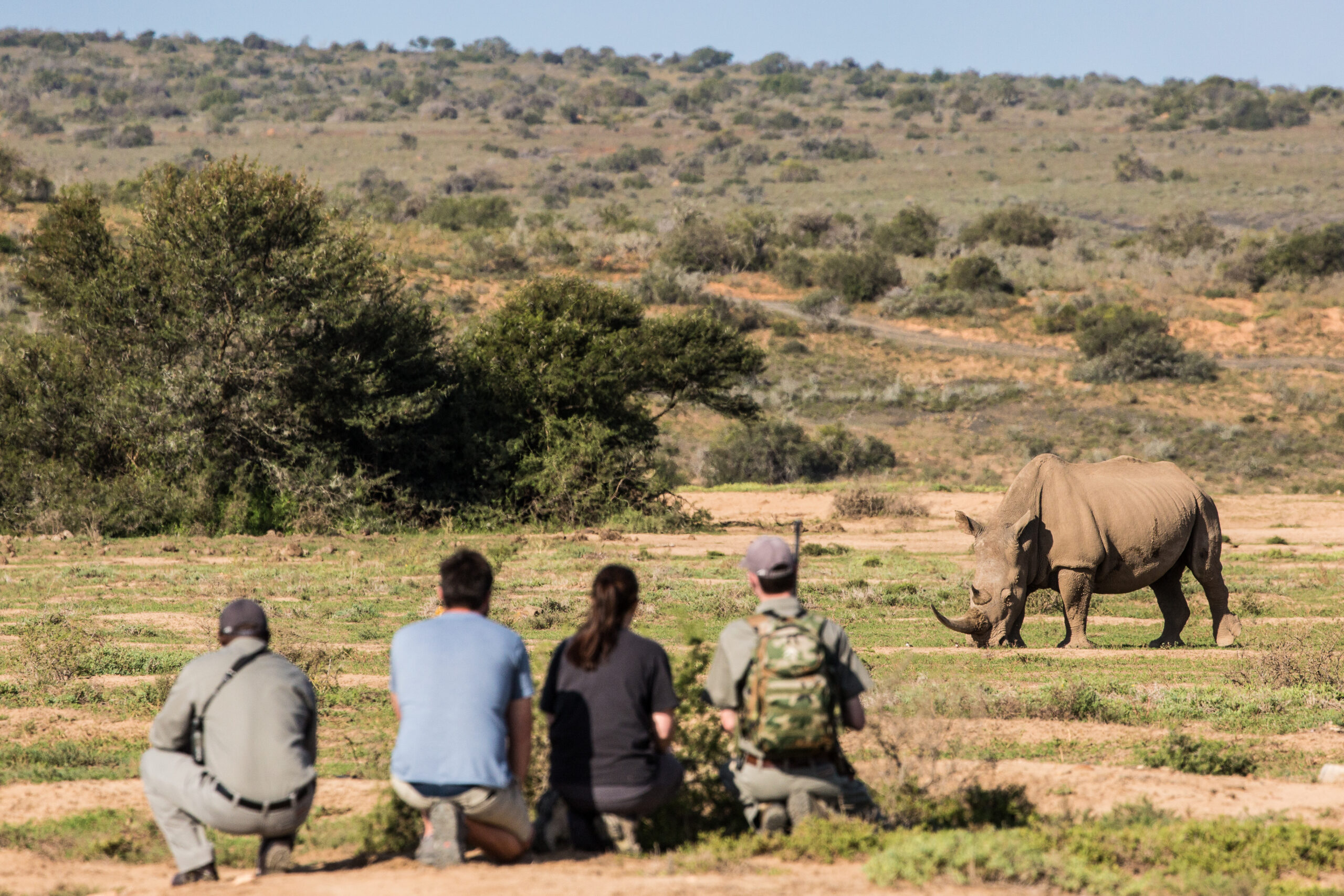
The fences came down first — all of the internal ones, dismantled to let the land begin remembering its own contours. Then came the animals: more than seven thousand of them, reintroduced over the years that followed, species by species, into a landscape that had not carried most of them in living memory. Black rhino arrived in 2000, six individuals purchased at auction and released into thicket that had no idea, yet, what to do with them. Today that population has grown into one of the most significant black rhino strongholds in the Eastern Cape, protected by a dedicated trust and monitored with a rigour that borders on the obsessive — for good reason, given what continues to be at stake for the species across the continent.
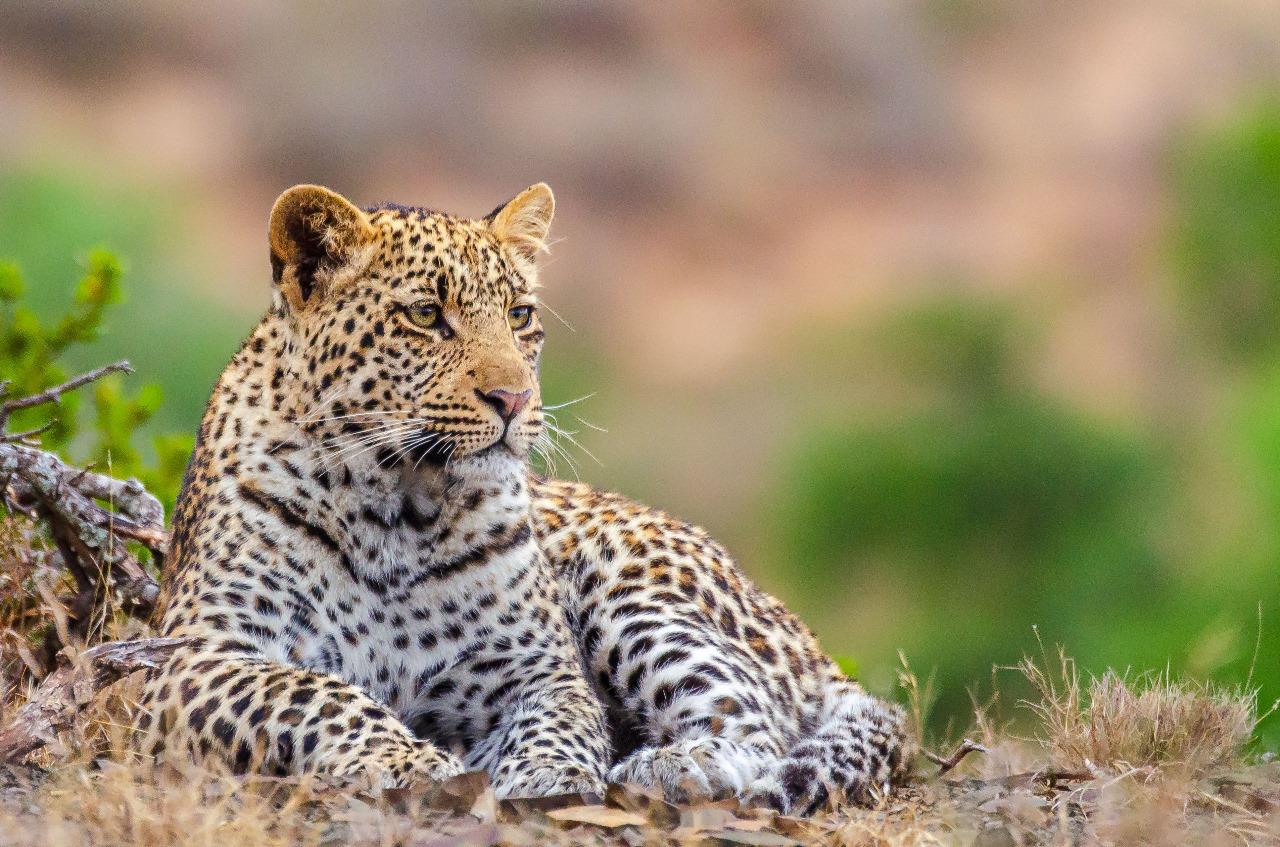
What makes Kwandwe quietly remarkable now, more than two decades on, is how complete the transformation feels on the ground. The Great Fish River valley’s semi-arid thicket is a different kind of beautiful to the classic savanna of the Lowveld — drier, denser, more textured, full of euphorbia and spekboom and the low, twisted growth that Eastern Cape conservationists have spent years learning to value rather than overlook. Lion, cheetah and leopard move through it as though they had never left. Black wildebeest and Cape grysbok graze in clearings that were, within living memory of the reserve’s older staff, planted with lucerne. The blue crane — for which Kwandwe is named, in the local isiXhosa — still nests here, a species so closely tied to this particular stretch of South Africa that its presence functions almost as a verdict on the project as a whole.
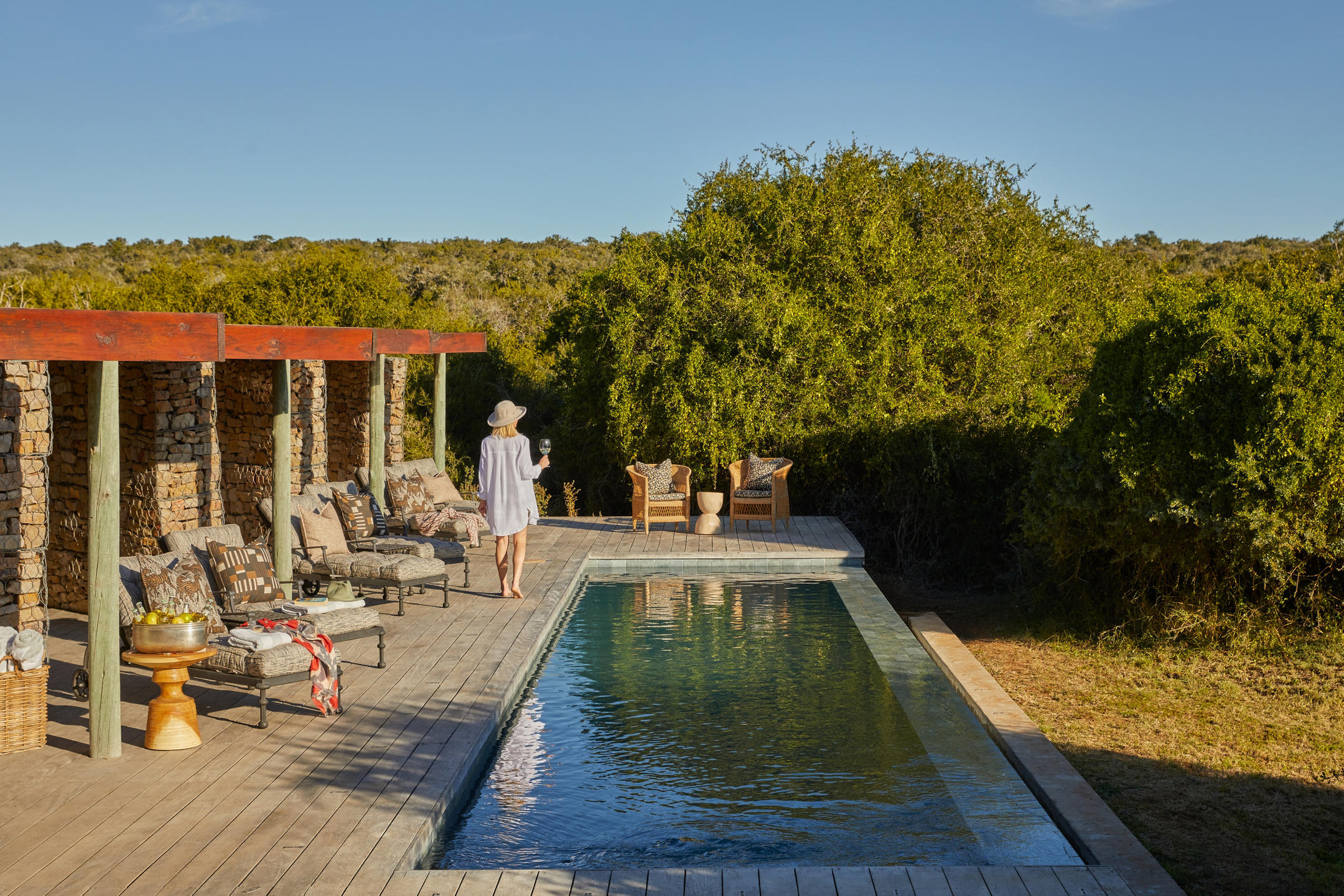
Because Kwandwe is malaria-free, it has become a particular favourite among families and first-time safari travellers wary of the logistics further north — but it would be a mistake to think of that as the headline. The headline is closer to this: an entire ecosystem, talked back into existence by people stubborn enough to believe that land doesn’t permanently forget what it once was. It simply needs, on occasion, to be reminded.
Driving out across Kwandwe at dusk, with the thicket turning copper and a black rhino moving unhurried through a clearing that was farmland within most visitors’ own lifetimes, it is difficult not to wonder what else might be possible, given enough patience and the right kind of stubbornness. The land remembered. The harder question, perhaps, is what else we might convince it to remember.