Ol Donyo Lodge – Kilimanjaro’s Wild Shadow

There are places in Africa that feel like they were designed by accident — where some ancient geological tantrum threw up a landscape so unlikely, so otherworldly, that the brain takes a moment to catch up with the eyes. The Chyulu Hills are one such place. Born of volcanic activity relatively recently (in geological terms), their dark lava rock and improbably green slopes rise from the semi-arid plains of southern Kenya like something out of a half-remembered dream, and it was Hemingway himself who is said to have been so moved by them that he described them as the most beautiful hills in Africa. High praise from a man who spent a good deal of time on the continent.

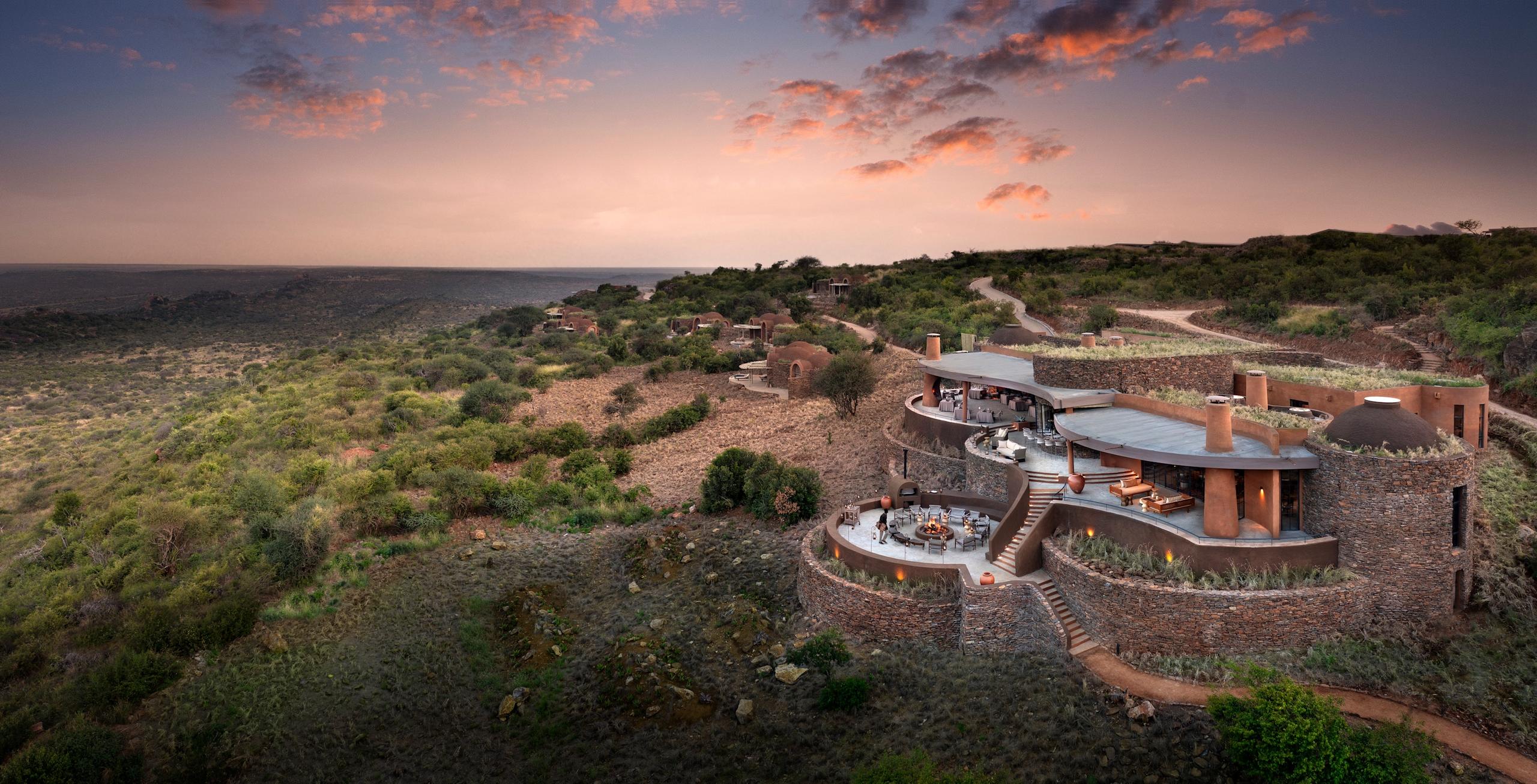
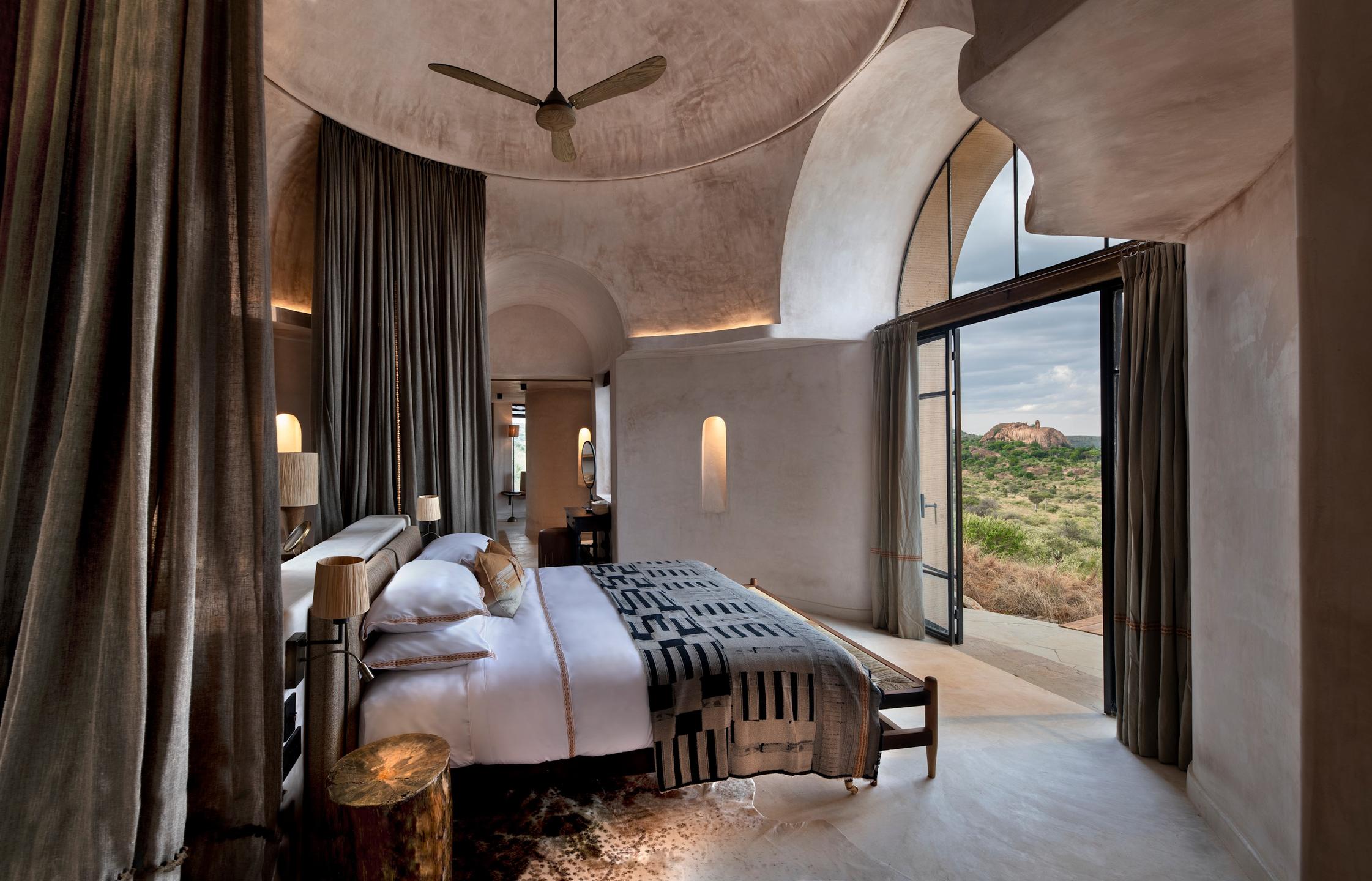
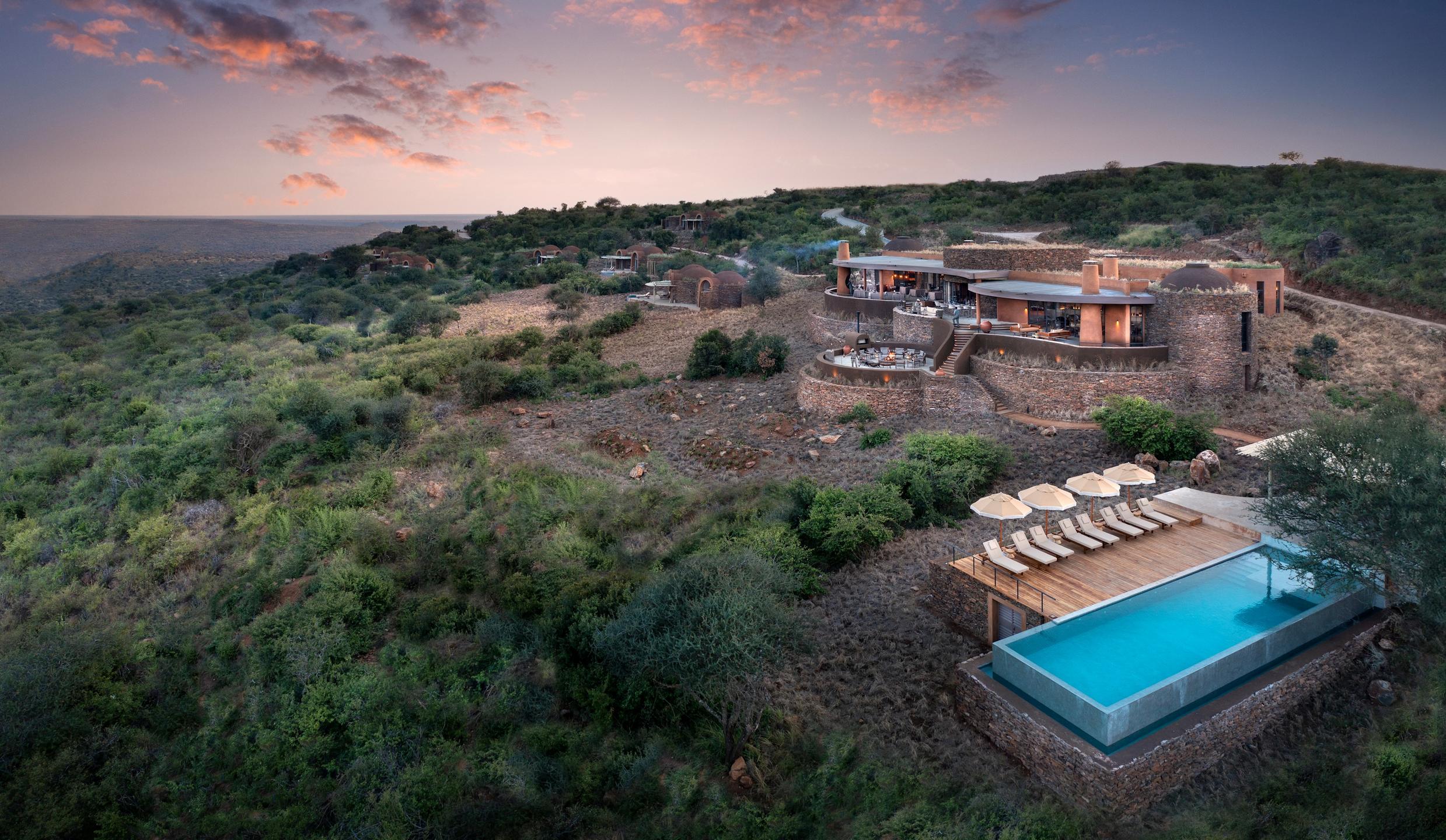
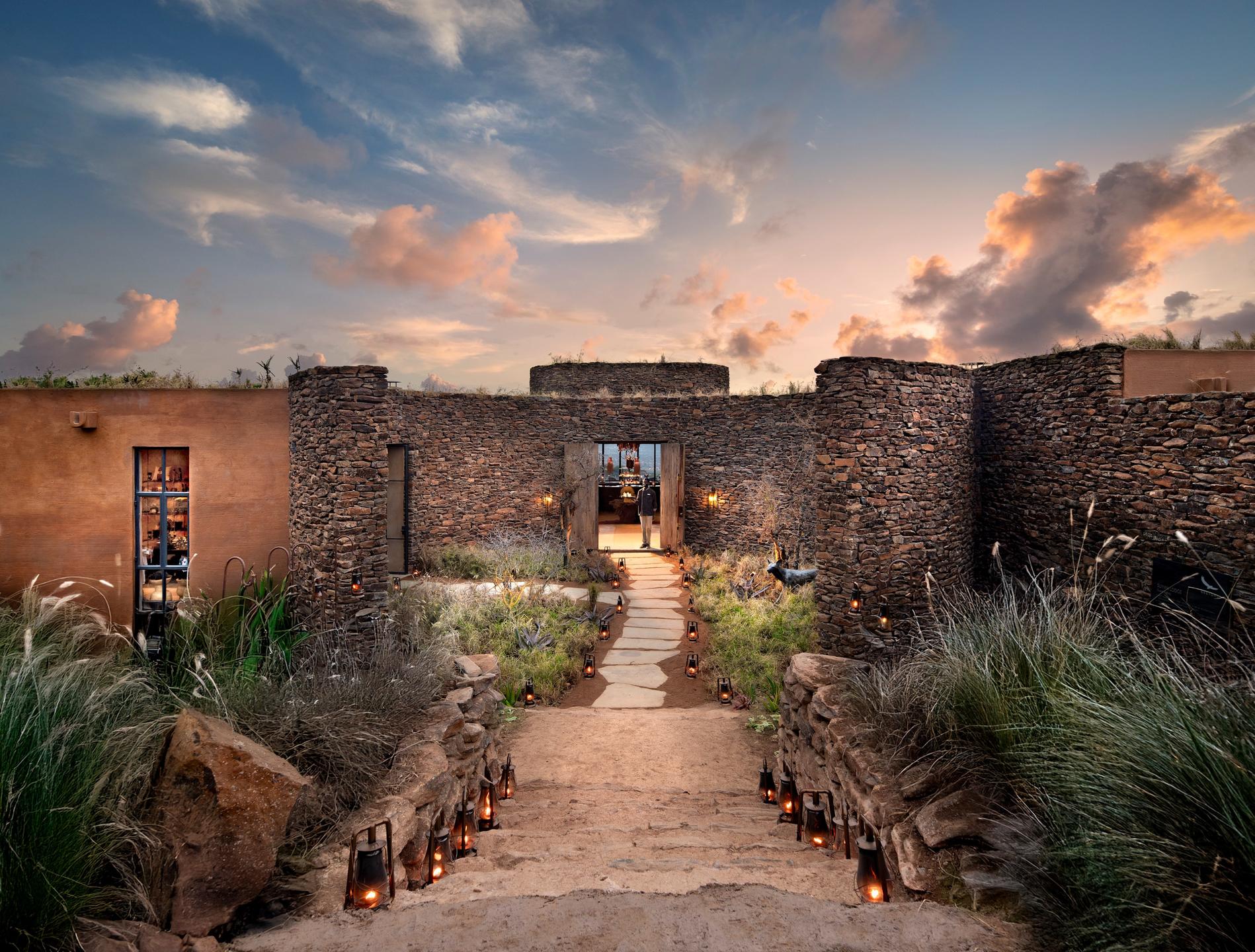
Ol Donyo Lodge sits within this landscape as if it has always been there. Constructed from the same raw lava rock that surrounds it, thatched and open to the mountain breeze, it neither announces itself nor apologises for its presence. It simply belongs. The architects behind its design understood something that many lodges get wrong: that a building should earn its place in a wild space, not impose upon it. Here, the walls feel like an extension of the earth itself.

But what strikes most guests isn’t the architecture at all. It’s what lies beyond it. From almost any vantage point at Ol Donyo, the great white dome of Kilimanjaro floats on the southern horizon — half in cloud, half in sky — an apparition so perfect it seems almost staged. At dawn, when the light is still hesitant and the air carries the cool of the night just past, there are few more arresting sights on the continent.

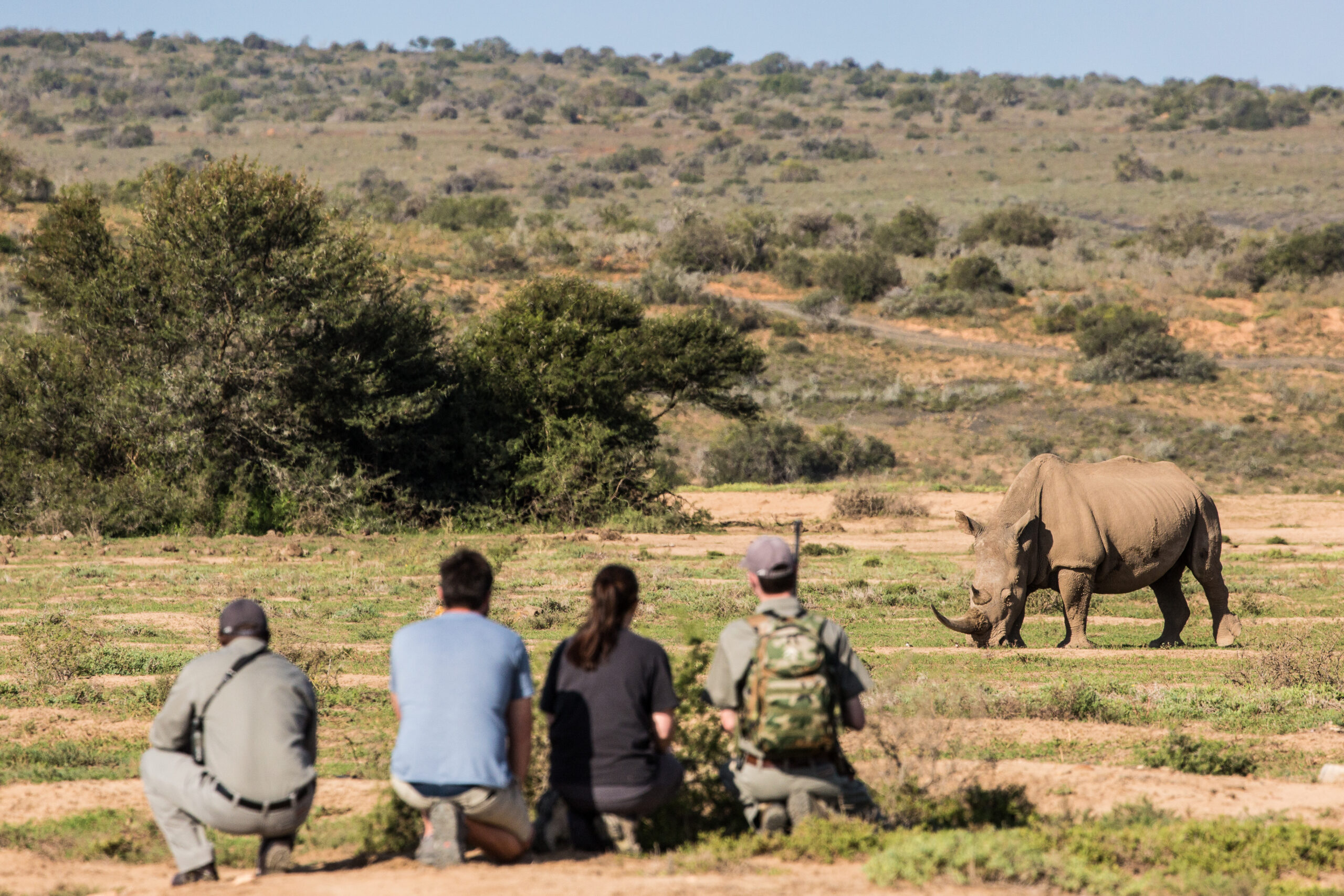
What sets Ol Donyo apart from many of its contemporaries, however, is an emphasis on getting out. The vehicle is a starting point, not the destination. Guests are actively encouraged to ride on horseback across the open plains, to walk the volcanic ridgelines with an expert guide, to feel the red earth of Maasai country underfoot rather than simply passing over it behind glass. There is a fundamental philosophy at work here — that Africa is most deeply felt when experienced with all the senses, and that the best way to truly understand a landscape is to move through it slowly, on its own terms.

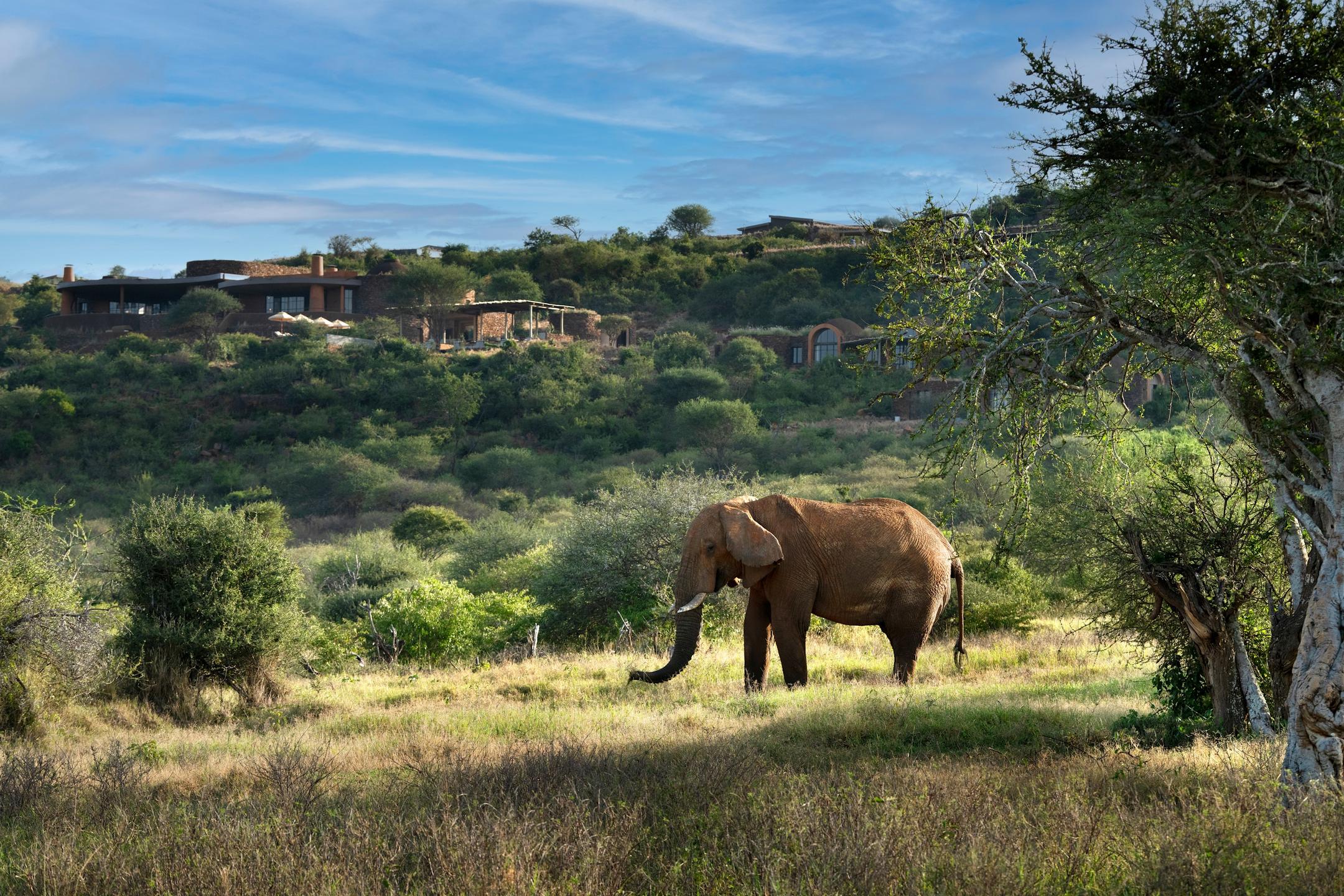
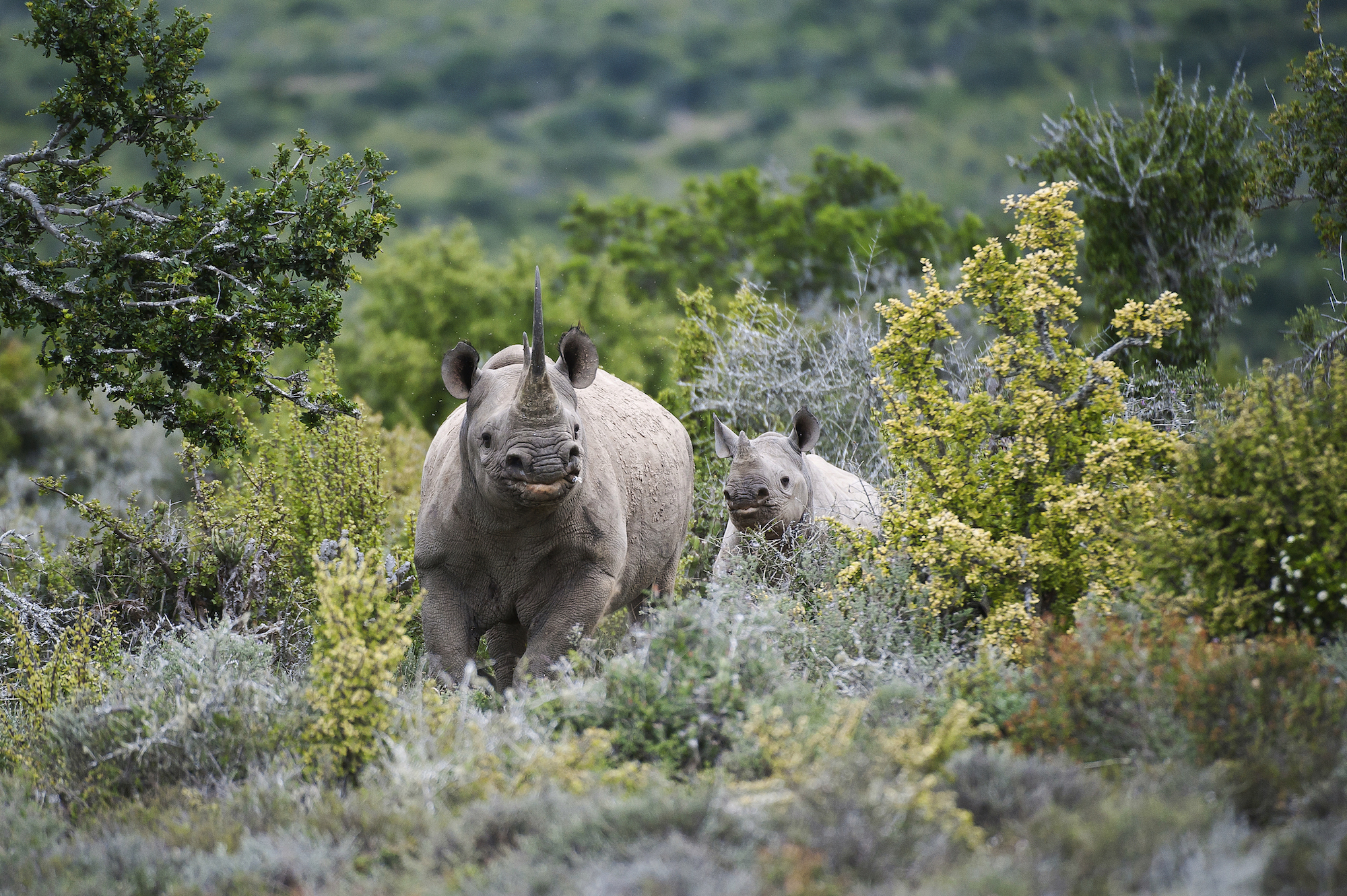
The 275,000-acre Mbirikani Group Ranch on which the lodge sits is Maasai land, and that matters. It means that when the lions roar at night, or a herd of elephants drifts past in the half-light of morning, the people who have called this land home for generations are the ones who benefit most from that encounter. The conservation work supported by every stay here — including the protection of some of the last wild-roaming black rhinos in Kenya — is not a brochure footnote. It is woven into the very fabric of the place.

Nights at Ol Donyo can be spent beneath open African skies on the rooftop star beds — an experience that has a quiet way of resetting one’s perspective completely. There is something about lying under a canopy of stars in a landscape this ancient and this alive that reminds you, without any fanfare whatsoever, of exactly where you stand in the order of things.

Which, it turns out, is a remarkably good place to be.

The River Knows — Old Mondoro, Zambia


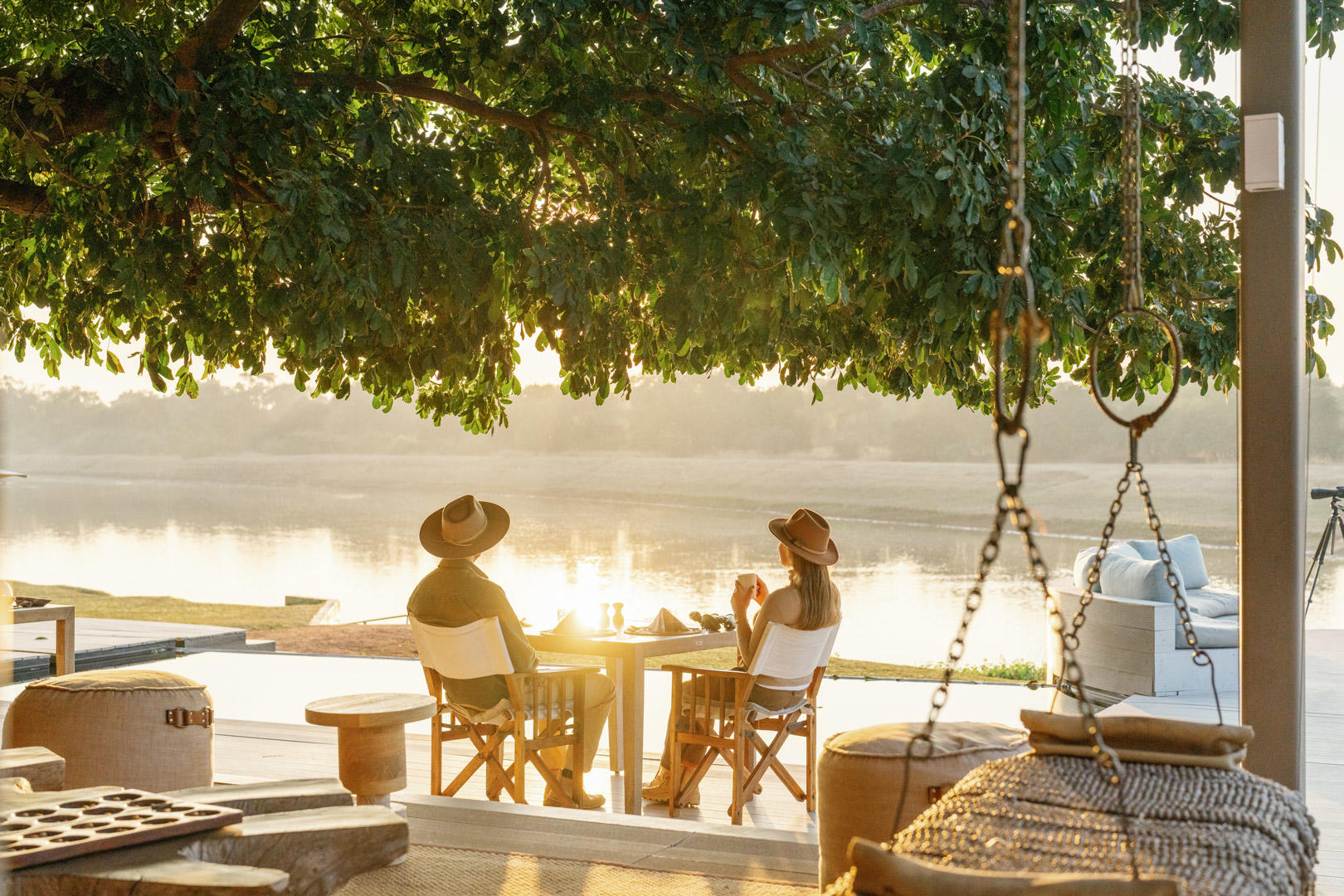
The Zambezi is one of those rivers that demands your attention. Wide, dark, and perpetually purposeful, it moves through its valley with the unhurried authority of something that has been doing this for millions of years — and will continue long after everything else has changed. For those lucky enough to find themselves on its banks in the Lower Zambezi National Park, it becomes apparent very quickly that the river is not merely a backdrop to the experience. It is the experience.

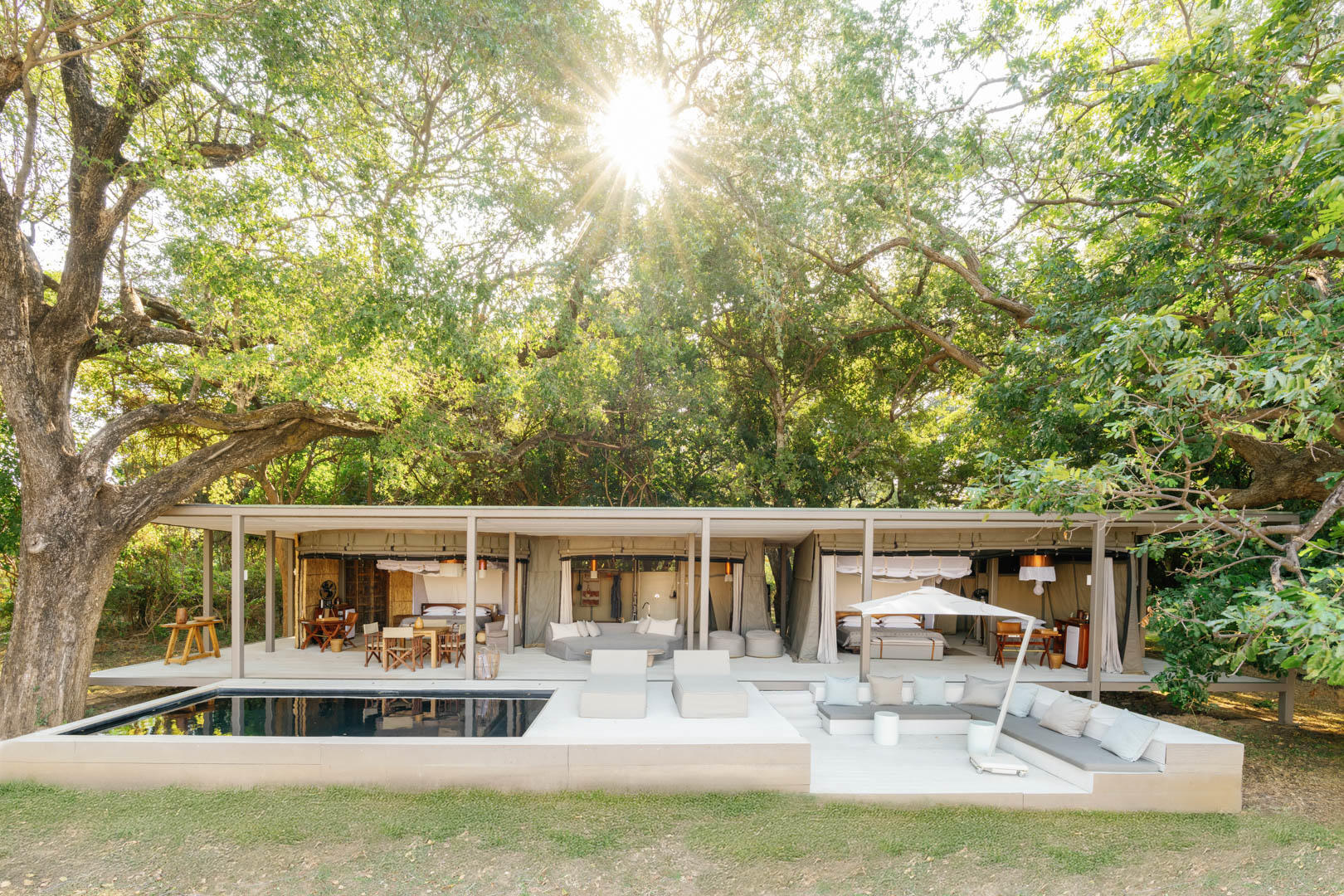
Old Mondoro understands this instinctively. Tucked an hour further east into the Lower Zambezi National Park than most visitors ever reach, it is a camp that has stripped the safari back to its essentials: a handful of tents built from pole, canvas and reed, open bathrooms beneath the stars, and a stretch of riverbank where the boundary between camp and wilderness has been left, quite deliberately, unmarked. There are no fences here. Elephants walk through at night. Buffalo have been known to graze between the tents at dawn. The camp holds this not as a selling point, but as a simple statement of intent — that the wilderness is not something to be kept at a comfortable distance, but something to be lived alongside.

The safaris here are unlike those found at most other camps. Yes, there are game drives — and good ones, through thick mopane woodland and floodplains where elephant, buffalo and lion move as though the fences of the modern world have never been invented. But it is on the water, and on foot, where Old Mondoro truly earns its reputation. Canoe safaris allow guests to drift silently downriver at the level of the hippos, with crocodiles ancient and motionless on every sandbank, and fish eagles calling overhead in a way that seems almost theatrical. There is something profoundly levelling about being in a small boat on the Zambezi — something that no vehicle, however comfortable, can replicate. The river puts everyone on equal terms.

The walking safaris offer their own kind of revelation. Guided by a team whose knowledge of the bush feels almost geological in its depth, these walks are not an activity to tick off a list. They are an education in attention — the way a broken twig tells a story, the way silence itself becomes a diagnostic tool. In the Lower Zambezi’s dense vegetation, understanding the landscape on foot is the only way to truly read it, and there are very few camps better placed to teach that skill.

What makes Old Mondoro quietly extraordinary, beyond the activities and the setting, is its sense of priority. The camp belongs to the same family that pioneered this stretch of river — people who have spent decades insisting that the best safari is the one that gets out of its own way and lets the wilderness do the talking. Meals are taken together around a communal table. Guides speak about the Zambezi as though it were a living thing they know personally. And the conservation work that underpins every stay here runs quietly beneath the surface, as it always has.

At night, with the Zambezi sliding past in the darkness and hippos grumbling from the shallows, it is easy to understand why the Cumings family never left. The Zambezi doesn’t notice you leave. That indifference, somehow, is exactly what makes you want to come back.

Why Safari Photographers Build Their Day Around Light

Spend enough time on safari, and a pattern begins to emerge. The early mornings feel sharper, the late afternoons seem to stretch, and the middle of the day, while still beautiful, lacks a certain depth that is difficult to define.

The difference is light.

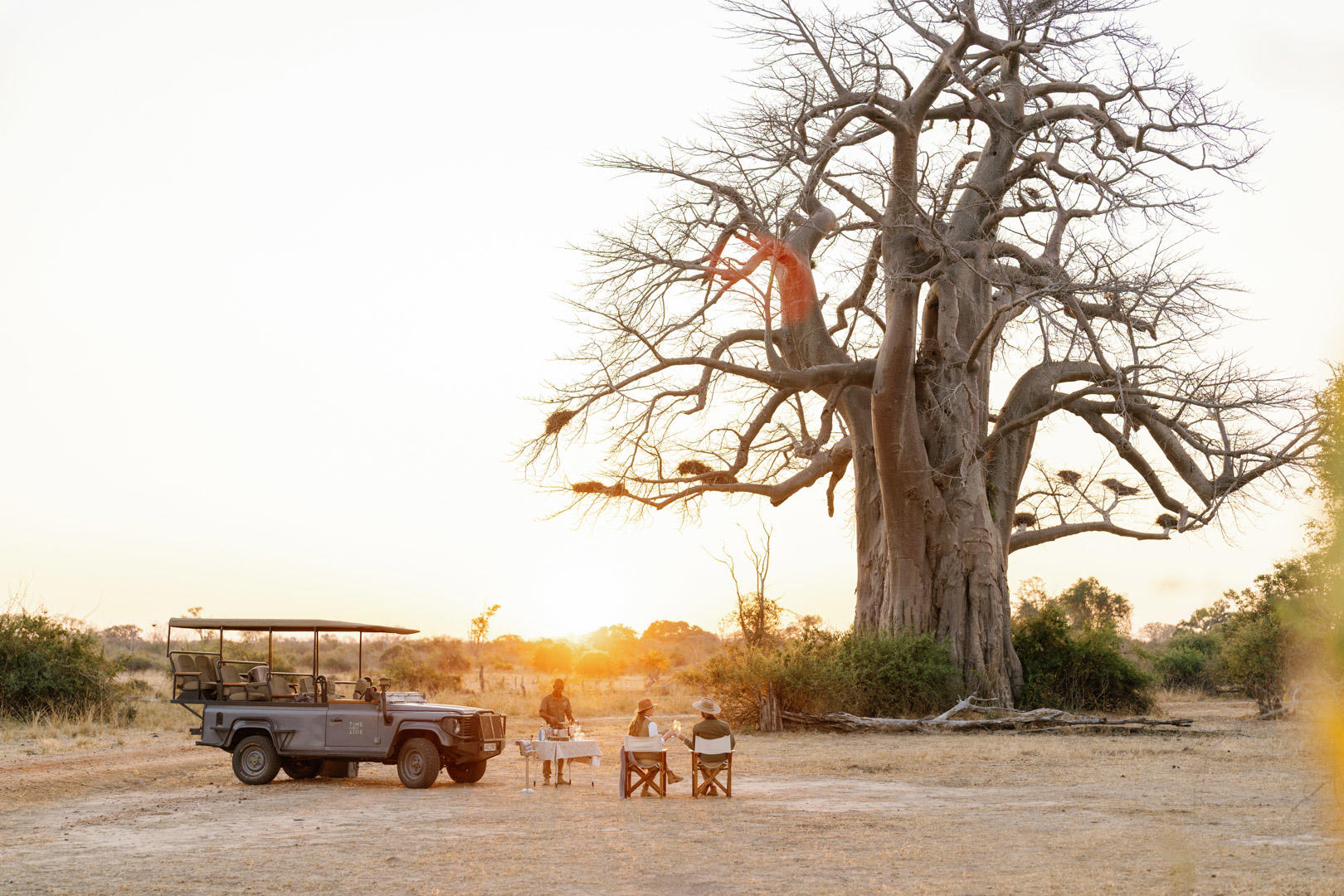
Golden hour, that brief window just after sunrise and before sunset, is when the landscape changes most completely. It is not simply softer light, but more directional light. It creates contrast, reveals texture, and gives shape to scenes that might otherwise feel flat.

In Africa, this transformation is particularly pronounced. Dust suspended in the air catches the light and holds it, creating a warm glow that softens edges and adds atmosphere. Grass reflects gold instead of white. Water becomes a mirror, carrying colour and movement rather than glare. Even familiar scenes begin to feel layered and dimensional.

Wildlife responds to this shift as well. Predators move more actively in cooler temperatures, using lower light to their advantage. Herbivores feed and travel, taking advantage of reduced exposure. Birds fill the air, adding motion and sound to a landscape that can feel still during harsher hours.

For photographers, this creates both opportunity and responsibility. Golden hour is not a time to react, but a time to anticipate. You begin to think about where the light will fall, how a subject will move through it, and what the background will contribute to the image. Positioning becomes critical. A small adjustment can change everything.

And then, just as quickly, it disappears. The sun rises higher or drops below the horizon, shadows shorten, and the landscape returns to something more neutral. Still beautiful, still compelling, but without the same depth or intensity.

This is why safari days are built around light. Early mornings are not about discipline. They are about access. Late afternoons are not just for sundowners. They are about holding onto the last usable light before it fades completely.

Because when light, subject, and timing align, the result is more than a photograph. It is a moment that carries atmosphere, emotion, and memory all at once.

It is also about patience, about waiting longer than feels necessary for something that may never happen. It is about trusting the process of light and behaviour to eventually meet. Sometimes they do, and sometimes they do not. But when they do, the image holds something far greater than the moment itself. It holds the feeling of being present in a place that is constantly shifting and entirely alive.

Sable Alley – Where Water Shapes the Story

There are safari camps where you head out each morning with intent, following roads, tracks, and instinct in the hope that the bush reveals something memorable. And then there are places like Sable Alley, where the experience begins long before the vehicle ever leaves camp, and often continues long after it returns.

Set beside a permanent lagoon in Botswana’s Khwai Concession, Sable Alley sits in one of the most consistently productive pockets of the Okavango Delta. Water is the defining force here, and with it comes a steady, almost predictable flow of life that gathers at its edge throughout the day.

Elephants arrive in loose herds, easing themselves into the shallows with a sense of ownership that suggests they have done this countless times before. Red lechwe move differently, splashing and bounding through water that would slow almost anything else. And along the fringes, predators wait, watching the same patterns unfold, knowing that opportunity eventually follows movement.

Khwai itself is what gives Sable Alley its depth. It is not a single environment, but a convergence of several. Floodplains stretch outward into open light, woodland provides cover and contrast, and channels of water thread through it all, constantly reshaping how animals move and interact.

Game drives reflect this variety. One morning may be spent following a lion pride through damp earth, reading tracks and behaviour as a story in progress. Another may open onto wide plains filled with grazing herds, where scale and distance become part of the experience.

But it is often the stillness that defines the camp.

From the main deck and private rooms, the lagoon becomes a continuous source of quiet activity. Early light reveals silhouettes through mist, midday concentrates movement at the water’s edge, and late afternoon settles into long reflections and softer tones.

The design supports this without drawing attention to itself. Elevated walkways, open spaces, and clean lines ensure that nothing interrupts your connection to the landscape. Comfort is present, but it never competes with what lies beyond it.

Sable Alley is not about chasing sightings across distance. It is about proximity, patience, and the subtle shift that happens when the wild no longer feels separate from you.

And once that shift takes hold, the entire safari experience begins to feel more immediate, more immersive, and far more difficult to forget.

Perhaps that is what lingers most. Not a single sighting, but the accumulation of small, unscripted moments that build quietly over time. A glance, a sound, a shift in light. Together, they create something that feels less like a trip, and more like a lived experience.

UNBEATABLE Gorilla Special for SADC Residents!

Rwanda has long been one of those places that sits just beyond easy reach.
This Iconic Africa Special changes that, opening up access to gorilla trekking for our SADC guests at rates up to 70% lower than usual — something that VERY rarely comes around.

There are certain trips that tend to live more in conversation than in reality.

Rwanda is one of them.

It comes up easily enough — over a glass of wine, around a dinner table, somewhere between “we should really go” and “one day.” The images are always the same: mist hanging low over forested slopes, the quiet anticipation of a trek, that first moment of eye contact with a gorilla in the undergrowth.

And then, just as quickly, the conversation moves on.

Not because the interest fades, but because the numbers tend to bring things back down to earth.

Gorilla trekking, for all its appeal, has always sat at the upper end of the safari spectrum. Permits priced in dollars, logistics to match — it’s the kind of experience that often gets postponed, rather than planned.

But every now and then, something shifts.

Set just outside Volcanoes National Park, Amarembo by Touch Down sits quietly on the edge of one of Africa’s most compelling wildlife experiences. There’s no overstatement to it. It’s comfortable, well-positioned, and close enough that early mornings don’t feel like a logistical exercise.

More importantly, it places you exactly where you need to be — at the start of a day that rarely unfolds the same way twice.

A gorilla trek isn’t something you can fully prepare for. There’s the briefing, of course, and the general outline of how things might go, but once you step into the forest, everything slows. The air shifts, the sounds change, and the sense of anticipation builds gradually rather than all at once.

You walk. You stop. You listen.

And then, at some point, you’re there.

It’s not dramatic in the way people expect. No sudden reveal, no orchestrated moment. Just a quiet realisation that you’re sharing space with something entirely self-contained. A silverback watching without concern. A younger gorilla moving through the foliage with a kind of casual confidence. The forest continuing around them as if nothing has changed — even though, for you, it has. Monumentally.

It’s an experience that tends to stay with people for reasons that are hard to put into words at the time.

Which is perhaps why it’s always been so sought after.

For travellers within the SADC region, the current Iconic Africa Special has secured rates at Amarembo in a way that makes the broader Rwanda experience significantly more accessible than it has been in the past.

A 3 day, 4 night stay including all meals, trekking permits (1 Gorilla, 1 Golden monkey), is now on sale for R49, 999! The offer is valid for travel until the 30 May, with strictly limited availability!

It’s not something being shouted about, and perhaps that’s why it feels as interesting as it does.

Because when a place like Rwanda — long considered just out of reach — suddenly becomes more than possible, and it changes the nature of the conversation entirely.

It moves from “one day” to “now”.

And those are often the trips that end up meaning the most!

Singita Sasakwa Lodge – Where the Serengeti Wears a Silk Jacket

Some safari camps feel like they belong to the wilderness. Singita Sasakwa feels like the wilderness decided it deserved a manor house.

Set high on the Sasakwa Hill in Singita Grumeti, this is the Serengeti with its collar pressed, its shoes polished, and its Martini served at exactly the right temperature. But don’t let the elegance fool you — you’re still in one of Africa’s wildest theatres, and the action below is anything but refined.

From the moment you arrive, Sasakwa has a certain old-world confidence. The architecture nods to grand estates and colonial-era romance, but without the stiffness. It’s expansive, warm, and quietly indulgent: long verandas, wide views, and interiors that invite you to sprawl rather than perch. The infinity pool looks out over plains that seem to go on forever, and if you’ve ever wanted to watch a storm roll across the Serengeti while wrapped in luxury, this is the place to do it.

And then there’s the safari.

Singita Grumeti is private, which means the experience has a freedom to it that’s increasingly rare. No traffic jams of vehicles. No radio chatter chaos. Just your guide, your curiosity, and a landscape that reveals itself at its own pace. One moment you’re tracking lions through grass that looks like it’s been brushed into place; the next you’re watching a leopard melt into the shadows of a riverine thicket as if it was never there at all.

If you time it right, you also have the Great Migration in your orbit — the kind of spectacle that makes you realise nature is capable of excess. Thousands of wildebeest, zebra, dust, noise, urgency. And then, later, back at Sasakwa, everything slows again. A bath with a view. A drink on the lawn. A dinner that feels like a private event, even when it’s simply your own table under the stars.

Sasakwa is for travellers who love the romance of safari, but also appreciate the finer things: space, service, and the luxury of feeling entirely unhurried. It’s the Serengeti, yes — but it’s the Serengeti dressed for the occasion.

Nyamatusi Camp: Where Mana Pools Casts Its Spell

Certain landscapes feel like they’ve drifted out of a dream, and Mana Pools is one of them — a place where blue-washed woodlands melt into slow water, where elephants stand on hind legs to reach ana pods, and where light behaves in ways photographers still can’t adequately explain. Nyamatusi Camp sits in the heart of this enchantment, offering front-row seats to one of Africa’s most atmospheric wildernesses.

Set along a remote curve of the Zambezi River, Nyamatusi’s tented suites are luxurious in a way that never breaks the spell of the environment. Interiors are warm, rich and tactile — brass, canvas, leather — but always with the river in view, always with the forest whispering just beyond the deck. This is the kind of camp where wildlife walks through your field of vision rather than being something you go out to find.

Activities lean into Mana’s slow, immersive energy. Walking safaris take you through cathedral-like woodlands where every shaft of light feels choreographed. It’s not unusual to round a grove and find an elephant calmly feeding at arm’s length, acknowledging you with the faintest ear-flick before returning to its breakfast. Canoeing is equally magical — drifting between hippo channels, listening to water lap against the bow, watching the shoreline shift like an unfolding watercolor.

Game drives capture Mana at its most instinctively wild: painted wolves trotting along riverbeds, lions dozing in delicate shade, nyala moving like brushstrokes through the trees. Yet the mood here is never rushed. The forest encourages softness, attentiveness, breathing room.

Evenings are all glow — lanterns, campfire sparks, the quiet hum of the river. It’s the kind of place where guests become loyalists, and loyalists become evangelists.

Nyamatusi doesn’t just show you Mana Pools. It lets the place seep into your bones.

Jao Camp: Let the Water Teach You to Slow Down

Most safaris begin with a map: roads, tracks, loops and river crossings. Jao Camp begins with a different philosophy — let the water decide. The Okavango Delta is famously unpredictable, rising and receding at its own whim, turning woodlands into lagoons and plains into mirror-smooth channels. Jao doesn’t fight this; it reveres it. And guests very quickly learn to do the same.

From the moment you arrive, elevated walkways signal the shift in perspective. You move through palm islands at tree-crown level, brushing past birdlife that seems only mildly surprised by your presence. Suites are generous to the point of indulgence — private decks, plunge pools, gauzy interiors that glow softly in Delta light — but nothing feels showy. Everything serves one quiet purpose: to invite you to unwind.

The rhythm here is governed entirely by water. When the flood is high, mokoro excursions become poetry in motion — a silent glide past lilies, reed frogs, jacanas stepping delicately across floating leaves. Boat outings open up the wider channels, sometimes revealing elephants swimming in slow motion, or a fish eagle perched in just the right shaft of light. When the waters pull back, game drives explore floodplains now etched with fresh tracks: lions, leopards, wild dogs, and the occasional sable giving you a regal once-over.

One of Jao’s most underrated luxuries is its sense of spaciousness — not in size, but in tempo. There’s permission here to move slowly. To linger in the hide while storm clouds bruise the horizon. To surrender to an afternoon spa treatment because thunder murmuring across the water feels like the day’s natural metronome. To enjoy dinner on the deck by lantern-light, listening to lechwe splashing distantly in the shallows.

Some camps help you see wildlife. Jao helps you feel the Delta. And in doing so, it becomes less a safari destination and more a gentle recalibration — a reminder that life is richer when you let nature set the pace.

Mwiba Lodge: Where the Wild Moves Quietly Around You

There are lodges that place you in the bush, and then there are lodges that make you feel as though the bush has quietly rearranged itself to accommodate you. Mwiba Lodge, set on a private concession bordering the southern Serengeti, does exactly that. It’s a sanctuary of ancient granite boulders, desert-rose trees, and soft, effortless luxury — all suspended above a landscape where wildlife drifts past as naturally as weather.

Mwiba’s architecture is a masterclass in restraint. Timber decks stretch between giant boulders, suites float above the riverine canopy, and the interiors lean into earth tones that feel lifted from the soil itself. Nothing shouts. Nothing intrudes. It’s as if the designers asked the land for permission, and the land gave a gentle nod.

The concession is vast — 130,000 acres of rolling hills, rock outcrops, woodlands, and secret springs. This is the Serengeti without the rush, a private universe where lions pad through the acacia shadows, leopards slip between granite slabs, and elephants wander through the corridors of light that open at dawn. In season, migratory herds move across the reserve like shifting weather; even when the plains fall quiet, Mwiba’s year-round water sources pull life in from every direction.

Safari days here favour depth over speed. Walk with expert guides among ancient kopjes, sit quietly at natural springs as kudu and zebra approach, or follow the soft architecture of tracks along the sand. Drives feel unhurried, as though time itself has stretched to match the pace of the wilderness. And when you return to the lodge, there’s always a sense of calm waiting for you — cool stone, wide views, the hum of the breeze across your deck.

As night folds in, Mwiba becomes a symphony of small sounds: frogs in the riverbed, fire crackling softly, distant hyenas threading their laughter across the hills. Sundowners turn into lantern-lit dinners, and the sky spills more stars than seems mathematically reasonable.

Mwiba isn’t just a lodge; it’s a feeling — of space, of silence, of being held by a landscape older than memory. It’s the Serengeti softened, elevated, and distilled into something quietly magnificent.

Saseka Tented Camp: Where Light Learns to Behave

Some lodges borrow from the bush. Saseka seems to collaborate with it.

Sitting on the banks of the Monwana River in Thornybush, Saseka is one of those rare camps where architecture stops being a backdrop and starts participating in the safari itself. The tents — if one can call them tents without stretching the definition to its upper limit — are floating canopies of patterned shade, soft fabric, and impossibly photogenic angles. It’s as if someone stitched together dappled sunlight and suspended it overhead.

Step inside and you’re met with a design language that’s both bold and quiet. Monochrome palettes soften into warm wood textures; sculptural furniture curves in the same rhythms as the surrounding bushwillows. Your suite feels less like a room and more like a mood — one that shifts subtly throughout the day as the Klaserie light moves across the floor.

But for all its glamour, Saseka doesn’t forget where it is. Just beyond the glass, nyalas graze with the casual entitlement of animals who know they were here first. Elephants drift along the riverbed, pausing occasionally to give you a glance that feels mildly evaluative. The wilderness is close, unavoidable, and deeply grounding.

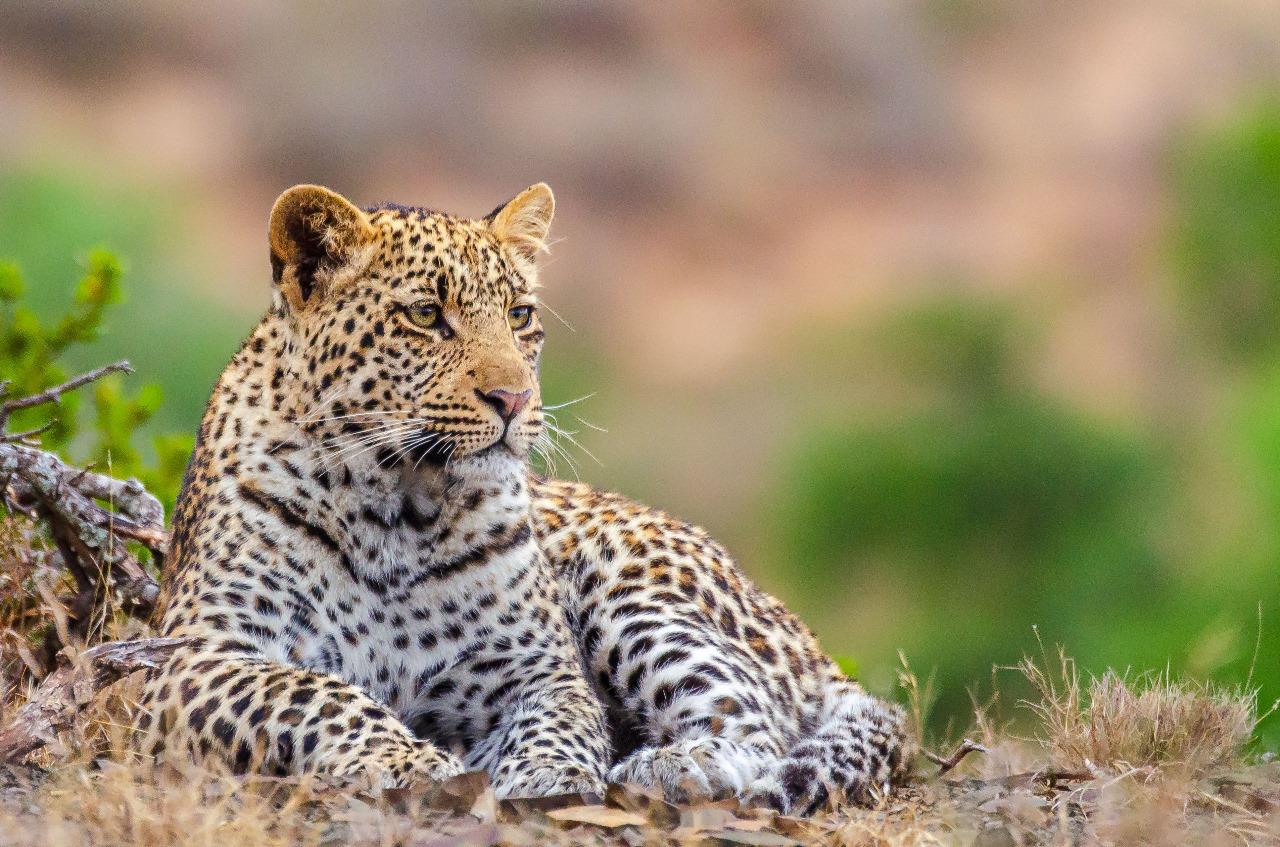
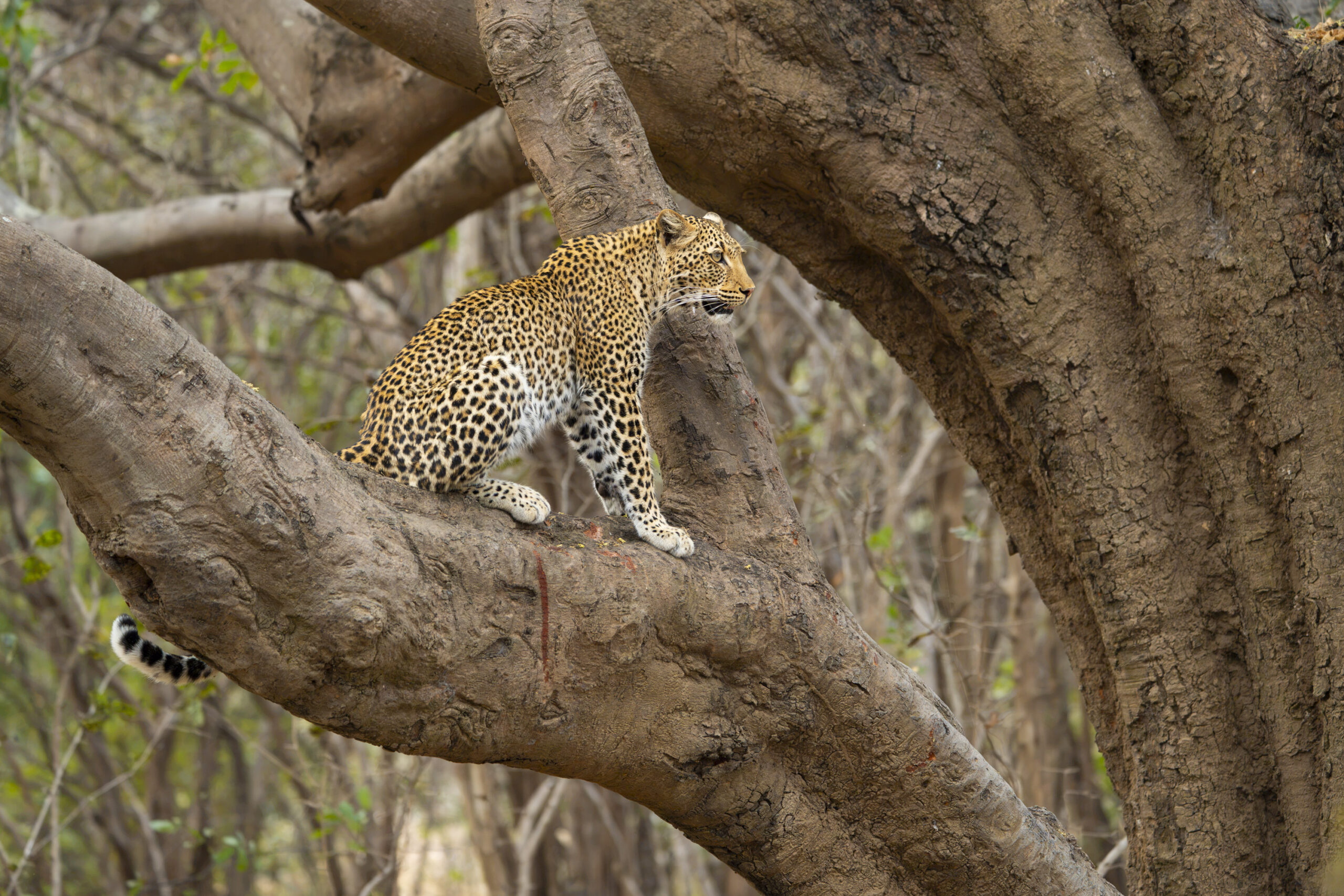
Game drives around Thornybush offer the classic Lowveld cast: lions on the prowl, leopards draped over the branches they pretend they chose purely for functionality, and rhinos that seem carved from the earth itself. The guiding teams weave expertise with ease — the kind of quiet professionalism that makes sightings feel earned rather than orchestrated.

Evenings at Saseka are a small study in atmosphere. Lantern-lit pathways, the hum of insects, dinner served beneath a sky that feels too generous with its stars. And, of course, that unmistakable sense of being wrapped in design without ever feeling removed from the wild.

Saseka is safari reimagined — an ode to clean lines, good light, and the gentle art of letting the wilderness take centre stage while still offering you a front-row seat.


Ngala Tented Camp: Where Silence Has a Shape

Some camps arrive with a flourish. Ngala Tented Camp doesn’t need to. Tucked beneath a line of ancient river trees along the banks of the Timbavati, it feels less like a lodge and more like something the landscape has been guarding for years — revealed only when you’re ready to notice it.

Ngala has always existed in that sweet spot between wild and minimalist. Canvas suites open directly onto the riverbed, where the daily cast of elephants, nyalas, and the occasional leopard drift past with the nonchalance of residents who pay no attention to human check-in times. The tents themselves are masterclasses in understatement: soft palettes, clean lines, and textures that let the wilderness do most of the talking.

And that’s Ngala’s quiet superpower — it knows when not to speak.

This is a camp that rewards the unhurried. Early mornings begin with the soft groan of branches stretching in the cool air, followed by coffee strong enough to stand up on its own. On game drive, the Timbavati reveals its subtler layers: the flick of a white tail through the thickets, a fresh drag mark across the sand, the unmistakable rasp of a leopard calling from somewhere just beyond the bend. The guides here have a knack for making the bush feel like a story unfolding rather than a checklist being ticked.

Afternoons stretch out in that dreamy, in-between way the Lowveld specialises in. You can sit on your deck and watch the river exhale as the heat deepens, or laze in the pool listening to the wind rehearsing through the jackalberries. Here, even doing nothing feels purposeful.

Evenings are lantern-lit and low tempo. Dinner might be under the fever trees or beside the water’s edge, each setting a reminder that Ngala’s real gift is the way it frames simplicity as luxury. No theatrics, no noise — just a deep, resonant sense of place.

Where some lodges make you feel pampered, Ngala makes you feel restored. The kind of refreshed that comes not from being entertained, but from being allowed to simply exist in a landscape that’s been doing fine for millennia without interruptions.

Ngala Tented Camp is safari distilled — quiet, thoughtful, and all the more powerful because of it.

What Would It Take for a Safari Lodge to Earn a Michelin Key?

Until now, Michelin has mostly told us where to eat, not where to sleep. But that’s changing. The famed guide has unfurled a new rating system for hotels and lodges — the Michelin Key — a sibling to the coveted Michelin Star, and a new yardstick for excellence in stays.

It’s an intriguing idea for the safari world, where barefoot luxury and wilderness don’t always fit neatly into the same tick-box criteria. How do you score a night filled with lion calls against a night filled with thread counts?

Michelin’s inspectors look for five things: architecture and design, consistency of service, personality, value for money, and connection to place. It’s that last one that feels most relevant to safari lodges. Connection to place is the heartbeat of the experience — the sense that the land, the wildlife, and the people aren’t just backdrops, but protagonists in the story.

By those standards, Africa already has its share of Michelin-worthy contenders. The design brilliance of Singita Sabora, the restraint and intimacy of Mara Nyika, the wild purity of Busanga Plains, and the playful luxury of Ulusaba all whisper the same thing: this is excellence defined by soul, not excess.

Of course, no one’s likely to find an inspector with a clipboard crouched beside a termite mound anytime soon. The Michelin Key isn’t just about imported standards — it’s about recognising that the best stays, like the best meals, create something intangible. A mood. A memory. A moment that lingers.

So, what would it take for a safari lodge to earn a Michelin Key? Probably the same things that make the bush unforgettable in the first place: an architecture that listens to its surroundings, service that anticipates without intruding, and a sense of belonging so strong it feels as though the land itself has checked you in.

If that’s the benchmark, Africa’s already set the table. Michelin just needs to find a way to reach it.

Tswalu Kalahari: The Luxury of Isolation

There’s a point somewhere between Upington and eternity where the Kalahari opens up and you start to feel very small. That’s usually the moment you realise you’re getting close to Tswalu.

South Africa’s largest privately protected reserve has never really played by anyone else’s rules. While other lodges might measure their worth in thread count or wine lists, Tswalu deals in something far rarer — space. Here, luxury isn’t about what’s added, but what’s absent: crowds, noise, clutter, deadlines. The silence is a currency all its own.

The new Loapi Camp, Tswalu’s most recent addition, continues this philosophy of elegant restraint — a collection of glass-fronted safari homes scattered like mirages across the dunes. Everything is deliberate yet unforced: natural materials, clean lines, textures that echo the desert itself. It’s architecture designed to defer to the landscape, not dominate it.

But what sets Tswalu apart isn’t just the design — it’s the depth of experience. Tracking pangolins under starlight with researchers. Following a coalition of cheetahs through the ochre grass. Sharing a breakfast of Kalahari truffles and poached eggs while the horizon hums with heat. The encounters here feel less like safaris and more like quiet collaborations with the wild.

Condé Nast’s readers regularly place Tswalu among Africa’s finest, yet its real brilliance is how little it seems to care about that. This is a place that hums to its own frequency — one of patience, purpose, and deep respect.

In a year when Michelin Keys and global accolades are reshaping how we define excellence, Tswalu stands as a gentle reminder: true luxury isn’t found in perfection, but in perspective. It’s the feeling of being utterly alone, yet completely connected — to the land, to the moment, to something far older than both.

Busanga Plains: Where Luxury Tiptoes Into the Wild

If Singita Sabora feels like theatre, Busanga Plains is closer to unscripted documentary — no retakes, no stage lighting, just the raw pulse of the African wilderness.

Deep in Zambia’s Kafue National Park, the camp sits in the middle of a seasonally flooded grassland so vast it makes the horizon feel like a rumour. For much of the year, these plains are inaccessible. When the waters retreat, they reveal one of Africa’s most dramatic safari arenas: red lechwe bounding through the shallows, herds of puku grazing in golden light, and lions that have learned to hunt where most cats would hesitate to get their paws wet.

Busanga Plains Camp itself doesn’t try to outshine the setting. It couldn’t, and it doesn’t need to. The lodge is deliberately small, with just a handful of tented suites raised on wooden decks. You’ll find comfortable beds, hot showers, and lantern-lit dinners — but don’t expect chandeliers or wine cellars. Here, the luxury is space. Silence. The sense that you’ve stumbled into Africa before the world got crowded.

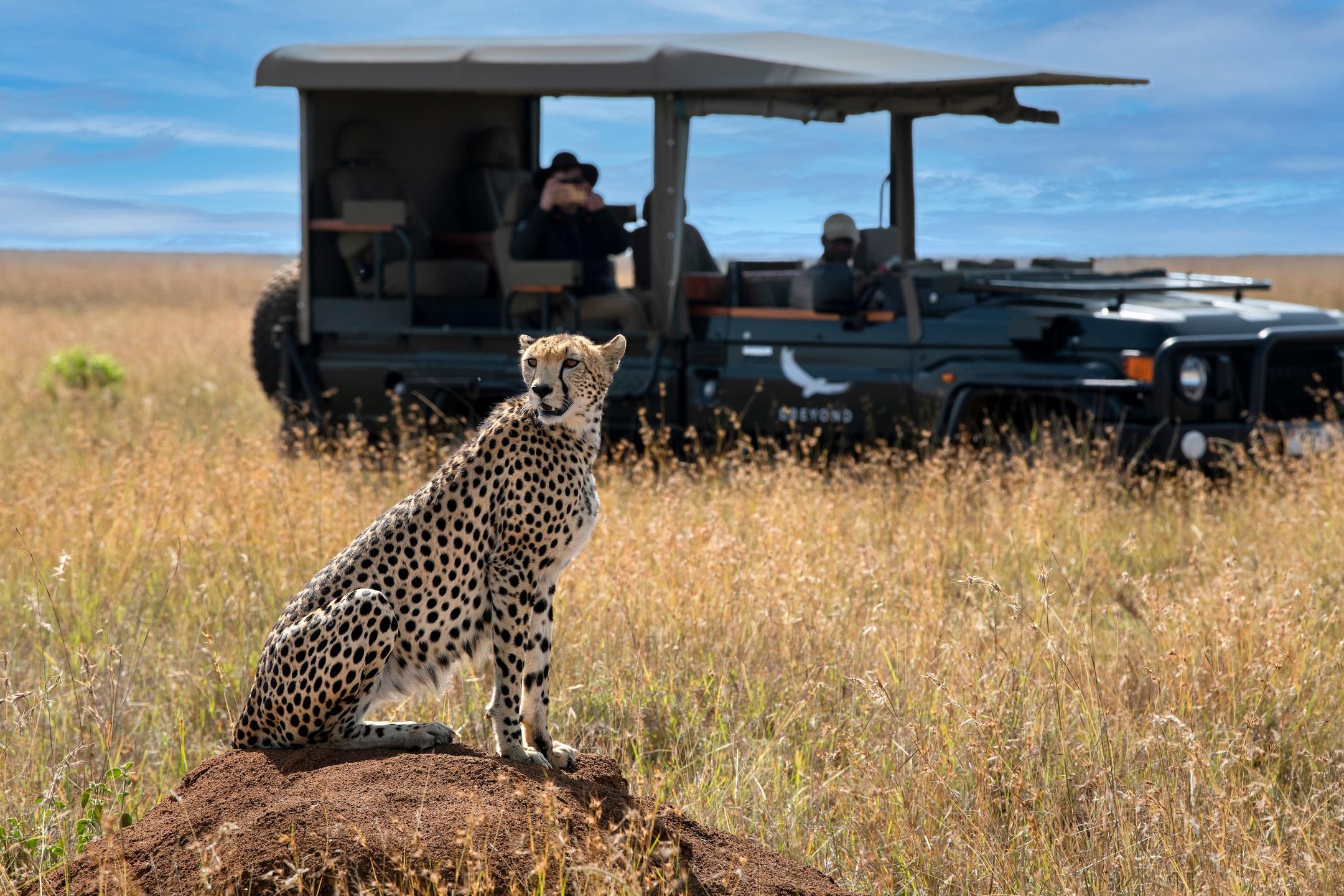
Game drives roll out across the plains like expeditions. Some mornings are about elephants and buffalo drifting through the mist. Others deliver the famous Busanga lion prides, often lounging on termite mounds like they own the place (which they do). If you’re lucky, you might spot a cheetah carving a line through the long grass, or watch crowned cranes rising in a flurry of wings as the sun sets.

Evenings back at camp are their own reward. Sitting by the fire, the vastness pressing in from all sides, you become acutely aware of just how remote you are. No highway hum, no faint glow of a distant town. Just stars — millions of them — and the steady chorus of the marsh.

Busanga isn’t safari with trimmings; it’s safari distilled. It’s for travellers who crave the edge of adventure but still appreciate a crisp linen sheet at the end of the day. The kind of place that makes you feel small, in the best possible way.

Mara Nyika: a Camp That Whispers Rather Than Shouts

Some lodges announce themselves before you’ve even unzipped your bag. Brass fittings, oversized chandeliers, the kind of bath you could launch a canoe in. Mara Nyika is not one of those lodges.

Perched lightly among the flat-topped acacias of the Naboisho Conservancy, Nyika doesn’t so much dominate the landscape as blend into it, like a well-worn canvas jacket. You could walk past its guest tents without even realising you were skirting one of Kenya’s most refined safari outposts. And that’s very much the point.

Naboisho itself is part of the magic: a vast conservancy bordering the Maasai Mara National Reserve, but with far fewer vehicles, more privacy, and a fierce dedication to conservation. Lions patrol the savanna here with the same swagger you’ll see inside the Reserve proper, while cheetahs, giraffes, and elephants all make daily cameos. The difference is that you’re unlikely to be sharing the sighting with a convoy of Land Cruisers.

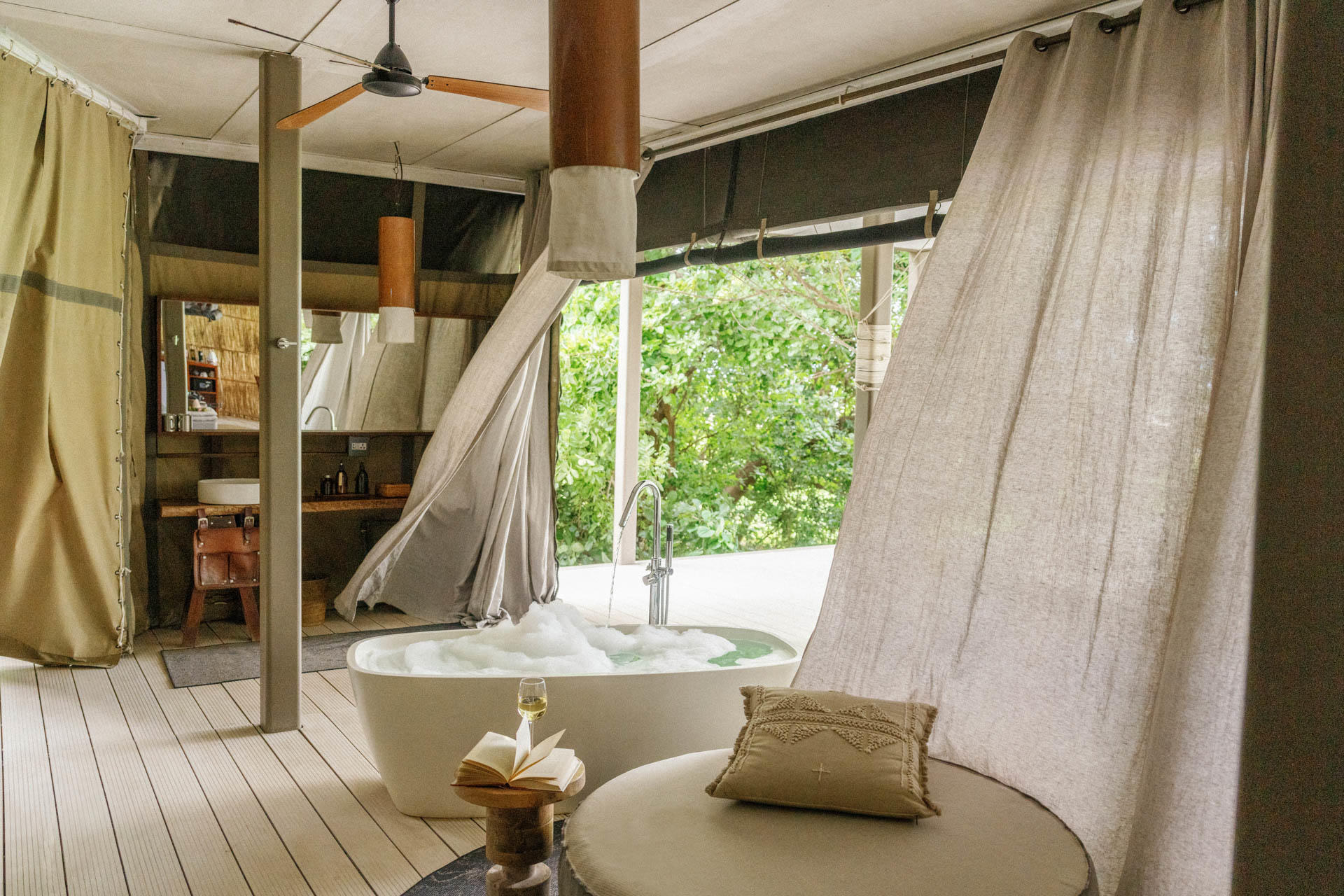
Mara Nyika leans into this ethos of understatement. The camp’s design is all flowing canvas, polished wood, and gentle curves that feel more like an extension of the trees than an intrusion. Step inside your suite and you’ll find the kind of detail that makes luxury feel effortless: a desk positioned to catch the morning light, copper accents that glow at dusk, a bathtub with a view that doesn’t require explanation.

But perhaps the greatest luxury is what you don’t see. No rush, no crowds, no clutter. Just space — for animals to roam, and for you to think, breathe, and reset. Evenings here are less about theatrical fanfare and more about quiet conversations around the fire, punctuated by a distant hyena call or the shuffle of elephant feet through the grass.

For those who like their safaris with a little narrative arc, Nyika also serves as a gateway. It connects seamlessly with Great Plains’ other Mara properties, so you can trace your own journey across the ecosystem, following the migration if the timing’s right.

Still, you may find yourself reluctant to move on. Mara Nyika is one of those rare places where the definition of luxury isn’t excess, but restraint. Where the whisper carries further than the shout.