Hoanib Skeleton Coast: Desert Lions, Distant Horizons, and the Luxury of Silence

Safari lovers often talk about sound — the roars, the rustles, the unending nighttime chorus. But Hoanib Skeleton Coast Camp flips the script with a different kind of sensory experience: profound, resonant silence. The kind that expands inside you. The kind that makes a single footstep feel like punctuation in an otherwise blank poem.

Set in one of Namibia’s most remote valleys, Hoanib lies at the intersection of desert, mountains, and the unseen pull of the Atlantic Ocean. At first glance, the landscape appears empty. Your eyes skim over pale dunes and ochre ridges, dismissing them as barren. But Hoanib rewards patience, not haste. Shapes resolve slowly: a lone elephant threading its way along a dry riverbed, a pair of oryx holding still in perfect desert camouflage, a fresh track hinting at the improbable wanderings of a desert-adapted lion.

Days here unfold with an exploratory rhythm. Drives trace ancient river systems carved by rains that may only come once in several years. You follow stories written in sand, piecing together the nomadic lives of animals that survive on astonishingly little. If conditions allow, the journey toward the Skeleton Coast is among the continent’s most surreal drives — a cinematic transition from shimmering dunes to the fog-laden wildness of the Atlantic, where shipwrecks tilt like abandoned punctuation on an unfinished sentence.

Inside camp, the minimalist architecture mirrors the desert: calm, tonal, grounded. Canvas, stone, and pale wood create a sanctuary that amplifies the surrounding quiet rather than competing with it. Meals are unhurried, evenings candlelit, and nights filled not with noise but with space.

Hoanib isn’t about abundance. It’s about revelation. It teaches you to look harder, listen deeper, and appreciate the astonishing resilience of life where it shouldn’t logically thrive. And in doing so, it reshapes your definition of wilderness itself.

Ngala Tented Camp: Where Silence Has a Shape

Some camps arrive with a flourish. Ngala Tented Camp doesn’t need to. Tucked beneath a line of ancient river trees along the banks of the Timbavati, it feels less like a lodge and more like something the landscape has been guarding for years — revealed only when you’re ready to notice it.

Ngala has always existed in that sweet spot between wild and minimalist. Canvas suites open directly onto the riverbed, where the daily cast of elephants, nyalas, and the occasional leopard drift past with the nonchalance of residents who pay no attention to human check-in times. The tents themselves are masterclasses in understatement: soft palettes, clean lines, and textures that let the wilderness do most of the talking.

And that’s Ngala’s quiet superpower — it knows when not to speak.

This is a camp that rewards the unhurried. Early mornings begin with the soft groan of branches stretching in the cool air, followed by coffee strong enough to stand up on its own. On game drive, the Timbavati reveals its subtler layers: the flick of a white tail through the thickets, a fresh drag mark across the sand, the unmistakable rasp of a leopard calling from somewhere just beyond the bend. The guides here have a knack for making the bush feel like a story unfolding rather than a checklist being ticked.

Afternoons stretch out in that dreamy, in-between way the Lowveld specialises in. You can sit on your deck and watch the river exhale as the heat deepens, or laze in the pool listening to the wind rehearsing through the jackalberries. Here, even doing nothing feels purposeful.

Evenings are lantern-lit and low tempo. Dinner might be under the fever trees or beside the water’s edge, each setting a reminder that Ngala’s real gift is the way it frames simplicity as luxury. No theatrics, no noise — just a deep, resonant sense of place.

Where some lodges make you feel pampered, Ngala makes you feel restored. The kind of refreshed that comes not from being entertained, but from being allowed to simply exist in a landscape that’s been doing fine for millennia without interruptions.

Ngala Tented Camp is safari distilled — quiet, thoughtful, and all the more powerful because of it.

Londolozi Earns Three Michelin Keys: Where Connection Is the True Currency

The Michelin Guide has spoken — and Londolozi has joined a rarified circle. In the inaugural list of global lodges recognised for excellence in hospitality, Londolozi has earned Three Michelin Keys, the highest possible rating.

For those unfamiliar, the new system is Michelin’s way of recognising the world’s most extraordinary places to stay — where design, service, character, value, and connection to place combine into something unforgettable. The restaurant world has long had its stars; now the lodging world has its keys. And in Londolozi’s case, the metaphor fits perfectly.

Because a stay here really is about unlocking something — not just a door to your suite, but a door into the wilderness itself. The luxury is evident, of course: the seamless service, the design that whispers rather than shouts, the food that would make even a Parisian inspector pause mid-bite. But it’s the connection that sets Londolozi apart. Connection to land, to community, to guests, and to a philosophy that’s been evolving for almost a century.

You feel it in the quiet professionalism of a tracker reading leopard spoor at dawn. You feel it in the stillness of the river at sunset, when the light folds over the granite outcrops and the bushveld seems to exhale. You feel it in the staff who’ve worked here for generations — living proof that hospitality, when done right, becomes heritage.

Michelin calls the Three-Key rating “an extraordinary stay.” But that hardly covers it. Londolozi doesn’t just offer extraordinary stays; it offers perspective. It reminds guests that luxury isn’t about what’s added, but what’s revealed when everything unnecessary falls away.

Earning Three Keys isn’t just a nod to Londolozi’s excellence — it’s an acknowledgment of its ethos: that true hospitality has always been about belonging. The kind that doesn’t just welcome you for a night, but stays with you long after you’ve left.

Tswalu Kalahari: The Luxury of Isolation

There’s a point somewhere between Upington and eternity where the Kalahari opens up and you start to feel very small. That’s usually the moment you realise you’re getting close to Tswalu.

South Africa’s largest privately protected reserve has never really played by anyone else’s rules. While other lodges might measure their worth in thread count or wine lists, Tswalu deals in something far rarer — space. Here, luxury isn’t about what’s added, but what’s absent: crowds, noise, clutter, deadlines. The silence is a currency all its own.

The new Loapi Camp, Tswalu’s most recent addition, continues this philosophy of elegant restraint — a collection of glass-fronted safari homes scattered like mirages across the dunes. Everything is deliberate yet unforced: natural materials, clean lines, textures that echo the desert itself. It’s architecture designed to defer to the landscape, not dominate it.

But what sets Tswalu apart isn’t just the design — it’s the depth of experience. Tracking pangolins under starlight with researchers. Following a coalition of cheetahs through the ochre grass. Sharing a breakfast of Kalahari truffles and poached eggs while the horizon hums with heat. The encounters here feel less like safaris and more like quiet collaborations with the wild.

Condé Nast’s readers regularly place Tswalu among Africa’s finest, yet its real brilliance is how little it seems to care about that. This is a place that hums to its own frequency — one of patience, purpose, and deep respect.

In a year when Michelin Keys and global accolades are reshaping how we define excellence, Tswalu stands as a gentle reminder: true luxury isn’t found in perfection, but in perspective. It’s the feeling of being utterly alone, yet completely connected — to the land, to the moment, to something far older than both.

Lemala Osonjoi: Ngorongoro Reimagined

The Ngorongoro Conservation Area is one of Africa’s most iconic and unique wildlife havens. This extinct volcano crater in Tanzania boasts an incredible profusion of wildlife, with its ancient volcanic soils providing the nourishment that brings in the herbivores, which in turn attract the predators like lions, leopards and hyenas.
Some of the most densely-packed game viewing on the continent is to be found on the crater floor!

Scheduled to open in 2025, Lemala Osonjoi Lodge is the latest addition to the Lemala portfolio and being conveniently located close to the Lemala Gate of Ngorongoro, provides a more gradual access road with game viewing en route.

The eastern quadrant of the Crater sees fewer visitors than the west, especially first thing in the morning and last thing in the afternoon – those critical hours when game viewing is at its best.

Lemala Osonjoi stands to offer guests unparalleled access to the world’s largest intact volcanic caldera that is Ngorongoro.

Positioned just back from the crater rim, Lemala Osonjoi is ideally located for early morning and late afternoon game drives, allowing guests to enjoy the environment without the crowds. The quicker descent to the crater floor is perfect for early risers or photographers in search of ideal light conditions. In just 10 to 15 minutes, you can be in and amongst the abundant wildlife that roams here.
For those seeking adventure beyond game drives, guided nature walks along the crater rim and through the nearby forests are available, led by an expert ranger and a Maasai guide team who will share their deep knowledge of the land.

After a thrilling day on safari, return to the comforts of Lemala Osonjoi’s luxurious suites.
With twenty spacious accommodations, including two-bedroom suites ideal for families or groups, each room is designed to blend elegance with comfort.
Picture windows allow the highland light to flood into the suites, offering guests breathtaking views of the surrounding forests. In cooler evenings, cozy up by the wood stove, wrapped in a winter-weight duvet, or indulge in the warmth of hot water bottles.


En suite bathrooms feature double vanities, walk-in showers, and even outdoor bathing options, creating a spa-like experience in the wilderness. The lodge also boasts an indoor heated swimming pool and a dedicated spa suite where guests can unwind with treatments from expert therapists.

Osonjoi’s Best Points:

  • Its proximity to the quiet eastern access road to Ngorongoro means fewer crowds and better game viewing during peak wildlife hours. What’s more, one of the lodge’s most unique offerings is a full day catered safari lunch on the crater floor, a rare privilege in this protected area.
  • From the spacious, beautifully designed suites to the spa and heated pool, Osonjoi offers the perfect blend of wilderness and luxury.
  • Whether it’s the early morning game drives or the guided walks with Maasai guides, guests are guaranteed unforgettable encounters with Africa’s most iconic wildlife.

Angama Amboseli: Elephant Heaven

With Mount Kilimanjaro – Africa’s highest peak – serving as its backdrop, Angama Amboseli creates an intimate and laid-back atmosphere in the heart of Kenya’s first community-owned conservancy; Kimana. Set within a forest of fever trees, Angama boasts some of the best guides in the region, as well as exclusive traversing rights on this private reserve – where some of Africa’s last super tuskers roam; elephants with tusks so large they drag along the ground as they walk.
This is truly Africa at its most quintessentially majestic.

With only ten Guest Suites in this private wildlife conservancy, Angama Amboseli is truly a respite from the world, and Amboseli National Park is only a 45-minute drive from the lodge to the gate, and is home to over 400 bird species and an array of wildlife.

Another contemporary take on African design with nods to the giants of this landscape — including concrete mixed with elephant dung for the unique exterior texture — each of the ten Suites is a mix of canvas, concrete and stone accented by woven rattan and grass, all in earthy, neutral colours. Each suite is orientated so that Kilimanjaro can be seen from nearly every corner — from the bed to the shower — while floor-to-ceiling screened doors are all that lies between you and the mountain.

The main Guest Area offers flexible indoor-outdoor dining with a baraza to wind down the days by the fire, telling stories with a drink in hand or marshmallows for roasting. The nearby Studios house a Safari Shop, Games Room, Art Gallery, Weaving Studio and a Photographic Studio, perfect for capturing Amboseli’s iconic scenes.

Kimana Sanctuary is the first community conservancy established in Kenya, and is owned by 844 Maasai family members. Thanks to its perennial water availability (fed by the snows of Kilimanjaro itself), the Sanctuary boasts the greatest habitat diversity and wildlife density in the area, with scores of eland, reedbuck, warthogs in their hundreds, as well with giraffe, zebra and wildebeest. Big cats are also regularly encountered.

Elephants are the real stars here as large breeding herds move in procession through the Sanctuary. There’s also a good chance you’ll see one of the famed Super Tuskers — elephants whose tusks weigh more than 100lbs each. Some of the last remaining Tuskers in Africa love to feed on the lush vegetation around the lodge.

Derived from the Maasai word for ‘salty dust’, Amboseli National Park is just a 45-minute drive from the lodge which guests can enjoy as a half- or full-day excursion with a picnic lunch at a private Angama spot. This is one of the best places in Africa to see huge herds of elephants marching single file across dusty pans or having a bath in the dry lake beds. In the savanna and woodlands, you may spot lion or cheetah, while in the wetlands, hippo, flamingo and an array of other local wildlife can be encountered.

Wake up to the sun illuminating Kili and after an early breakfast, depart for a full-day safari in Amboseli National Park. As you leave, visit the ‘pinch point’ — the smallest segment of a critical wildlife corridor.  Spend the day exploring the Park’s famous marshlands and dry lake bed looking for Super Tuskers. After a picnic lunch at a private Angama site, return to the lodge in time for a visit to the Studios. Dinner is served on the private patio of your Guest Suite as the moon rises slowly over Kili.

Your Butler gently wakes you with coffee before first light to catch your sunrise hot-air balloon flight. Float along with Kili, admiring the views below before touching down for a champagne breakfast. A much-needed siesta and lunch are followed by an afternoon with our conservation partner, Big Life Foundation — visit HQ for control room and camera-trap monitoring or go out with ranger patrols and canine tracking units. Enjoy your final evening sharing stories over a delicious dinner in the Guest Area.

Access to this magnificent lodge is very straightforward; there are daily scheduled flights with Safarilink landing at Kimana Airfield in the Sanctuary, as well as Amboseli National Park, about a 1h drive. Private charters are always welcome at the Sanctuary’s airfield, whether to or from the Mara or Nairobi.

Get in touch with us through info@iconicafrica.com to find out more about this unique safari which combines Africa’s giants; it’s highest mountain and its largest inhabitants, the elephants.


Lion Sands Tinga: Private Kruger Park

Lion Sands Tinga is nestled on the banks of the Sabie River,  one of the Kruger Park’s most iconic. The softly burbling water flows under enormous jackalberry and fig trees, and provides some of the most scenic game-viewing habitat imaginable. In winter when water resources are scarce, everything has to drink at the river, so a slow meander along the riparian roads will reveal a myriad of delights.

The lodge consists of nine suites as well as the exclusive two-bedroom Hinkwenu Residence.
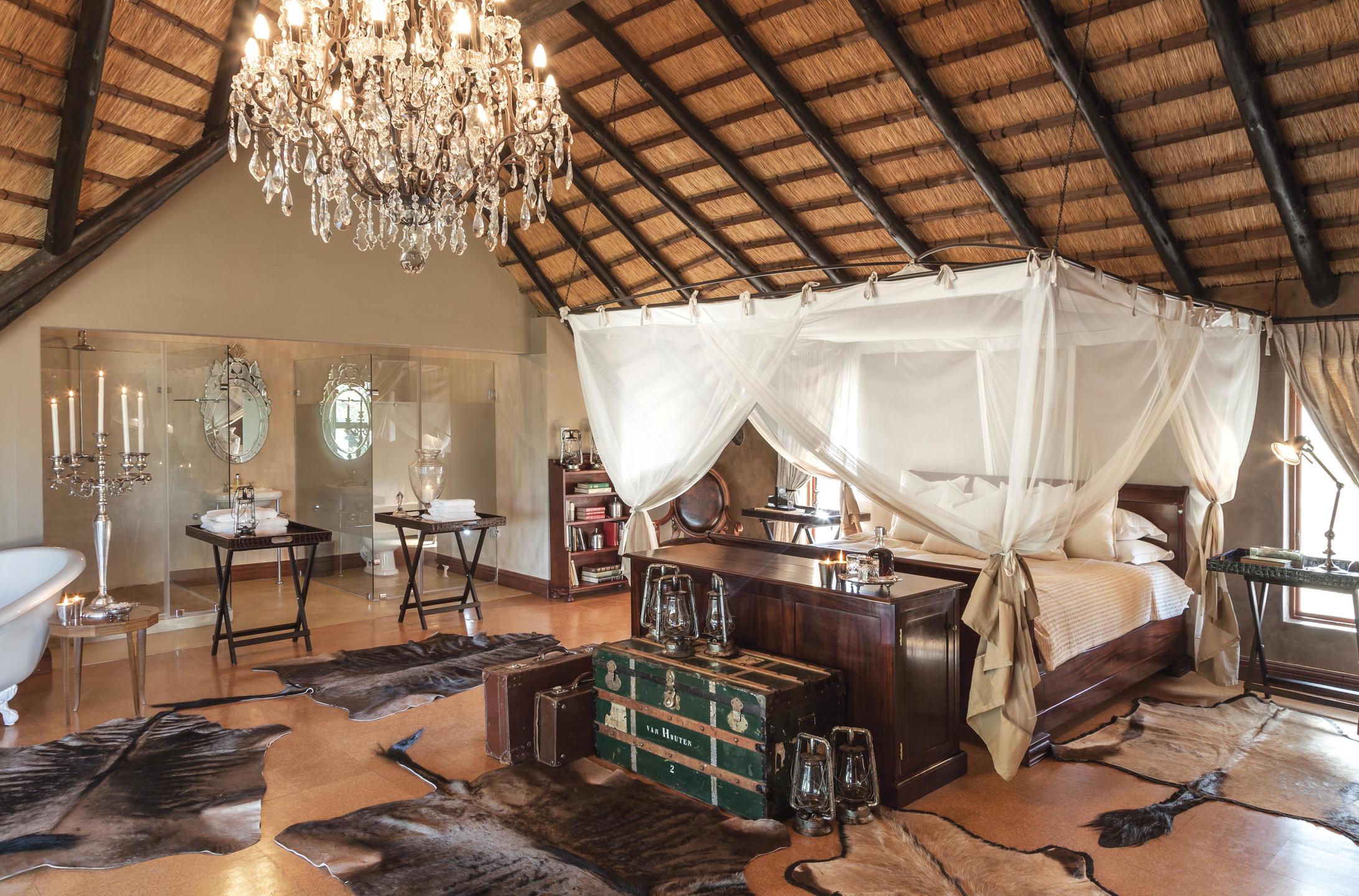
Each room, blending vintage style with modern luxury, provides stunning views that make you feel as if the outside reserve is simply an extension of your living quarters, ensuring an intimate connection with Africa’s beauty.

The suites are joined by elevated wooden pathways that wind their way through the lodge, also connecting the spa and main lodge area, where a bar lounge, pool, and boma also feature. Here, you can share a delicious glass of some of South Africa’s finest wines, refelct on the day’s sightings, or simply relax in a quiet moment alone, with only the background ambience of the birds as your company.
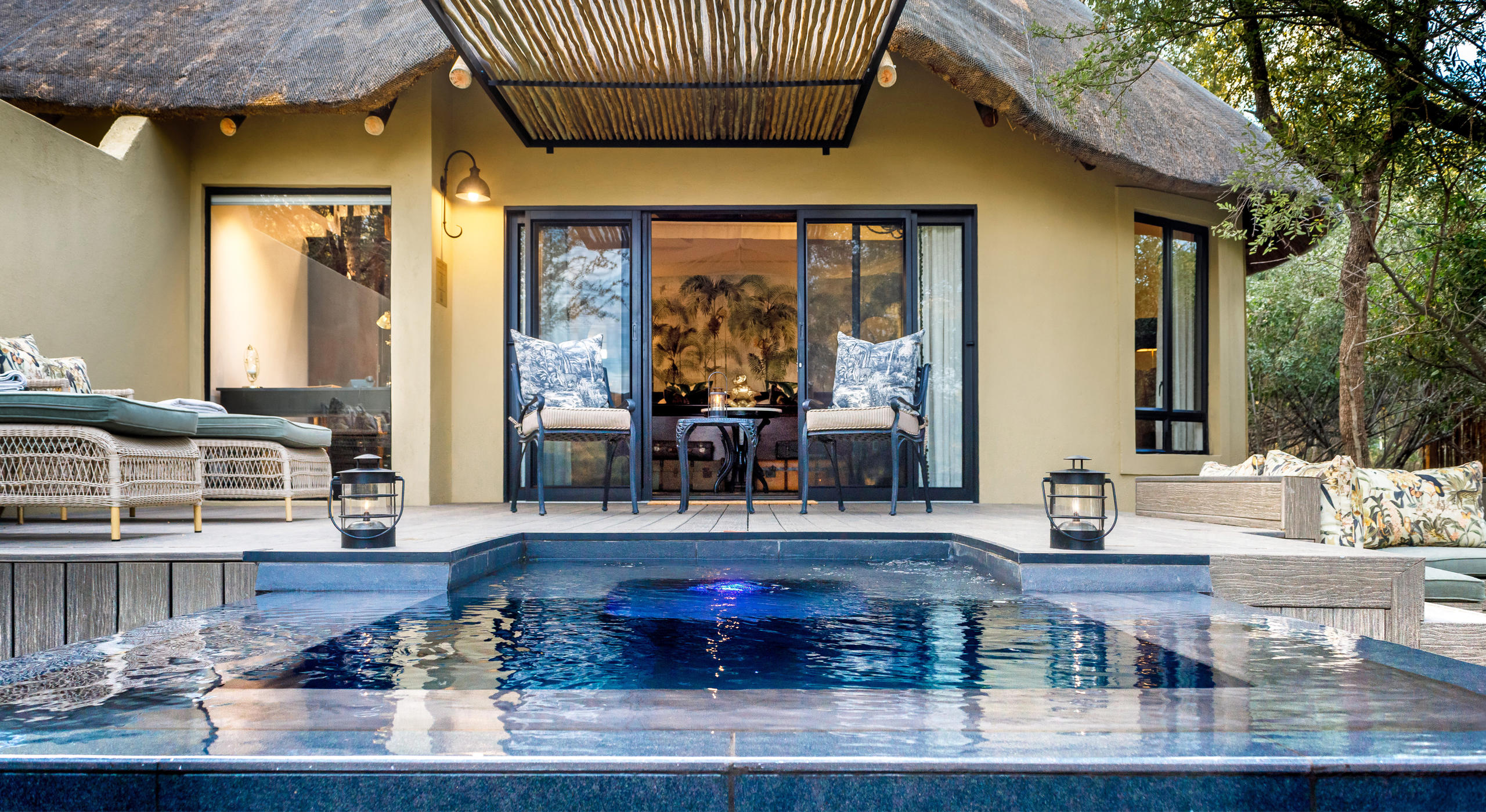
The suites all feature their own private plunge pool and deck, providing a personal sanctuary where you can bathe in opulence, spend your time bird watching or check on the hippos in the river below.

The Lion Sands Game Reserve is essentially a combination between their Kruger National Park concession where Tinga is found, and their property in the world-famous Sabi Sands; one of the best places in the world to see leopards. Vehicles are allowed to traverse both sections, ensuring full access to the bast sightings.

Lion Sands Tinga Lodge has tailor-made experiences for children aged 6 to 11, so the lodge ensures that every member of the family has the freedom to explore and have fun.
A dedicated playroom, coordinated by a qualified activity leader, offers a range of engaging activities from sports and crafts to baking sessions with the chef. Family game drives, bush orientation, dung tracking, spoor casting, and nature scavenger hunts are just a few of the adventures that families can enjoy together, making every day a new discovery.


Safari experiences are of course the central reason why people visit, and Lion Sands boasts some of the best. Game drives depart the lodge at dawn and then again in mid-afternoon, facilitated by experienced field guides. These drives aim to capture the essence of an African safari as you go in search of the Big Five. Feel how your senses swiftly become attuned to the slightest rustle in the bush. Walking safaris are another great way to explore the landscape; most are conducted after breakfast, as you set out on foot to enjoy a true bush immersion, with your guide and tracker interpreting event eh faintest signs for you.

If it’s more of a relaxation or a spiritual experience that you are after, the our spa provides treatments featuring Africology products, ethically sourced and inspired by traditional African healing practices.
Additionally, for those dreaming of sleeping under the star-laden African sky, Lion Sands offers optional treehouse sleep-outs, which provide an unforgettable night surrounded by the sounds of the wild (activity is at an additional cost).


Between 4 January and 19 December 2025 & 2026, Lion Sands is offering incredible specials.

Pay for 3, Stay for 4, as well as a 50% rate for Honeymooners.

If you are after amazing game viewing, superb opulence and some of the most scenic terrain in the whole of the Kruger National Park, Lion Sands Tinga might be just what you’re looking for.

Get in touch through info@iconicafrica.com to find out more…


Sala’s Camp: Prime Migration Viewing

Sala’s Camp first hosted guests in 2004 and has become renowned for delivering an authentic Masai Mara safari experience with exceptional personalised service and fine dining.
Seamlessly combining a traditional ‘under canvas’ safari experience with contemporary comfort, including private plunge pools and glass fronted tents, Sala’s Camp offers an unforgettable and magical Mara retreat.

Owned and operated by The Safari Collection, it can be booked for the night or as part of a complete tailor-made safari. The magic of a Kenya safari doesn’t end with Sala’s Camp. The Safari Collection is the proud owner of four distinct lodges in some of Kenya’s most spectacular locations, including Giraffe Manor in Nairobi, Solio Lodge in Laikipia, Sasaab in Samburu and Sala’s Camp in the Masai Mara.

Sala’s sits in one of the best locations in the whole of the Masai Mara National Reserve. Intimate and secluded, it is nestled along the tree lined banks of the Sand River in the southern tip of the reserve. One can literally look out from your room to the Tanzanian border only a kilometre or two away, with the Serengeti National Park forming the backdrop with its rolling, grass-covered hills. This also means that it is one of the first camps in the Mara to witness the annual wildebeest migration which comes pouring in from June to September each year. Major crossing points on the Mara River are only an hour’s drive away, and the Sand River itself, right on your doorstep, regularly sees herds streaming over in their thousands

With teeming wildlife year round, Sala’s game drives never disappoint. Lions in particular are plentiful in this part of the reserve, and being far from the entrance gates means that you will enjoy regular sightings all to yourself. Cook-out breakfasts and sundowners out on the savannah make for magical memories. The landscape is spectacular, the birdlife impressive and the feeling of being totally immersed in nature cannot be beaten.

Enjoy world class bird watching, spectacular star-gazing and epic sundowners on the savannah with our vintage mobile bar. When you’re not out discovering the wonderful wildlife there’s plenty to do back at camp, including nature walks and games in the Sand River when the water is low enough.

Kenya’s Masai Mara is home to one of the largest overland migrations of animals in the world. Between June and September each year, 1.5 million wildebeest, 500,000 Thompson gazelles, 200,000 zebra and thousands of other antelope cross the border into Kenya from Tanzania on their seasonal migration. Drama, dust and danger abound. Guests of Sala’s camp who are lucky enough to catch this famous spectacle are treated to one of the greatest shows on earth. Witnessing the Great Migration is a real bonus to an already mind-blowing Masai Mara safari experience. Searching for greener pastures, exact movements of the wildebeest herds change each year. As they enter into Kenya however, crossing the Mara River is one path they cannot avoid. Famous for providing documentary-worthy footage, river crossings are a tense spectacle. Predators lurk and the journey is treacherous. Be sure to have your camera at the ready as you never know what might happen.

The word ‘Mara’ comes from the Maa word for ‘spotted’ (Maa being the official language of the Maasai people). The name comes from the spotted appearance of the land from above, as it is all dotted with Acacia and Ballanites trees. The professionally trained Maasai guides at Sala’s Camp are passionate and knowledgeable about all the animals, plants and trees you will encounter on safari and offer fascinating insights into the ecosystem as well as their traditional culture.

T

At Sala’s you will feel like you have the great plains of the Maasai Mara all to yourself, a rare thing in a conservation space which of late has started to gain the reputation for crowds.
This almost untouched part of Kenya will provide almost everything you could want on an East African safari.

Get in touch with us through info@iconicafrica.com to find out more about Sala’s Camp, the Safari Collection, and the endless plains of the Maasai Mara and Serengeti in general…

Iconic Africa Wins Another Award

We’re thrilled to announce that Iconic Africa has won yet another honour in the annual LUXLife Travel Awards, this year being announced as the 

Best Global Boutique Safari Business 2024

LUXLlife focuses on a range of topics within the luxury lifestyle industry, and with their circulation extending to almost 100 000 readers, we are incredibly excited to have achieved such recognition within this space.

The combination of the words “Global” and  “Boutique” are what we enjoyed most about the award; we feels the almost paradoxical combination sums us up accurately. We have guests who travel from all over the world to visit Africa in all her magnificence, yet we have remained a small company, not looking to expand too much, keeping true to our roots as


To quote their website:

“The LUXLife awards celebrate the tradition of acknowledging unparalleled achievements and exceptional creativity in the realm of luxury. These distinguished awards are their way of honouring the leaders and pioneers who redefine excellence within our industry. This section is dedicated to those who inspire with their visionary contributions and consistently set higher standards of sophistication and elegance.”

The travel and tourism industry has long been a vital part of the world economy, contributing significantly to employment, market development, and cultural exchange. Despite the lingering effects of the Covid-19 pandemic, the sector has now fully recovered, bolstered by strong consumer demand, emerging technology and trends, and an eagerness to return to exploring the world. The World Travel & Tourism Council expected 2025 to be a record-breaking year, with the market’s global economic contribution set to hit an all-time high of over $11 trillion!

There are a variety of trends that are boosting performance and rapidly reshaping the travel and tourism space; more and more travellers are choosing eco-friendly options, along with lodges that dhow a genuine commitment to social upliftment and environmental consciousness.

Moreover, the blending of business and leisure travel continues to rise, with more professionals extending work trips to enjoy personal time at their destination. Digital transformation is also playing a crucial role, as innovations like contactless check-ins and AI-powered travel recommendations enhance the convenience and personalization of travel. Additionally, wellness tourism remains a strong growth area, with more travellers looking to focus on mental and physical well-being.

Iconic Africa will keep striving to remain at the forefront of the industry.

Our small team of highly experienced agents all know the continent intimately, and continue to research new destinations, experiences and trends. We want every guest’s visit to our shores to be life-changing.

Get hold of us on info@iconicafrica.com to start planning your own bucket list safari…


Beach after Bush

An authentic African safari is one of the most thrilling experiences you can ever have.

Those whom the bug has bitten find themselves returning time and time again to revisit that sense of excitement, the tranquility of an Okavango sunrise, the thrill of a lion stalk or the sheer rawness of nature as ten thousand wildebeest come pouring over the Mara River in their desperate need to reach the other shore.
Safari can also simply be about getting in touch with yourself and family once more. No receiving message on drive, no police sirens in the distance, just you and the peace of the bush; birdsong, the soft trilling of cicadas and the whisper of the wind in the golden grass.

Yet in order to take full advantage of the environment and prime viewing conditions, early wake-ups are the norm, with a pre-dawn coffee on deck the order of the day as you wipe the sleep from your eyes and prepare to head out into the gloom, just before the sun peeks over the horizon.
A good few days of these early mornings, combined with some late nights around the fire and some excellent bottles of South Africa’s finest red wine, and you may well find yourself needing a holiday after your holiday. And that is where the beach comes in.

There are literally thousands of kilometres of pristine coastline from Cape Town up to Kenya, with golden sands, whales breaching, turtles laying eggs, and often miles and miles of emptiness stretching before you, with only the warm, turquoise waters of the Indian Ocean lapping against your feet.

If its genuine relaxation you are after on your holiday, look no further. The resorts and beach lodges we love will have you wanting for nothing. Pina coladas on call, boat excursions to remote sand bars, and snorkelling in the clearest water imaginable as the warm sun gently tans you.
An Indian Ocean getaway is – at least for us – the perfect ay to wind down after a safari. You won’t have anyone waking you up before it’s light, you make your own schedule, and you can be as indulgent as you like.

Our Top 3 choices for beach destinations would be:

Plettenberg Bay

It’s a no-brainer for us, with “Plett’” as South Africans call it, just having been nominated for World’s Leading Beach Destination.
The shores of this wonderful seaside town can get quite busy during the Christmas period when a lot of SA residents move into their summer homes, but for 90% of the year it is a wonderfully quiet town, with so much to do within such a short distance.
Explore the Robberg Peninsula or go hiking in the Knysna Forest. Take a canoe up the Keurbooms River in search of Knysna Turacos (even leopards have been sighted here) or look for pansy shells on some of the more remote beaches in the area.

Plett has it all, and with a convenient airport nearby (a major one at George or a local one practically in town), access is very easy.

Vilanculos & Surrounds

A short flight from Johannesburg will have you on the beach in Mozambique’s Vilanculos sipping a strawberry daquiri before lunchtime.
Flying in over the extensive sandbars, gazing down through the azure waters, is a landing you won’t be forgetting in a hurry.

Vilanculos is essentially the gateway to a multitude of incredible lodges – some on the mainland and some out on the islands – like Sussurro, Azura and Kisawa. All will leave you speechless at their simple charm and opulence, and all will have you immediately wanting to extend your stay.

The lodges around Vilnaculos are as close to paradise as you can find…

Maputaland, South Africa

One of South Africa’s last great stretches of untouched coastline, made up almost entirely of pristine beaches, and home to a vast array of land based and marine wildlife, Maputaland is the far northern section of South Africa, just south of the Mozambican border.

With a wonderful array of destinations like Black Rock Bay, Tonga Beach Lodge and Mabibi to choose from, as well as being in close proximity to wonderful game viewing areas like Phinda and iSiMangaliso Wetland Reserve, Maputaland is a region packed full of exciting options

If you want to tag on a relaxing beach option to your safari, get hold of us through info@iconciafrica.com com, and let’s see what stretch of coastline tickles your fancy the most…

San Camp: Uncovering the Desert

An almost mirage-like appearance of white tents, rising as an oasis of shade and tranquility on the edge of an endless horizon… This is the reality that is San Camp, an unbelievably romantic, seven-bedroom camp on the edge of the Ntwetwe Pan in Botswana’s Makgadikgadi.

This camp isn’t a place for frills and excess. The minimalistic approach is what creates the magic, both at the camp and in the lunar desert landscape. You can forget the crowds and packed overland vehicles; it’s just you, the wildlife and the empty spaces….

Meerkats abound here, popping their heads up from the desert dust, brown hyaenas secret themselves in the golden grass, and you’ll encounter oryx, red hartebeest and springbok all moving endlessly between them. But San Camp is about far more than the desert wildlife – it’s about the atmosphere and the ethereal surroundings. Here you can truly merge yourself with a forgotten world, a million miles from screens and car alarms, where vistas are so vast you can literally see the curvature of the earth…

The salt pans are home to a host of unique desert animals which make a fascinating contrast to an Okavango safari. For those with the time, visiting this area as part of an Okavango itinerary is highly recommended. Wildlife in the region includes the famous black maned lion and cheetah, and small roaming herds of wildebeest and zebra, elephant and brown hyaena almost exclusive to this area. Kori bustards and northern black korhaan can be ticked off your bird list and your trip would not be complete without an up-close-and-personal interaction with the habituated and well- loved meerkats that have delighted guests from all over the world.

An elegant, solar powered, seven-bedroom camp on the rim of the Ntwetwe Pan, the seasonal San Camp offers a truly remarkable safari experience. White canvas tents complement the stark setting and create an ambience of calm, perfect for a few precious hours of meditation at the specially designed yoga retreat. Think elegant décor and mouth-watering cuisine to delight travellers of all ages.

The main canvas covered central area is light and airy, inviting you into a stylish dining room where delectable meals live up to their excellent reputation. The lounge floor area is accentuated by Eastern Style rugs and dark Mahogany furniture adds to the atmosphere of the camp. Interesting sources of anthropology and archaeology of this specialized desert region are just waiting to be discovered within the cabinets housing historical artefacts and old fossils. Romantic lantern-lit evenings in camp add to memorable moments on your African safari.

The strategically placed luxury tents with views over the pan are slightly reminiscent of times gone by and feature relaxing outdoor day beds. Indoors, the bed linen is crisp and fresh – irresistible at the end of the day’s activities and en- suite bathrooms include all the necessary facilities to make your stay comfortable and relaxed.

The menu of desert activities offered by San Camp is exhilarating and include game drives within theMakgadikgadi Pans National Park and night drives led by spotlight while seeking out specially adapted desert wildlife. Adventurous expeditions to Kubu Island by quadbike can be enjoyed during the dry season and horse-riding safaris add to the magic of exploring this vast wilderness.

From San Camp you are encouraged to venture out and experience the desert through the eyes of the nomadic bushmen. To learn first- hand the culture of the Zu’/Hoasi Bushmen who call this arid landscape home is a truly remarkable experience. The experience here is sensitively done and not contrived, it is one of the best such experiences in Botswana. Informative bush walks with the Zu/’hoasi Bushmen satisfy the most curious of minds as you learn to identify medicinal plants, source food to eat and learn the habits of smaller animals so easily overlooked on game drives.

Stargazing takes on a new meaning as one studies the heavens above from the salt pans.

San Camp and its sister camp Jack’s – only a few kilometres away – are truly in a league of their own when it comes to opening your eyes to the wonders of this arid corner of Africa. Don’t stay too long though, as the magic of the desert gets under your skin, and it will be almost heartbreaking to leave…

Get in touch through info@iconicafrica.com to find out rates and availability, and the best way to incorporate San Camp into your itinerary…

(Not So) Secret Cape Town

When guests of ours visit Cape Town and talk about their trip after the time, they often refer to how they did the “touristy” things.

Well, we’re here to tell you that the so-called touristy things of Cape Town are just that for very good reason. People don’t visit this breathtaking city to do things they can do anywhere else. No, Cape Town has its specific attractions that make it so special, and it stands to reason that whether making it the centre-point of your stay or simply tailoring onto the beginning or end of your safari, you are going to want to get to the top of Table Mountain, take a drive down the Peninsula, eat at some fine restaurants and indulge yourself in wine country for a couple of days.

Literally millions of people visit South Africa’s Mother City each year, but don’t be fooled by these numbers; there is still plenty of space to do things. Granted, the summer season can see the most popular beaches getting a little crowded, but a good guide will know the places and timings to make sure you have more than enough space to yourself.

The Big Four are essentially Table Mountain, Peninsula Tour (including the Penguins at Boulders Beach), the Winelands and the Waterfront.

Starting with the Waterfront…
It has its perks sure, and there are some amazing hotels all around it, which makes it very convenient for dining at its incredible diversity of restaurants, but the place itself is essentially a large mall. Save your curio shopping for when you are actually on safari, as the artefacts are more likely to be genuine. That’s our main bit of inside intel.
What the Waterfront is best for, we feel, is as a gateway to a whole multitude of Cape Town experiences.


Visting Robben Island (where Nelson Mandela was imprisoned), evening boat cruises, helicopter rides around the peninsula… all are launched from the vicinity of the Waterfont, so for those alone, its worth a visit.

Next, Table Mountain.
Try to hike up if you can, and make a full morning of it. The cold beer at the restaurant on top will be even more delicious after the walk. It can be pretty steep, but the paths are good; all you need to do is take it slow. Then take the Cable Car down. You’ll have earned it.

Inclement weather can sometimes close the cable car down and make a hike a poor idea, but this is generally just a winter thing (May – August), although high winds in summer can occasionally do the same.

The winelands should have at least three days assigned to them. And a driver.
The choices of vineyards are almost endless, so you could stay for a month and still only be scratching the surface. Our recommendation would be to stay at one specific location and visit two to three vineyards a day. One for a lunch and an afternoon of wondering around the grounds, and a second for dinner. Most of the bigger wineries have amazing restaurants associated with them. This is the fine-dining heart of South Africa, so take your time once you get there, and truly savour it.

Finally, the full peninsular tour itself. You’ll want to allow for at least half a day for this, if not more. There are so many quaint stop-offs and secret corners and coves to explore. Have a breakfast in Muizenburg before making your way down to the penguins at Boulders Beach. From there its a short drive to the Cape of Good Hope Nature Reserve, which is a must-see; only 45 minutes from the city centre yet you feel like you’re in the middle of nowhere.


From there head back north on the western side of the peninsula. TAke the time to watch the surfers down at Long Beach and marvel at the engineering feat that is Chapman’s Peak. Maybe enjoy a fish and chips in Hout Bay near the Harbour, before heading over Suikerbossie for the wonderfully picturesque home stretch towards town, past Camps Bay and the upmarket ocean-side suburbs.

We could wax lyrical about the majesty of Cape Town, but we’ll never be able to do it justice. Just remember that “touristy” in the context of the city does not mean gimmicky. It simply means the things everyone wants to experience because theya re so spectacular.

If you are heading all the way to Southern Africa for safari, it’d be a shame not to add on a Cape Town leg…

trust us…

Azura Benguerra: White Sand Paradise

The exceptional Azura resort rests on the idyllic shoreline of Benguerra Island. Built entirely by hand by the local community, Azura offers 18 splendid villas set amidst indigenous gardens only steps away from the beach. Each villa features a beautiful ensuite bathroom with an alfresco shower, a dressing area, a huge comfy bed, a private plunge pool, a beachside sala, a sundeck and day beds.

Guests are assigned a dedicated Mozambican host, who will attend to their every need for the duration of their stay. Dining is a delectable affair, with a superb seafood menu. Meals can be savoured in the restaurant, on the beach or at a picnic in a romantic and secluded spot. Azura houses a decadent and luxurious spa, as well as a water sports centre that offers adventures such as scuba diving, snorkelling, sailing, big game fishing and kayaking. Island drives and cultural excursions can also be arranged.

Compact villas offer the perfect balance of stylish comfort and elegant simplicity. Comfortable indoor lounge and living spaces flow into an outdoor seating and dining area with secluded beachside frontage.

Submerge into your private plunge pool that mirrors the colours of the ocean, or enjoy some R&R on the large, undercover deck with a daybed. All beach villas have a separate sundeck, as well as a private beach sala for seaside relaxation.

Hop aboard a traditional dhow, a wooden vessel with a triangular sail, used for fishing by the island’s locals. A welcoming local skipper will collect you from your casita or cabana in the late afternoon, embarking on an unforgettable cruise around the azure bay. The sailing adventure presents the Island and its surrounding waters in a unique light and thus offers excellent photographic opportunities of the wide horizon, the calm waters and the glowing horizon.

Watch the sun set over the islands of the Bazaruto Archipelago as you drift along the calm water, guided by ocean breezes. Witness the cerulean sky rapidly change colour, embracing hues of rose and violet spread over an amber canvas. Marvel at the illuminated water, dancing with gold shimmers, as it welcomes the sun’s descent beneath the distant horizon. The scene plays out beautifully and the ocean swallows the golden orb into its infinite depths. Travel back to the shore, accompanied by the quiet swoosh of the dhow’s sail, lost in the kaleidoscope of an African sunset.

Feel as though you have the island all to yourself as you indulge in a decadent picnic set in one of the most secluded sites on the Bazaruto Archipelago. Revel in magnificent sea views from the sand spit that daringly juts out into the ocean and lounge on the peak of soaring sand dunes, romantically set up for an idyllic picnic. Delight in fare that is sure to tantalise your taste buds with a vast assortment of hors d’oeuvres, appetisers and local delicacies.

Choose from South Point Bazaruto or North Point Benguerra, gently evoking feelings of being a castaway on a dreamy deserted island. Kick up your heels and lounge on satiny sands with 360 degree views of the ocean vista and the frolicking dolphins below. Relish a languid afternoon picnic in exquisite natural surroundings. South Point Bazaruto is an ideal spot to relax after thrilling dives or on a meandering sunset cruise. The North Point Benguerra Castaway Picnic will have you reclining on a sandy spit with unparalleled views of a wild, frothing ocean with short waves on one side and a calm bay with mirror-like waters on the other. Explore the clean coastline over miles, treasure hunt for rippled seashells, encounter the almost translucent ghost crab and marvel at the ebony and candy floss coloured wings of the elegant flamingo. Soak in the temperate, aquamarine waters of the Indian Ocean, brilliantly illuminated by the warmth of the African sun.

Snorkelling at Two-Mile Reef will suit every guest, regardless of age and expertise. The boat ride out to the reef can be bumpy as the outgoing and incoming tides converge in the channel between Bazaruto and Benguerra Island. Two-Mile Reef is a flat-topped barrier reef renowned for its brilliant snorkelling. Highlights include a variety of hard and soft corals and many schools of reef and pelagic fish passing through. On the boat trip you may be lucky enough to spot playful dolphins and the elusive, endangered dugong.  Under the water you may encounter harmless reef sharks and slumberous turtles that effortlessly glide past with their wise eyes. Embrace the unspoilt beauty of the reef and the kaleidoscopic colours of the tropical fish that move in droves along the exposed coral. Two-Mile Reef is faultless in its beauty, guaranteeing an unforgettable outing, and is ideal for those who want to confidently explore the Indian Ocean’s shallower coral reefs. Your snorkelling excursion goes out at low tide, so is determined by the timing of the sea.

Azura Benguerra is truly the perfect way to wind down at the end of your African sojourn.

Safaris are incredible, but a few days of the early wake-ups for morning drives and some late evenings around the fire sipping delicious red wine can leave one in need of some proper down time, and that’s where the tropical paradise of the Mozambican islands comes in…

Get in touch with us through info@iconicafrica.com to find out about rates and availability at Azura Benguerra or others like it…

Sossusvlei Desert Lodge: Quietening the Soul

Sossusvlei Desert Lodge is set in a veritable ocean of tranquility; a vast 12,715 hectare (31,419 acre) expanse deep in the Namib , the world’s oldest living desert.

Tucked discreetly against a rocky outcrop amidst a seemingly endless sea of red dunes and gravel plains, the utter tranquility and extraordinary clarity of light makes this area one of Africa’s most compelling landscapes. The night skies are heavenly, with the concession bordering the International Dark Sky Reserve (recently declared one of the two quietest places on earth) of the Namib Rand Nature Reserve. A canvas of beauty that invites reconnection with yourself and nature.

Sustainability and uncompromised luxury go hand in hand at Sossusvlei; 10 beautifully appointed stone and glass suites, spread out along the curve of the escarpment, open onto ever-changing outlooks. Each spacious air conditioned suite offers a secluded, shaded veranda complete with private plunge pool, a living room with a fireplace, a large retractable skylight above the bed, and an ensuite bathroom with a glass-encased rain shower offering 180º desert views. The two-bedroomed Star Dune Suite is an ideal option for families or groups of friends.

The split-level guest area is an inspired masterpiece of glass, rock and steel. Large glass panels fold away to reveal unobstructed desert vistas. Inviting amenities include a central-island bar, comfortable sitting room, walk-in cellar, interactive kitchen and rim-flow pool. Other signature features include numerous shaded, private spaces; a sunrise-view gym and sunset-facing wellness centre which offers both a treatment room with a private spa-bath, and a separate wet-room spa. The lodge’s Signature Shop showcases Namibia’s finest craft offerings.

Immerse yourself in the ultimate safe travel bubble as you enjoy an array of private experiences, delectable dining, myriad adventures and spectacular accommodation. Among these vast ancient vistas, a thousand tiny miracles play out each day, as fascinating desert animals and plants make dozens of unique adaptations that allow them to thrive in this arid environment. Natural beauty on a grand scale stretches beneath impossibly blue African skies. Stripped down to barest simplicity, the desert playground of Sossusvlei is the ideal place to reawaken your soul.

Get in touch through info@iconicafrica.com to find out about rates and availability, and to explore more about a potential Namibian itinerary…


Sabi Sabi Fly-In: Ultimate Big 5 Convenience

Sabi Sabi Private Game Reserve, situated in the Sabie Game Reserve in the South-Western section of the Greater Kruger National Park, is a wildlife oasis where you can observe at close quarters the age-old natural relationship between predator and prey.

The accommodation at Sabi Sabi is quite simply stunning. Four completely different lodges dotted about the reserve provide accommodation types for everyone’s taste. Earth Lodge is completely modern; cutting edge architecture merges it with the landscape in an almost subterranean design. It is a breathtakingly original approach to safari lodge design, but those who prefer a throwback to the early days of safari may prefer the other three offerings of Bush Lodge, Little Bush Lodge or Selati Lodge.

Safari at a destination like Sabi Sabi will always go far beyond your expectations. Whilst all visitors arrive in the anticipation of stunning wildlife encounters, delicious meals in a beautiful setting and a comfortable night’s sleep, it is the in-between experiences that ultimately end up as the most trip-defining and memorable.

The shot of Amarula with your coffee, sipped on whilst overlooking an elephant herd at a waterhole. The hyena which comes slinking past while you enjoy a drinks stop under the African stars, or the choir in full foot-stomping harmony around the fire, inviting you to come and dance with them.

These are the moments that settle into your soul, and will stay with you long after safari is over. They are far more than any brochure or website could ever fully capture, and have to be lived to be understood…

Whilst Sabi Sabi is among the best South Africa can offer in terms of safari options, it is the special they are currently offering in conjunction with Federal Air (the local safari carrier) that is really making them a no-brainer for safari vistors, especially those coming in from overseas and looking to have safari as their first stop.

16 hours in the air coupled with hours spent waiting at the airport before you even take off is often met with sighs of despair. When jetlagged, hungry and probably in need of a shower, the last thing you want is to wait even longer before you arrive at your destination.
Jumping on a Federal Air Flight from OR Tambo International (South Africa’s main airport hub) can see you on the ground in the South African bush in less than an hour.
A few minutes road transfer from the international terminal to the private FedAir Lounge sees you waiting in comfort for your Sabi Sabi connection. Then it’s onto the ‘plane, 50 minutes flight, quite possibly some elephants from the air as you come in to land, and straight into your Game Viewer for the short safari drive to the lodge, with the very high probability of encountering wildlife on the way.

Three packages are on offer:

  • Return flights from Johannesburg to Sabi Sabi and a three-night stay
  • One-way flights either to SS from Johannesburg or the other way round, with a three night stay.
  • Flights to Sabi Sabi from Johannesburg and then out of Sabi Sabi to Nelspruit (a great jump-off point for a Mozambique beach adventure) or the other way around (Nelspruit – SS – JHB). This also includes three nights on Safari.

Rates vary depending on which Sabi Sabi Lodge you elect to stay at, so get hold of us through info@iconicafrica.com to enquire about availability and the costs of the respective lodges.

This fly-in rate is on offer until February 2025.