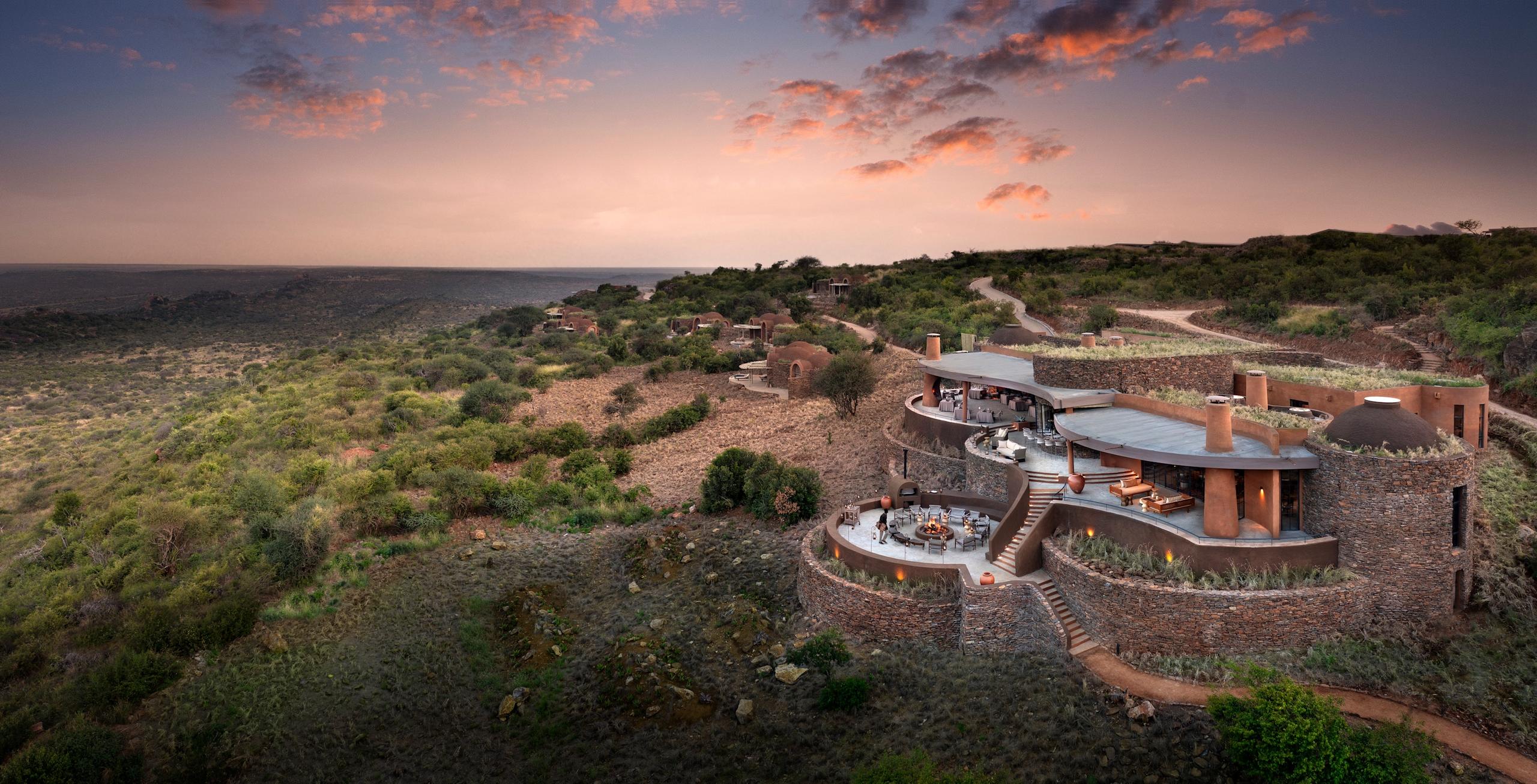
There are lodges that place you in the bush, and then there are lodges that make you feel as though the bush has quietly rearranged itself to accommodate you. Mwiba Lodge, set on a private concession bordering the southern Serengeti, does exactly that. It’s a sanctuary of ancient granite boulders, desert-rose trees, and soft, effortless luxury — all suspended above a landscape where wildlife drifts past as naturally as weather.
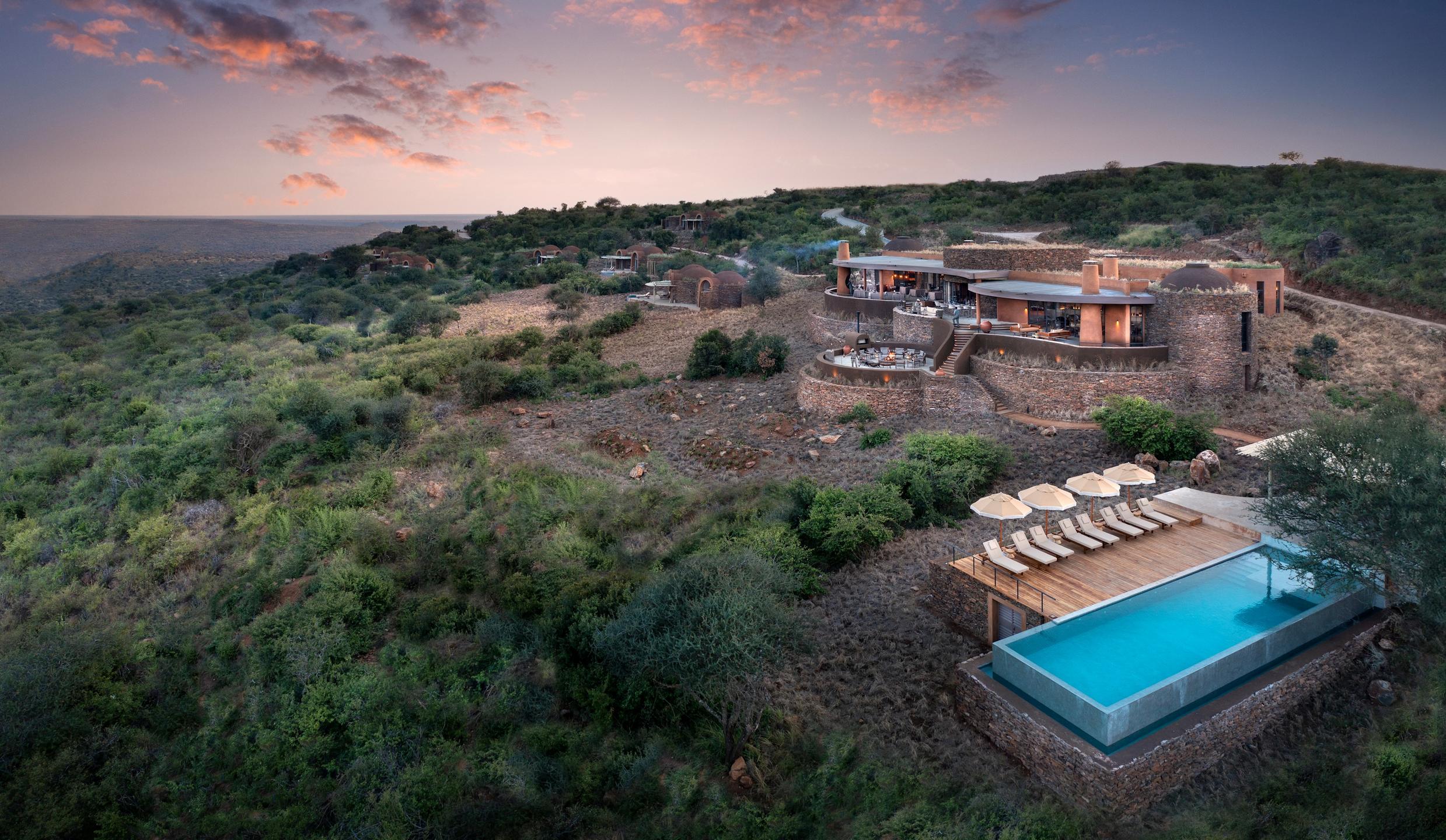
Mwiba’s architecture is a masterclass in restraint. Timber decks stretch between giant boulders, suites float above the riverine canopy, and the interiors lean into earth tones that feel lifted from the soil itself. Nothing shouts. Nothing intrudes. It’s as if the designers asked the land for permission, and the land gave a gentle nod.
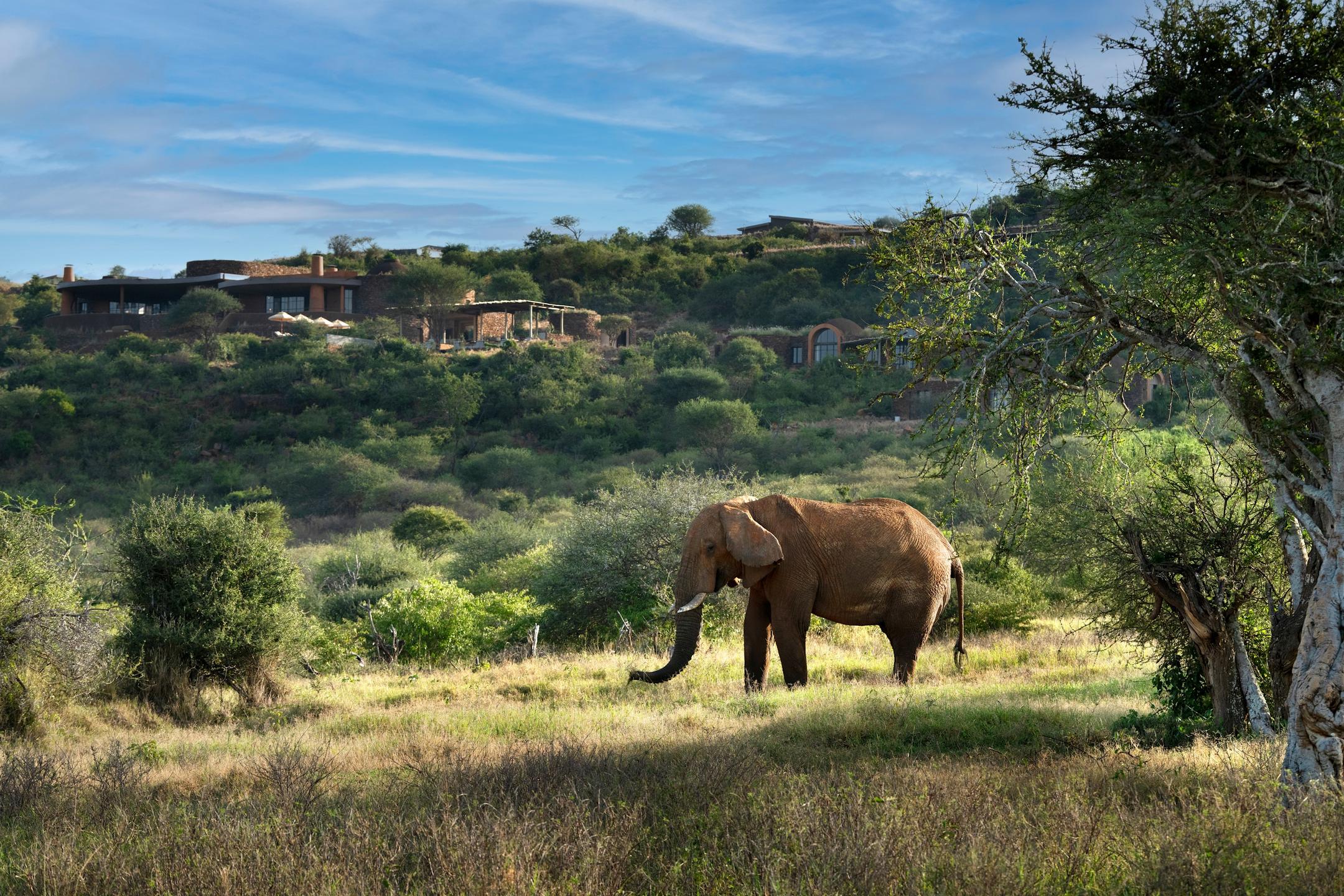
The concession is vast — 130,000 acres of rolling hills, rock outcrops, woodlands, and secret springs. This is the Serengeti without the rush, a private universe where lions pad through the acacia shadows, leopards slip between granite slabs, and elephants wander through the corridors of light that open at dawn. In season, migratory herds move across the reserve like shifting weather; even when the plains fall quiet, Mwiba’s year-round water sources pull life in from every direction.
Safari days here favour depth over speed. Walk with expert guides among ancient kopjes, sit quietly at natural springs as kudu and zebra approach, or follow the soft architecture of tracks along the sand. Drives feel unhurried, as though time itself has stretched to match the pace of the wilderness. And when you return to the lodge, there’s always a sense of calm waiting for you — cool stone, wide views, the hum of the breeze across your deck.
As night folds in, Mwiba becomes a symphony of small sounds: frogs in the riverbed, fire crackling softly, distant hyenas threading their laughter across the hills. Sundowners turn into lantern-lit dinners, and the sky spills more stars than seems mathematically reasonable.
Mwiba isn’t just a lodge; it’s a feeling — of space, of silence, of being held by a landscape older than memory. It’s the Serengeti softened, elevated, and distilled into something quietly magnificent.
Some lodges announce themselves before you’ve even unzipped your bag. Brass fittings, oversized chandeliers, the kind of bath you could launch a canoe in. Mara Nyika is not one of those lodges.
Perched lightly among the flat-topped acacias of the Naboisho Conservancy, Nyika doesn’t so much dominate the landscape as blend into it, like a well-worn canvas jacket. You could walk past its guest tents without even realising you were skirting one of Kenya’s most refined safari outposts. And that’s very much the point.
Naboisho itself is part of the magic: a vast conservancy bordering the Maasai Mara National Reserve, but with far fewer vehicles, more privacy, and a fierce dedication to conservation. Lions patrol the savanna here with the same swagger you’ll see inside the Reserve proper, while cheetahs, giraffes, and elephants all make daily cameos. The difference is that you’re unlikely to be sharing the sighting with a convoy of Land Cruisers.
Mara Nyika leans into this ethos of understatement. The camp’s design is all flowing canvas, polished wood, and gentle curves that feel more like an extension of the trees than an intrusion. Step inside your suite and you’ll find the kind of detail that makes luxury feel effortless: a desk positioned to catch the morning light, copper accents that glow at dusk, a bathtub with a view that doesn’t require explanation.
But perhaps the greatest luxury is what you don’t see. No rush, no crowds, no clutter. Just space — for animals to roam, and for you to think, breathe, and reset. Evenings here are less about theatrical fanfare and more about quiet conversations around the fire, punctuated by a distant hyena call or the shuffle of elephant feet through the grass.
For those who like their safaris with a little narrative arc, Nyika also serves as a gateway. It connects seamlessly with Great Plains’ other Mara properties, so you can trace your own journey across the ecosystem, following the migration if the timing’s right.
Still, you may find yourself reluctant to move on. Mara Nyika is one of those rare places where the definition of luxury isn’t excess, but restraint. Where the whisper carries further than the shout.
Enjoy some extra time at Mara Plains Camp free of charge! You will get one night for free when booking a three night safari at Mara Plains. This special offer is applicable for new bookings for arrivals between 11 January and 14 June 2025, and between 1 November and 19 December 2025. This special offer may not be combined with any other special offers.
Mara Plains Camp is a one-of-a-kind luxury Kenya safari camp. Located in the private 13,300-hectare Olare Motorogi Conservancy, just on the Maasai Mara National Reserve’s northern boundary, you are immersed in one of the most iconic wildlife destinations on the planet.
The community-owned conservancies set a new standard for game viewing on the world-famous East African grasslands. Vehicle regulations mean far more intimate sightings, and you are not surrounded by throngs of day visitors as you might be in other parts of the ecosystem. This part of the world offers some of the best big cat viewing we have ever experienced.
Mara Plains Camp is ideal for those seeking a luxury Kenya safari, as this intimate Great Plains Conservation Réserve-Collection safari camp offers you the finest in wildlife viewing paired with the absolute best in safari hospitality and wildlife guiding.
The Olare Motorogi Conservancy hugs the northern border of the Masai Mara National Reserve and is known for its high concentration of wildlife and for the fact it only allows five safari camps to operate within its borders. Mara Pains camp lies hidden among the lush green forested banks of the Ntiakitiak River. This tiny camp in the wild is unforgettably luxurious and inviting. It allows its guests to get remarkably close to nature without sacrificing comfort.
Staying at one of the Masai Mara conservancies has countless benefits, not just to you the safari traveller… but also to the local Maasai community, the lands and local wildlife. The arrival of each safari travel, which is limited to a small number at any given time, contributes to programs benefiting the Maasai people. It also contributes to the conservation of the area and to the employment of Maasai staff, guides and trackers. By staying at Mara Plains Camp you are in fact helping to better the lives of the Maasai who have lived on these lands for generations and contributing to the conservation of the lands and the wildlife roaming them.
Mara Plains Camp is a member of Great Plain Conservation. This initiative is dedicated to protecting endangered species and supports Kenyan initiatives such as the Maasai Olympics. Great Plains Conservation also supports conservation education by investing in kids’ camps and supports local female-owned businesses through sale of their handiwork in the camp’s bush boutique. The conservation program has also planted more than 2000 trees in the Masai Mara. This was done in an effort to help regenerate the ecosystem and bring back indigenous trees to the Mara Landscape
As you near the camp you will see the first safari tents appear amidst a thick forest along the Ntiakitiak Riverbend. After crossing a bridge across the river and climbing a few broad steps, you’ll look out over an endless horizon speckled by flat-topped acacia. The camp’s décor and design pay homage to the look and feel of Eastern Africa. A touch of Swahili heritage can be found in the lodge’s large wooden doors originally from the island of Lamu. There are also occasional splashes of red in the décor which are reminiscent of the great Maasai chiefs and warriors. The rich leathers, brass and copper used in the campaign-style furniture give the camp a very lavish, yet warm and comfortable atmosphere. During your stay you’ll be treated to delicious home-cooked cuisine, lovely fine wines and tasty cocktails. The camp is made up of a total of seven safari tents and can accommodate a maximum of up to fourteen guests at any given time.
Each of the seven traditional safari-style tents are raised on decks and feature marquis ceilings. Their muted tones make them blend into the countryside beautifully and each tent enjoys sweeping views of the savanna in the distance. The safari tents feature a comfortable king-sized bed or two twin beds, a sitting area, rough hewn wood floors, thick Lamu wood doors, en-suite bathrooms with lovely deep copper freestanding tubs and walk-in showers, a writing desk, safe and complimentary WiFi. You will also find one pair of Swarovski HD binoculars and a professional Canon camera body and lens kit for complimentary use. Families with children 6 years and older are also welcome at the camp and are welcome in the designated family suite. These tented suites feature two bedrooms, one with a king-sized bed and the other with a twin bed. The family suites have a common lounge area and a private verandah overlooking the savannah.
Activities at Mara Plains Camp
Mara Plains Camp has a very comprehensive set of activities for you to choose from during your stay. For starters, every safari drive (during prime sunrise and sunset hours) or bush walk will be a memorable one thanks to the camp’s professional Maasai guides that will be there to accompany you. The camp will also offer you the opportunity to enjoy lovely gourmet bush breakfasts or lunch in a scenic location in the wild to make your day extra special. Thanks to the wide variety of bird species in the area (over 300!), you’ll also have plenty of opportunity for birdwatching either during a bush walk or while relaxing at camp. Another great way to relax when back at camp is to enjoy one of the camp spa’s relaxing massages. To get a taste of local culture and traditions you’ll have an opportunity to meet the Maasai during a visit to a local manyatta (Maasai village). For a very high-flying safari adventure you can also choose to go on a hot-air balloon safari flight at an extra cost.
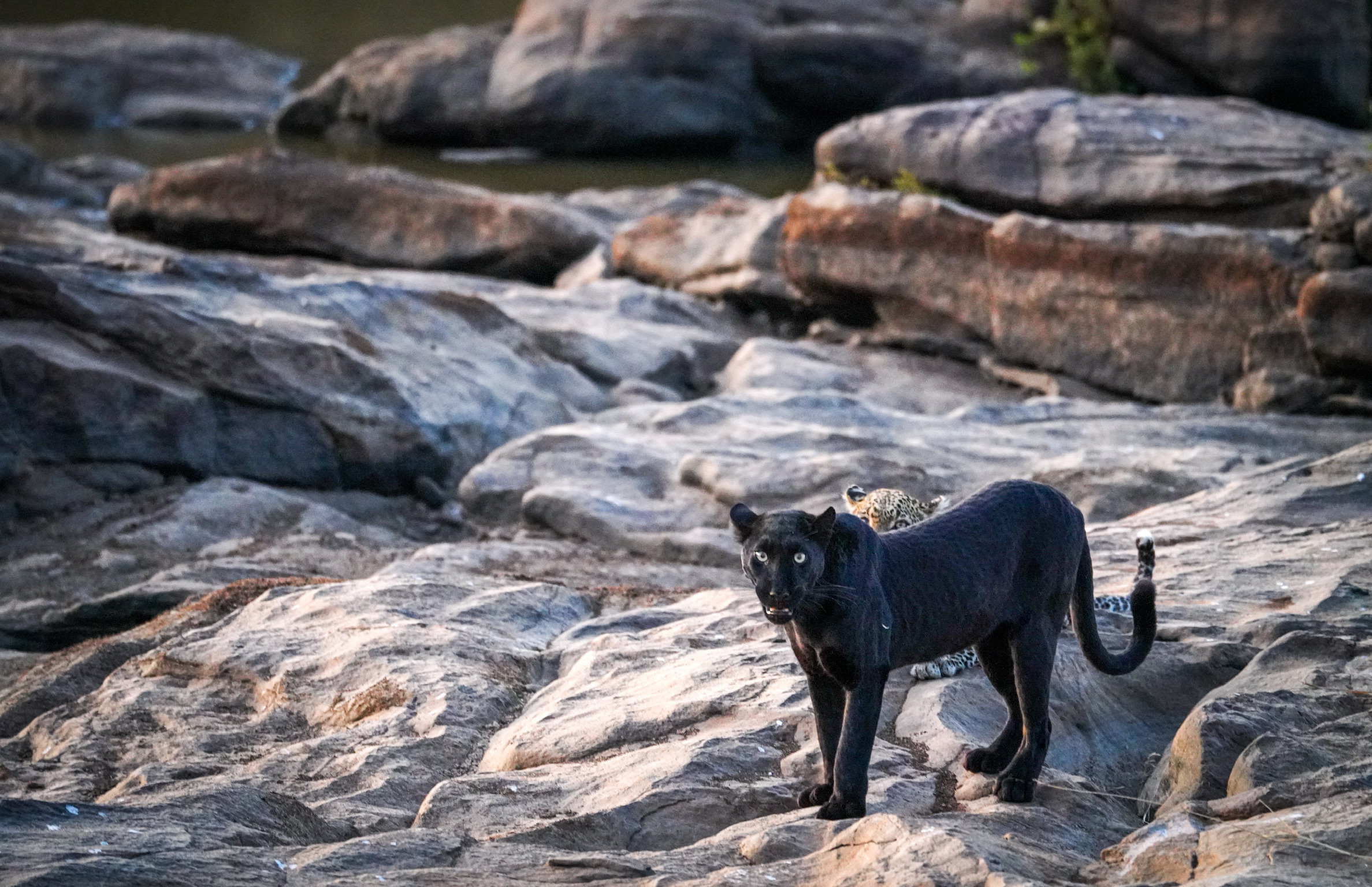
The Laikipia district has risen to the fore as a prime safari destination in recent years due to the consistent sightings of the black leopard Giza.
This relaxed female splits her time between two sides of the Ewaso Narok river, and it is on the northern bank where &Beyond have built their stunning new lodge Suyian.
The lodge offers an array of adventures, allowing guests to create their perfect day in this conservation haven. Activities include day and night game drives, walking safaris, camel and horseback safaris, active ranching tours, and fishing. Experience local culture through village visits, or enjoy outdoor yoga, scenic helicopter flights, wellness treatments, and riverside picnics.
Nestled within a 44,000-acre wilderness, the lodge overlooks the Rock Sanctuary, a mesmerising landscape of undulating granite kopjes steeped in history, including ancient rock art. With only 14 rooms, this tranquil retreat ensures exceptional privacy amidst expansive plains and dramatic boulders. Guests enjoy sweeping views towards Mount Kenya.
Home to over 100 types of mammals, plus numerous endangered and non-endangered species, Suyian Conservancy’s variety of compelling landscapes, which includes grassland, savanna, rocky outcrops (or kopjes), dense Vechellia woodland, plus more than 16 km (10 mi) of river frontage, offers unforgettable wilderness views and up-close wildlife sightings. A hidden gem within northern Kenya’s Laikipia region, the conservancy houses one lodge, Suyian Lodge, named after the African wild dog in the local Maa language.
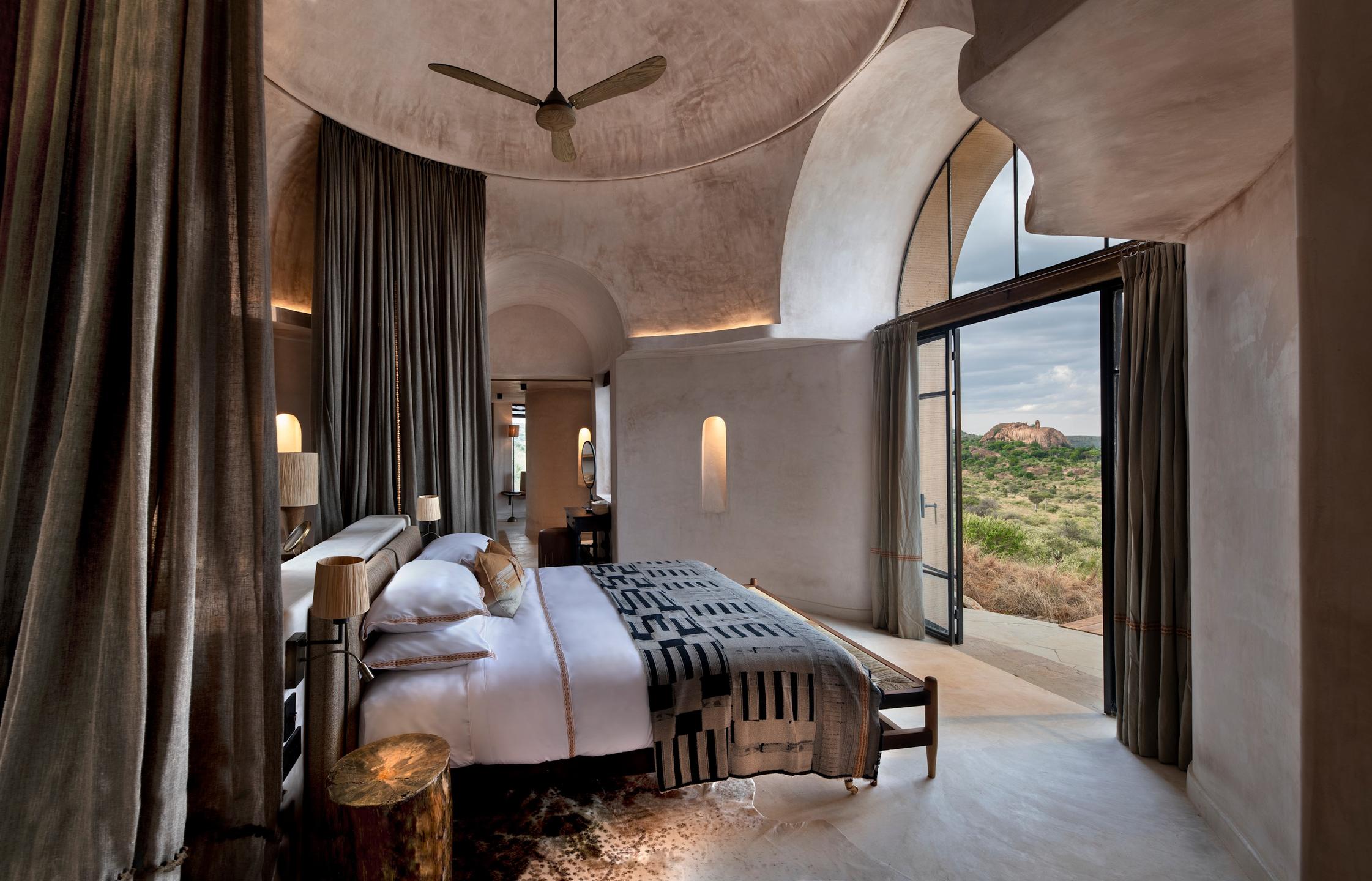
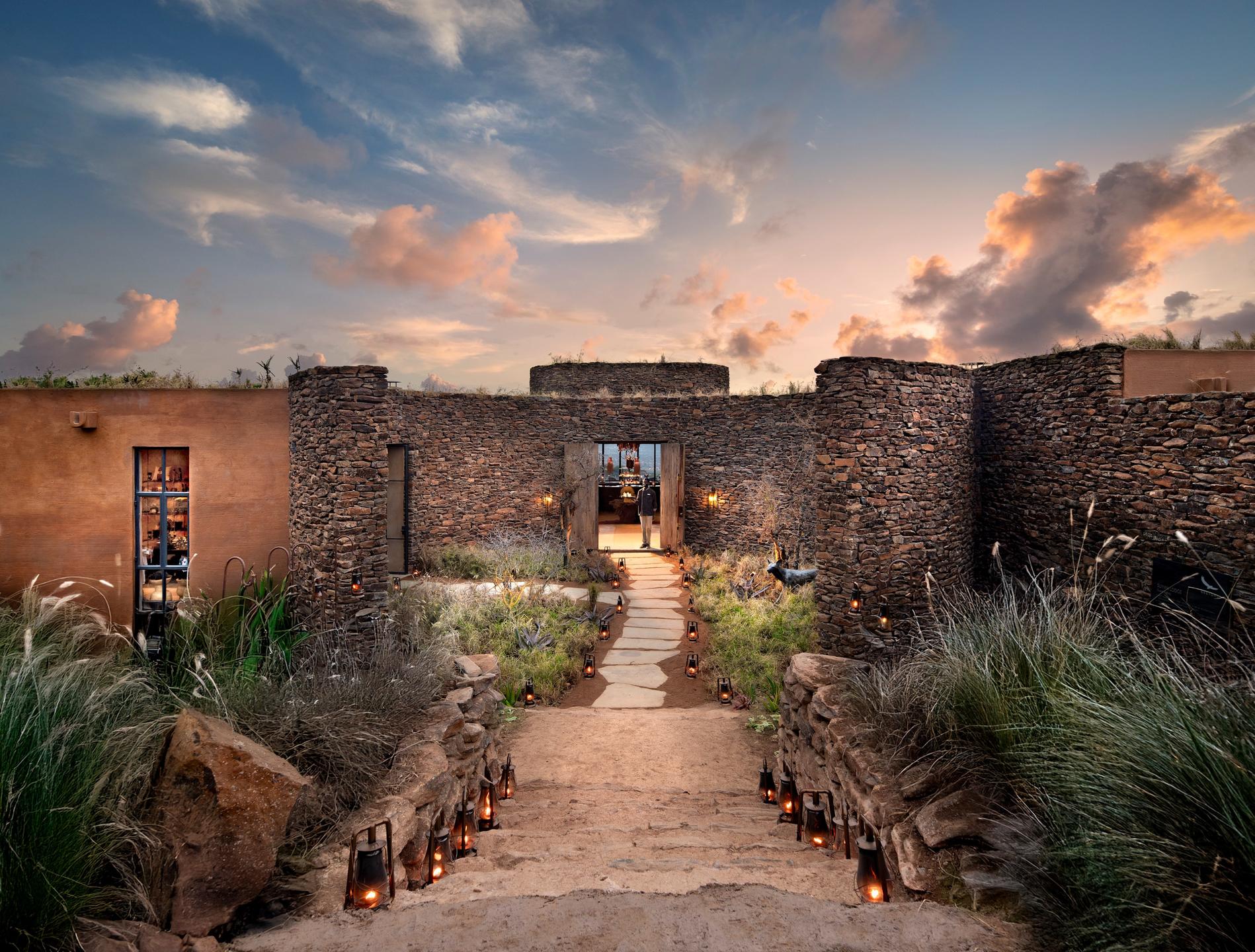
A sculptural structure of architectural brilliance, the lodge draws inspiration from its unique surrounds and its rounded appearance with plant growth atop mimics the region’s ancient Rock Sanctuary and the robust plant life that lives in between the granite edges. A harmonious blend of raw, earthy Africa materials with a contemporary flair, the lodge reflects the Afro Wabi-Sabi sentiment of taking pleasure in the transient nature of earthly things. Subtle cultural touches inspired by the local semi-nomadic Samburu tribe infuse with modest luxury while mottled undertones pay homage to the region’s most cherished wildlife, such as the rare African wild dog and elusive black (melanistic) leopard. Rich textures and colours enhance the lodge’s understated yet sophisticated feel, and the majority of the furniture and finishes are locally sourced and crafted by Kenyan artisans.
The lodge’s guest area echoes the flow of the kopjes across the valley, offering the perfect vantage point for viewing the conservancy’s incredible habitats along with the abundance of wildlife that calls it home. Accessed by a winding stone path, the lodge’s entrance courtyard opens onto a large circular, central bar that showcases breathtaking views of the open plains, while intimate, softly lit areas create cocoon-like spaces for guests to escape.
Each spacious Suite, constructed as if part of the unusual natural rocky formation, blends seamlessly into its surrounds. An outdoor terrace, featuring a private plunge pool and viewing deck, boasts magnificent sunrise views for early risers.
Previously, there were limited options if one wanted to seek out a black leopard, but Suyian now offers a supremely comfortable stay in an area hitherto relatively unexplored by safaris.
With over ten black leopards documented in the area by trail cam, who knows what other delights will soon form the mainstay of Suyian’s game viewing.
Get in touch through info@iconicafrica.com to start planning your trip…
Sala’s Camp first hosted guests in 2004 and has become renowned for delivering an authentic Masai Mara safari experience with exceptional personalised service and fine dining.
Seamlessly combining a traditional ‘under canvas’ safari experience with contemporary comfort, including private plunge pools and glass fronted tents, Sala’s Camp offers an unforgettable and magical Mara retreat.
Owned and operated by The Safari Collection, it can be booked for the night or as part of a complete tailor-made safari. The magic of a Kenya safari doesn’t end with Sala’s Camp. The Safari Collection is the proud owner of four distinct lodges in some of Kenya’s most spectacular locations, including Giraffe Manor in Nairobi, Solio Lodge in Laikipia, Sasaab in Samburu and Sala’s Camp in the Masai Mara.
Sala’s sits in one of the best locations in the whole of the Masai Mara National Reserve. Intimate and secluded, it is nestled along the tree lined banks of the Sand River in the southern tip of the reserve. One can literally look out from your room to the Tanzanian border only a kilometre or two away, with the Serengeti National Park forming the backdrop with its rolling, grass-covered hills. This also means that it is one of the first camps in the Mara to witness the annual wildebeest migration which comes pouring in from June to September each year. Major crossing points on the Mara River are only an hour’s drive away, and the Sand River itself, right on your doorstep, regularly sees herds streaming over in their thousands
With teeming wildlife year round, Sala’s game drives never disappoint. Lions in particular are plentiful in this part of the reserve, and being far from the entrance gates means that you will enjoy regular sightings all to yourself. Cook-out breakfasts and sundowners out on the savannah make for magical memories. The landscape is spectacular, the birdlife impressive and the feeling of being totally immersed in nature cannot be beaten.
Enjoy world class bird watching, spectacular star-gazing and epic sundowners on the savannah with our vintage mobile bar. When you’re not out discovering the wonderful wildlife there’s plenty to do back at camp, including nature walks and games in the Sand River when the water is low enough.
Kenya’s Masai Mara is home to one of the largest overland migrations of animals in the world. Between June and September each year, 1.5 million wildebeest, 500,000 Thompson gazelles, 200,000 zebra and thousands of other antelope cross the border into Kenya from Tanzania on their seasonal migration. Drama, dust and danger abound. Guests of Sala’s camp who are lucky enough to catch this famous spectacle are treated to one of the greatest shows on earth. Witnessing the Great Migration is a real bonus to an already mind-blowing Masai Mara safari experience. Searching for greener pastures, exact movements of the wildebeest herds change each year. As they enter into Kenya however, crossing the Mara River is one path they cannot avoid. Famous for providing documentary-worthy footage, river crossings are a tense spectacle. Predators lurk and the journey is treacherous. Be sure to have your camera at the ready as you never know what might happen.
The word ‘Mara’ comes from the Maa word for ‘spotted’ (Maa being the official language of the Maasai people). The name comes from the spotted appearance of the land from above, as it is all dotted with Acacia and Ballanites trees. The professionally trained Maasai guides at Sala’s Camp are passionate and knowledgeable about all the animals, plants and trees you will encounter on safari and offer fascinating insights into the ecosystem as well as their traditional culture.
T
At Sala’s you will feel like you have the great plains of the Maasai Mara all to yourself, a rare thing in a conservation space which of late has started to gain the reputation for crowds.
This almost untouched part of Kenya will provide almost everything you could want on an East African safari.
Get in touch with us through info@iconicafrica.com to find out more about Sala’s Camp, the Safari Collection, and the endless plains of the Maasai Mara and Serengeti in general…
We’ll be going a little deeper into each offering in the Entara portfolio – one of our new favourites – in the coming months, but for now we’ll simply present a brief overview of what to expect from one of Tanzania’s most underrated safari offerings.
In terms of exceeding expectations, Entara does it in spades…
The group was formed by a group of like-minded souls that found a common ground.
Artists and safari guides, hoteliers, chefs and entrepreneurs – an eclectic tribe bound together by bonds of deep passion and commitment to Africa’s wilderness and its people. They learned through years of hands-on safari operation that the safari experience means nothing without that unbridled and raw connection to wildlife and wilderness. The soul of the safari experience can’t be conveyed through fancy décor and glass sealed rooms. It lives through a sense of adventure and a rekindled sense of wonder, through shared experiences and new friendships. The whole team endeavours to convey this sense of wonder, passion and deep connection to wilderness and wildlife.
Their five intimate lodges and camps are settled within the natural wonders of each region without sacrificing comfort and service.
The elegant Katambuga House with lush gardens and a pool in Arusha is an oasis of tropical tranquility and a destination in its own right.
Not every flight into or out of Tanzania is at a convenient time to connect to the safari landscape; sometimes an overnight just to get your feet on the ground or decompress before heading home is necessary, and Katmbuga House, only a few minutes drive from Arusha airport, fills this role wonderfully. Simple and intimate, it is the perfect jump-off point for safari, only a few hours drive from Ngorongoro, Tarangire National Park and some of the Rift Valley Lakes…
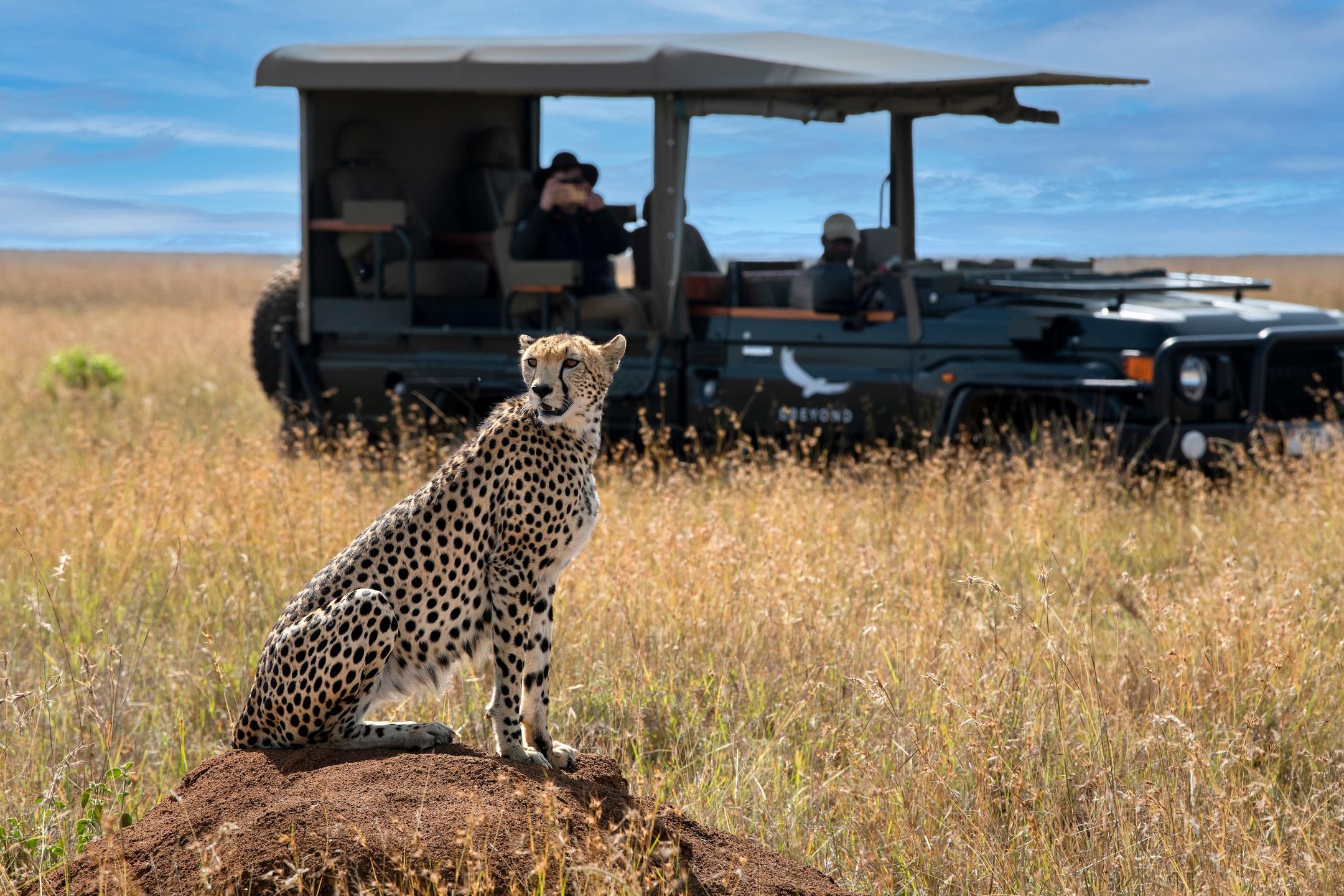
Olmara Camp, home of the cheetah and a wildlife photography dream location, is in the remote Ngare Nayuki River Valley and provides a base of luxury tented suites that merge seamlessly into the environment of acacia groves, grasslands and rocky outcrops.
Some of the best big cat viewing to be found in the world is right here, as the short-grass plains provide perfect hunting conditions, and rocky outcrops are a photographers dream, providing wonderful vantage points for predators to perch atop of.
Being a more remote concession, this camp affords guests an exclusivity to sightings that is hard to come by anywhere else in the Serengeti.
Kisima Ngeda Camp, nestled in a fever tree forest with its palm-thatched tents, offers a further wilderness adventure through the overnight Ombako Private Fly Camp that is set up on the eastern shore of Lake Eyasi for a night under the stars.
This camp provides a remarkable opportunity for a cultural deep-dive, as from the fly camp one can join local tribesmen on a traditional hunting expedition. The Hadza are one of the only tribes on earth that still pursue a hunter/gatherer lifestyle, and Kisima Ngeda offers guests a rare window into their world.
The Esirai Camp is luxuriously light and moves alongside the grazing Wildebeest as they make their epic 600km crossing of the vast Serengeti plains, offering an unrivalled African safari adventure.
The camp shifts between northern and southern locations depending on the season, with the southern camp allowing guests access to the wildebeest calving towards the Ndut Plains area, and the northern camp presenting the opportunity to see one of the famed crossings of the Mara River.
Finally, Olkeri Camp is home to great Elephant herds, and replete with views of woodlands, rocky hills, and shaded by gnarled old-growth Baobab and Acacia, offering the ultimate freedom to explore day and night.
This elegantly simple camp is set in the Randalin Wildlife Conservancy, contiguous with the Tarangire National Park. Predators abound here and the birdlife is sensational. Enjoy bush-walks from the camp or an evening sipping cockktails under one of the hundreds of baoba trees that dot the landscape.
The protection of African wildlife and their habitat is at the core of Entara Lodge’s ethos and operations. The camps and lodges are to be found in some of the most bio-diverse areas on the African continent and Entara recognises the importance and sensitivity that goes with this custodianship within the regions.
Get in touch with us through info@iconicafrica.com to find out more about Entara and the diversity of experiences they offer…
In the heart of Kenya lies Laikipia County, slap bang on the Equator and one of 47 counties in the country.
The county encompasses the high, dry Laikipia Plateau, a wilderness of thornscrub, rocky outcrops, valleys and rivers, with Mount Kenya rising imposingly in the distance to the south-east, just beyond Laikipia’s borders.
Over the last few years, this previously unobtrusive part of Kenya has crept into safari prominence. Not because of its wonderful wildlife density and diversity, but because of a very special population of leopards roaming its hills; melanistic ones.
Although long known about by the locals, they were essentially ghosts in the night; glimpsed from afar by a villager tending his flocks or heard calling in the distance, passing themselves off as one of their spotted cousins. It was not until Will Burrard-Lucas famously camera-trapped an individual in 2018 that a spotlight was finally shone on the region and the unique gene pool it contained.
Local researchers have shown that approximately 10 melanistic leopards (or black panthers, if you will) roam the greater Laikipia region, but it is one individual that has captured the world’s attention with her relaxed demeanour and accessible territory; Giza Mrembo – the Beautiful Darkness in Swahili.
This young female was first seen fleetingly as a young cub around four years ago, but as her mother is quite relaxed around vehicles, Giza herself become habituated within 18 months, and these days is completely relaxed around game viewing vehicles.
Photographic opportunities are plentiful as a result, but it is certainly not just the chance of seeing a black leopard in the wild that one visits this area for.
Elephants make their stately way through the acacia trees and dik-diks (one of the world’s smallest antelopes) peer out from almost every bush. These diminutive ungulates are the main food source of Laikipiia’s leopard population, and their importance in the ecosystem cannot be overstated. The striking vulturine guineafowl is a common feature in the area as well.
Safari options in the immediate area are varied, but the best option if one wants to stand a good chance of viewing and photographing Giza, is one of the Laikipia Wilderness Offerings; River Camp, Wilderness Camp itself, or the newly established Palm Camp, found a little bit upstream on the Ewaso Narok River.
Wilderness Camp, perched up on a hillside, overlooks the whole stunning vista. Giza – and other leopards – are spotted consistently from the hillside above the camp, and a beautiful lookout deck is perched on top of the hill from which some of the most spectacular sunsets in Africa can be observed.
River Camp sits down below and its guests are lulled to sleep by the bubbling of river water over the rocks. Elephants regularly come to drink at a culvert opposite Room 5.
Venture a few kilometres upstream and you find Palm Camp, Laikipia Wilderness’s newest offering, only opened in the second half of 2024. The simple yet elegant rooms stay cool even on the hottest days thanks to their intricately woven palm-frond roofs.
Cuisine at the camps is simple and delicious; coffee and muffins on morning drive with the occasional bush breakfast if you are to be out long. Brunch is a wonderful mix of whatever the chef may feel like on the day, dinners are a similar selection of local and international flavours. Mealtimes are completely up to you, depending on the safari schedule you have discussed with your guide.
The guides at the camps are very experienced. They operate in an incredibly nuanced environment, and believe us, they know how to find leopards, particularly Giza the black panther. Well versed in her habits, they have a knack of being in the right place at the right camp.
Laikipia is well and truly on the map for its black leopard sightings these days, but there is far, far more to it than one cat. A whole world awaits discovery in a beautiful, diverse and remote landscape.
If it is true bucket-list stuff that you are after, look no further. The black leopard of Laikipia will truly take your breath away, as will the rest of it…
It might seem strange to head out on game drive, spend some time viewing a lion pride sleeping int he shade, then drive round the corner and bump into a Maasai herdsman out walking with his cattle.
Yet that is the reality in much of rural Africa – the co-existence of wildlife and people. And if it is to be a peaceful and productive one, conservancies are an excellent way to maintain it.
The last thirty years in Africa have seen the evolution of the conservancy concept, which has spread fast.
Conservancies in Kenya in particular are regarded as a way of involving local communities with wildlife conservation. The purpose of a conservancy is not the same as a nationally protected reserve like a park, and they do not replace these area, instead they complement them.
Conservancies provide a range of local values, including clarifying and firming up local land tenure over pasture and grazing areas, improving security – both for wildlife and land-owners – through networks of community scouts and communications infrastructure and law enforcement bodies, and “providing a legal structure for communities to enter into third-party joint ventures with tourism investors in order to generate revenue from wildlife”.
Conservancies in Kenya are represented by Kenya Wildlife Conservancies Association “who work with landowners and communities to sustainably conserve and manage wildlife and their habitat outside formal protected areas to perpetuate Kenya’s heritage.”
Whereas historically wildlife has been seen as a nuisance by both pastoralists and farmers (livestock gets killed by predators and elephants raid crops), and the establishment of restricted wildlife areas as prohibiting access to good grazing grounds, the establishment of conservancies essentially sees local landowners and local communities benefitting from tourism dollars whilst still maintaining many land-use rights, and ultimately coming to see wildlife as a positive.
Kicheche Wildlife Camps, who operate in three conservancies that border the Maasai Mara (Naboisho, Olare Matorogi and Mara North) have this to say about their trust in the conservcancy system:
Keeping with the commitment of The Long Run’s 4Cs – Conservation, Community, Culture and Commerce – we collaborate with the local community via the Kicheche Community Trust to support traditional and sustainable ways of living that are in harmony with wildlife and the environment.
All guest donations and bednight contributions to the Kicheche Community Trust are channelled into projects impacting its conservancy communities. These then have a significant impact on women’s empowerment in particular. The Trust’s efforts and passion evolve around four pillars: Education, Health and Family Care Community Empowerment, Environment and Conservation.
With an ever expanding number of conservancies across Kenya that provide safe havens for wildlife as well as invaluable corridors for its free movement between established protected areas, the system seems to be the way forward in areas where it can be implemented…
The Masai Mara – in particular the Mara Triangle between the Mara River and the Oloololo Escarpment – is most famous for the Great Migration that passes through each year, around July/August, yet what many don’t realise is that the game viewing is spectacular no matter what month you visit.
The lions, elephants, buffalo and cheetahs that call the area home don’t move with the migration; they are resident, and can be found whatever the season.
Nestled in indigenous forest at the base of the escarpment sits &Beyond Bateleur Camp.
It is situated in the Kichwa Tembo private concession, contiguous with the Masai Mara. Meaning ‘head of the elephant’ in Kiswahili, Kichwa Tembo consists of private land leased from Maasai landlords and situated in the remote western Mara, almost exclusively explored by &Beyond guests. In addition to its the excellent year-round concentration of wildlife, Kichwa Tembo lies directly in the path of Africa’s spectacular Great Migration, and perfectly positioned to maximise the viewing of the reserve’s wildlife.
Guests can almost exclusively explore this area on a game drive or on foot, as well as enjoying access to pristine outdoor dining locations.
Comprised of just two intimate camps of nine Luxury Tents each and a Luxury Family Tent, Bateleur Camp retains a wonderful sense of intimacy; each with its own private butler and housekeeper reflecting the ambiance and glamour of Kenyan explorers of old.
Slip into a world of hardwood floors, polished silver and copper bathtubs juxtaposed against the romance of the open Mara plains, with their abundant herds of game. Beautifully handcrafted artefacts, fine antiques, leather buttoned Chesterfield sofas, books, and crystal and candlelight adorn the comfortable sitting and dining areas, making you feel like you have slipped straight into a 19th century safari.
Cooling pools in each camp provide comfort in between stimulating game drives that can be so varied in their offerings. Grasslands, riverfront or the escarpment itself all offer something different in terms of setting and species.
On the culinary side, delectable cuisine is served in memorable settings – often beneath the stars – and bush breakfasts and romantic sundowners offer an unforgettable African experience. Adventures at Bateleur Camp include twice-daily game drives, including spot-lit night drives on which some of the more elusive nocturnal creatures might be encountered. The camp also offers a range of additional activities such as bush walks, hot air balloon safaris and community excursions, and for the fitness-minded a well-equipped gym and wellness treatment centre await.
The Masai Mara is unforgettable due to the abundance of wildlife and spectacular landscapes. This is the quintessential African safari experience, where travellers can expect to encounter the Big Five and observe thrilling predator interaction.
With the Kitchwa Tembo airstrip only a few minutes drive from camp, and flights from Wilson Airport in Nairobi only taking an hour, Bateleur Camp is supremely accessible, allowing guests an easy trip to the greatest wildlife show on earth.
Get in touch through info@iconicafrica.com to find out more about &Beyond Bateleur Camp, and other East African safari offerings…
A million wildebeest moving as one extended carpet of biomass is quite something to behold.
Throw in a quarter of a million zebras, thousands of Thompson’s gazelles, elephants moving through the throng and attending predators dotting the surrounding termite mounds, just waiting for an opportunity to strike, and you truly do have one of the greatest wildlife spectacles on earth.
Yet as the name suggests, this is a migration. The herds migrate. They travel long distances, following the rains and resultant good grazing. After giving birth in the southern Serengeti near the Ngorongoro Conservation Area, they journey on a clockwise loop through up the Serengeti to the Masai Mara in Kenya, before heading back south again and repeating the process.
Although there might be yearly variations in exactly what weeks the herds move in because of what rain has fallen, for the most part the migration is fairly predictable, and knowing where the wildebeest will be and when is obviously quite important if your safari is meant to be timed to see them. Arriving in the Ndutu Plains area in July will only get you a view of a couple of resident wildebeest bulls, while one million of them are fording the Mara River 150km to the north. Timing, it seems, is everything.
Here then, is where to expect the herds at what time of year…
January – March
At the start of each year, the migration will be ending its southward journey, moving along the Serengeti’s eastern edge and into the Ngorongoro Conservation Area. The grazing here is rich, providing the herds with the best conditions for raising their newborn calves.
Although the migration is essentially one continuous circuit, it seems reasonable to refer to the wildebeests’ birthing season as the start of the journey. Around late January or February, the herds occupy the short-grass plains that spread over the lower northern slopes of the Ngorongoro Crater highlands and around Olduvai Gorge. Almost half a million calves are born here within a period of two to three weeks, or nearly 8,000 each day.
The abundance of vulnerable calves provides a glut for the predators, so the action is non-stop as lions, cheetahs and hyenas all feast on the bounty.
April – May
After birthing their young, around April the wildebeest herds start to move north-west toward the newer grasses of the central Serengeti, accompanied by thousands of zebras and other antelope. By May, long columns of wildebeest stretch for several kilometres as the animals start to congregate near the Moru Koppies, a scenically stunning area of the park. Mating season begins toward the end of May and wildebeest bulls compete for rights to the females, all the while as the herds continue to drift northwards.
Gradually, the movement gathers momentum and the wildebeest start to mass in the Serengeti’s Western Corridor. A number of seasonal camps operate in this area, which open only at this time of year to take advantage of the great migration’s passing. The herds form in huge numbers along the pools and channels of the Grumeti River, which they have to cross in order to continue on their journey.
The Grumeti is much shallower than the Mara River so does not deliver quite the same spectacle, but the crossings are dramatic nevertheless. This can be a great time to visit the region as it is still deemed to be low-season, so generally offers excellent value for money.
June – July
As June moves into July, the hundreds of thousands of wildebeest and zebra continue to head north along the western edge of the park toward an even riskier barrier then the Grumeti: the Mara River in the north of the Serengeti. These river crossings are arguably one of the most exciting wildlife events on Earth. They usually begin at the onset of high season in July, but timing all depends on rainfall and when the herds arrive in the area. It can vary by a few weeks either way but in general, late July is prime.
The herds will typically be found in the Northern Serengeti and over the border into Kenya’s Masai Mara.
At this time of year, daily river crossings can be seen at both the Mara and Talek rivers,
August – October
Once the herds have negotiated the river crossings they are generally spread throughout the Masai Mara’s northern region, with plenty of them remaining in the northern Serengeti. Years with heavy rains that result in fast flowing rivers take their toll on wildebeest numbers, but even in years of relatively gently flowing water, the crocs have an impact, as well as the resident lion prides. There is no single crossing: at some spots, there are just a few individuals fording the river, while others see thousands of animals moving without break for hours.
By September to October, the main chaos has ended and the migrating columns have moved eastward.
November – December
After the East African short rains in late October and early November, the wildebeest head south from Kenya and into the eastern edge of the Serengeti past Namiri Plains, an area renowned for incredible cheetah sightings. By December, the herds are spread throughout the eastern and southern reaches of the Serengeti, back down towards the Ngornogoro area (although they don’t actually enter the crater itself).
In the early months of the new year, the grasses in the deep south of the Serengeti are lush after the rains. This attracts the wildebeest as well as countless other plains game. The cycle commences as the calving season starts once more.
That is the great migration in a nutshell. Although witnessing the crossings in the dry season is the spectacle it is renowned for, the truth is any time of year can be spectacular.
With multiple accommodation options to choose from – both permanent and mobile – there is something for everyone.
Don’t wait to start your enquiry. Get hold of us through info@iconicafrica.com, and let’s start planning your migration safari…
Although Elephants are prevalent in many of the more famous game reserves across Africa, they are seldom the reason to visit a specific park or area. The spotlight is generally reserved for the big cats or some other nuanced factor like a rare species or specific behaviour that occurs there. A lot of the time, as spectacular as they are, the presence of elephants can almost get taken for granted by visitors to Africa, and the viewing of them seen as a guaranteed byproduct of a safari. Yet there is a tremendous amount of variability in elephant populations across the continent. In some areas they are scarce and nervous of vehicles, in others they are massively overpopulated, sometimes their presence is seasonal, and they are hardly to be found during certain months of the year…
If it is elephants that you want to see, it is imperative that you know where the best places are, and what to expect once you are there.
Here a few of our favourite places to view elephants in Africa…
MANA POOLS
As unique an elephant experience as you’ll get, if you visit between June and October. The local elephant population congregates along the Zambezi River to take advantage of the availability of water at the height of the dry season, and to feed on the pods of the Ana Trees that fall to the ground during this time of year.
The true magic of Mana Pools lies in the freedom guests have to go on foot whenever they wish (although the uninitiated should only do so when accompanied by a professional guide). Mana Pools is the only National Park that allows its visitors to alight from their vehicles and approach wildlife whilst walking.
As a result, the local animals have grown used to seeing humans on foot, and as long as respectful distances are maintained, accept people’s presence.
Being 40 metres from a large African Elephant bull when on foot is just as if not more exciting than having one brush right past your safari vehicle.
With amazing accommodation options on some of the more exclusive concessions on the east and west sides of the park, as well as a couple right in the heart of it, Mana Pools is there to explore…
AMBOSELI, KENYA
The true Giants of Africa live here. Famous super tuskers like Craig and Tim – old bulls carrying some of the biggest ivory in Africa – call this ecosystem their home, and what could be more iconic than an enormous elephant bull with a backdrop of Africa’s tallest mountain, Kilimanjaro?
There are few images that are as quintessentially Africa as this.
Photo Credit: Jeff Wendorff
Between the Amboseli and neighbouring Tsavo ecosystems there are a number of super tuskers (elephants classified as carrying tusks of over 100 pounds) with even more so-called emerging tuskers – younger individuals who are on track to carry enormous ivory – so one’s chances of seeing a truly spectacular elephant are high.
Alongside the rest of the resident wildlife like lions, cheetahs and a whole assortment of the weird and wonderful, the Amboseli and Tsavo regions provide some of the best elephant viewing on the continent.
SABI SAND, SOUTH AFRICA
Plenty of relaxed elephants, plenty of lodge options.. The Sabi Sands is one of Africa’s best places to view wildlife. Known particularly for its leopards – the reserve boasts the densest population yet recorded in Africa – this is one place where elephants almost are a by-product of looking for big cats. Non-impactful viewing practices over the last fifty years have resulted in local wildlife populations that are completely relaxed in the presence of a vehicle, and close-up sightings of elephants are commonplace. Being completely surrounded by a herd is not at all unlikely, and an experience like this will quite simply take your breath away.
With a wide variety of accommodation options catering for a range of budgets and needs, the Sabi Sands is an excellent place in which to get cloe to elephants, and at the same time enjoy some of the most spectacular wildlife viewing on the planet…
NAMIBIA
Namibia is one of the most unique places you can see elephants, and one small population in particular.
In the far north-western corner of Namibia lie the Kaokaveld and Damaraland regions, which are home to the fabled desert elephants. These animals have adapted to survive in the harshest environment, sometimes walking round trips of 70km in their search for water.
The lunar landscape is the last place one would normally expect to view elephants, and it is the setting itself that makes sightings that much more spectacular.
There are a few isolated yet luxurious camps tucked discreetly away in this desert wilderness, the guides of which know exactly where to find the herds at different times of year, so despite the elephants being few in number and the wilderness so vast, encountering them is still a likelihood.
Ultimately, elephant viewing in Africa is as diverse as the continent itself, and our feeling is that it almost doesn’t count as a safari unless elephants are part of it. Almost…
Get hold of our safari consultants through info@iconicafrica.com to start planning your elephant safari…
Black Panthers. An idea from the Jungle Book that many people associate only with storybooks, and few believe actually exist. Those that do know that they are out there more often than not believe them to be a species apart, when the truth is they are simply melanistic versions of a leopard or jaguar.
A recessive gene codes for a much higher production of the dark pigment melanin, and an almost black coat is the result. Leopards like this still have their normal rosettes, they are just much harder to see against the infinitely darker coat.
Photograph credit: Will Burard-Lucas
The Laikipia region in central Kenya is home to the highest diversity of mammals in Africa, and like its wildlife, the region is wild. Although it isn’t a national park, a series of private conservancies and ranches maintain its wilderness feel, and these are largely unfenced, allowing animals to roam free between the,. The whole area spans nearly a million acres and the habitat is incredibly varied. It is home to a number of threatened and unique species of mammals found only in Northern Kenya; Grevy’s zebra, Reticulated giraffe, Beisa oryx, zorilla, striped hyena, aardwolf and wild dog.
A melanistic leopard therefore, is simply the cherry on top.
It was a young individual that was first spotted by the owner of Laikipia Wilderness Camp a few years ago, and subsequent camera trap work by photographer Will Burrard-Lucas documented the animal in spectacular fashion.
Photograph credit: Will Burard-Lucas
To this point there have been reports of a number of melanistic individuals in the greater Laikipia region; an encouraging sign that the recessive gene is becoming more prevalent. However, the majority of these cats are unrelaxed; nervous of people and vehicles and very difficult to see or capture on camera.
It is around Laikipia Wilderness Camp that one has the greatest chance of experiencing a once-in-a-lifetime sighting of a black leopard, as the young female there was viewed with her mother for much of her youth, and became habituated fairly rapidly as a result.
For those adventurous enough to venture off the beaten path and explore this lesser known region of Kenya, viewing a black leopard in the wild is a very real possibility. Our strong recommendation is that you are accompanied by a private guide, to assist with photography in particular, as photographing a black animal at night with only a spotlight for light can be a tricky prospect (most of the viewing of the melanistic cat is after dark, when it feels most relaxed).
There are as couple of very experienced photographic guides that we work with, so be sure to enquire as to their availability.
If this unique experience is something you would be interested in, get in touch with us through info@iconicafrica.com. Laikipia Wilderness Camp has limited space and is suddenly a much sought after destination with the appearance of the black panthers, seemingly out of nowhere, so don’t hesitate to start planning your safari…
Wildlife Photographer and Guide James Tyrrell recently visited Angama Mara, perched on the lip of the Oloololo Escarpment overlooking Kenya’s Maasai Mara. He is adamant that walking on to the deck for the first time and taking in the view below him is one of his all-time favourite safari moments.
Read what he had to say in a recent Angama Mara blog post here:
After more than a decade of living and working in the African bush, the truly “Wow” moments are inevitably going to be harder to come by.
Despite retaining the same level of childhood excitement I have always felt when heading out on a game drive or bush walk, it was always going to happen that over the years with a certain amount of repetition (and I hesitate to use that word, since nothing in the bush is ever the same), there would be just the slightest drop off in the impact a sighting would have on me. Actually, I guess it’s more a case of working in the bush for so long means it’s just harder to pick specific sightings out of the literally thousands you will have accumulated over the course of my career, just like Kilimanjaro would be tougher to point out if it was part of a mountain range instead of being free-standing. Maybe not the best metaphor, but it’s the closest I can think of.
The first time I saw a leopard hoist a kill will be indelibly imprinted on my mind for the rest of my days, but my twenty fifth time is a bit harder to zero in on. It’s not that one becomes jaded – not at all – but more that you have an absolute surplus of experiences to choose from, and many of them start to merge into each other over the years.
Having a moment then, in which you know, in the moment itself, that this is going to stay with you forever, becomes a rarity.
Walking on to the Angama Mara deck for the first time was one such moment for me.
I can still go back to it in my head and feel the same sense of wonder and awe. I can still see what the light was doing and how cloud shadows danced on the grassland far below, and I can still hear the air rushing over the white-backed vulture’s wings as it soared past, beneath me.
It’s not often that I am truly at a loss for words, but seeing Africa laid out before me in all its vastness was something that upon consideration would have made anything spoken superfluous.
There’s a surrealism to that view that grips you. It’s almost like a live version of the love-child of Google Earth and the best nature documentary you’ve seen.
When elephants look like ants, the teeming herds of wildebeest resemble a moving carpet and you can make out every little twist and turn in the Mara River in the distance, you know you are somewhere special.
“Moments of Discovery” are one of the first things one learns about when training as a guide. They come in a multitude of forms; from the first time a guest exits their plane to the first time they enter their room, to their first encounter with a lion.
Hundreds of little moments – some more noticeably impactful than others – that aggregate over the course of a safari to create an intangible experiential synergy…
Each one is an opportunity for a guest to reconfirm to themselves – whether consciously or subconsciously – that this, right here, right now, is where they ought to be.
The top guides, lodges and companies in the safari industry – and other industries as well – recognise these moments of discovery as being instrumental in making guests or customers want to return time and time again.
One rare occasions, one single moment of discovery is all it takes for a guest to say to themselves, “I could go home right now, and I’d be happy”. More often than not these are the wildlife sightings normally associated with National Geographic; a leopard hoisting a kill, a wild crossing during the great migration or a pride of lions taking down a buffalo bull in the rain.
Sometimes though, they are something else, and for me, it was walking out onto the Angama Mara deck.
When such a moment occurs before a guest has even gone on safari, you’re onto a pretty good thing.
The view breathes life into your soul and captures your imagination.
A safari lodge that can do that is one that’s always going to occupy a special place in its guests’ hearts.
It’s certainly been a rough year-and-a-half for the travel fundis, and for the industry as a whole. Confined at home for months, then confined to your home country, and even eighteen months in, many of you have been told that a mandatory two-week quarantine period will be enforced as soon as you return home from your overseas sojourn. Not appealing, we know!
But the light at the end of the tunnel is growing brighter and brighter, as seemingly each week another country in Africa opens up for travel. Most of the more prominent safari destinations have fallen off international red lists, regulations are easing all over the world, vaccinations have been rolled out, and although things certainly aren’t fully back to normal, there is an air of normalcy in the air that is making us more excited than we’ve been for a long time to fully welcome international visitors to African shores once more.
Kenya was recently struck off the international red list, visitors from the UK no longer have to quarantine upon their return from South Africa, and Rwanda and its gorillas is easier to visit than it has been for a long, long time. We’ve stated it before, but want to repeat that there literally is no better time to satisfy your travel cravings than right now. Many safari operators are offering insane discounts, popular areas are still quiet, and the strict covid guidelines that have made many people reluctant to venture overseas are enforced so efficiently that being out in the wilds on safari is actually pretty much the safest place to be right now, if any lingering doubts about Covid still remain.
We currently have many guests travelling with us, and without an exception the feedback has been the wonderful tranquility, the soothing of the soul by being back in the wild after so long, and the exclusive feel of almost every lodge given the current reduced occupancies. It’s a bit of an internal dilemma; wishing for business to return to how it it was as soon as possible, but also relishing in the quiet times that are currently greeting every visitor to the bush.
If you want to experience world class game viewing, relax on a beach in a Mozambiquan archipelago, or enjoy the sights and sounds of South Africa’s Mother City Cape Town, don’t wait! The light at the end of the tunnel is certainly approaching, but for the traveller that light is likely to be accompanied by higher occupancies and back-to-normal prices.
Incredible value in safari has never been easier to come by than now.
Kenya’s Maasai Mara ecosystem is subdivided into a number of areas; the Mara Triangle in the west which forms the edge of the grasslands where it rises up into the Oloololo escarpment, the Maasai Mara National Reserve, which has its own private camps and is where public vehicles can access too, and on the norther edge, a number of conservancies, which operate in conjunction with local communities and traditional pastoralists.
All sections are unfenced and open to each other, allowing free movement of wildlife.
Although not receiving as much press as the sectors to the south, the northern conservancies boast just as spectacular game viewing, if not more so, as well as operating with far fewer vehicles in a sighting. And it is in these areas, prolific with wildlife, that you find the Kicheche camps.
Valley Camp in the Naboisho conservancy is tucked discreetly away in acacia woodland on a hillside, and it is not uncommon to see 20 different cheetahs in a week’s stay here. In the west, Kicheche Mara Camp is in the Mara North conservancy, where world-famous Leopard Gorge is to be found and where so many iconic wildlife documentaries have been filmed.
And in the middle sits Kicheche Bush Camp, set back in the tree-line alongside an expansive grassy plain. This is the lurking ground of the leopard Fig, who featured prominently in the National Geographic Documentary “Jade Eyed Leopard”.
All three camps are small enough to retain that sense of intimacy with guests, in which you don’t feel like a number, but part of things. Valley and Bush Camp have only six tents each, while Mara Camp is only slightly bigger with eight.
Many of the guides have been with Kicheche for well over a decade, and their experience shows in their intimate knowledge of the area. This is especially true when it comes to photography, and Kicheche is ultimately a photographer’s dream. Open skylines, an abundance of wildlife, lion numbers like you wouldn’t believe… combine this with the specially adapted Kicheche photographic vehicles and guides who understand everything from backlighting to depth of field, and you couldn’t ask for anything more, except maybe a memory card or two, as yours are sure to fill up given the prolific number of photographic opportunities.
Kicheche gets it right in the “feeling”; that intangible sense that you are somewhere that you ought to be. That synergy of all the smaller details that can seem so formulaic on paper yet is so difficult to achieve in reality. It’s the staff, the accommodation, the wildlife, the setting. It’s all of them yet none of them.
It’s an ever-elusive element that very few destinations produce, yet Kicheche have, through their own secret formula, got it right…
We use cookies to ensure that we give you the best experience on our website. By continuing to use our website, you are agreeing to our use of cookies.