Nyamatusi Camp: Where Mana Pools Casts Its Spell

Certain landscapes feel like they’ve drifted out of a dream, and Mana Pools is one of them — a place where blue-washed woodlands melt into slow water, where elephants stand on hind legs to reach ana pods, and where light behaves in ways photographers still can’t adequately explain. Nyamatusi Camp sits in the heart of this enchantment, offering front-row seats to one of Africa’s most atmospheric wildernesses.

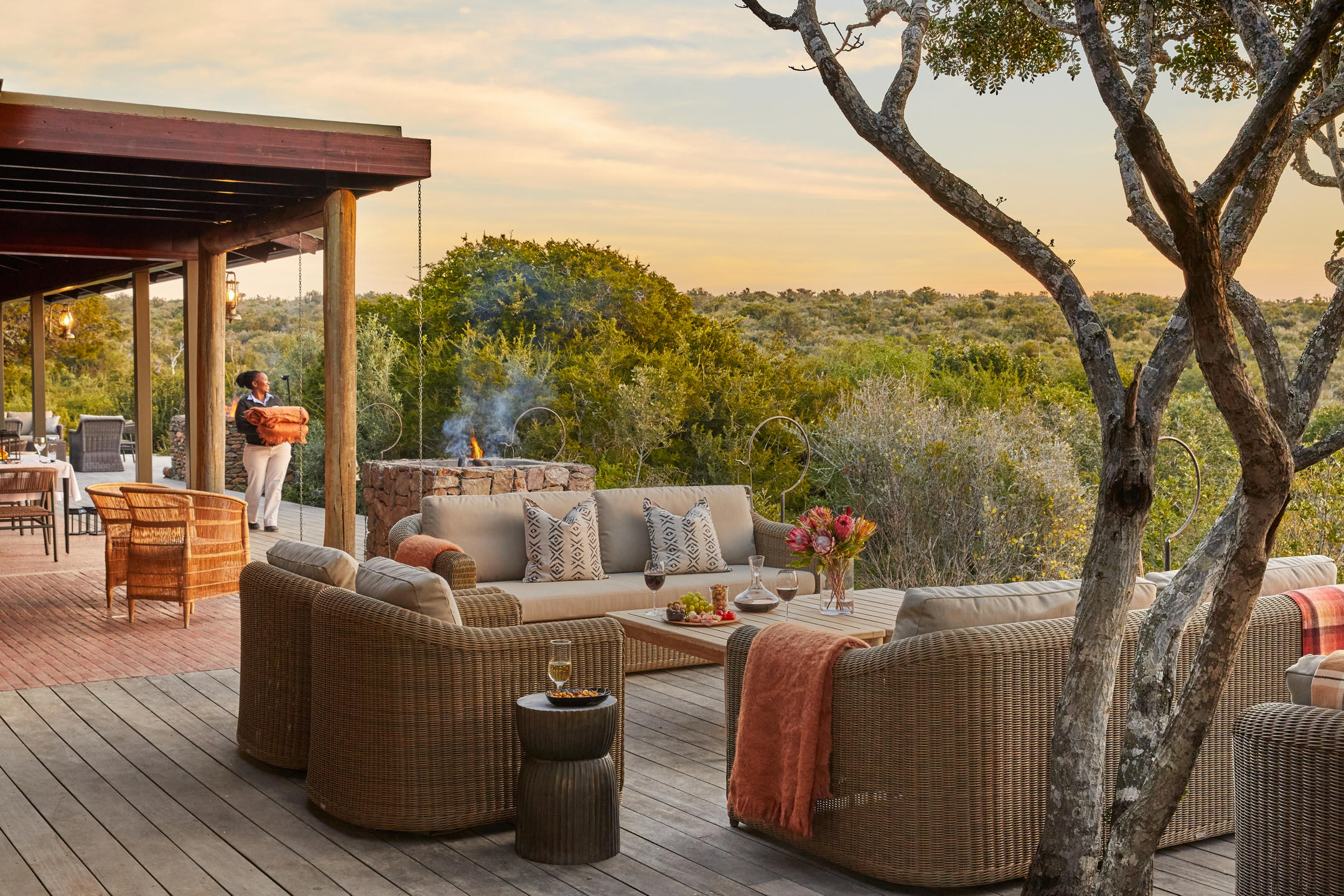
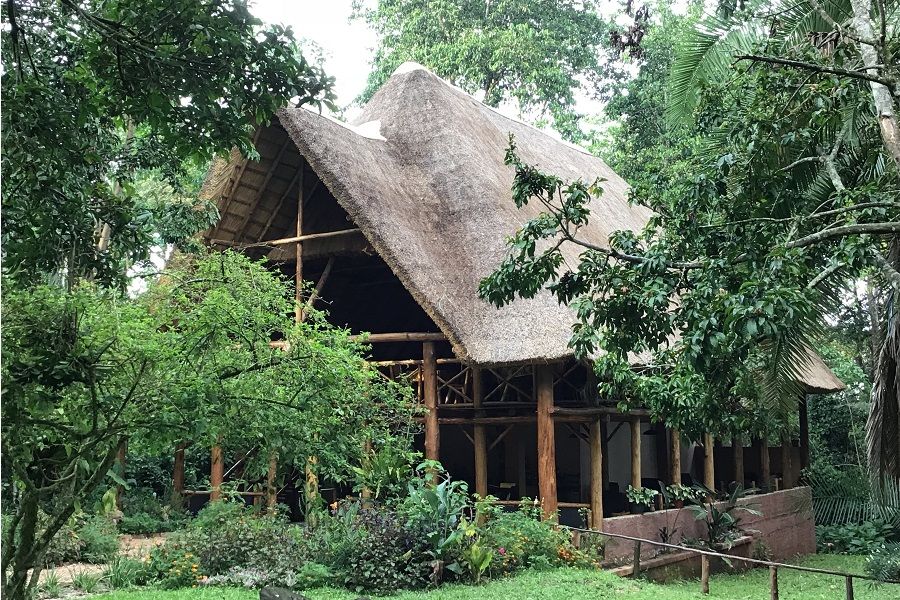
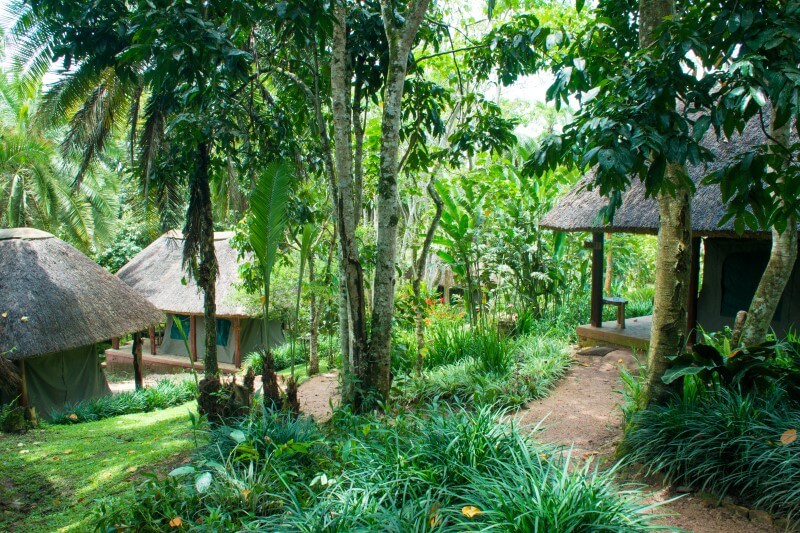
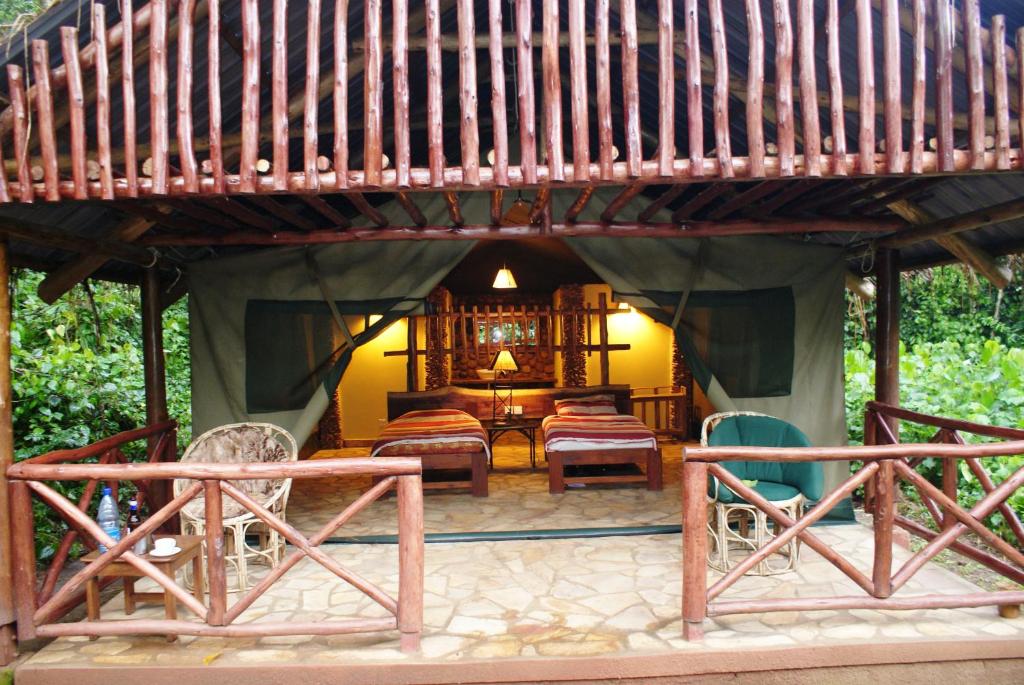
Set along a remote curve of the Zambezi River, Nyamatusi’s tented suites are luxurious in a way that never breaks the spell of the environment. Interiors are warm, rich and tactile — brass, canvas, leather — but always with the river in view, always with the forest whispering just beyond the deck. This is the kind of camp where wildlife walks through your field of vision rather than being something you go out to find.

Activities lean into Mana’s slow, immersive energy. Walking safaris take you through cathedral-like woodlands where every shaft of light feels choreographed. It’s not unusual to round a grove and find an elephant calmly feeding at arm’s length, acknowledging you with the faintest ear-flick before returning to its breakfast. Canoeing is equally magical — drifting between hippo channels, listening to water lap against the bow, watching the shoreline shift like an unfolding watercolor.

Game drives capture Mana at its most instinctively wild: painted wolves trotting along riverbeds, lions dozing in delicate shade, nyala moving like brushstrokes through the trees. Yet the mood here is never rushed. The forest encourages softness, attentiveness, breathing room.

Evenings are all glow — lanterns, campfire sparks, the quiet hum of the river. It’s the kind of place where guests become loyalists, and loyalists become evangelists.

Nyamatusi doesn’t just show you Mana Pools. It lets the place seep into your bones.

Hoanib Skeleton Coast: Desert Lions, Distant Horizons, and the Luxury of Silence

Safari lovers often talk about sound — the roars, the rustles, the unending nighttime chorus. But Hoanib Skeleton Coast Camp flips the script with a different kind of sensory experience: profound, resonant silence. The kind that expands inside you. The kind that makes a single footstep feel like punctuation in an otherwise blank poem.

Set in one of Namibia’s most remote valleys, Hoanib lies at the intersection of desert, mountains, and the unseen pull of the Atlantic Ocean. At first glance, the landscape appears empty. Your eyes skim over pale dunes and ochre ridges, dismissing them as barren. But Hoanib rewards patience, not haste. Shapes resolve slowly: a lone elephant threading its way along a dry riverbed, a pair of oryx holding still in perfect desert camouflage, a fresh track hinting at the improbable wanderings of a desert-adapted lion.

Days here unfold with an exploratory rhythm. Drives trace ancient river systems carved by rains that may only come once in several years. You follow stories written in sand, piecing together the nomadic lives of animals that survive on astonishingly little. If conditions allow, the journey toward the Skeleton Coast is among the continent’s most surreal drives — a cinematic transition from shimmering dunes to the fog-laden wildness of the Atlantic, where shipwrecks tilt like abandoned punctuation on an unfinished sentence.

Inside camp, the minimalist architecture mirrors the desert: calm, tonal, grounded. Canvas, stone, and pale wood create a sanctuary that amplifies the surrounding quiet rather than competing with it. Meals are unhurried, evenings candlelit, and nights filled not with noise but with space.

Hoanib isn’t about abundance. It’s about revelation. It teaches you to look harder, listen deeper, and appreciate the astonishing resilience of life where it shouldn’t logically thrive. And in doing so, it reshapes your definition of wilderness itself.

Little Kulala: Where Silence Learns to Shine

There are landscapes that feel sculpted. And then there are landscapes like Namibia’s Sossusvlei, where the earth seems to have spent a few million years deciding on the perfect curve of a dune before finally signing its name in sand. It’s here, on a private reserve bordering the iconic Namib-Naukluft, that you’ll find Little Kulala — a lodge so seamlessly woven into its surroundings that it feels less built and more exhaled by the desert itself.

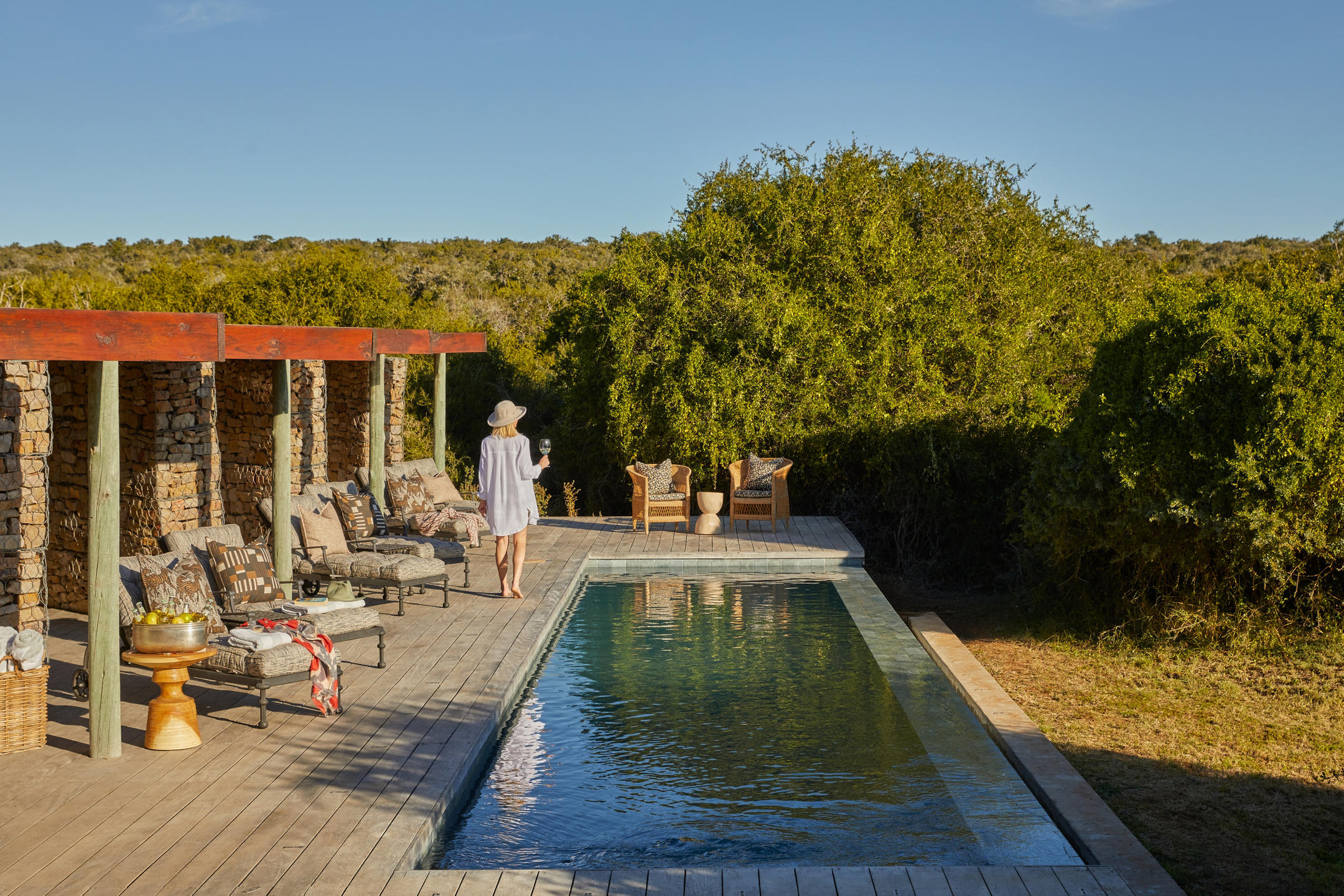
Little Kulala is a study in understatement. Its suites are soft, pale, and impossibly serene — all timber, linen, and clean geometry. They’re the kind of spaces where even time seems to walk more quietly, padding across the floor in bare feet. Private plunge pools shimmer in the heat, rooftop starbeds invite late-night sky worship, and every window frames a view that looks suspiciously like a carefully composed photograph.

But the real magic, as always in Namibia, happens outside the walls.

Mornings begin with air cool enough to make your coffee feel philosophical. The journey into the dunes is a slow unfurling: pastel light, long shadows, oryx silhouettes gliding across the horizon like punctuation marks in an unfinished poem. Climb Big Daddy or Dune 45 if you want a challenge; wander the fossilised trees of Dead Vlei if you want perspective. Either way, the desert has a knack for reminding you how vast the world is — and how refreshing it can be to feel wonderfully small.

Wildlife here is subtle by design. A brown hyena’s tracks etch the sand. A springbok drifts through a mirage haze. A lone ostrich appears exactly where you didn’t expect it, then pretends it meant to be there all along. It’s not a place of abundance; it’s a place of presence.

Back at Little Kulala, afternoons melt into golden silence. Perhaps you retreat to your deck with a book you barely open. Perhaps you sink into your pool while the desert rearranges its colours one degree at a time. Evenings bring lanternlight, deep tranquillity, and stars that seem to multiply just to show off.

Little Kulala is luxury distilled — minimalism with meaning, privacy without pretence, and landscapes so unfiltered they feel almost spiritual. It’s not a place you visit so much as a place that quietly rewrites the rhythm inside you.

Grootbos: Where the Secret Garden Goes Global

Recognition tends to find those who aren’t chasing it. So it feels fitting that Grootbos Private Nature Reserve, a property defined by restraint and regeneration rather than self-promotion, has just been named 5th in Condé Nast Traveler’s Readers’ Choice Awards for South Africa’s Top 15 Resorts.

Tucked between mountain and sea near Gansbaai, Grootbos has always felt slightly out of category — too wild to be a vineyard retreat, too elegant to be called an eco-lodge. It’s its own species entirely: a place where the word luxury is defined less by opulence and more by intention.

The reserve protects over 2,500 hectares of fynbos, one of the world’s most biodiverse floral kingdoms, and its story has always been as much about what grows outside the rooms as what’s inside them. Suites open onto views where the ocean feels stitched to the sky; the air carries the faint honey scent of proteas; and the architecture — all glass, timber, and understatement — feels designed not to compete, but to frame.

Condé Nast readers have long rewarded beauty, but here they’ve also rewarded purpose. Grootbos runs on solar energy, champions community development through its foundation, and supports local conservation and research projects that ripple well beyond the reserve’s borders. Every stay helps sustain that mission — which might be the most modern definition of luxury we have.

At a time when the world’s finest lodges are being recognised by Michelin, by Condé Nast, by whoever next holds a clipboard of merit, Grootbos’s achievement feels especially resonant. Because what it really celebrates is balance: design and wildness, comfort and conscience, people and place.

To walk through a field of blooming fynbos at dawn, then return to a breakfast plated like fine art, is to understand exactly why Grootbos stands among the best. It’s not just about where you stay — it’s about what stays with you.

Londolozi Earns Three Michelin Keys: Where Connection Is the True Currency

The Michelin Guide has spoken — and Londolozi has joined a rarified circle. In the inaugural list of global lodges recognised for excellence in hospitality, Londolozi has earned Three Michelin Keys, the highest possible rating.

For those unfamiliar, the new system is Michelin’s way of recognising the world’s most extraordinary places to stay — where design, service, character, value, and connection to place combine into something unforgettable. The restaurant world has long had its stars; now the lodging world has its keys. And in Londolozi’s case, the metaphor fits perfectly.

Because a stay here really is about unlocking something — not just a door to your suite, but a door into the wilderness itself. The luxury is evident, of course: the seamless service, the design that whispers rather than shouts, the food that would make even a Parisian inspector pause mid-bite. But it’s the connection that sets Londolozi apart. Connection to land, to community, to guests, and to a philosophy that’s been evolving for almost a century.

You feel it in the quiet professionalism of a tracker reading leopard spoor at dawn. You feel it in the stillness of the river at sunset, when the light folds over the granite outcrops and the bushveld seems to exhale. You feel it in the staff who’ve worked here for generations — living proof that hospitality, when done right, becomes heritage.

Michelin calls the Three-Key rating “an extraordinary stay.” But that hardly covers it. Londolozi doesn’t just offer extraordinary stays; it offers perspective. It reminds guests that luxury isn’t about what’s added, but what’s revealed when everything unnecessary falls away.

Earning Three Keys isn’t just a nod to Londolozi’s excellence — it’s an acknowledgment of its ethos: that true hospitality has always been about belonging. The kind that doesn’t just welcome you for a night, but stays with you long after you’ve left.

Busanga Plains: Where Luxury Tiptoes Into the Wild

If Singita Sabora feels like theatre, Busanga Plains is closer to unscripted documentary — no retakes, no stage lighting, just the raw pulse of the African wilderness.

Deep in Zambia’s Kafue National Park, the camp sits in the middle of a seasonally flooded grassland so vast it makes the horizon feel like a rumour. For much of the year, these plains are inaccessible. When the waters retreat, they reveal one of Africa’s most dramatic safari arenas: red lechwe bounding through the shallows, herds of puku grazing in golden light, and lions that have learned to hunt where most cats would hesitate to get their paws wet.

Busanga Plains Camp itself doesn’t try to outshine the setting. It couldn’t, and it doesn’t need to. The lodge is deliberately small, with just a handful of tented suites raised on wooden decks. You’ll find comfortable beds, hot showers, and lantern-lit dinners — but don’t expect chandeliers or wine cellars. Here, the luxury is space. Silence. The sense that you’ve stumbled into Africa before the world got crowded.

Game drives roll out across the plains like expeditions. Some mornings are about elephants and buffalo drifting through the mist. Others deliver the famous Busanga lion prides, often lounging on termite mounds like they own the place (which they do). If you’re lucky, you might spot a cheetah carving a line through the long grass, or watch crowned cranes rising in a flurry of wings as the sun sets.

Evenings back at camp are their own reward. Sitting by the fire, the vastness pressing in from all sides, you become acutely aware of just how remote you are. No highway hum, no faint glow of a distant town. Just stars — millions of them — and the steady chorus of the marsh.

Busanga isn’t safari with trimmings; it’s safari distilled. It’s for travellers who crave the edge of adventure but still appreciate a crisp linen sheet at the end of the day. The kind of place that makes you feel small, in the best possible way.

Mara Nyika: a Camp That Whispers Rather Than Shouts

Some lodges announce themselves before you’ve even unzipped your bag. Brass fittings, oversized chandeliers, the kind of bath you could launch a canoe in. Mara Nyika is not one of those lodges.

Perched lightly among the flat-topped acacias of the Naboisho Conservancy, Nyika doesn’t so much dominate the landscape as blend into it, like a well-worn canvas jacket. You could walk past its guest tents without even realising you were skirting one of Kenya’s most refined safari outposts. And that’s very much the point.

Naboisho itself is part of the magic: a vast conservancy bordering the Maasai Mara National Reserve, but with far fewer vehicles, more privacy, and a fierce dedication to conservation. Lions patrol the savanna here with the same swagger you’ll see inside the Reserve proper, while cheetahs, giraffes, and elephants all make daily cameos. The difference is that you’re unlikely to be sharing the sighting with a convoy of Land Cruisers.

Mara Nyika leans into this ethos of understatement. The camp’s design is all flowing canvas, polished wood, and gentle curves that feel more like an extension of the trees than an intrusion. Step inside your suite and you’ll find the kind of detail that makes luxury feel effortless: a desk positioned to catch the morning light, copper accents that glow at dusk, a bathtub with a view that doesn’t require explanation.

But perhaps the greatest luxury is what you don’t see. No rush, no crowds, no clutter. Just space — for animals to roam, and for you to think, breathe, and reset. Evenings here are less about theatrical fanfare and more about quiet conversations around the fire, punctuated by a distant hyena call or the shuffle of elephant feet through the grass.

For those who like their safaris with a little narrative arc, Nyika also serves as a gateway. It connects seamlessly with Great Plains’ other Mara properties, so you can trace your own journey across the ecosystem, following the migration if the timing’s right.

Still, you may find yourself reluctant to move on. Mara Nyika is one of those rare places where the definition of luxury isn’t excess, but restraint. Where the whisper carries further than the shout.


Mpala Jena: Zambezi Luxury

When you combine the feel of a Mozambican beach side lodge with a classic safari camp, and throw in Africa’s mightiest waterfall just downstream, that’s Mpala Jena.

Part of the Great Plains portfolio, Mpala Jena is the epitome of Victoria Falls luxury accommodation and is an intimate safari lodge positioned along the beautiful tree-laden banks of the Zambezi River.

Zambezi National Park, in which the lodge is nestled, is little known, despite its proximity to the world famous Victoria Falls. Split off from the Victoria Falls National Park in 1979, the 56,000 hectares of pristine wilderness and wildlife habitat has been a National Park in its own right ever since.

It is home to a wide range of wildlife that can be enjoyed on safari drives, seen from the Zambezi River when on a boat cruise or the unique Dhow, walking trails or even while sipping cocktails from the camp’s swing chairs. Higher concentrations of buffalo and elephants are typical from June to October. There are more lions per km² here than in any other park in Zimbabwe.

In August 2025, two new, 3-bedroom Mpala Jena Private Villas will open. These two unique villas will be located five kilometres upstream from the current Mpala Jena.

the location of both camps allows easy access to Victoria Falls town by an exciting 40-minute boat or road transfer. Mpala Jena also offers guided tours of the Victoria Falls.

The sand floor in the main camp’s bar area and the adjacent swimming pool set the scene for guests to kick off their shoes and relax after their morning safari drive or river cruise. The pool lounge makes you feel that you are right on the river. Mpala Jena is highly sought after for those wanting the best Victoria Falls luxury accommodation.

Guests have a choice of three large double or twin bed configuration suites, plus two 2-bedroom family suites; are all under sand-coloured, flowing canvas, with canopy ceilings and open (yet netted) views of the river frontage.

Each suite has a shaded, private veranda area and en-suite bathroom facilities, including an indoor shower, separate loo, and double basins. The highlight of the suites is the outdoor bathrooms with a beautiful bathtub and outdoor shower. Decking in front of the tent leads to views of the Zambezi River’s calming and peaceful flowing waters.

Mpala Jena has a strong sustainability ethos. It is powered entirely by a solar plant and battery. Building materials and design elements were specified and sourced with a clear vision of minimising embodied energy and transportation miles.

Although there are plenty of fantastic accommodation options in and around Victoria Falls town itself, it can be nice to escape to somewhere a bit more sheltered, that moves at its own pace, away from the hustle closer to the falls.
The barefoot luxury of Mpala Jena ticks this box perfectly, where safari and rest combine into a magical sense of contentment.


Wilderness Magashi: Thrilling Rwanda

Witness the abundance of Akagera National Park from Wilderness Magashi.
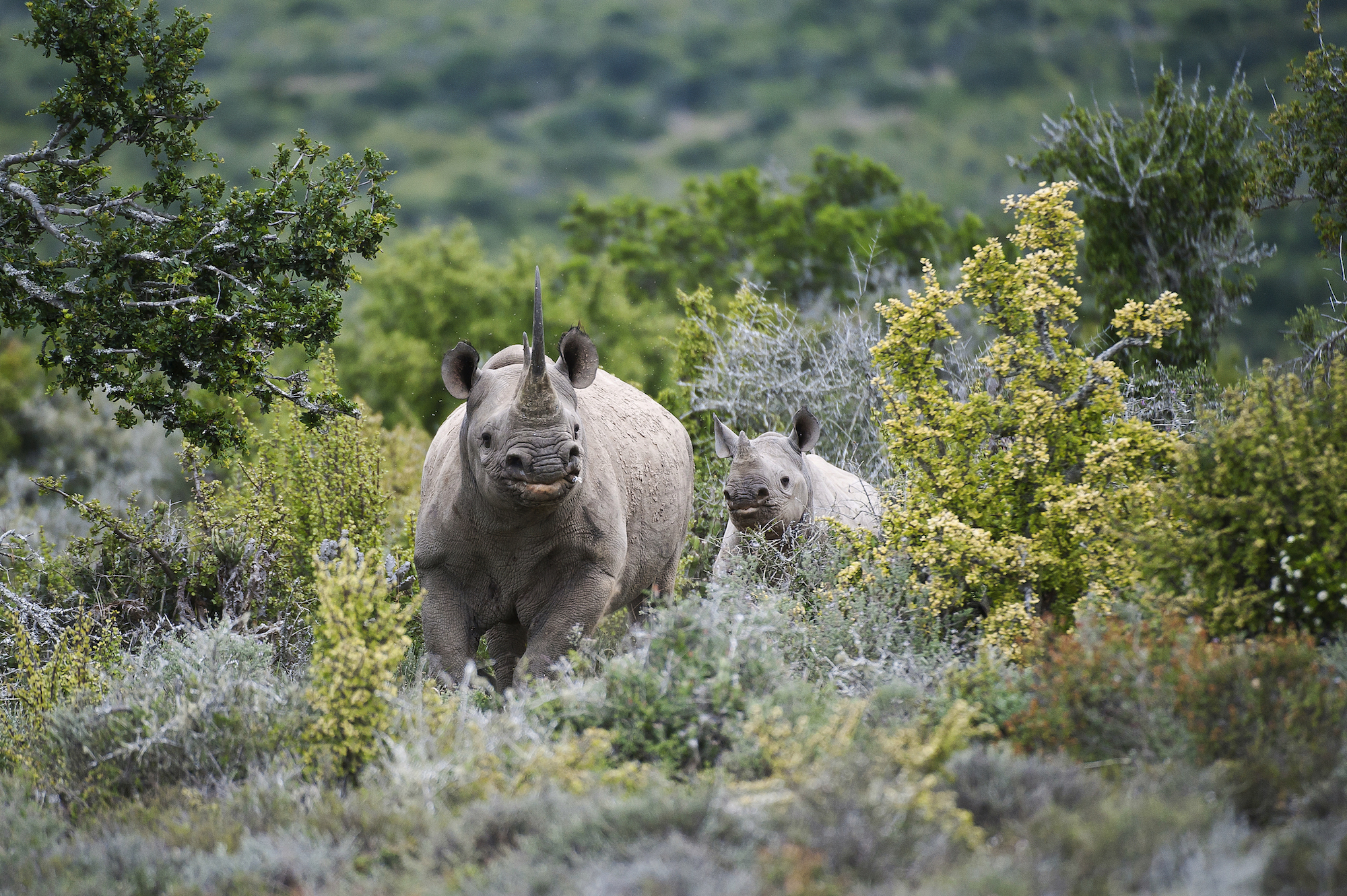
Akagera is Central Africa’s largest protected wetland and the last remaining refuge for savannah-adapted species in Rwanda. Home once more to an abundance of apex predators and their prey after highly successful reintroduction efforts, the park is again a place where one can marvel at lion, white and black rhino, buffalo and elephant roaming its hills and savannahs.

Wilderness Magashi provides the quintessential East African safari adventure and the perfect complement to your gorilla trekking experience in Rwanda.

The eight spacious tents of the lodge are perched on the shores of Lake Rwanyakazinga. You can watch elephants submerge themselves in the lake’s still waters from the deck of your room, while you are experiencing a wonderful sense of intimacy as the next tent is far enough away that you hardly know that it is there. All the rooms are linked by a raised boardwalk which runs to the main area, where you will find a luxury lounge, the dining space and bar, a swimming pool and an expansive viewing deck that takes in further sweeping views of the lake. The fire pit provides the perfect setting to enjoy a chilled cocktail after sunset.

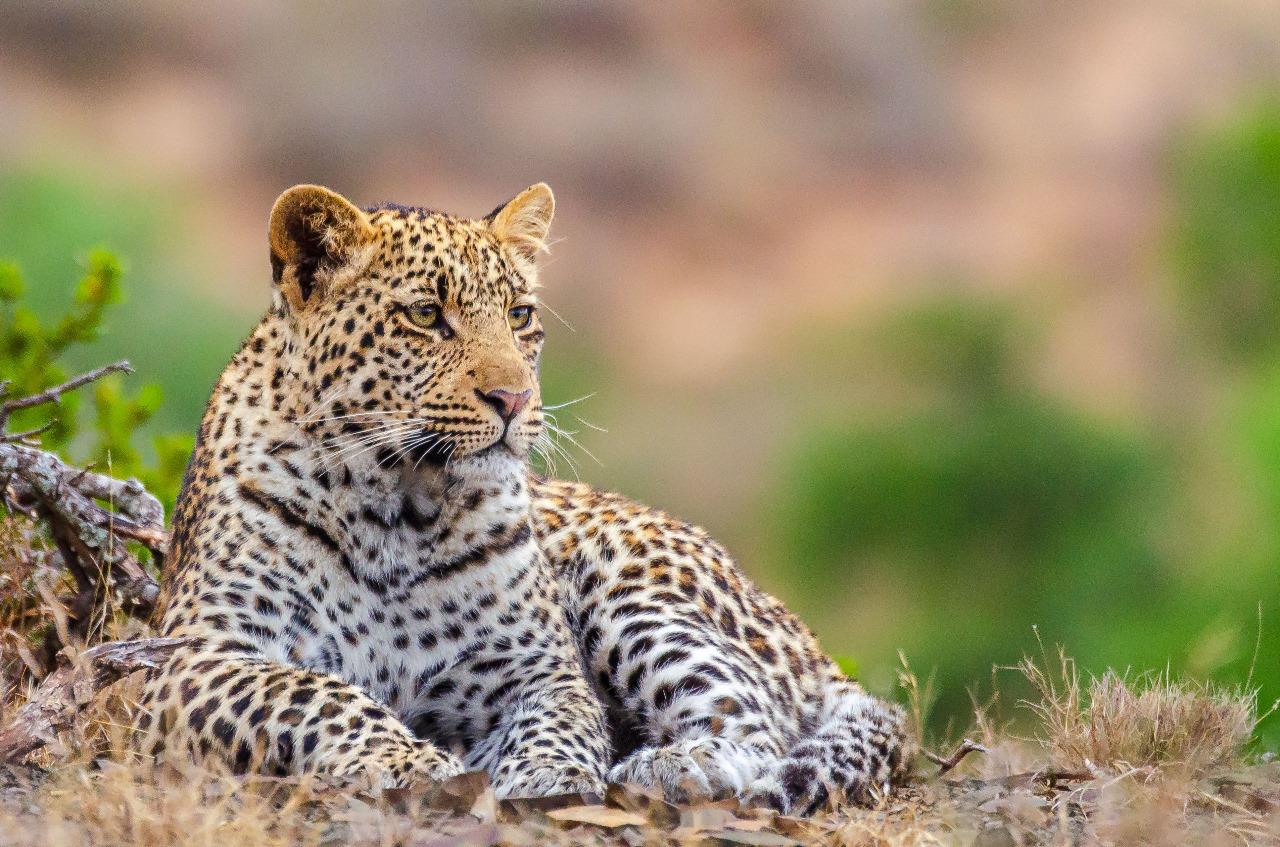
The camp is the only exclusive-use area in Akagera, which means guests are the only ones who will be on game drives and wildlife viewing activities in the area. Rhinos, giraffes and lions roam the seemingly endless savannah. The elusive sitatunga skulks in the reedbeds, watching as you try your hand at catch-and-release fishing. Leopards sightings here are very much on the rise, thanks to a sensitive and consistent effort by trackers and guides alike to habituate the spotted cats.

It is the way this camp is integrated into its surroundings that makes it so special. Influences of Rwandan culture are balanced with the wilderness that surrounds. There are no fences, so the wildlife is uninterrupted, making their home a shared space with the camp.

Private. Peaceful. Participatory; these are the overwhelming feelings you get from your stay here. Akagera National Park is a story of survival and regeneration, and now Wilderness Magashi is very much a part of that story too…

You don’t have to journey to another country to add safari to your Gorilla trekking (which is one of Rwanda’s main drawcards). Akagera National Park and Magashi are only a short distance from Kigali, the capital. It’s 100km kilometres by road to the park entrance or a short flight.

Get in touch with us through info@iconicafrica.com to chat about Magashi, Akagera, Gorillas, Rwanda in general, or whatever type of safari you may be interested in…

Chitabe Reimagined

For almost thirty years, Wilderness Chitabe has earned a reputation as one of the Okavango Delta’s most incredible safari destinations. Set on a wildlife-rich peninsula in the eastern sector of this tranquil eden, its diverse landscapes and patchwork of habitats draw an unparalleled abundance of game year-round. But beyond the remarkable sightings, Chitabe is a place where guests feel at home – a camp shaped by a team whose deep-rooted connection creates a rare and timeless magic.
And now, with a fresh, sustainable design, rebuilt Chitabe remains true to its roots while embracing the future.

Chitabe’s impressive mix of micro-ecosystems makes it one of Botswana’s most rewarding wildlife destinations. The convergence of the Gomoti and Santantadibe channels create almost an island, which supports a rich, year-round game viewing paradise. Here, prides of lions, packs of wild dogs, and the Okavango’s most consistent and viewable cheetah population hunt the plains. There have also been no fewer than 50 leopards recorded at Chitabe.

The Chitabe guest suites offer a blend of comfort and design, perfectly suited to the temperature swings of the Delta (summer can get very hot, winter nights can see the temperature drop to sub-zero).
Crafted to enhance the experience, the suites feature insulated canvas walls and roofs, creating an environment that maintains a light, airy feel. Spacious high ceilings, large insect-proof mesh openings, and private shaded decks open to horizon-wide views of the Delta.

The eight spacious luxury safari-style tents at are built on elevated wooden decks amongst the stunning trees of the Okavango.
Each tent has en-suite facilities that include an indoor and outdoor shower, mosquito nets, standing fans and double sliding doors opening to the shady deck with comfortable seating – a perfect breakfast nook from which to soak up the bush.
Elevated walkways connect the tents to the central camp facilities made up of a thatched raised dining and lounge area leading onto open decking with views across the waterways and floodplains. There is an evening campfire, a small curio shop and a plunge pool providing a cool sanctuary for those warm hours. Or nestle yourself in the library with a view and read a little more about the wildlife and natural history of the area; although the staff, rangers and trackers of Chitabe Camp would be more than happy to tell you all about as well.

Supreme opulence and some of the most consistent wild dog viewing in the Okavango (the local pack dens on the concession almost every year) have ensured a high level of repeat business at Chitabe. Guests fall in love and don’t want to go anywhere else.

If this sounds like the place for you, get in touch through info@iconicafrica.com, and let’s start planning your Okavango itinerary…

GweGwe Beach Lodge: the Wildest Coast

If your idea of paradise involves unspoiled landscapes, pristine coastlines, and a symphony of nature’s wonders, then pack your bags and set your compass to GweGwe Beach Lodge in the Mkambati Nature Reserve. A hidden gem along South Africa’s Wild Coast, this is where luxury and adventure merge into an amazing fusion of beach activities and opulent lodge. There are not many places in the world you can watch wildlife on land and offshore at the same time.

You’ll feel miles from civilisation, yet have comforts like as wood-burning fires and South Africa’s top wines waiting after a day of epic adventures like paddleboarding to hidden waterfalls and rock scrambling through gorges.

The main lounge has floor-to-ceiling glass windows, and a roaring fire illuminates a huge mural representing a timeline of the area from the last hundred millenia. The ambient sound is the constant wash of waves on the shoreline. Whales breach out in the bay and dolphins explore close to the backline of the breakers. Guests gather for an evening under the stars as the sun dips slowly down in the west.

GweGwe Lodge is the ultimate combination of wilderness and luxury. Activities are almost endless: swim, hike, cycle, snorkel, kayak, SUP, spa, hot tub, game watch. It will be almost impossible to fit it all in during your stay.

Nine spacious rooms all have front-row views of the ocean. Rooms are so close to the water you can feel the mist of waves as you sit reading in your hammock. At low tide, one can walk a few hundred feet down to the tide pools.

The reed-like ceiling, sea foam green and turquoise bedding, and rammed earth-inspired walls channel a chic beach retreat. The shower heads in both the indoor and outdoor shower areas provide a truly luxurious shower. Rooms one and two are closest to the main lodge and access to the beach, but the others aren’t farther than a 10-minute walk from the pristine sands.


The lodge has an impressive wine cellar exclusively devoted to local vineyards. Meals are wonderfully varied; one lunch might be a picnic of grilled chicken wraps and beef skewers, the nexxt a buffet of  mini grilled sliders, roasted pumpkin and avocado salad, and pizzas cooked in the wood-fired pizza oven (a hit with kids). Teatime is full of delicacies but more often than not you’ll find yourself out on some adventure or another. Dinners on outdoor tables facing the ocean are superb (weather permitting). Rooms are well stocked with drinks and snacks, and it’s a simple matter to get a bottle of wine sent down..

Mkambati is an unspoiled natural wonderland of diverse ecosystems ranging from coastal forests and grasslands to mangroves. It’s found in the heart of the Maputaland-Pondoland region, one of South Africa’s three biodiversity hotspots. Because there is no dangerous game in the reserve, guests can hike, trail run or mountain bike without a guide and spot zebra or eland grazing. The reserve fronts a marine protected area world-renowned for its sardine run each June and July, and the surrounding beaches are riddled with tidal pools full of weird and fascinating sea creatures. The waterfalls are some of the most dramatic on the planet – some of them flow right into the sea – and adventurous guests can explore them up close via a kayak or paddleboard.

The ecosystem is so tailor-made for exploration that jumping in a vehicle is almost the last thing guests will want to do.
The excellent guides are wonderful at encouraging all manner of activities that involve self-locomotion, like kayaking, snorkelling or nature walks, and for those who seek a bit of additional fitness after or between activities, there is a fantastic gym on site.

For couples, those who seek adventure or families with kids who like to roam, GweGwe Beach Lodge is absolutely ideal.

This stretch of coastline that is as untamed as it is beautiful; between the dramatic cliffs, tumbling waterfalls, pockets of dense swamp forest and crystal-clear waters, there’s so much to see and do that at the end of each day you will be fast asleep within seconds of your head hitting the pillow, lulled to sleep by the soft wash of the Indian Ocean.

Get in touch with us through info@iconicafrica.com to find out more, and especially how to combine GweGwe Lodge with your broader safari itinerary…

&Beyond Suyian: The Heart of Black Leopard Country

The Laikipia district has risen to the fore as a prime safari destination in recent years due to the consistent sightings of the black leopard Giza.
This relaxed female splits her time between two sides of the Ewaso Narok river, and it is on the northern bank where &Beyond have built their stunning new lodge Suyian.

The lodge offers an array of adventures, allowing guests to create their perfect day in this conservation haven. Activities include day and night game drives, walking safaris, camel and horseback safaris, active ranching tours, and fishing. Experience local culture through village visits, or enjoy outdoor yoga, scenic helicopter flights, wellness treatments, and riverside picnics.
Nestled within a 44,000-acre wilderness, the lodge overlooks the Rock Sanctuary, a mesmerising landscape of undulating granite kopjes steeped in history, including ancient rock art. With only 14 rooms, this tranquil retreat ensures exceptional privacy amidst expansive plains and dramatic boulders. Guests enjoy sweeping views towards Mount Kenya.

Home to over 100 types of mammals, plus numerous endangered and non-endangered species, Suyian Conservancy’s variety of compelling landscapes, which includes grassland, savanna, rocky outcrops (or kopjes), dense Vechellia woodland, plus more than 16 km (10 mi) of river frontage, offers unforgettable wilderness views and up-close wildlife sightings. A hidden gem within northern Kenya’s Laikipia region, the conservancy houses one lodge, Suyian Lodge, named after the African wild dog in the local Maa language.

A sculptural structure of architectural brilliance, the lodge draws inspiration from its unique surrounds and its rounded appearance with plant growth atop mimics the region’s ancient Rock Sanctuary and the robust plant life that lives in between the granite edges. A harmonious blend of raw, earthy Africa materials with a contemporary flair, the lodge reflects the Afro Wabi-Sabi sentiment of taking pleasure in the transient nature of earthly things. Subtle cultural touches inspired by the local semi-nomadic Samburu tribe infuse with modest luxury while mottled undertones pay homage to the region’s most cherished wildlife, such as the rare African wild dog and elusive black (melanistic) leopard. Rich textures and colours enhance the lodge’s understated yet sophisticated feel, and the majority of the furniture and finishes are locally sourced and crafted by Kenyan artisans.

The lodge’s guest area echoes the flow of the kopjes across the valley, offering the perfect vantage point for viewing the conservancy’s incredible habitats along with the abundance of wildlife that calls it home. Accessed by a winding stone path, the lodge’s entrance courtyard opens onto a large circular, central bar that showcases breathtaking views of the open plains, while intimate, softly lit areas create cocoon-like spaces for guests to escape.

Each spacious Suite, constructed as if part of the unusual natural rocky formation, blends seamlessly into its surrounds. An outdoor terrace, featuring a private plunge pool and viewing deck, boasts magnificent sunrise views for early risers.

Previously, there were limited options if one wanted to seek out a black leopard, but Suyian now offers a supremely comfortable stay in an area hitherto relatively unexplored by safaris.

With over ten black leopards documented in the area by trail cam, who knows what other delights will soon form the mainstay of Suyian’s game viewing.

Get in touch through info@iconicafrica.com to start planning your trip…

Mana Sands: the Zambezi at its Best

Mana Pools National Park in Zimbabwe has long been associated with wild adventure.
It is a place where Africa still feels like its is moving at the same pace it did thousands of years ago, and the rhythm of nature is uninterrupted by human presence.
The epicentre of walking safaris in Southern Africa, Mana Pools is where you can literally go on foot to join a pack of wild dogs as they get on the hunt, or you can stand mere metres from a giant bull elephant as he stands on his back legs to retrieve seedpods from the upper branches.
It feels like anything is possible in this spectacular wilderness of the Zambezi Valley, and with the construction of Mana Sands, a new luxury lodge on the western side of the park, the envelope of what a true bush experience is, is about to be pushed even further…

Mana Sands represents the realisation of a dream; the owners all share a deep love of nature and in particular of this stretch of the Zambezi River, where they all spent holidays as children. The development of the lodge represents a way for them to find a way back to those simple times of wonder, and to be able to pass on a similar feeling to their own children.

That is ultimately what the lodge is aiming to create for those who visit; a way back to a time before emails and traffic and bills and the complications of day to day life. A visit here will get you in touch with the essence of what it is to feel human. Mana Sands will give guests a rare opportunity to be part of a world where natureʼs raw beauty and untamed spirit come alive in the most extraordinary way.

Mana Sands is in fact two lodges; Mana Sands Main Camp, featuring six private ensuite tents each with an expansive private deck and plunge pool, whilst Little Mana, just downstream, boasts four private ensuite tents, each with a private deck, as well as two extended family units allowing space for up to two extra beds to be added for children.

Both camps offer a full range of bush adventures, from guided walks to tiger fishing excursions, birding-focused expeditions and everything in between. All are facilitated through highly competent, professional local guides.

Little delights surprise you at every turn, from gin and tonic stops on the riverbank to stargazing under the brilliance of the southern skies.

Whilst Mana Pools has been on our radar for some years now, it has been a while since we were as excited about this iconic destination; Mana Sands certainly looks like being our top new lodge of 2025.
Although they are still in the final stages of the lodge build, they will be opening for bookings come the new year, so don’t wait to enquire if the archetypal safari adventure is what you are after.

Get in touch through info@iconicafrica.com to find out more about 2025’s most exciting new offering…

Hinkwenu for Thanksgiving

Hinkwenu!

Thanksgiving is all about Hinkwenu: togetherness. The togetherness we feel around a table while sharing a meal, around the campfire, around the living room, around each other. We are grateful for Hinkwenu, particularly at this time of year when we remember our blessings, friendships, and good fortune.

In the United States, we give thanks around the dinner table with a hearty meal complete with family favourites – turkey, sweet potatoes, stuffing, cranberries, and pumpkin pie. We share in the spirit of gratitude for family, good health, and fall harvest, not forgetting that many countries have their own version of Thanksgiving celebrations.

England celebrates a bountiful harvest with music and food festivals in the fall months. Joaquim Nabuco brought US traditions to Brazil in 1940s, establishing the day with a carnival, church services, and parades. Canada gives thanks on the second Monday in October by hosting a traditional feast of turkey, mashed potatoes, corn, pumpkin pie, and cranberry sauce. In Mid-Autumn Festival in China, a three-day celebration includes a feast with mooncakes, dragon dancing, and lantern lighting. Korean Thanksgivings involve a three-day holiday during which people visit their ancestral hometowns to prepare a traditional rice cake –  songpyeon – to celebrate.

This year, I think of the many aspects of Africa that bless me with each visit: the unrestricted wildlife, vast savannas, lush rainforests, dramatic mountains, arid deserts, and pristine beaches. The warm weather. The sense of community – Ubuntu – permeates through the continent. The delicious cuisine: chakalaka, Moroccan stew, koki corn, and pilau. The sense of freedom. The deep connection to the land and vistas.

With a heart filled with gratitude, I extend to you the opportunity to express your appreciation for the iconic nature of Africa. As many Thanksgiving celebrations extend past the table and onto acts of charity, sharing time with family and friends, congenial sporting events, and decorating the mantle with pomegranates, leafy boughs, and spiced oranges, my Thanksgiving celebration includes contributing to the place where I feel most connected – the place I think of as home.

And, I invite you to do the same: your philanthropy to Iconic Africa’s Foundation demonstrates a genuine commitment to the conservation of Africa’s breathtaking wilderness and the people who care for it and live amongst it. Your travel with Iconic Africa assures wilderness conservation and the alleviation of poverty on the continent: protect rhinos, conserve lions and their habitats, create green energy, support ecological research and widespread education, as well as development in rural communities.

November presents a time to express generosity of spirit. We invite you to extend the kind of gratitude that making lasting, positive change to a unique part of our world.

Celebrate Hinkwenu.

Celebrate Africa.

Sala’s Camp: Prime Migration Viewing

Sala’s Camp first hosted guests in 2004 and has become renowned for delivering an authentic Masai Mara safari experience with exceptional personalised service and fine dining.
Seamlessly combining a traditional ‘under canvas’ safari experience with contemporary comfort, including private plunge pools and glass fronted tents, Sala’s Camp offers an unforgettable and magical Mara retreat.

Owned and operated by The Safari Collection, it can be booked for the night or as part of a complete tailor-made safari. The magic of a Kenya safari doesn’t end with Sala’s Camp. The Safari Collection is the proud owner of four distinct lodges in some of Kenya’s most spectacular locations, including Giraffe Manor in Nairobi, Solio Lodge in Laikipia, Sasaab in Samburu and Sala’s Camp in the Masai Mara.

Sala’s sits in one of the best locations in the whole of the Masai Mara National Reserve. Intimate and secluded, it is nestled along the tree lined banks of the Sand River in the southern tip of the reserve. One can literally look out from your room to the Tanzanian border only a kilometre or two away, with the Serengeti National Park forming the backdrop with its rolling, grass-covered hills. This also means that it is one of the first camps in the Mara to witness the annual wildebeest migration which comes pouring in from June to September each year. Major crossing points on the Mara River are only an hour’s drive away, and the Sand River itself, right on your doorstep, regularly sees herds streaming over in their thousands

With teeming wildlife year round, Sala’s game drives never disappoint. Lions in particular are plentiful in this part of the reserve, and being far from the entrance gates means that you will enjoy regular sightings all to yourself. Cook-out breakfasts and sundowners out on the savannah make for magical memories. The landscape is spectacular, the birdlife impressive and the feeling of being totally immersed in nature cannot be beaten.

Enjoy world class bird watching, spectacular star-gazing and epic sundowners on the savannah with our vintage mobile bar. When you’re not out discovering the wonderful wildlife there’s plenty to do back at camp, including nature walks and games in the Sand River when the water is low enough.

Kenya’s Masai Mara is home to one of the largest overland migrations of animals in the world. Between June and September each year, 1.5 million wildebeest, 500,000 Thompson gazelles, 200,000 zebra and thousands of other antelope cross the border into Kenya from Tanzania on their seasonal migration. Drama, dust and danger abound. Guests of Sala’s camp who are lucky enough to catch this famous spectacle are treated to one of the greatest shows on earth. Witnessing the Great Migration is a real bonus to an already mind-blowing Masai Mara safari experience. Searching for greener pastures, exact movements of the wildebeest herds change each year. As they enter into Kenya however, crossing the Mara River is one path they cannot avoid. Famous for providing documentary-worthy footage, river crossings are a tense spectacle. Predators lurk and the journey is treacherous. Be sure to have your camera at the ready as you never know what might happen.

The word ‘Mara’ comes from the Maa word for ‘spotted’ (Maa being the official language of the Maasai people). The name comes from the spotted appearance of the land from above, as it is all dotted with Acacia and Ballanites trees. The professionally trained Maasai guides at Sala’s Camp are passionate and knowledgeable about all the animals, plants and trees you will encounter on safari and offer fascinating insights into the ecosystem as well as their traditional culture.

T

At Sala’s you will feel like you have the great plains of the Maasai Mara all to yourself, a rare thing in a conservation space which of late has started to gain the reputation for crowds.
This almost untouched part of Kenya will provide almost everything you could want on an East African safari.

Get in touch with us through info@iconicafrica.com to find out more about Sala’s Camp, the Safari Collection, and the endless plains of the Maasai Mara and Serengeti in general…