A Quiet Inheritance — Chinzombo Camp, Zambia

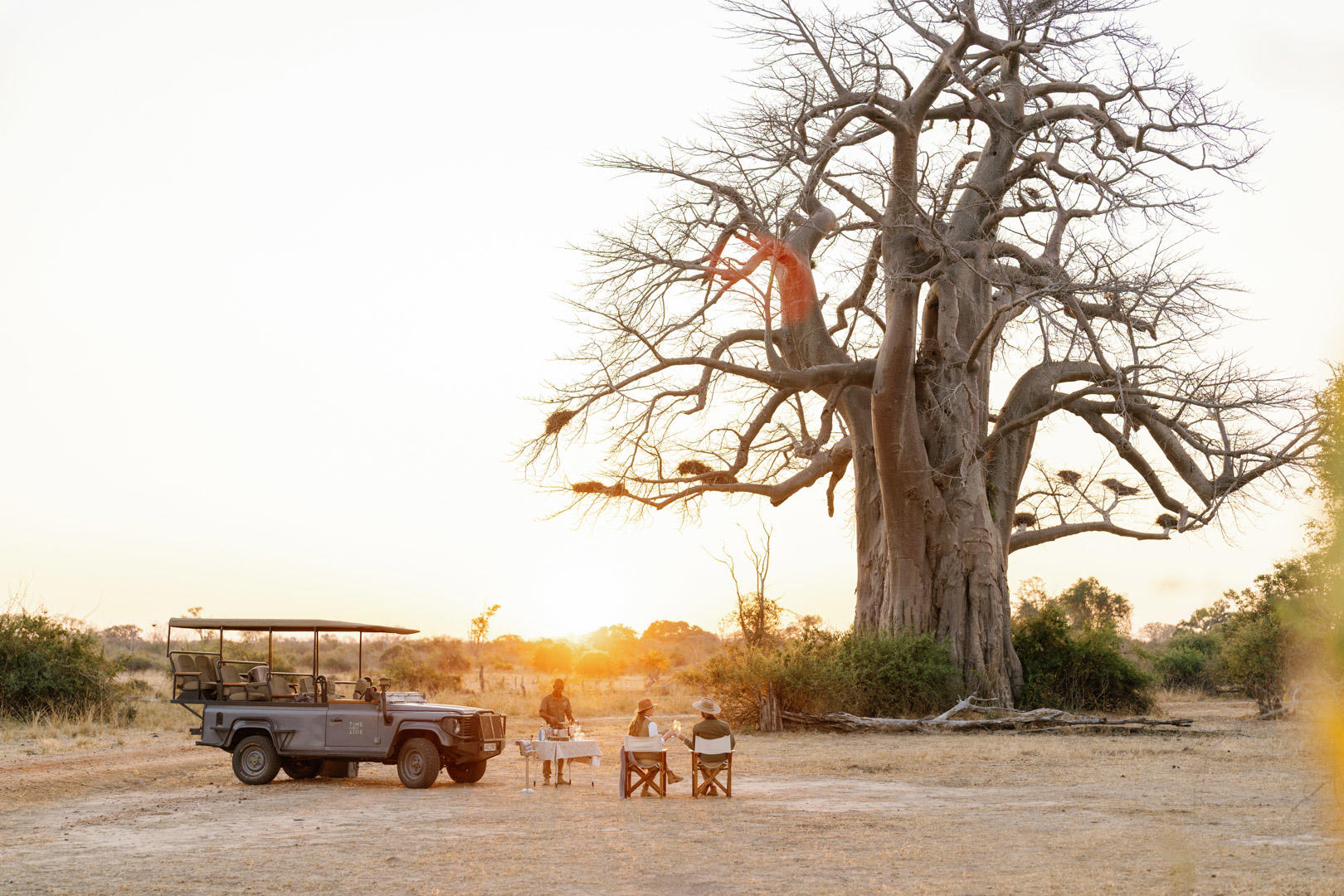
In the 1970s, a game ranger named Norman Carr kept a rainy-season camp on a ridge above the Luangwa River, named after the snuffbox tree that grew there in abundance. Carr is the reason the walking safari exists at all — he pioneered it here in the Luangwa Valley decades earlier, having persuaded a local chief to set aside tribal land as a game reserve, and having decided, somewhat radically for the time, that the best way to understand this landscape was to get out of the vehicle entirely and let it happen at eye level. He called the place Chinzombo. It was never meant to be permanent. It became, eventually, something close to legend.

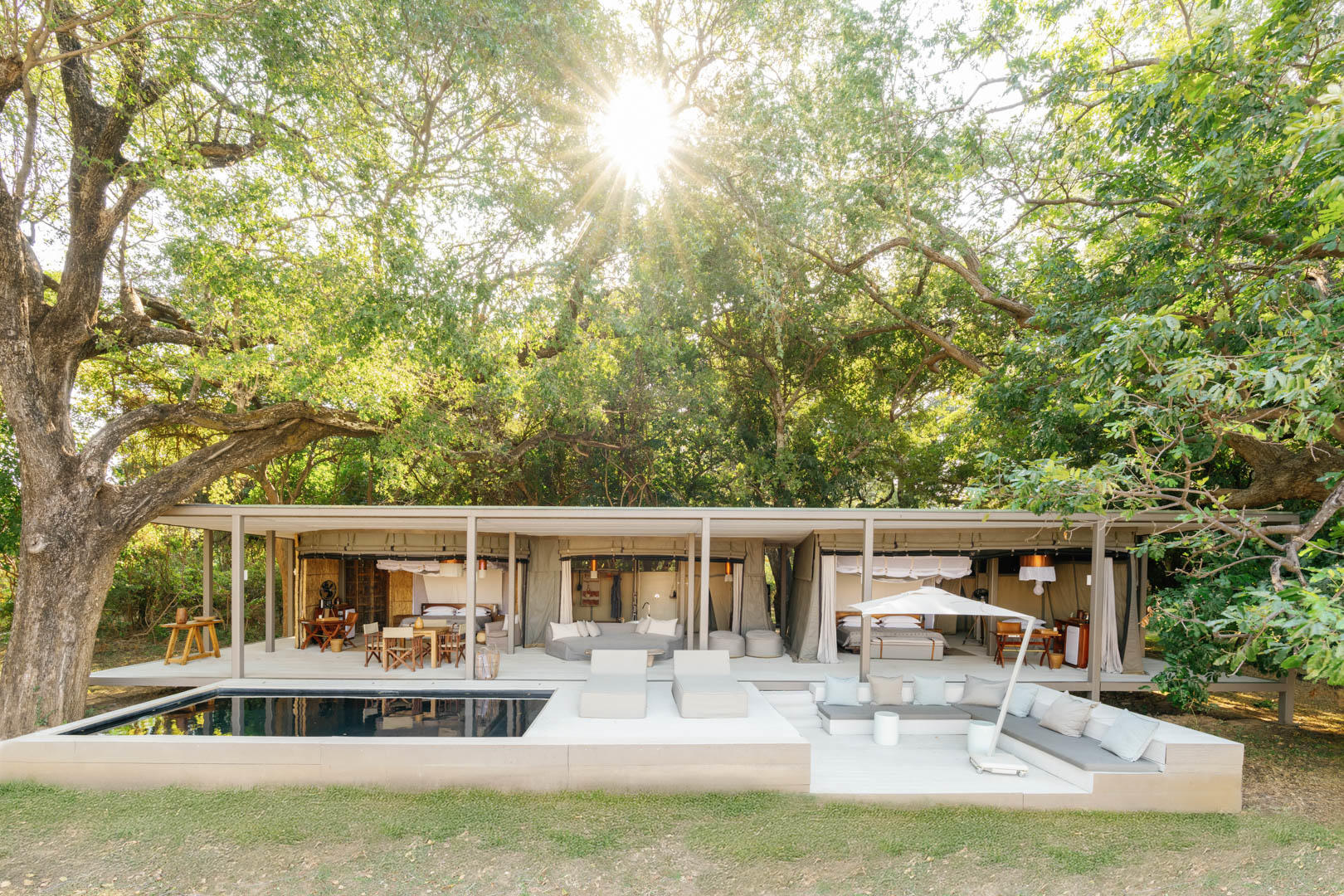
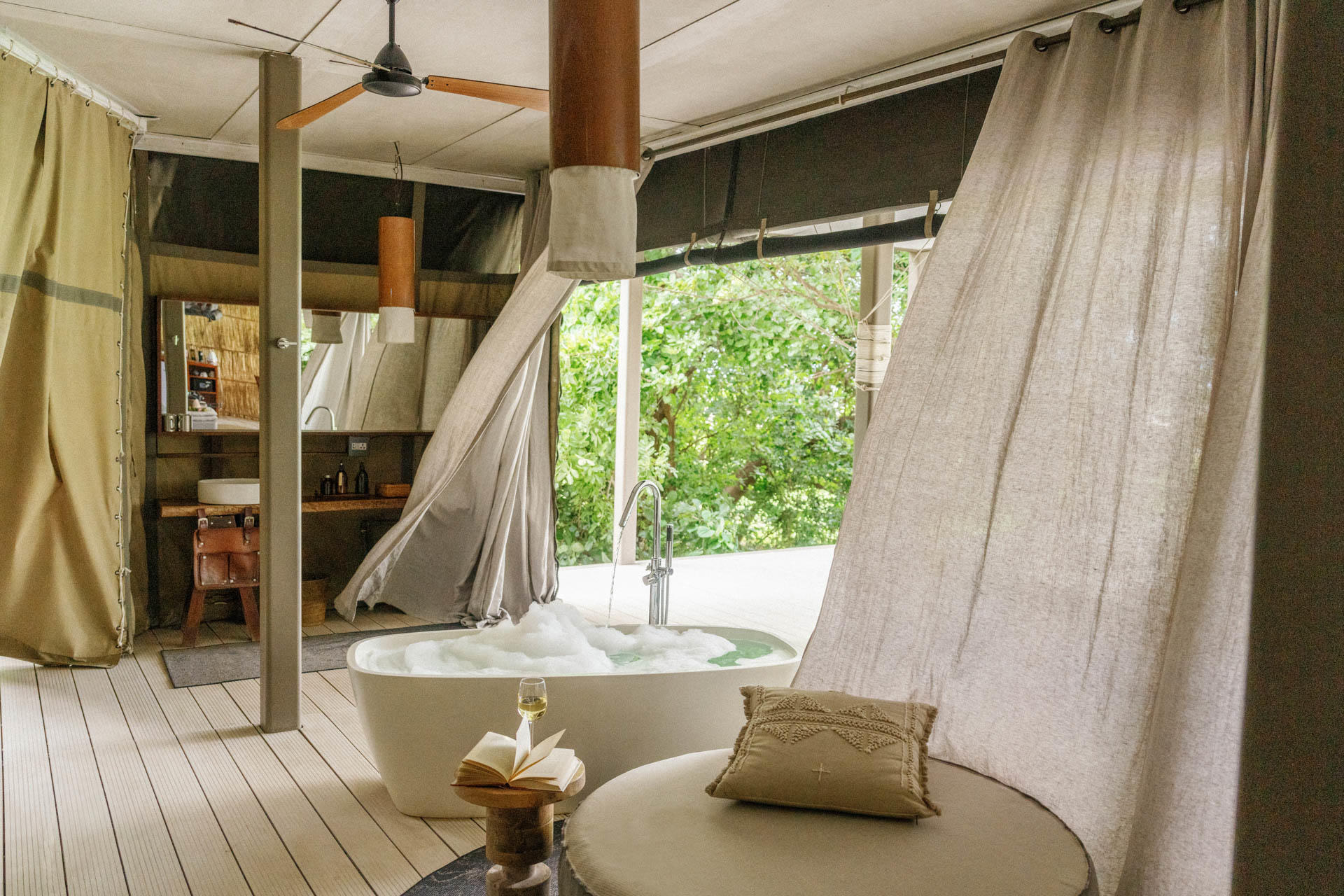
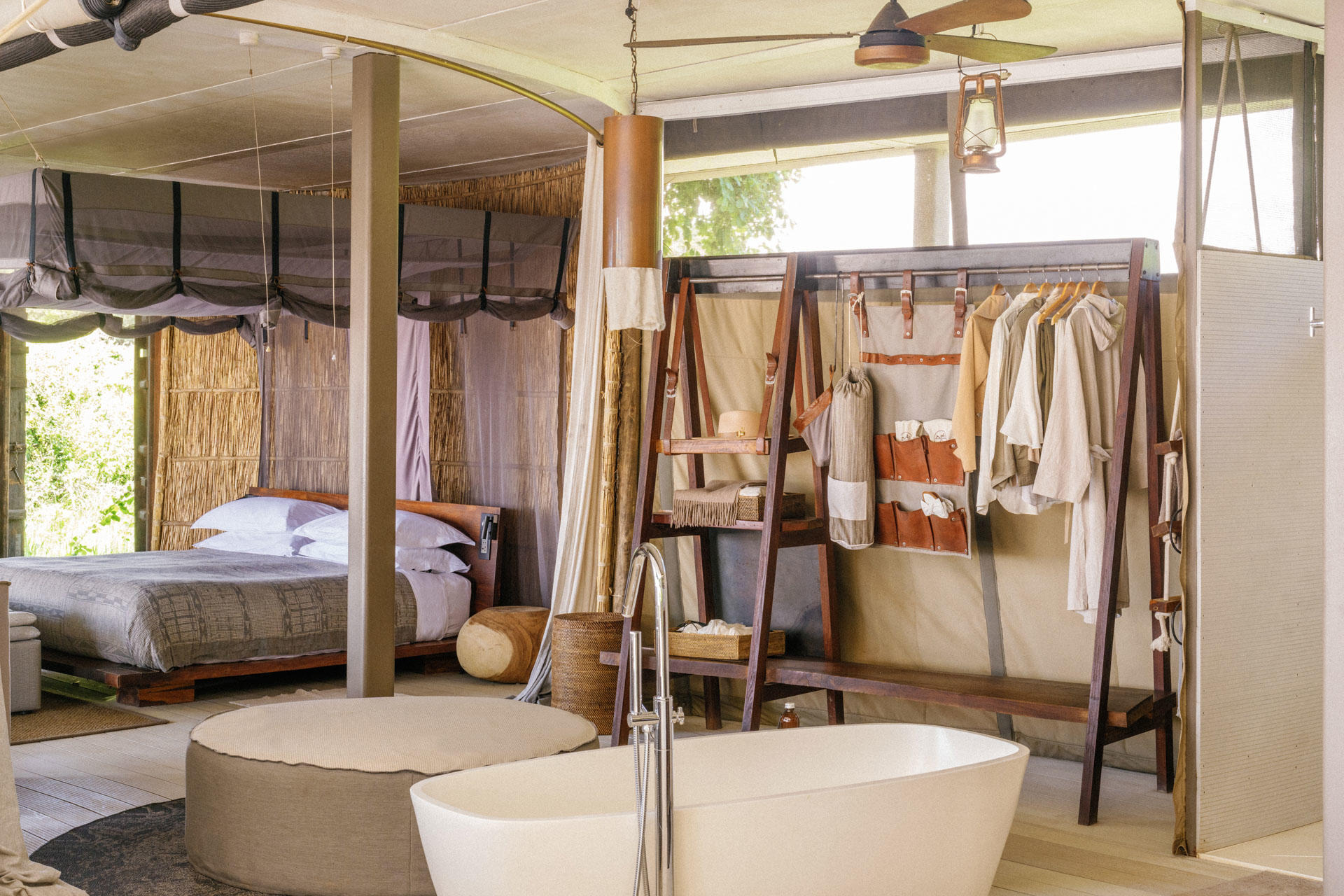
The camp that carries his name today is not a recreation. It is something more interesting: a continuation, built on the same stretch of river, that has taken everything Carr believed about this valley — that walking is more honest than driving, that wildlife deserves attention rather than spectacle, that the Luangwa rewards patience above all else — and rebuilt it for a different era, with rather better plumbing. Six tented suites rest beneath a canopy of ancient trees on the riverbank, each one designed with enough restraint that the view does most of the talking. There are private pools and soaking tubs angled toward the water, but the architecture seems almost apologetic about its own comfort, as though aware that the real luxury here was always going to be the bush itself.

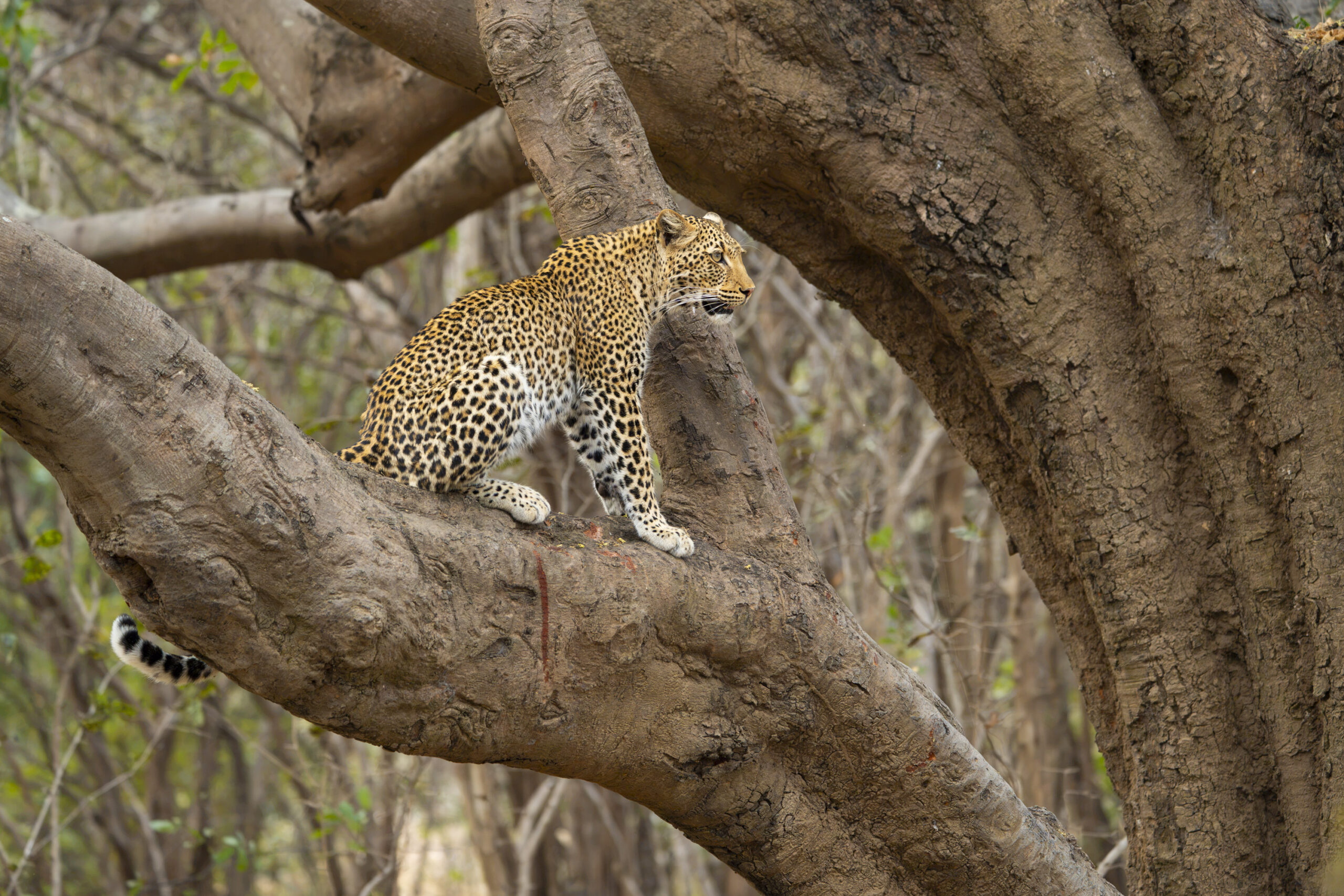
South Luangwa has long been called the Valley of the Leopard, and the reputation holds. The riverine thicket that lines the Luangwa is some of the most reliable leopard country left on the continent, and Chinzombo’s guides — many of them trained in a tradition that traces directly back to Carr’s original walking trails — read it with a fluency that turns a quiet afternoon into something extraordinary without anyone quite noticing the shift. Game drives cover the wider floodplain, thick with hippo and elephant and the kind of birdlife that makes ornithologists go quiet mid-sentence, while access by boat opens up stretches of river that the vehicles can never reach.

What lingers, though, isn’t really the leopards or the river or even the six beautifully unfussy tents. It’s the sense of being inside an idea that someone else had first, decades ago, in a much rougher version of this exact spot — and that the idea turned out to be right. Carr believed wildlife tourism could fund its own conservation, long before anyone had a name for that. He believed the Luangwa deserved to be walked, not just photographed through glass. Chinzombo, for all its polish, still operates on that same quiet conviction.

Some places improve with age. Fewer of them manage to keep their founder’s argument intact while doing it. Chinzombo, somehow, has done both — which may be the truest kind of tribute a landscape can pay to the person who first understood it.

The River Knows — Old Mondoro, Zambia


The Zambezi is one of those rivers that demands your attention. Wide, dark, and perpetually purposeful, it moves through its valley with the unhurried authority of something that has been doing this for millions of years — and will continue long after everything else has changed. For those lucky enough to find themselves on its banks in the Lower Zambezi National Park, it becomes apparent very quickly that the river is not merely a backdrop to the experience. It is the experience.

Old Mondoro understands this instinctively. Tucked an hour further east into the Lower Zambezi National Park than most visitors ever reach, it is a camp that has stripped the safari back to its essentials: a handful of tents built from pole, canvas and reed, open bathrooms beneath the stars, and a stretch of riverbank where the boundary between camp and wilderness has been left, quite deliberately, unmarked. There are no fences here. Elephants walk through at night. Buffalo have been known to graze between the tents at dawn. The camp holds this not as a selling point, but as a simple statement of intent — that the wilderness is not something to be kept at a comfortable distance, but something to be lived alongside.

The safaris here are unlike those found at most other camps. Yes, there are game drives — and good ones, through thick mopane woodland and floodplains where elephant, buffalo and lion move as though the fences of the modern world have never been invented. But it is on the water, and on foot, where Old Mondoro truly earns its reputation. Canoe safaris allow guests to drift silently downriver at the level of the hippos, with crocodiles ancient and motionless on every sandbank, and fish eagles calling overhead in a way that seems almost theatrical. There is something profoundly levelling about being in a small boat on the Zambezi — something that no vehicle, however comfortable, can replicate. The river puts everyone on equal terms.

The walking safaris offer their own kind of revelation. Guided by a team whose knowledge of the bush feels almost geological in its depth, these walks are not an activity to tick off a list. They are an education in attention — the way a broken twig tells a story, the way silence itself becomes a diagnostic tool. In the Lower Zambezi’s dense vegetation, understanding the landscape on foot is the only way to truly read it, and there are very few camps better placed to teach that skill.

What makes Old Mondoro quietly extraordinary, beyond the activities and the setting, is its sense of priority. The camp belongs to the same family that pioneered this stretch of river — people who have spent decades insisting that the best safari is the one that gets out of its own way and lets the wilderness do the talking. Meals are taken together around a communal table. Guides speak about the Zambezi as though it were a living thing they know personally. And the conservation work that underpins every stay here runs quietly beneath the surface, as it always has.

At night, with the Zambezi sliding past in the darkness and hippos grumbling from the shallows, it is easy to understand why the Cumings family never left. The Zambezi doesn’t notice you leave. That indifference, somehow, is exactly what makes you want to come back.

Busanga Plains: Where Luxury Tiptoes Into the Wild

If Singita Sabora feels like theatre, Busanga Plains is closer to unscripted documentary — no retakes, no stage lighting, just the raw pulse of the African wilderness.

Deep in Zambia’s Kafue National Park, the camp sits in the middle of a seasonally flooded grassland so vast it makes the horizon feel like a rumour. For much of the year, these plains are inaccessible. When the waters retreat, they reveal one of Africa’s most dramatic safari arenas: red lechwe bounding through the shallows, herds of puku grazing in golden light, and lions that have learned to hunt where most cats would hesitate to get their paws wet.

Busanga Plains Camp itself doesn’t try to outshine the setting. It couldn’t, and it doesn’t need to. The lodge is deliberately small, with just a handful of tented suites raised on wooden decks. You’ll find comfortable beds, hot showers, and lantern-lit dinners — but don’t expect chandeliers or wine cellars. Here, the luxury is space. Silence. The sense that you’ve stumbled into Africa before the world got crowded.

Game drives roll out across the plains like expeditions. Some mornings are about elephants and buffalo drifting through the mist. Others deliver the famous Busanga lion prides, often lounging on termite mounds like they own the place (which they do). If you’re lucky, you might spot a cheetah carving a line through the long grass, or watch crowned cranes rising in a flurry of wings as the sun sets.

Evenings back at camp are their own reward. Sitting by the fire, the vastness pressing in from all sides, you become acutely aware of just how remote you are. No highway hum, no faint glow of a distant town. Just stars — millions of them — and the steady chorus of the marsh.

Busanga isn’t safari with trimmings; it’s safari distilled. It’s for travellers who crave the edge of adventure but still appreciate a crisp linen sheet at the end of the day. The kind of place that makes you feel small, in the best possible way.

Mpala Jena: Zambezi Luxury

When you combine the feel of a Mozambican beach side lodge with a classic safari camp, and throw in Africa’s mightiest waterfall just downstream, that’s Mpala Jena.

Part of the Great Plains portfolio, Mpala Jena is the epitome of Victoria Falls luxury accommodation and is an intimate safari lodge positioned along the beautiful tree-laden banks of the Zambezi River.

Zambezi National Park, in which the lodge is nestled, is little known, despite its proximity to the world famous Victoria Falls. Split off from the Victoria Falls National Park in 1979, the 56,000 hectares of pristine wilderness and wildlife habitat has been a National Park in its own right ever since.

It is home to a wide range of wildlife that can be enjoyed on safari drives, seen from the Zambezi River when on a boat cruise or the unique Dhow, walking trails or even while sipping cocktails from the camp’s swing chairs. Higher concentrations of buffalo and elephants are typical from June to October. There are more lions per km² here than in any other park in Zimbabwe.

In August 2025, two new, 3-bedroom Mpala Jena Private Villas will open. These two unique villas will be located five kilometres upstream from the current Mpala Jena.

the location of both camps allows easy access to Victoria Falls town by an exciting 40-minute boat or road transfer. Mpala Jena also offers guided tours of the Victoria Falls.

The sand floor in the main camp’s bar area and the adjacent swimming pool set the scene for guests to kick off their shoes and relax after their morning safari drive or river cruise. The pool lounge makes you feel that you are right on the river. Mpala Jena is highly sought after for those wanting the best Victoria Falls luxury accommodation.

Guests have a choice of three large double or twin bed configuration suites, plus two 2-bedroom family suites; are all under sand-coloured, flowing canvas, with canopy ceilings and open (yet netted) views of the river frontage.

Each suite has a shaded, private veranda area and en-suite bathroom facilities, including an indoor shower, separate loo, and double basins. The highlight of the suites is the outdoor bathrooms with a beautiful bathtub and outdoor shower. Decking in front of the tent leads to views of the Zambezi River’s calming and peaceful flowing waters.

Mpala Jena has a strong sustainability ethos. It is powered entirely by a solar plant and battery. Building materials and design elements were specified and sourced with a clear vision of minimising embodied energy and transportation miles.

Although there are plenty of fantastic accommodation options in and around Victoria Falls town itself, it can be nice to escape to somewhere a bit more sheltered, that moves at its own pace, away from the hustle closer to the falls.
The barefoot luxury of Mpala Jena ticks this box perfectly, where safari and rest combine into a magical sense of contentment.


Dulini Anabezi – A New Beginning

Anabezi Camp in the eastern section of the Lower Zambezi National Park, has always ranked among our favourite Zambezi River destinations. Modern comfort and authentic African luxury come together here in one of Africa’s finest game viewing destinations.

Now the camp has been incorporated into the Dulini portfolio, whose camps in the Sabi Sand Reserve, South Africa, we also love, so we anticipate a wonderful renewal of our your love affairs with both brands.

You feel wonderfully close to nature in all of the twelves tented suites, which come complete with either king or twin beds, and all of which overlook either the Zambezi River, Zambezi Floodplain or Kulefu Channel. Each tent features an indoor ensuite bathroom with Victorian style soaking bathtub, and an outdoor bathroom complete with outdoor shower.

Cool off in your private plunge pool during the warmer hours of the ay between game drives whilst buffalo, elephants and warthog feed down below and a host of bird species flit amongst the branches of the Albida trees that tower over the camp walkways.

All rooms are connected to the camp’s main areas by a raised wooden boardwalk and designed for maximum privacy, creating a personal haven amidst the Zambian wilderness. The family tent features two connected rooms, one king with en suite bathroom and outdoor bathroom, and one twin room with private bathroom, both of which share the same viewing deck and plunge pool.

Home to Anabezi’s second swimming pool, the Mushika Deck offers a full bar and sweeping views of the Mushika River floodplain. A nearby watering hole attracts wildlife like resident elephants and buffalos, warthogs bathing in the mud, antelope and the Anabezi troop of Baboons, making it an ideal spot for wildlife viewing.

As its namesake implies, the Zambezi Deck provides sweeping views of the Zambezi River and the floodplain, with daily visits from elephants, buffalo, impala, waterbuck and a variety of birds. Watch the wildlife from the swimming pool, while you’re having lunch or from one of the many lounging areas and take in the surrounding landscape. It’s not uncommon to get up close views of elephants drinking, bathing and crossing the Zambezi River to one of its many islands.

Anabezi is situated deep within the Lower Zambezi National Park, which forms part of the Lower Zambezi– Mana Pools Trans Frontier Conservation area, spanning 1,750,000-hectares of wilderness. The area is a big game mecca, an African Eden, and one of the world’s last remaining untouched natural landscapes. Exceptional game viewing is assured – the area is home to a host of high profile wildlife including lion, leopard, hyena as well as an abundance of other indigenous species.

We are supremely confident that the incorporation of Anabezi into the Dulini brand will do nothing to alter the allure of the place.

The rooms will remain just as comfortable, the service just as exceptional and the food just as delicious. And the wildlife will continue living its wildest life, unaware of any branding changes. And that is the main reason we visit destinations in the first place.

If you’d like to know more about Dulini Anabezi or even Dulini Sabi Sand, get in touch with us through info@iconicafrica.com, and let’s talk safari…

Anabezi Camp: Lower Zambezi Delights

Explore pristine and untouched wilderness in one of Africa’s most remote safari destinations. Anabezi sits on the banks of the Zambezi River in a secluded corner in the eastern area of Lower Zambezi National Park. Far from the majority of other camps,  Anabezi is surrounded by the iconic Winterthorn forest, renowned by safari experts, professional photographers, and documentary film crews.

The camp is built on an elevated boardwalk which connects each luxury tented suite to two main areas with their own respective swimming pools. The elevated boardwalk allows for wildlife to roam freely throughout camp while minimising effects on the ecosystem. It also means guests can walk around safely during the day without an escort. Elephants, buffalo, antelope – and even the occasional lion or leopard – often pass through camp, allowing you to experience wildlife from the comfort of your room. These communal areas evoke a classic African style with a modern touch, providing guests the opportunity to experience Lower Zambezi and its wilderness while relaxing at camp.  As the sun sets and nightlife of the bush comes to life, guests are invited to sit by the campfire with a sundowner and share stories of their sightings with fellow visitors.

Modern comfort and authentic African luxury come together at Anabezi in one of Africa’s finest game viewing destinations. Renew your love affair with nature in one of their twelves tented suites, complete with either king or twin beds, overlooking the Zambezi River, Zambezi Floodplain or Kulefu Channel. Each tent features an indoor en suite bathroom with Victorian style soaking bathtub, and an outdoor bathroom complete with outdoor shower.

As its namesake implies, the Zambezi Deck provides sweeping views of the Zambezi River and the floodplain, with daily visits from elephants, buffalo, impala, waterbuck, warthogs and a variety of birds. Watch the wildlife from the swimming pool while you’re having lunch, or from one of the many lounging areas, and take in the surrounding landscape. It’s not uncommon to get up close views of elephants drinking, bathing and crossing the Zambezi River to one of its many islands.

Large populations of elephants and buffalo roam the forest and the banks of the Zambezi along with Anabezi’s resident pride of lions. The local pack of African Wild Dogs moves up and down the length of the park, with Chakwenga (the section in which Anabezi is found) being one of their favourite hunting grounds. When they are in the area, this pack provides truly exceptional sightings!

Cruising down the Zambezi river allows you to experience Lower Zambezi from a different perspective. At eye level with the rich aquatic ecosystem, watch elephants bath and swim from island to island, G&T in hand, while the sun sets behind the escarpment. You’ll also spot buffalo, crocodiles, hippos, and antelope perched on the river bank floating in Anabezi’s custom-fitted pontoon boats. For those in pursuit of the legendary African tigerfish, the Zambezi River rarely disappoints (although the productive fishing times are seasonal).
Experienced fishermen and novices alike will enjoy heading out on an afternoon fishing trip with one of the camps seasoned guides, full of expert advice and an unparalleled knowledge of this stretch of the river. While Anabezi provide all the necessary rods and tackle for spinner and lure fishing, anglers who specialize in Fly should bring their own equipment.

Anabezi’s location on the east side of the park near the heart of the winterthorn forest makes for epic sightings with few other vehicles. They are able to modify our game viewers for photographers and provide custom beanbags if needed. Should you require a private vehicle or vehicle modification for a photographic safari, Iconic Africa can easily get in touch with the camp to set it up.

Get hold of us through info@iconicafrica.com to start planning your Lower Zambezi safari; an area that is quickly becoming a must-visit on the Southern Africa safari circuit…


Leopards of the Lower Zambezi

The Zambezi is truly one of Africa’s great rivers.

The fourth longest in the continent, it rises in the highlands of western Zambia, before cutting down into Angola, back into Zambia and then acting as a natural border with Namibia, then Zimbabwe before it finally flows into Mozambique, wending its way down to the Indian Ocean.

One specific section of it – the aptly named Zambezi Valley – is between Chirundu and the Mpata Gorge, and is absolutely teeming with wildlife! On the northern, Zambian side of the river, lies the Lower Zambezi National Park, and it is here that we shine our spotlight…

Although the park itself is over 4000 square kilometres, the vast majority of that is scrubby hill-land from the escarpment back away from the river; as a result over 95% of the wildlife viewing takes place down on the valley floor, in the few kilometres between the river itself and the escarpment. It is here that the camps of the Lower Zambezi are to be found, and it is here that you will find some of the best leopard viewing in Africa.

Stunning open forested areas made up of imposing Winterthorn trees provide an incredible backdrop through which the sly cats are consistently to be found moving, as they stalk their predominantly impala prey. The bark of a baboon is often the first indication that there is a leopard on the prowl.

Although in recent years it is the large pack of buffalo-hunting wild dogs in the central Jeki area that has truly put the park on the map, the reality is there is far more to it than a single pack of canids. The lion population is as healthy as ever, general game is prolific, and the elephant herds move their stately way under the Winterthorn canopy in such numbers as to almost be uncountable. The height of the dry season in particular is a spectacular time for a visit as there is scant grass cover and lovely soft light, so you are invariably viewing animals in the open and the photographic opportunities are prolific.

Accommodation-wise one is treated to an almost surfeit of spectacular camps. To the west of the park lie two of our favourites – Zambezi Grande and Time & Tide’s Chongwe House.

With our amazing 35% special currently running on Time & Tide’s camps, Chongwe House would be our obvious recommendation for now, although Zambezi Grande is no less stunning.

Moving east along the riverbank one gets to Chiawa Camp, and it’s sister camp Old Mondoro more centrally located in the park. Both are very similar in design and feel and share similar game viewing opportunities, with Old Mondor being a particular favourite with the elephants, and Chiawa being one of the leopard hotspots in the west of the reserve.

Jeki Airstrip (directly above of Old Mondoro camp on the map) is where most flights to Lower Zambezi will arrive, and is unofficially the centre of the park; it is here that the famous wild dog pack renowned for their buffalo hunting prowess have chosen to den over the past two or three years. Although the pack has split slightly, the larger group and their pups still number roughly 30 individuals, and they still hunt the big bovines in the dry season.

Just east of Jeki, down towards Anabezi Lodge, is the leopard area. For some reason the density here seems to be higher than in the rest of the park, and sightings are frequent. A mother and her two daughters have become regular features in the sightings logs, as well as two small cubs born towards the end of 2023 that are now wll on their way to sub-adulthood.

Anabezi is our favourite camp in the east. It provides superb access to the eastern section of the reserve, is as comfortable as one could wish, and best of all, each visiting party receives their own private vehicle, meaning game drives are yours to do with what you please.

Whilst it is the wild dogs that have taken centre stage over the last few years in the Lower Zambezi, it is the leopards that we believe will keep the park on the map.
Spread throughout the reserve (the wild dogs can disappear into the escarpment), the viewing of them is as consistent and spectacular as one could wish, and with some of the most stunning scenery in Africa on display, there is almost no better place to be viewing these cats in the wild.

The Time & Tide 35% special will be running for the next two months, but there are plenty of options to choose from in this, one of the continent’s most underrated destinations.

Get in touch now through info@iconicafrica.com to find out more…


The Luangwa Valley: the Best of Time & Tide

Spoiled for choice is a wonderful term with which to associate with safari, and it is certainly the case when looking into lodge options within the South Luangwa Time & Tide portfolio.
Stunning camps – some of which are set along the banks of the Luangwa River while the others are further west on the seasonal Luwi Riverbed – provide access to a wide diversity of habitats, ensuring maximum game viewing opportunities in one of Africa’s greatest wildlife areas.

Time & Tide camps are currently available at 35% off, but this limited-time offer is set to expire in a couple of months, so this is the time to book!

Essentially what you are looking at is a wonderful spectrum that takes you from the heart of one of the core game viewing areas out into the true wilderness areas of the park where there are far fewer operators; you will work a bit harder for your major sightings in the more remote camps, but whatever you find you will likely have all to yourself.

Our personal recommendation would be to combine two of the camps in your trip; either Chinzombo or Kakuli at which the chances of seeing excellent game are exceptionally high, and then moving on to a Luwi or Nsolo camp where you will get a true sense of wilderness. Apart from dusty roads there will be almost no other evidence of human presence. The stars will be more brilliant than you could imagine and you will feel like you are a part of the community

The beauty of Luangwa is its seasonality. Cool dry winters give way to a hot dusty spring, with the promise of rain threatening more and more each day. Wildlife congregates around the river and permanent waterholes during the dry times, but when the rains unleash during the summer months the entire landscape transforms into one of vibrant greens, with ephemeral pans topped up, frogs calling throughout the night, and the dambos (dry floodplains) turning into boggy ground that is difficult to negotiate with even the hardiest of vehicles. It’s all part of the adventure, and for photographers in particular this is a time of plenty. The migrant birds have returned, baby impalas are all over the place and everything is clean and colourful.

Some of the more remote camps shut down over the rainy season due to the logistical difficulty of getting supplies in during muddy periods, but Chinzombo remains open due to its still-navigable road network.

One of the main reasons to visit South Luangwa is the leopards. There are plenty of them. Plenty. The dry season in particular is an amazing time to visit as the leopards alter their behaviour to suit the terrain. As the grass dies through the winter, cover becomes sparse and the hunting becomes difficult. The leopards then take to the trees, in particular the heavily foliated sausage and mahogany trees. With ample cover up in the branches, they have shady refuges from which to scan for hunting opportunities, often only waiting until darkness has descended before descending to attempt a stalk.
On rare occasions they will even drop straight from a tree onto unsuspecting prey down below.

Zambia, and South Luangwa in particular is swiftly emerging as front-runner in Africa’s wildlife real estate; a place to compete with the Okavango Delta to the south or the East African grasslands.

With the amazing 35% special currently running with Time & Tide, there could be no better time to book, so you can see for yourself…

Get in touch through info@iconicafrica.com to find out more about the special, camp rates and availability…


Space & Silence: The Real Luxury

In this modern age of safari, when there are countless lodges to choose from, often with no more than a few kilometres between them, people are starting to reevaluate what luxury means.
Wifi speeds and thread-counts, wine lists and heated seats in the game viewer… these are certainly things that can optimise your enjoyment of an experience and make it as comfortable as can be desired, but are they things you can’t find anywhere else? Are they things that will leave you breathless and in complete awe?


It is the sensation of feeling somehow so insignificant yet so much a part of something that people are starting to realise they are truly searching for, and that you are unlikely to find in a fairly standard lodge offering, no matter how “luxurious” it may be on the surface.
Those feelings can only be sought in the stillness of great space, where one can look to distant horizons and let the imagination soar as to what might be out there.

The absolute silence of the Makgadikgadi Pans as you gaze out over their endless salt flats will humble you.
A huge bull elephant dwarfed by the vastness of the north Namibian landscape will give you a new appreciation for the fine balance of life in the harsher environments of this world, and the beauty of an Okavango sunset reflected in the still waters will open your mind to colours and beauty you never knew existed.

These are the bespoke trips we love our guests to experience. Discovering the thrill of safari and adventure often comes with the realisation that it’s not only about the wildlife, but about feeling grounded with the earth and unearthing a deep sense of reverence.
Finding places in this world that are hardly affected by man and where you still very much need to respect the elements gives one a respect for nature that won’t dwindle.

Come and travel with us to uncover these worlds.
Where the magnificence of the land before you makes your gin and tonic the sweetest you’ve ever tasted, and where the emotions of being confronted by such grandeur leave you almost drained come the end of the day, so you enjoy the best sleep you’ve ever had, disturbed only y the lion’s roar on the still night air.

Come and journey with Iconic Africa, and discover that the stillness to be found out there can translate into a stillness and peace within you…

Time & Tide Chinzombo: Gateway to South Luangwa

South Luangwa National Park is simply breathtaking.

Essentially Zambia’s flagship national park, it boasts a stunning array of wildlife, and although there are a number of accommodation options in and around the park, it still boasts that wilderness feel. At almost 10 000 square kilometres it doesn’t lack for size, and when one considers that only a small portion of this area is touched by tourist roads, you appreciate what a wild and untamed place it really is.

Time & Tide, one of our favourite groups in Zambia, have five different camps to choose from in and around the park. Whereas many camps in the area are seasonal and not open during the rainy season, Time & Tide’s Chinzombo is open the whole year round, providing wonderful access to the park during the green months, when the migrant birds are at their most plentiful and life is everywhere.

Named after a type of tree which grows near camp, Chinzombo’s natural building materials and vintage accents blend modern style with the best of a traditional bush safari camp.

Its six spacious luxury safari tents (including a two-bedroom, two-bathroom family tent) rest beneath ancient msikizi trees. Each has a private pool and soaking tub with panoramic views over the river and its abundant wildlife.

Elephants cross the river regularly in front of camp, and the section of the park opposite Chinzombo – known as Wakumba – is one of the hotspots in the whole of South Luangwa to find leopards…

The luxury safari tents’ award-winning design features canvas, timber and reed, accented with leather and raw linen. Each stretches out onto a shaded verandah where you can wile away the afternoon or unwind with an in-room spa treatment.

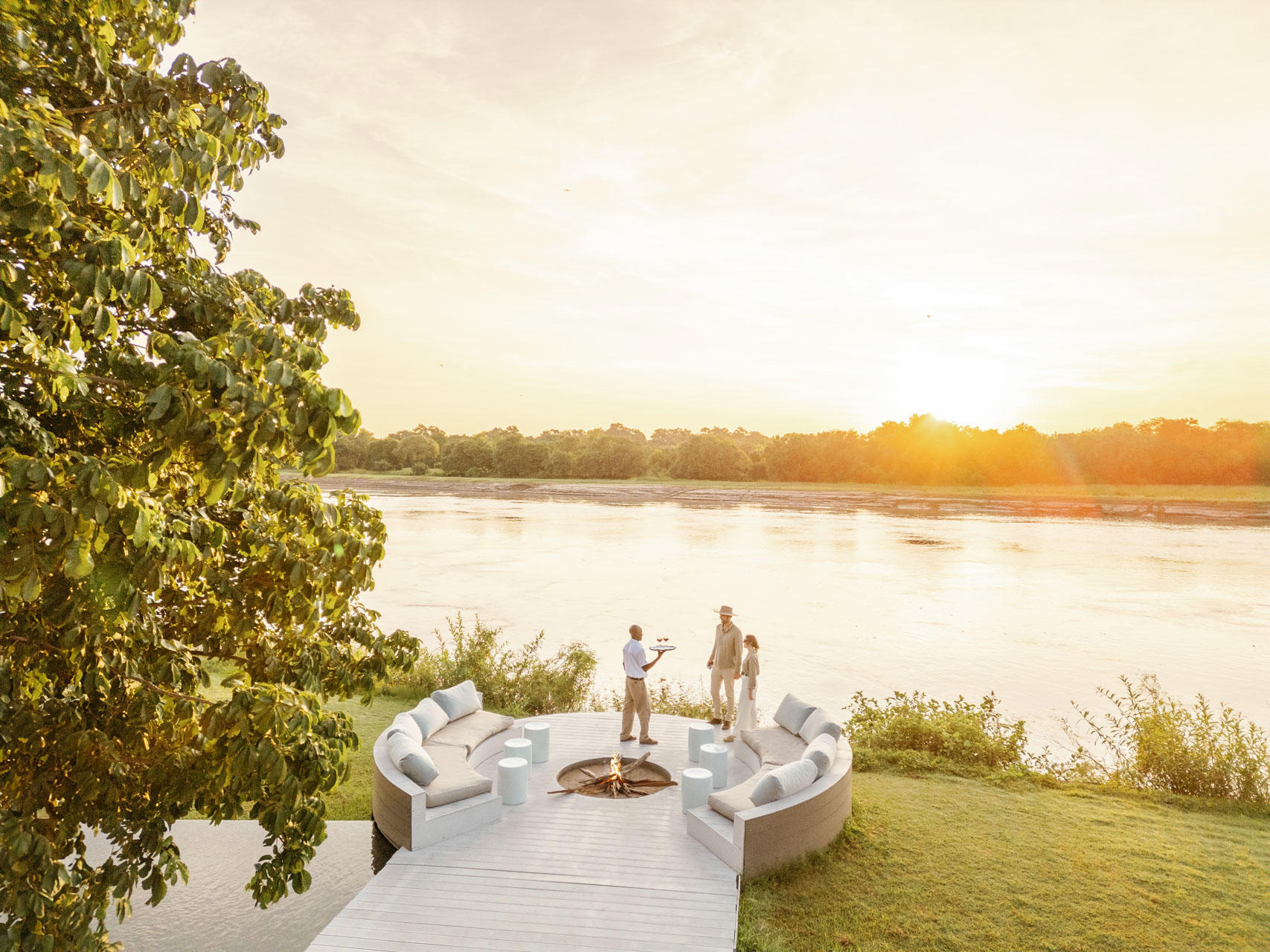
Down a winding path, the main lodge beckons. Lounge on the riverfront sun deck with a book from the open-air library. Enjoy dinner under the stars, made with produce we grow ourselves. Sip a drink at the bar while browsing through old books and photos or around the fire pit suspended high atop the river bank.

This is one of the most game-rich areas of South Luangwa National Park. Take a boat across the river with our experienced guides for a game drive, safari walk or boat cruise (seasonal) to catch sight of lions, leopards and other predator action.

Chinzombo is right on the doorstep of an area of prolific game viewing, but as mentioned earlier, is only a part of the Time & Tide portfolio in this area.

Get in touch through info@iconicafrica.com to find out more, and let’s start planning your Zambian safari…

A Rising Tide: Extraordinary Zambia

As Zambia continues to rise swiftly to prominence in the African safari scene, boasting some stunning beautiful and game-filled safari destinations, one group of lodges keeps emerging as a centre of consistent excellence across their portfolio of camps.

Time & Tide’s conservation heritage dates back to 1950, when Norman Carr set up Zambia’s first game viewing camp in cooperation with Paramount Chief Nsefu of the Kunda Tribes.
Today, the company maintains his legacy, working with local communities to protect and share rare and unique places in all their natural beauty.
Aside from Miavana – a simply mind-blowing destination on Madagascar, which we will be featuring soon – Time & Tide’s lodges are essentially focused in Zambia, and more specifically in three areas; the Lower Zambezi, South Luangwa and Liuwa Plains National Parks.

With a broad spectrum of destinations on offer, there are too many to fit into one short post, so we thought we’d give a brief summary of each area with their T&T options, and go into a bit more detail at a later date.

South Luangwa

Very few places in Africa can offer the unique combination of South Luangwa National Park’s open, grassy plains and mature, mesmerizing woodlands, crowned with the pristine, impressive Luangwa River. This area’s reputation for abundant wildlife and unspoiled vegetation is well earned, so whether driving around or walking through, the intense beauty calls to you from every corner.

South Luangwa National Park is the highlight of eastern Zambia. Known to locals as simply ‘the South Park,’ it was initially founded as the Luangwa Game Park in 1904, and converted to one of three game reserves in 1938. The impressive park covers an area of about 9050 square kilometers of the Luangwa Valley floor, and lies anywhere from 500 meter to 800 meter above sea level. With its western and northwestern edge bounded by the Muchinga Escarpment, and the southern border lined with the meandering Luangwa River, there’s no shortage of dramatic and fascinating topography in this stunning game-rich park.

Time & Tide boast 5 different camps in the South Luangwa National Park: Chinzombo, Mchenja, Kakuli, Nsolo and Luwi.

The latter two are more centrally located in the park, carefully secreted along the ephemeral Luwi River system – a hotbed of elephant activity, particularly in the dry season.
Mchenja, Kakuli and Chinzombo all front onto the Luangwa River itself, and the night air is filled with the sounds of hippo grunts as a result.

South Luangwa boasts one of the densest leopard populations in Africa. Its wild dog population is particularly healthy, and epecially in winter, when animals congregate around the remaining water sources, game viewing is almost unrivalled on the continent.

This is truly a special corner of this ancient land in which to safari

Lower Zambezi:

While this park is developing rapidly and gaining in popularity as the game bounces back, its beauty still lies in its unchanged wilderness state. The diversity of animals may not be quite as wide as the other big parks (there are famously no giraffes as the hilly terrain that protects the Zambezi River doesn’t suit them) but the opportunities to get close to game wandering in and out of the Zambezi channels are spectacular. It lies opposite the famous Mana Pools National Park in Zimbabwe, so the whole area on both sides of the Zambezi River is a massive wildlife sanctuary.

The river’s edge is overhung with a thick riverine fringe, including ebony and fig trees. Further inland is a floodplain fringed with mopane forest and interspersed with winterthorn trees and huge acacias. The rolling hills, which form the backdrop to the park, are covered in broadleaf woodland.

Even though the Lower Zambezi National Park covers an area of 4 092km² / 2 542mi², most of the game is concentrated along the valley floor. There is an escarpment along the northern end that acts as a physical barrier to most of the park’s animal species. Enormous herds of elephant, some up to a hundred strong, are often seen at the river’s edge. ‘Island hopping’ buffalo and waterbuck are common. The park also hosts good populations of lion and leopard, and listen too for the ubiquitous cry of the fish eagle.

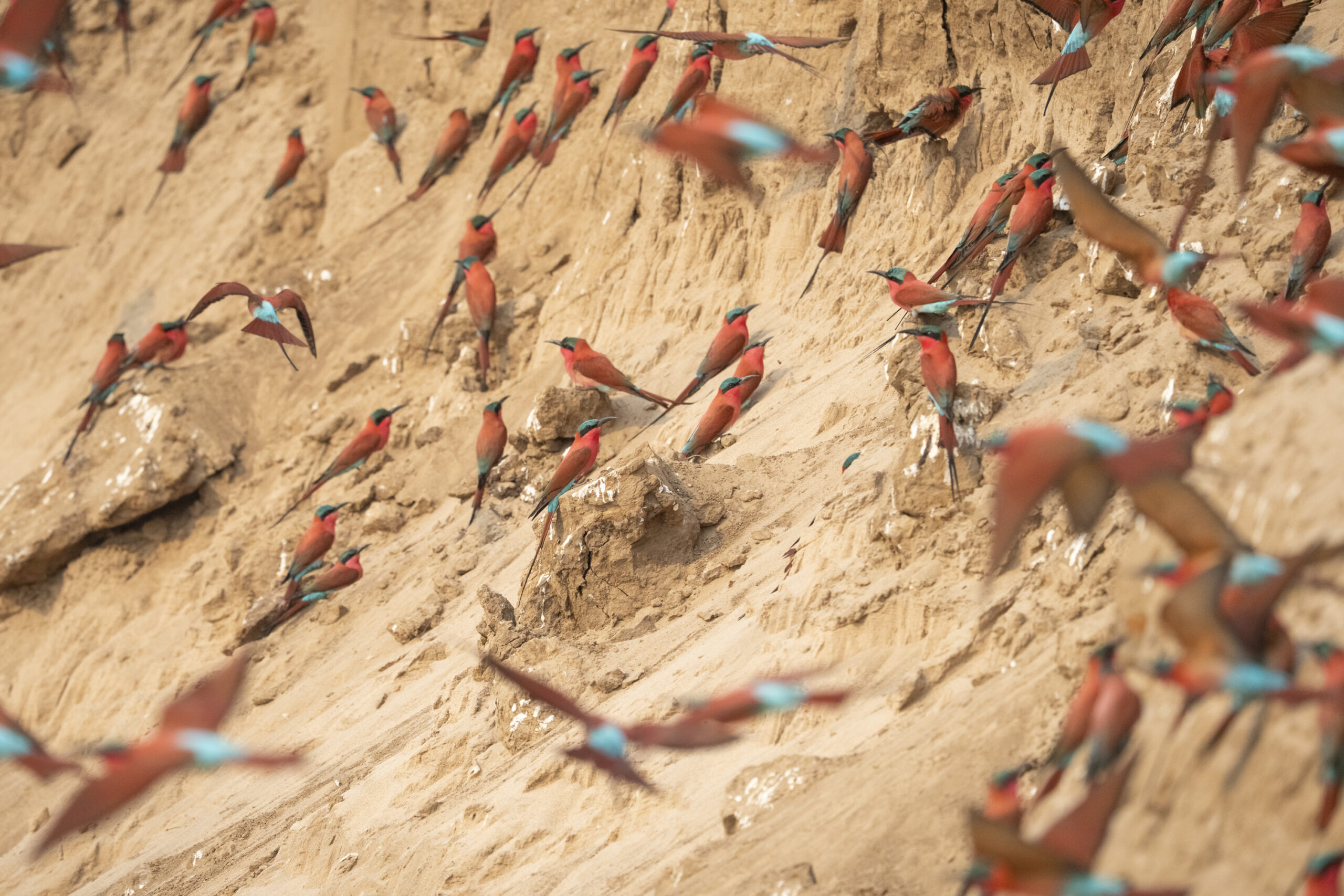
Despite its size, this section of the Zambezi is considered fairly calm and predictable, unlike the mercurial Luangwa River. For this reason, seasonal fishing, boating and canoeing are popular activities, especially guided kayaking through the channels. Look out for shy elephant along the way and magnificent flourishes of scarlet carmine bee-eaters at work on their nests in the riverbanks.

Tims & Tides lodges consist of Chongwe Camp (the main camp of eight suites), Chongwe House (a two-storey, four-bedroom, four-bathroom private house which operates exclusively), and the Cassia and Albida suites – perfect for honeymooners and couples.
All are located on the Chongwe River which forms the park’s western boundary.
Game Drives and boat cruises make up the mainstay of the wildlife viewing activities, but simply spending time at the lodge is almost guaranteed to give you your fill of wildlife – in particular elephants.

Liuwa Plains:

Liuwa Plain in western Zambia has one of the longest conservation histories in Africa, dating back to the late 19th century when the King of Barotseland appointed his people as the custodians of the reserve.

In 2008, African Parks began a series of lion reintroductions. Over a similar period, eland and buffalo were reintroduced to the park and plains game began to increase, providing a healthy prey base for the predators: lion, cheetah and hyaena.

Today, with over 10,000 people legally living within the park, Liuwa is a prime example of how people and wildlife can coexist and benefit in a shared landscape. Helping protect the land for the benefit of local people to continue accessing its natural resources sustainably is enhanced through ongoing community engagement and integration. In addition, communities are supported through socio-economic initiatives, employment and tourism revenue that is generated as Liuwa becomes a major tourist attraction. Now that the landscape is once again a source of stability and abundance, the people of Liuwa have renewed their commitment and sense of custodianship to their land.

Time + Tide King Lewanika is the only permanent camp in Liuwa Plain National Park, its six open-front luxury safari tents (including a two-bedroom, two-bathroom luxury family tent) are the essence of pure and simple luxury. Built using local techniques and sustainable materials, they run on solar power and are furnished using vintage leather, cotton and canvas—a nod to old-world safari days. Designed to completely immerse you in the vast landscape, each has an indoor and outdoor shower, a comfortable lounge and a verandah, all with stunning views over the plains.

We will be showcasing a bit more of the various camps in more detail over the next few months, but in the meantime, if you would like more information on rates and availability, and which camp would be best suited to your needs, get in touch through info@iconicafrica.com, and let’s start planning your Zambian Safari…

The Wildest of Wild Dogs

We recently ran a post on one of the best offerings in the Zambezi River Valley; Zambezi Grande on the Zambian side. This luxury lodge provides amazing access to the Lower Zambezi National Park and its incredible wildlife.

Safari Guide Robbie Ball was recently on a trip to Zambezi Grande, and tells us here of one of the wildest things he’s ever seen in the bush:

We’d heard stories of the huge pack of African Wild Dogs that were resident in the Lower Zambezi Park and asked our guide if we could try and find them one morning.

Zambezi Grande is literally on the water’s edge, and water activities form a huge part of the offering here, so in true Zambezi River style, we set off downstream before dawn in one of the lodge’s boats whilst our ranger drove the vehicle round to meet us in the area the dogs had been seen the day before.
We enjoyed a spectacular sunrise from the boat, passing fish eagles, pods of hippos and elephants ambling along the bank.

It was about a 45 minute boat ride to where we disembarked, and shortly after linking up with the vehicle, we were guided to where the pack of wild dogs were sleeping by the tell-tale signs of vultures in the trees nearby.

The pack numbered 46 at the time, which must surely make them one of the largest packs in Africa!

After sitting with them for 30 minutes or so, we noticed a large dust cloud billowing up from the winterthorn forest nearby, which signalled the approach of a herd of buffalo. We could hear their bellowing from a long way off, which meant the dogs could hear them too, but they pack stayed snoozing.


The buffalo came into view and still the dogs did nothing, when suddenly, with the herd only about 200 metres away, the dogs leapt up and raced towards them. There had been no signal that we could see, not greeting ritual that usually precedes a hunt, no sign whatsoever; they were just up and racing in as a pack.

We tried to keep up with them but the bush was too thick where they led us and the herd had fled to. By the time we caught up a few minutes later the pack had already grabbed hold of a buffalo cow and were in the process of bringing her down.

The rest of the herd was still bellowing nearby but they didn’t come to the aid of the old female.
Wild dog kills tend to be quite gory, but are usually mercifully quick when they involve small game. With a large buffalo cow, despite the number of dogs involved, things were drawn out and difficult to watch.

Eventually the buffalo cow had died from a combination of shock and bloodloss, and whilst the pack gorged themselves, one of the adults trotted back to where they had been resting, to call the pups – who don’t get involved in the hunt – to come and feed.

We were there for maybe an hour and a half, and it was certainly one of the craziest wildlife sightings I will probably ever have in my lifetime!

Visit our Facebook or instagram pages (@iconicafrica) to see some video footage of this sighting…

The Zambezi Grande offers fantastic access – both by river and land – to the wildlife of the Zambezi Valley and Lower Zambezi National Park. Although sightings like the one Robbie witnessed are certainly not the norm, this particular pack has become renowned for taking down adult buffalo.

If a wildlife adventure like this is something you would be interested in, get in touch through info@iconicafrica.com


Zambezi Grande: The Perfect River Escape

Different wildlife areas in Africa come into their own seasons of popularity over the years. There always seems to be “the hottest new destination around”, and it is difficult for a single lodge to remain in the forefront of people’s minds for year after year.

Well the star of the Lower Zambezi National Park and surrounds in Zambia seems to be shining brighter and brighter each and every year. It has been on the rise for a while now, and set right on the banks of this amazing wilderness area, in a prime location to take full advantage of what the unique landscape has to offer, one finds Zambezi Grande.

Opened in October 2017, Zambezi Grande Private Game Experience is situated on a prime sector of the Zambezi River front, offering visitors an unforgettable personal retreat, with all the sumptuous indulgences a discerning guest would appreciate. The honk of the local hippo pod will be your wake-up call in the morning, the call of the African Fish Eagle high above will sound throughout the day, and the roar of a lion will add to the nighttime symphony as you sit around the campfire, watching the glow of the fading light reflecting off the gently flowing Zambezi River in front of you.

Bringing the heart and soul of the magical Zambezi into one place, the décor of the lodge is a mix of contemporary design and truly authentic African feel. Reflecting the serenity of its surrounds with neutral colours representing life, renewal, nature, and energy, there is an almost seamless transition between the wilds and the lodge itself. With a seamless open-plan, guests can enjoy the majestic views of the river from all areas of the lodge, and as such be exposed to all the activities by of the local wildlife, be it river-borne or strolling past on the bank.

Since welcoming their first guests in October 2017, the lodge has truly encapsulated the vivid environment they call home. Whether relaxing on the pool deck, enjoying a sundowner cruise on the river, or unwinding on the terrace watching the wildlife passing by, there are so many ways to soak in this enchanted corner of Africa.

Zambezi Grande Private Game Experience neighbours the Lower Zambezi National Park, a bountiful 4,092 square kilometres of rich birdlife, indigenous flora and untamed wildlife. Packs of the rare African Wild Dog roam the winterthorn forests, leopards slink from grove to grove, and the elephants are particularly plentiful, flocking down to the river in great numbers at the end of the dry season to feast on Ana tree pods and quench their thirst from the waters of the Zambezi.

The game viewing along this section of the Zambezi Valley is simply out of this world, and the local guides of Zambezi Grande are well-trained to both find and interpret the high-profile sightings that guests seek,

A variety of habitats ranging from forest to open plains, thick bush to palm groves, complement the safari experience here, and guests will never feel like they are on the same excursion twice, be it a fishing trip, a game drive or a bush walk.

Zambezi Grande features five Superior Suites, each with an exclusive veranda on the banks of the Zambezi River. King size beds allow one to wallow in unspeakably comfortable opulence during the hours of slumber, and the river-facing outdoor shower allows you to refresh yourself whilst feeling completely in tune with the African wilds.

Five Luxury rooms offer their own intimate Zambezi Grande experience, being only slightly smaller than the Superior Suites, but being perfect for a family option, having inter-connecting rooms available.

Zambezi Grande offers guests the perfect way to immerse themselves in this unique corner of the world. Ultimate comfort, a superior game viewing experience, and a prime position that lets you switch off from all the trappings of the fast-paced modern world, make this lodge a must-do if Zambia’s safari scene is something on your bucket list.

Lolebezi: Wild, Remote, Luxurious

The Zambezi is one of Africa’s largest and most iconic rivers.

Originating in the highlands of Zambia, it sweeps out to the west into Angola, then back south through Zambia before forming the border between Namibia as it turns to the east, then the border with Zimbabwe, and eventually crossing into Mozambique where it continues its path to the Indian Ocean.

Wildlife is to be found all along its almost 3000km length, but one section in particular is a verdant paradise; the 150km downstream from the Chirundu border post between Zambia and Zimbabwe. This is part of the Lower Zambezi Valley, and it is here that you will find some of the most spectacular wildlife viewing in one of the most spectacular areas in Africa.
It is here that you find Lolebezi Camp, in Zambia’s Lower Zambezi National Park.

Lolebezi is the latest offering in the African Bush Camps portfolio, and is one of the most special. An exclusive kilometre of Zambezi River frontage has guests waking up to one of the continent’s great waterways within a few metres of the deck of their rooms, more often than not with an elephant or two in attendance, and at the very least the local pod of hippos. The river teems with life here, especially in the dry season (July – October), when the inland pans evaporate and animals have to flock to the riverbank to drink.

Elephant herds congregate under the Ana trees to eat the fallen pods, impalas and baboons feed together, both acting as sentries for each other, and where there is a multitude of herbivores, the predators are never far away.
Leopards and lions abound here, and the openness in of the area towards the end of the dry season in particular makes the sightings of these big cats more common.

Large packs of the endangered African Wild Dog have made their home in the park, one of the few areas that provides the space that these enigmatic animals require to operate effectively in the huge home ranges they need, whilst simultaneously allowing for a large enough population to establish itself that ensures healthy genetic flow.

The camp itself is paradise.

Sunsets like no other as the sky and the river itself are bathed in golden, red and purple hues. Fish eagles calling from the trees above and the chatter of monkeys from the tree tops serves as constant reminders that you are not separated from nature here; you are immersed in it.

The contemporary design of Lolebezi seamlessly blends modest elegance with a simplicity that can only be found in the African bush. Designed for both family and romantic escapes, Lolebezi has four superior suites and two double family units. The lodge is fully airconditioned, with a private plunge pool and thatched Sala on the river.

The eco-conscious traveller should look no further, as the camp is powered by an off-the-grid solar farm, and the water supply and wastewater are managed to ensure that no pollution enters the river. Everything is done to minimise the human footprint on the land.


Lolebezi is a family friendly lodge, welcoming children of all ages (with the restriction of children over the age of 16 being able to join walking safaris and canoeing).
The small number of suites assures an intimate experience, whether you are travelling as a couple or in a slightly larger group.

The main dining area of Lolebezi is designed out of old railway sleepers, harking back to the long-forgotten days of exploration and giving it a distinctly adventurous atmosphere. The all-day café and pizza bar ensure that you won’t be going hungry whilst on safari here. If you’d rather opt for a more secluded dining experience, you can eat in your own dining room or take advantage of the river-pods for picnics.

Lolebezi is truly a special place. The combination of its immersion in one of Africa’s greatest wildlife areas as well as its superb accommodation and attention to detail make it one of the best offerings in the region.
A short flight from Lusaka (Zambia’s capital) will set you down at the airstrip just two kilometres from camp, and only a short game drive down the road you will be on the banks of the Zambezi, sipping a G&T while taking in the river and its accompanying escarpment in all their glory.

Get in touch to find out more…

Amanzi: Lower Zambezi’s Living Eden

If tranquility in an African bush setting is what you are after, with the gentle current of the Zambezi River flowing past your private deck, a cold Zambezi Lager in one hand, a pair of binoculars in the other and a herd of elephants swimming across the river int he distance, Amanzi Luxury Tented Camp is the place for you.

Set far from the madding crowd in the Lower Zambezi National Park – a place swiftly gaining a reputation as one of Africa’s new hotspots for sensational game viewing – Amanzi is the most remote of the camps in the region, as well as being exclusive-use only, meaning you’ll enjoy a far more intimate wildlife experience.

Guided walks, game drives and river excursions offer multiple exciting ways to explore the area, and all offer their own unique way to immerse yourself in of the continent’s most special wildernesses.

Amanzi is a small camp, being comprised of only four classically styled luxury suites.
Two suites are stand-alone and one is a double-bedroom family styled suite, with the two bedrooms being designed in exactly the same way as the stand-alones.
Wooden walkways link the rooms to the lounge and dining area, and move further through the riparian thickets to the pool and teak viewing deck, situated just above the mighty Zambezi River.

More often than not guests don’t even need to leave their suites to view wildlife, as large hippo pods frequent the area and elephants are an almost constant presence around the camp.

Whilst historically areas like Hwange in Zimbabwe, the Okavango in Botswana, and the Kruger National Park and surrounds in South Africa have been at the forefront of the Southern African wildlife scene, Zambia’s Lower Zambezi National Park is fast coming into its own as a premier destination for wildlife viewing.
Leopards abound here, packs of wild dogs dominate the floodplains in the dry season, and the local lion population are frequent hunters of the large buffalo herds.

If it’s up-close wildlife encounters that you are after, in a setting almost tailor-made for photography, look no further. The fact that Amanzi is out beyond all the other camps means that a lot of the time, you are all alone with the animals you are viewing.

With amazing rates currently available for Iconic Africa guests (for both international and SADC visitors), this is a fantastic time to think about a safari into this part of the continent. As the area grows in renown it is likely that more and more visitors will want to head there, but for the moment there is still exclusivity and plenty of space to be found.

Get in touch to start planning your safari…