An Arrangement With Elephants — Ruckomechi Camp, Zimbabwe

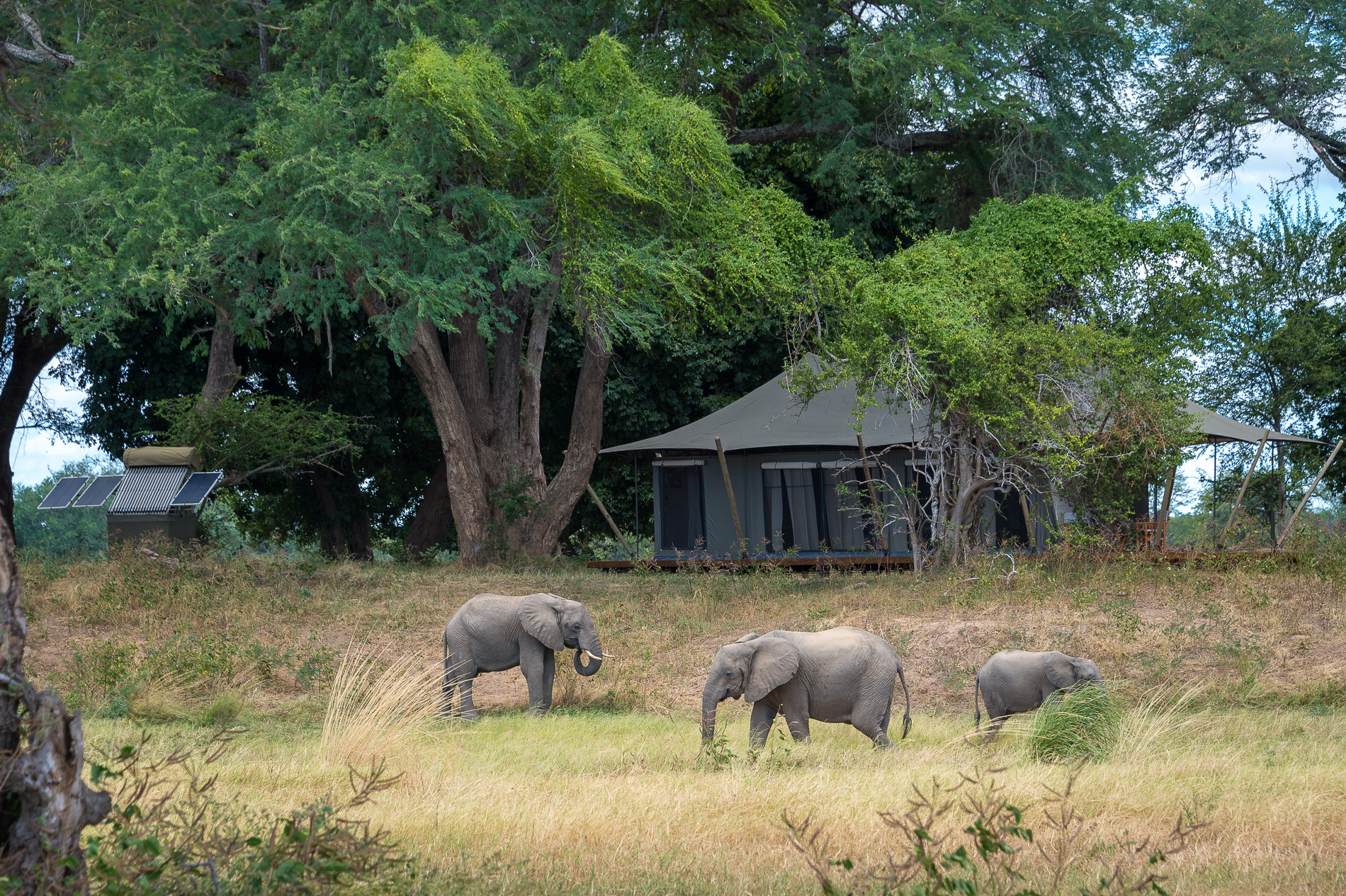
There is a particular tree along the Zambezi’s floodplain — the apple-ring acacia, known locally as the albida — that drops its seed pods in the dry season at precisely the moment the rest of the bush has nothing left to offer. Elephants have understood this for longer than anyone has been keeping records, and they organise entire days around it. Ruckomechi Camp, tucked into a private concession on the western edge of Zimbabwe’s Mana Pools National Park, happens to have been built beneath a particularly fine grove of them. Which means, in practice, that the elephants come to camp. Not occasionally, and not as a curiosity laid on for the cameras. As a matter of routine, the way one might call in at a regular café.
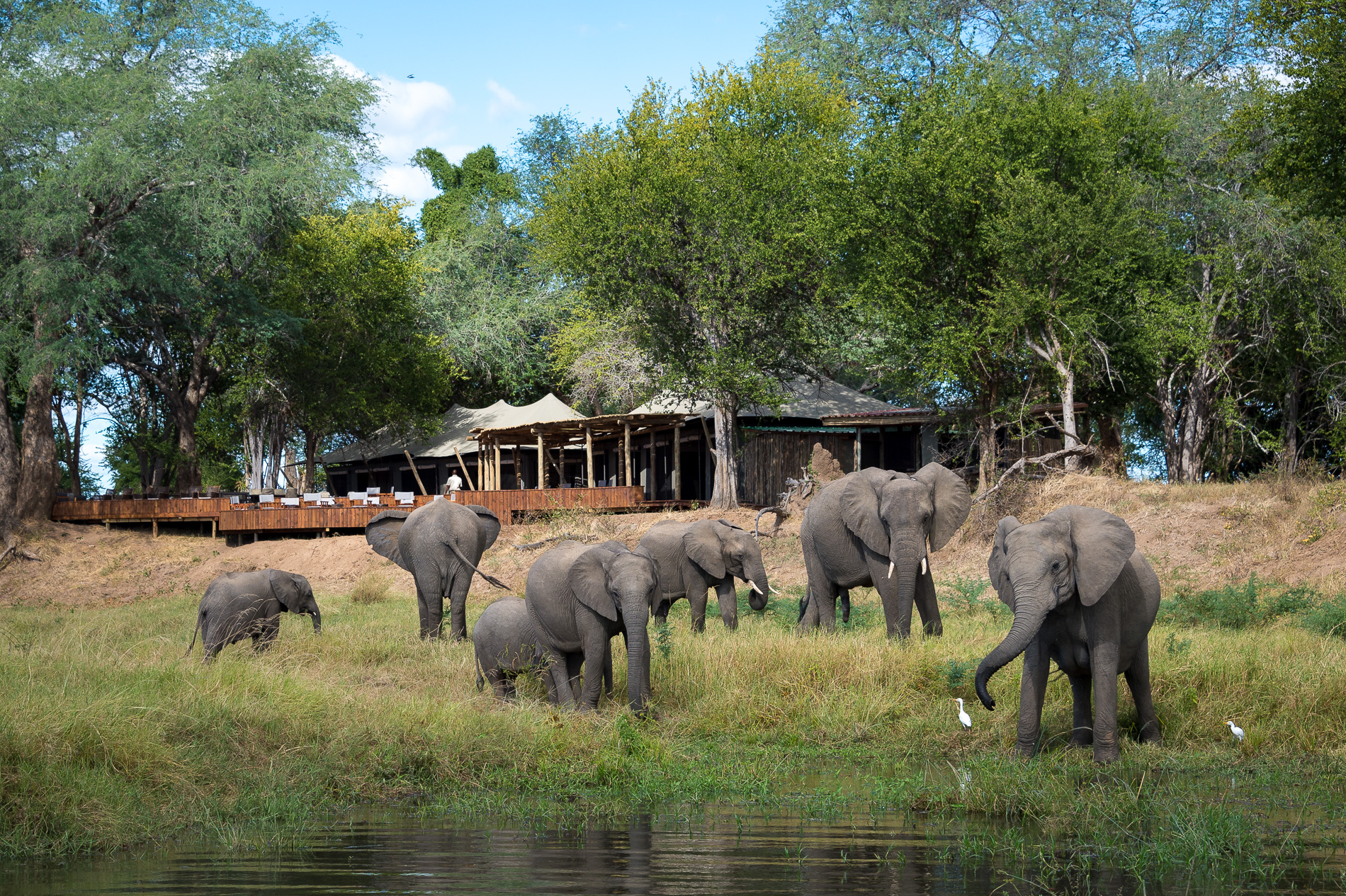
It takes most guests a day or two to stop being startled by this. A bull will wander between the tents at midday, entirely unbothered, working through a low branch with the unhurried focus of someone who has done this ten thousand times before. The camp’s answer is not to intervene but to make room — chairs angled politely out of the way, conversations paused mid-sentence, nobody especially alarmed. Mana Pools is one of the very few places in Africa where this kind of proximity is considered not reckless but simply how the wildlife works here, on its own terms, with people permitted to watch from close enough to feel the air move.
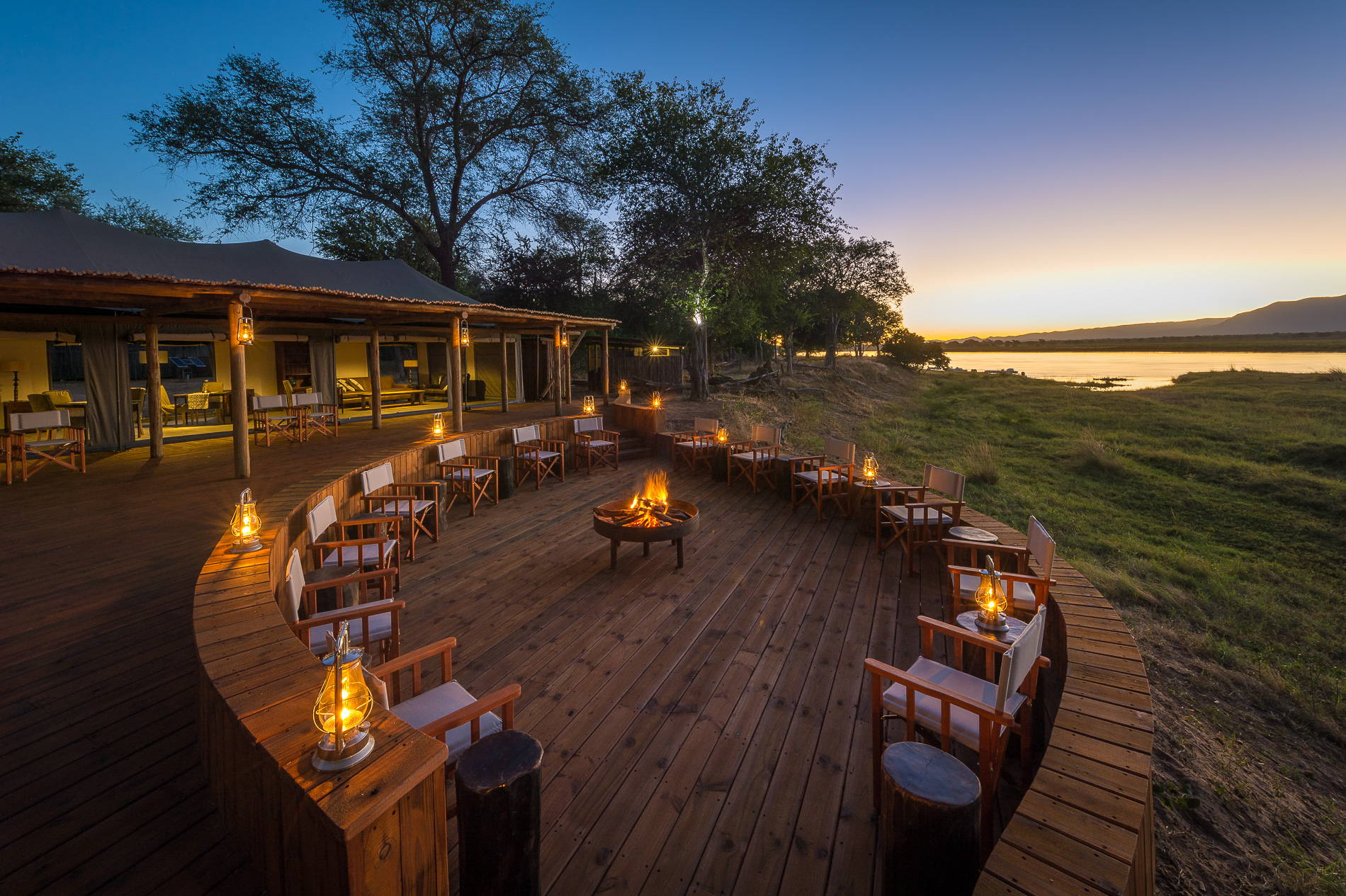
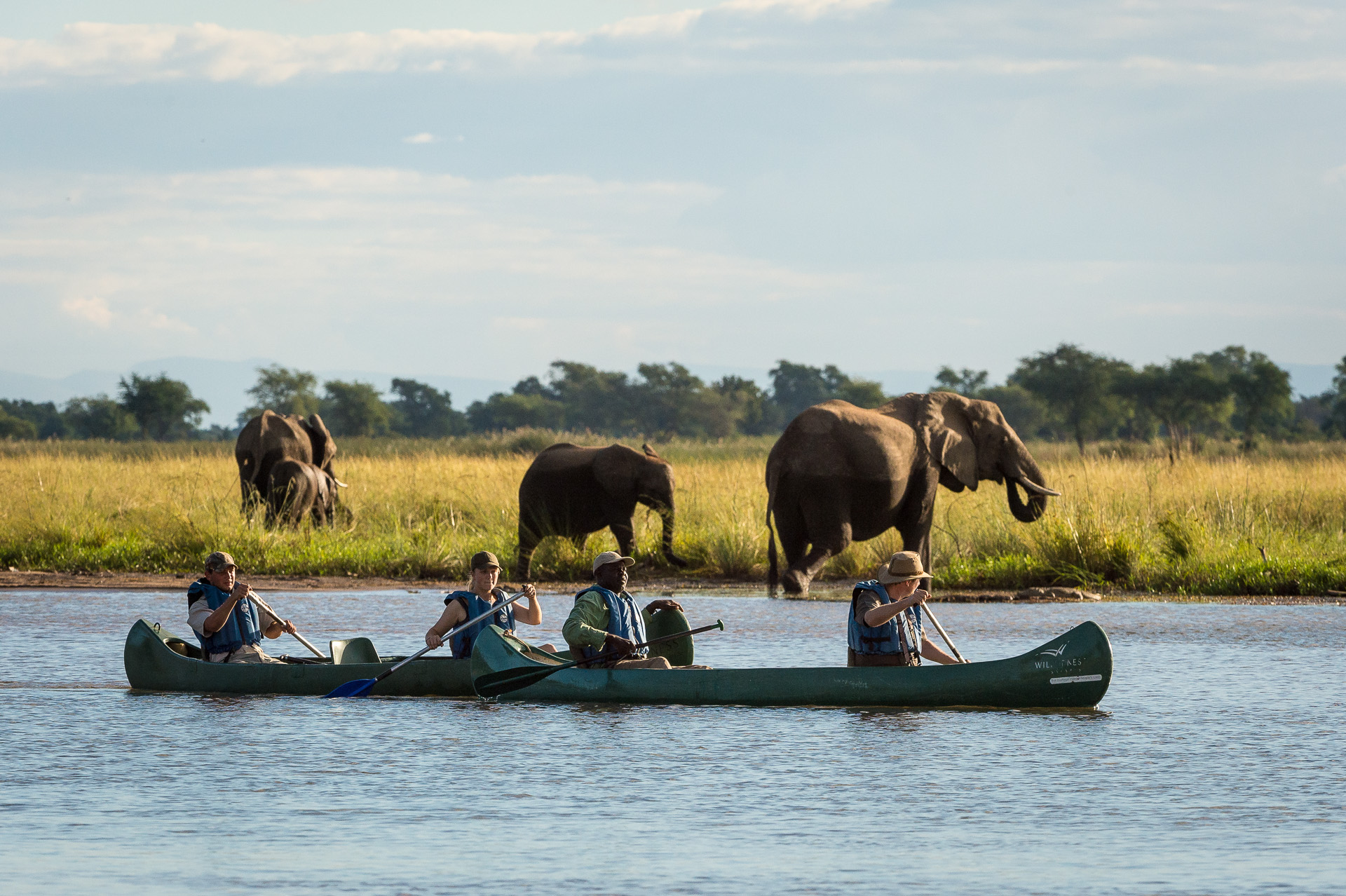
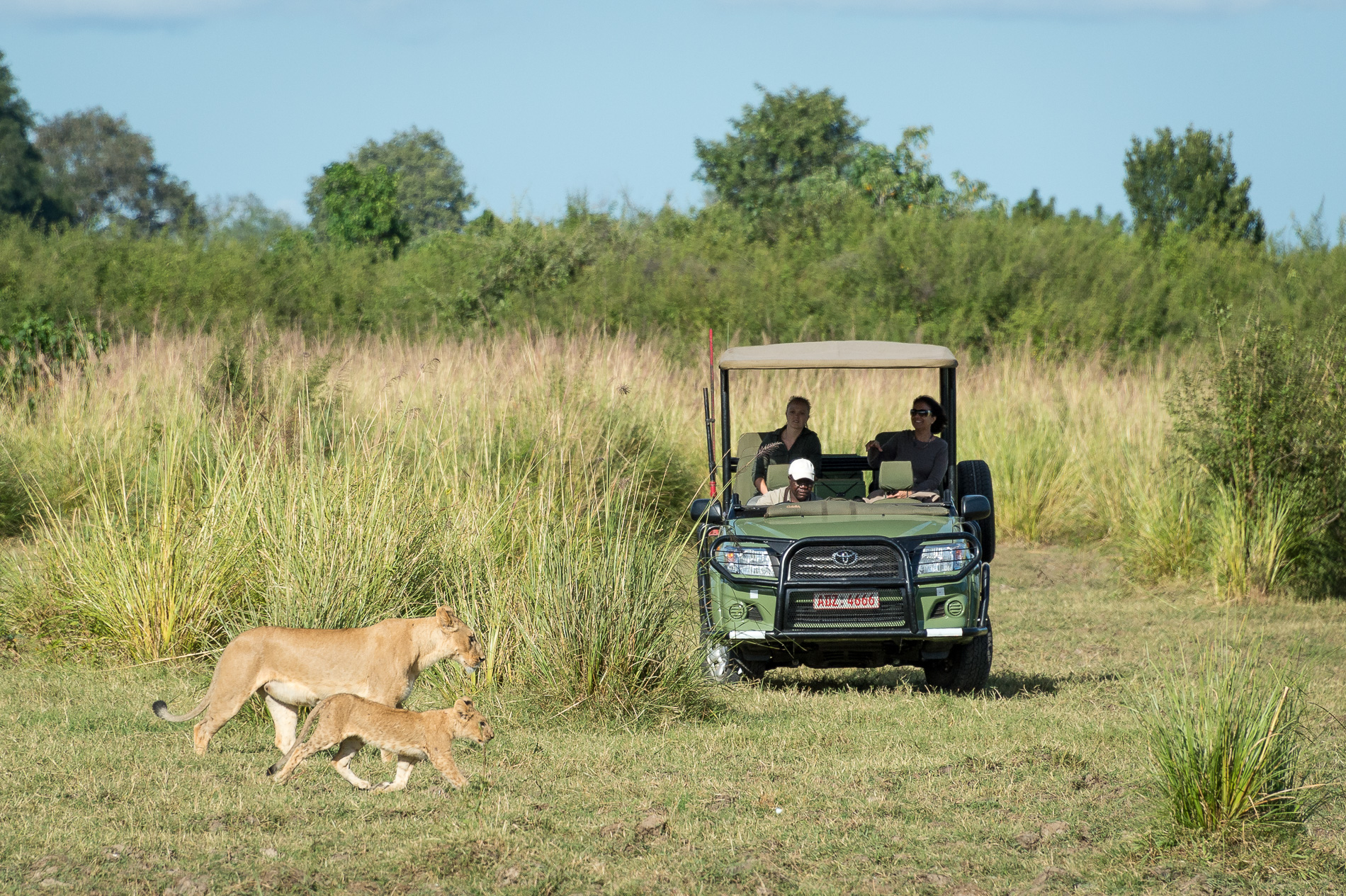
The wider floodplain is where Ruckomechi properly reveals itself. Wide, flat, threaded with the kind of ana forest that gives Mana Pools its particular green-gold light, it draws an unusual concentration of predators through the dry season — lion, leopard, and increasingly, African wild dog, which have found a stronghold here that has become one of the most reliable in the region. Walking safaris move through this landscape at the pace it deserves, led by guides trained to read a floodplain the way a sailor reads weather, while canoe safaris drift down a stretch of the Zambezi so still in places that the only ripples are the ones you’ve made yourself.
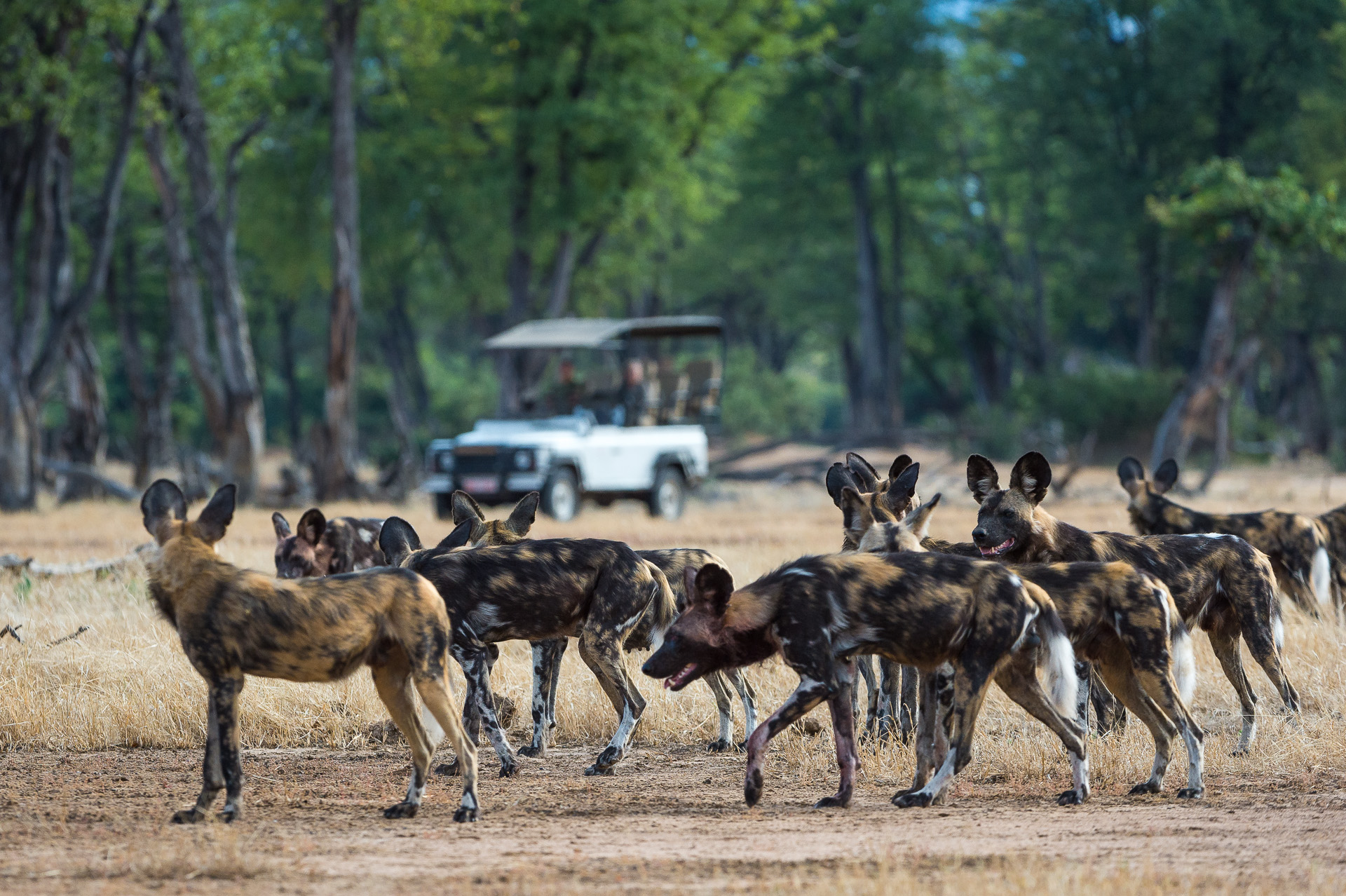
What separates Mana Pools from the rest of the Zambezi valley is its UNESCO World Heritage status, granted not for grandeur but for the specific, irreplaceable ecology of this floodplain system — and Ruckomechi’s private concession plays an active part in protecting it, funding the anti-poaching patrols and research that keep the wild dog population recovering rather than retreating. None of this is advertised loudly. It simply happens, the way the elephants simply arrive, as part of an arrangement that long predates the camp and will presumably outlast it.
In the late afternoon, with the heat finally loosening its grip and the floodplain turning the colour of weak tea, it becomes easy to forget that any of this required explaining. The elephants are not performing for anyone. They were here first, and they have simply allowed the camp to stay.

The River Knows — Old Mondoro, Zambia


The Zambezi is one of those rivers that demands your attention. Wide, dark, and perpetually purposeful, it moves through its valley with the unhurried authority of something that has been doing this for millions of years — and will continue long after everything else has changed. For those lucky enough to find themselves on its banks in the Lower Zambezi National Park, it becomes apparent very quickly that the river is not merely a backdrop to the experience. It is the experience.

Old Mondoro understands this instinctively. Tucked an hour further east into the Lower Zambezi National Park than most visitors ever reach, it is a camp that has stripped the safari back to its essentials: a handful of tents built from pole, canvas and reed, open bathrooms beneath the stars, and a stretch of riverbank where the boundary between camp and wilderness has been left, quite deliberately, unmarked. There are no fences here. Elephants walk through at night. Buffalo have been known to graze between the tents at dawn. The camp holds this not as a selling point, but as a simple statement of intent — that the wilderness is not something to be kept at a comfortable distance, but something to be lived alongside.

The safaris here are unlike those found at most other camps. Yes, there are game drives — and good ones, through thick mopane woodland and floodplains where elephant, buffalo and lion move as though the fences of the modern world have never been invented. But it is on the water, and on foot, where Old Mondoro truly earns its reputation. Canoe safaris allow guests to drift silently downriver at the level of the hippos, with crocodiles ancient and motionless on every sandbank, and fish eagles calling overhead in a way that seems almost theatrical. There is something profoundly levelling about being in a small boat on the Zambezi — something that no vehicle, however comfortable, can replicate. The river puts everyone on equal terms.

The walking safaris offer their own kind of revelation. Guided by a team whose knowledge of the bush feels almost geological in its depth, these walks are not an activity to tick off a list. They are an education in attention — the way a broken twig tells a story, the way silence itself becomes a diagnostic tool. In the Lower Zambezi’s dense vegetation, understanding the landscape on foot is the only way to truly read it, and there are very few camps better placed to teach that skill.

What makes Old Mondoro quietly extraordinary, beyond the activities and the setting, is its sense of priority. The camp belongs to the same family that pioneered this stretch of river — people who have spent decades insisting that the best safari is the one that gets out of its own way and lets the wilderness do the talking. Meals are taken together around a communal table. Guides speak about the Zambezi as though it were a living thing they know personally. And the conservation work that underpins every stay here runs quietly beneath the surface, as it always has.

At night, with the Zambezi sliding past in the darkness and hippos grumbling from the shallows, it is easy to understand why the Cumings family never left. The Zambezi doesn’t notice you leave. That indifference, somehow, is exactly what makes you want to come back.

Mpala Jena: Zambezi Luxury

When you combine the feel of a Mozambican beach side lodge with a classic safari camp, and throw in Africa’s mightiest waterfall just downstream, that’s Mpala Jena.

Part of the Great Plains portfolio, Mpala Jena is the epitome of Victoria Falls luxury accommodation and is an intimate safari lodge positioned along the beautiful tree-laden banks of the Zambezi River.

Zambezi National Park, in which the lodge is nestled, is little known, despite its proximity to the world famous Victoria Falls. Split off from the Victoria Falls National Park in 1979, the 56,000 hectares of pristine wilderness and wildlife habitat has been a National Park in its own right ever since.

It is home to a wide range of wildlife that can be enjoyed on safari drives, seen from the Zambezi River when on a boat cruise or the unique Dhow, walking trails or even while sipping cocktails from the camp’s swing chairs. Higher concentrations of buffalo and elephants are typical from June to October. There are more lions per km² here than in any other park in Zimbabwe.

In August 2025, two new, 3-bedroom Mpala Jena Private Villas will open. These two unique villas will be located five kilometres upstream from the current Mpala Jena.

the location of both camps allows easy access to Victoria Falls town by an exciting 40-minute boat or road transfer. Mpala Jena also offers guided tours of the Victoria Falls.

The sand floor in the main camp’s bar area and the adjacent swimming pool set the scene for guests to kick off their shoes and relax after their morning safari drive or river cruise. The pool lounge makes you feel that you are right on the river. Mpala Jena is highly sought after for those wanting the best Victoria Falls luxury accommodation.

Guests have a choice of three large double or twin bed configuration suites, plus two 2-bedroom family suites; are all under sand-coloured, flowing canvas, with canopy ceilings and open (yet netted) views of the river frontage.

Each suite has a shaded, private veranda area and en-suite bathroom facilities, including an indoor shower, separate loo, and double basins. The highlight of the suites is the outdoor bathrooms with a beautiful bathtub and outdoor shower. Decking in front of the tent leads to views of the Zambezi River’s calming and peaceful flowing waters.

Mpala Jena has a strong sustainability ethos. It is powered entirely by a solar plant and battery. Building materials and design elements were specified and sourced with a clear vision of minimising embodied energy and transportation miles.

Although there are plenty of fantastic accommodation options in and around Victoria Falls town itself, it can be nice to escape to somewhere a bit more sheltered, that moves at its own pace, away from the hustle closer to the falls.
The barefoot luxury of Mpala Jena ticks this box perfectly, where safari and rest combine into a magical sense of contentment.


Dulini Anabezi – A New Beginning

Anabezi Camp in the eastern section of the Lower Zambezi National Park, has always ranked among our favourite Zambezi River destinations. Modern comfort and authentic African luxury come together here in one of Africa’s finest game viewing destinations.

Now the camp has been incorporated into the Dulini portfolio, whose camps in the Sabi Sand Reserve, South Africa, we also love, so we anticipate a wonderful renewal of our your love affairs with both brands.

You feel wonderfully close to nature in all of the twelves tented suites, which come complete with either king or twin beds, and all of which overlook either the Zambezi River, Zambezi Floodplain or Kulefu Channel. Each tent features an indoor ensuite bathroom with Victorian style soaking bathtub, and an outdoor bathroom complete with outdoor shower.

Cool off in your private plunge pool during the warmer hours of the ay between game drives whilst buffalo, elephants and warthog feed down below and a host of bird species flit amongst the branches of the Albida trees that tower over the camp walkways.

All rooms are connected to the camp’s main areas by a raised wooden boardwalk and designed for maximum privacy, creating a personal haven amidst the Zambian wilderness. The family tent features two connected rooms, one king with en suite bathroom and outdoor bathroom, and one twin room with private bathroom, both of which share the same viewing deck and plunge pool.

Home to Anabezi’s second swimming pool, the Mushika Deck offers a full bar and sweeping views of the Mushika River floodplain. A nearby watering hole attracts wildlife like resident elephants and buffalos, warthogs bathing in the mud, antelope and the Anabezi troop of Baboons, making it an ideal spot for wildlife viewing.

As its namesake implies, the Zambezi Deck provides sweeping views of the Zambezi River and the floodplain, with daily visits from elephants, buffalo, impala, waterbuck and a variety of birds. Watch the wildlife from the swimming pool, while you’re having lunch or from one of the many lounging areas and take in the surrounding landscape. It’s not uncommon to get up close views of elephants drinking, bathing and crossing the Zambezi River to one of its many islands.

Anabezi is situated deep within the Lower Zambezi National Park, which forms part of the Lower Zambezi– Mana Pools Trans Frontier Conservation area, spanning 1,750,000-hectares of wilderness. The area is a big game mecca, an African Eden, and one of the world’s last remaining untouched natural landscapes. Exceptional game viewing is assured – the area is home to a host of high profile wildlife including lion, leopard, hyena as well as an abundance of other indigenous species.

We are supremely confident that the incorporation of Anabezi into the Dulini brand will do nothing to alter the allure of the place.

The rooms will remain just as comfortable, the service just as exceptional and the food just as delicious. And the wildlife will continue living its wildest life, unaware of any branding changes. And that is the main reason we visit destinations in the first place.

If you’d like to know more about Dulini Anabezi or even Dulini Sabi Sand, get in touch with us through info@iconicafrica.com, and let’s talk safari…

Mana Sands: the Zambezi at its Best

Mana Pools National Park in Zimbabwe has long been associated with wild adventure.
It is a place where Africa still feels like its is moving at the same pace it did thousands of years ago, and the rhythm of nature is uninterrupted by human presence.
The epicentre of walking safaris in Southern Africa, Mana Pools is where you can literally go on foot to join a pack of wild dogs as they get on the hunt, or you can stand mere metres from a giant bull elephant as he stands on his back legs to retrieve seedpods from the upper branches.
It feels like anything is possible in this spectacular wilderness of the Zambezi Valley, and with the construction of Mana Sands, a new luxury lodge on the western side of the park, the envelope of what a true bush experience is, is about to be pushed even further…

Mana Sands represents the realisation of a dream; the owners all share a deep love of nature and in particular of this stretch of the Zambezi River, where they all spent holidays as children. The development of the lodge represents a way for them to find a way back to those simple times of wonder, and to be able to pass on a similar feeling to their own children.

That is ultimately what the lodge is aiming to create for those who visit; a way back to a time before emails and traffic and bills and the complications of day to day life. A visit here will get you in touch with the essence of what it is to feel human. Mana Sands will give guests a rare opportunity to be part of a world where natureʼs raw beauty and untamed spirit come alive in the most extraordinary way.

Mana Sands is in fact two lodges; Mana Sands Main Camp, featuring six private ensuite tents each with an expansive private deck and plunge pool, whilst Little Mana, just downstream, boasts four private ensuite tents, each with a private deck, as well as two extended family units allowing space for up to two extra beds to be added for children.

Both camps offer a full range of bush adventures, from guided walks to tiger fishing excursions, birding-focused expeditions and everything in between. All are facilitated through highly competent, professional local guides.

Little delights surprise you at every turn, from gin and tonic stops on the riverbank to stargazing under the brilliance of the southern skies.

Whilst Mana Pools has been on our radar for some years now, it has been a while since we were as excited about this iconic destination; Mana Sands certainly looks like being our top new lodge of 2025.
Although they are still in the final stages of the lodge build, they will be opening for bookings come the new year, so don’t wait to enquire if the archetypal safari adventure is what you are after.

Get in touch through info@iconicafrica.com to find out more about 2025’s most exciting new offering…

Kanga Camp: the Home of the Armchair Safari

Most safari lodges have you feeling like you should be out and about, exploring the area, wondering what might be going on around the next bend in the road.
But Kanga Camp, set on a private concession in Mana Pools National Park of Zimbabwe, offers such prolific wildlife viewing from the comfort of an armchair on the camp deck, the only place you’ll feel you need to go is to the charging station to replace your camera battery.

Kanga is a seasonal camp, open between the months of April and November. The wet season when it is closed features surface water everywhere, which means animals aren’t drawn to the Kanga Pan itself, which during the dry months is essentially the only standing water for miles in any direction.
Elephants in particular are an almost constant procession to the valuable drinking water of the pan (the Zambezi River itself is almost 20 kilometres away), and there are few places on earth that you will be able to get as close to these magnificent creatures, at eye level.

Kanga Pan is a photographer’s paradise in particular. The unique, close-up angles you can get of all manner of wildlife coming down to drink at all hours of the day means that both that long lens and wide-angle will get their fair share of use. Meal-times are regularly punctuated by the rumble of breeding elephant herds only a few feet away, and the nocturnal roar of the local lion coalitions forms the most authentic African serenade you can have.

In line with African Bush Camp’s sustainability approach, the camp is solar-powered. It comprises six tents all raised on individual wooden platforms for an elevated view over the Pan and surrounding bush. The Meru-styled tents are elegantly styled, featuring floor-to-ceiling mesh windows that allow for refreshing air flow and make you feel completely immersed in nature, whilst keeping out any bugs that may be buzzing around (although there are very few to be found during the dry season).

All tents are replete with fans, en-suite bathroom, flushing toilet, outdoor shower, hot running water and a secluded veranda. Kanga also has a family tent which boasts a wraparound terrace facing the pan with private seating and dining areas. Children over seven years old are welcome at the camp, although waling safaris are restricted to kids over the age of 16. The camp plunge pool offers respite from the heat during the warm days at the beginning and end of the season.

It’s not all about out the Pan itself though. Experienced rangers take insightful game drives to explore the wider park, including trips down to the Zambezi River itself, which offers a completely different experience to the inland terrain around Kanga. The Ana tree forests of the Zambezi floodplain and the multitude of wildlife it attracts will leave you speechless.

All in all, Kanga offers the same dedication to hospitality that we’ve come to expect from the African Bush Camps portfolio. It is as comfortable as you could wish, the experience is unique, and in the context of a wildlife destination, especially in an area like Mana Pools, there isn’t a much higher accolade than that.

Amanzi: Lower Zambezi’s Living Eden

If tranquility in an African bush setting is what you are after, with the gentle current of the Zambezi River flowing past your private deck, a cold Zambezi Lager in one hand, a pair of binoculars in the other and a herd of elephants swimming across the river int he distance, Amanzi Luxury Tented Camp is the place for you.

Set far from the madding crowd in the Lower Zambezi National Park – a place swiftly gaining a reputation as one of Africa’s new hotspots for sensational game viewing – Amanzi is the most remote of the camps in the region, as well as being exclusive-use only, meaning you’ll enjoy a far more intimate wildlife experience.

Guided walks, game drives and river excursions offer multiple exciting ways to explore the area, and all offer their own unique way to immerse yourself in of the continent’s most special wildernesses.

Amanzi is a small camp, being comprised of only four classically styled luxury suites.
Two suites are stand-alone and one is a double-bedroom family styled suite, with the two bedrooms being designed in exactly the same way as the stand-alones.
Wooden walkways link the rooms to the lounge and dining area, and move further through the riparian thickets to the pool and teak viewing deck, situated just above the mighty Zambezi River.

More often than not guests don’t even need to leave their suites to view wildlife, as large hippo pods frequent the area and elephants are an almost constant presence around the camp.

Whilst historically areas like Hwange in Zimbabwe, the Okavango in Botswana, and the Kruger National Park and surrounds in South Africa have been at the forefront of the Southern African wildlife scene, Zambia’s Lower Zambezi National Park is fast coming into its own as a premier destination for wildlife viewing.
Leopards abound here, packs of wild dogs dominate the floodplains in the dry season, and the local lion population are frequent hunters of the large buffalo herds.

If it’s up-close wildlife encounters that you are after, in a setting almost tailor-made for photography, look no further. The fact that Amanzi is out beyond all the other camps means that a lot of the time, you are all alone with the animals you are viewing.

With amazing rates currently available for Iconic Africa guests (for both international and SADC visitors), this is a fantastic time to think about a safari into this part of the continent. As the area grows in renown it is likely that more and more visitors will want to head there, but for the moment there is still exclusivity and plenty of space to be found.

Get in touch to start planning your safari…

Ruckomechi Camp: Mana Magic

When half of the Southern African guiding fraternity view a destination as their own version of Mecca, you know something special must be happening there.

Mana Pools National Park in north Zimbabwe draws people in fo many reasons, but the main attraction is most certainly one’s ability to have close encounters with wildlife on foot. Walking safaris have been conducted in the park since 1963, and as a result of decades of being exposed to people on foot, a large proportion of the local wildlife has become used to people out of the vehicles, and ignore them completely.

Tag along behind African Wild Dogs as they go on the hunt or watch spellbound as an enormous elephant bull stretches up to snack on the pods of an Ana tree, barely thirty metres from you… the experiences one can have here are almost impossible to replicate anywhere else in Africa.

On the western fringes of Mana Pools NP one finds Ruckomechi Camp, nestled into a corner of a huge expanse of private conservation land.
The might Zambezi River flows in front of the camp, the surrounding woodlands are constantly alive with birdsong, and the Zambezi escarpment provides an amazing backdrop to your evening sundowners.

Ruckomechi was one Mana Pools’ pioneer camps, having entertained guests for over two decades.

Ten spacious and beautifully decorated en-suite rooms, including two family units, are unobtrusively placed beneath the spreading Ana trees, the seeds of which are heavily sought after by the local elephant population.
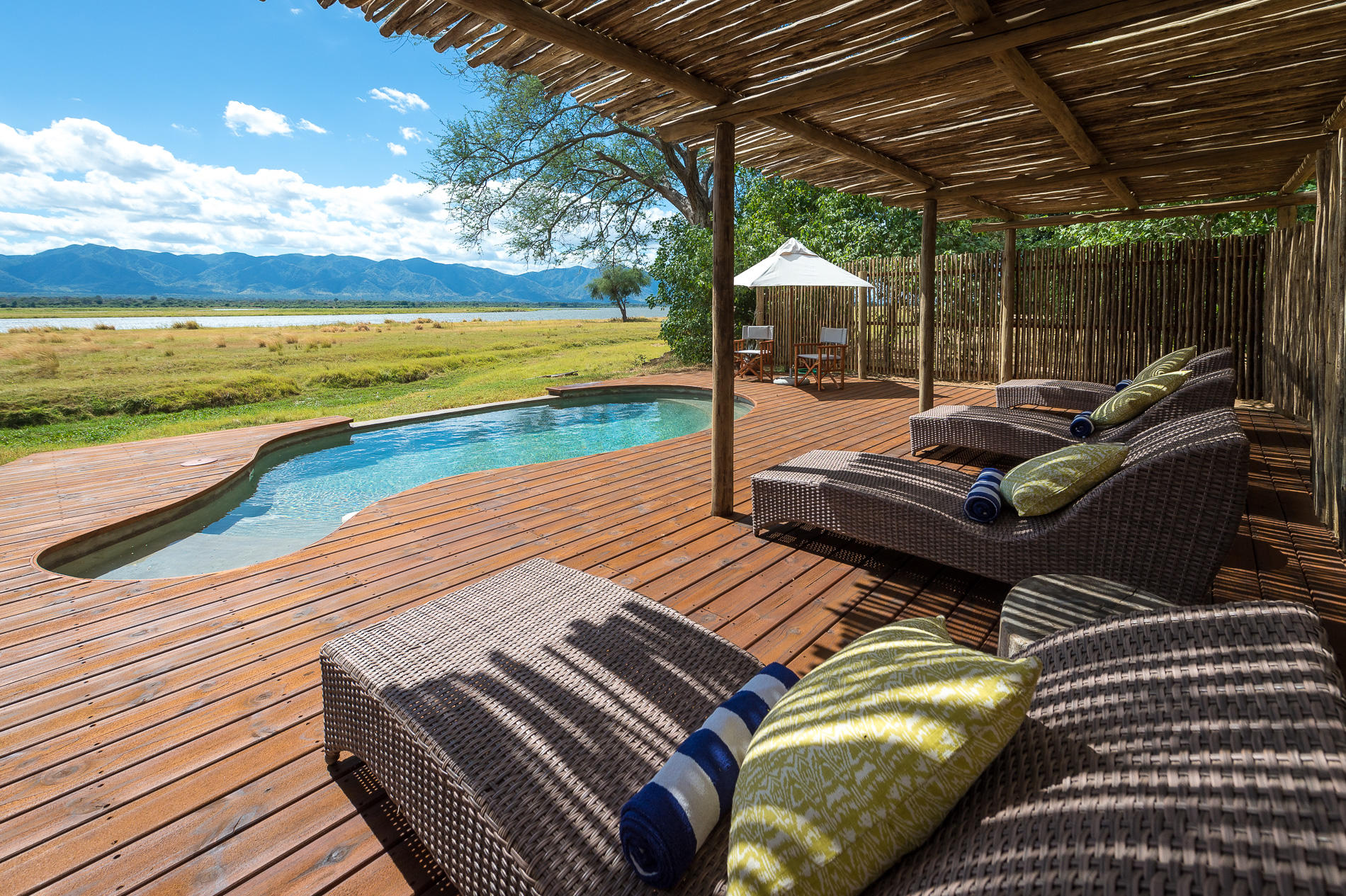
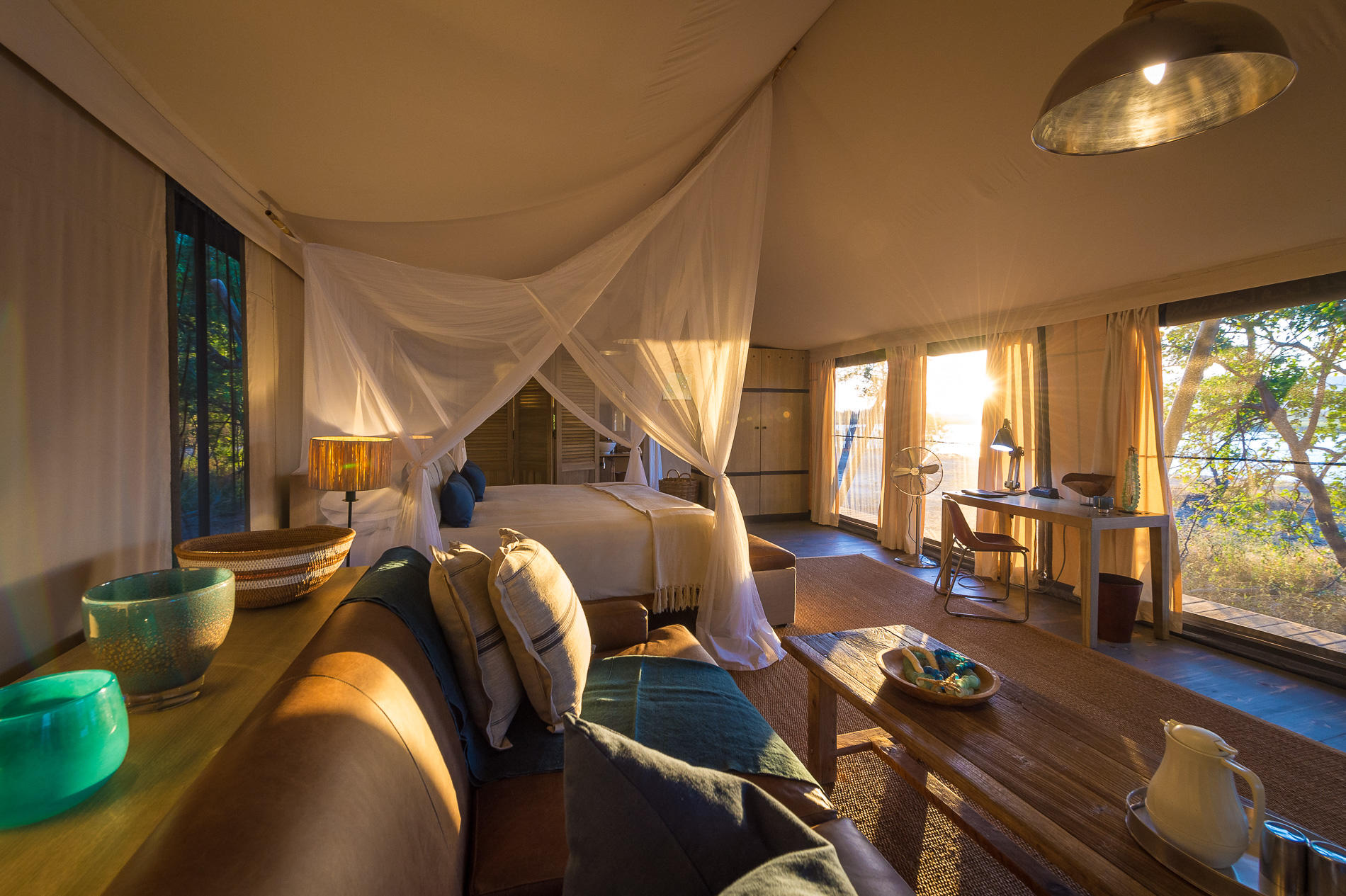
Interiors are peacefully earth-toned, with hints of blue, reflecting the flowing river. The camp’s main area include a fire-pit, for evening chats, delicious glasses of red wine and the awe-struck contemplation of the infinite stars above you. A pool overlooking a broad sweep of river invites swimmers during the heat of summer, as the river itself, with its countless hippos and crocs, is not recommended for bathing!

Ultimately though it’s the wildlife that draws people to Mana Pools and on that front Ruckomechi delivers in spades. The local pack of wild dogs are regular visitors to the camp area, the roar of a lion reverberates almost nightly through and past the guest suites, and huge herds of buffalo flock to the river more and more as the dry season sets in and they seek life-sustaining water.

Ruckomechi is a seasonal camp, only open between mid/late November. Long grass and sodden terrain during the wet season of December-March makes most land-based activities difficult.
As soon as the rains have stopped though, and animals become more and more dependent on the river as the ephemeral pans dry up one after the other, Ruckomechi and the rest of the Zambezi riverfront come alive.

With a more limited window during which guests can visit this slice of heaven, bookings at Ruckomechi are in demand, but don’t worry, as there are a number of other Mana Pools options for those wanting to experience this ultimate of parks.

Email us on info@iconicafcia.com to find out more and to start planning your safari…