Tanda Tula — What Happens When a Camp Grows Up

There’s a particular kind of safari lodge that earns its reputation not through marketing but through the quiet accumulation of people who come back. Tanda Tula is that lodge. Guests return for their fifth visit, their tenth, their sixteenth. The owners know their names. The guides remember what they saw last time. It has the texture of somewhere that has been genuinely loved into existence, which is a difficult thing to manufacture and an impossible thing to fake.
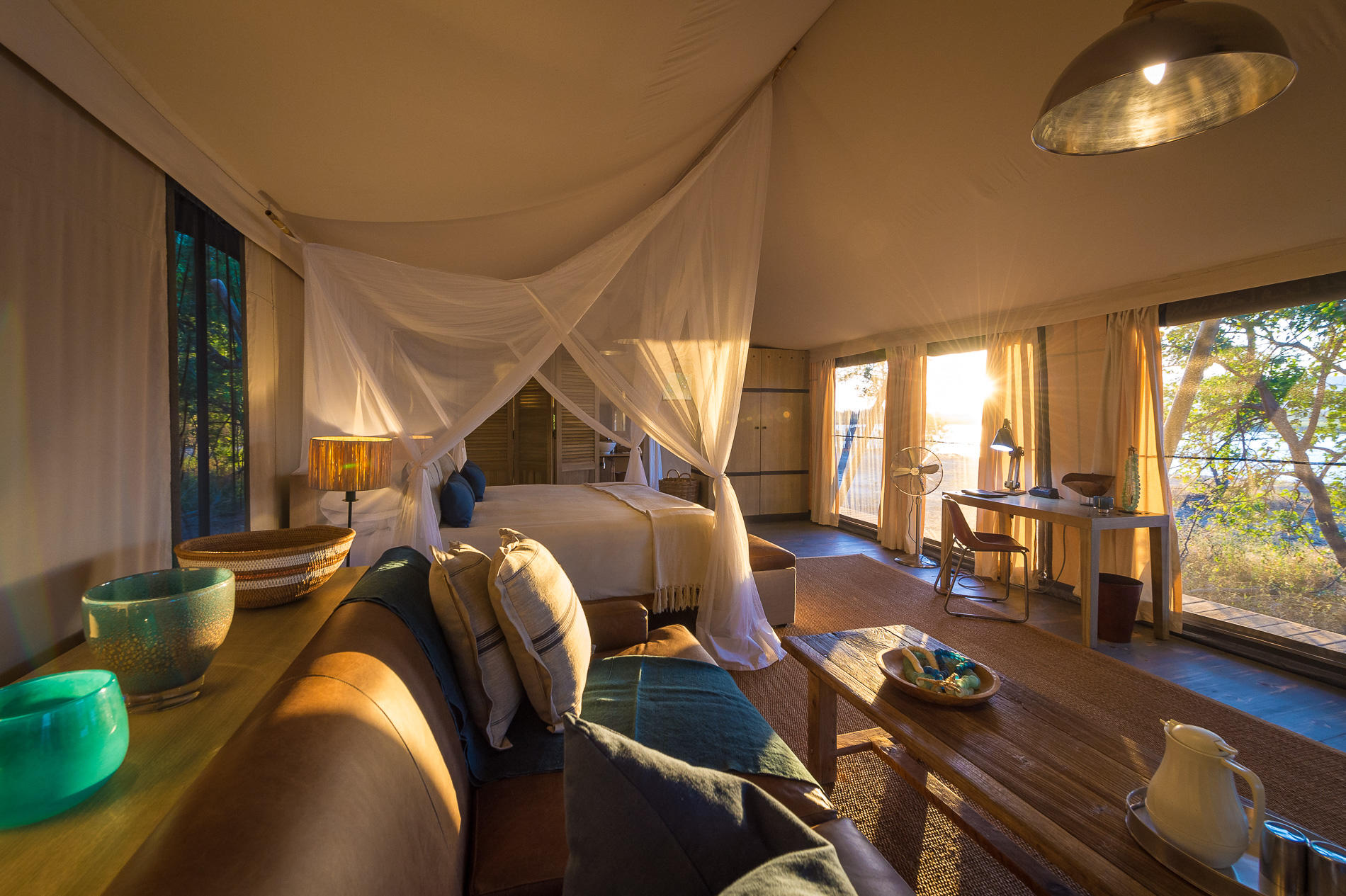
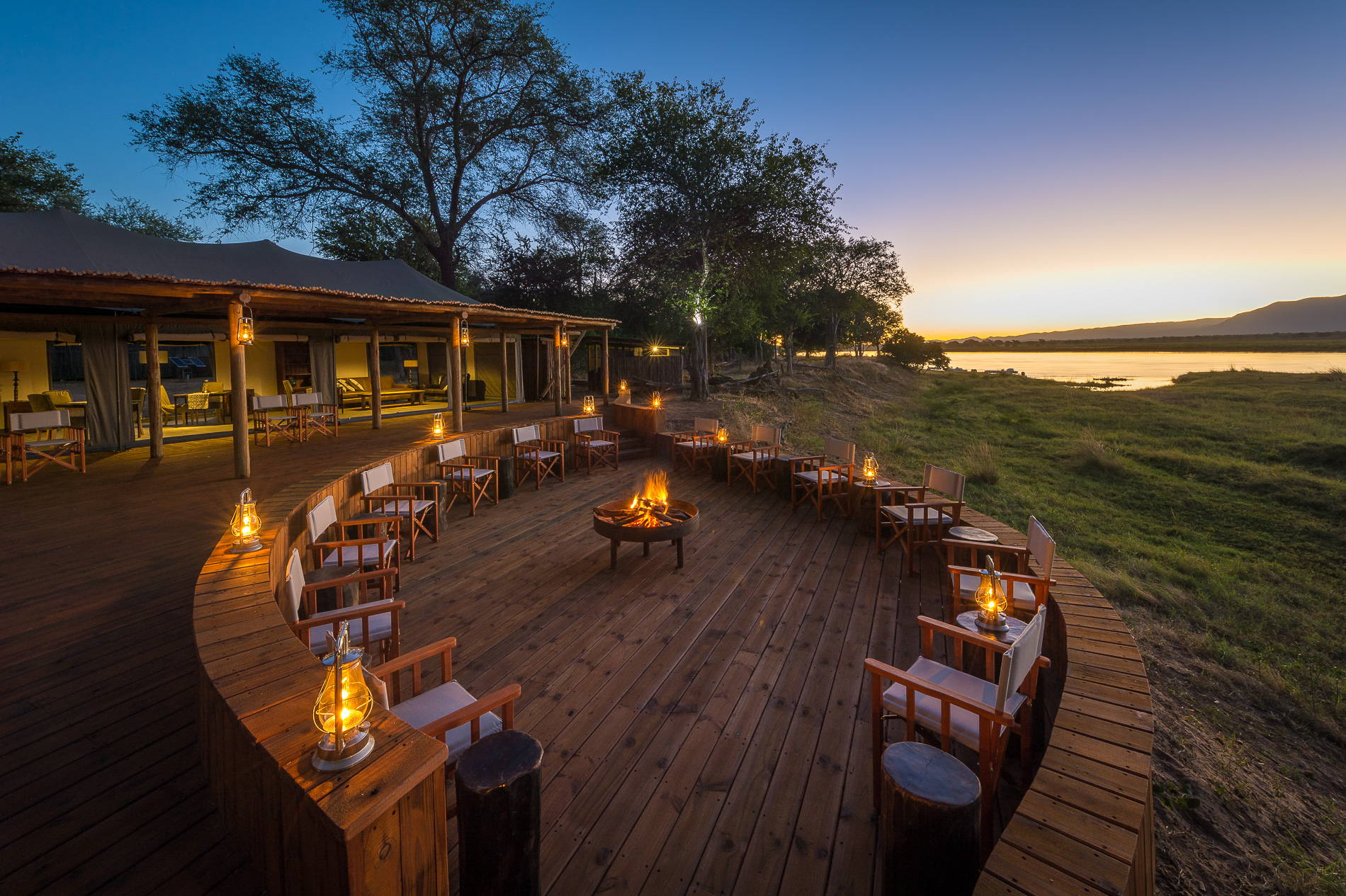
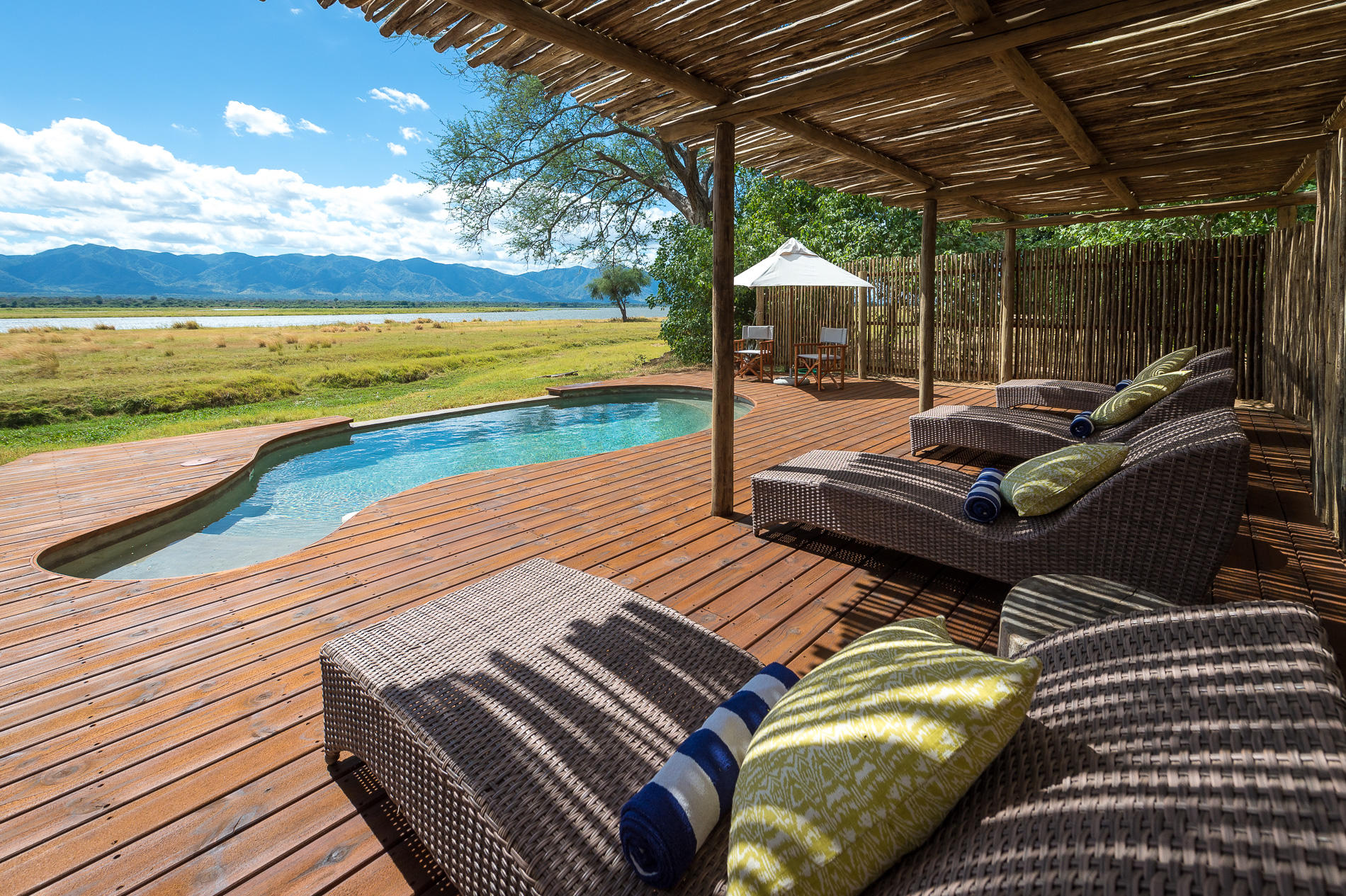
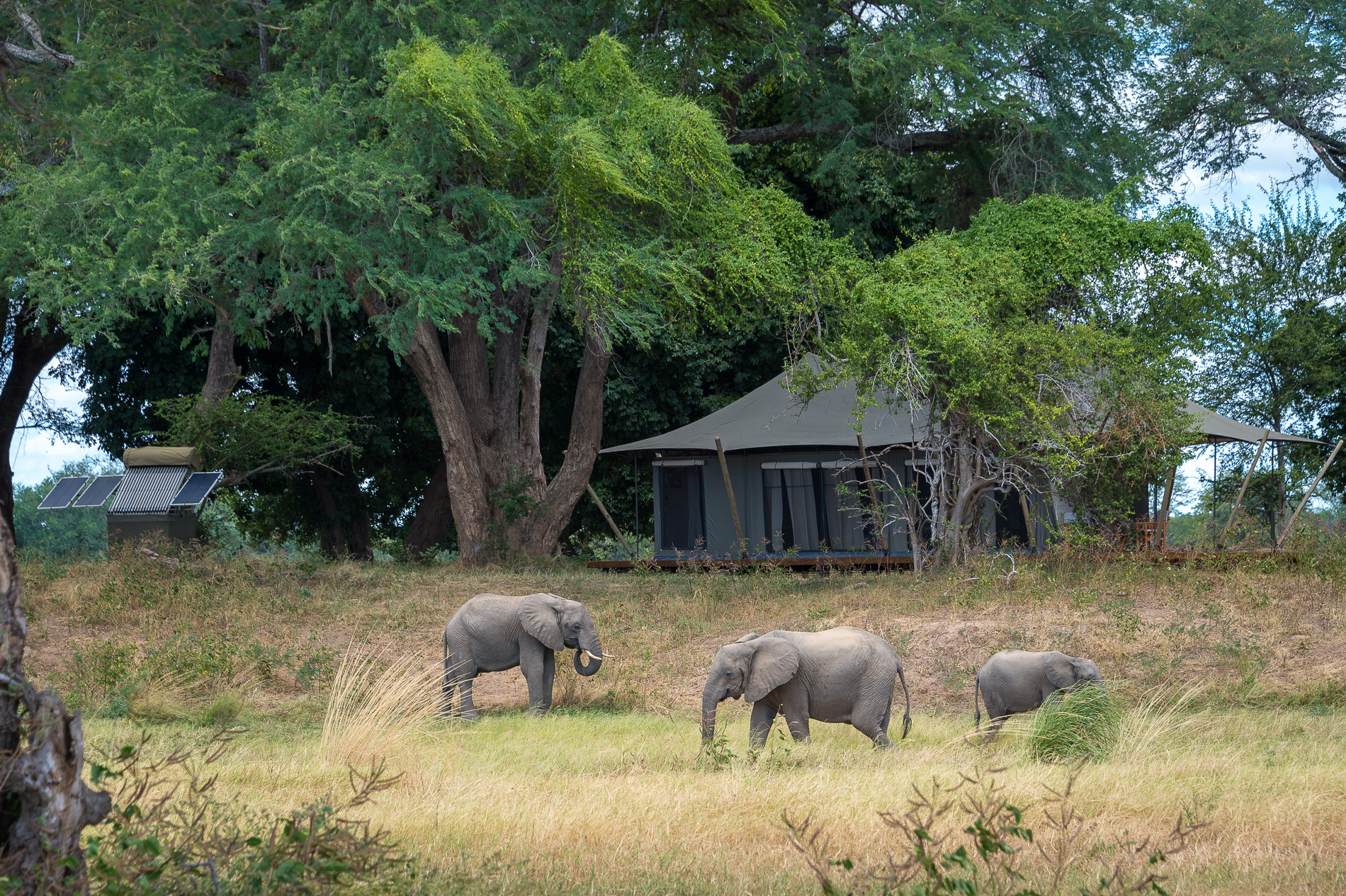
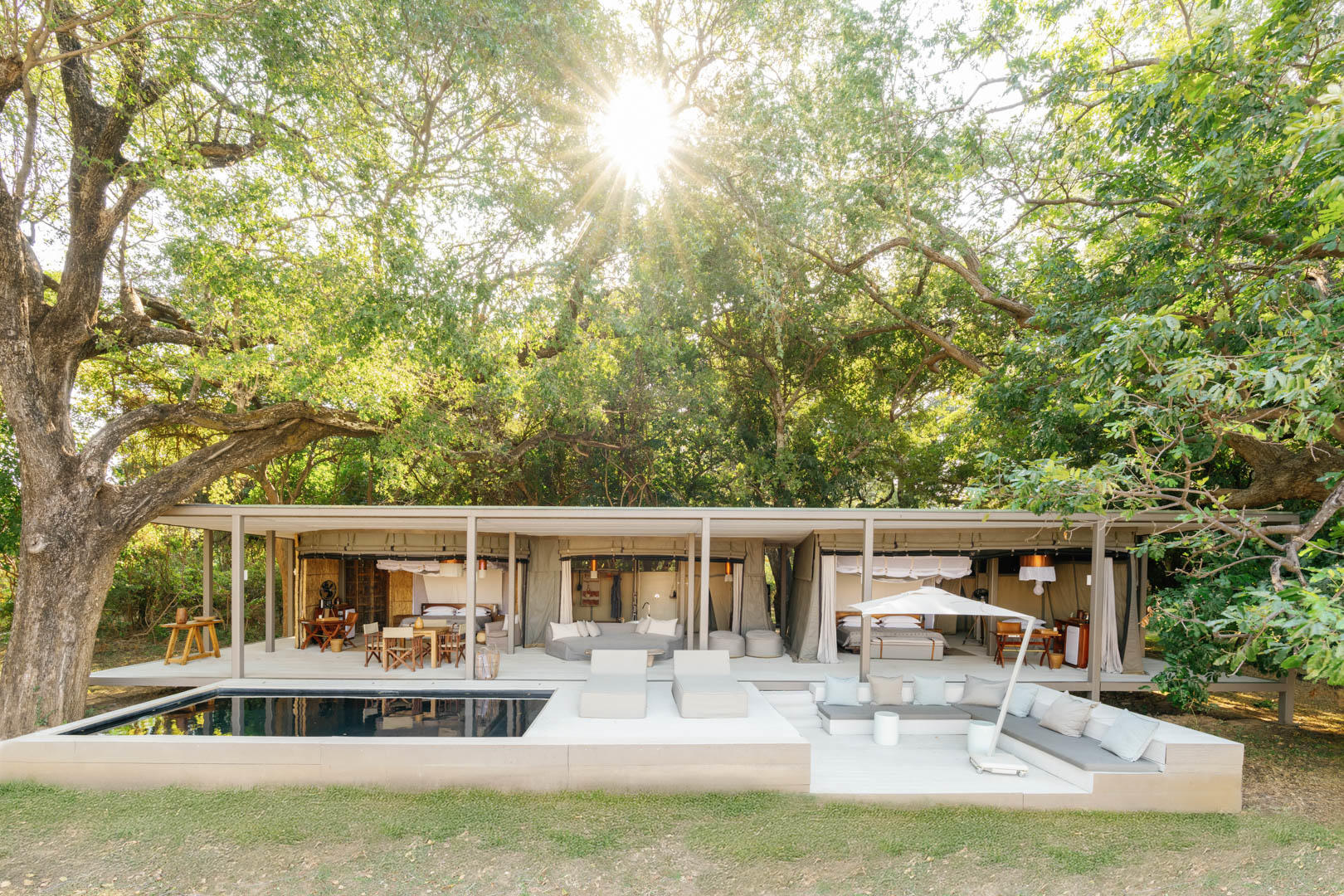
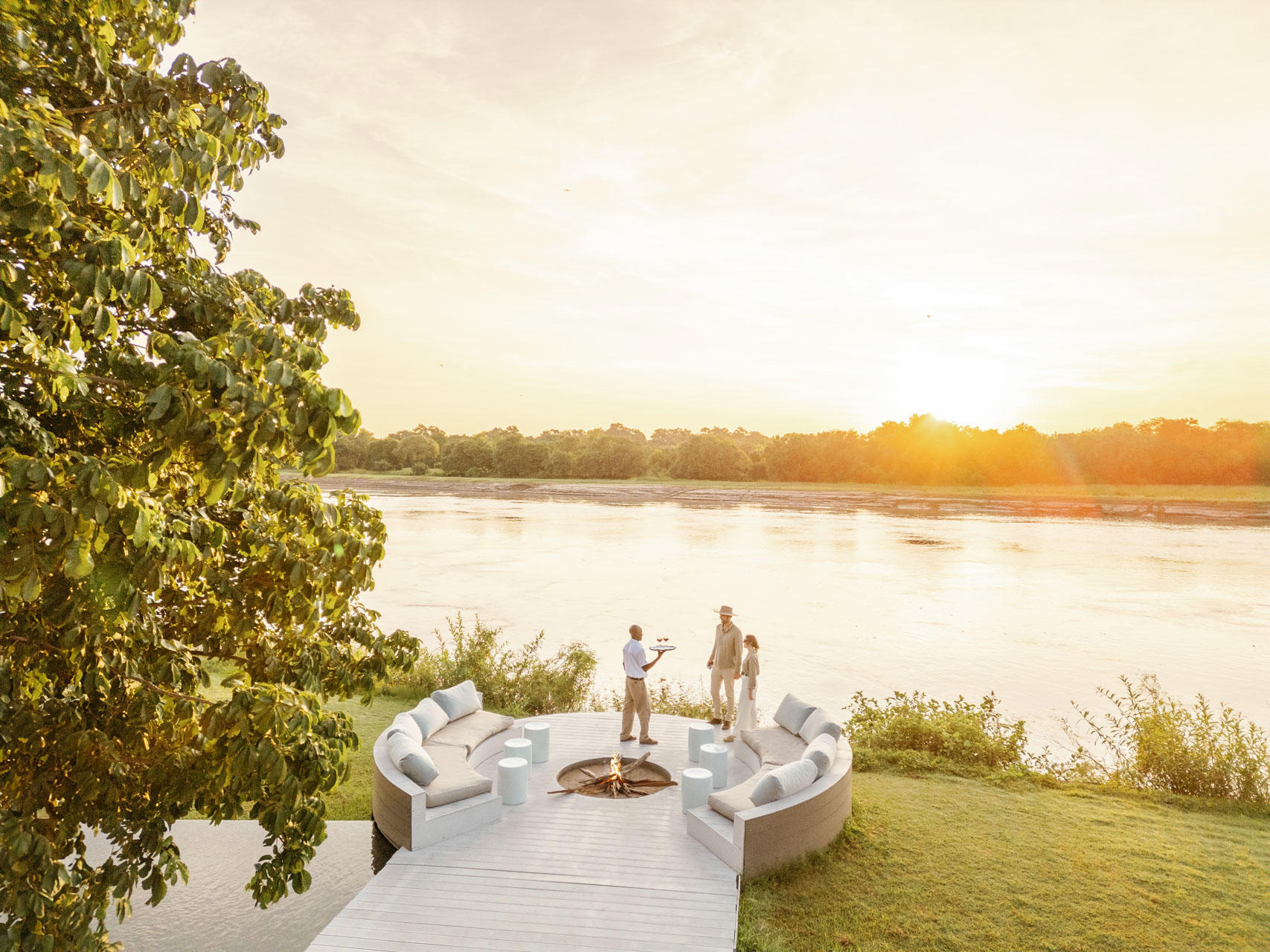
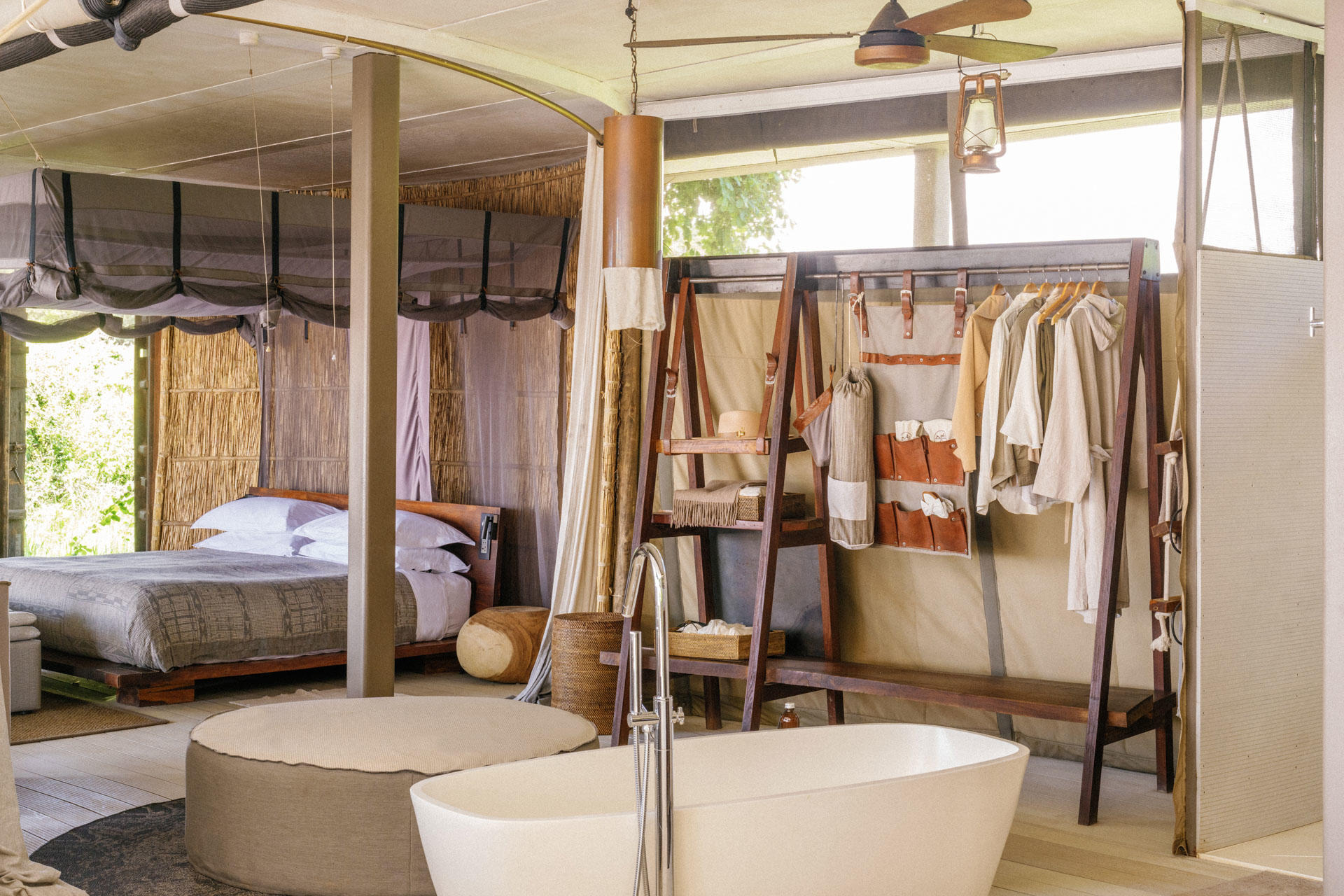
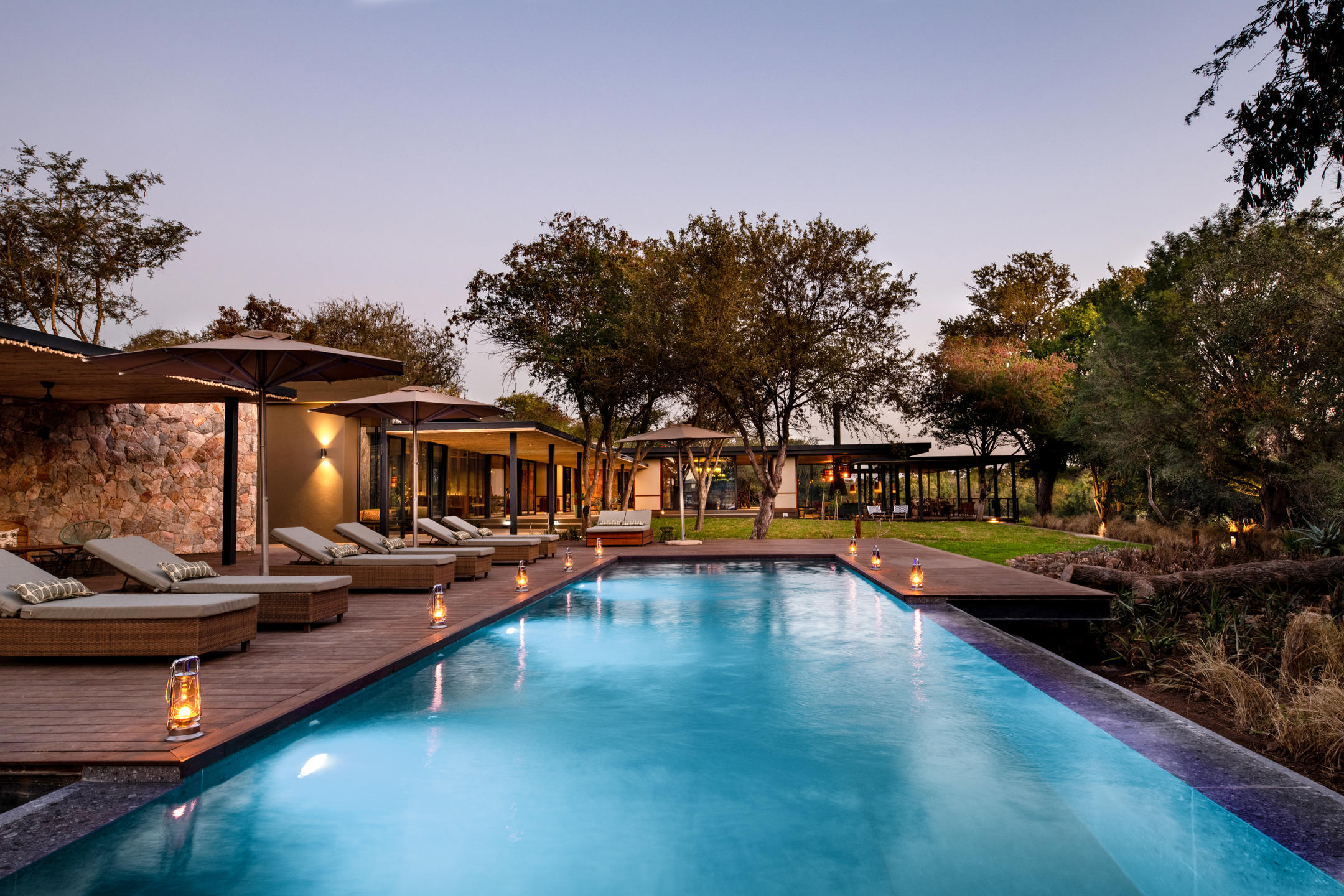
The backstory matters here. Tanda Tula began as a rustic bush camp — unpretentious, warm, focused entirely on the quality of the experience rather than the thread count of the linen. When owners Don and Nina Scott eventually rebuilt the lodge, they made a decision that not everyone in the industry gets right: they carried the soul of the old camp into the new one. The result is a property that sits at the top end of the luxury spectrum — nine suites overlooking the Nhlaralumi riverbed, each with a private plunge pool and an open-plan configuration that blurs the line between inside and outside — but that feels nothing like a corporate exercise in high-end safari. It feels like someone’s home. A very well-designed someone’s home, but a home nonetheless.

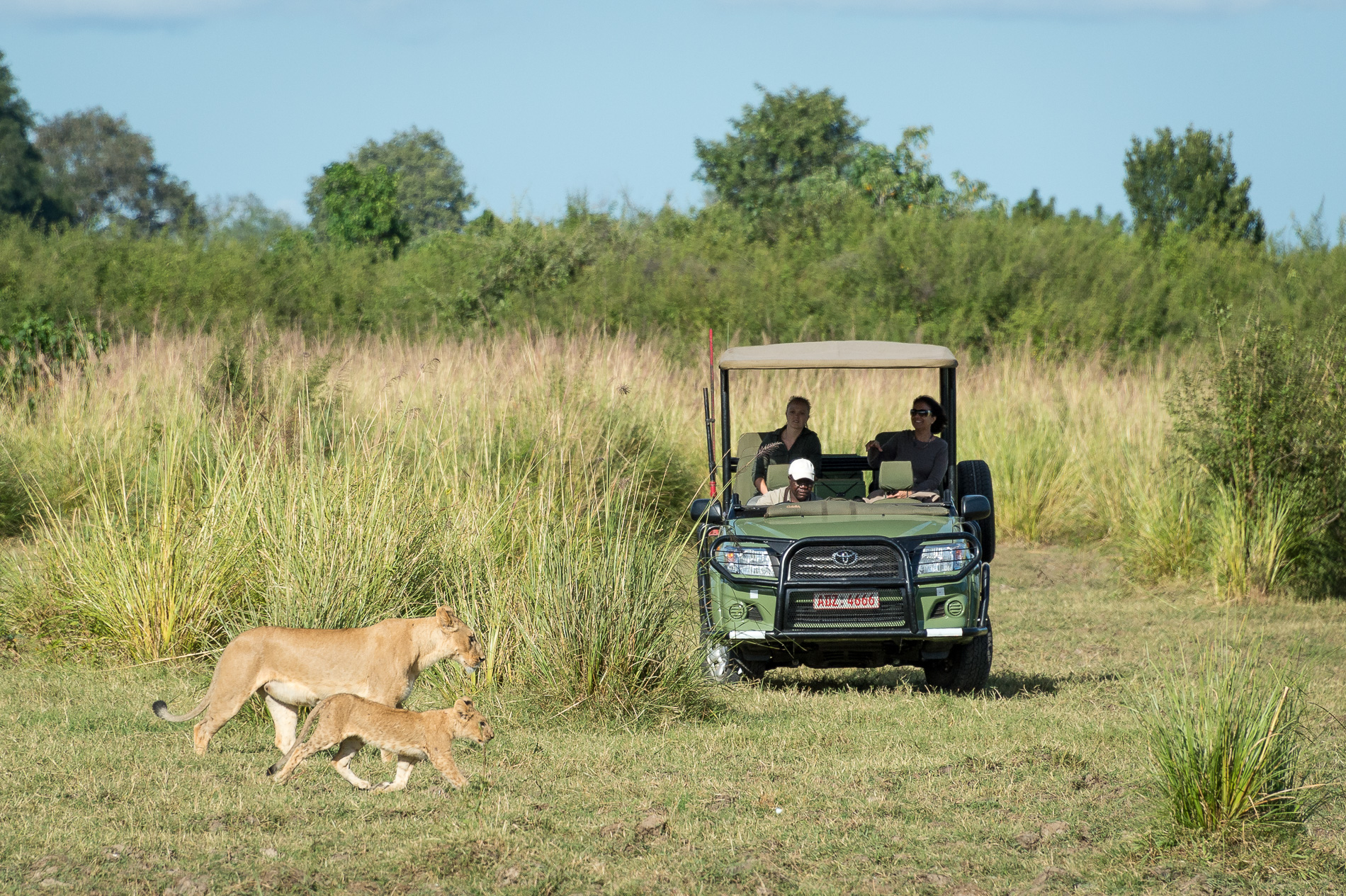
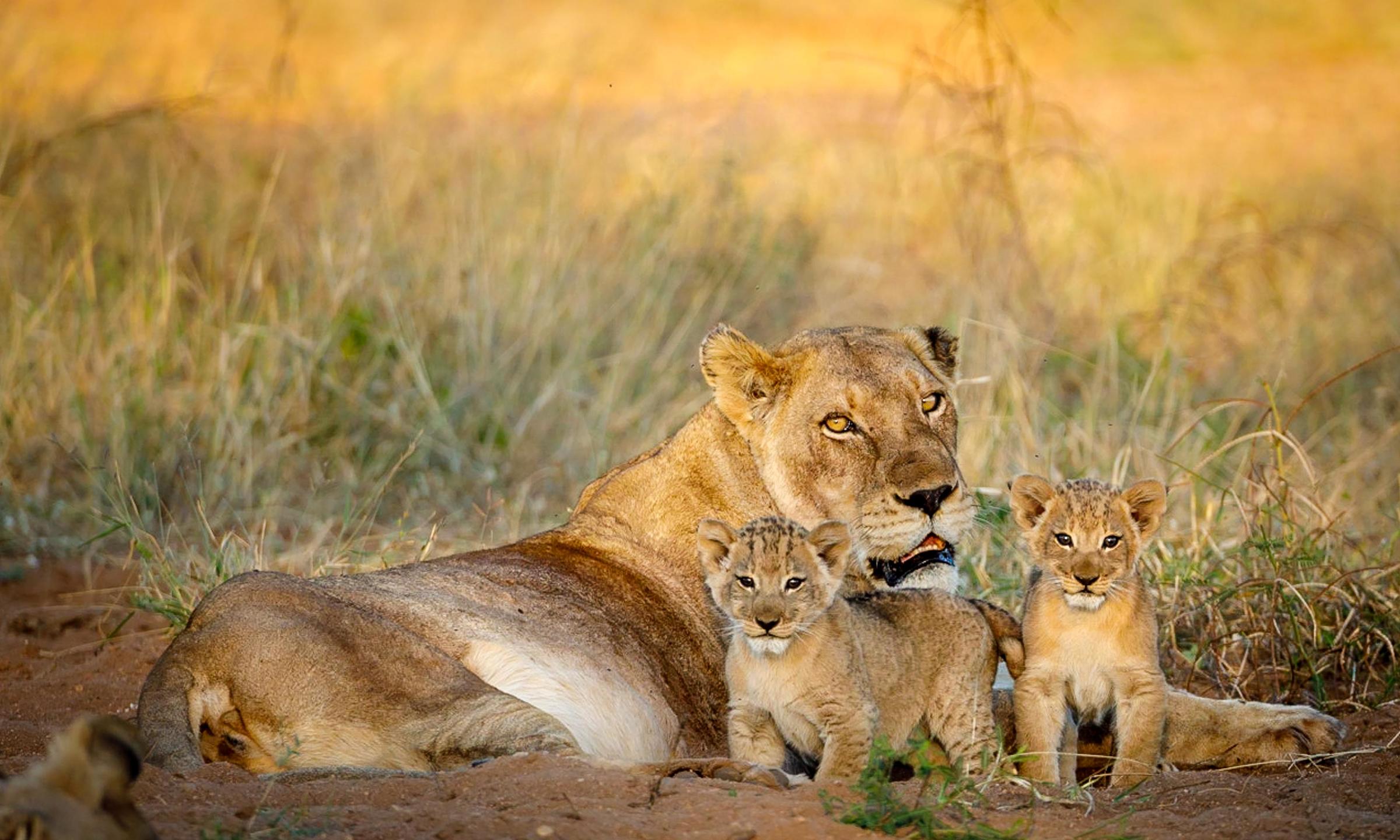
The guides are the heart of it. Rangers Scotch, Formen and Civilised — names you won’t forget — have between them more than fifty years of experience in this specific piece of the Timbavati. They know the predator territories, the wild dog pack movements, the productive waterholes, the particular morning light on the Nhlaralumi. Maximum six guests per vehicle on a game drive. Walking safaris alongside the drives. A patrol flight conservation experience for the younger guests who want something beyond a Land Rover. The game viewing here is consistently exceptional, and the low vehicle density of the Timbavati means that when you find something, you sit with it properly.
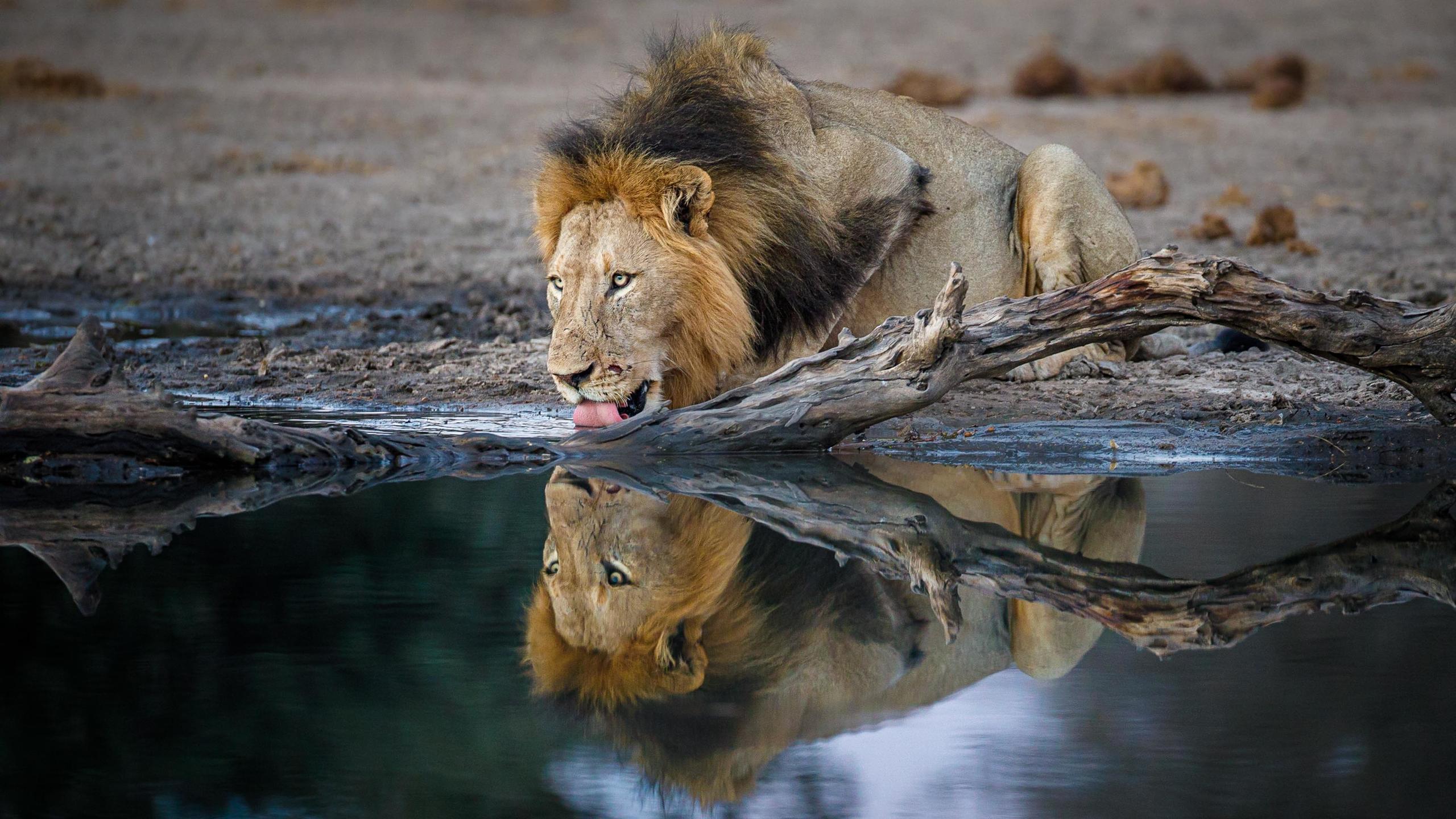
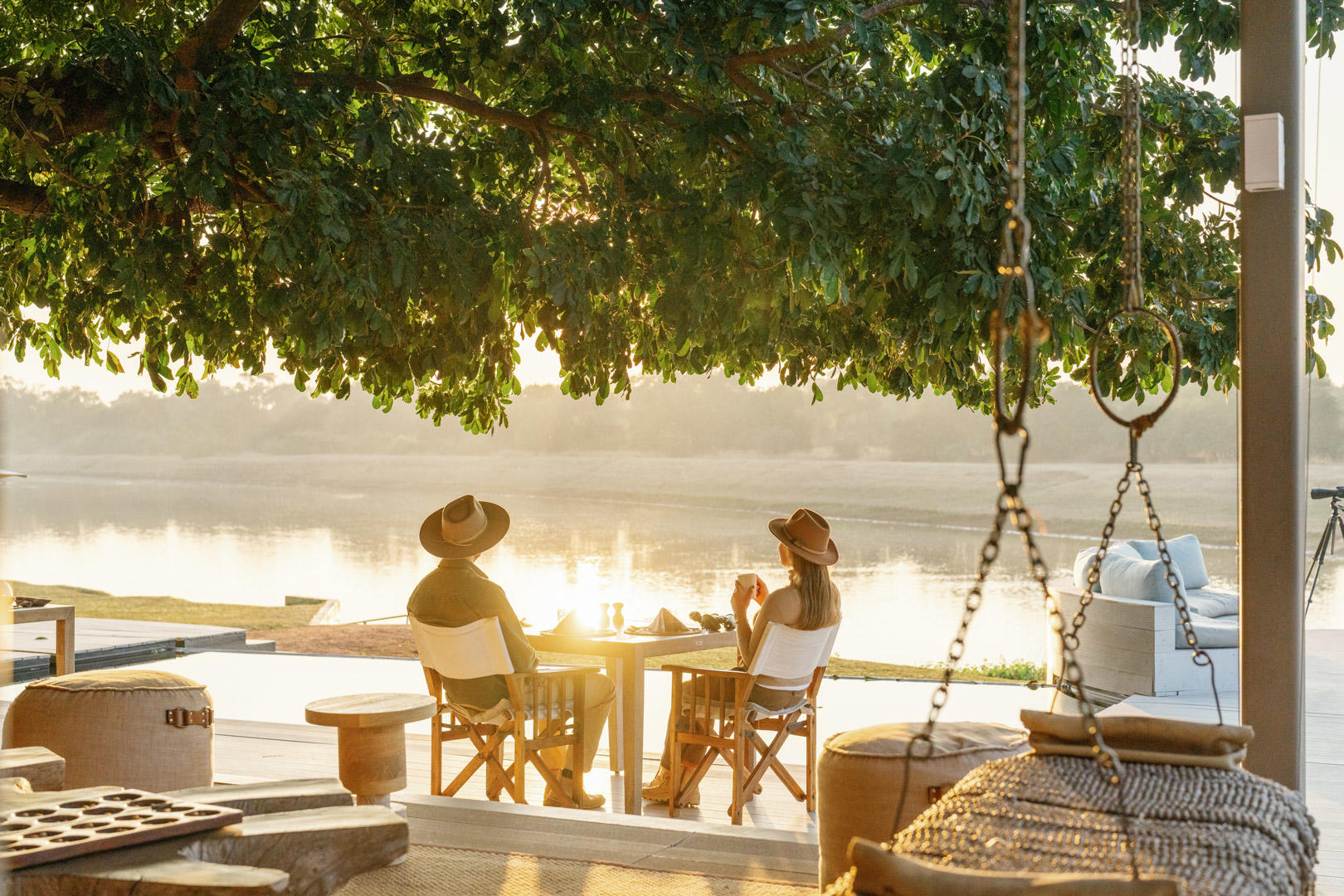
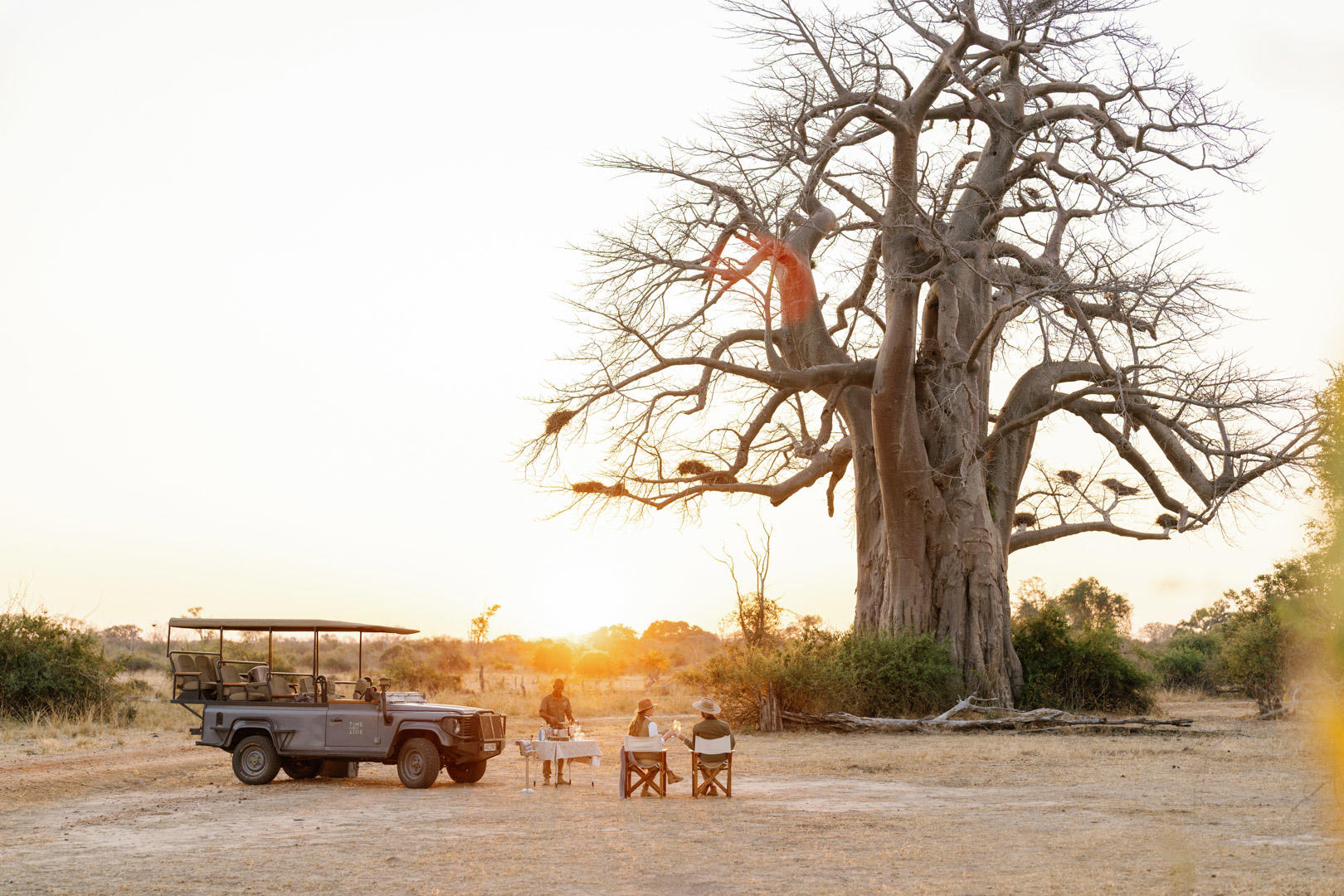
The food deserves a mention that most safari blogs neglect to give it. Chef Ryan’s kitchen was runner-up for best safari cuisine in Africa in 2024 — a detail that becomes entirely believable at the first dinner. Meals rotate between the boma, the deck, the dining room, and occasionally the riverbed itself, where a table appears as if from nowhere and the Timbavati provides the atmosphere free of charge.

Between March and October, Tanda Tula offers something that very few lodges anywhere can match: an exclusive-use bush field camp, accommodating a maximum of eight guests, that takes the experience entirely off-grid. No permanent structures, no electricity beyond what’s needed, just the Timbavati in its rawest form and a guiding team that knows it intimately. For guests who have done the luxury lodge circuit and are looking for something that goes further — this is where further actually lives.

Tanda Tula means “love and peace” in the Shangaan language. It’s the kind of name that could easily be dismissed as marketing. Spend a few days there and it starts to feel like an accurate description.
Kings Camp — Old Charm, Serious Wildlife

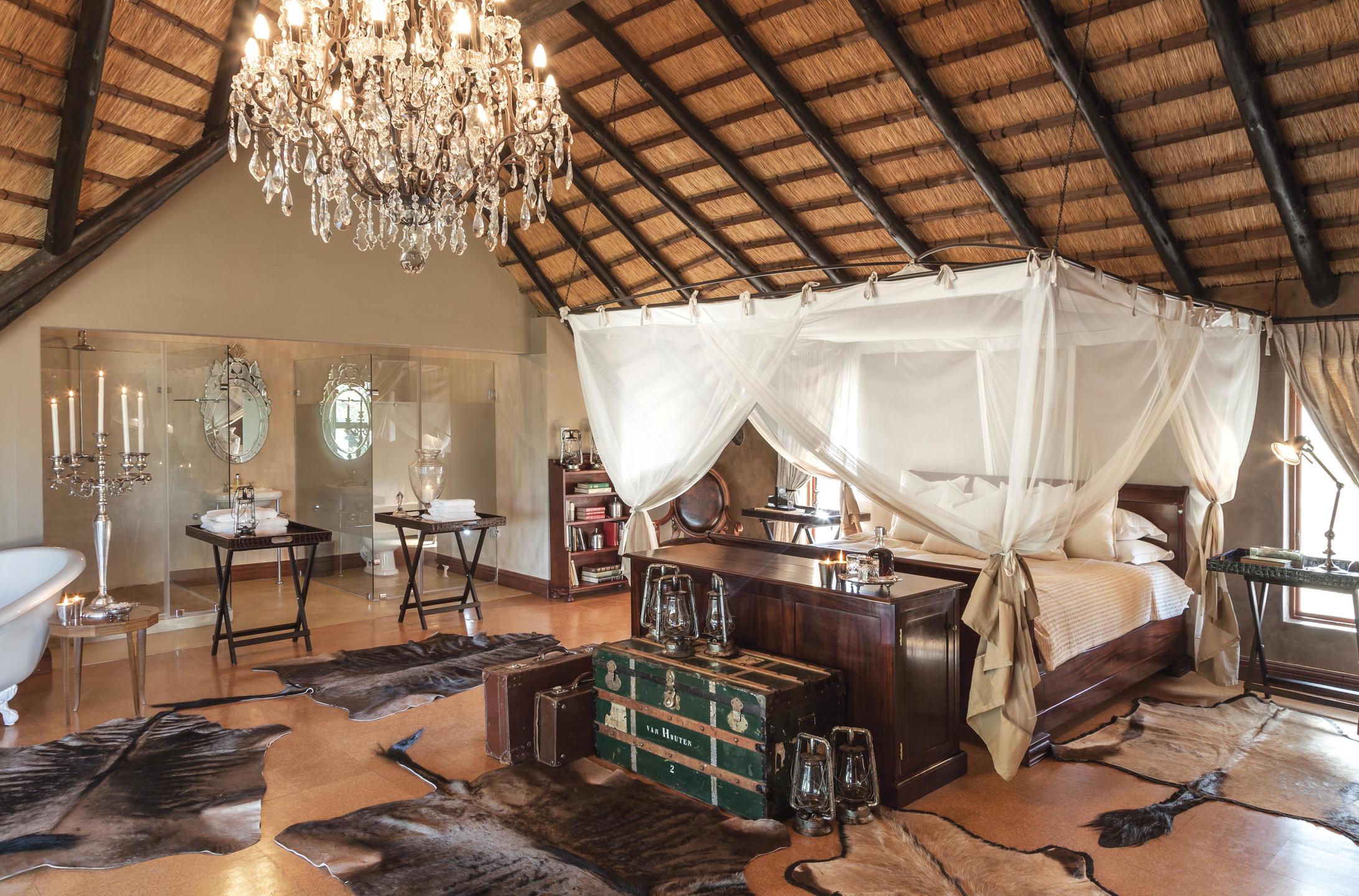
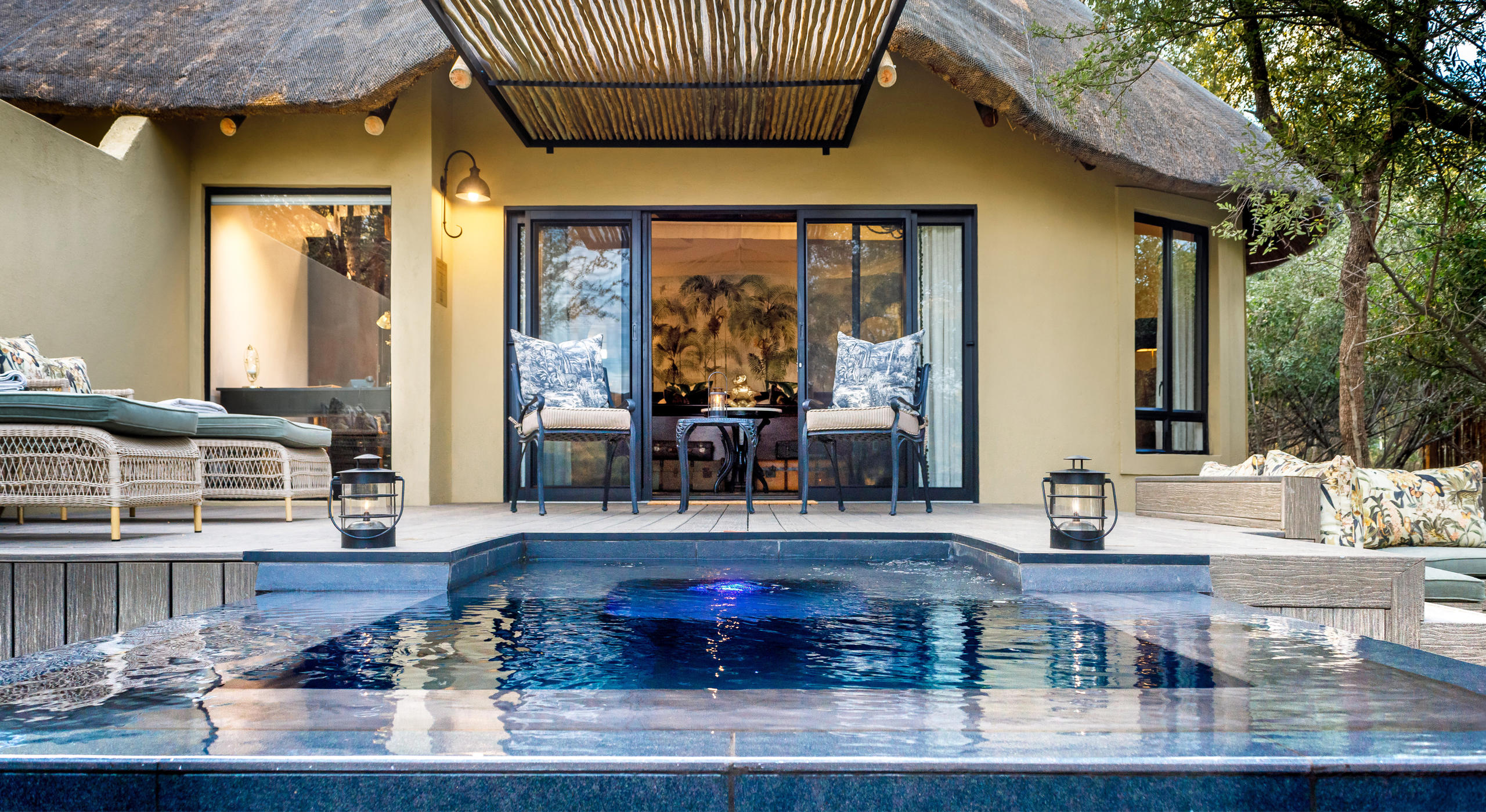
There’s a particular aesthetic that Kings Camp has committed to, and it commits fully. Colonial-era teak, dark thatch, Victorian ball-and-claw baths, a bar that looks like it belongs in a Hemingway novel. It could easily tip into pastiche, but it doesn’t — partly because the execution is genuinely good, and partly because the wildlife outside the window is so emphatically real that no amount of interior design could overshadow it.

Kings Camp sits in the heart of the Timbavati, gazing out across an open savanna plain and an active waterhole that operates, around the clock, as nature’s own theatre. Elephants at dusk. Lions at midnight. A parade of antelope, buffalo and giraffe across the daylight hours. Eleven suites — including two honeymoon suites and a private villa — each with a private veranda, plunge pool and outdoor shower. Comfortable without being excessive, which is harder to get right than it sounds.

The game drives cover 100 square kilometres of traversing on a reserve that shares an unfenced border with Kruger. That last detail matters: wildlife here moves freely across a combined ecosystem of 400,000 hectares, which means what you encounter on a drive is genuinely wild and genuinely unpredictable. Kings Camp guests have consistently ticked the Big Five across repeat visits, with wild dog sightings that the Timbavati’s low vehicle density makes all the more intimate.

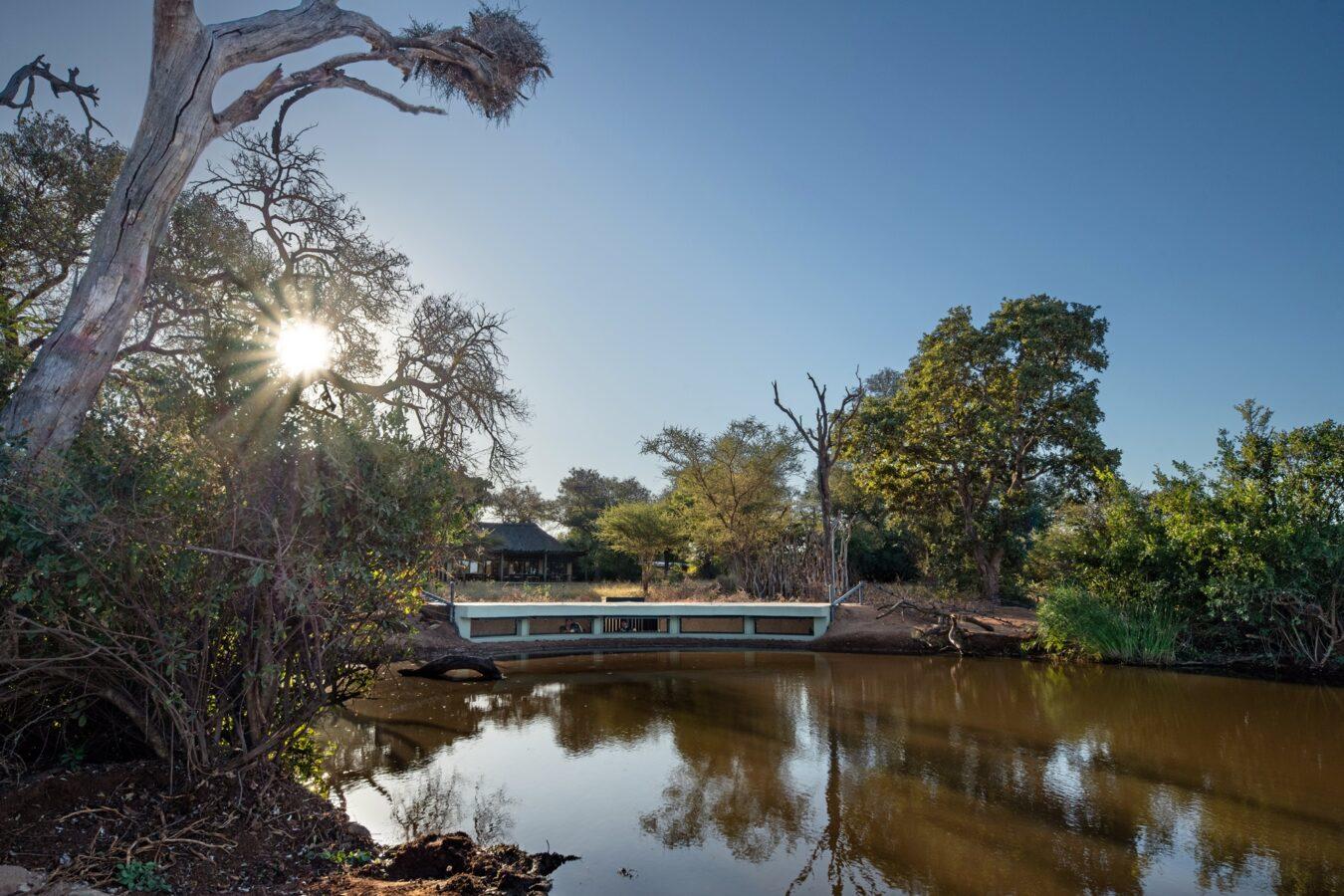
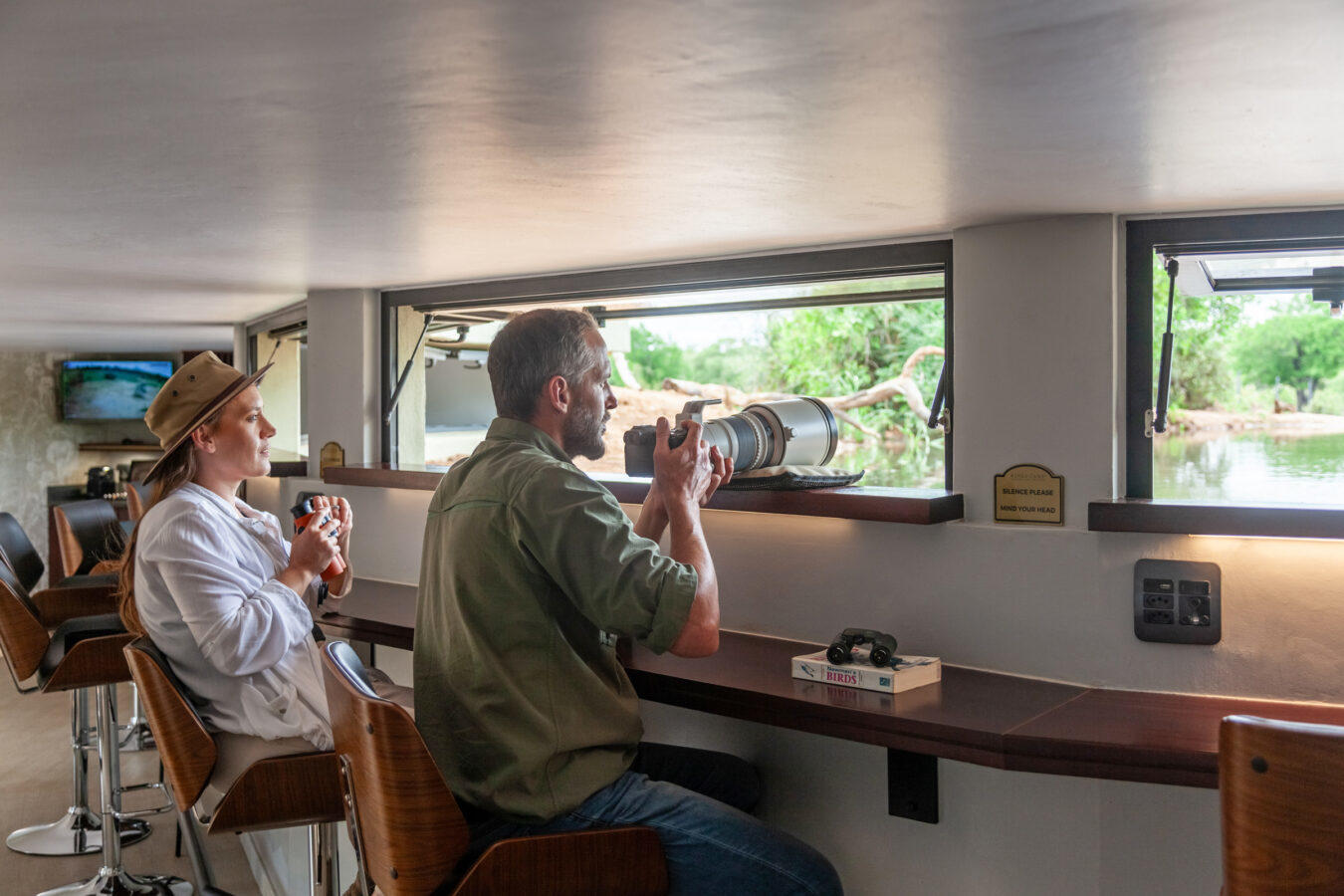
But the feature that deserves its own paragraph is The Kings Warren — an underground photographic hide built into the bank of the waterhole. You descend, settle in, and find yourself at eye level with whatever decides to drink. It’s an extraordinary perspective shift. A lion approaching a waterhole looks very different from two feet above the ground than it does from a Land Rover. Photographers in particular tend to surface from the hide slightly overwhelmed.

Walking safaris are offered alongside the drives, led by guides whose knowledge of the Timbavati’s predator territories and wild dog pack movements is the product of years on the same ground. This is where the smaller, more focused operations consistently outperform the famous names — the guides have nowhere else to be, and every incentive to know this particular piece of wilderness better than anyone.

Evenings at Kings Camp have their own rhythm. Sundowners at the bar, dinners that rotate between the elegant dining room, the open terrace, and the traditional boma under the stars. A spa for those whose legs have given up after a morning walk. A library for those who haven’t. The pacing is unhurried in a way that feels deliberate rather than lazy — which is, again, harder to get right than it sounds.

Kings Camp was established in 1995, which gives it a quiet confidence that newer properties are still working towards. It knows exactly what it is, makes no apologies for it, and delivers consistently. For guests who want serious wildlife in a setting that feels genuinely warm rather than performatively luxurious — this is the place.

An Arrangement With Elephants — Ruckomechi Camp, Zimbabwe

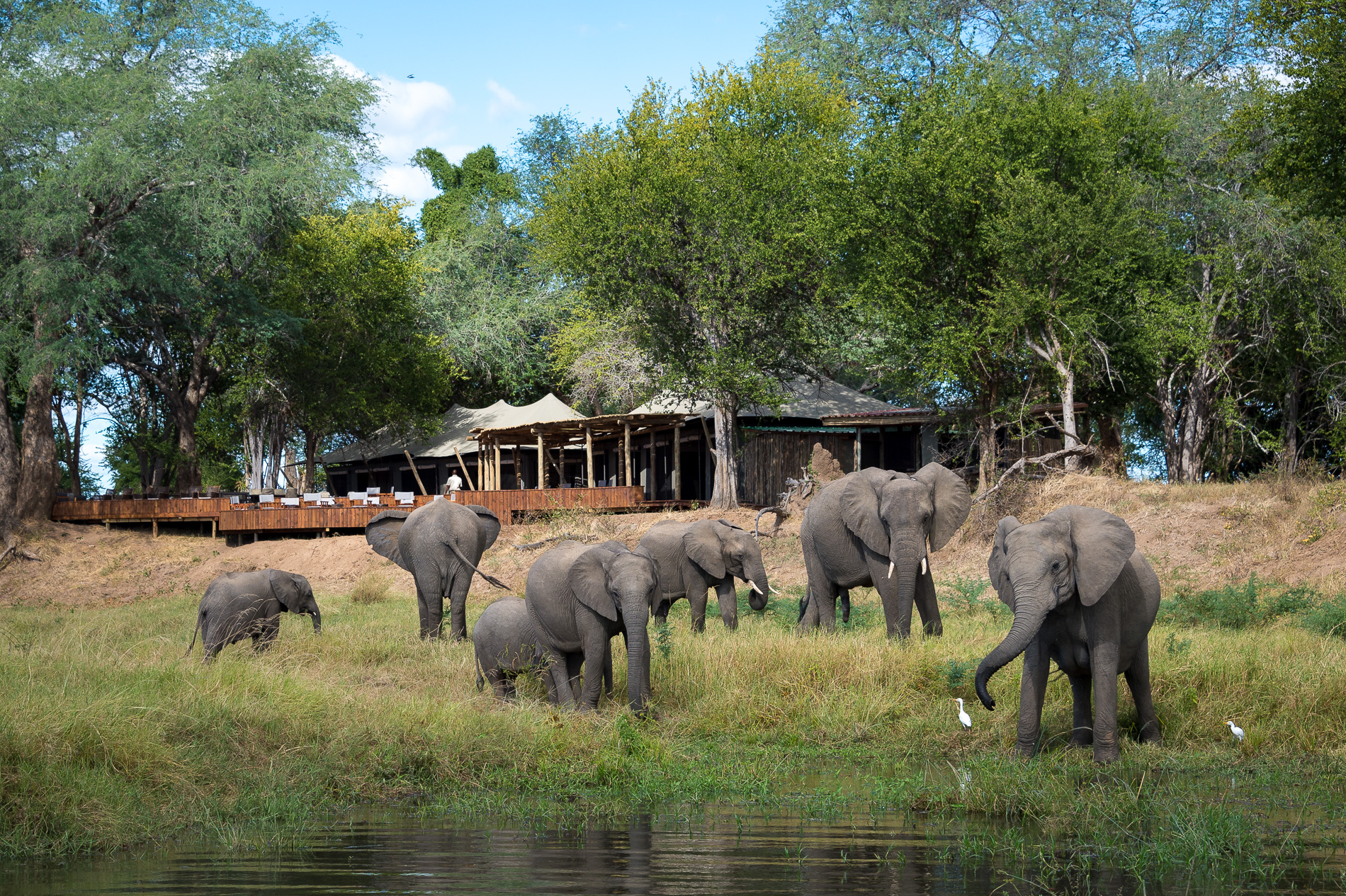
There is a particular tree along the Zambezi’s floodplain — the apple-ring acacia, known locally as the albida — that drops its seed pods in the dry season at precisely the moment the rest of the bush has nothing left to offer. Elephants have understood this for longer than anyone has been keeping records, and they organise entire days around it. Ruckomechi Camp, tucked into a private concession on the western edge of Zimbabwe’s Mana Pools National Park, happens to have been built beneath a particularly fine grove of them. Which means, in practice, that the elephants come to camp. Not occasionally, and not as a curiosity laid on for the cameras. As a matter of routine, the way one might call in at a regular café.

It takes most guests a day or two to stop being startled by this. A bull will wander between the tents at midday, entirely unbothered, working through a low branch with the unhurried focus of someone who has done this ten thousand times before. The camp’s answer is not to intervene but to make room — chairs angled politely out of the way, conversations paused mid-sentence, nobody especially alarmed. Mana Pools is one of the very few places in Africa where this kind of proximity is considered not reckless but simply how the wildlife works here, on its own terms, with people permitted to watch from close enough to feel the air move.

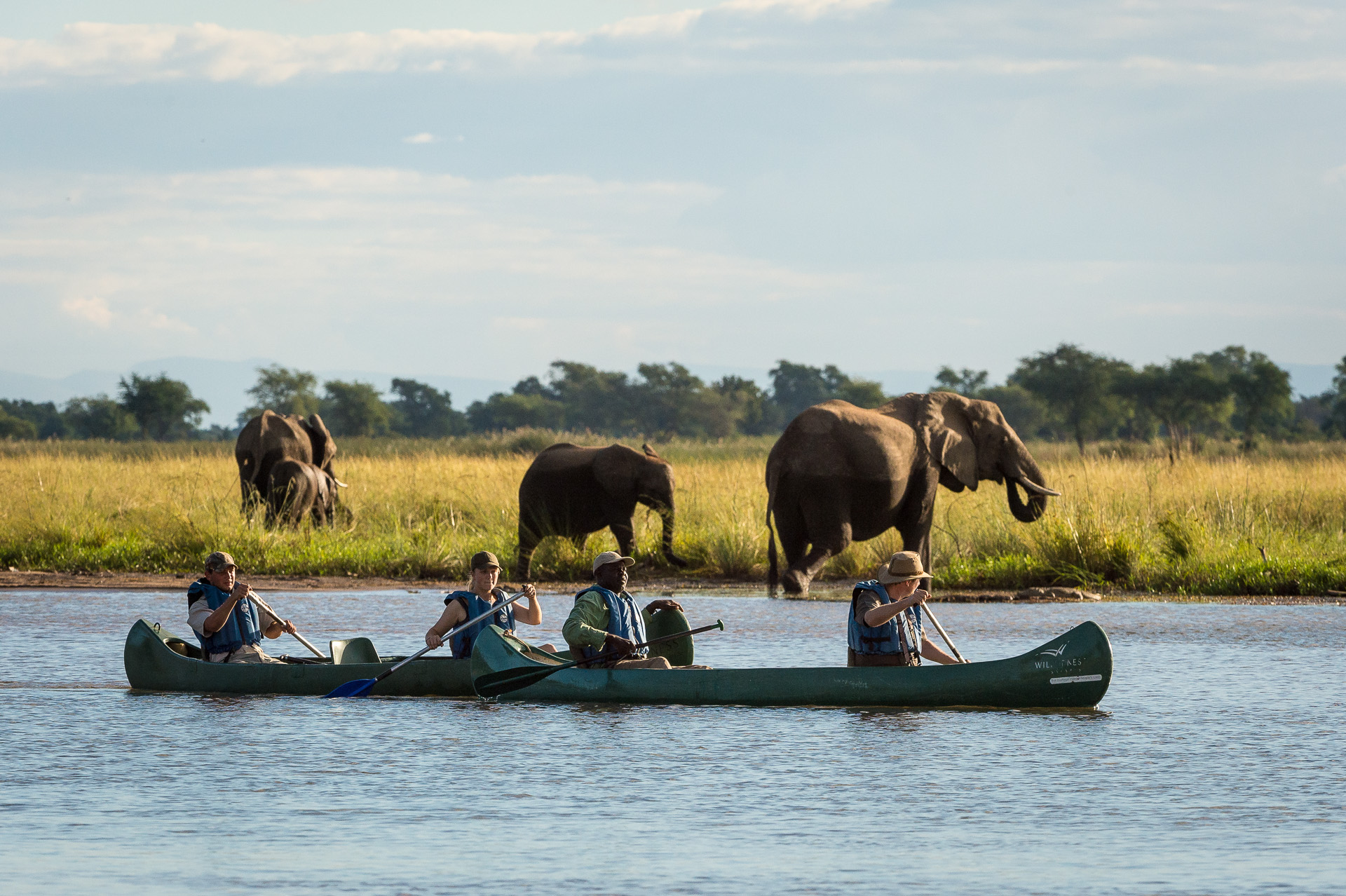
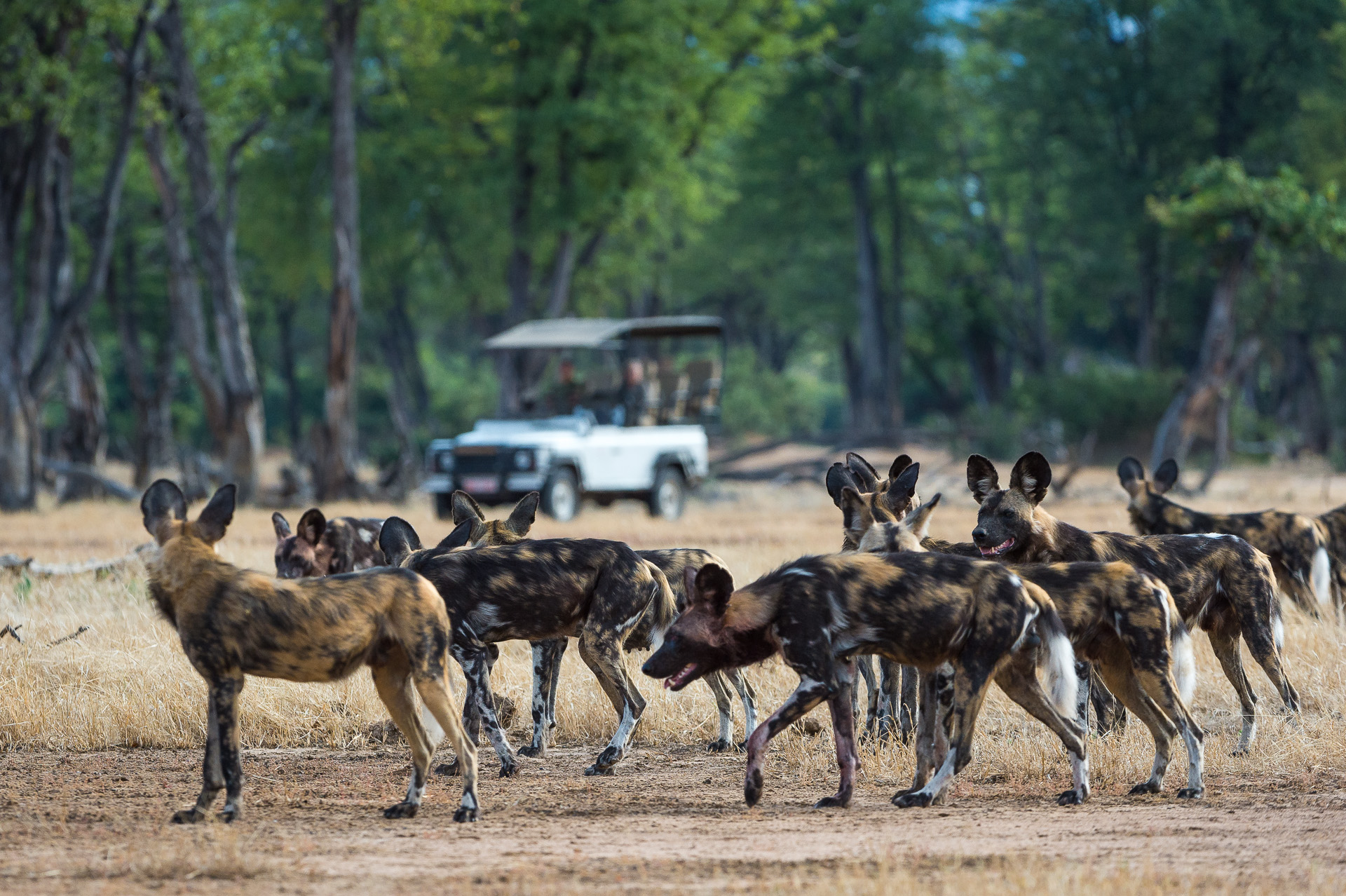
The wider floodplain is where Ruckomechi properly reveals itself. Wide, flat, threaded with the kind of ana forest that gives Mana Pools its particular green-gold light, it draws an unusual concentration of predators through the dry season — lion, leopard, and increasingly, African wild dog, which have found a stronghold here that has become one of the most reliable in the region. Walking safaris move through this landscape at the pace it deserves, led by guides trained to read a floodplain the way a sailor reads weather, while canoe safaris drift down a stretch of the Zambezi so still in places that the only ripples are the ones you’ve made yourself.

What separates Mana Pools from the rest of the Zambezi valley is its UNESCO World Heritage status, granted not for grandeur but for the specific, irreplaceable ecology of this floodplain system — and Ruckomechi’s private concession plays an active part in protecting it, funding the anti-poaching patrols and research that keep the wild dog population recovering rather than retreating. None of this is advertised loudly. It simply happens, the way the elephants simply arrive, as part of an arrangement that long predates the camp and will presumably outlast it.

In the late afternoon, with the heat finally loosening its grip and the floodplain turning the colour of weak tea, it becomes easy to forget that any of this required explaining. The elephants are not performing for anyone. They were here first, and they have simply allowed the camp to stay.

A Quiet Inheritance — Chinzombo Camp, Zambia

In the 1970s, a game ranger named Norman Carr kept a rainy-season camp on a ridge above the Luangwa River, named after the snuffbox tree that grew there in abundance. Carr is the reason the walking safari exists at all — he pioneered it here in the Luangwa Valley decades earlier, having persuaded a local chief to set aside tribal land as a game reserve, and having decided, somewhat radically for the time, that the best way to understand this landscape was to get out of the vehicle entirely and let it happen at eye level. He called the place Chinzombo. It was never meant to be permanent. It became, eventually, something close to legend.

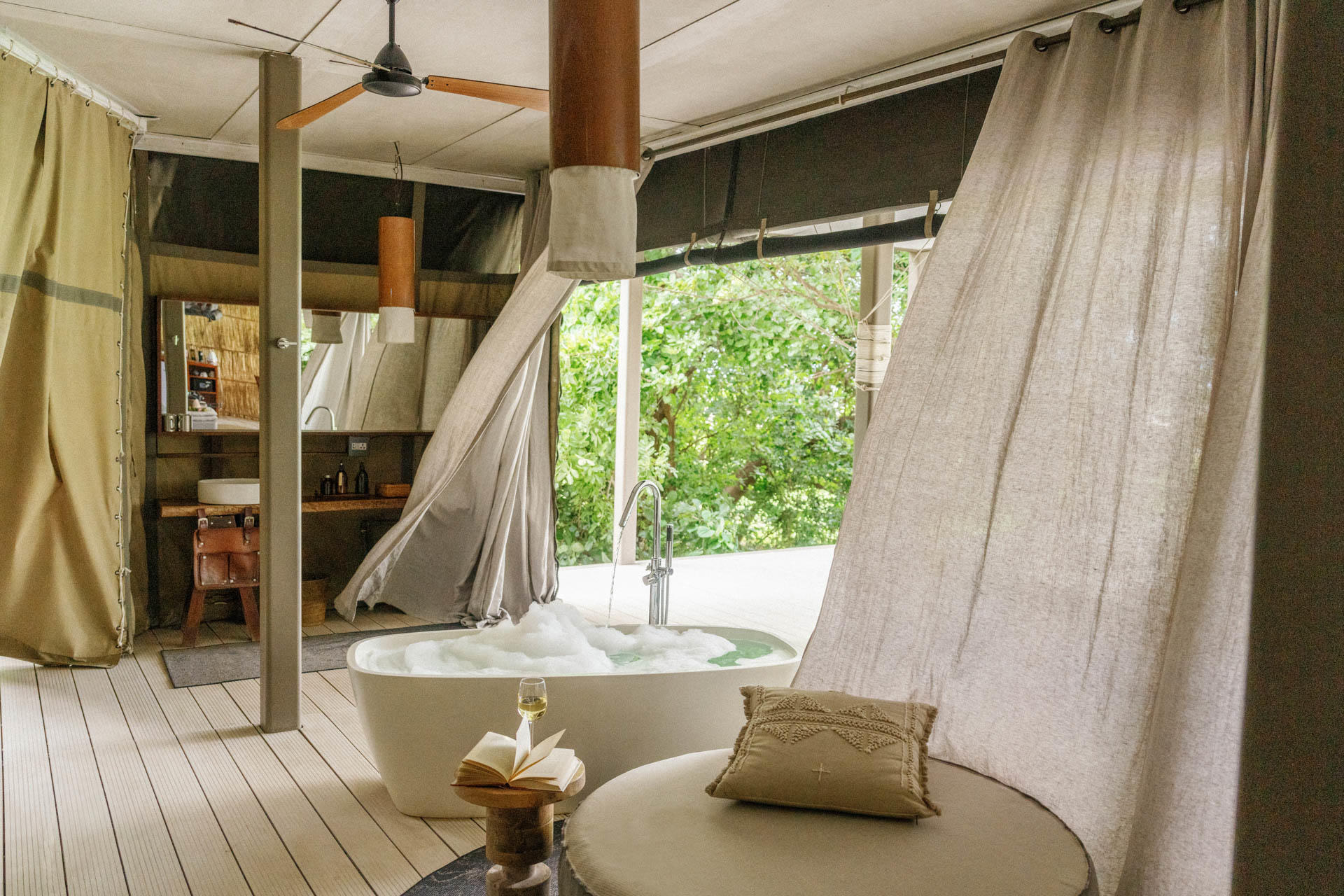
The camp that carries his name today is not a recreation. It is something more interesting: a continuation, built on the same stretch of river, that has taken everything Carr believed about this valley — that walking is more honest than driving, that wildlife deserves attention rather than spectacle, that the Luangwa rewards patience above all else — and rebuilt it for a different era, with rather better plumbing. Six tented suites rest beneath a canopy of ancient trees on the riverbank, each one designed with enough restraint that the view does most of the talking. There are private pools and soaking tubs angled toward the water, but the architecture seems almost apologetic about its own comfort, as though aware that the real luxury here was always going to be the bush itself.

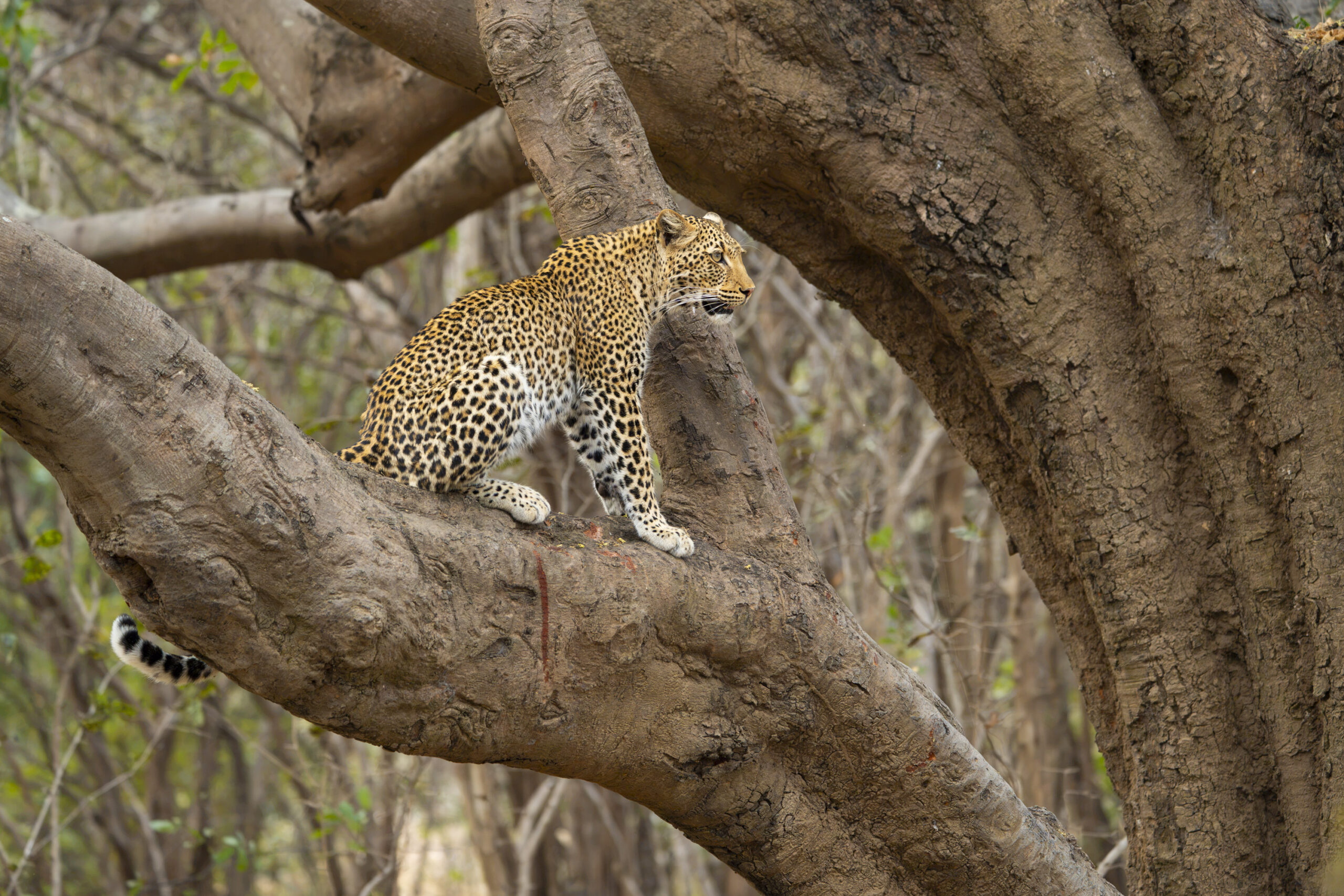
South Luangwa has long been called the Valley of the Leopard, and the reputation holds. The riverine thicket that lines the Luangwa is some of the most reliable leopard country left on the continent, and Chinzombo’s guides — many of them trained in a tradition that traces directly back to Carr’s original walking trails — read it with a fluency that turns a quiet afternoon into something extraordinary without anyone quite noticing the shift. Game drives cover the wider floodplain, thick with hippo and elephant and the kind of birdlife that makes ornithologists go quiet mid-sentence, while access by boat opens up stretches of river that the vehicles can never reach.

What lingers, though, isn’t really the leopards or the river or even the six beautifully unfussy tents. It’s the sense of being inside an idea that someone else had first, decades ago, in a much rougher version of this exact spot — and that the idea turned out to be right. Carr believed wildlife tourism could fund its own conservation, long before anyone had a name for that. He believed the Luangwa deserved to be walked, not just photographed through glass. Chinzombo, for all its polish, still operates on that same quiet conviction.

Some places improve with age. Fewer of them manage to keep their founder’s argument intact while doing it. Chinzombo, somehow, has done both — which may be the truest kind of tribute a landscape can pay to the person who first understood it.

On The Rock – Lamai Serengeti, Tanzania

The Serengeti needs no introduction. Its name alone is enough to conjure something — a golden expanse of grass, a sky stacked with cloud, the distant rumble of a million wildebeest moving as if the plains themselves had come briefly alive. Most people know the Serengeti before they’ve ever seen it, and most people experience it from somewhere in its vast and well-travelled centre.

The northern reaches are different. Quieter in vehicle traffic, bolder in topography, and framed to the north by the Mara River — the final barrier in the wildebeest’s annual circuit, where crocodiles the size of dining tables wait with a patience that can only be described as geological. The Kogatende region up here feels, in some important way, less curated than the rest. More indifferent. More itself.

Lamai Serengeti sits on the Kogakuria Kopje — an ancient granite outcrop that rises from the surrounding plains and offers, from its highest points, a view of the Serengeti that the ground simply cannot provide. The camp was designed to inhabit the kopje rather than conquer it, with massive boulders becoming walls and room dividers, the rock itself doing half the architect’s work. Sitting on a veranda here, with the Mara River valley spread below you and the horizon running uninterrupted in every direction, the effect is that of an accidental observatory — one that has been in place, in one form or another, since long before anyone thought to build on it.

Walking is central to the Lamai experience, and the kopje is ideal terrain for it. Between July and October, when the short grass plains are open and the wildebeest are moving north, guests on foot can work within surprisingly close range of animals that would bolt at the sound of an engine. The kopje itself, threaded with paths that wind through ancient granite formations and patches of shade, reveals a miniature world of lizards and birds and plant life that a vehicle would crush without noticing. Down on the plains below, the scale shifts entirely.


Those same months bring the Migration river crossings, twenty minutes from camp — one of the more extraordinary things that nature produces on a regular schedule. Tens of thousands of wildebeest gathering at the bank, surging forward in a wave of collective decision-making that seems both impossible and inevitable at once, the crocodiles below cutting through the chaos with a terrible efficiency. It is the kind of spectacle that stays with people for the rest of their lives, and Lamai’s position on the Kogakuria Kopje places guests closer to it than almost anywhere else in the Serengeti.


The furniture is locally made, the food sourced from within the country, the guiding among the finest in East Africa. These things matter. But what Lamai really offers is simpler than any of it: a rock, a view, and a landscape old enough to make even the Great Migration — that ancient, ceaseless turning of the wheel — feel like something happening right on schedule.


Duba Plains – Turn the Wild Up a Notch

Some parts of the Okavango Delta feel calm, almost meditative. Channels drift quietly, birds skim the surface, and elephants move through water with an ease that feels timeless. And then there is Duba Plains Camp, where the same water seems to sharpen everything instead.

Set deep within a private concession in the northern Delta, Duba Plains sits in a landscape defined by seasonal flood. When the waters arrive, they spread wide across the plains, transforming dry ground into a shifting mosaic of channels, islands and open space. It is beautiful, unquestionably — but it is also functional. Because where the flood goes, the buffalo follow.

And where there are buffalo, lions are never far behind.

Duba has become quietly known for this relationship. Not in a way that feels staged or predictable, but in the sense that the ecosystem itself leans toward drama. Large herds move across open ground, bunching, spreading, testing the edges of safety. Lions watch, wait, and then commit with a level of intensity that feels very different to more casual encounters elsewhere in Africa.

Game drives here carry a particular kind of focus. You are not simply looking for sightings; you are stepping into a story that is already unfolding. Tracks matter. Direction matters. Behaviour matters. Everything feels connected, as if each movement is part of a wider narrative that began long before you arrived.

And yet, for all its intensity, Duba Plains is still very much a water-based safari.


Between moments of action, the landscape settles back into something softer. Elephants cross channels with slow, deliberate confidence. Lechwe move through flooded grasslands, their hooves adapted perfectly to terrain that would challenge almost anything else. Reflections stretch across the water, turning movement into something almost abstract.

The camp itself mirrors this balance. Elevated, elegant, and quietly luxurious, it offers comfort without separation. Wide decks open onto the floodplain, allowing you to watch the landscape shift throughout the day. Interiors are refined but never overbearing, keeping the focus where it belongs — outside.

There is a rhythm here that feels heightened. Stillness builds into movement. Calm gives way to intensity, then settles again. It is a place where contrast defines the experience as much as continuity.

Duba Plains is not a passive safari. It asks you to pay attention, to read the bush, to stay present in moments that can change quickly and without warning.

And when everything aligns — water, movement, predator and prey — you are reminded that the Delta is not just beautiful.

It is alive in a way that feels immediate, unpredictable, and entirely real.

UNBEATABLE Gorilla Special for SADC Residents!

Rwanda has long been one of those places that sits just beyond easy reach.
This Iconic Africa Special changes that, opening up access to gorilla trekking for our SADC guests at rates up to 70% lower than usual — something that VERY rarely comes around.

There are certain trips that tend to live more in conversation than in reality.

Rwanda is one of them.

It comes up easily enough — over a glass of wine, around a dinner table, somewhere between “we should really go” and “one day.” The images are always the same: mist hanging low over forested slopes, the quiet anticipation of a trek, that first moment of eye contact with a gorilla in the undergrowth.

And then, just as quickly, the conversation moves on.

Not because the interest fades, but because the numbers tend to bring things back down to earth.

Gorilla trekking, for all its appeal, has always sat at the upper end of the safari spectrum. Permits priced in dollars, logistics to match — it’s the kind of experience that often gets postponed, rather than planned.

But every now and then, something shifts.

Set just outside Volcanoes National Park, Amarembo by Touch Down sits quietly on the edge of one of Africa’s most compelling wildlife experiences. There’s no overstatement to it. It’s comfortable, well-positioned, and close enough that early mornings don’t feel like a logistical exercise.

More importantly, it places you exactly where you need to be — at the start of a day that rarely unfolds the same way twice.

A gorilla trek isn’t something you can fully prepare for. There’s the briefing, of course, and the general outline of how things might go, but once you step into the forest, everything slows. The air shifts, the sounds change, and the sense of anticipation builds gradually rather than all at once.

You walk. You stop. You listen.

And then, at some point, you’re there.

It’s not dramatic in the way people expect. No sudden reveal, no orchestrated moment. Just a quiet realisation that you’re sharing space with something entirely self-contained. A silverback watching without concern. A younger gorilla moving through the foliage with a kind of casual confidence. The forest continuing around them as if nothing has changed — even though, for you, it has. Monumentally.

It’s an experience that tends to stay with people for reasons that are hard to put into words at the time.

Which is perhaps why it’s always been so sought after.

For travellers within the SADC region, the current Iconic Africa Special has secured rates at Amarembo in a way that makes the broader Rwanda experience significantly more accessible than it has been in the past.

A 3 day, 4 night stay including all meals, trekking permits (1 Gorilla, 1 Golden monkey), is now on sale for R49, 999! The offer is valid for travel until the 30 May, with strictly limited availability!

It’s not something being shouted about, and perhaps that’s why it feels as interesting as it does.

Because when a place like Rwanda — long considered just out of reach — suddenly becomes more than possible, and it changes the nature of the conversation entirely.

It moves from “one day” to “now”.

And those are often the trips that end up meaning the most!

Jao Camp: Let the Water Teach You to Slow Down

Most safaris begin with a map: roads, tracks, loops and river crossings. Jao Camp begins with a different philosophy — let the water decide. The Okavango Delta is famously unpredictable, rising and receding at its own whim, turning woodlands into lagoons and plains into mirror-smooth channels. Jao doesn’t fight this; it reveres it. And guests very quickly learn to do the same.

From the moment you arrive, elevated walkways signal the shift in perspective. You move through palm islands at tree-crown level, brushing past birdlife that seems only mildly surprised by your presence. Suites are generous to the point of indulgence — private decks, plunge pools, gauzy interiors that glow softly in Delta light — but nothing feels showy. Everything serves one quiet purpose: to invite you to unwind.

The rhythm here is governed entirely by water. When the flood is high, mokoro excursions become poetry in motion — a silent glide past lilies, reed frogs, jacanas stepping delicately across floating leaves. Boat outings open up the wider channels, sometimes revealing elephants swimming in slow motion, or a fish eagle perched in just the right shaft of light. When the waters pull back, game drives explore floodplains now etched with fresh tracks: lions, leopards, wild dogs, and the occasional sable giving you a regal once-over.

One of Jao’s most underrated luxuries is its sense of spaciousness — not in size, but in tempo. There’s permission here to move slowly. To linger in the hide while storm clouds bruise the horizon. To surrender to an afternoon spa treatment because thunder murmuring across the water feels like the day’s natural metronome. To enjoy dinner on the deck by lantern-light, listening to lechwe splashing distantly in the shallows.

Some camps help you see wildlife. Jao helps you feel the Delta. And in doing so, it becomes less a safari destination and more a gentle recalibration — a reminder that life is richer when you let nature set the pace.

Little Kulala: Where Silence Learns to Shine

There are landscapes that feel sculpted. And then there are landscapes like Namibia’s Sossusvlei, where the earth seems to have spent a few million years deciding on the perfect curve of a dune before finally signing its name in sand. It’s here, on a private reserve bordering the iconic Namib-Naukluft, that you’ll find Little Kulala — a lodge so seamlessly woven into its surroundings that it feels less built and more exhaled by the desert itself.

Little Kulala is a study in understatement. Its suites are soft, pale, and impossibly serene — all timber, linen, and clean geometry. They’re the kind of spaces where even time seems to walk more quietly, padding across the floor in bare feet. Private plunge pools shimmer in the heat, rooftop starbeds invite late-night sky worship, and every window frames a view that looks suspiciously like a carefully composed photograph.

But the real magic, as always in Namibia, happens outside the walls.

Mornings begin with air cool enough to make your coffee feel philosophical. The journey into the dunes is a slow unfurling: pastel light, long shadows, oryx silhouettes gliding across the horizon like punctuation marks in an unfinished poem. Climb Big Daddy or Dune 45 if you want a challenge; wander the fossilised trees of Dead Vlei if you want perspective. Either way, the desert has a knack for reminding you how vast the world is — and how refreshing it can be to feel wonderfully small.

Wildlife here is subtle by design. A brown hyena’s tracks etch the sand. A springbok drifts through a mirage haze. A lone ostrich appears exactly where you didn’t expect it, then pretends it meant to be there all along. It’s not a place of abundance; it’s a place of presence.

Back at Little Kulala, afternoons melt into golden silence. Perhaps you retreat to your deck with a book you barely open. Perhaps you sink into your pool while the desert rearranges its colours one degree at a time. Evenings bring lanternlight, deep tranquillity, and stars that seem to multiply just to show off.

Little Kulala is luxury distilled — minimalism with meaning, privacy without pretence, and landscapes so unfiltered they feel almost spiritual. It’s not a place you visit so much as a place that quietly rewrites the rhythm inside you.

Londolozi Earns Three Michelin Keys: Where Connection Is the True Currency

The Michelin Guide has spoken — and Londolozi has joined a rarified circle. In the inaugural list of global lodges recognised for excellence in hospitality, Londolozi has earned Three Michelin Keys, the highest possible rating.

For those unfamiliar, the new system is Michelin’s way of recognising the world’s most extraordinary places to stay — where design, service, character, value, and connection to place combine into something unforgettable. The restaurant world has long had its stars; now the lodging world has its keys. And in Londolozi’s case, the metaphor fits perfectly.

Because a stay here really is about unlocking something — not just a door to your suite, but a door into the wilderness itself. The luxury is evident, of course: the seamless service, the design that whispers rather than shouts, the food that would make even a Parisian inspector pause mid-bite. But it’s the connection that sets Londolozi apart. Connection to land, to community, to guests, and to a philosophy that’s been evolving for almost a century.

You feel it in the quiet professionalism of a tracker reading leopard spoor at dawn. You feel it in the stillness of the river at sunset, when the light folds over the granite outcrops and the bushveld seems to exhale. You feel it in the staff who’ve worked here for generations — living proof that hospitality, when done right, becomes heritage.

Michelin calls the Three-Key rating “an extraordinary stay.” But that hardly covers it. Londolozi doesn’t just offer extraordinary stays; it offers perspective. It reminds guests that luxury isn’t about what’s added, but what’s revealed when everything unnecessary falls away.

Earning Three Keys isn’t just a nod to Londolozi’s excellence — it’s an acknowledgment of its ethos: that true hospitality has always been about belonging. The kind that doesn’t just welcome you for a night, but stays with you long after you’ve left.

Tswalu Kalahari: The Luxury of Isolation

There’s a point somewhere between Upington and eternity where the Kalahari opens up and you start to feel very small. That’s usually the moment you realise you’re getting close to Tswalu.

South Africa’s largest privately protected reserve has never really played by anyone else’s rules. While other lodges might measure their worth in thread count or wine lists, Tswalu deals in something far rarer — space. Here, luxury isn’t about what’s added, but what’s absent: crowds, noise, clutter, deadlines. The silence is a currency all its own.

The new Loapi Camp, Tswalu’s most recent addition, continues this philosophy of elegant restraint — a collection of glass-fronted safari homes scattered like mirages across the dunes. Everything is deliberate yet unforced: natural materials, clean lines, textures that echo the desert itself. It’s architecture designed to defer to the landscape, not dominate it.

But what sets Tswalu apart isn’t just the design — it’s the depth of experience. Tracking pangolins under starlight with researchers. Following a coalition of cheetahs through the ochre grass. Sharing a breakfast of Kalahari truffles and poached eggs while the horizon hums with heat. The encounters here feel less like safaris and more like quiet collaborations with the wild.

Condé Nast’s readers regularly place Tswalu among Africa’s finest, yet its real brilliance is how little it seems to care about that. This is a place that hums to its own frequency — one of patience, purpose, and deep respect.

In a year when Michelin Keys and global accolades are reshaping how we define excellence, Tswalu stands as a gentle reminder: true luxury isn’t found in perfection, but in perspective. It’s the feeling of being utterly alone, yet completely connected — to the land, to the moment, to something far older than both.

Ulusaba: Safari, With a Wink

Most luxury lodges lean on hushed tones and reverence for the wilderness. Ulusaba, Richard Branson’s private slice of the Sabi Sand, does all that — but it also has a twinkle in its eye. It’s safari, yes, but safari that knows how to have a little fun.

The property is split between three lodges: Rock Lodge, perched high on a koppie with views that stretch forever, and Safari Lodge, tucked into the riverine forest where rope bridges link treehouse-style rooms. And then there’s the newest kid on the block: Cliff Lodge; just two ultra-private suites carved into the rock, perfect for families or friends who want the whole “this is OUR patch of Africa” feeling. Private pools, epic decks, and views so good you might forget to go on game drive (don’t worry, the rangers will remind you).
All three come with the sort of playful details Branson is famous for — think surprise champagne stops in the bush and the kind of storytelling that turns an ordinary sundowner into a small event.

Wildlife here is the main draw, of course. Ulusaba sits in the heart of the Sabi Sand, one of the best places on Earth to see leopards. Lions, rhinos, buffalo, and elephants make daily appearances, but it’s the frequency and intimacy of big cat sightings that has made this region legendary. The rangers and trackers here are sharp, and they know how to read the land with the kind of confidence that comes only from decades of experience.

Yet what sets Ulusaba apart is its refusal to take itself too seriously. The service is seamless, but never stiff. Staff banter with guests as though you’re part of the family, and evenings often end with laughter rising into the night alongside the distant roar of a lion. If other lodges are symphonies, Ulusaba is more like jazz: polished, but with a streak of improvisation that keeps it fresh.

For all its playfulness, the lodge doesn’t skimp on indulgence. Rock Lodge has a wine cellar and spa treatments with sweeping views. Safari Lodge offers shaded pools and private decks perfect for doing absolutely nothing. And when the day’s game drive is done, you can expect a dinner that balances serious culinary flair with a sense of occasion.

Ulusaba is proof that luxury can be lighthearted. That you can sip fine wine and watch the sunset, but also laugh when the resident vervet monkeys make a grab for your toast at breakfast. Because the best safaris aren’t just about what you see — they’re about how it all makes you feel. And Ulusaba makes you feel alive, in on the joke, and right at home.

Busanga Plains: Where Luxury Tiptoes Into the Wild

If Singita Sabora feels like theatre, Busanga Plains is closer to unscripted documentary — no retakes, no stage lighting, just the raw pulse of the African wilderness.

Deep in Zambia’s Kafue National Park, the camp sits in the middle of a seasonally flooded grassland so vast it makes the horizon feel like a rumour. For much of the year, these plains are inaccessible. When the waters retreat, they reveal one of Africa’s most dramatic safari arenas: red lechwe bounding through the shallows, herds of puku grazing in golden light, and lions that have learned to hunt where most cats would hesitate to get their paws wet.

Busanga Plains Camp itself doesn’t try to outshine the setting. It couldn’t, and it doesn’t need to. The lodge is deliberately small, with just a handful of tented suites raised on wooden decks. You’ll find comfortable beds, hot showers, and lantern-lit dinners — but don’t expect chandeliers or wine cellars. Here, the luxury is space. Silence. The sense that you’ve stumbled into Africa before the world got crowded.

Game drives roll out across the plains like expeditions. Some mornings are about elephants and buffalo drifting through the mist. Others deliver the famous Busanga lion prides, often lounging on termite mounds like they own the place (which they do). If you’re lucky, you might spot a cheetah carving a line through the long grass, or watch crowned cranes rising in a flurry of wings as the sun sets.

Evenings back at camp are their own reward. Sitting by the fire, the vastness pressing in from all sides, you become acutely aware of just how remote you are. No highway hum, no faint glow of a distant town. Just stars — millions of them — and the steady chorus of the marsh.

Busanga isn’t safari with trimmings; it’s safari distilled. It’s for travellers who crave the edge of adventure but still appreciate a crisp linen sheet at the end of the day. The kind of place that makes you feel small, in the best possible way.

Know Thy Camera: Why Valuable Seconds Count in Wildlife Photography

The difference between the greatest wildlife photographers and those just getting started isn’t actually that much, when it comes to actual time taken to snap a shot.
In terms of the number of seconds between spotting an opportunity, lifting one’s eye to the viewfinder, dialling in your settings an pushing the shutter button, the complete rookie might take just a few seconds longer – ten at the most – but the difference in image quality is – for the most part – utterly remarkable.

So how do the pros make those few seconds count so drastically in their favour?

The main thing to remember is that you’re dealing with wildlife. “Wild” being the operative word. With no control over an animal’s movements, when a moment passes it’s likely gone forever.
There are therefore two main factors at play here:

  1. Anticipation

  2. Dialling in your settings. Quickly.

Let’s talk about the first one briefly.

As obvious as it may sound, understanding wildlife behaviour is of primary importance in wildlife photography, for the simple reason that predicting what is likely to. happen next cand and often will set you up to both be in the right position for a shot and to have everything ready on your camera, from lens choice to settings.
Realising that a lion yawning in the soft evening light means that he will likely yawn again soon and then get moving will inform you as to what shutter speed, aperture and ISO you should be using.
Being new in the game however means you will be relying heavily on your safari guide for this information, so make sure you are asking questions and looking for prompts as to what is probably going to happen next, and you can switch to part2: Dialling in Your Settings.

Although some sort of base level ISO and shutter speed will be adequate for at least capturing a memory of a scene (which modern cameras can often do a decent job with on Auto mode), the more control you are taking when it comes to settings selection the better, as you will necessarily be able to increase image quality and start to look for the photos you want to capture in terms of your own interpretation of a scene.

Believe me, the few seconds it takes to bring your camera down, look for the button you want to be pressing, pressing it, scrolling through the menu for the desired setting then bringing the camera up again to eye level, composing the shot and then snapping it, will more often than not result in the scene you originally saw or envisioned having already changed, and you will find yourself behind the 8-ball.

This is where the pros have the upper-hand; they have spent so much time adjusting settings at speed, in the field, without removing their eye from the view-finder, that a 2-second tweak with the thumb and forefinger dials can completely change what mode and settings they’re shooting on, and have them fully prepared to nail the shot.
As with so many things in life that demand mastery, the muscle memory is what sets them apart here.

Don’t get disheartened though.

The good news in the early days of anyone’s wildlife photography journey is that although the learning curve is steep at first, but you can attain a decent level quickly:

Once you hit the plateau stage, it takes hours in the field and thousands of photos. to start seeing real change, but that initial period of increasing competence can very much be fast-tracked by just knowing your camera.

You shouldn’t have to be fiddling around trying to work out how to change the shutter speed when the leopard is about to launch up the tree. It should just happen.
Sun suddenly disappeared behind some dark clouds? Low light? Raise your ISO immediately! One push of a button, quick scroll, done.

Looking at the menu above, things might seem complicated, but trust me; a few basic concepts and you’re set.
Yes you will have to take time to come to terms with what’s what, but knowing how to change settings is what’s going to make the difference.

When in a photographic situation, a good guide might tell you something like “Make sure your aperture is wide open and your ISO is at about 1600. That should get you a decent shutter speed”. It’s then up to you to get those settings set up. As a sighting unfolds, he or she might be issuing updates on the fly; “Ok the sun’s gone down.. I’d double your ISO now. Use a beanbag to keep the camera steady. Make sure your shutter speed is at least 1/320”. Or something like that.

You don’t even have to be too comfortable with what all the terms mean or how they relate to each other; as long as you can respond to a verbal instruction from your guide, you’ll at least be able to get the shot.

Sitting for half an hour before you come on safari to make sure you know what each button on the camera does, how to access menus and which dials to spin for what result will go a long way towards relieving frustration when actually out in the field, believe us!

For those interested in private photographic tutelage on safari through a specialist photographic guide, get in touch with us through info@iconicafrica.com.

We know where the best photographic lodges are to be found, so if you are looking for any photographic advice pre-, during- or even post-safari, don’t hesitate to reach out.

What Lens to Take on Safari?

The old adage of “The best camera to have is the one you have with you” will always stand true on safari, and the same can be said for lenses.
Most scenes and/or sightings can be reimagined to make your lens work for you, from an 8mm fish-eye to an 800mm zoom.

Ok that might be stretching it a little, as a proper wide-angle won’t get you that nice close up of a bird from forty metres away, nor will you be able to encompass a whole pride of lions next to your vehicle in one photo with a mega-zoom, but if you do happen to find yourself seemingly limited by your lens choice, simply zoom out (figuratively), and start to imagine what’s in front of you in a new way.

The solution of course is simply to have a selection of lenses with you, and move between them as the situation dictates, but multiple lenses can start getting expensive and heavy, not to mention dust-filled if you are constantly switching them out. Multiple camera bodies take care of this latter problem, but again you start encountering extra weight and expense.

What we want to do here is give a brief run through of some of the most commonly used lenses on safari, what they’re good for, and which parts of Africa you should be sure to pack them for.

WIDE ANGLE

These lenses are essentially wider than 35mm. They can be fixed or zoom lenses. The 16-35mm range is a popular one.
Wide-angle are severely underrated in the safari world. The tendency for most safari-goers is to want to zoom in close. This can be great if you’re after detail, or trying to isolate a single subject, but just because you can zoom, doesn’t mean you should. More often than not, by zooming in too much you are excluding critical elements of the photographic story. Wide angle lenses allow you to capture an entire scene, not just one single element of it.
Landscapes, big herds of elephants, room interiors… these are a few things you might want a wide-angle for. Astrophotography is pretty much impossible without a wide-angle, and they can be very effective in exaggerating the scale of something (see the elephant photo below).

Wider is often better, and since these lenses are quite compact more often than not, they won’t take up too much room in your camera bag.

Best Destinations for Wide-Angle: Namibia, Cape Town

MEDIUM ZOOM

Between 50mm and 300mm is generally your sweet spot if yu want a lens to tick as many boxes as possible. Wide enough to capture a landscape is an animal is far enough away from you, but with enough zoom to really be able to isolate a subject if its proximity allows for it. The 70-200mm f2.8 lens is the mainstay of wildlife photographers around the world, and Canon, Nikon and Sony all make one.

The f2.8 aperture is wide enough to be able to carry on shooting in low light conditions (eg. dawn and dusk), and in areas where the wildlife is habituated to vehicles and can therefore come quite close, any more zoom just feels excessive.

Best Destinations for Medium Zoom: Sabi Sands, Lower Zambezi, Gorilla Trekking

FIXED TELEPHOTO

Starting from 300mm, things start to get interesting. Your zoom is starting to pack a real punch, and fixed zoom lenses generally allow for wider apertures, which ultimately means better low-light performance, higher shutter speeds and fewer missed shots. The 400mm f2.8 in particular is an incredible lens.
The image quality tends to be superb, but since the focal length is fixed, you can sometimes feel a bit constrained. This is when a bit of creativity can be necessary.

With 500mm, 600mm and 800mm you are dealing with seriously bulky lenses, They can take amazing photos – portraits of a lions face from a good distance, crisp shots of tiny birds that make them look larger than life – but the lack of mobility can be a hindrance. Some sort of support in the form of a bean bag or Wimberley arm is needed when shooting from a vehicle, or a tripod if you are on foot.

Best Destinations for Fixed Telephoto: Serengeti, Maasai Mara, any bird-focused photography trip.

There is no right or wrong in your lens selection.
Certain lenses might be the only way to capture specific images, but sightings need not be restricted to those specific images; it’s ultimately up to your imagination how you choose to represent a sighting.

Be sure to get in touch with us through info@iconicafrica.com if you need any sort of photographic advice for your African safari.