&Beyond Suyian — The Kenya Almost Nobody Knows

Most people who go on safari in Kenya go to the Mara. And the Mara deserves its reputation — the migration, the lions, the sheer volume of wildlife on those open plains. But there’s a version of Kenya that sits north of all that, quieter and considerably less visited, where the landscape shifts into something altogether different. Rocky outcrops, granite kopjes, dry sweeping valleys, and a conservancy so large that 44,000 acres of it belongs entirely to Suyian. &Beyond opened their lodge here in mid-2025, and it’s already one of the more interesting things to happen to Kenyan safari in recent memory.
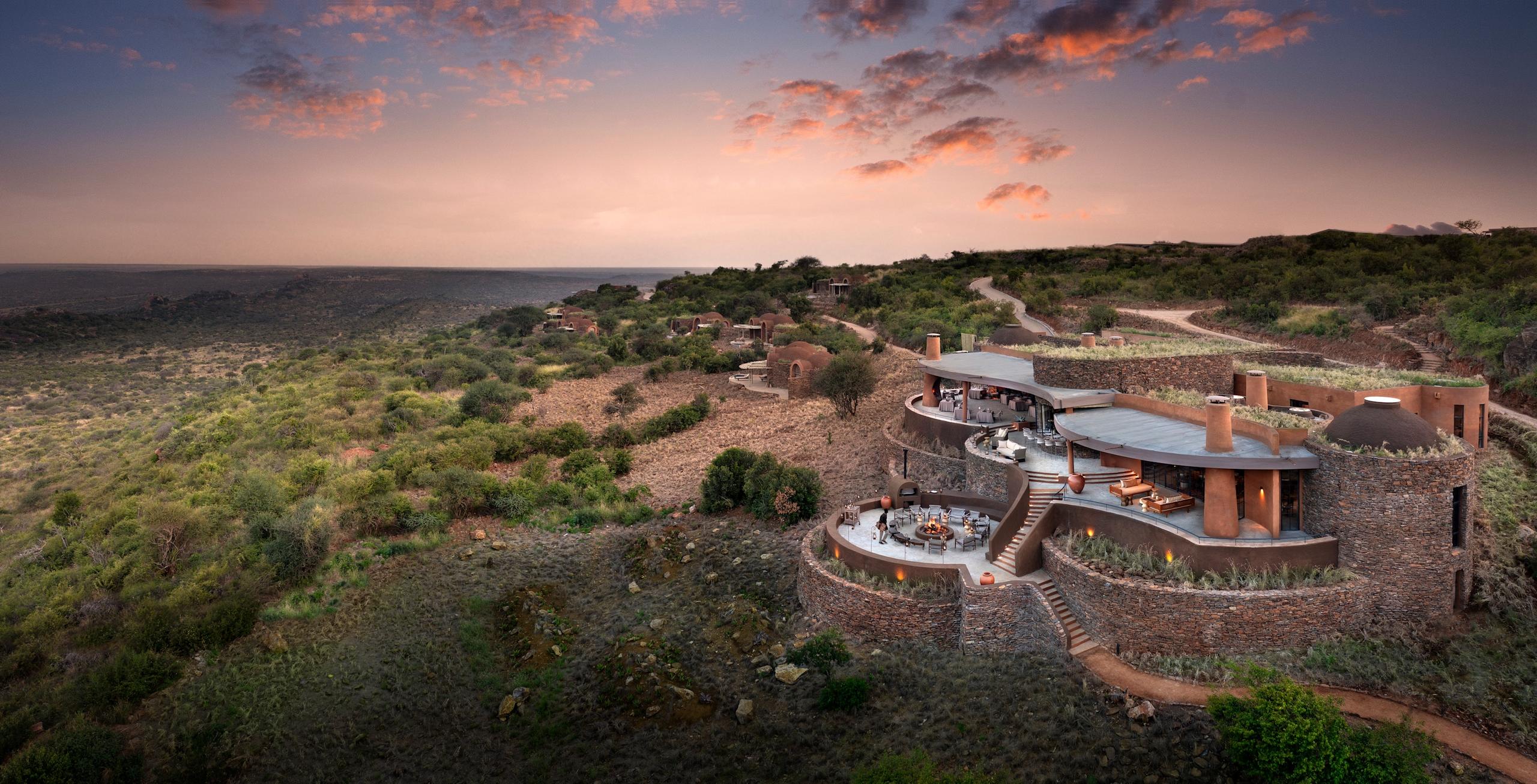
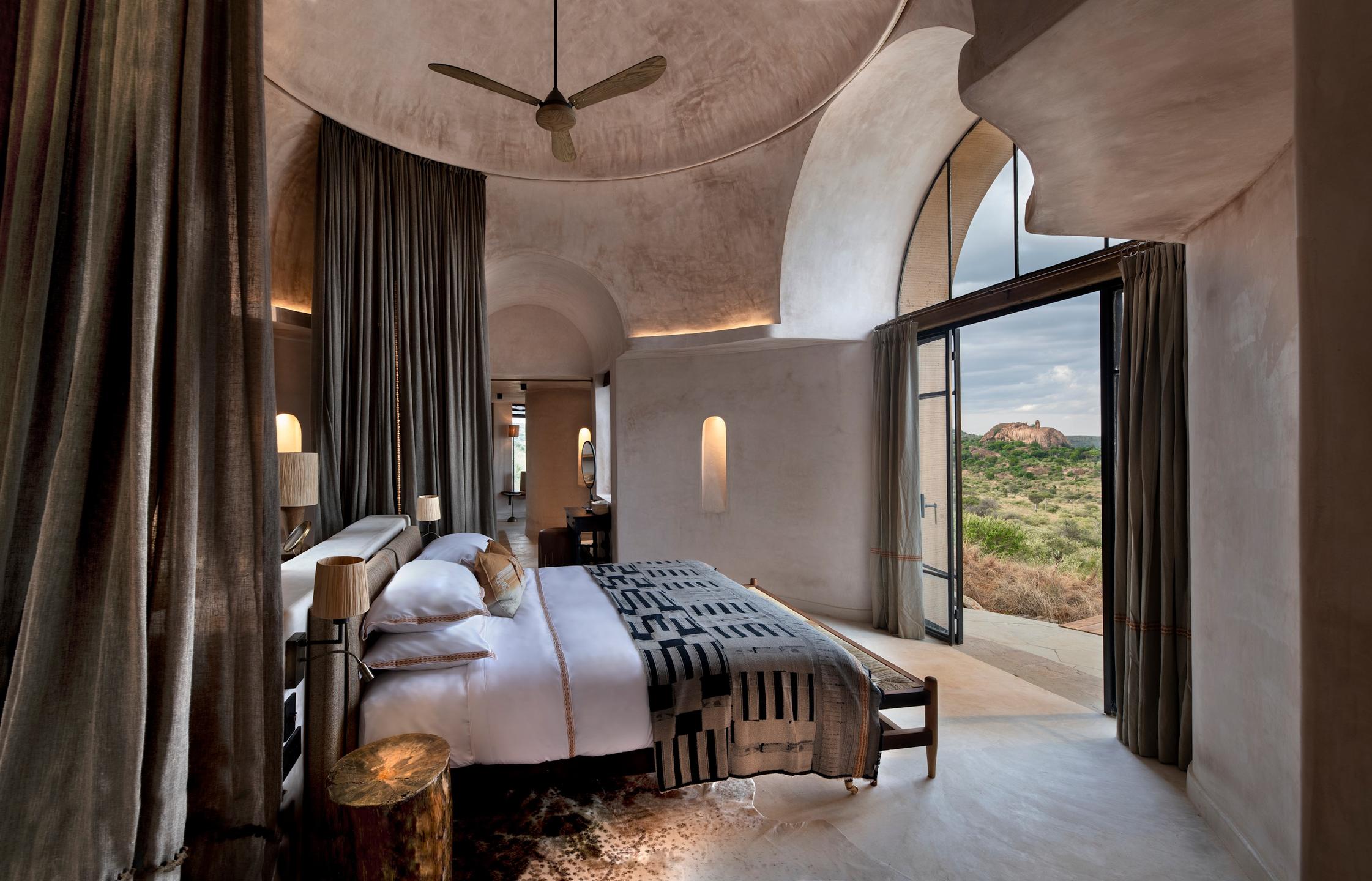
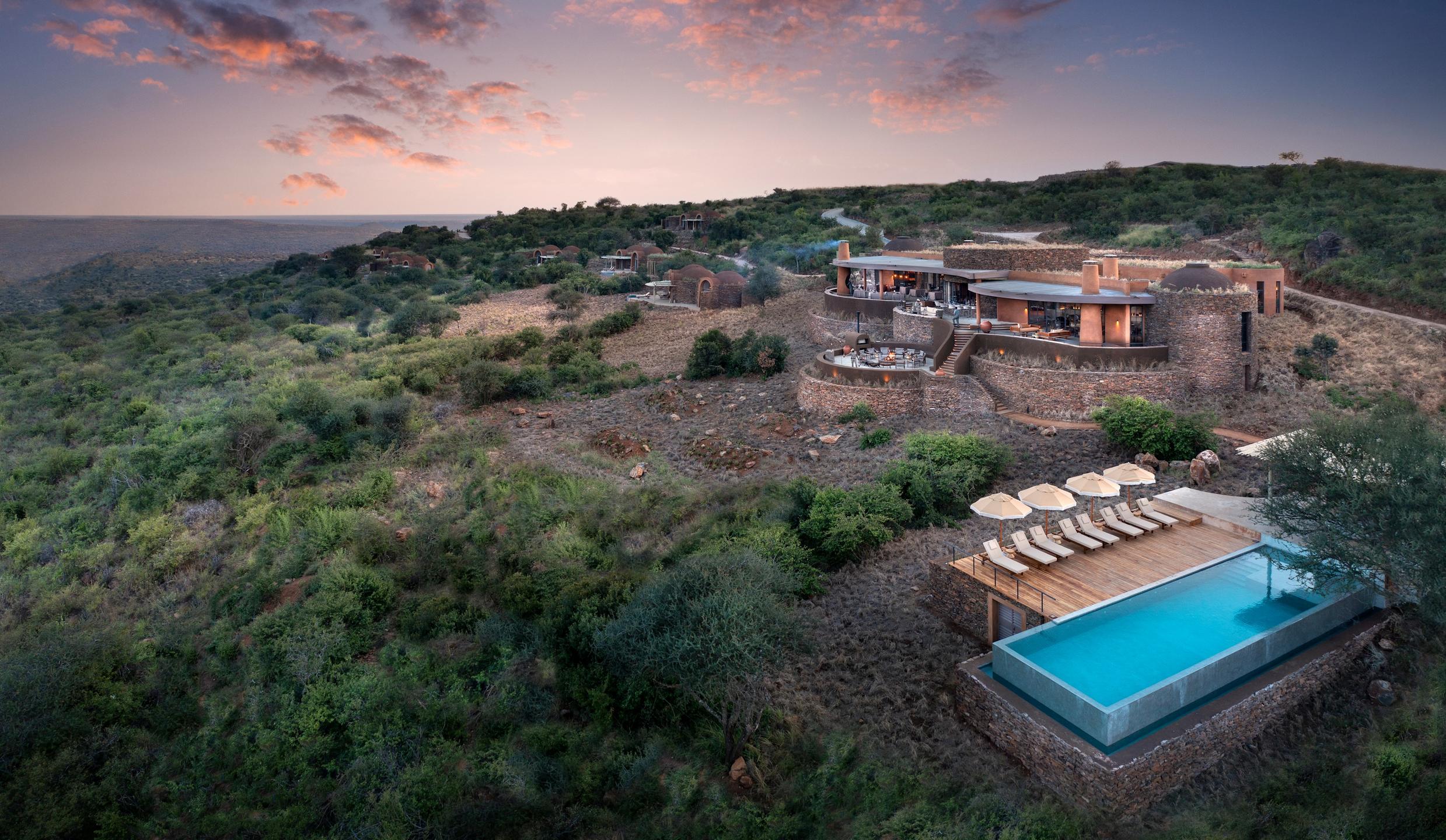
The lodge itself is striking. Low-slung domed structures tucked into the escarpment, their rounded forms and planted roofs drawn directly from the surrounding granite. Fourteen suites, each with a plunge pool, outdoor shower, and fireplace — useful at this altitude, where the evenings cool faster than guests expect. The interiors carry a philosophy &Beyond calls Afro Wabi-Sabi: natural materials, mottled textures, subtle references to the semi-nomadic Samburu culture that has shaped this landscape for generations. Someone has thought carefully about every surface, and it shows.
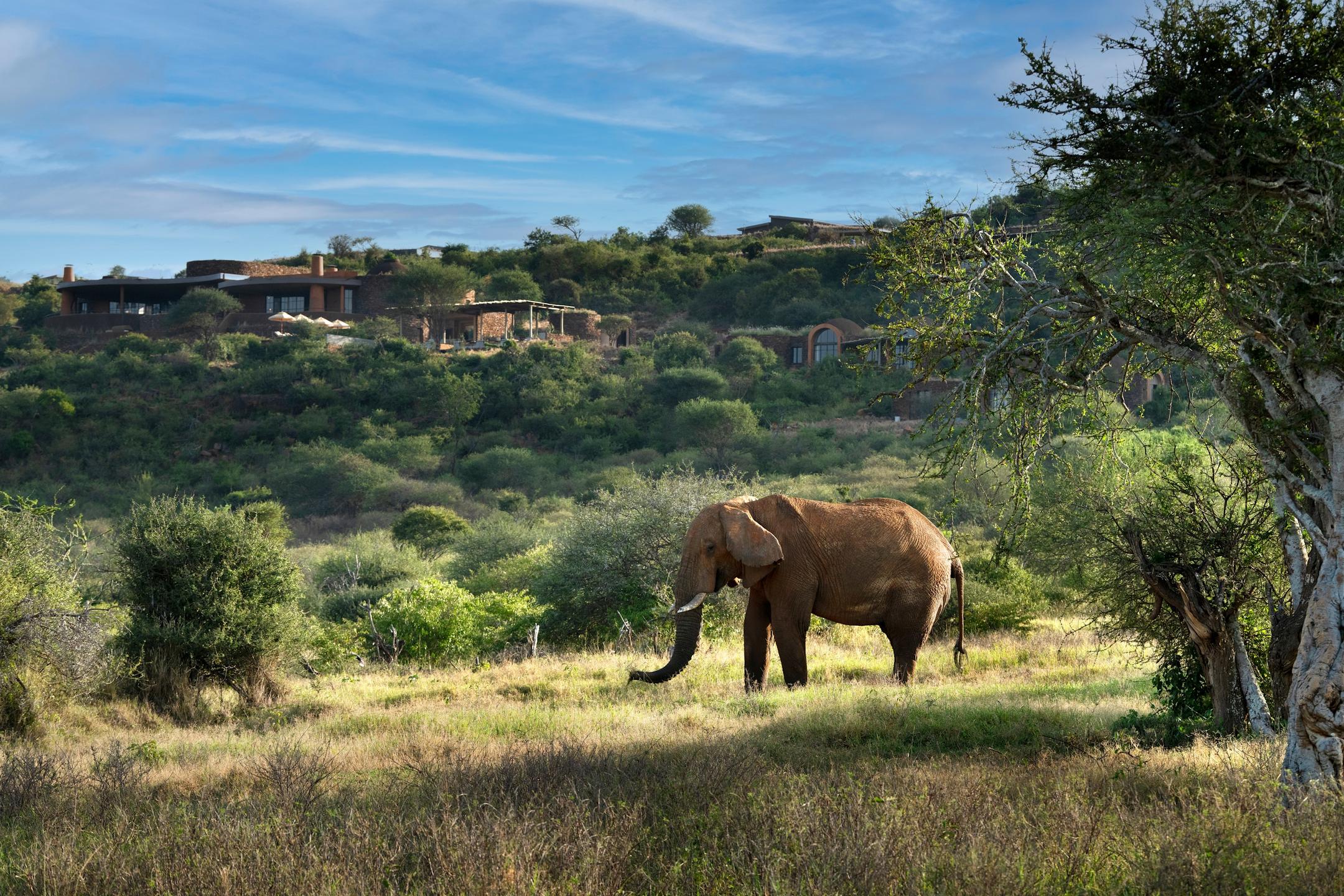
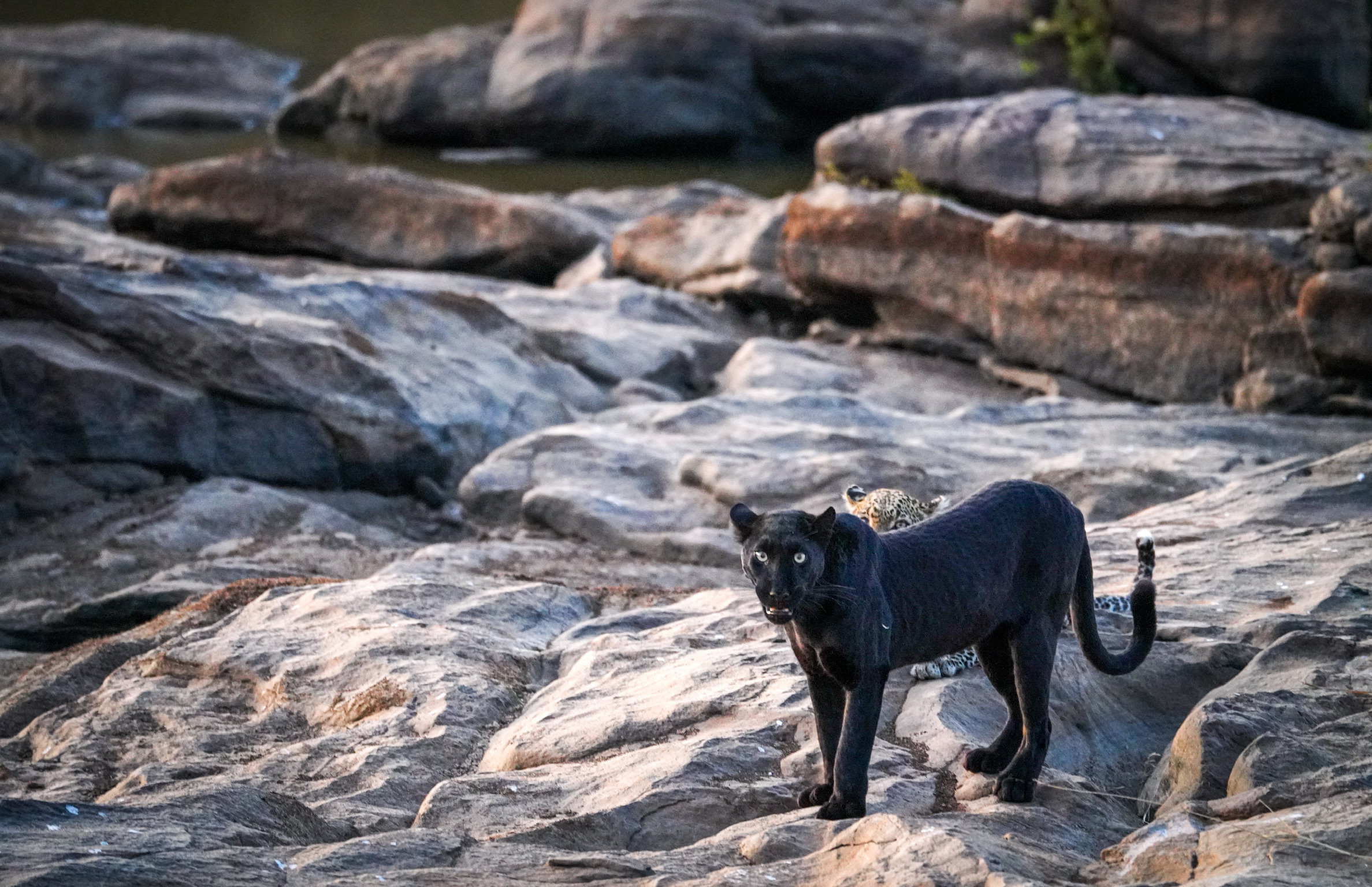
The wildlife at Suyian is not the Mara. There are no wildebeest thundering past in their hundreds of thousands, and anyone arriving with a Big Five checklist and a tight schedule will need to recalibrate. What Suyian offers instead is rarer and, for the right traveller, considerably more compelling. Grevy’s zebra, reticulated giraffe, gerenuk, African wild dog, and the animal that has become something of a symbol for the conservancy — the melanistic leopard. Black leopards are among the most elusive cats on the continent. The neighbouring conservancy is famous for one named Giza. Suyian has its own. The odds of seeing one are never guaranteed, but the fact that they’re here at all says something important about the quality of the wilderness.
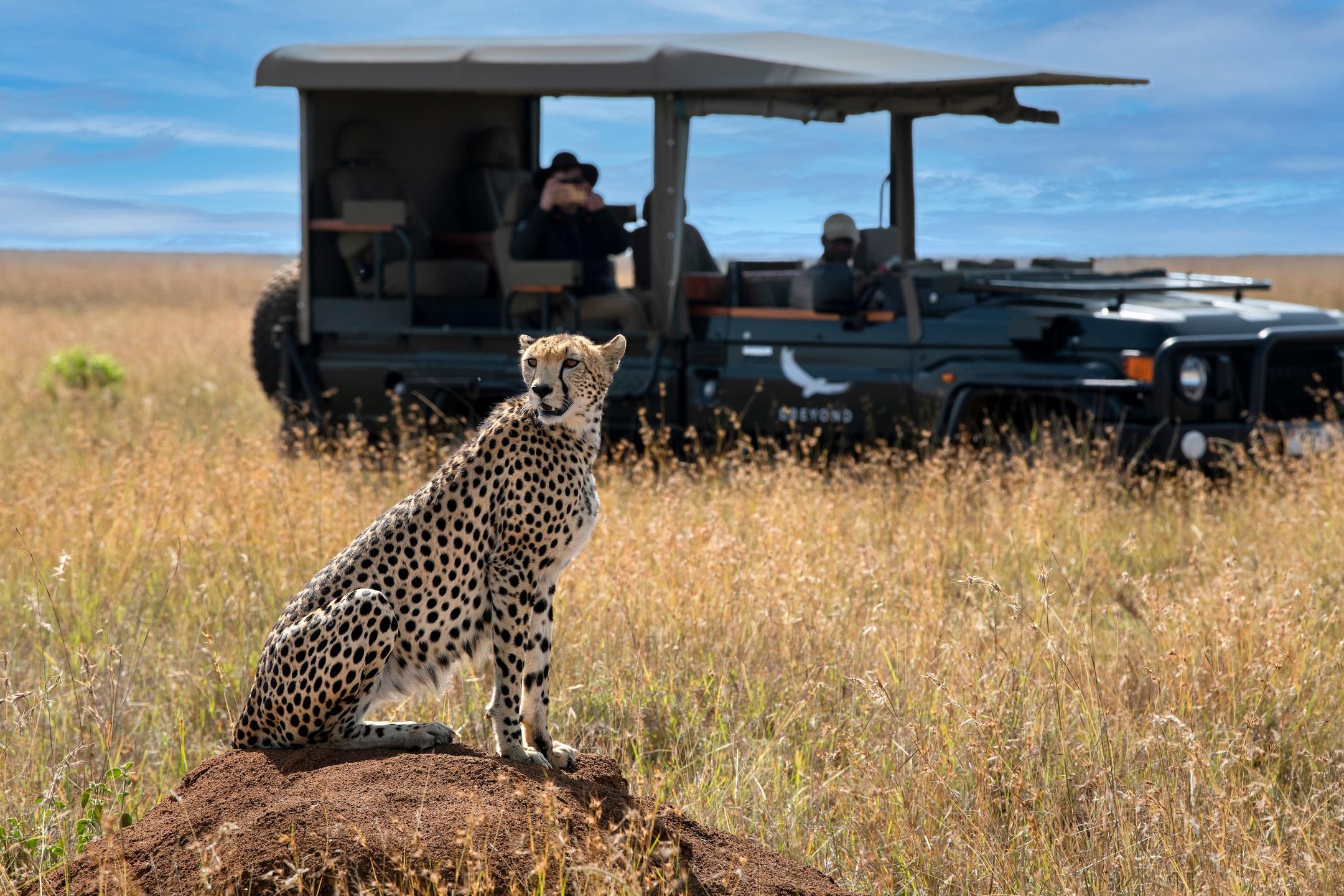
The activities lean into what makes Laikipia genuinely different. Camelback safaris trace routes across the conservancy that have been walked by Samburu herders for centuries. Horse riding is available for those who prefer their wildlife encounters at a slower, quieter pace — animals tend to behave differently around horses than vehicles, and the sightings reflect that. Walking safaris, night drives, visits to the working ranch that still runs alongside the conservation operation — Suyian is a working landscape, not a sealed-off reserve, and that gives it a layered, lived-in quality that is increasingly rare.
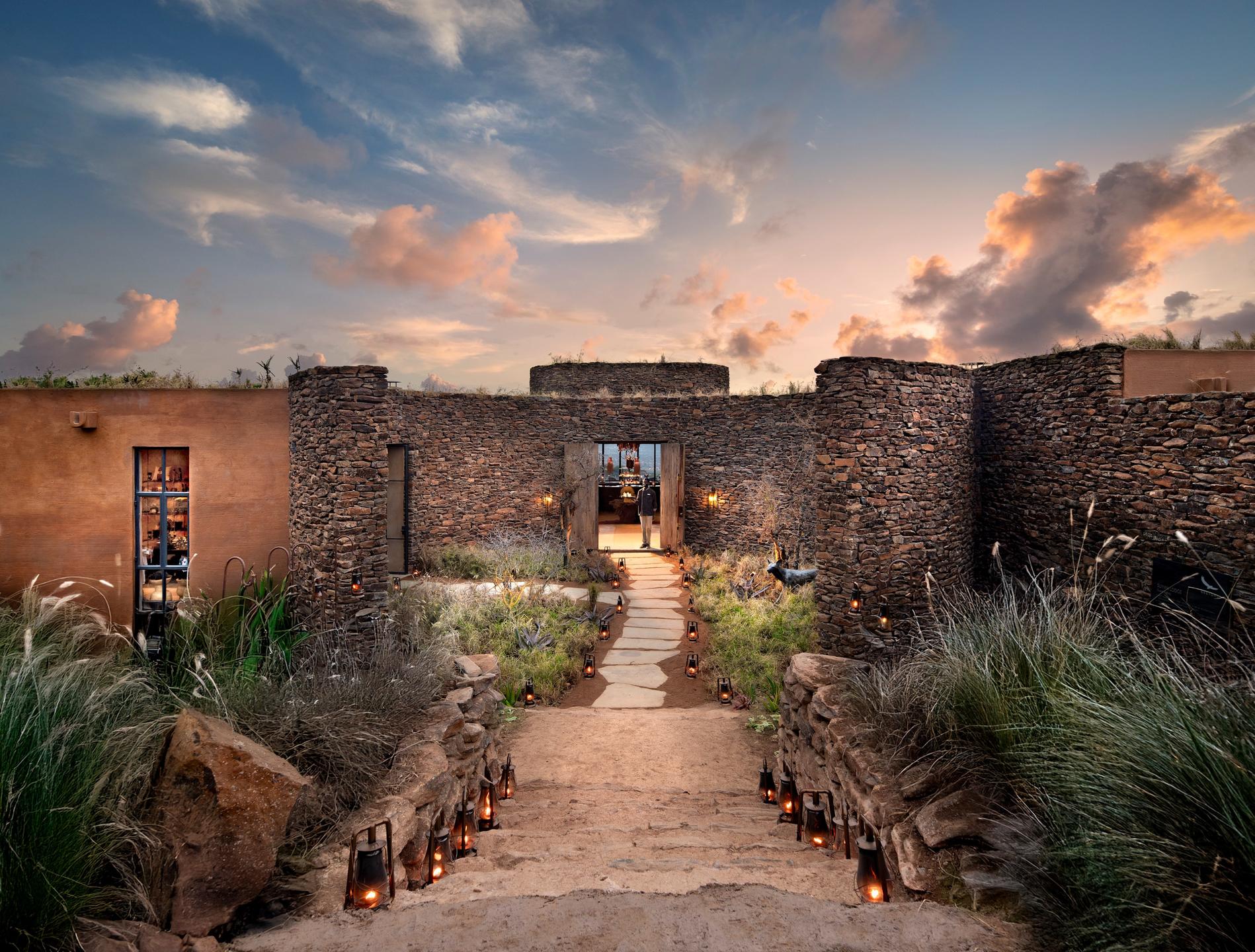
Suyian is a young property. It opened less than a year ago, but the architecture and food have drawn consistent praise. The wildlife, by its own nature, is unpredictable. This is a lodge for people who understand that the best safari experiences are not always the ones with the most animals — sometimes they’re the ones that take you somewhere genuinely new.

Laikipia has been on the radar of serious safari travellers for years. Suyian has given it a front door worthy of what lies behind it.
A Quiet Inheritance — Chinzombo Camp, Zambia

In the 1970s, a game ranger named Norman Carr kept a rainy-season camp on a ridge above the Luangwa River, named after the snuffbox tree that grew there in abundance. Carr is the reason the walking safari exists at all — he pioneered it here in the Luangwa Valley decades earlier, having persuaded a local chief to set aside tribal land as a game reserve, and having decided, somewhat radically for the time, that the best way to understand this landscape was to get out of the vehicle entirely and let it happen at eye level. He called the place Chinzombo. It was never meant to be permanent. It became, eventually, something close to legend.

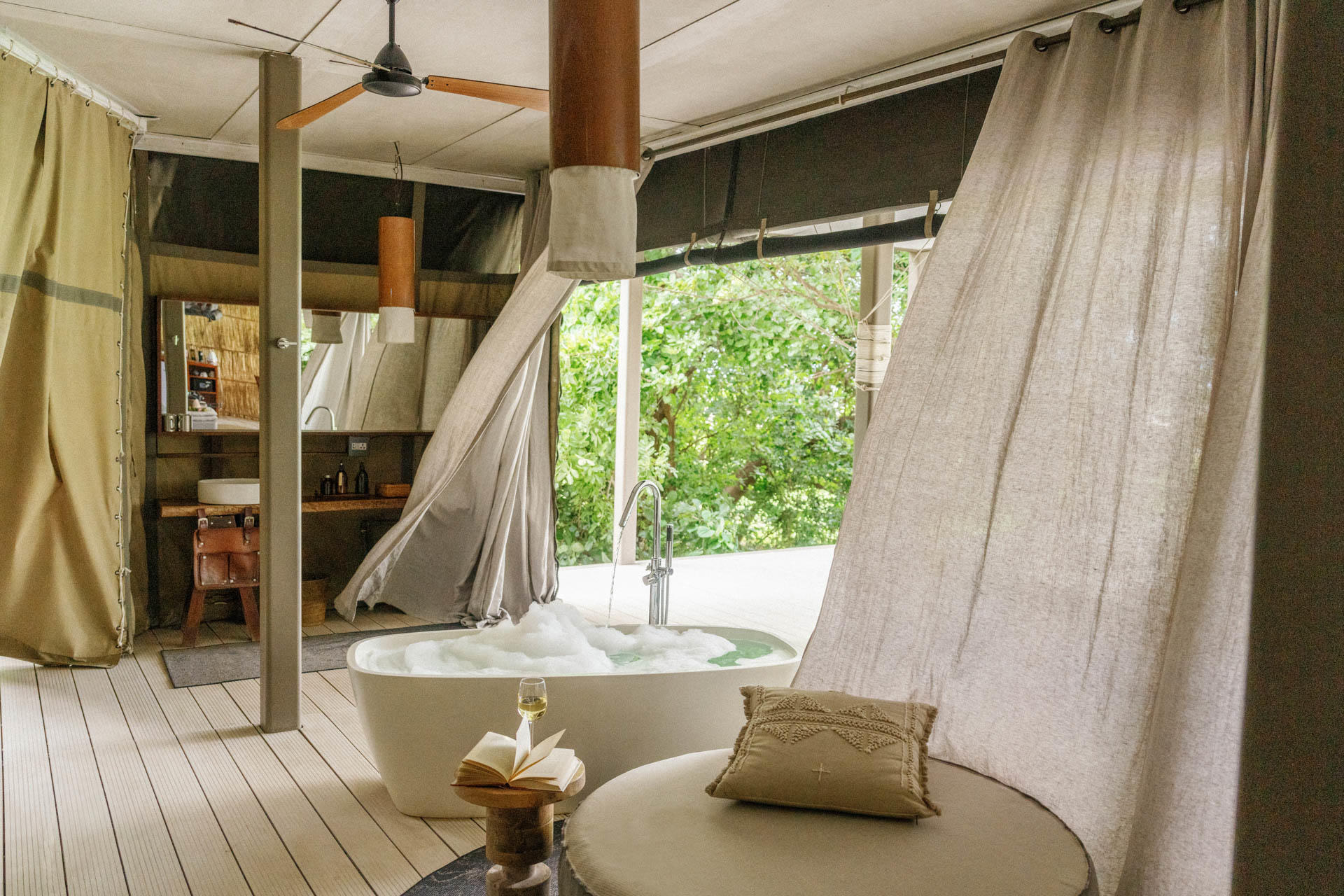
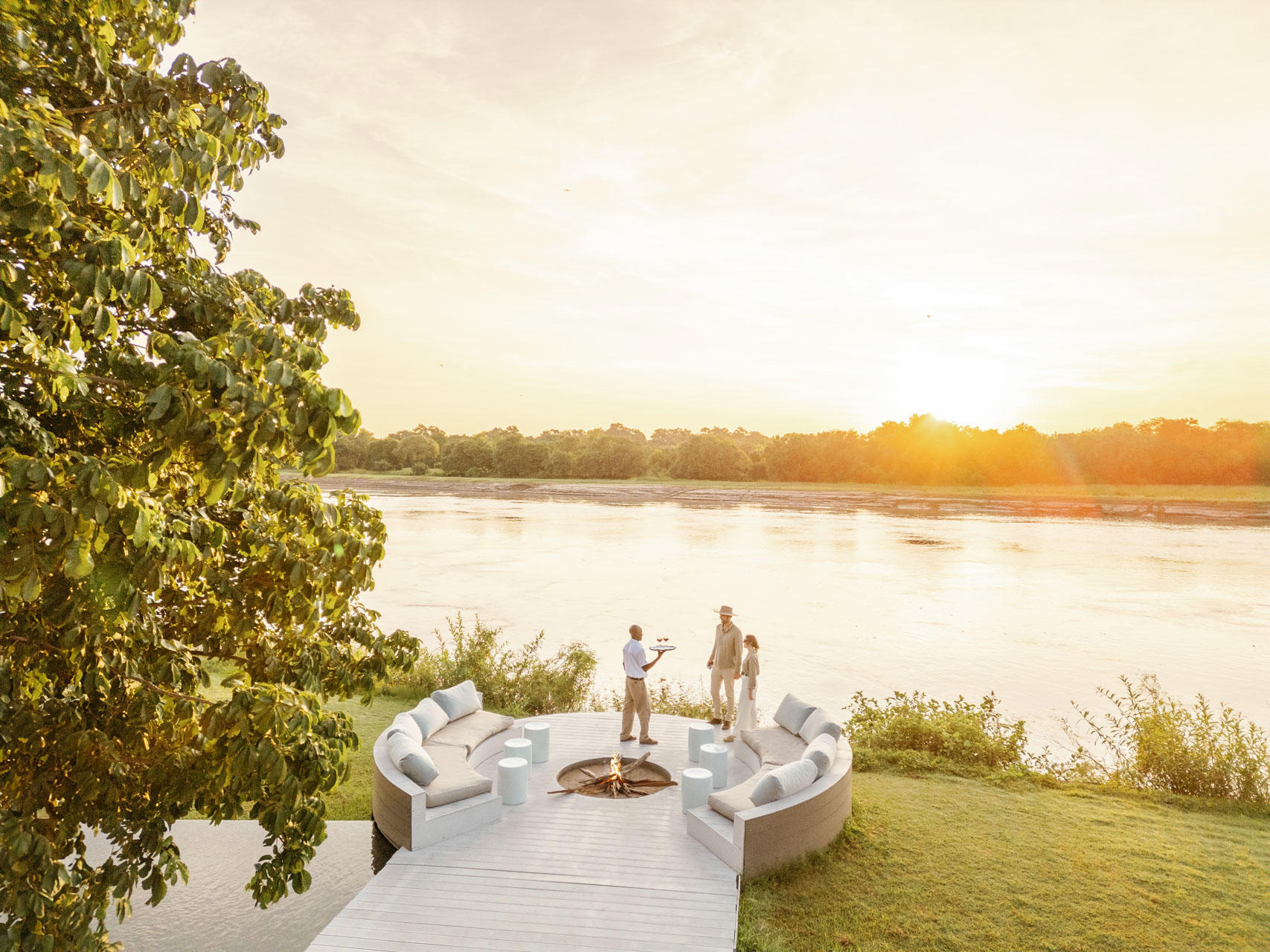
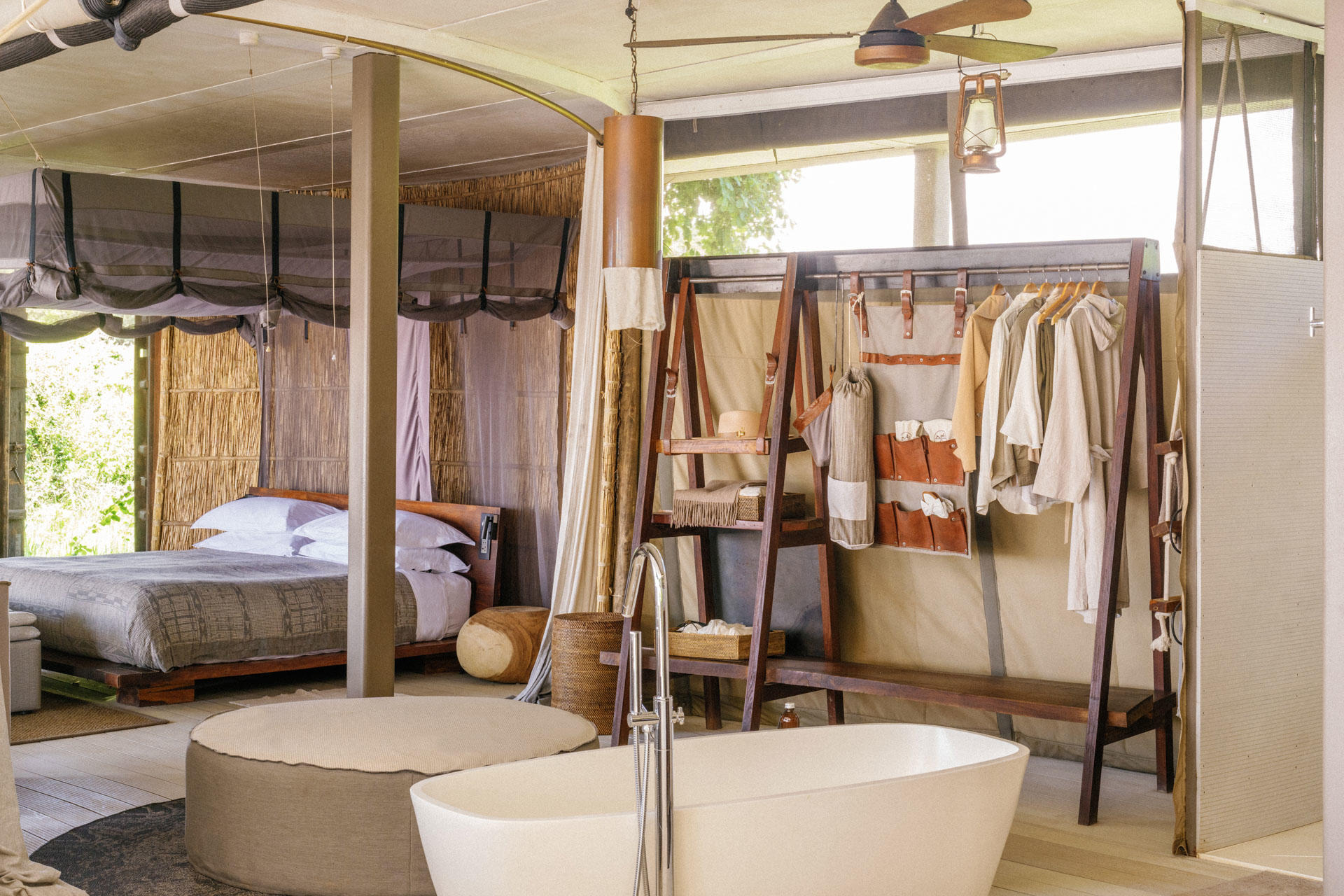
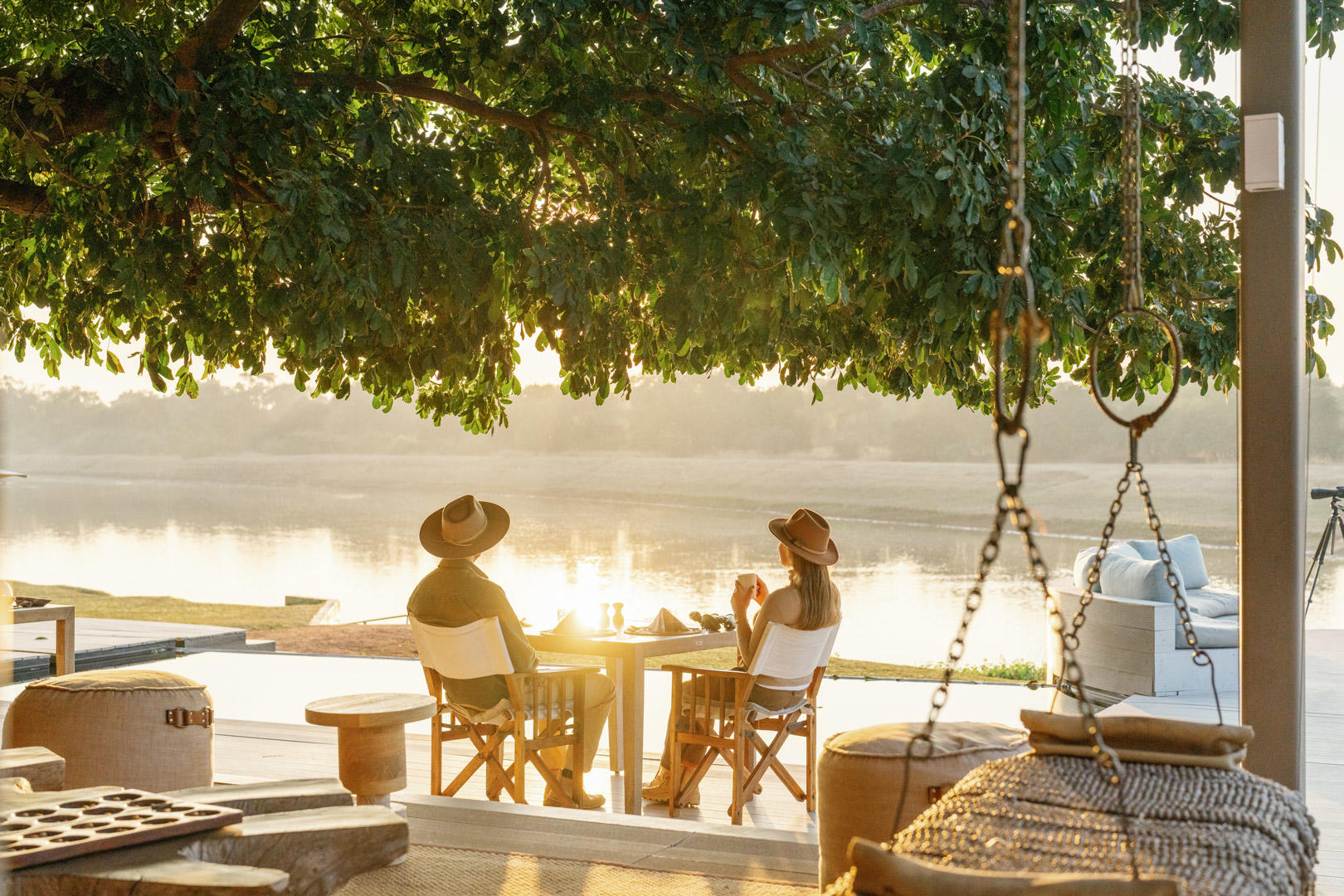
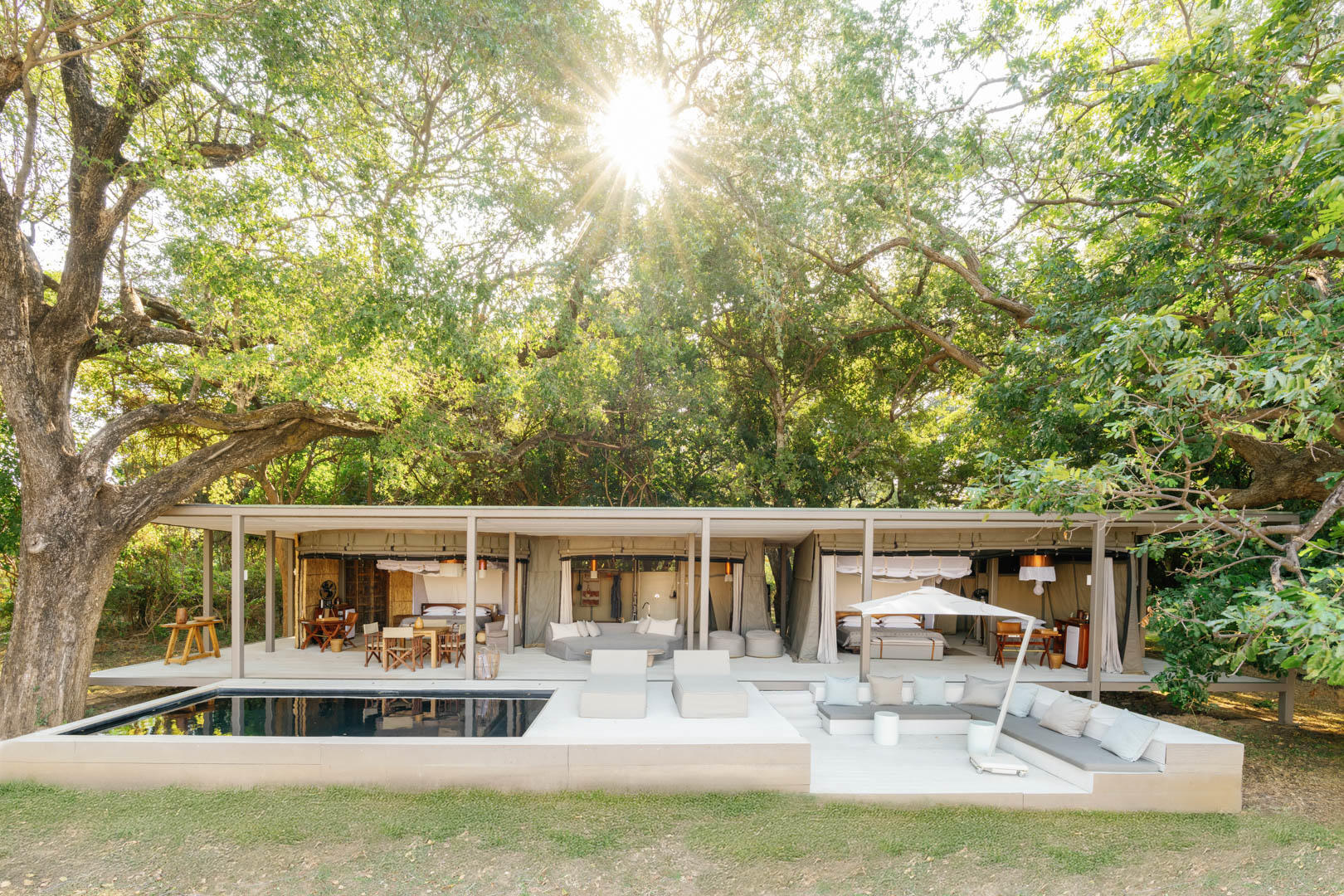
The camp that carries his name today is not a recreation. It is something more interesting: a continuation, built on the same stretch of river, that has taken everything Carr believed about this valley — that walking is more honest than driving, that wildlife deserves attention rather than spectacle, that the Luangwa rewards patience above all else — and rebuilt it for a different era, with rather better plumbing. Six tented suites rest beneath a canopy of ancient trees on the riverbank, each one designed with enough restraint that the view does most of the talking. There are private pools and soaking tubs angled toward the water, but the architecture seems almost apologetic about its own comfort, as though aware that the real luxury here was always going to be the bush itself.

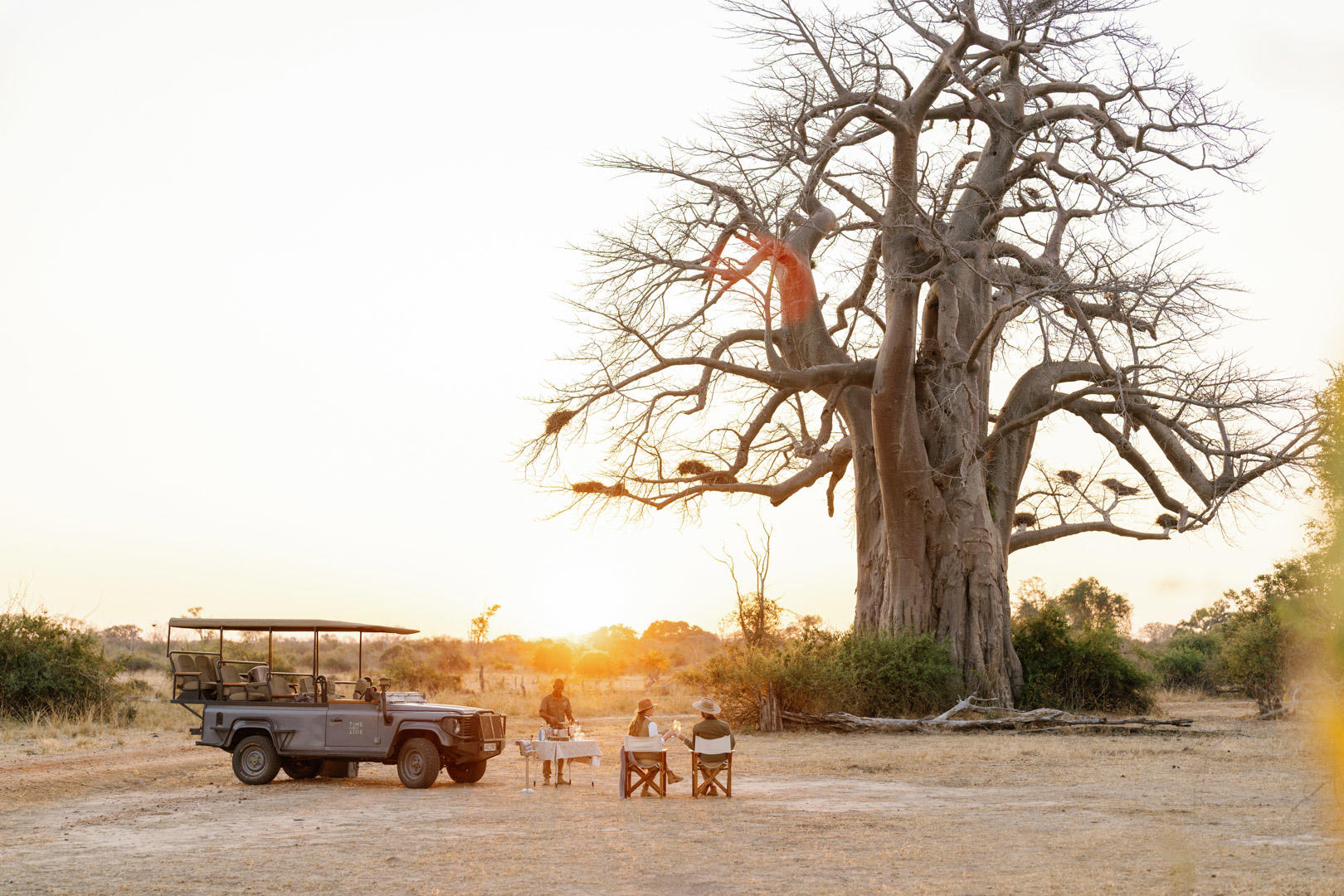
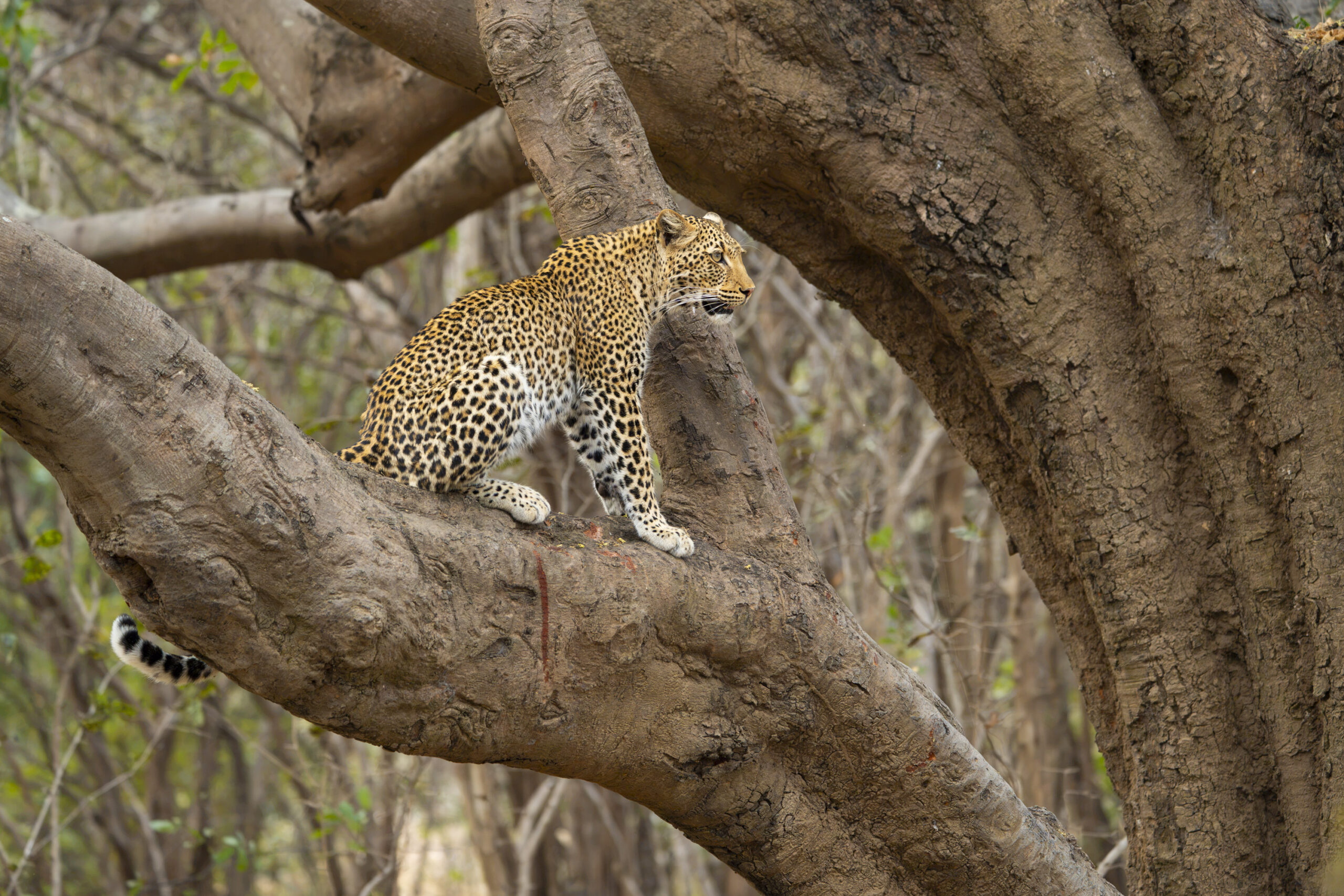
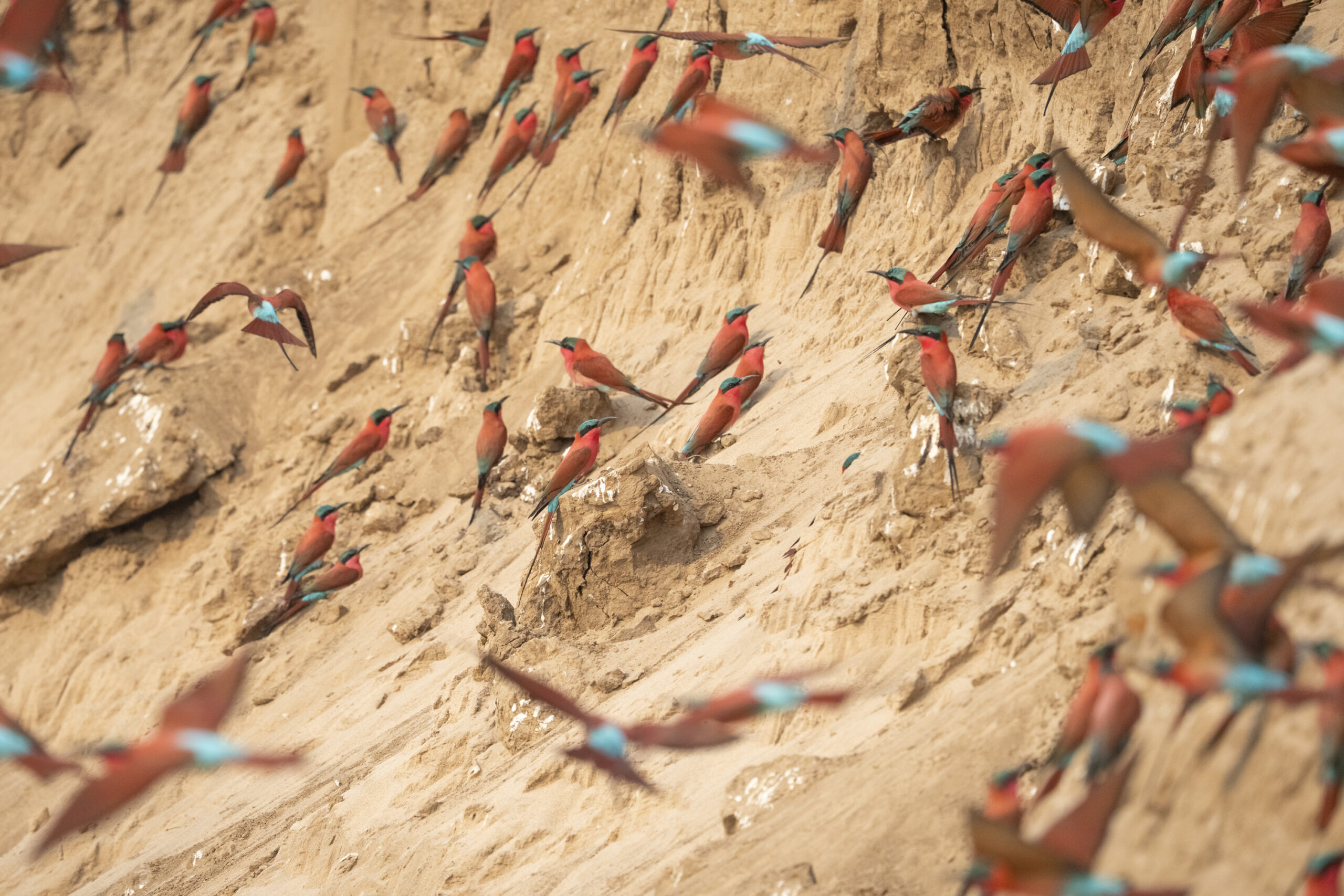
South Luangwa has long been called the Valley of the Leopard, and the reputation holds. The riverine thicket that lines the Luangwa is some of the most reliable leopard country left on the continent, and Chinzombo’s guides — many of them trained in a tradition that traces directly back to Carr’s original walking trails — read it with a fluency that turns a quiet afternoon into something extraordinary without anyone quite noticing the shift. Game drives cover the wider floodplain, thick with hippo and elephant and the kind of birdlife that makes ornithologists go quiet mid-sentence, while access by boat opens up stretches of river that the vehicles can never reach.

What lingers, though, isn’t really the leopards or the river or even the six beautifully unfussy tents. It’s the sense of being inside an idea that someone else had first, decades ago, in a much rougher version of this exact spot — and that the idea turned out to be right. Carr believed wildlife tourism could fund its own conservation, long before anyone had a name for that. He believed the Luangwa deserved to be walked, not just photographed through glass. Chinzombo, for all its polish, still operates on that same quiet conviction.

Some places improve with age. Fewer of them manage to keep their founder’s argument intact while doing it. Chinzombo, somehow, has done both — which may be the truest kind of tribute a landscape can pay to the person who first understood it.

Ol Donyo Lodge – Kilimanjaro’s Wild Shadow

There are places in Africa that feel like they were designed by accident — where some ancient geological tantrum threw up a landscape so unlikely, so otherworldly, that the brain takes a moment to catch up with the eyes. The Chyulu Hills are one such place. Born of volcanic activity relatively recently (in geological terms), their dark lava rock and improbably green slopes rise from the semi-arid plains of southern Kenya like something out of a half-remembered dream, and it was Hemingway himself who is said to have been so moved by them that he described them as the most beautiful hills in Africa. High praise from a man who spent a good deal of time on the continent.

Ol Donyo Lodge sits within this landscape as if it has always been there. Constructed from the same raw lava rock that surrounds it, thatched and open to the mountain breeze, it neither announces itself nor apologises for its presence. It simply belongs. The architects behind its design understood something that many lodges get wrong: that a building should earn its place in a wild space, not impose upon it. Here, the walls feel like an extension of the earth itself.

But what strikes most guests isn’t the architecture at all. It’s what lies beyond it. From almost any vantage point at Ol Donyo, the great white dome of Kilimanjaro floats on the southern horizon — half in cloud, half in sky — an apparition so perfect it seems almost staged. At dawn, when the light is still hesitant and the air carries the cool of the night just past, there are few more arresting sights on the continent.

What sets Ol Donyo apart from many of its contemporaries, however, is an emphasis on getting out. The vehicle is a starting point, not the destination. Guests are actively encouraged to ride on horseback across the open plains, to walk the volcanic ridgelines with an expert guide, to feel the red earth of Maasai country underfoot rather than simply passing over it behind glass. There is a fundamental philosophy at work here — that Africa is most deeply felt when experienced with all the senses, and that the best way to truly understand a landscape is to move through it slowly, on its own terms.

The 275,000-acre Mbirikani Group Ranch on which the lodge sits is Maasai land, and that matters. It means that when the lions roar at night, or a herd of elephants drifts past in the half-light of morning, the people who have called this land home for generations are the ones who benefit most from that encounter. The conservation work supported by every stay here — including the protection of some of the last wild-roaming black rhinos in Kenya — is not a brochure footnote. It is woven into the very fabric of the place.

Nights at Ol Donyo can be spent beneath open African skies on the rooftop star beds — an experience that has a quiet way of resetting one’s perspective completely. There is something about lying under a canopy of stars in a landscape this ancient and this alive that reminds you, without any fanfare whatsoever, of exactly where you stand in the order of things.

Which, it turns out, is a remarkably good place to be.

Duba Plains – Turn the Wild Up a Notch

Some parts of the Okavango Delta feel calm, almost meditative. Channels drift quietly, birds skim the surface, and elephants move through water with an ease that feels timeless. And then there is Duba Plains Camp, where the same water seems to sharpen everything instead.

Set deep within a private concession in the northern Delta, Duba Plains sits in a landscape defined by seasonal flood. When the waters arrive, they spread wide across the plains, transforming dry ground into a shifting mosaic of channels, islands and open space. It is beautiful, unquestionably — but it is also functional. Because where the flood goes, the buffalo follow.

And where there are buffalo, lions are never far behind.

Duba has become quietly known for this relationship. Not in a way that feels staged or predictable, but in the sense that the ecosystem itself leans toward drama. Large herds move across open ground, bunching, spreading, testing the edges of safety. Lions watch, wait, and then commit with a level of intensity that feels very different to more casual encounters elsewhere in Africa.

Game drives here carry a particular kind of focus. You are not simply looking for sightings; you are stepping into a story that is already unfolding. Tracks matter. Direction matters. Behaviour matters. Everything feels connected, as if each movement is part of a wider narrative that began long before you arrived.

And yet, for all its intensity, Duba Plains is still very much a water-based safari.


Between moments of action, the landscape settles back into something softer. Elephants cross channels with slow, deliberate confidence. Lechwe move through flooded grasslands, their hooves adapted perfectly to terrain that would challenge almost anything else. Reflections stretch across the water, turning movement into something almost abstract.

The camp itself mirrors this balance. Elevated, elegant, and quietly luxurious, it offers comfort without separation. Wide decks open onto the floodplain, allowing you to watch the landscape shift throughout the day. Interiors are refined but never overbearing, keeping the focus where it belongs — outside.

There is a rhythm here that feels heightened. Stillness builds into movement. Calm gives way to intensity, then settles again. It is a place where contrast defines the experience as much as continuity.

Duba Plains is not a passive safari. It asks you to pay attention, to read the bush, to stay present in moments that can change quickly and without warning.

And when everything aligns — water, movement, predator and prey — you are reminded that the Delta is not just beautiful.

It is alive in a way that feels immediate, unpredictable, and entirely real.

Sable Alley – Where Water Shapes the Story

There are safari camps where you head out each morning with intent, following roads, tracks, and instinct in the hope that the bush reveals something memorable. And then there are places like Sable Alley, where the experience begins long before the vehicle ever leaves camp, and often continues long after it returns.

Set beside a permanent lagoon in Botswana’s Khwai Concession, Sable Alley sits in one of the most consistently productive pockets of the Okavango Delta. Water is the defining force here, and with it comes a steady, almost predictable flow of life that gathers at its edge throughout the day.

Elephants arrive in loose herds, easing themselves into the shallows with a sense of ownership that suggests they have done this countless times before. Red lechwe move differently, splashing and bounding through water that would slow almost anything else. And along the fringes, predators wait, watching the same patterns unfold, knowing that opportunity eventually follows movement.

Khwai itself is what gives Sable Alley its depth. It is not a single environment, but a convergence of several. Floodplains stretch outward into open light, woodland provides cover and contrast, and channels of water thread through it all, constantly reshaping how animals move and interact.

Game drives reflect this variety. One morning may be spent following a lion pride through damp earth, reading tracks and behaviour as a story in progress. Another may open onto wide plains filled with grazing herds, where scale and distance become part of the experience.

But it is often the stillness that defines the camp.

From the main deck and private rooms, the lagoon becomes a continuous source of quiet activity. Early light reveals silhouettes through mist, midday concentrates movement at the water’s edge, and late afternoon settles into long reflections and softer tones.

The design supports this without drawing attention to itself. Elevated walkways, open spaces, and clean lines ensure that nothing interrupts your connection to the landscape. Comfort is present, but it never competes with what lies beyond it.

Sable Alley is not about chasing sightings across distance. It is about proximity, patience, and the subtle shift that happens when the wild no longer feels separate from you.

And once that shift takes hold, the entire safari experience begins to feel more immediate, more immersive, and far more difficult to forget.

Perhaps that is what lingers most. Not a single sighting, but the accumulation of small, unscripted moments that build quietly over time. A glance, a sound, a shift in light. Together, they create something that feels less like a trip, and more like a lived experience.

Nyamatusi Camp: Where Mana Pools Casts Its Spell

Certain landscapes feel like they’ve drifted out of a dream, and Mana Pools is one of them — a place where blue-washed woodlands melt into slow water, where elephants stand on hind legs to reach ana pods, and where light behaves in ways photographers still can’t adequately explain. Nyamatusi Camp sits in the heart of this enchantment, offering front-row seats to one of Africa’s most atmospheric wildernesses.

Set along a remote curve of the Zambezi River, Nyamatusi’s tented suites are luxurious in a way that never breaks the spell of the environment. Interiors are warm, rich and tactile — brass, canvas, leather — but always with the river in view, always with the forest whispering just beyond the deck. This is the kind of camp where wildlife walks through your field of vision rather than being something you go out to find.

Activities lean into Mana’s slow, immersive energy. Walking safaris take you through cathedral-like woodlands where every shaft of light feels choreographed. It’s not unusual to round a grove and find an elephant calmly feeding at arm’s length, acknowledging you with the faintest ear-flick before returning to its breakfast. Canoeing is equally magical — drifting between hippo channels, listening to water lap against the bow, watching the shoreline shift like an unfolding watercolor.

Game drives capture Mana at its most instinctively wild: painted wolves trotting along riverbeds, lions dozing in delicate shade, nyala moving like brushstrokes through the trees. Yet the mood here is never rushed. The forest encourages softness, attentiveness, breathing room.

Evenings are all glow — lanterns, campfire sparks, the quiet hum of the river. It’s the kind of place where guests become loyalists, and loyalists become evangelists.

Nyamatusi doesn’t just show you Mana Pools. It lets the place seep into your bones.

Singita Sabora: Serengeti Theatre

Some places you check into. Others, you quite literally arrive. Singita Sabora is firmly in the latter camp. It doesn’t just sit in the Serengeti; it unfurls across it, like a lavish set design waiting for the curtain to rise.

Set in the private Grumeti Reserve, Sabora has all the cinematic grandeur you’d expect from Singita, but with a modern twist. Think sweeping canvas tents — though “tent” feels like a disservice when your suite has Persian rugs, curated antiques, and a four-poster bed that could comfortably accommodate a small wildebeest herd. Out front, the Serengeti plains stretch until they dissolve into a mirage. At night, the soundtrack is equal parts hyena cackles and the fizz of your G&T.

Where Sabora really excels is in its balance of indulgence and immersion. One minute you’re lounging in a leather campaign chair, thumbing through a design book you didn’t know you needed in your life. The next, you’re out on game drive, watching a cheetah test the limits of physics as it streaks across the golden grass. The lodge sits right on the migratory route, so if you time it right, you can sip your morning coffee as a column of wildebeest trundles by — a reminder that in this theatre, the extras number in the thousands.

Meals here are another performance. Candlelit dinners on the deck blur into starlit skies. The menu is a masterclass in contradiction: refined yet rooted, locally inspired yet globally polished. Even the wine cellar, improbably stocked with South Africa’s finest vintages, feels like a nod to the fact that luxury in the bush isn’t just about where you are, but how well you’re looked after while you’re there.

And yet, amidst all the design flourishes and high-thread-count whispers, Sabora manages not to lose its sense of place. Step outside your suite and you’re reminded quickly that this is still big wilderness. Giraffes drift like apparitions between acacias, lions call at dusk, and the Serengeti light — that ever-changing, golden wash — steals the show at every hour.

Sabora is proof that you can have it both ways: the romance of classic safari and the thrill of contemporary design. Here, the Serengeti isn’t just a backdrop. It’s the main character, and you, for a few days, are written into the script.

3 Rules for Wildlife Photography Composition

Wildlife photography can be tricky.
Animals are just that – wild – and don’t always do what you expect. Branches get in your way and if the light goes, it goes. No studio dimmer switch is going to change that.

But by simply sticking to a couple of composition principles you can make sure that at least most of your shots from your safari are usable, even if they aren’t award winning.

Here are three to bear in mind.

1. Rule of Thirds

The rule of thirds is an effective way to frame the elements in your scene so that the final image is more visually captivating. Like most other so-called “rules,” it’s not really a rule at all — more of a guideline.

But if you stick to it with wildlife, more often than not it will leave you with a photograph that’s mor pleasing to the eye.

Put very simply, you want your subject either moving or looking from one third of the photo into the remaining two thirds. If it’s looking left, place it on the right looking into the left hand two thirds of the picture. If it’s looking right, place it on the left, looking into the right hand two thirds.

Have a look at this elephant picture:

The elephant closer tot he camera (the subject) has its head (which is the main point of interest) roughly a third of the way into the frame, moving into the further two thirds. You always want an animal moving or looking into space, and not butting up against the edge of the frame. If we divide the image up into thirds using vertical lines, we get the following:

You can see how it’s not an exact science, but by using these approximate measurements, we get an image that tells more of a story.

The same proportions were used in the following image of a wild dog, but this time, both vertical and horizontal thirds were used:

The four points where the horizontal and vertical gridlines intersect are known as power points, and the more you can place the main subjec tof your image on one of these power points, the ro visually appealing it will be.

2. Central Framing With Symmetry

When an animal is looking straight at you, especially in close up/portrait, go for the central placement:

The rule of thirds doesn’t necessarily apply here as the straight-on image creates a connection and intensity.
Remember, these are guidelines, not rules. If we refer back to the wild dog image above, it’s also looking straight at the camera yet it was placed off to one side. This was mainly to compensate for the body being visible out to the right.

Because the lion in the above image has an even balance of mane on both sides, the symmetrical central framing works.

3. Use Foreground to Create Depth

Photography is ultimately about storytelling, and by simply having a foreground element in frame (which doesn’t have to be in focus), one can give far more context to an image.
Take a look at the following two photographs:

Both were taken to deliberately have people in frame in the foreground, which shows us that the animal/s is/are being viewed in a game drive setting.
There is far more story than a simple picture of two elephants or a leopard walking.

In wildlife photography as in many things, rules are there to be broken, but by keeping the above concepts in mind when on your next safari, we’ll be willing to bet that the percentage of your shots that you really like will be significantly higher.

Get in touch with us through info@iconicafrica.com for more photography tips and tricks…

San Camp: Kalahari Skies

Billowing white tents on the edge of the endless Makgadikgadi Pans. Desert palms cast their shade here, and you are surrounded by a thousand acres of shimmering, nothingness.
San Camp, a quintessentially romantic, seven-bedroom camp on the edge of the Nwetwe Pan in Botswana’s Makgadikgadi, is something straight out of Arabian Nights. The allure lies in the minimalism here, both within the camp itself and in the broader desert horizons.

Meerkats emerge from their desert burrows, if you’re lucky an Aardvark might emerge at sunset, and you’ll see red hartebeest, springbok and gemsbok scurrying between them. But San Camp isn’t just about wildlife-watching – it’s about the atmosphere and the ethereal surroundings. Disappear into a remote world, a million miles from glowing screens and fruit-themed devices, where the 360-degree panoramas are so vast, you can see the curvature of the earth.

The enormous salt pans are like something off the moon. They are the home of a host of unique desert animals which are for the most part completely different to those encountered to the north-west in the Okavango.Combining the two areas into a single itinerary is highly recommended.
Species to tick include the famed black-maned Kalahari lion as well as cheetah, plains game like wildebeest and zebra, elephant and brown hyaena almost exclusive to this region. The bird list here is extensive and highly localised within the habitat, and of course your trip would not be complete without an immersive interaction with one of the habituated troops meerkats that have delighted guests for years.

The safari experience here is truly remarkable. The stark setting is complemented by the minimalist camp design, and the ever-present Kalahari silence creates an ambience of peace.
The main canvas covered central area is open and wonderfully unencumbered by clutter, inviting you into a stylish dining room where delicious food makes sure you are never hungry.
Dark mahogany furniture and Persian carpets complement each other well and the bedouin feel simply adds to the elegance and romanticism…

The name of the game here is adventure.
Walk with the San Bushmen or go horse-riding across the plains. Take quad bikes out onto the salt flats or charter a helicopter down to see the ethereal and ancient Kubu Island, one of the most remarkable places on earth…
Wildlife aside, this is a safari experience like no other.

If you want to find out more about this incredible destination, and how best to include it into an itinerary, get in touch through info@iconicafrica.com, and let’s start a safari conversation…

Mara Plains: Big Cat Heaven

SPECIAL OFFER

Enjoy some extra time at Mara Plains Camp free of charge! You will get one night for free when booking a three night safari at Mara Plains. This special offer is applicable for new bookings for arrivals between 11 January and 14 June 2025, and between 1 November and 19 December 2025. This special offer may not be combined with any other special offers.

Mara Plains Camp is a one-of-a-kind luxury Kenya safari camp. Located in the private 13,300-hectare Olare Motorogi Conservancy, just on the Maasai Mara National Reserve’s northern boundary, you are immersed in one of the most iconic wildlife destinations on the planet.

The community-owned conservancies set a new standard for game viewing on the world-famous East African grasslands. Vehicle regulations mean far more intimate sightings, and you are not surrounded by throngs of day visitors as you might be in other parts of the ecosystem. This part of the world offers some of the best big cat viewing we have ever experienced.

Mara Plains Camp is ideal for those seeking a luxury Kenya safari, as this intimate Great Plains Conservation Réserve-Collection safari camp offers you the finest in wildlife viewing paired with the absolute best in safari hospitality and wildlife guiding.

The Olare Motorogi Conservancy hugs the northern border of the Masai Mara National Reserve and is known for its high concentration of wildlife and for the fact it only allows five safari camps to operate within its borders. Mara Pains camp lies hidden among the lush green forested banks of the Ntiakitiak River. This tiny camp in the wild is unforgettably luxurious and inviting. It allows its guests to get remarkably close to nature without sacrificing comfort.

Staying at one of the Masai Mara conservancies has countless benefits, not just to you the safari traveller… but also to the local Maasai community, the lands and local wildlife. The arrival of each safari travel, which is limited to a small number at any given time, contributes to programs benefiting the Maasai people. It also contributes to the conservation of the area and to the employment of Maasai staff, guides and trackers. By staying at Mara Plains Camp you are in fact helping to better the lives of the Maasai who have lived on these lands for generations and contributing to the conservation of the lands and the wildlife roaming them.

Mara Plains Camp is a member of Great Plain Conservation. This initiative is dedicated to protecting endangered species and supports Kenyan initiatives such as the Maasai Olympics. Great Plains Conservation also supports conservation education by investing in kids’ camps and supports local female-owned businesses through sale of their handiwork in the camp’s bush boutique. The conservation program has also planted more than 2000 trees in the Masai Mara. This was done in an effort to help regenerate the ecosystem and bring back indigenous trees to the Mara Landscape

As you near the camp you will see the first safari tents appear amidst a thick forest along the Ntiakitiak Riverbend. After crossing a bridge across the river and climbing a few broad steps, you’ll look out over an endless horizon speckled by flat-topped acacia. The camp’s décor and design pay homage to the look and feel of Eastern Africa. A touch of Swahili heritage can be found in the lodge’s large wooden doors originally from the island of Lamu. There are also occasional splashes of red in the décor which are reminiscent of the great Maasai chiefs and warriors. The rich leathers, brass and copper used in the campaign-style furniture give the camp a very lavish, yet warm and comfortable atmosphere. During your stay you’ll be treated to delicious home-cooked cuisine, lovely fine wines and tasty cocktails. The camp is made up of a total of seven safari tents and can accommodate a maximum of up to fourteen guests at any given time.

Each of the seven traditional safari-style tents are raised on decks and feature marquis ceilings. Their muted tones make them blend into the countryside beautifully and each tent enjoys sweeping views of the savanna in the distance. The safari tents feature a comfortable king-sized bed or two twin beds, a sitting area, rough hewn wood floors, thick Lamu wood doors, en-suite bathrooms with lovely deep copper freestanding tubs and walk-in showers, a writing desk, safe and complimentary WiFi. You will also find one pair of Swarovski HD binoculars and a professional Canon camera body and lens kit for complimentary use. Families with children 6 years and older are also welcome at the camp and are welcome in the designated family suite. These tented suites feature two bedrooms, one with a king-sized bed and the other with a twin bed. The family suites have a common lounge area and a private verandah overlooking the savannah.


Activities at Mara Plains Camp

Mara Plains Camp has a very comprehensive set of activities for you to choose from during your stay. For starters, every safari drive (during prime sunrise and sunset hours) or bush walk will be a memorable one thanks to the camp’s professional Maasai guides that will be there to accompany you. The camp will also offer you the opportunity to enjoy lovely gourmet bush breakfasts or lunch in a scenic location in the wild to make your day extra special. Thanks to the wide variety of bird species in the area (over 300!), you’ll also have plenty of opportunity for birdwatching either during a bush walk or while relaxing at camp. Another great way to relax when back at camp is to enjoy one of the camp spa’s relaxing massages. To get a taste of local culture and traditions you’ll have an opportunity to meet the Maasai during a visit to a local manyatta (Maasai village). For a very high-flying safari adventure you can also choose to go on a hot-air balloon safari flight at an extra cost.


Mara Plains Camp stay 4 pay 3 special offer


A Londolozi Revisit

Londolozi was where it all began for Iconic Africa.

Years ago, around a boma fire, IA directors John Holley and Terri Abadi – ranger and guest – chatted about life, travel, and how through their respective global positions (Johannesburg and Atlanta, Georgia) and experience in the industry, there was an opportunity for a boutique travel company to service both markets simultaneously.

Fast forward just over a decade, and Iconic Africa now has guests from all over the world travelling on luxury safaris throughout the year.


Our team has grown and we now feature an office in Hoedspruit –  the heart of the South African safari industry.

We send guests across the continent on incredible itineraries and are currently looking to expand our offering to Asia and Antarctica.

We link guests with top Private Guides to create a seamless safari and create continuity throughout their African experience.

So it was with great excitement that the team assembled at Londolozi’s most newly refurbished camp, Founders.

At Founders Camp, classic meets modern. This Londolozi signature camp is clean and uncomplicated and really comfortable, leaving nothing forgotten. You will get the feeling of all the comforts of a stylish African home that is ideally situated to provide an insider’s view of the secrets of river life. Classy, grounded and timeless – Londolozi’s Founders Camp represents a safari style that is inviting and restful.

Ten bespoke and varied superior chalets repose in the shade of ancient Ebony and Matumi trees along the banks of the Sand River.

Founders Camp honours the early Londolozi staff, many of them larger-than-life characters whose names have gone on to become legend in the wider guiding and travel industries (one even attended the wedding of Prince Harry & Meghan Markle).
Their legacy continues to this day through an unwavering commitment from all staff to provide an incredible guest experience whilst doing everything possible to conserve this landscape in as natural a state as possible.

Our small Iconic team could sadly only stay for two nights, but as usual, Londolozi delivered at every turn.

Although our visit felt like it was over far too quickly (it’ll do so no matter how long you stay for), we packed so much in that we could have been there for a week.

Dinner in the bush, getting stuck in a dry riverbed, constant laughter, and more stunning wildlife than we could ever have hoped for to point our cameras at; we were truly spoilt during our short stay.


We love the safari industry for how varied it is. Africa is an incredible mosaic of destinations and accompanying experiences.

But for a stunning level of consistency across the board – be it food, rooms, guiding standard, wildlife sightings or just simply having an amazing time – we have no hesitation in putting Londolozi right up there on the podium.

If Founders Camp, or any of the other four amazing camps on this reserve, feature on your to-do list, let’s get chatting…

Get in touch through info@iconicafrica.com, and let’s start planning your dream safari…

&Beyond Suyian: The Heart of Black Leopard Country

The Laikipia district has risen to the fore as a prime safari destination in recent years due to the consistent sightings of the black leopard Giza.
This relaxed female splits her time between two sides of the Ewaso Narok river, and it is on the northern bank where &Beyond have built their stunning new lodge Suyian.

The lodge offers an array of adventures, allowing guests to create their perfect day in this conservation haven. Activities include day and night game drives, walking safaris, camel and horseback safaris, active ranching tours, and fishing. Experience local culture through village visits, or enjoy outdoor yoga, scenic helicopter flights, wellness treatments, and riverside picnics.
Nestled within a 44,000-acre wilderness, the lodge overlooks the Rock Sanctuary, a mesmerising landscape of undulating granite kopjes steeped in history, including ancient rock art. With only 14 rooms, this tranquil retreat ensures exceptional privacy amidst expansive plains and dramatic boulders. Guests enjoy sweeping views towards Mount Kenya.

Home to over 100 types of mammals, plus numerous endangered and non-endangered species, Suyian Conservancy’s variety of compelling landscapes, which includes grassland, savanna, rocky outcrops (or kopjes), dense Vechellia woodland, plus more than 16 km (10 mi) of river frontage, offers unforgettable wilderness views and up-close wildlife sightings. A hidden gem within northern Kenya’s Laikipia region, the conservancy houses one lodge, Suyian Lodge, named after the African wild dog in the local Maa language.

A sculptural structure of architectural brilliance, the lodge draws inspiration from its unique surrounds and its rounded appearance with plant growth atop mimics the region’s ancient Rock Sanctuary and the robust plant life that lives in between the granite edges. A harmonious blend of raw, earthy Africa materials with a contemporary flair, the lodge reflects the Afro Wabi-Sabi sentiment of taking pleasure in the transient nature of earthly things. Subtle cultural touches inspired by the local semi-nomadic Samburu tribe infuse with modest luxury while mottled undertones pay homage to the region’s most cherished wildlife, such as the rare African wild dog and elusive black (melanistic) leopard. Rich textures and colours enhance the lodge’s understated yet sophisticated feel, and the majority of the furniture and finishes are locally sourced and crafted by Kenyan artisans.

The lodge’s guest area echoes the flow of the kopjes across the valley, offering the perfect vantage point for viewing the conservancy’s incredible habitats along with the abundance of wildlife that calls it home. Accessed by a winding stone path, the lodge’s entrance courtyard opens onto a large circular, central bar that showcases breathtaking views of the open plains, while intimate, softly lit areas create cocoon-like spaces for guests to escape.

Each spacious Suite, constructed as if part of the unusual natural rocky formation, blends seamlessly into its surrounds. An outdoor terrace, featuring a private plunge pool and viewing deck, boasts magnificent sunrise views for early risers.

Previously, there were limited options if one wanted to seek out a black leopard, but Suyian now offers a supremely comfortable stay in an area hitherto relatively unexplored by safaris.

With over ten black leopards documented in the area by trail cam, who knows what other delights will soon form the mainstay of Suyian’s game viewing.

Get in touch through info@iconicafrica.com to start planning your trip…

Photography Tips & Tricks: What to Look for When Photographing Predators

Paw, Tail, Ears, Eyes.

That’s it. The Magic Formula.

When photographing big cats – but not just them, not by any means – there are a few boxes to tick to really make the photo pop. We’re thinking broad picture now, zooming out and looking at the whole animal, and more specifically as it’s walking.

That is the key word here: “walking”. Some of these pointers apply in other situations, but all four are only really applicable when the animal is walking and its full body is visible.

Now, I only learnt this whole quadfecta (whats one up from a trifecta?) late in the game, but it makes so much more sense now why some photos are more eye-catching than others.

Have a look at this picture of a lioness seemingly approaching the vehicle (she had seen an antelope in the thicket on the far side):

Ntsevu Lioness Stalk

Her expression is fairly intent, and it’s hard to tear your eyes away. But WHY is it an appealing photo?
Let’s go through it according to the formula:

Eyes: Both open. Pupils Visible. Eye glint.
Ears: Both pointed forward. Crucial.
Paw: Raised, implying movement and therefore heightening the sense of anticipation in the photo.
Tail: Visible, ideally in mid-flick or movement.

It’s tricky to get all four lined up at the same time, but that’s exactly why it’s so much harder to capture a truly eye-catching image.
The following photo of lionesses walking down a road illustrates it nicely:

As one goes back down the line however, the lionesses don’t quite make the cut. The second one is almost there, but her right ear is twisted slightly backwards, so we have to be brutal and disqualify her.
The third female has her ears back, her eyes closed and her tail isn’t visible, so she’s a massive sub-par for the course.

It’s the same for this leopard photo:

Mashaba Leopard

We can’t make an animal do what we want, but just remember the above four things to look for when photographing wildlife on the move; put your camera on high frame-rate and take a few more pictures and hope for the best.
And when browsing through your images in Lightroom after the event, you’ll now know which ones to look for…

Anabezi Camp: Lower Zambezi Delights

Explore pristine and untouched wilderness in one of Africa’s most remote safari destinations. Anabezi sits on the banks of the Zambezi River in a secluded corner in the eastern area of Lower Zambezi National Park. Far from the majority of other camps,  Anabezi is surrounded by the iconic Winterthorn forest, renowned by safari experts, professional photographers, and documentary film crews.

The camp is built on an elevated boardwalk which connects each luxury tented suite to two main areas with their own respective swimming pools. The elevated boardwalk allows for wildlife to roam freely throughout camp while minimising effects on the ecosystem. It also means guests can walk around safely during the day without an escort. Elephants, buffalo, antelope – and even the occasional lion or leopard – often pass through camp, allowing you to experience wildlife from the comfort of your room. These communal areas evoke a classic African style with a modern touch, providing guests the opportunity to experience Lower Zambezi and its wilderness while relaxing at camp.  As the sun sets and nightlife of the bush comes to life, guests are invited to sit by the campfire with a sundowner and share stories of their sightings with fellow visitors.

Modern comfort and authentic African luxury come together at Anabezi in one of Africa’s finest game viewing destinations. Renew your love affair with nature in one of their twelves tented suites, complete with either king or twin beds, overlooking the Zambezi River, Zambezi Floodplain or Kulefu Channel. Each tent features an indoor en suite bathroom with Victorian style soaking bathtub, and an outdoor bathroom complete with outdoor shower.

As its namesake implies, the Zambezi Deck provides sweeping views of the Zambezi River and the floodplain, with daily visits from elephants, buffalo, impala, waterbuck, warthogs and a variety of birds. Watch the wildlife from the swimming pool while you’re having lunch, or from one of the many lounging areas, and take in the surrounding landscape. It’s not uncommon to get up close views of elephants drinking, bathing and crossing the Zambezi River to one of its many islands.

Large populations of elephants and buffalo roam the forest and the banks of the Zambezi along with Anabezi’s resident pride of lions. The local pack of African Wild Dogs moves up and down the length of the park, with Chakwenga (the section in which Anabezi is found) being one of their favourite hunting grounds. When they are in the area, this pack provides truly exceptional sightings!

Cruising down the Zambezi river allows you to experience Lower Zambezi from a different perspective. At eye level with the rich aquatic ecosystem, watch elephants bath and swim from island to island, G&T in hand, while the sun sets behind the escarpment. You’ll also spot buffalo, crocodiles, hippos, and antelope perched on the river bank floating in Anabezi’s custom-fitted pontoon boats. For those in pursuit of the legendary African tigerfish, the Zambezi River rarely disappoints (although the productive fishing times are seasonal).
Experienced fishermen and novices alike will enjoy heading out on an afternoon fishing trip with one of the camps seasoned guides, full of expert advice and an unparalleled knowledge of this stretch of the river. While Anabezi provide all the necessary rods and tackle for spinner and lure fishing, anglers who specialize in Fly should bring their own equipment.

Anabezi’s location on the east side of the park near the heart of the winterthorn forest makes for epic sightings with few other vehicles. They are able to modify our game viewers for photographers and provide custom beanbags if needed. Should you require a private vehicle or vehicle modification for a photographic safari, Iconic Africa can easily get in touch with the camp to set it up.

Get hold of us through info@iconicafrica.com to start planning your Lower Zambezi safari; an area that is quickly becoming a must-visit on the Southern Africa safari circuit…


The Luangwa Valley: the Best of Time & Tide

Spoiled for choice is a wonderful term with which to associate with safari, and it is certainly the case when looking into lodge options within the South Luangwa Time & Tide portfolio.
Stunning camps – some of which are set along the banks of the Luangwa River while the others are further west on the seasonal Luwi Riverbed – provide access to a wide diversity of habitats, ensuring maximum game viewing opportunities in one of Africa’s greatest wildlife areas.

Time & Tide camps are currently available at 35% off, but this limited-time offer is set to expire in a couple of months, so this is the time to book!

Essentially what you are looking at is a wonderful spectrum that takes you from the heart of one of the core game viewing areas out into the true wilderness areas of the park where there are far fewer operators; you will work a bit harder for your major sightings in the more remote camps, but whatever you find you will likely have all to yourself.

Our personal recommendation would be to combine two of the camps in your trip; either Chinzombo or Kakuli at which the chances of seeing excellent game are exceptionally high, and then moving on to a Luwi or Nsolo camp where you will get a true sense of wilderness. Apart from dusty roads there will be almost no other evidence of human presence. The stars will be more brilliant than you could imagine and you will feel like you are a part of the community

The beauty of Luangwa is its seasonality. Cool dry winters give way to a hot dusty spring, with the promise of rain threatening more and more each day. Wildlife congregates around the river and permanent waterholes during the dry times, but when the rains unleash during the summer months the entire landscape transforms into one of vibrant greens, with ephemeral pans topped up, frogs calling throughout the night, and the dambos (dry floodplains) turning into boggy ground that is difficult to negotiate with even the hardiest of vehicles. It’s all part of the adventure, and for photographers in particular this is a time of plenty. The migrant birds have returned, baby impalas are all over the place and everything is clean and colourful.

Some of the more remote camps shut down over the rainy season due to the logistical difficulty of getting supplies in during muddy periods, but Chinzombo remains open due to its still-navigable road network.

One of the main reasons to visit South Luangwa is the leopards. There are plenty of them. Plenty. The dry season in particular is an amazing time to visit as the leopards alter their behaviour to suit the terrain. As the grass dies through the winter, cover becomes sparse and the hunting becomes difficult. The leopards then take to the trees, in particular the heavily foliated sausage and mahogany trees. With ample cover up in the branches, they have shady refuges from which to scan for hunting opportunities, often only waiting until darkness has descended before descending to attempt a stalk.
On rare occasions they will even drop straight from a tree onto unsuspecting prey down below.

Zambia, and South Luangwa in particular is swiftly emerging as front-runner in Africa’s wildlife real estate; a place to compete with the Okavango Delta to the south or the East African grasslands.

With the amazing 35% special currently running with Time & Tide, there could be no better time to book, so you can see for yourself…

Get in touch through info@iconicafrica.com to find out more about the special, camp rates and availability…