The Beautiful Darkness: Black Leopards of Laikipia

In the heart of Kenya lies Laikipia County, slap bang on the Equator and one of 47 counties in the country.
The county encompasses the high, dry Laikipia Plateau, a wilderness of thornscrub, rocky outcrops, valleys and rivers, with Mount Kenya rising imposingly in the distance to the south-east, just beyond Laikipia’s borders.

Over the last few years, this previously unobtrusive part of Kenya has crept into safari prominence. Not because of its wonderful wildlife density and diversity, but because of a very special population of leopards roaming its hills; melanistic ones.

Although long known about by the locals, they were essentially ghosts in the night; glimpsed from afar by a villager tending his flocks or heard calling in the distance, passing themselves off as one of their spotted cousins. It was not until Will Burrard-Lucas famously camera-trapped an individual in 2018 that a spotlight was finally shone on the region and the unique gene pool it contained.

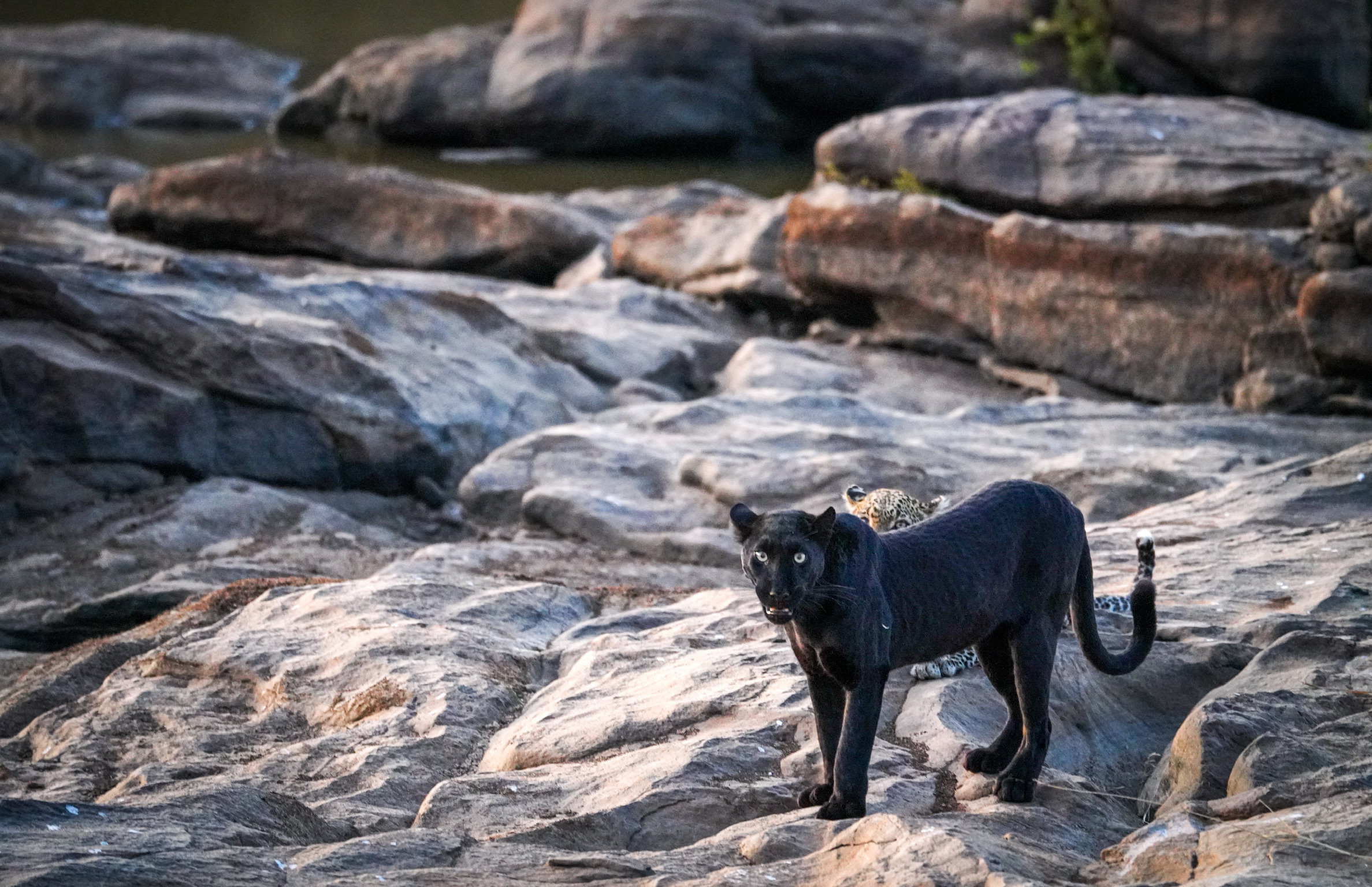
Local researchers have shown that approximately 10 melanistic leopards (or black panthers, if you will) roam the greater Laikipia region, but it is one individual that has captured the world’s attention with her relaxed demeanour and accessible territory; Giza Mrembo – the Beautiful Darkness in Swahili.

This young female was first seen fleetingly as a young cub around four years ago, but as her mother is quite relaxed around vehicles, Giza herself become habituated within 18 months, and these days is completely relaxed around game viewing vehicles.

Photographic opportunities are plentiful as a result, but it is certainly not just the chance of seeing a black leopard in the wild that one visits this area for.

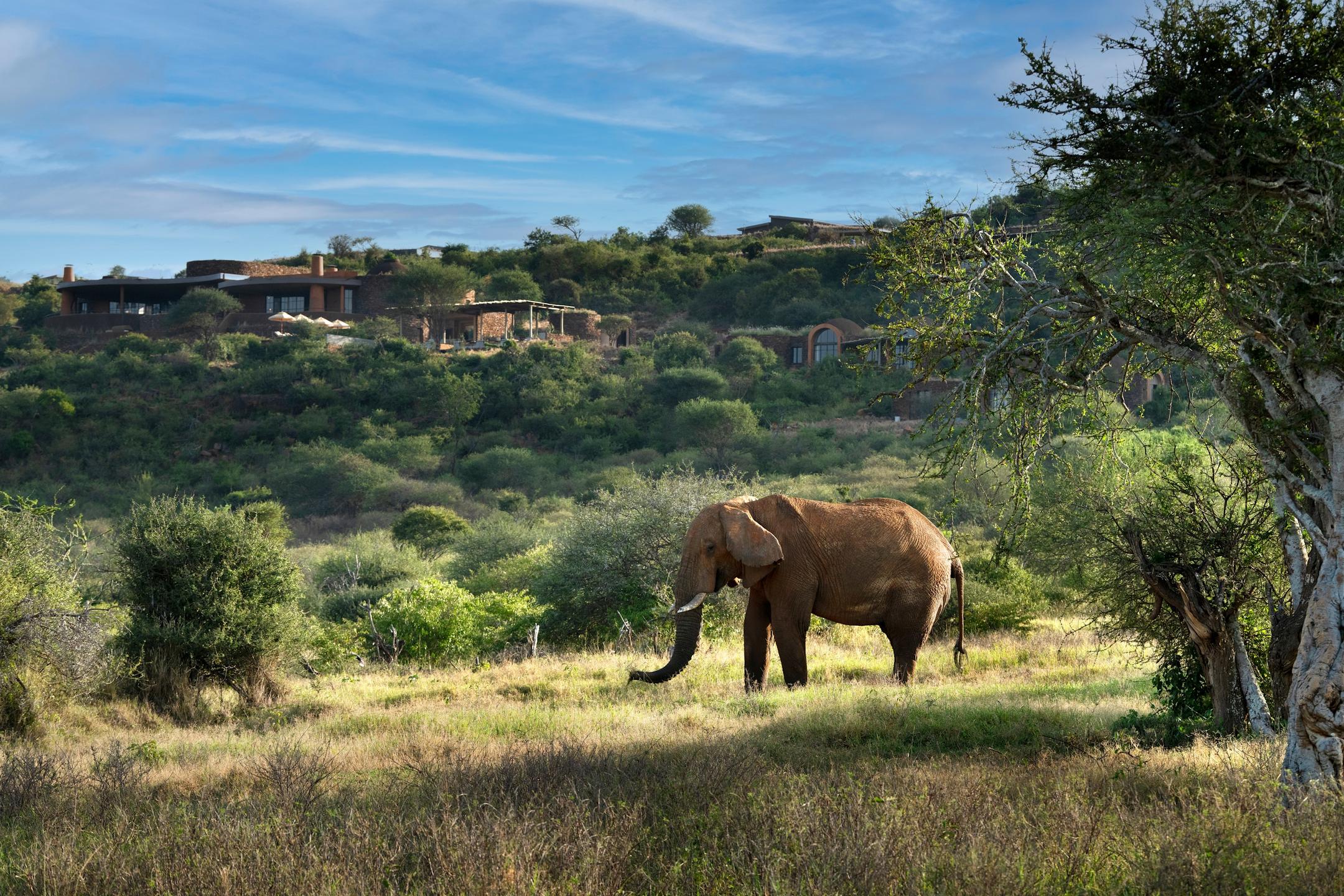
Elephants make their stately way through the acacia trees and dik-diks (one of the world’s smallest antelopes) peer out from almost every bush. These diminutive ungulates are the main food source of Laikipiia’s leopard population, and their importance in the ecosystem cannot be overstated. The striking vulturine guineafowl is a common feature in the area as well.

Safari options in the immediate area are varied, but the best option if one wants to stand a good chance of viewing and photographing Giza, is one of the Laikipia Wilderness Offerings; River Camp, Wilderness Camp itself, or the newly established Palm Camp, found a little bit upstream on the Ewaso Narok River.

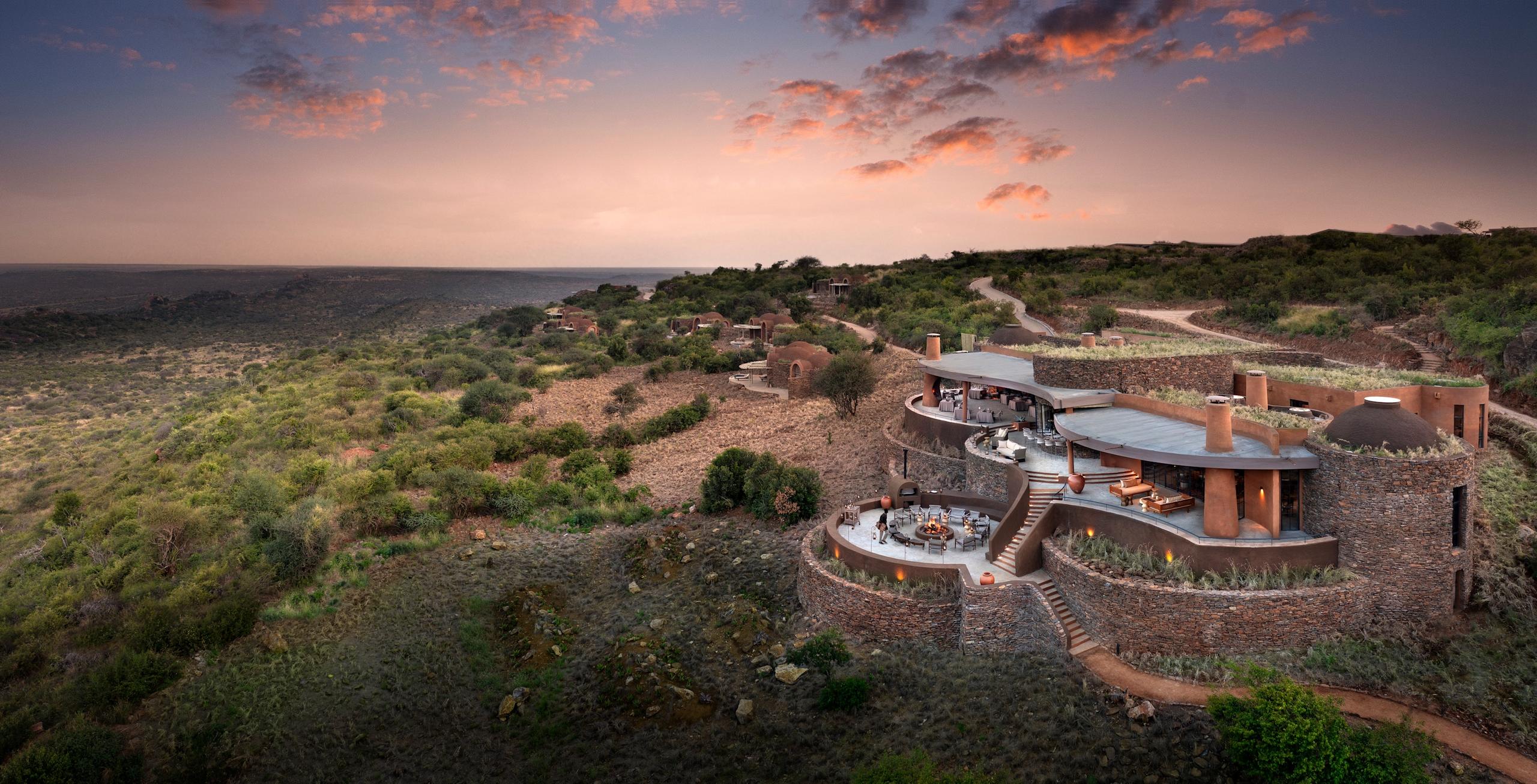
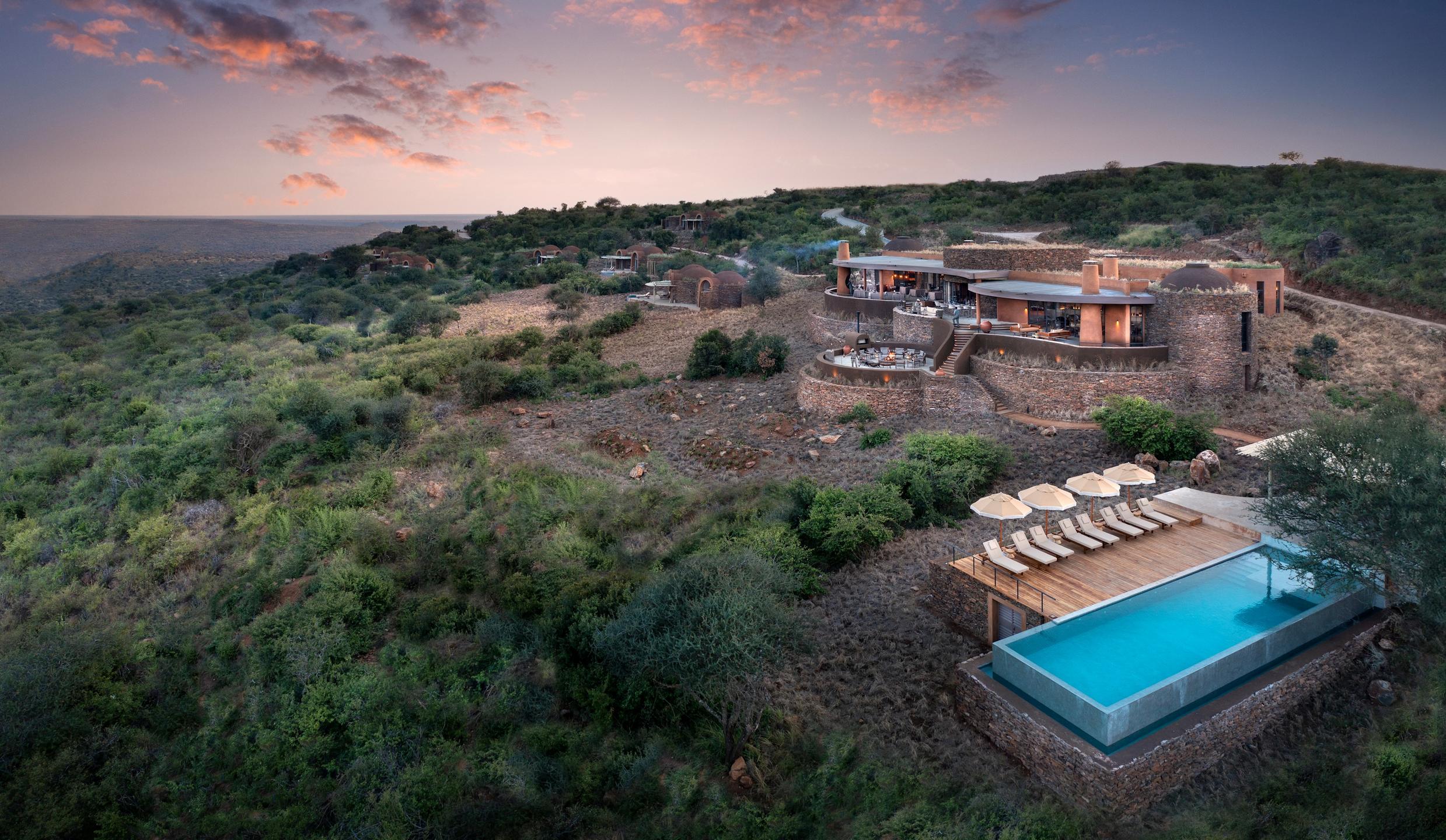
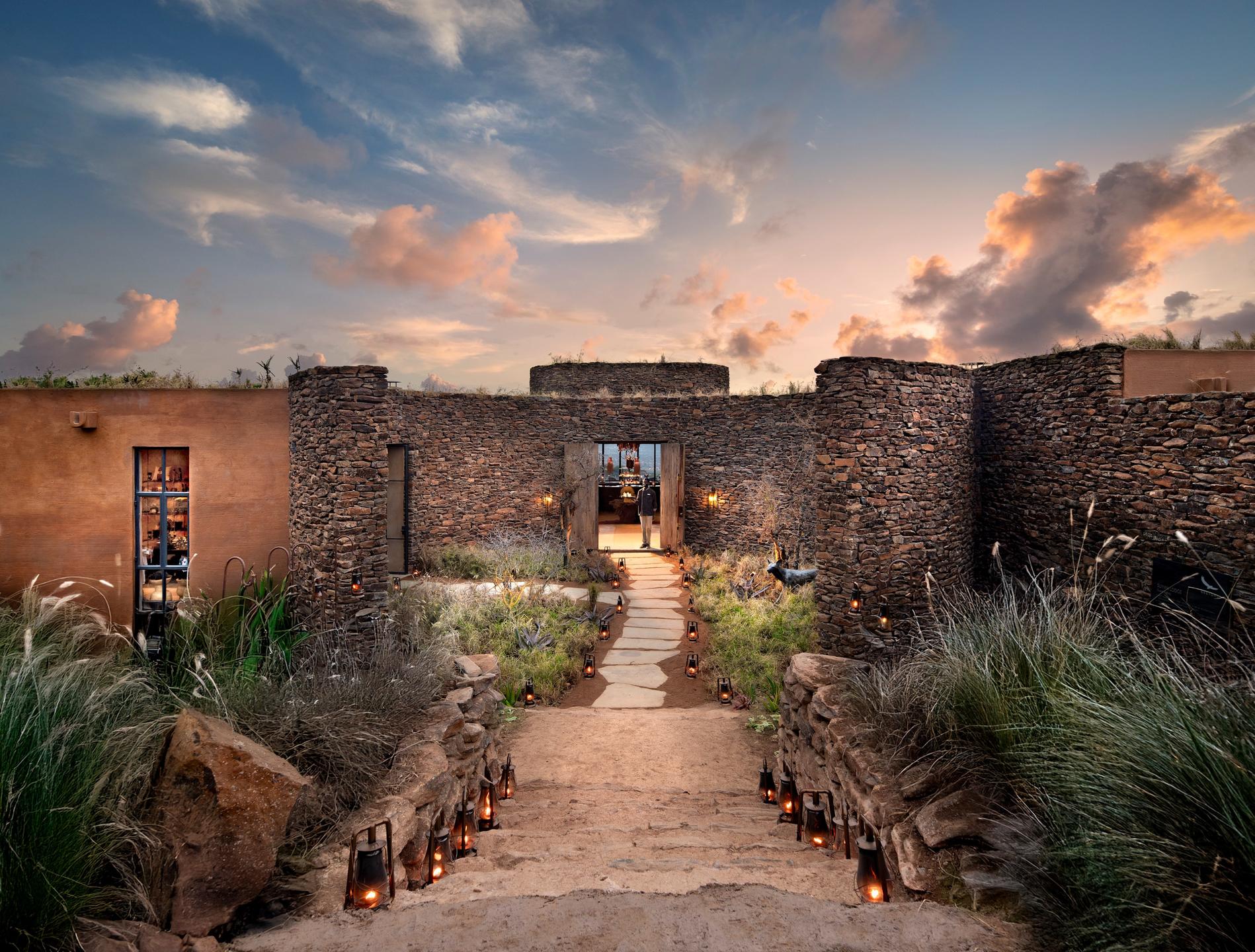
Wilderness Camp, perched up on a hillside, overlooks the whole stunning vista. Giza – and other leopards – are spotted consistently from the hillside above the camp, and a beautiful lookout deck is perched on top of the hill from which some of the most spectacular sunsets in Africa can be observed.
River Camp sits down below and its guests are lulled to sleep by the bubbling of river water over the rocks. Elephants regularly come to drink at a culvert opposite Room 5.

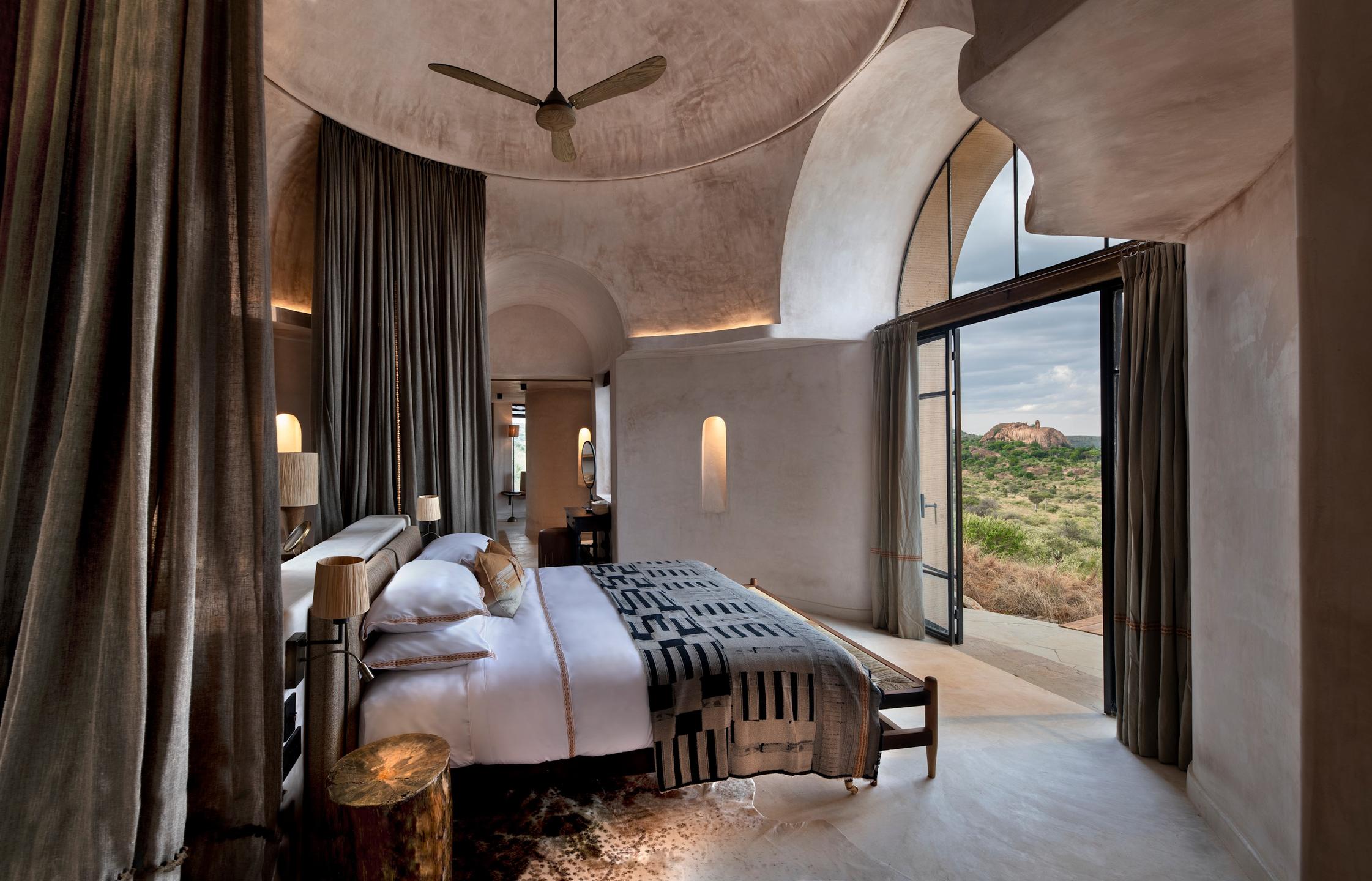
Venture a few kilometres upstream and you find Palm Camp, Laikipia Wilderness’s newest offering, only opened in the second half of 2024. The simple yet elegant rooms stay cool even on the hottest days thanks to their intricately woven palm-frond roofs.

Cuisine at the camps is simple and delicious; coffee and muffins on morning drive with the occasional bush breakfast if you are to be out long. Brunch is a wonderful mix of whatever the chef may feel like on the day, dinners are a similar selection of local and international flavours. Mealtimes are completely up to you, depending on the safari schedule you have discussed with your guide.

The guides at the camps are very experienced. They operate in an incredibly nuanced environment, and believe us, they know how to find leopards, particularly Giza the black panther. Well versed in her habits, they have a knack of being in the right place at the right camp.

Laikipia is well and truly on the map for its black leopard sightings these days, but there is far, far more to it than one cat. A whole world awaits discovery in a beautiful, diverse and remote landscape.

If it is true bucket-list stuff that you are after, look no further. The black leopard of Laikipia will truly take your breath away, as will the rest of it…

Laikipia’s Black Leopards

They are the stuff of legends.

Black Panthers. An idea from the Jungle Book that many people associate only with storybooks, and few believe actually exist. Those that do know that they are out there more often than not believe them to be a species apart, when the truth is they are simply melanistic versions of a leopard or jaguar.
A recessive gene codes for a much higher production of the dark pigment melanin, and an almost black coat is the result. Leopards like this still have their normal rosettes, they are just much harder to see against the infinitely darker coat.

Photograph credit: Will Burard-Lucas

The Laikipia region in central Kenya is home to the highest diversity of mammals in Africa, and like its wildlife, the region is wild. Although it isn’t a national park, a series of private conservancies and ranches maintain its wilderness feel, and these are largely unfenced, allowing animals to roam free between the,. The whole area spans nearly a million acres and the habitat is incredibly varied. It is home to a number of threatened and unique species of mammals found only in Northern Kenya; Grevy’s zebra, Reticulated giraffe, Beisa oryx, zorilla, striped hyena, aardwolf and wild dog.

A melanistic leopard therefore, is simply the cherry on top.

It was a young individual that was first spotted by the owner of Laikipia Wilderness Camp a few years ago, and subsequent camera trap work by photographer Will Burrard-Lucas documented the animal in spectacular fashion.

Photograph credit: Will Burard-Lucas

To this point there have been reports of a number of melanistic individuals in the greater Laikipia region; an encouraging sign that the recessive gene is becoming more prevalent. However, the majority of these cats are unrelaxed; nervous of people and vehicles and very difficult to see or capture on camera.
It is around Laikipia Wilderness Camp that one has the greatest chance of experiencing a once-in-a-lifetime sighting of a black leopard, as the young female there was viewed with her mother for much of her youth, and became habituated fairly rapidly as a result.

For those adventurous enough to venture off the beaten path and explore this lesser known region of Kenya, viewing a black leopard in the wild is a very real possibility. Our strong recommendation is that you are accompanied by a private guide, to assist with photography in particular, as photographing a black animal at night with only a spotlight for light can be a tricky prospect (most of the viewing of the melanistic cat is after dark, when it feels most relaxed).

There are as couple of very experienced photographic guides that we work with, so be sure to enquire as to their availability.

If this unique experience is something you would be interested in, get in touch with us through info@iconicafrica.com. Laikipia Wilderness Camp has limited space and is suddenly a much sought after destination with the appearance of the black panthers, seemingly out of nowhere, so don’t hesitate to start planning your safari…

Where to View Leopards in 2023

In many ways, the leopard represents the African continent best.

Whilst the regal lion may hold the title of King of the Beasts, and the elephant’s great size render it the most impressive African mammal, it is the enigmatic nature of the leopard, and the mystery that surrounds it, that most adds to its allure as an animal to see on safari, and captures the essence of the African continent most effectively.

In large portions of Africa – and particularly in areas where human wildlife conflict has been a factor over the years – leopards can be hard to find. They are there, but remain invisible. Although they occupy almost every habitat from the mountains just outside Cape Town to the open deserts of the Sahara way to the north, for the most part they are unobserved creatures of the night.

Yet in a few wildlife reserves, leopards are eminently viewable. The big cats there have long realised that the game viewing vehicles do not represent a threat to them, and so allow them and the guests they contain into their daily lives.
Although there is no such thing as a guaranteed sighting, these are a few places that will give you your best chance of viewing leopards in the wild:

Sabi Sand Reserve, South Africa

Long-viewed as the epicentre of wildlife viewing in Southern Africa, a recent camera-trap survey by the Panthera Organisation firmly established this iconic reserve as containing the densest leopard population yet recorded on the African continent.
With a high availability of natural prey species and perfect habitat in which to hunt and raise cubs, the area boasts leopard numbers that around 12 per hundred square kilometres in the centre of the park.


A number of world-class lodges like Londolozi, Singita and Mala Mala have decades of experience showing guests the wonders of the area, and in particular the leopards. Experienced rangers are well versed in the habits and territorial movements of the resident individuals, and so it is in the Sabi Sands that we feel you have THE best chance of viewing leopards in the wild.

South Luangwa, Zambia

Although not as lauded as other contemporary reserves, the South Luangwa National Park has in fact been providing phenomenal game viewing for years. With the Luangwa River delivering a much-needed source of water during the dry season, the area is able to sustain healthy general game populations, and it is these antelope species  – particularly puku and impala – that the local leopard population favours.

Riparian vegetation along the river and its many tributaries provides the perfect habitat for the leopards to slink through, and large evergreen trees provide safe refuges in which to hoist kills to keep them out of reach of hyenas.

Serengeti, Tanzania

Whilst better known for boasting the largest populations of lions and cheetahs in Africa, the Serengeti/Masai Mara ecosystem in East Africa has no shortage of leopards. Although sightings won’t be quite as regular as in other reserves, it is the setting here that creates the appeal around leopard viewing.


Wide open spaces, unimpeded Acacia woodland; wherever you see a leopard – and in particular photograph it – you are likely to get the sense of space that the greater habitat brings. Vistas like you can’t believe, with the seemingly endless plains of Africa stretched out around you. If you happen to be there during the migration, you will also have the background accompaniment of a million snorting wildebeest throughout the day.
Leopard or no leopard though, the East African grasslands are a wildlife experience like no other.

Laikipia, Kenya

Our final recommended leopard-viewing destination is not what one would normally expect to be included in a list like this.
In fact until recently, it wasn’t really on the international radar as a place to see these beautiful cats.
But over the last couple of years, one or two leopards in particular in a small area called Laikipia in central Kenya, have captured the broader imagination of the safari community.
These are the mythical black leopards.

Photographer: Will Burard-Lucas

A rare recessive gene that codes for an excess of melanin – a dark pigment – results in an animal that is much darker than a normal individual. This is the black panther of legend. Black panthers can be any big cat from the Panthera genus – although they are essentially either leopards or jaguars – and contrary to popular belief they are not all black. One can still see the rosettes in their coats if you look closely.
A few individuals have been born recently in the Laikipia district, and although most of them are skittish and very hard to find, one or two individuals that inhabit the area near Laikipia Wilderness Camp have become accustomed to the presence of game drive vehicles, and spectacular photos like the above one by Will Burrard-Lucas are now possible.

Even without the viewing of this most special of leopards, Laikipia is a spectacular area to safari with its high number of unique species.

Leopards capture the idea of safari beautifully. They are on many safari-goers’ bucket lists, but many visitors to Africa entertain little hope of actually seeing them.

If they are an animal which you really to want to see though, we have a number of lodges we recommend highly to give you your best chance.

Get in touch through info@iconicafrica.com, and let’s start planning your safari…