Mwiba Lodge — Tanzania’s Best Kept Secret

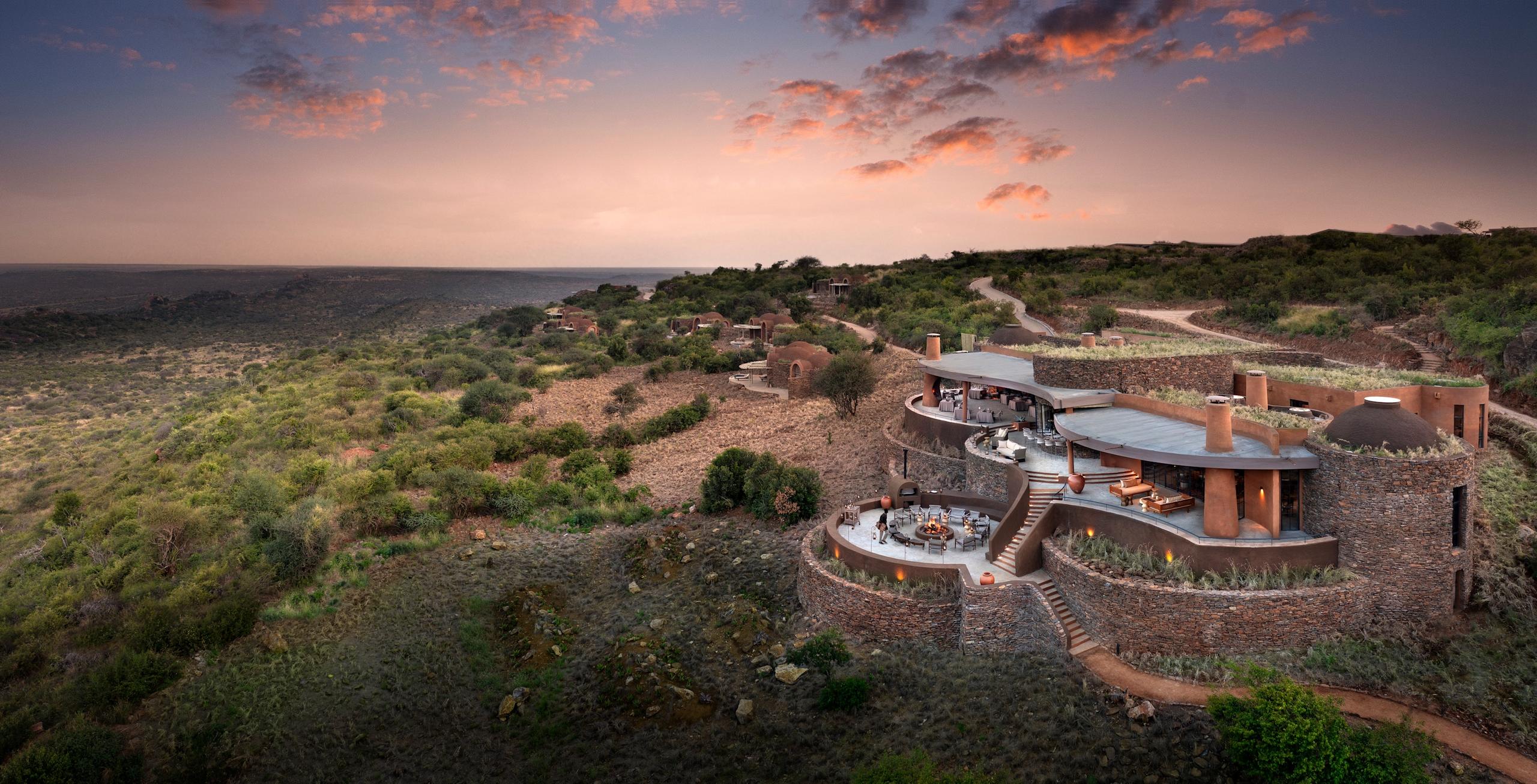
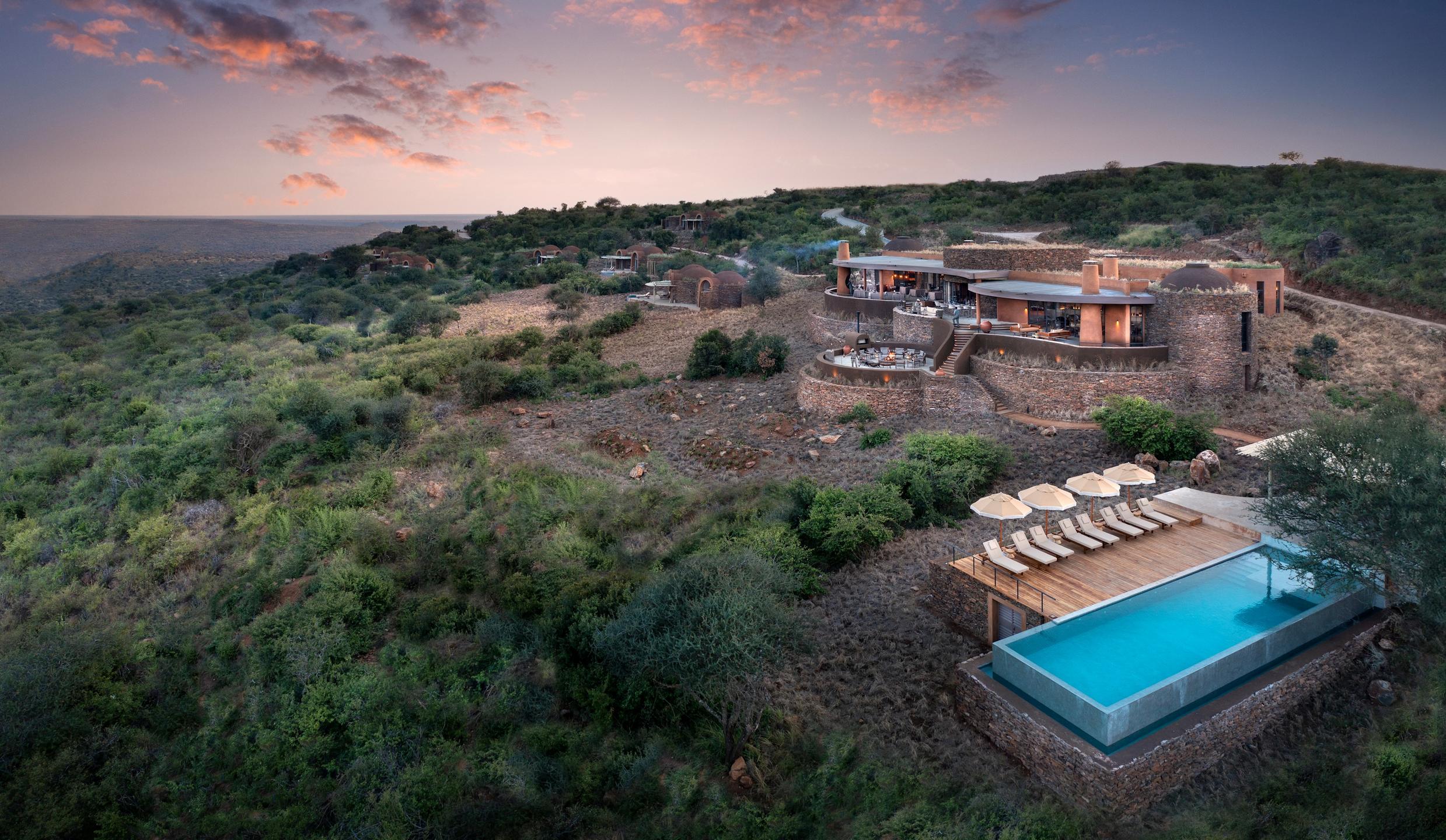
There’s a particular kind of satisfaction that comes from knowing about a place most people don’t. Mwiba Lodge, tucked into a private wildlife reserve on the southern border of the Serengeti, is that place. Ten tented suites, 130,000 acres, and no other camps anywhere near it. If exclusivity is something safari operators throw around loosely, Mwiba earns the word.
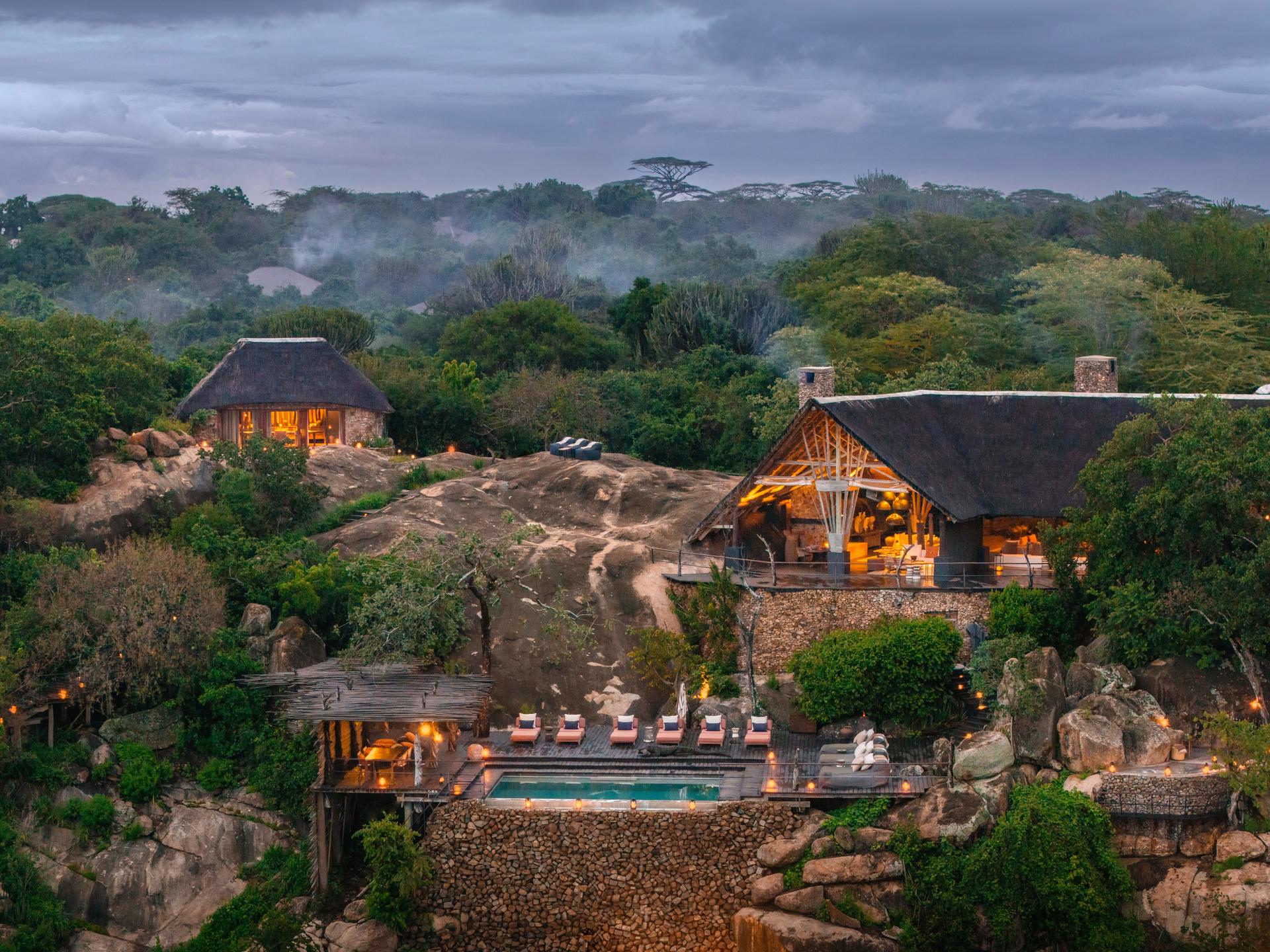
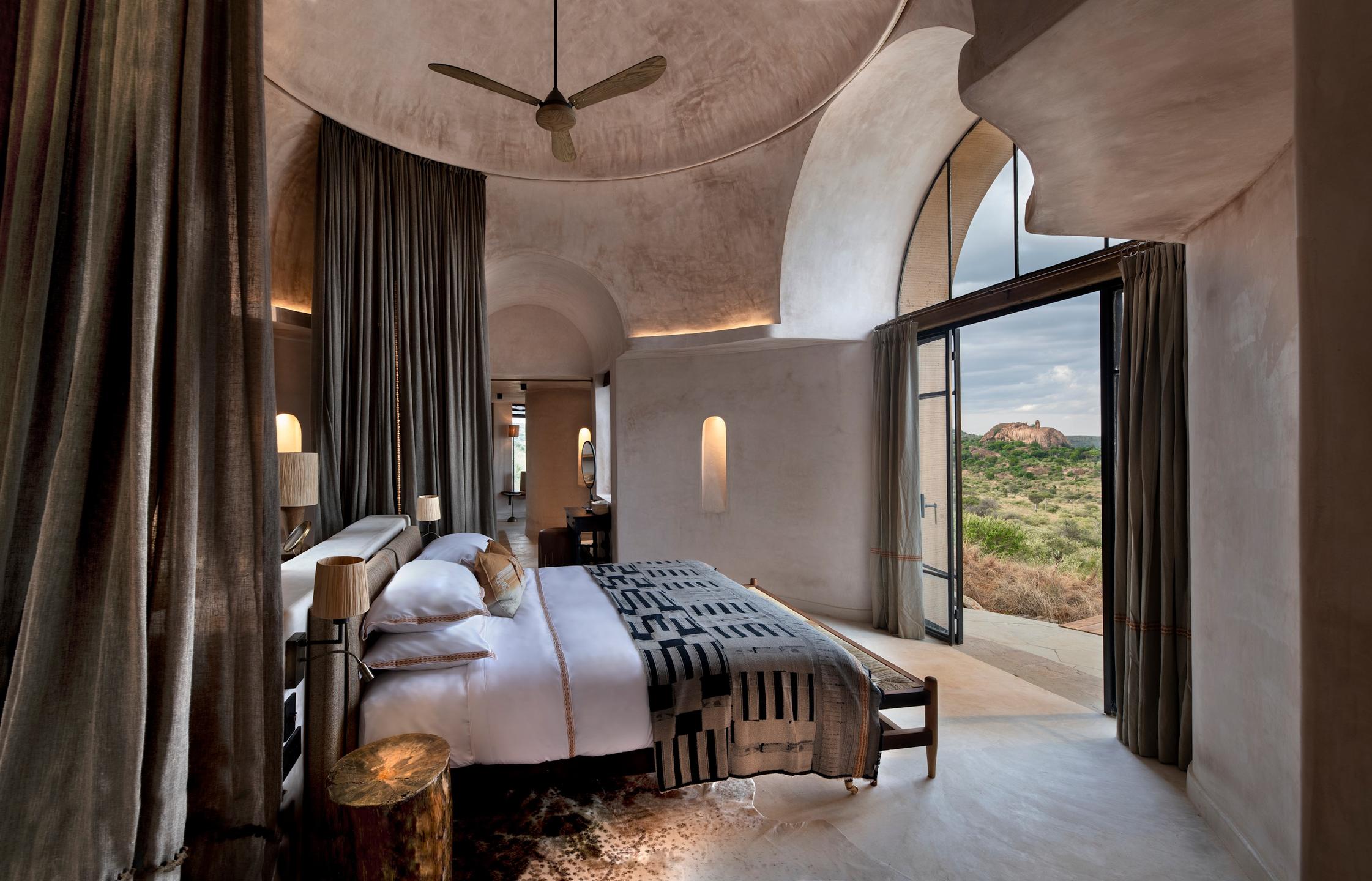
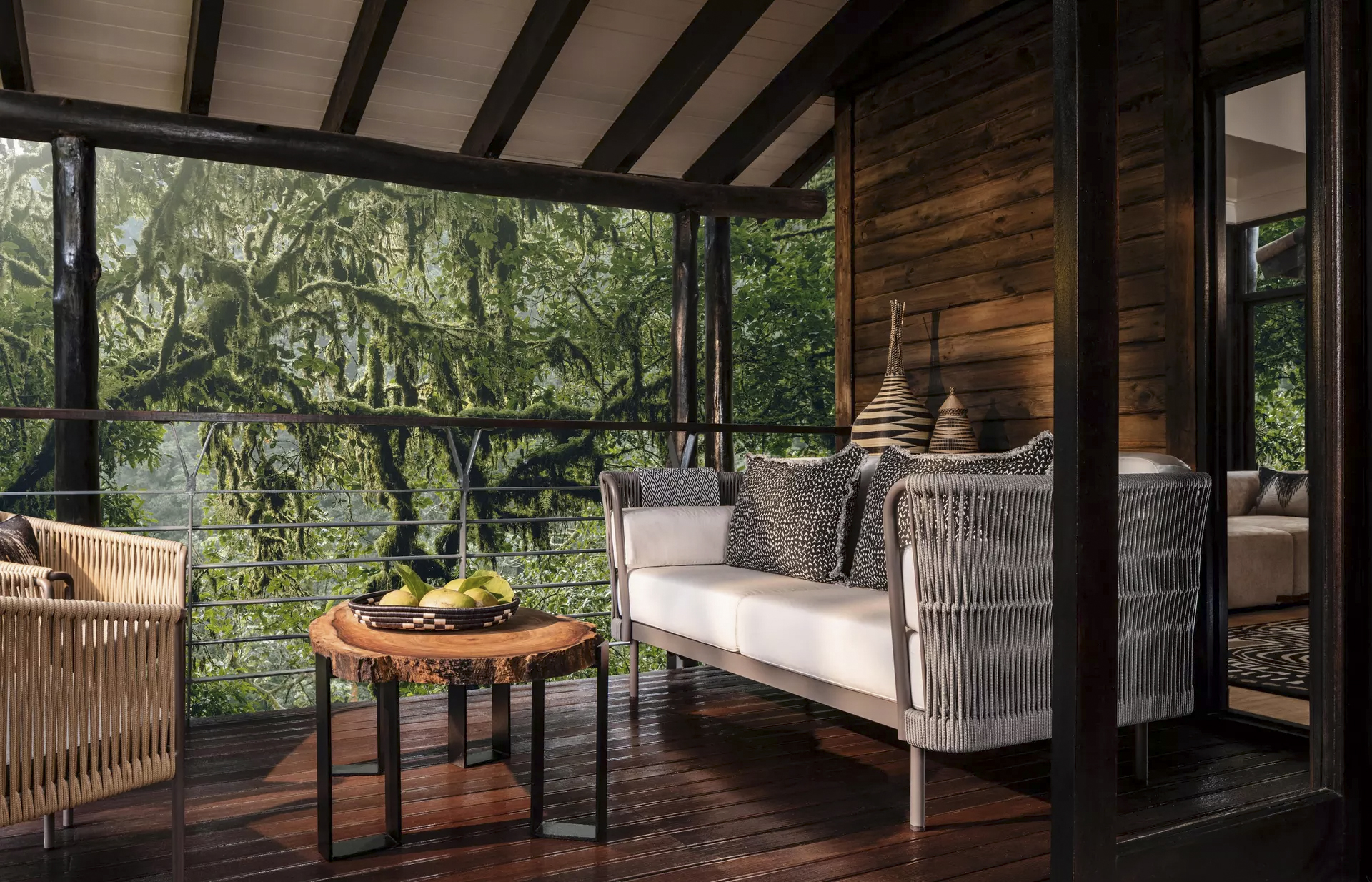
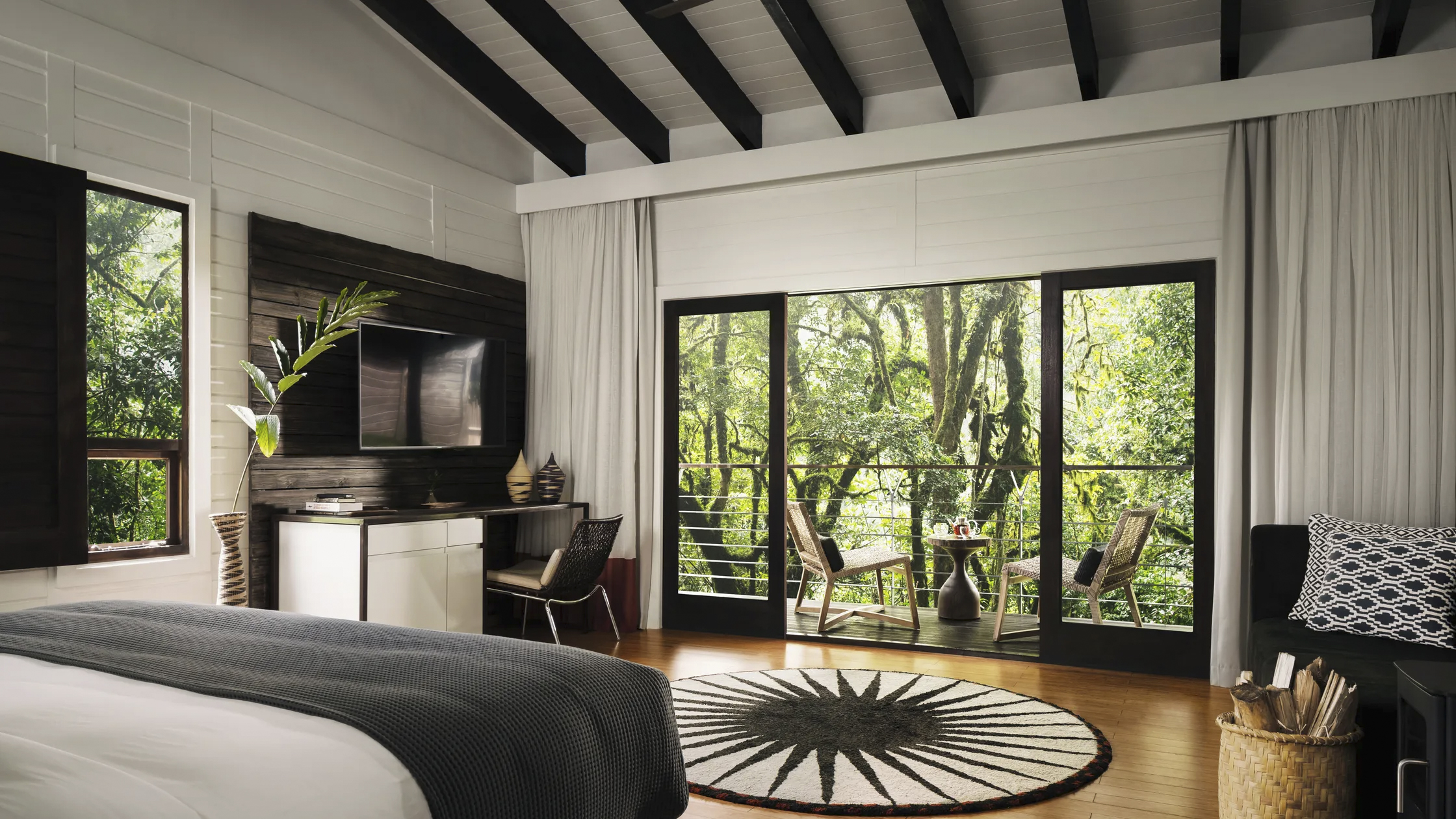
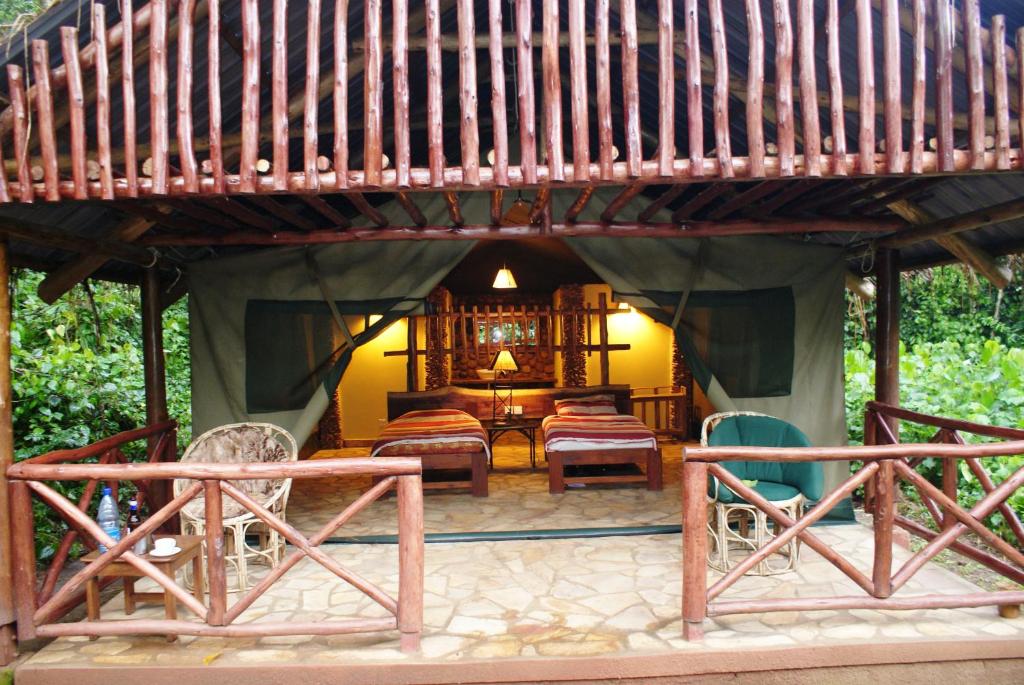
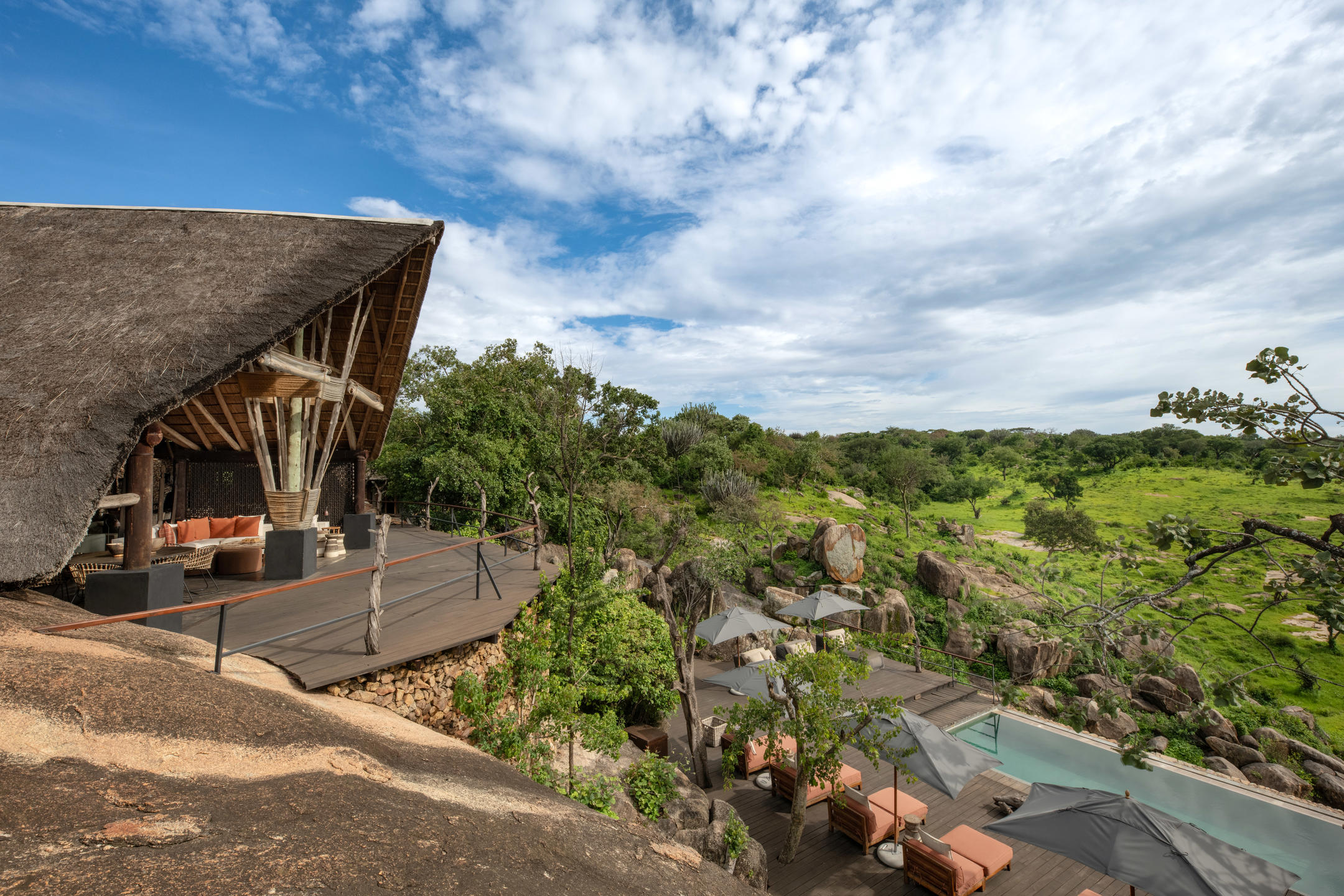
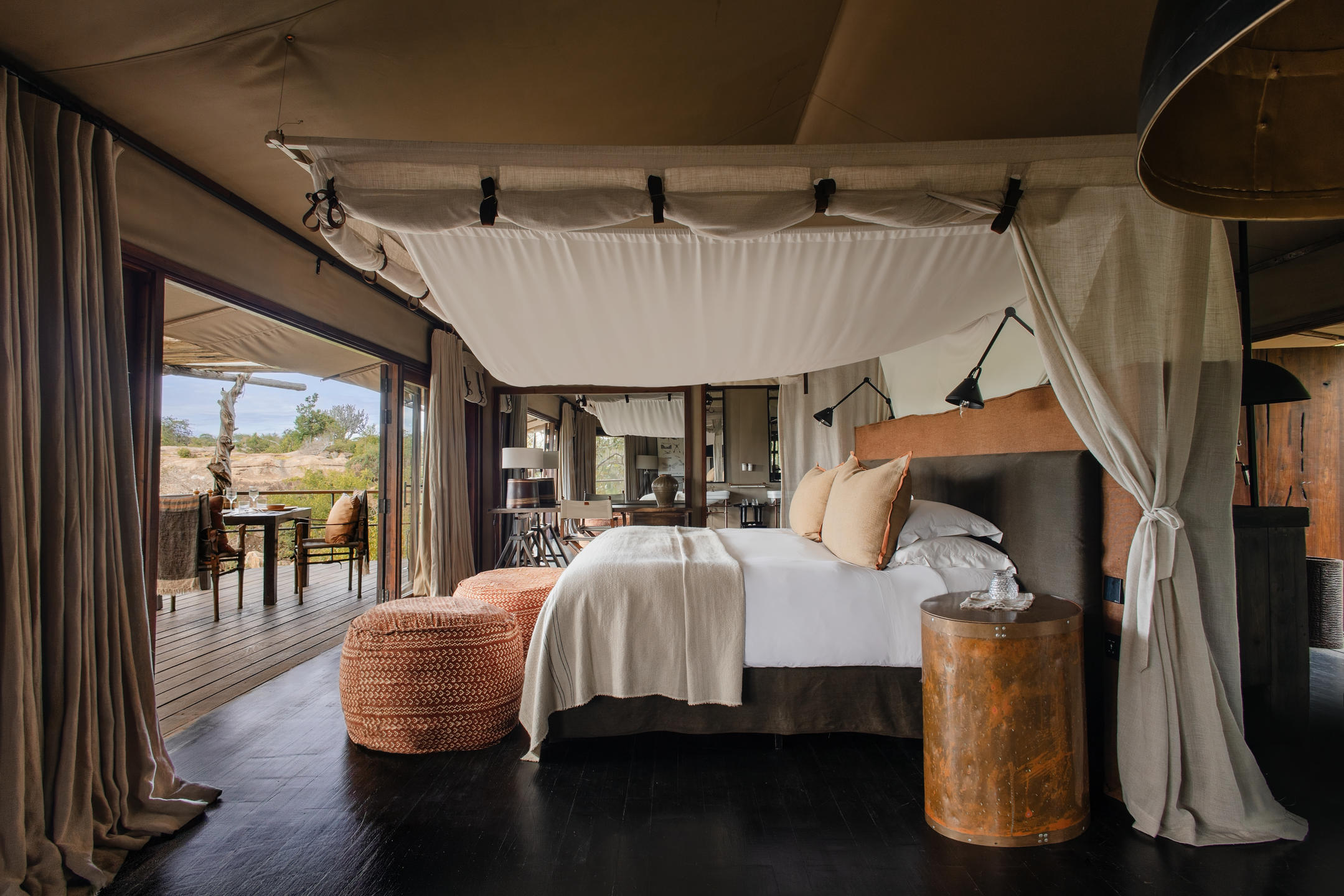
The lodge itself sits perched on granite boulders above the Arugusinyai River gorge, connected by winding wooden walkways that feel like they grew out of the landscape rather than were built on top of it. The suites are generous without being showy — expansive decks, soaking tubs positioned to face the bush, outdoor showers, the kind of beds you need a moment to commit to leaving. The design lets the setting do the talking, which is a smart call given the setting.

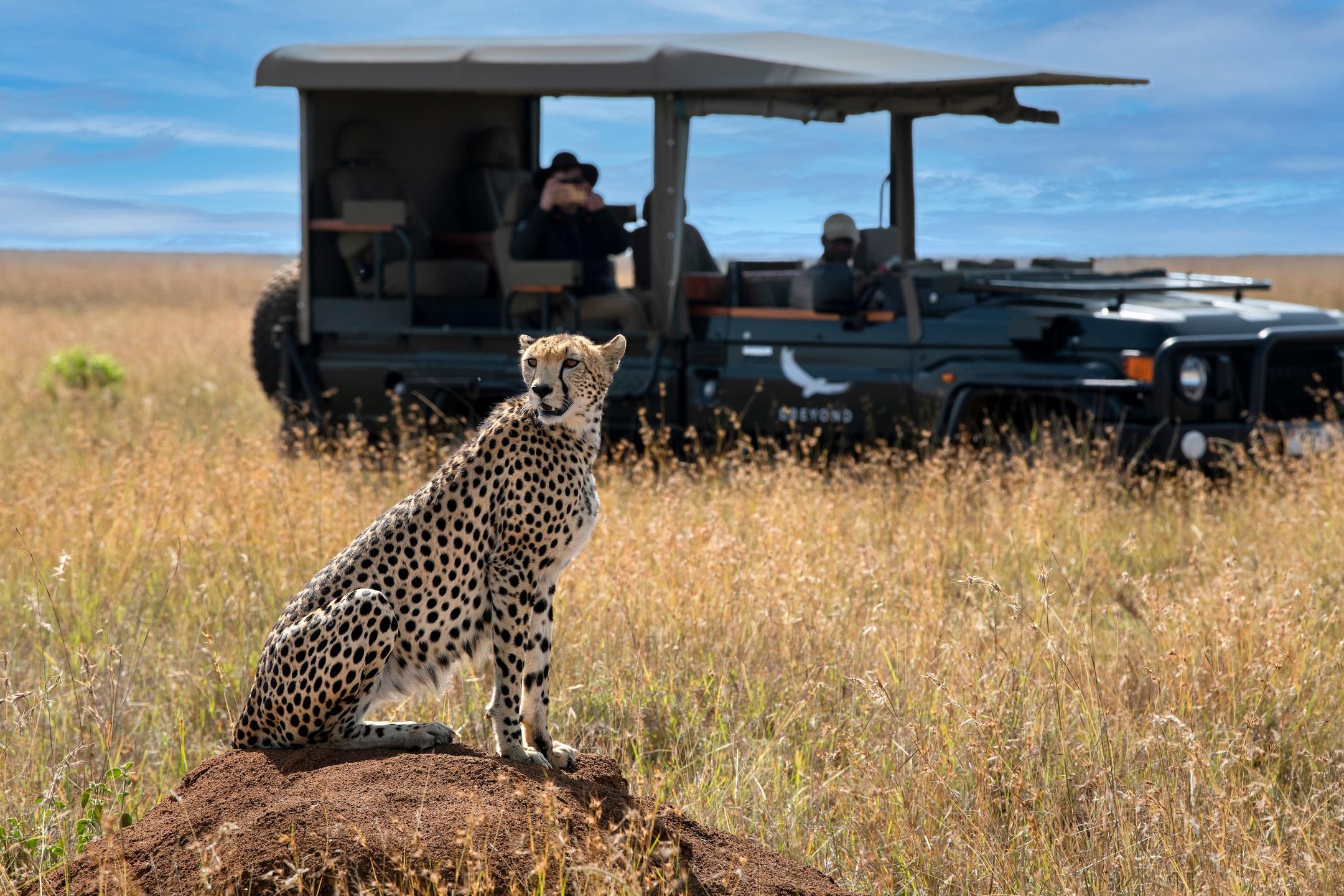
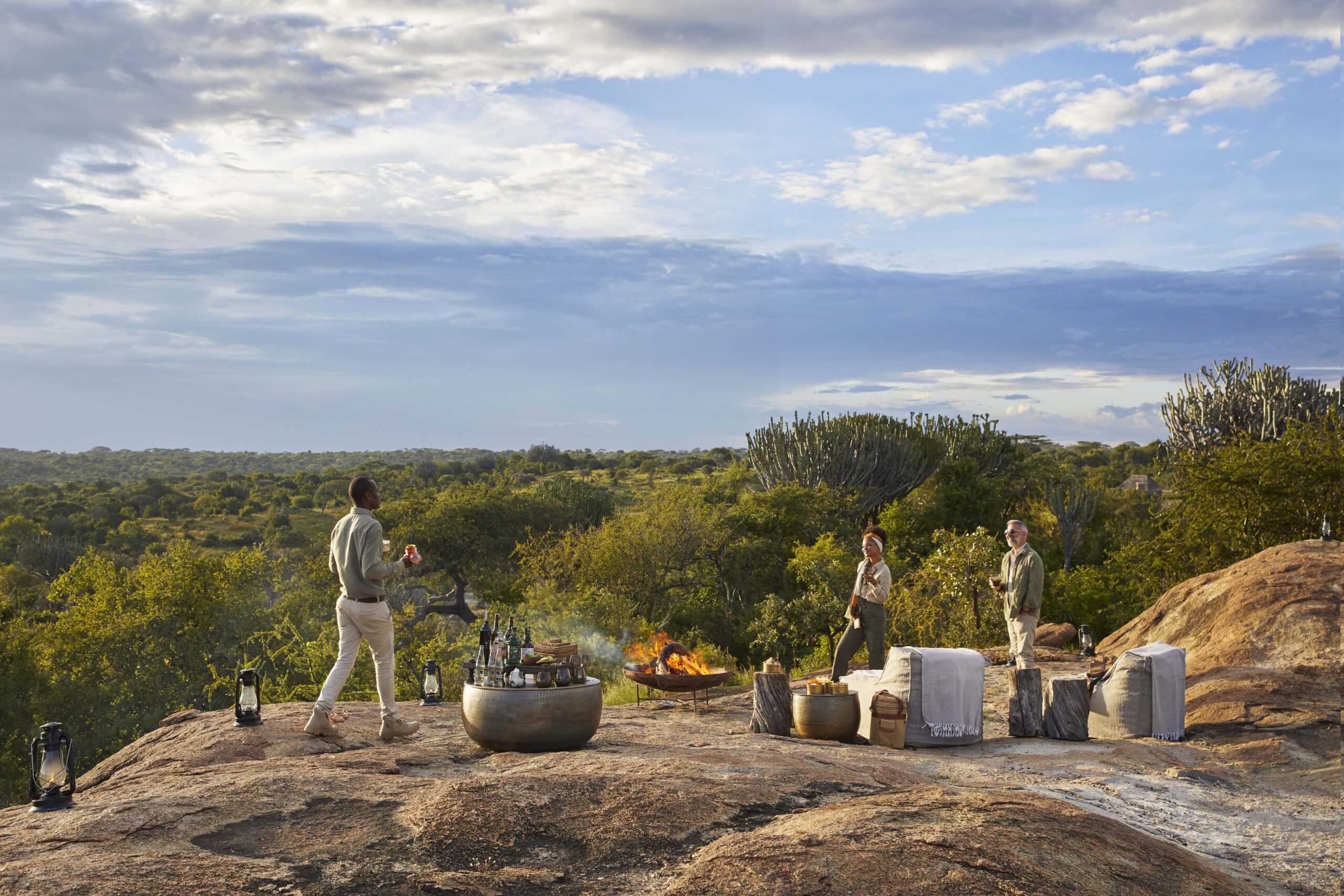
But what really separates Mwiba from the crowded northern circuit isn’t the hardware. It’s the freedom. Every guest gets their own private guide and vehicle. There are no set schedules, no convoy of Land Cruisers jostling for position at a kill. You go where you want, when you want, for as long as you want. For anyone who’s spent time trying to enjoy a leopard sighting with six other vehicles parked around it, that matters more than it sounds.
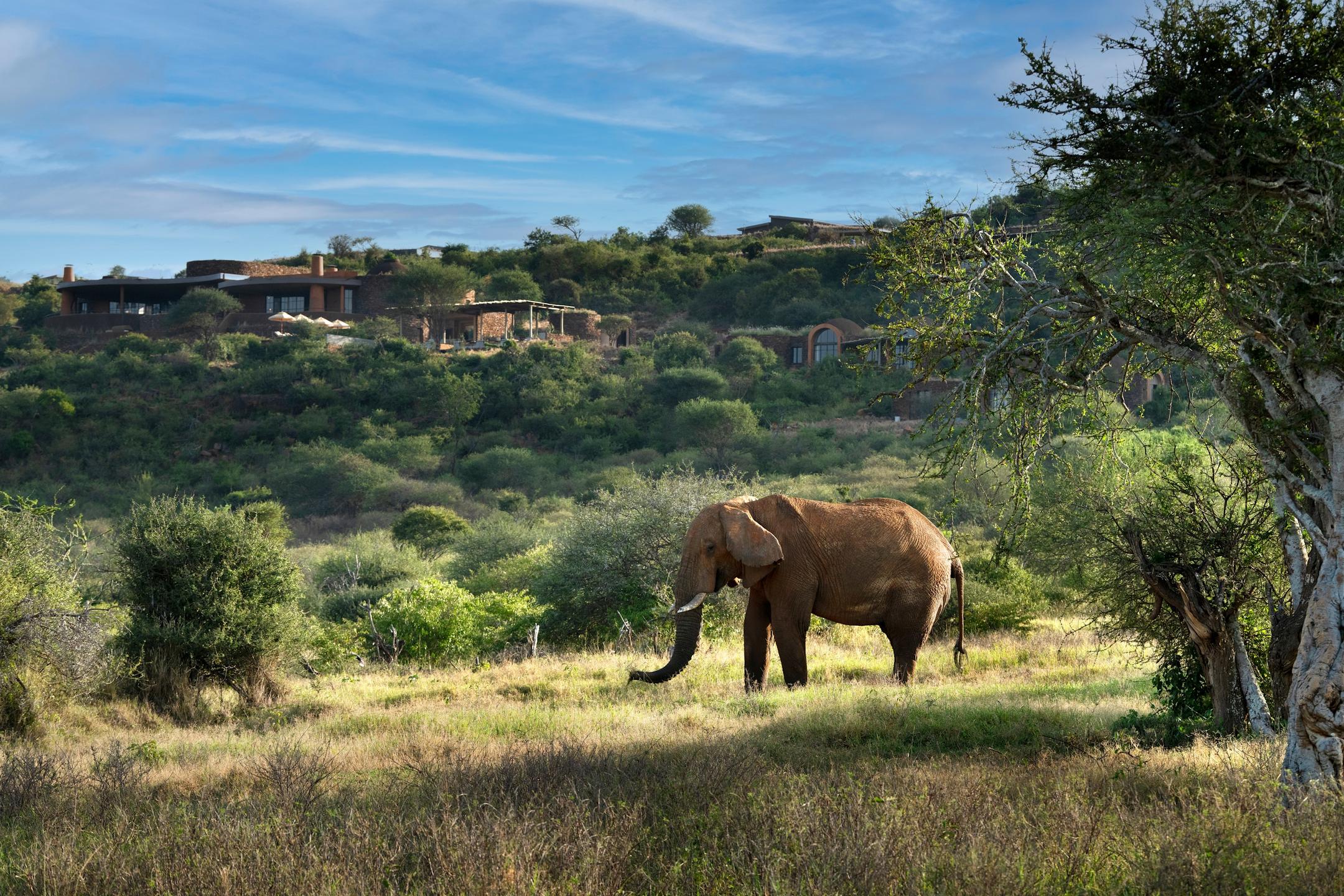
The wildlife corridor here connects the southern Serengeti to Lake Manyara and the Ngorongoro highlands, which means the diversity of what you’ll encounter is genuinely surprising. Elephant, lion, cheetah, wild dog — all on a reserve where the only tyre tracks in the road are probably yours.

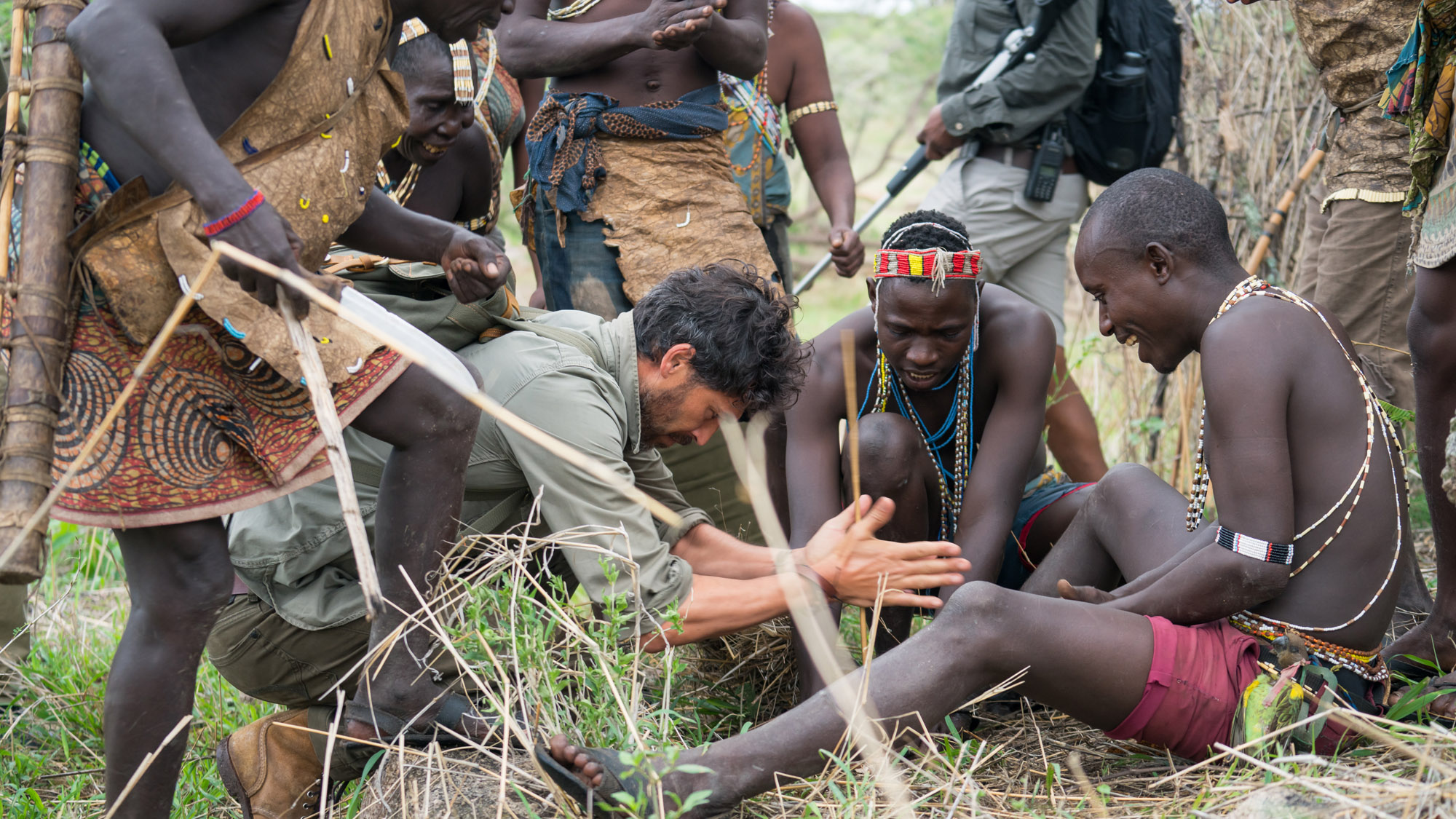
Then there’s the Hadzabe. One of the last remaining hunter-gatherer tribes in Africa, they’ve lived around Lake Eyasi — a short helicopter flight from the lodge — for tens of thousands of years. A morning spent with them, watching them hunt with handmade bows in the acacia scrub, has a way of quietly rearranging your priorities. It’s not a performance put on for tourists. It’s a way of life that has remained largely unchanged, and being invited into it, even briefly, is a privilege worth the journey alone.
The helicopter deserves its own mention. Mwiba is the only lodge in Tanzania with a permanent helicopter on site, which opens up a level of exploration most safari-goers never access — flights over the Serengeti plains, down into the Rift Valley, across to Lake Eyasi. It turns an already exceptional stay into something that feels almost unreasonably good.
Mwiba recently joined the Auberge Collection alongside sister property Chem Chem, which makes combining the two lodges on a single Tanzania itinerary a seamless and logical exercise. Different ecosystems, complementary experiences, and a level of consistency across both properties that makes planning straightforward.

The honest question with any safari lodge is whether it lives up to what’s written about it. Mwiba does, and then some. It’s the kind of place that doesn’t need to shout about itself. The guests who find it tend to come back — and tend not to tell too many people about it either.
Singita Kwitonda — Where the Mountain Comes to You

Rwanda surprises people. They arrive expecting something — usually a vague sense of the continent’s familiar safari rhythms — and find instead a country that is green, cool, mountainous, and unlike anywhere else they’ve been. Kigali is spotless and orderly. The roads work. And in the northwest, rising out of mist-draped forest on the edge of Volcanoes National Park, Singita Kwitonda is waiting.

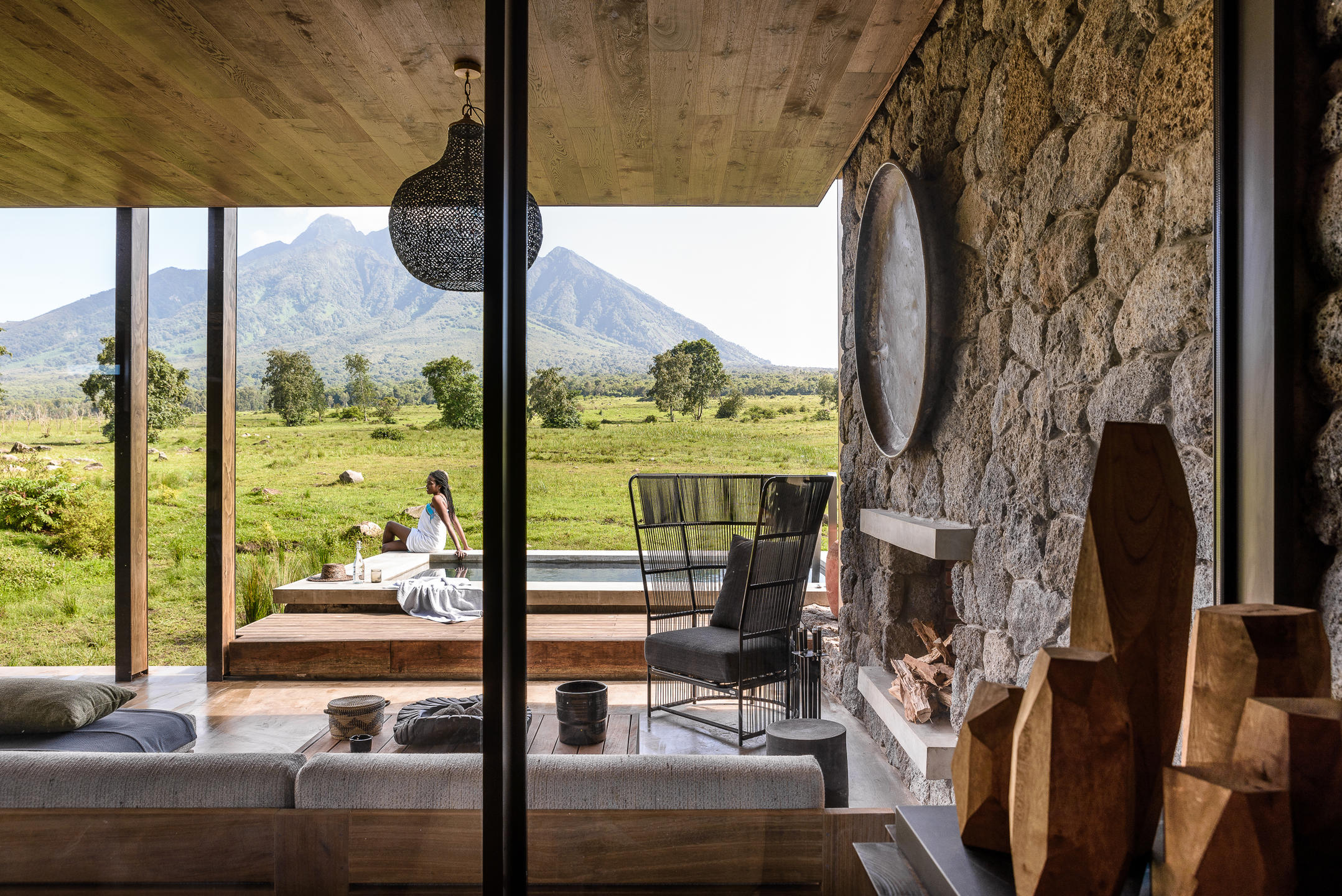
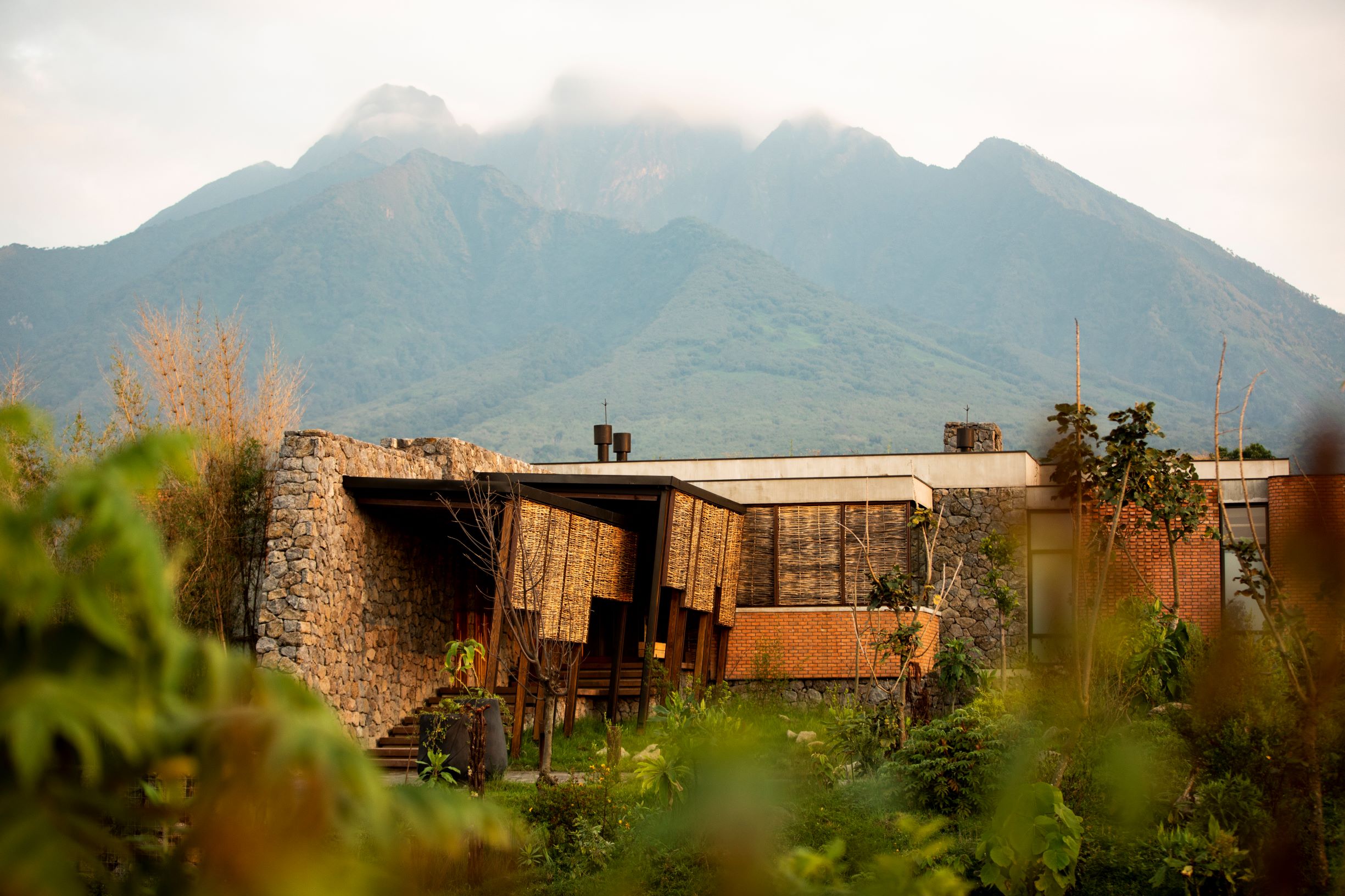
The lodge sits on 178 acres that share a direct boundary with the park — a detail that sounds like marketing copy until you understand what it actually means. The gorillas are not somewhere out there beyond a gate and a long drive. They are, in the most literal sense, next door. On a clear morning, standing on your suite’s private deck with a cup of coffee and views of the Sabyinyo, Gahinga and Muhabura volcanoes filling the horizon, that proximity feels almost implausible.

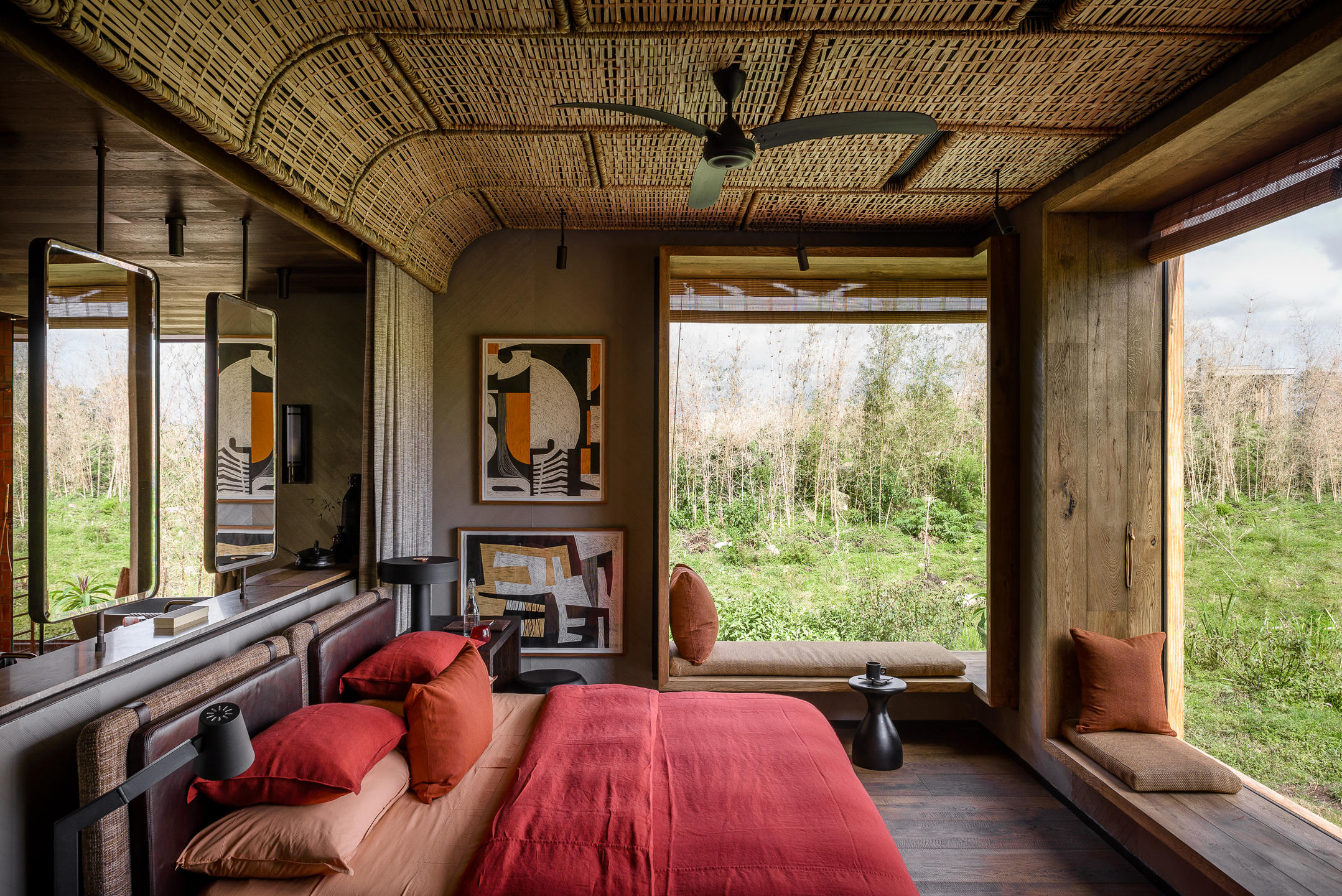
Eight suites, each with a heated plunge pool and both indoor and outdoor fireplaces — because at 2,000 metres above sea level, the evenings are cooler than most guests expect. The interiors draw on Rwandan craft traditions: woven ceilings, hand-fired terracotta brickwork made by local artisans, timber-framed windows wide enough to make the landscape feel like a living room fixture. It is unmistakably Singita — precise, considered, nothing wasted — but it wears Rwanda on it in a way that feels genuinely earned rather than decorative.

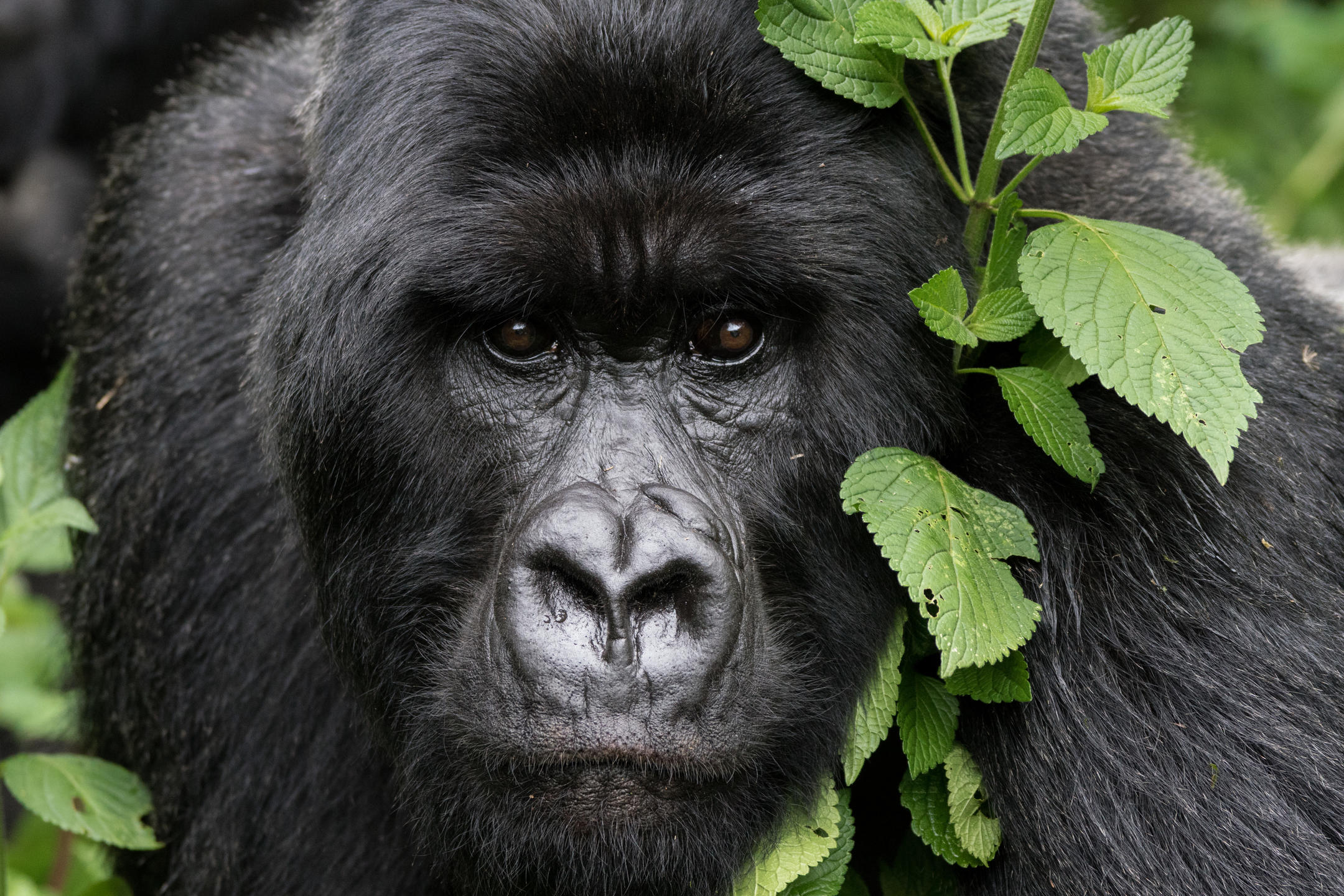
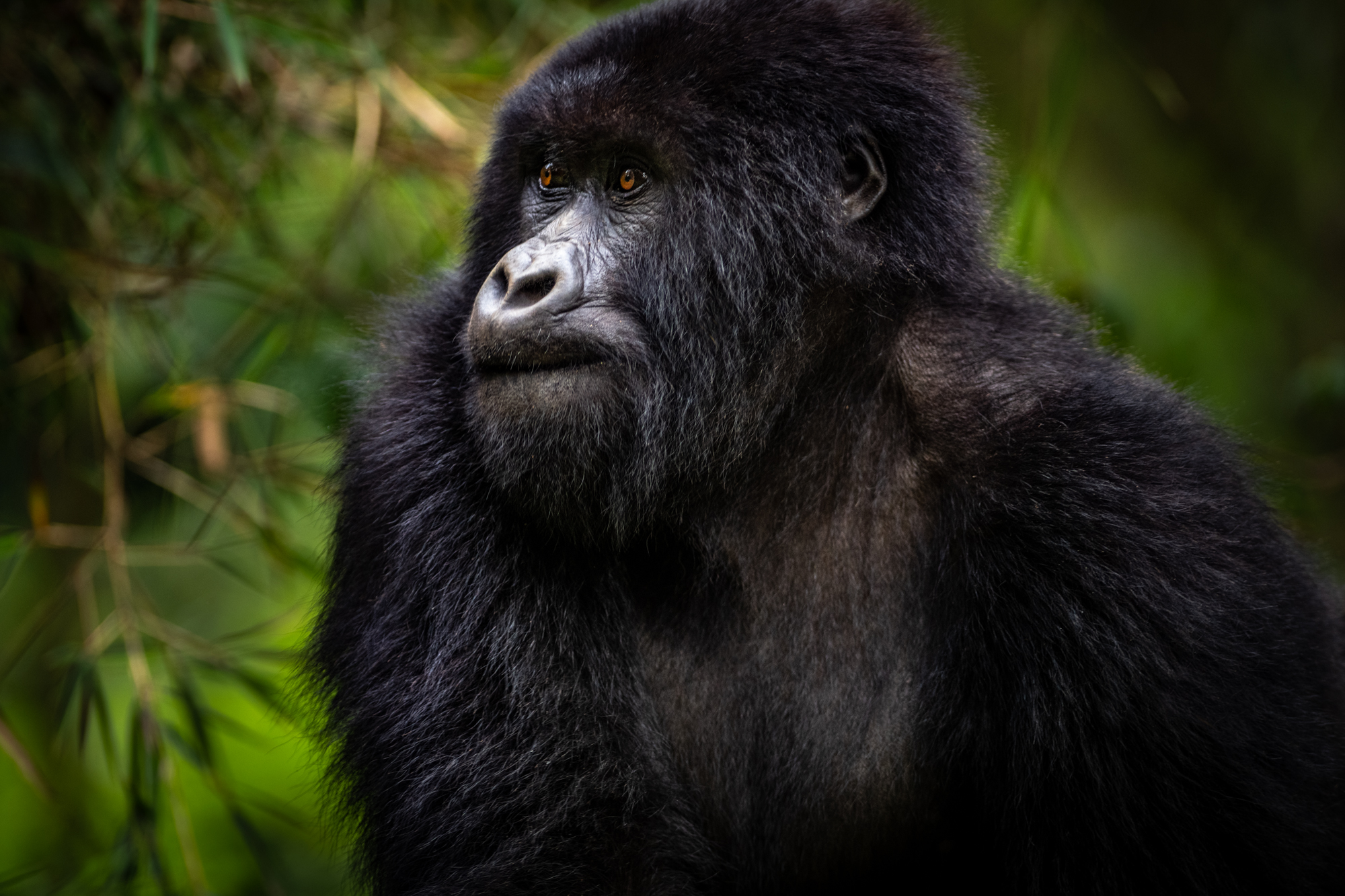
The gorilla trek is, of course, the reason most people come. An early start, a drive to the park headquarters, a briefing, and then you’re on foot into the forest. The terrain varies — some days it’s relatively gentle, other days you’re pulling yourself up through dense vegetation on a steep volcanic slope — and nobody can tell you in advance exactly how long it will take. The gorillas are where they are. When you find them, and you will, the hour you’re permitted to spend with them passes in approximately four minutes. This is not an exaggeration. It is, for many people, the most affecting wildlife experience of their lives. The scale of them, the intelligence in their eyes, the complete indifference with which a silverback regards you — it rearranges something.

But Kwitonda is not purely a one-trick property. The conservation lounge traces the story of the land from Dian Fossey’s research through to the ongoing work to expand gorilla habitat — Singita is actively working to convert agricultural land on the park’s border back into forest. Golden monkey trekking offers a different but equally compelling primate experience. There are cultural visits, walking trails through eucalyptus forest, and a kitchen garden that supplies a meaningful portion of what ends up on the plate.

The name deserves a mention. Kwitonda was a silverback gorilla known for his gentle nature and quiet authority, who roamed these forests for years before his death. The lodge was named in his memory. It’s a small detail, but it tells you something about how Singita approaches this particular place. They’re not just running a luxury property adjacent to something remarkable. They’re trying, with genuine seriousness, to be part of what keeps it remarkable.

For the right traveller — curious, physically willing, and open to an Africa that looks nothing like the one on most safari brochures — Kwitonda is quietly unmissable.

&Beyond Suyian — The Kenya Almost Nobody Knows

Most people who go on safari in Kenya go to the Mara. And the Mara deserves its reputation — the migration, the lions, the sheer volume of wildlife on those open plains. But there’s a version of Kenya that sits north of all that, quieter and considerably less visited, where the landscape shifts into something altogether different. Rocky outcrops, granite kopjes, dry sweeping valleys, and a conservancy so large that 44,000 acres of it belongs entirely to Suyian. &Beyond opened their lodge here in mid-2025, and it’s already one of the more interesting things to happen to Kenyan safari in recent memory.

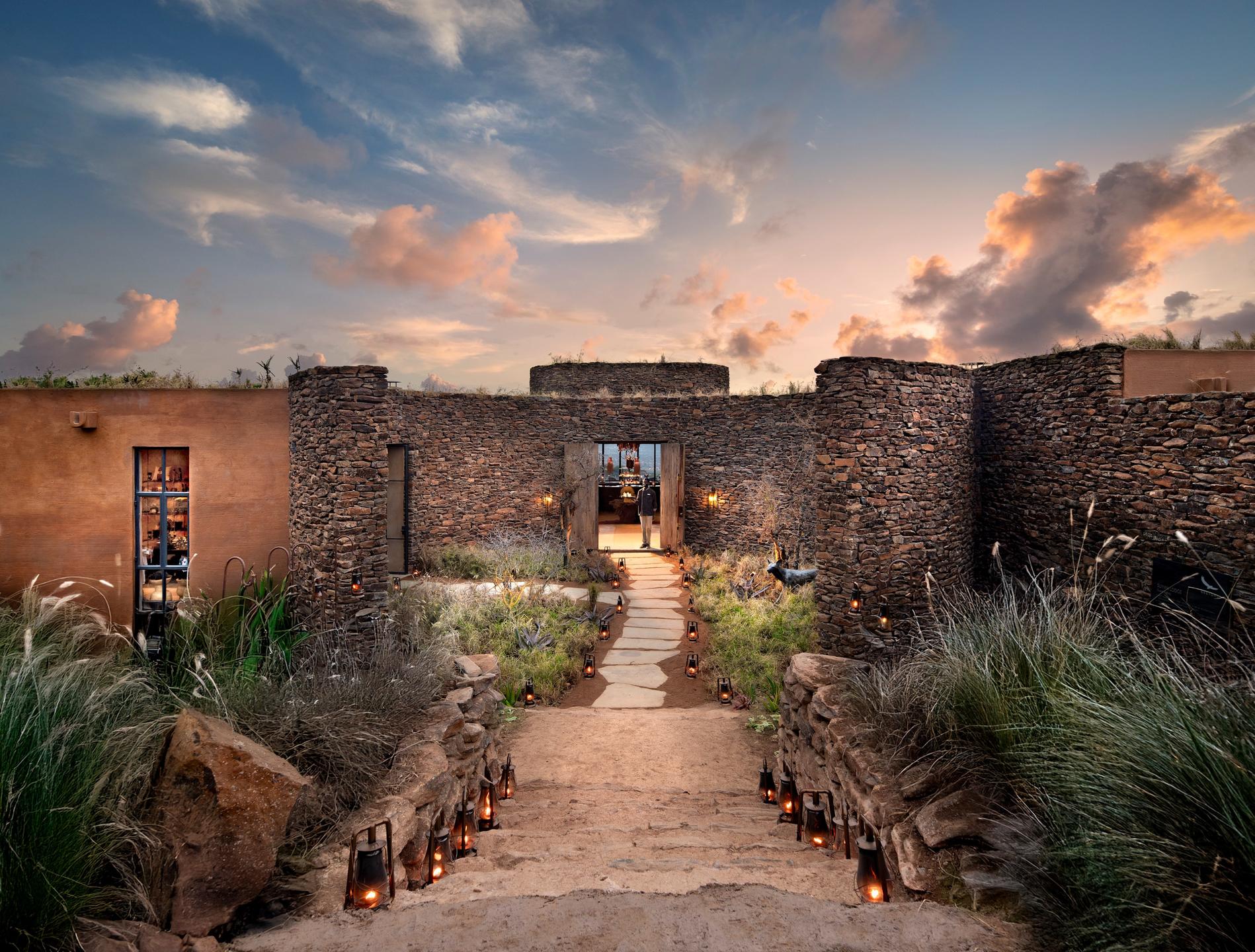
The lodge itself is striking. Low-slung domed structures tucked into the escarpment, their rounded forms and planted roofs drawn directly from the surrounding granite. Fourteen suites, each with a plunge pool, outdoor shower, and fireplace — useful at this altitude, where the evenings cool faster than guests expect. The interiors carry a philosophy &Beyond calls Afro Wabi-Sabi: natural materials, mottled textures, subtle references to the semi-nomadic Samburu culture that has shaped this landscape for generations. Someone has thought carefully about every surface, and it shows.

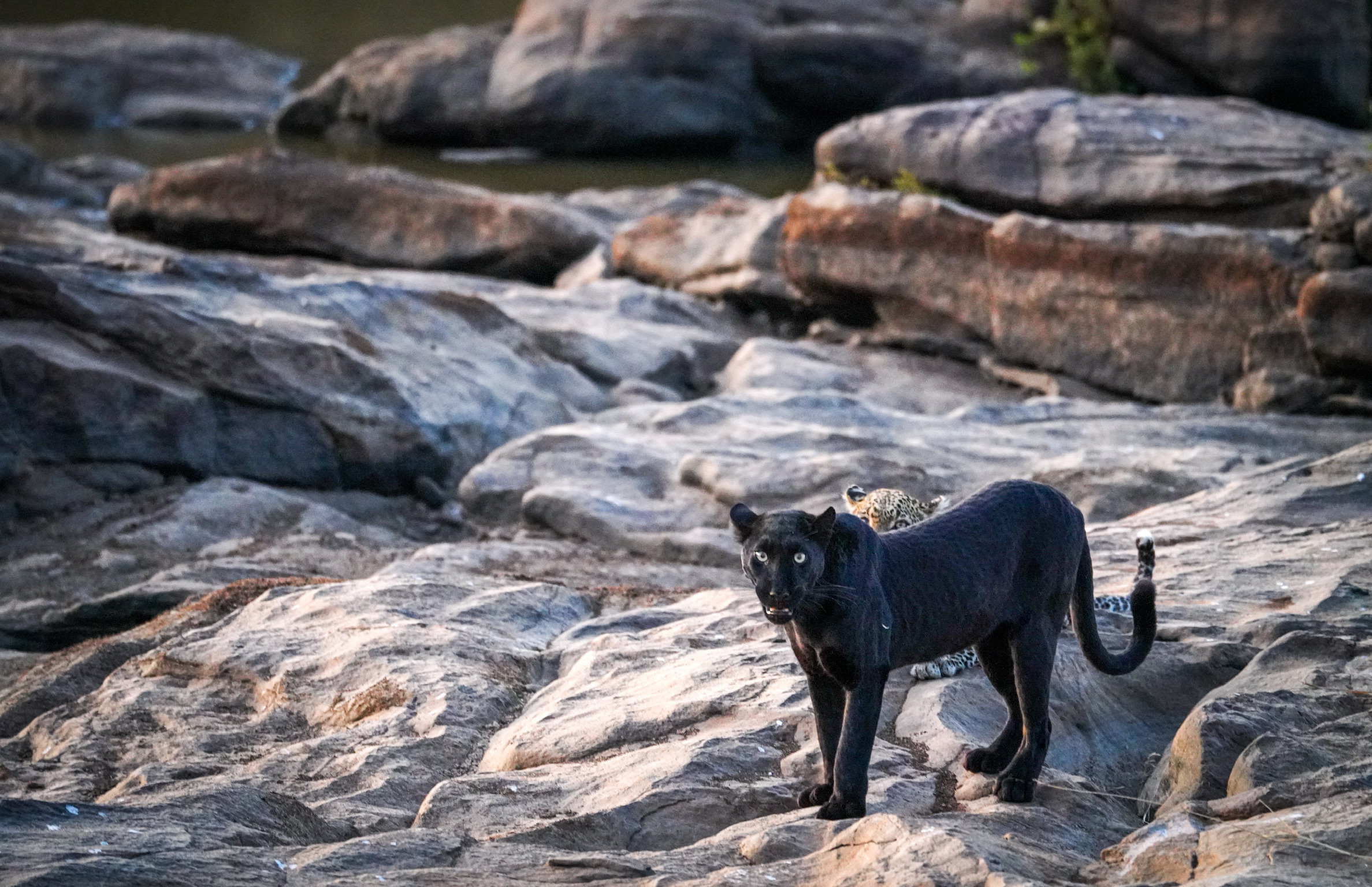
The wildlife at Suyian is not the Mara. There are no wildebeest thundering past in their hundreds of thousands, and anyone arriving with a Big Five checklist and a tight schedule will need to recalibrate. What Suyian offers instead is rarer and, for the right traveller, considerably more compelling. Grevy’s zebra, reticulated giraffe, gerenuk, African wild dog, and the animal that has become something of a symbol for the conservancy — the melanistic leopard. Black leopards are among the most elusive cats on the continent. The neighbouring conservancy is famous for one named Giza. Suyian has its own. The odds of seeing one are never guaranteed, but the fact that they’re here at all says something important about the quality of the wilderness.

The activities lean into what makes Laikipia genuinely different. Camelback safaris trace routes across the conservancy that have been walked by Samburu herders for centuries. Horse riding is available for those who prefer their wildlife encounters at a slower, quieter pace — animals tend to behave differently around horses than vehicles, and the sightings reflect that. Walking safaris, night drives, visits to the working ranch that still runs alongside the conservation operation — Suyian is a working landscape, not a sealed-off reserve, and that gives it a layered, lived-in quality that is increasingly rare.

Suyian is a young property. It opened less than a year ago, but the architecture and food have drawn consistent praise. The wildlife, by its own nature, is unpredictable. This is a lodge for people who understand that the best safari experiences are not always the ones with the most animals — sometimes they’re the ones that take you somewhere genuinely new.

Laikipia has been on the radar of serious safari travellers for years. Suyian has given it a front door worthy of what lies behind it.

The Forest Before the Fields — One&Only Nyungwe House, Rwanda

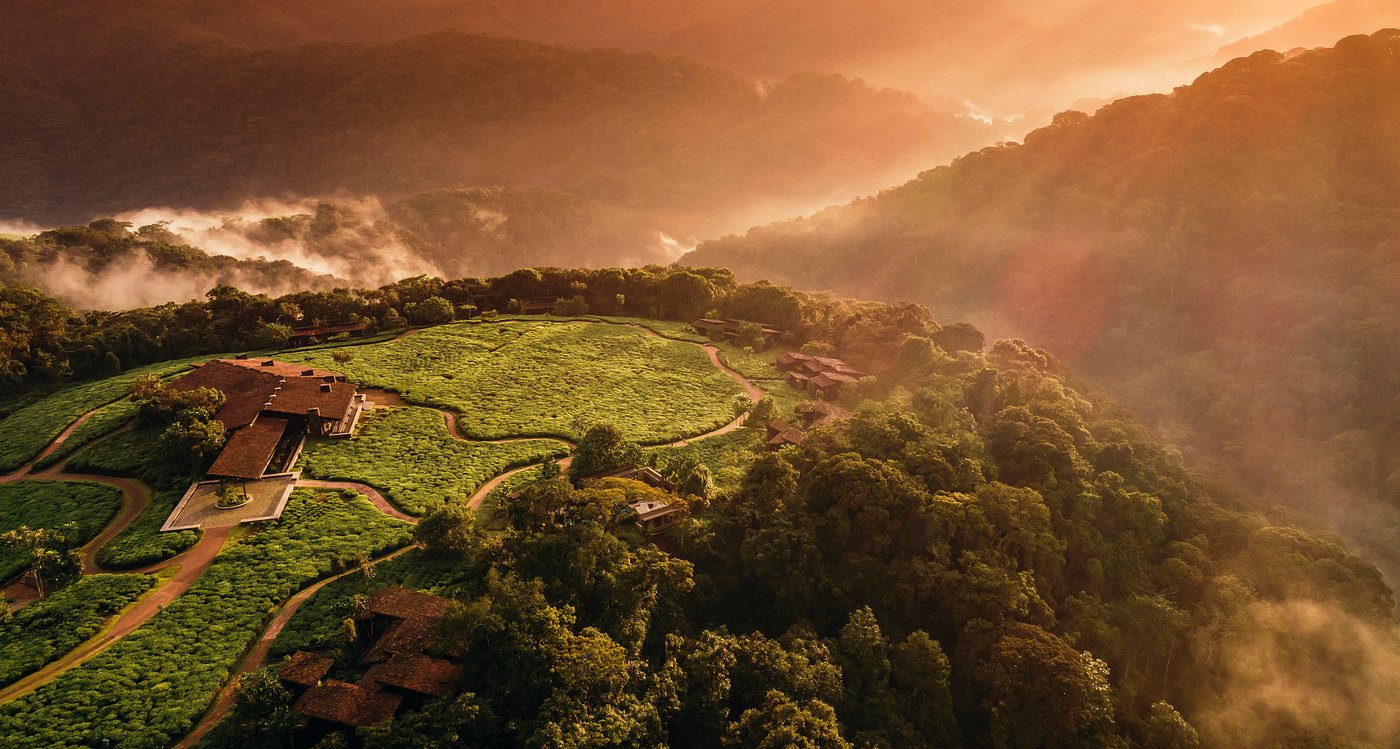
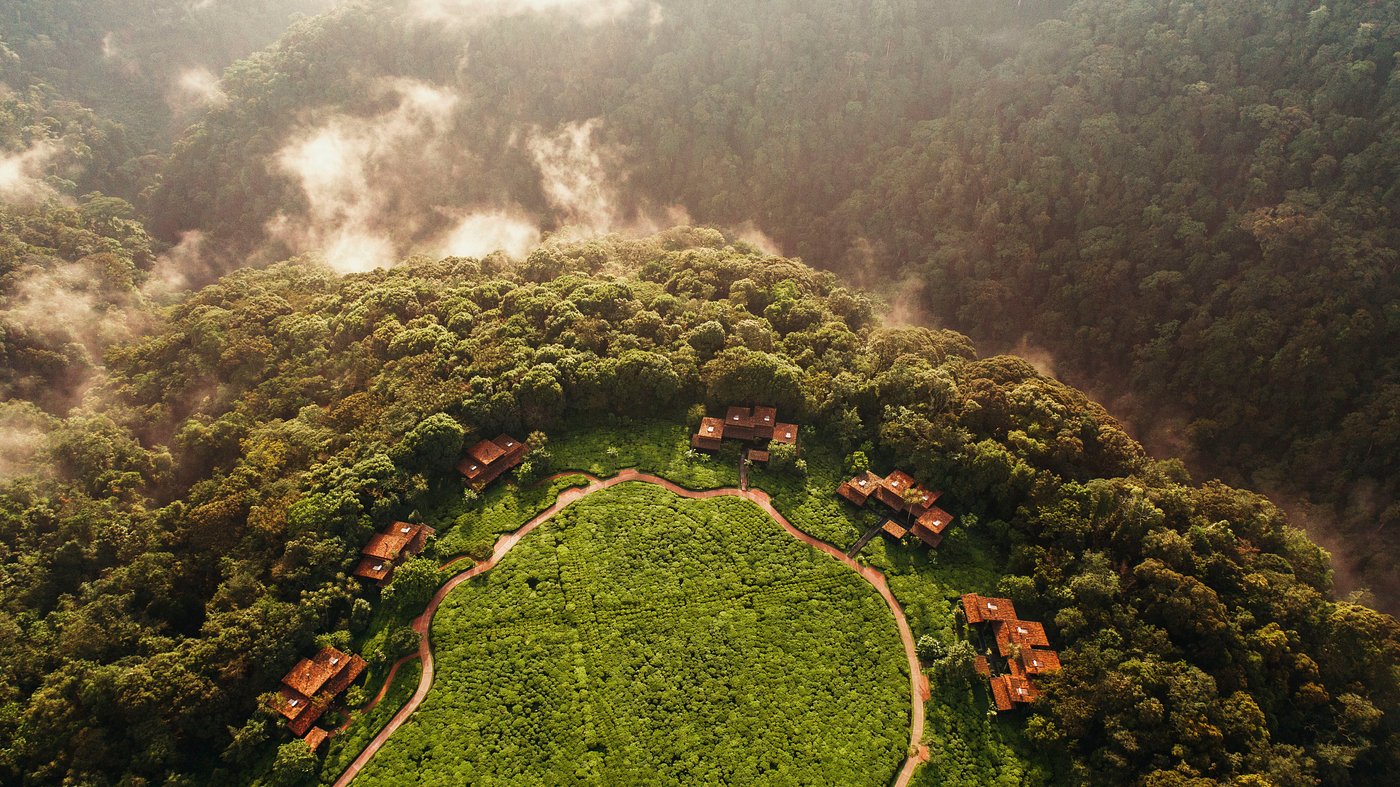
The drive into Nyungwe is a lesson in contrast long before the forest itself appears. The road climbs through Rwanda’s southwest in a wash of green — tea plantations laid out in neat, contoured rows, hills terraced with the kind of agricultural discipline that has earned this country its reputation as one of the tidiest on the continent. And then, with very little warning, the cultivated green gives way to something older and considerably less organised. A wall of rainforest rises out of the hillside, dense and tangled and entirely indifferent to the order around it, as though the tea fields had been quietly guarding something they were never quite allowed to touch.

What they have been guarding is one of the oldest rainforests in Africa — a montane ecosystem so ancient that some botanists believe it may have survived the last ice age largely intact, sheltering plant lineages that have vanished almost everywhere else on the continent. Nyungwe holds over a thousand plant species, eighty-five types of mammal, and thirteen species of primate, more than 300 species of bird, dozens found nowhere else on earth. It is, by most measures that matter, one of the most biologically significant forests left standing anywhere.

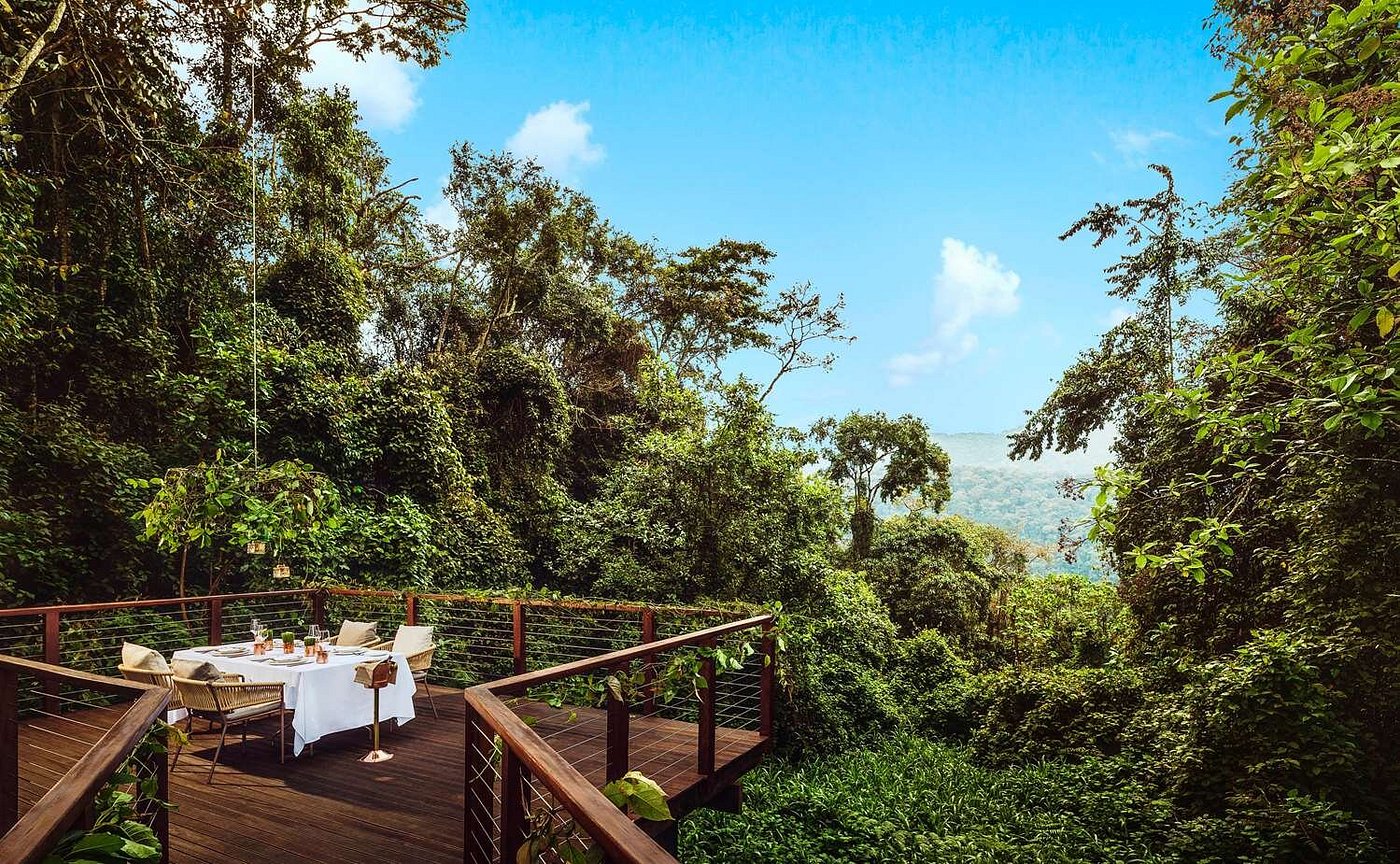
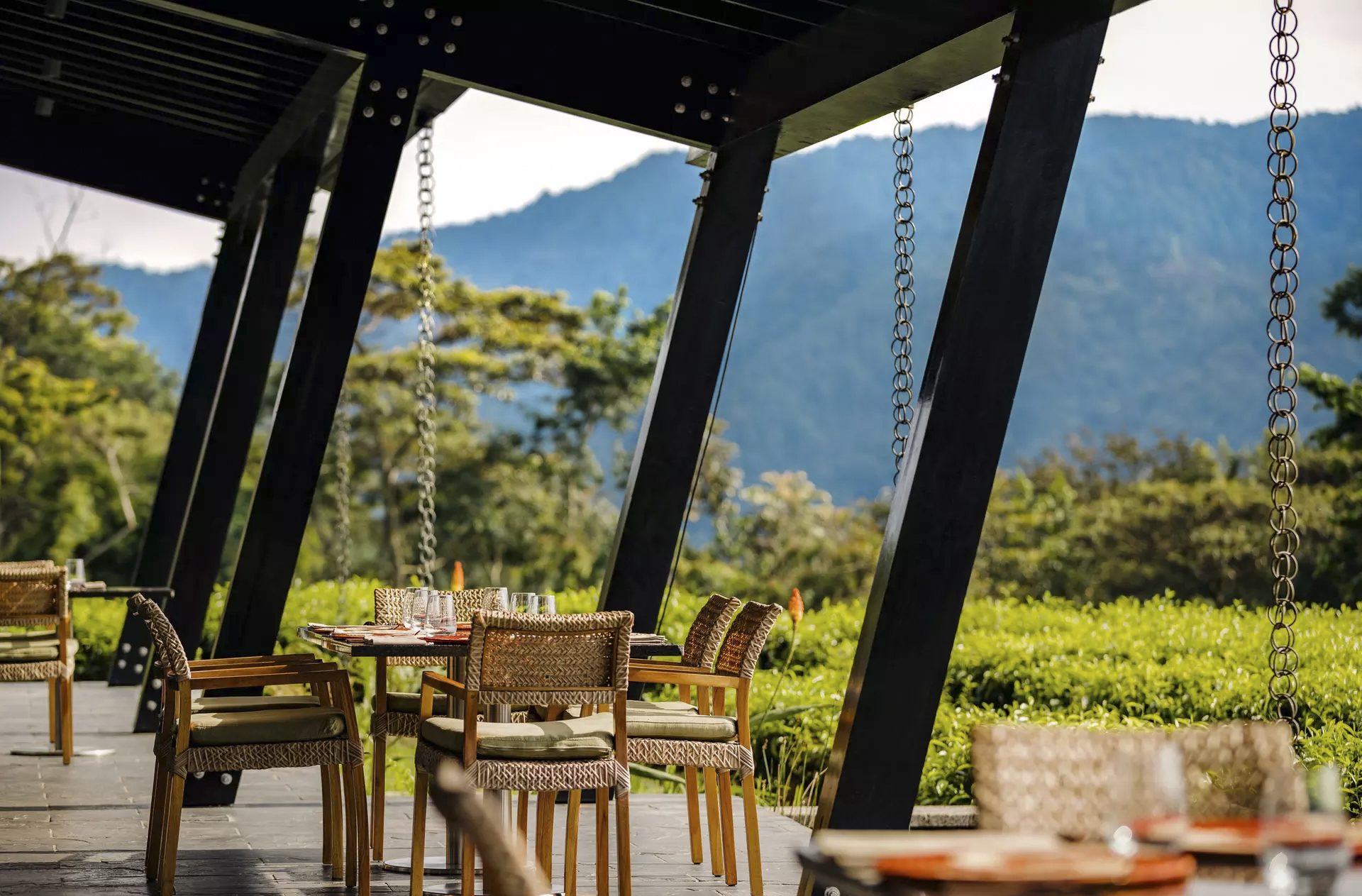
One&Only Nyungwe House sits at the forest’s edge among the very tea plantations that frame the approach, which turns out to be a rather elegant piece of design logic: guests wake up inside the cultivated landscape and walk out into the wild one. The villas are spacious and quietly luxurious in the way the brand tends to do well, but the real architecture worth discussing is the forest’s own — particularly the canopy walkway, suspended sixty metres above the ground between towering trees, the only structure of its kind in East Africa. Crossing it is disorienting in the best possible way: the forest floor disappears, the canopy becomes the world, and birds that spend their entire lives above the ground suddenly make a great deal more sense.

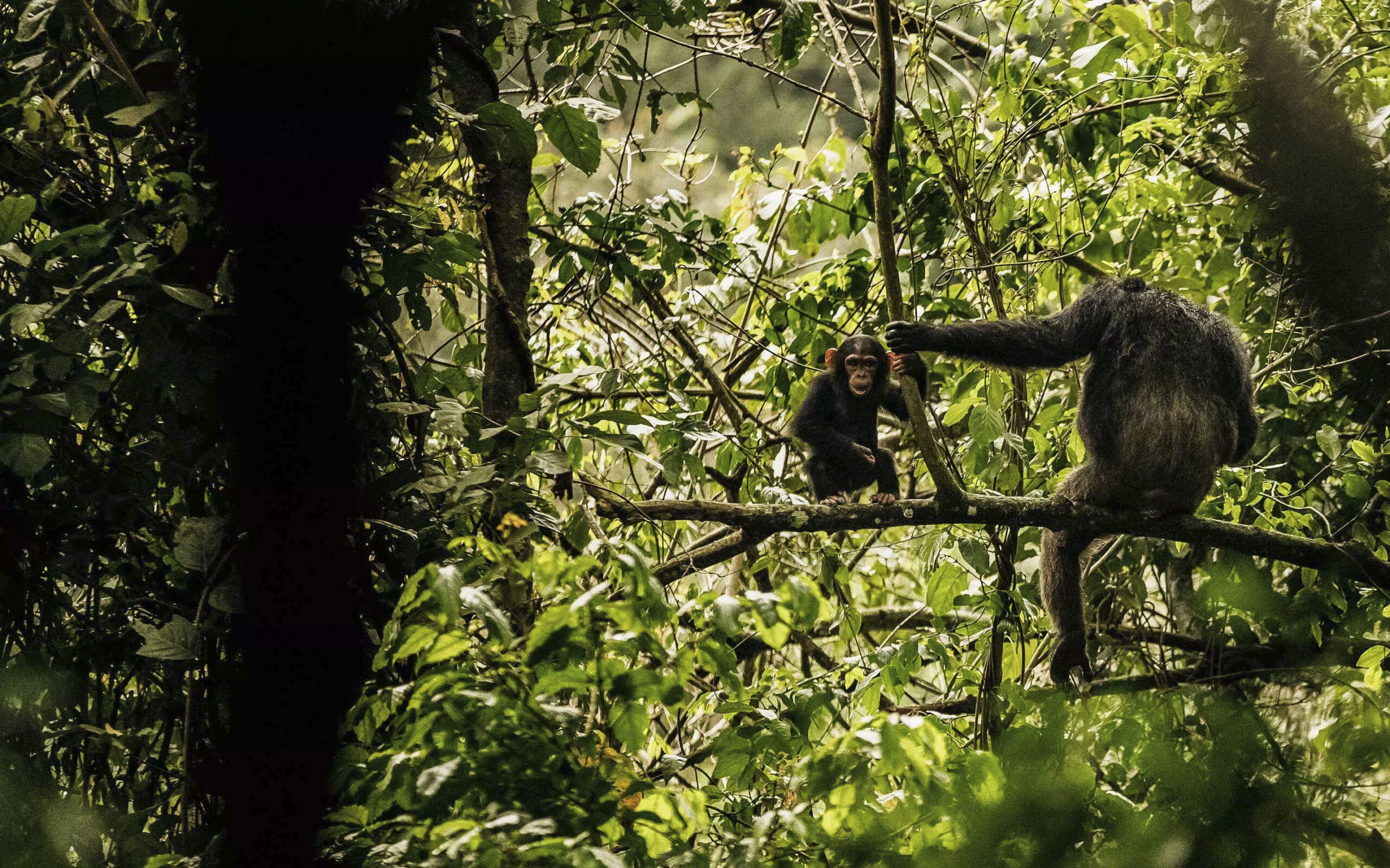
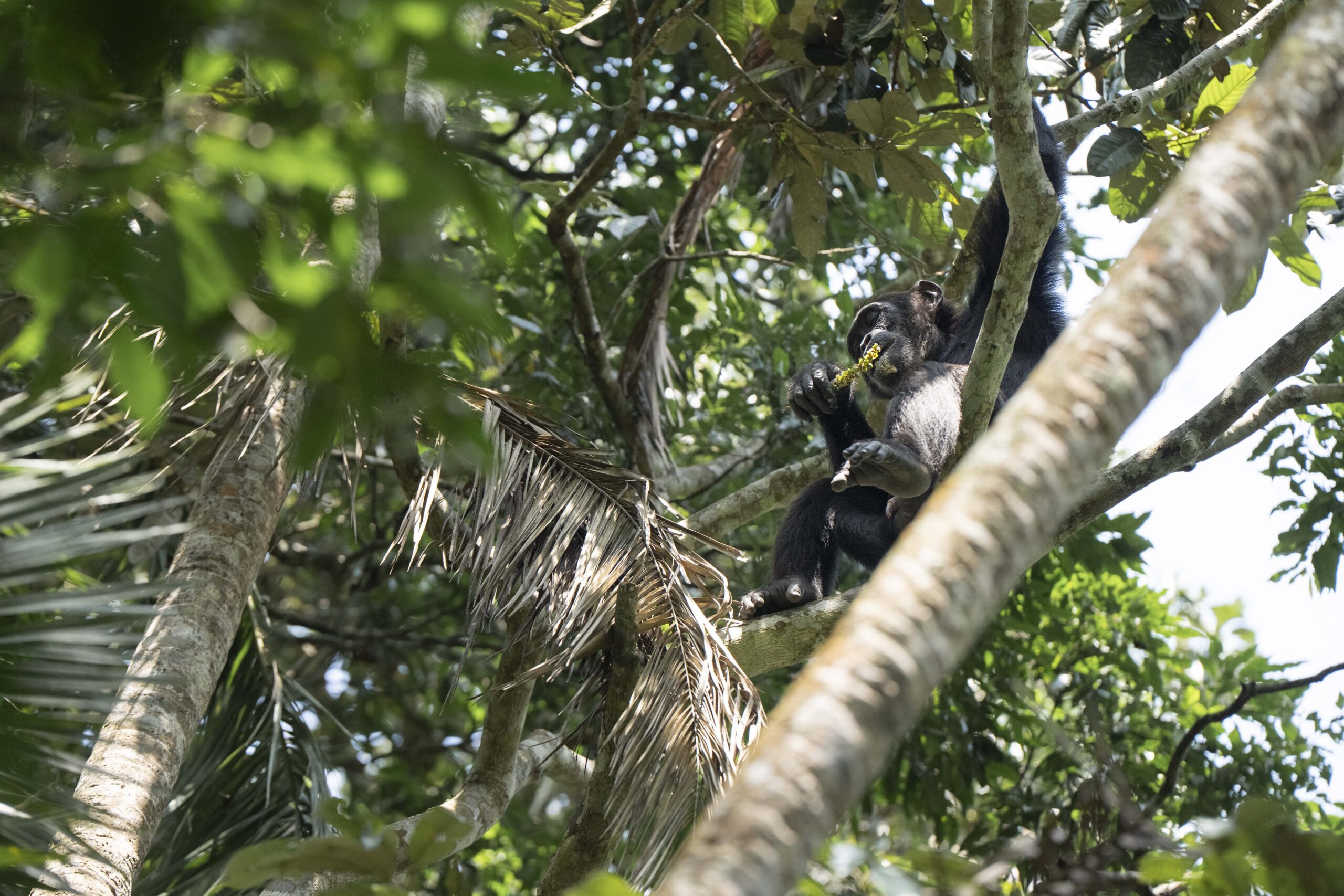
The chimpanzees are the other reason people come. Nyungwe is home to several hundred of them, tracked daily by expert guides through dense, often steep terrain that demands a kind of fitness most safari activities don’t require — and the reward, when a group is found, is an encounter considerably quieter and more contemplative than anything possible on the open plains. There is no vehicle to retreat to. Just the forest, the chimpanzees going about their business at a slight remove, and the particular vertigo of realising how closely we are related to creatures we’ve spent so little time actually watching.

By evening, back among the tea plantations with the forest a dark shape against the last light, it is tempting to think of Nyungwe as a destination defined by what surrounds it — Rwanda’s gorillas get the postcards, after all, and Nyungwe is often an afterthought even within its own country. But that gets the relationship backwards. The tea fields are the afterthought. The forest was here first, and it has simply allowed everything else to grow up around its edges, on borrowed time it never asked for and shows no particular sign of relinquishing.

The Green Dark – Kibale Forest Camp, Uganda

The great apes don’t know we’re coming — not really. The rangers and habituators do their best to prepare us, briefing us at the forest edge on what to expect, how to move, how to conduct ourselves in the presence of something that shares approximately 98.7% of our DNA. But when the moment actually arrives, when the canopy parts and a chimpanzee drops from a branch fifteen feet above your head and looks you directly in the eye, all the preparation in the world counts for very little. Nothing really readies you for that gaze.

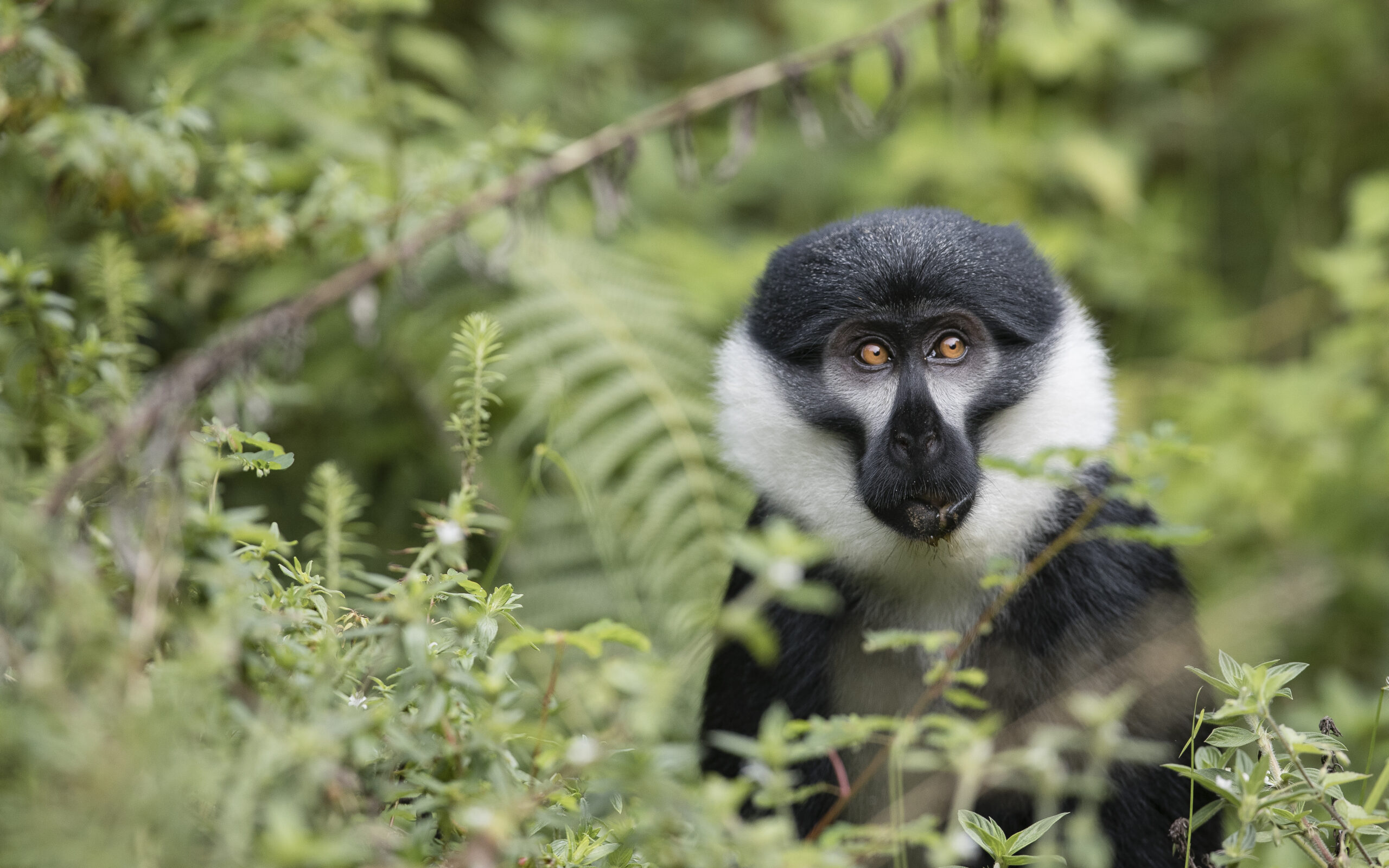
Kibale Forest, rising in the foothills of Uganda’s Rwenzori Mountains, is home to the highest concentration of primates on the African continent. Thirteen species move through its shade, from the red colobus to the L’Hoest’s monkey and the grey-cheeked mangabey, but it is the chimpanzee — around 1,500 of them — that draws people here from across the world. The experience of following them on foot through this forest, tracking their calls through cathedral-sized trees, pushing through the undergrowth, then emerging into a clearing where an entire community is eating and playing and arguing and grooming, is one of the most disorienting and quietly profound things it is possible to do anywhere on the continent.

Kibale Forest Camp sits at the forest’s edge, close enough to the park boundary that the night sounds drift in unrestricted: the barking of baboons, the percussion of something large moving through undergrowth too thick to see, the metallic chorus of insects that seems to intensify the moment the light fades. It is a camp that feels deliberately unimposing, which is as it should be. The forest is the reason for being here, and the camp is wise enough not to compete with it.

What surprises many first-time visitors to Kibale is how different this experience feels from the classic East African safari. There are no open plains and no game drives. Instead, there is shade and canopy and the smell of wet earth and the peculiar sensation of moving through a landscape on foot where you are emphatically not at the top of the food chain. It demands a different kind of attention — slower, lower, more instinctive. You stop not because something is in front of you, but because something may be above.

The one-hour rule — just a single hour per day, per group, in the presence of a chimpanzee community — is a reminder that what you are witnessing is a privilege, not an entitlement. Used well, sixty minutes is more than enough. The animals bicker and nurse their young and groom each other with a tenderness that is startling, and stare back at you with an intelligence that is unmistakable and faintly unsettling — then they are gone, back into the green dark of the forest.

The walk back to camp tends to be quiet. Not because there is nothing to say, but because most people find that whatever they might say feels inadequate to what they have just seen. There is a particular kind of silence that follows an encounter like this — the silence of a perspective that has been, without warning, very gently rearranged.

Kibale does that to people. Uganda, more often than not, tends to.


UNBEATABLE Gorilla Special for SADC Residents!

Rwanda has long been one of those places that sits just beyond easy reach.
This Iconic Africa Special changes that, opening up access to gorilla trekking for our SADC guests at rates up to 70% lower than usual — something that VERY rarely comes around.

There are certain trips that tend to live more in conversation than in reality.

Rwanda is one of them.

It comes up easily enough — over a glass of wine, around a dinner table, somewhere between “we should really go” and “one day.” The images are always the same: mist hanging low over forested slopes, the quiet anticipation of a trek, that first moment of eye contact with a gorilla in the undergrowth.

And then, just as quickly, the conversation moves on.

Not because the interest fades, but because the numbers tend to bring things back down to earth.

Gorilla trekking, for all its appeal, has always sat at the upper end of the safari spectrum. Permits priced in dollars, logistics to match — it’s the kind of experience that often gets postponed, rather than planned.

But every now and then, something shifts.

Set just outside Volcanoes National Park, Amarembo by Touch Down sits quietly on the edge of one of Africa’s most compelling wildlife experiences. There’s no overstatement to it. It’s comfortable, well-positioned, and close enough that early mornings don’t feel like a logistical exercise.

More importantly, it places you exactly where you need to be — at the start of a day that rarely unfolds the same way twice.

A gorilla trek isn’t something you can fully prepare for. There’s the briefing, of course, and the general outline of how things might go, but once you step into the forest, everything slows. The air shifts, the sounds change, and the sense of anticipation builds gradually rather than all at once.

You walk. You stop. You listen.

And then, at some point, you’re there.

It’s not dramatic in the way people expect. No sudden reveal, no orchestrated moment. Just a quiet realisation that you’re sharing space with something entirely self-contained. A silverback watching without concern. A younger gorilla moving through the foliage with a kind of casual confidence. The forest continuing around them as if nothing has changed — even though, for you, it has. Monumentally.

It’s an experience that tends to stay with people for reasons that are hard to put into words at the time.

Which is perhaps why it’s always been so sought after.

For travellers within the SADC region, the current Iconic Africa Special has secured rates at Amarembo in a way that makes the broader Rwanda experience significantly more accessible than it has been in the past.

A 3 day, 4 night stay including all meals, trekking permits (1 Gorilla, 1 Golden monkey), is now on sale for R49, 999! The offer is valid for travel until the 30 May, with strictly limited availability!

It’s not something being shouted about, and perhaps that’s why it feels as interesting as it does.

Because when a place like Rwanda — long considered just out of reach — suddenly becomes more than possible, and it changes the nature of the conversation entirely.

It moves from “one day” to “now”.

And those are often the trips that end up meaning the most!

Bisate Lodge – Volcanoes, Gorillas, and the Luxury of Doing It Properly

There are certain places that don’t feel like a destination so much as a pilgrimage. Bisate Lodge is one of them.

Perched on the edge of Rwanda’s Volcanoes National Park, Bisate looks out across misty slopes and ancient forest — the kind of landscape that makes you lower your voice without realising you’ve done it. It’s dramatic, moody, and intensely beautiful, and the lodge leans into that atmosphere with a sense of theatre and purpose.

The design is striking: thatched, nest-like villas tucked into the hillside, each one offering sweeping views of the volcanic peaks. It feels both futuristic and rooted — as if it belongs to another era, but also exactly here. Inside, everything is warm and tactile: rich textures, thoughtful details, and a sense of comfort that feels earned rather than flashy.

But Bisate isn’t only about aesthetics. It’s about intention.

This is luxury with a backbone — a lodge built with conservation at its core, deeply tied to reforestation and community impact. You feel it in the way the team speaks about the land, in the pride behind the experience, and in the sense that your presence here contributes to something that lasts beyond your stay.

And then there are the gorillas.

There is no truly adequate way to describe the moment you first see a mountain gorilla in the wild. It is humbling, electric, and oddly intimate — like being allowed into a world that has no need for you, yet tolerates your awe. The trek itself is part of the story: early mornings, boots and rain jackets, breath in your chest as you climb into the forest, and then… that moment.

Back at Bisate, the luxury lies in how well it holds you afterwards. A hot shower. A drink by the fire. A meal that feels restorative. It gives you space to process what you’ve just experienced, without rushing you into the next thing.

Bisate is for travellers who want their safari to mean something — not in a heavy, preachy way, but in a way that feels real. It’s extraordinary, not because it tries to impress you, but because it quietly does.

A mother and child, Titus Group, Bisate Lodge, Wilderness Safari, Rwanda

Iconic Africa Wins Again: Best Bespoke Luxury African Safari Specialists 2026

There are some things in life you don’t really chase. Not because they aren’t worth having, but because you know that if you do the work properly — quietly, consistently, obsessively — they tend to arrive on their own.

Awards are a bit like that.

So when Iconic Africa was named “Best Bespoke Luxury African Safari Specialists 2026” in LuxLife’s Annual Travel Awards, we didn’t immediately pop champagne and start practicing acceptance speeches in the mirror. We did what any travel-obsessed team would do: we smiled, took a breath, and then got back to building itineraries.

Because that’s the point.

This award isn’t just a pat on the back for having good taste in lodges (although, let’s be honest, that certainly helps). It’s recognition of something more meaningful: the art of getting it right for each guest, every single time. Not “right” in the sense of ticking boxes, but right in the way that matters — the right rhythm, the right feeling, the right level of adventure, the right amount of quiet.

At Iconic Africa, bespoke isn’t a buzzword. It’s a responsibility.

It’s knowing that two travellers can visit the same destination and walk away with completely different versions of Africa — one filled with big cat drama and early mornings, the other shaped by slow afternoons, beautiful food, and long, golden hours of nothing much at all. And it’s our job to build the safari that fits the person, not the trend.

After 11 years of crafting luxury journeys across the continent, we’ve learned that the real magic isn’t in the “wow moments” (although Africa has plenty of those). The magic is in the seamlessness — the way a trip feels effortless, even when it’s crossing borders, changing landscapes, and juggling flights that don’t always behave.

With teams based in both South Africa and the United States, we’re able to offer the best of both worlds: local expertise and global support, paired with an obsessive attention to detail and a love for the places we sell.

But perhaps what we’re proudest of is this: our guests come back. They return with friends, with family, with stories. That kind of loyalty can’t be bought, and it can’t be faked — it’s earned through trust, service, and the simple act of caring.

So yes, we’re honoured. And we’re grateful.

And then we’ll do what we always do: keep building the kind of safaris that feel like they were made for you — because they were.

Singita Kwitonda: Where the Path to the Gorillas Begins

Some journeys announce themselves loudly: roaring waterfalls, thundering hooves, sweeping plains. Others begin in a whisper — a curl of mist drifting across a volcanic slope, a soft crackle of bamboo, a quiet exhale in the forest as a mountain gorilla meets your gaze. Singita Kwitonda Lodge exists for that kind of journey: the kind that stays with you long after your boots are clean and your heartbeat has settled.

Built on the edge of Rwanda’s Volcanoes National Park, Kwitonda doesn’t feel placed in the landscape so much as grown from it. The lodge’s architecture — timber walkways, lava-stone walls, huge panes of glass framing the volcanoes — creates a feeling of being held inside the ecosystem rather than observing it. It’s soft-spoken luxury: fireplaces quietly glowing, deep sofas encouraging you to sink rather than sit, and staff who anticipate your needs with the gentleness of people who understand the emotional weight of a gorilla trek.

That trek is the axis on which every day turns. Mornings begin early with rich Rwandan coffee, boots waiting, gaiters neatly arranged, and a palpable sense of anticipation humming through the air. Guides brief you with the kind of calm, precise storytelling that turns nerves into excitement. And then you’re walking — into a forest that feels ancient, alive, and almost sentient.

The encounter itself is often described as moving, profound, transformative. What’s remarkable about Kwitonda is how it holds you after that experience. You return mud-splattered, wide-eyed, and slightly overwhelmed, and without a single forced word, the lodge creates space for reflection. A hot shower, a warm drink, the quiet crackle of a fire — these aren’t amenities; they’re invitations to process what just happened.

In the end, the true luxury of Kwitonda is its deep respect for the moment you’re here to have. It doesn’t compete with the gorillas. It doesn’t rush you past them. It simply builds a sanctuary around the most extraordinary hour you may ever spend in nature.

Mwiba Lodge: Where the Wild Moves Quietly Around You

There are lodges that place you in the bush, and then there are lodges that make you feel as though the bush has quietly rearranged itself to accommodate you. Mwiba Lodge, set on a private concession bordering the southern Serengeti, does exactly that. It’s a sanctuary of ancient granite boulders, desert-rose trees, and soft, effortless luxury — all suspended above a landscape where wildlife drifts past as naturally as weather.

Mwiba’s architecture is a masterclass in restraint. Timber decks stretch between giant boulders, suites float above the riverine canopy, and the interiors lean into earth tones that feel lifted from the soil itself. Nothing shouts. Nothing intrudes. It’s as if the designers asked the land for permission, and the land gave a gentle nod.

The concession is vast — 130,000 acres of rolling hills, rock outcrops, woodlands, and secret springs. This is the Serengeti without the rush, a private universe where lions pad through the acacia shadows, leopards slip between granite slabs, and elephants wander through the corridors of light that open at dawn. In season, migratory herds move across the reserve like shifting weather; even when the plains fall quiet, Mwiba’s year-round water sources pull life in from every direction.

Safari days here favour depth over speed. Walk with expert guides among ancient kopjes, sit quietly at natural springs as kudu and zebra approach, or follow the soft architecture of tracks along the sand. Drives feel unhurried, as though time itself has stretched to match the pace of the wilderness. And when you return to the lodge, there’s always a sense of calm waiting for you — cool stone, wide views, the hum of the breeze across your deck.

As night folds in, Mwiba becomes a symphony of small sounds: frogs in the riverbed, fire crackling softly, distant hyenas threading their laughter across the hills. Sundowners turn into lantern-lit dinners, and the sky spills more stars than seems mathematically reasonable.

Mwiba isn’t just a lodge; it’s a feeling — of space, of silence, of being held by a landscape older than memory. It’s the Serengeti softened, elevated, and distilled into something quietly magnificent.

Mara Nyika: a Camp That Whispers Rather Than Shouts

Some lodges announce themselves before you’ve even unzipped your bag. Brass fittings, oversized chandeliers, the kind of bath you could launch a canoe in. Mara Nyika is not one of those lodges.

Perched lightly among the flat-topped acacias of the Naboisho Conservancy, Nyika doesn’t so much dominate the landscape as blend into it, like a well-worn canvas jacket. You could walk past its guest tents without even realising you were skirting one of Kenya’s most refined safari outposts. And that’s very much the point.

Naboisho itself is part of the magic: a vast conservancy bordering the Maasai Mara National Reserve, but with far fewer vehicles, more privacy, and a fierce dedication to conservation. Lions patrol the savanna here with the same swagger you’ll see inside the Reserve proper, while cheetahs, giraffes, and elephants all make daily cameos. The difference is that you’re unlikely to be sharing the sighting with a convoy of Land Cruisers.

Mara Nyika leans into this ethos of understatement. The camp’s design is all flowing canvas, polished wood, and gentle curves that feel more like an extension of the trees than an intrusion. Step inside your suite and you’ll find the kind of detail that makes luxury feel effortless: a desk positioned to catch the morning light, copper accents that glow at dusk, a bathtub with a view that doesn’t require explanation.

But perhaps the greatest luxury is what you don’t see. No rush, no crowds, no clutter. Just space — for animals to roam, and for you to think, breathe, and reset. Evenings here are less about theatrical fanfare and more about quiet conversations around the fire, punctuated by a distant hyena call or the shuffle of elephant feet through the grass.

For those who like their safaris with a little narrative arc, Nyika also serves as a gateway. It connects seamlessly with Great Plains’ other Mara properties, so you can trace your own journey across the ecosystem, following the migration if the timing’s right.

Still, you may find yourself reluctant to move on. Mara Nyika is one of those rare places where the definition of luxury isn’t excess, but restraint. Where the whisper carries further than the shout.


Lemala Osonjoi: Ngorongoro Reimagined

The Ngorongoro Conservation Area is one of Africa’s most iconic and unique wildlife havens. This extinct volcano crater in Tanzania boasts an incredible profusion of wildlife, with its ancient volcanic soils providing the nourishment that brings in the herbivores, which in turn attract the predators like lions, leopards and hyenas.
Some of the most densely-packed game viewing on the continent is to be found on the crater floor!

Scheduled to open in 2025, Lemala Osonjoi Lodge is the latest addition to the Lemala portfolio and being conveniently located close to the Lemala Gate of Ngorongoro, provides a more gradual access road with game viewing en route.

The eastern quadrant of the Crater sees fewer visitors than the west, especially first thing in the morning and last thing in the afternoon – those critical hours when game viewing is at its best.

Lemala Osonjoi stands to offer guests unparalleled access to the world’s largest intact volcanic caldera that is Ngorongoro.

Positioned just back from the crater rim, Lemala Osonjoi is ideally located for early morning and late afternoon game drives, allowing guests to enjoy the environment without the crowds. The quicker descent to the crater floor is perfect for early risers or photographers in search of ideal light conditions. In just 10 to 15 minutes, you can be in and amongst the abundant wildlife that roams here.
For those seeking adventure beyond game drives, guided nature walks along the crater rim and through the nearby forests are available, led by an expert ranger and a Maasai guide team who will share their deep knowledge of the land.

After a thrilling day on safari, return to the comforts of Lemala Osonjoi’s luxurious suites.
With twenty spacious accommodations, including two-bedroom suites ideal for families or groups, each room is designed to blend elegance with comfort.
Picture windows allow the highland light to flood into the suites, offering guests breathtaking views of the surrounding forests. In cooler evenings, cozy up by the wood stove, wrapped in a winter-weight duvet, or indulge in the warmth of hot water bottles.


En suite bathrooms feature double vanities, walk-in showers, and even outdoor bathing options, creating a spa-like experience in the wilderness. The lodge also boasts an indoor heated swimming pool and a dedicated spa suite where guests can unwind with treatments from expert therapists.

Osonjoi’s Best Points:

  • Its proximity to the quiet eastern access road to Ngorongoro means fewer crowds and better game viewing during peak wildlife hours. What’s more, one of the lodge’s most unique offerings is a full day catered safari lunch on the crater floor, a rare privilege in this protected area.
  • From the spacious, beautifully designed suites to the spa and heated pool, Osonjoi offers the perfect blend of wilderness and luxury.
  • Whether it’s the early morning game drives or the guided walks with Maasai guides, guests are guaranteed unforgettable encounters with Africa’s most iconic wildlife.

Wilderness Magashi: Thrilling Rwanda

Witness the abundance of Akagera National Park from Wilderness Magashi.
Akagera is Central Africa’s largest protected wetland and the last remaining refuge for savannah-adapted species in Rwanda. Home once more to an abundance of apex predators and their prey after highly successful reintroduction efforts, the park is again a place where one can marvel at lion, white and black rhino, buffalo and elephant roaming its hills and savannahs.

Wilderness Magashi provides the quintessential East African safari adventure and the perfect complement to your gorilla trekking experience in Rwanda.

The eight spacious tents of the lodge are perched on the shores of Lake Rwanyakazinga. You can watch elephants submerge themselves in the lake’s still waters from the deck of your room, while you are experiencing a wonderful sense of intimacy as the next tent is far enough away that you hardly know that it is there. All the rooms are linked by a raised boardwalk which runs to the main area, where you will find a luxury lounge, the dining space and bar, a swimming pool and an expansive viewing deck that takes in further sweeping views of the lake. The fire pit provides the perfect setting to enjoy a chilled cocktail after sunset.

The camp is the only exclusive-use area in Akagera, which means guests are the only ones who will be on game drives and wildlife viewing activities in the area. Rhinos, giraffes and lions roam the seemingly endless savannah. The elusive sitatunga skulks in the reedbeds, watching as you try your hand at catch-and-release fishing. Leopards sightings here are very much on the rise, thanks to a sensitive and consistent effort by trackers and guides alike to habituate the spotted cats.

It is the way this camp is integrated into its surroundings that makes it so special. Influences of Rwandan culture are balanced with the wilderness that surrounds. There are no fences, so the wildlife is uninterrupted, making their home a shared space with the camp.

Private. Peaceful. Participatory; these are the overwhelming feelings you get from your stay here. Akagera National Park is a story of survival and regeneration, and now Wilderness Magashi is very much a part of that story too…

You don’t have to journey to another country to add safari to your Gorilla trekking (which is one of Rwanda’s main drawcards). Akagera National Park and Magashi are only a short distance from Kigali, the capital. It’s 100km kilometres by road to the park entrance or a short flight.

Get in touch with us through info@iconicafrica.com to chat about Magashi, Akagera, Gorillas, Rwanda in general, or whatever type of safari you may be interested in…

Mara Plains: Big Cat Heaven

SPECIAL OFFER

Enjoy some extra time at Mara Plains Camp free of charge! You will get one night for free when booking a three night safari at Mara Plains. This special offer is applicable for new bookings for arrivals between 11 January and 14 June 2025, and between 1 November and 19 December 2025. This special offer may not be combined with any other special offers.

Mara Plains Camp is a one-of-a-kind luxury Kenya safari camp. Located in the private 13,300-hectare Olare Motorogi Conservancy, just on the Maasai Mara National Reserve’s northern boundary, you are immersed in one of the most iconic wildlife destinations on the planet.

The community-owned conservancies set a new standard for game viewing on the world-famous East African grasslands. Vehicle regulations mean far more intimate sightings, and you are not surrounded by throngs of day visitors as you might be in other parts of the ecosystem. This part of the world offers some of the best big cat viewing we have ever experienced.

Mara Plains Camp is ideal for those seeking a luxury Kenya safari, as this intimate Great Plains Conservation Réserve-Collection safari camp offers you the finest in wildlife viewing paired with the absolute best in safari hospitality and wildlife guiding.

The Olare Motorogi Conservancy hugs the northern border of the Masai Mara National Reserve and is known for its high concentration of wildlife and for the fact it only allows five safari camps to operate within its borders. Mara Pains camp lies hidden among the lush green forested banks of the Ntiakitiak River. This tiny camp in the wild is unforgettably luxurious and inviting. It allows its guests to get remarkably close to nature without sacrificing comfort.

Staying at one of the Masai Mara conservancies has countless benefits, not just to you the safari traveller… but also to the local Maasai community, the lands and local wildlife. The arrival of each safari travel, which is limited to a small number at any given time, contributes to programs benefiting the Maasai people. It also contributes to the conservation of the area and to the employment of Maasai staff, guides and trackers. By staying at Mara Plains Camp you are in fact helping to better the lives of the Maasai who have lived on these lands for generations and contributing to the conservation of the lands and the wildlife roaming them.

Mara Plains Camp is a member of Great Plain Conservation. This initiative is dedicated to protecting endangered species and supports Kenyan initiatives such as the Maasai Olympics. Great Plains Conservation also supports conservation education by investing in kids’ camps and supports local female-owned businesses through sale of their handiwork in the camp’s bush boutique. The conservation program has also planted more than 2000 trees in the Masai Mara. This was done in an effort to help regenerate the ecosystem and bring back indigenous trees to the Mara Landscape

As you near the camp you will see the first safari tents appear amidst a thick forest along the Ntiakitiak Riverbend. After crossing a bridge across the river and climbing a few broad steps, you’ll look out over an endless horizon speckled by flat-topped acacia. The camp’s décor and design pay homage to the look and feel of Eastern Africa. A touch of Swahili heritage can be found in the lodge’s large wooden doors originally from the island of Lamu. There are also occasional splashes of red in the décor which are reminiscent of the great Maasai chiefs and warriors. The rich leathers, brass and copper used in the campaign-style furniture give the camp a very lavish, yet warm and comfortable atmosphere. During your stay you’ll be treated to delicious home-cooked cuisine, lovely fine wines and tasty cocktails. The camp is made up of a total of seven safari tents and can accommodate a maximum of up to fourteen guests at any given time.

Each of the seven traditional safari-style tents are raised on decks and feature marquis ceilings. Their muted tones make them blend into the countryside beautifully and each tent enjoys sweeping views of the savanna in the distance. The safari tents feature a comfortable king-sized bed or two twin beds, a sitting area, rough hewn wood floors, thick Lamu wood doors, en-suite bathrooms with lovely deep copper freestanding tubs and walk-in showers, a writing desk, safe and complimentary WiFi. You will also find one pair of Swarovski HD binoculars and a professional Canon camera body and lens kit for complimentary use. Families with children 6 years and older are also welcome at the camp and are welcome in the designated family suite. These tented suites feature two bedrooms, one with a king-sized bed and the other with a twin bed. The family suites have a common lounge area and a private verandah overlooking the savannah.


Activities at Mara Plains Camp

Mara Plains Camp has a very comprehensive set of activities for you to choose from during your stay. For starters, every safari drive (during prime sunrise and sunset hours) or bush walk will be a memorable one thanks to the camp’s professional Maasai guides that will be there to accompany you. The camp will also offer you the opportunity to enjoy lovely gourmet bush breakfasts or lunch in a scenic location in the wild to make your day extra special. Thanks to the wide variety of bird species in the area (over 300!), you’ll also have plenty of opportunity for birdwatching either during a bush walk or while relaxing at camp. Another great way to relax when back at camp is to enjoy one of the camp spa’s relaxing massages. To get a taste of local culture and traditions you’ll have an opportunity to meet the Maasai during a visit to a local manyatta (Maasai village). For a very high-flying safari adventure you can also choose to go on a hot-air balloon safari flight at an extra cost.


Mara Plains Camp stay 4 pay 3 special offer


Entara: Tanzania Like You’ve Never Seen it Before

We’ll be going a little deeper into each offering in the Entara portfolio – one of our new favourites – in the coming months, but for now we’ll simply present a brief overview of what to expect from one of Tanzania’s most underrated safari offerings.
In terms of exceeding expectations, Entara does it in spades…

The group was formed by a group of like-minded souls that found a common ground.

Artists and safari guides, hoteliers, chefs and entrepreneurs – an eclectic tribe bound together by bonds of deep passion and commitment to Africa’s wilderness and its people. They learned through years of hands-on safari operation that the safari experience means nothing without that unbridled and raw connection to wildlife and wilderness. The soul of the safari experience can’t be conveyed through fancy décor and glass sealed rooms. It lives through a sense of adventure and a rekindled sense of wonder, through shared experiences and new friendships. The whole team endeavours to convey this sense of wonder, passion and deep connection to wilderness and wildlife.

Their five intimate lodges and camps are settled within the natural wonders of each region without sacrificing comfort and service.

The elegant Katambuga House with lush gardens and a pool in Arusha is an oasis of tropical tranquility and a destination in its own right.

Not every flight into or out of Tanzania is at a convenient time to connect to the safari landscape; sometimes an overnight just to get your feet on the ground or decompress before heading home is necessary, and Katmbuga House, only a few minutes drive from Arusha airport, fills this role wonderfully. Simple and intimate, it is the perfect jump-off point for safari, only a few hours drive from Ngorongoro, Tarangire National Park and some of the Rift Valley Lakes…

Olmara Camp, home of the cheetah and a wildlife photography dream location, is in the remote Ngare Nayuki River Valley and provides a base of luxury tented suites that merge seamlessly into the environment of acacia groves, grasslands and rocky outcrops.

Some of the best big cat viewing to be found in the world is right here, as the short-grass plains provide perfect hunting conditions, and rocky outcrops are a photographers dream, providing wonderful vantage points for predators to perch atop of.
Being a more remote concession, this camp affords guests an exclusivity to sightings that is hard to come by anywhere else in the Serengeti.

Kisima Ngeda Camp, nestled in a fever tree forest with its palm-thatched tents, offers a further wilderness adventure through the overnight Ombako Private Fly Camp that is set up on the eastern shore of Lake Eyasi for a night under the stars.

This camp provides a remarkable opportunity for a cultural deep-dive, as from the fly camp one can join local tribesmen on a traditional hunting expedition. The Hadza are one of the only tribes on earth that still pursue a hunter/gatherer lifestyle, and Kisima Ngeda offers guests a rare window into their world.

The Esirai Camp is luxuriously light and moves alongside the grazing Wildebeest as they make their epic 600km crossing of the vast Serengeti plains, offering an unrivalled African safari adventure.

The camp shifts between northern and southern locations depending on the season, with the southern camp allowing guests access to the wildebeest calving towards the Ndut Plains area, and the northern camp presenting the opportunity to see one of the famed crossings of the Mara River.

Finally, Olkeri Camp is home to great Elephant herds, and replete with views of woodlands, rocky hills, and shaded by gnarled old-growth Baobab and Acacia, offering the ultimate freedom to explore day and night.

This elegantly simple camp is set in the Randalin Wildlife Conservancy, contiguous with the Tarangire National Park. Predators abound here and the birdlife is sensational. Enjoy bush-walks from the camp or an evening sipping cockktails under one of the hundreds of  baoba trees that dot the landscape.

The protection of African wildlife and their habitat is at the core of Entara Lodge’s ethos and operations. The camps and lodges are to be found in some of the most bio-diverse areas on the African continent and Entara recognises the importance and sensitivity that goes with this custodianship within the regions.

Get in touch with us through info@iconicafrica.com to find out more about Entara and the diversity of experiences they offer…