The Green Dark – Kibale Forest Camp, Uganda

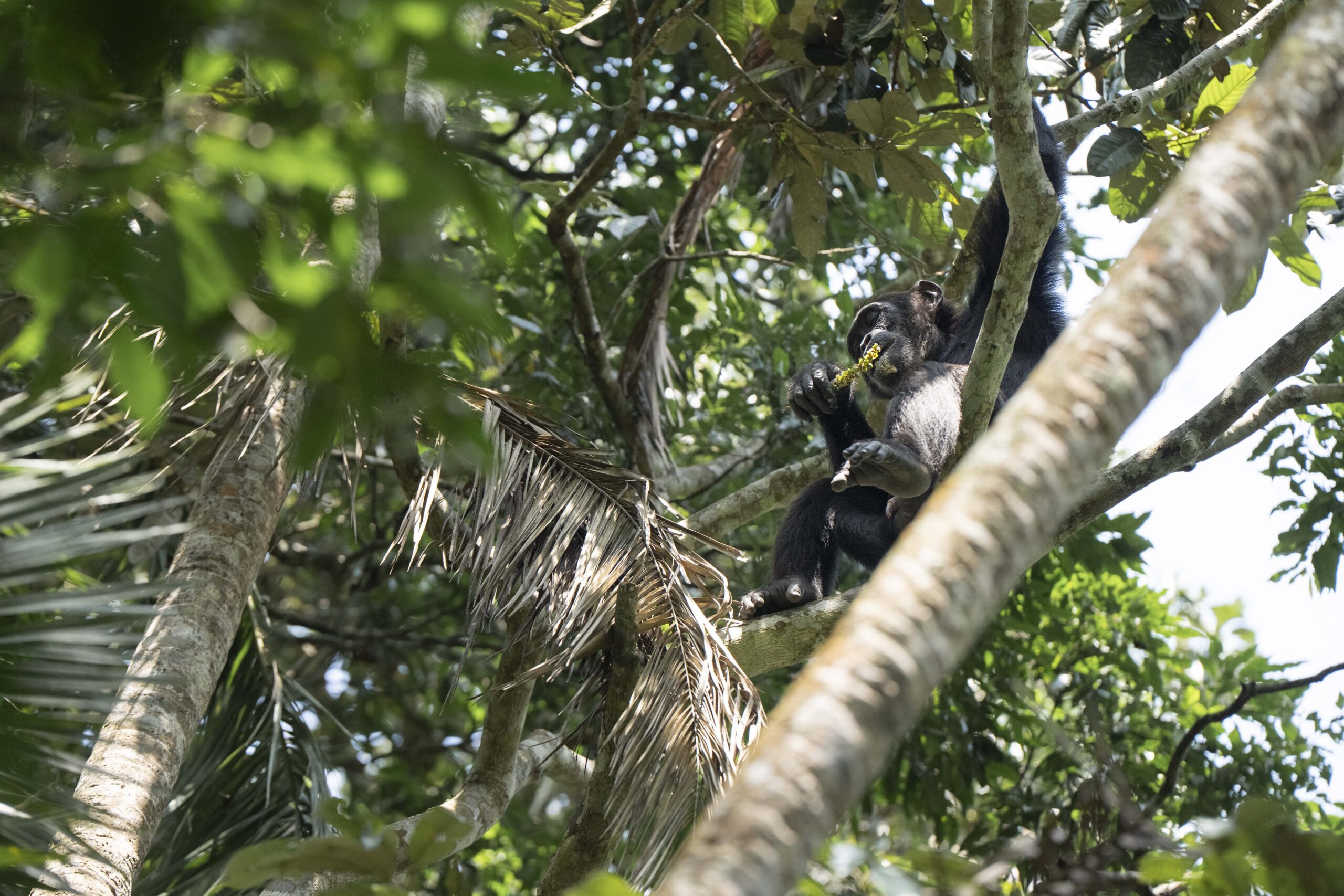
The great apes don’t know we’re coming — not really. The rangers and habituators do their best to prepare us, briefing us at the forest edge on what to expect, how to move, how to conduct ourselves in the presence of something that shares approximately 98.7% of our DNA. But when the moment actually arrives, when the canopy parts and a chimpanzee drops from a branch fifteen feet above your head and looks you directly in the eye, all the preparation in the world counts for very little. Nothing really readies you for that gaze.

Kibale Forest, rising in the foothills of Uganda’s Rwenzori Mountains, is home to the highest concentration of primates on the African continent. Thirteen species move through its shade, from the red colobus to the L’Hoest’s monkey and the grey-cheeked mangabey, but it is the chimpanzee — around 1,500 of them — that draws people here from across the world. The experience of following them on foot through this forest, tracking their calls through cathedral-sized trees, pushing through the undergrowth, then emerging into a clearing where an entire community is eating and playing and arguing and grooming, is one of the most disorienting and quietly profound things it is possible to do anywhere on the continent.
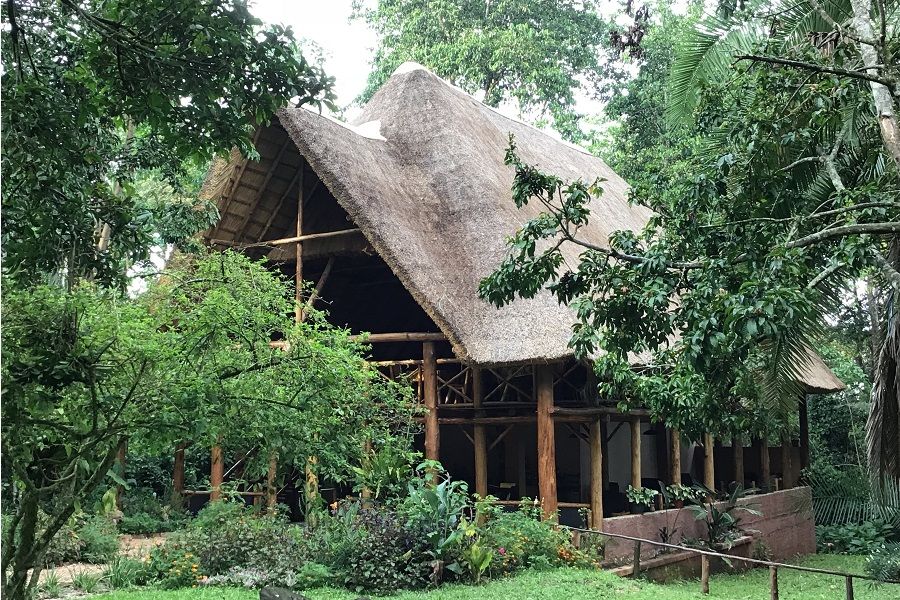
Kibale Forest Camp sits at the forest’s edge, close enough to the park boundary that the night sounds drift in unrestricted: the barking of baboons, the percussion of something large moving through undergrowth too thick to see, the metallic chorus of insects that seems to intensify the moment the light fades. It is a camp that feels deliberately unimposing, which is as it should be. The forest is the reason for being here, and the camp is wise enough not to compete with it.
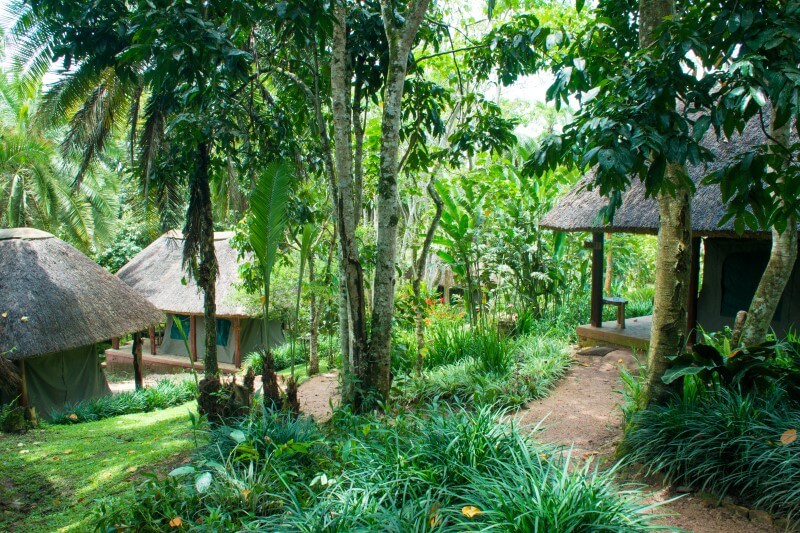
What surprises many first-time visitors to Kibale is how different this experience feels from the classic East African safari. There are no open plains and no game drives. Instead, there is shade and canopy and the smell of wet earth and the peculiar sensation of moving through a landscape on foot where you are emphatically not at the top of the food chain. It demands a different kind of attention — slower, lower, more instinctive. You stop not because something is in front of you, but because something may be above.
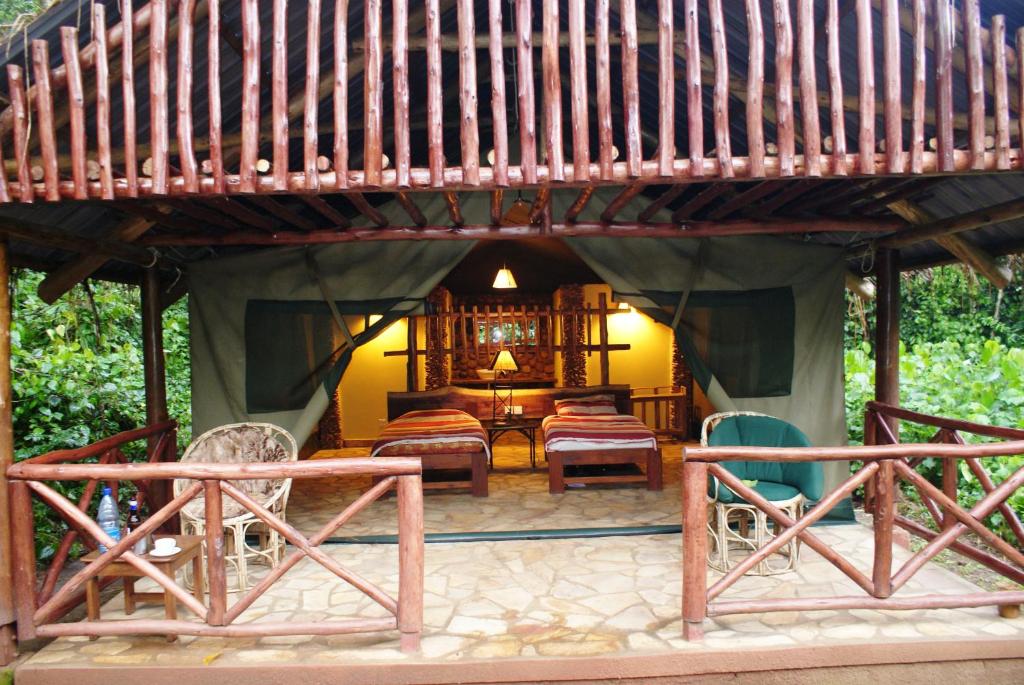
The one-hour rule — just a single hour per day, per group, in the presence of a chimpanzee community — is a reminder that what you are witnessing is a privilege, not an entitlement. Used well, sixty minutes is more than enough. The animals bicker and nurse their young and groom each other with a tenderness that is startling, and stare back at you with an intelligence that is unmistakable and faintly unsettling — then they are gone, back into the green dark of the forest.
The walk back to camp tends to be quiet. Not because there is nothing to say, but because most people find that whatever they might say feels inadequate to what they have just seen. There is a particular kind of silence that follows an encounter like this — the silence of a perspective that has been, without warning, very gently rearranged.

Kibale does that to people. Uganda, more often than not, tends to.


Bisate Lodge – Volcanoes, Gorillas, and the Luxury of Doing It Properly

There are certain places that don’t feel like a destination so much as a pilgrimage. Bisate Lodge is one of them.

Perched on the edge of Rwanda’s Volcanoes National Park, Bisate looks out across misty slopes and ancient forest — the kind of landscape that makes you lower your voice without realising you’ve done it. It’s dramatic, moody, and intensely beautiful, and the lodge leans into that atmosphere with a sense of theatre and purpose.

The design is striking: thatched, nest-like villas tucked into the hillside, each one offering sweeping views of the volcanic peaks. It feels both futuristic and rooted — as if it belongs to another era, but also exactly here. Inside, everything is warm and tactile: rich textures, thoughtful details, and a sense of comfort that feels earned rather than flashy.

But Bisate isn’t only about aesthetics. It’s about intention.

This is luxury with a backbone — a lodge built with conservation at its core, deeply tied to reforestation and community impact. You feel it in the way the team speaks about the land, in the pride behind the experience, and in the sense that your presence here contributes to something that lasts beyond your stay.

And then there are the gorillas.

There is no truly adequate way to describe the moment you first see a mountain gorilla in the wild. It is humbling, electric, and oddly intimate — like being allowed into a world that has no need for you, yet tolerates your awe. The trek itself is part of the story: early mornings, boots and rain jackets, breath in your chest as you climb into the forest, and then… that moment.

Back at Bisate, the luxury lies in how well it holds you afterwards. A hot shower. A drink by the fire. A meal that feels restorative. It gives you space to process what you’ve just experienced, without rushing you into the next thing.

Bisate is for travellers who want their safari to mean something — not in a heavy, preachy way, but in a way that feels real. It’s extraordinary, not because it tries to impress you, but because it quietly does.

A mother and child, Titus Group, Bisate Lodge, Wilderness Safari, Rwanda

Erebero Hills – The Best of Bwindi

The considered design of Erebero Hills – meaning “a place where you can see far” – takes creative inspiration from the surrounding landscape of rolling hills. Sweeping views across the forest will be on offer from all guest suites, or from the hillside swimming pool on warm afternoons. Combining sustainable luxury with the thrill of observing one of the world’s most endangered species in their natural habitat, Erebero Hills will provide a unique and rewarding safari experience.

Located on the northern edge of the Bwindi Impenetrable Forest, Erebero Hills holds an enviable position offering both privacy and convenient access to a preferred gorilla trekking location.

An AMAZING SPECIAL OFFER is currently on the go; due to high demand, Asilia are extending their exclusive opening special to offer ONE FREE GORILLA PERMIT PER PERSON for all new bookings confirmed by 28th February 2025.

Book now, and be one of the first to stay in what will likely prove to be a groundbreaking new lodge in this discreet corner of Uganda.

Driving an ambitious reforestation project, Asilia aims to create a forest buffer zone within the 45 acres surrounding the lodge. A long-term project, this will eventually deliver an accessible forest for the Batwa people who are no longer allowed in Bwindi Impenetrable Forest, and will create sustainable livelihood opportunities for local communities both now during the planting phase, and for many years to come.

Imagine yourself in a rare moment, crouched on the forest floor, respectfully avoiding eye contact while observing some of the last remaining eastern and mountain gorillas up close.

These majestic creatures are found only in three countries – Rwanda, Uganda, and the Democratic Republic of the Congo – and live in four national parks, including Bwindi Impenetrable National Park, Mgahinga Gorilla National Park, Volcanoes National Park, and Virunga National Park. Asilia’s gorilla trekking tours offer an exclusive opportunity, a privilege, to witness them in their natural habitat.

Erebero Hills is set to provide the service and attention to detail that Asilia is well-renowned for, alongside a meaningful and empowering positive impact commitment.

Eight forest-view suites tucked into the hillside – each with a private viewing deck and uninterrupted views of the forest across the valley – have been designed for style and luxury. The spacious, glass fronted interiors are filled with natural light, with a king-sized bed and both indoor and outdoor seating options designed to maximise the expansive views. A boot-room at the entrance to each suite offers a thoughtful design element, while the en suite bathroom applies the finishing touches with a free-standing bathtub and both an indoor and outdoor shower, all with breathtaking views of the forest. The main lounge and swimming pool offer additional areas for relaxation, while spa treatments can be enjoyed in-room to ease tired muscles.

In addition to housing more than half the world’s remaining population of mountain gorilla, Bwindi Impenetrable Forest plays home to staggeringly rich array of biodiversity. Over 350 species of bird, more than 200 species of butterfly, and more than 100 mammal species, of which 10 are primates. With convenient flights from Kenya, Erebero Hills combines easily with Asilia’s Kenya portfolio, allowing for an incredible East Africa adventure.

Gorillas live in family groups led by a dominant silverback male and are majestic, highly intelligent, and social creatures. They communicate through a repertoire of up to 25 distinct sounds. They share strong family bonds and are known to create and use tools. It’s fascinating to see them building nests on the ground or in trees using branches and leaves, which they use both during the day and at night. Sadly, they are critically endangered, according to the IUCN Red List. 

If you would like to be one of the vanguard to stay in what may prove to be Asilia’s flagship lodge, we’d just like to remind you about the special offer, with a free gorilla trekking permit for every booking confirmed before 28th February. That amounts to a saving of $600 per person.

Get in touch through info@iconicafrica.com to enquire…