Mwiba Lodge — Tanzania’s Best Kept Secret

There’s a particular kind of satisfaction that comes from knowing about a place most people don’t. Mwiba Lodge, tucked into a private wildlife reserve on the southern border of the Serengeti, is that place. Ten tented suites, 130,000 acres, and no other camps anywhere near it. If exclusivity is something safari operators throw around loosely, Mwiba earns the word.
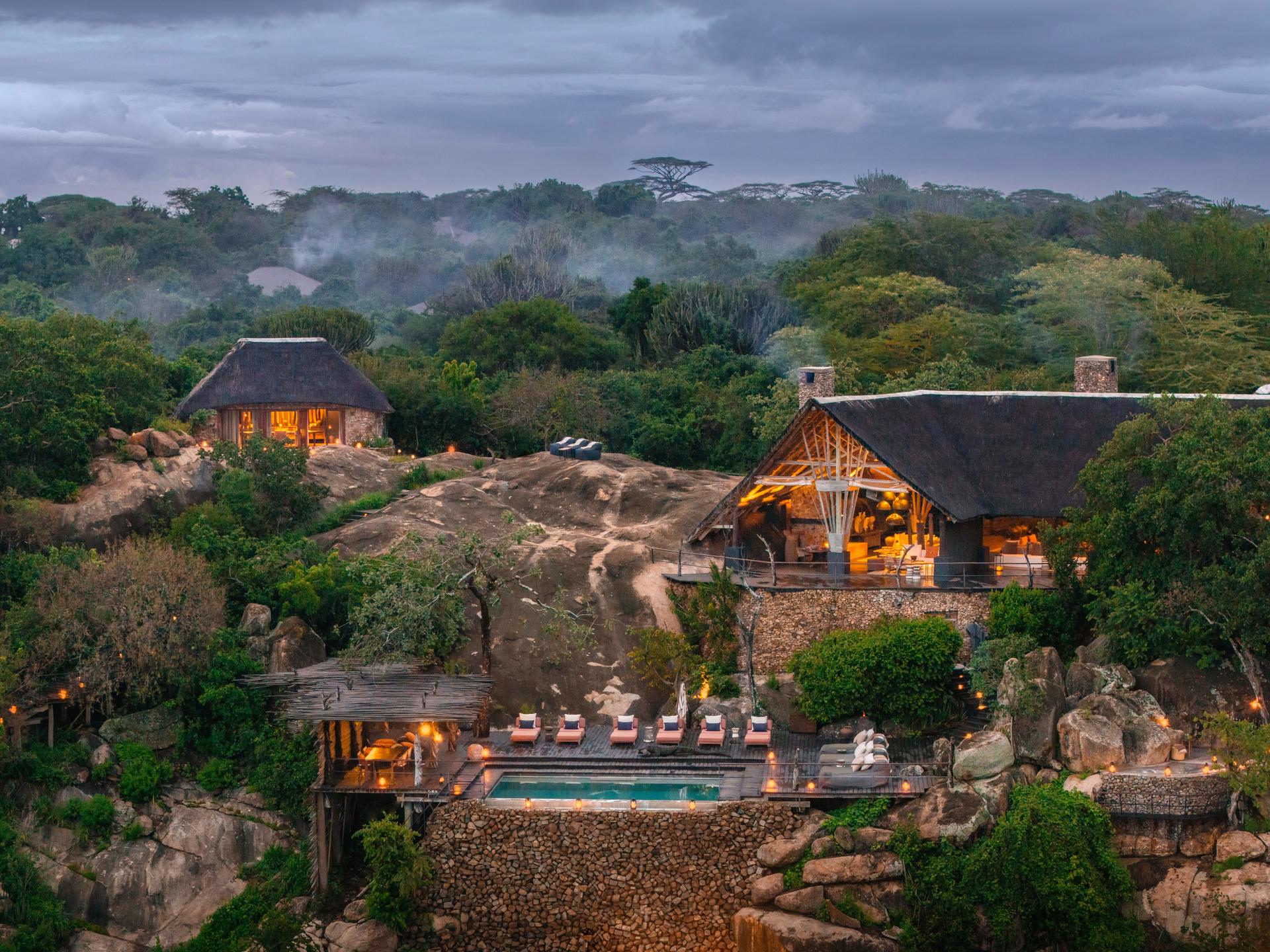
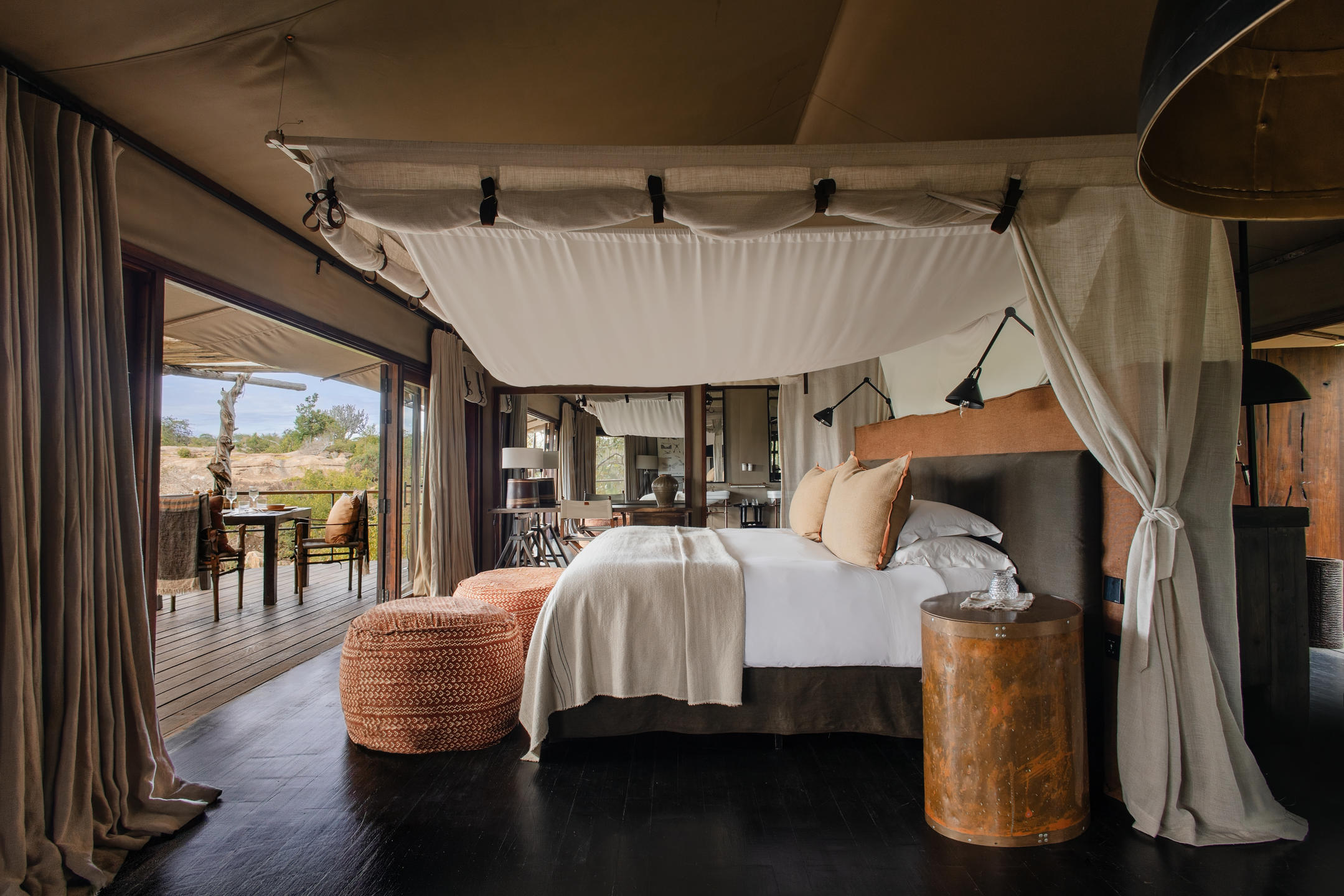
The lodge itself sits perched on granite boulders above the Arugusinyai River gorge, connected by winding wooden walkways that feel like they grew out of the landscape rather than were built on top of it. The suites are generous without being showy — expansive decks, soaking tubs positioned to face the bush, outdoor showers, the kind of beds you need a moment to commit to leaving. The design lets the setting do the talking, which is a smart call given the setting.

But what really separates Mwiba from the crowded northern circuit isn’t the hardware. It’s the freedom. Every guest gets their own private guide and vehicle. There are no set schedules, no convoy of Land Cruisers jostling for position at a kill. You go where you want, when you want, for as long as you want. For anyone who’s spent time trying to enjoy a leopard sighting with six other vehicles parked around it, that matters more than it sounds.
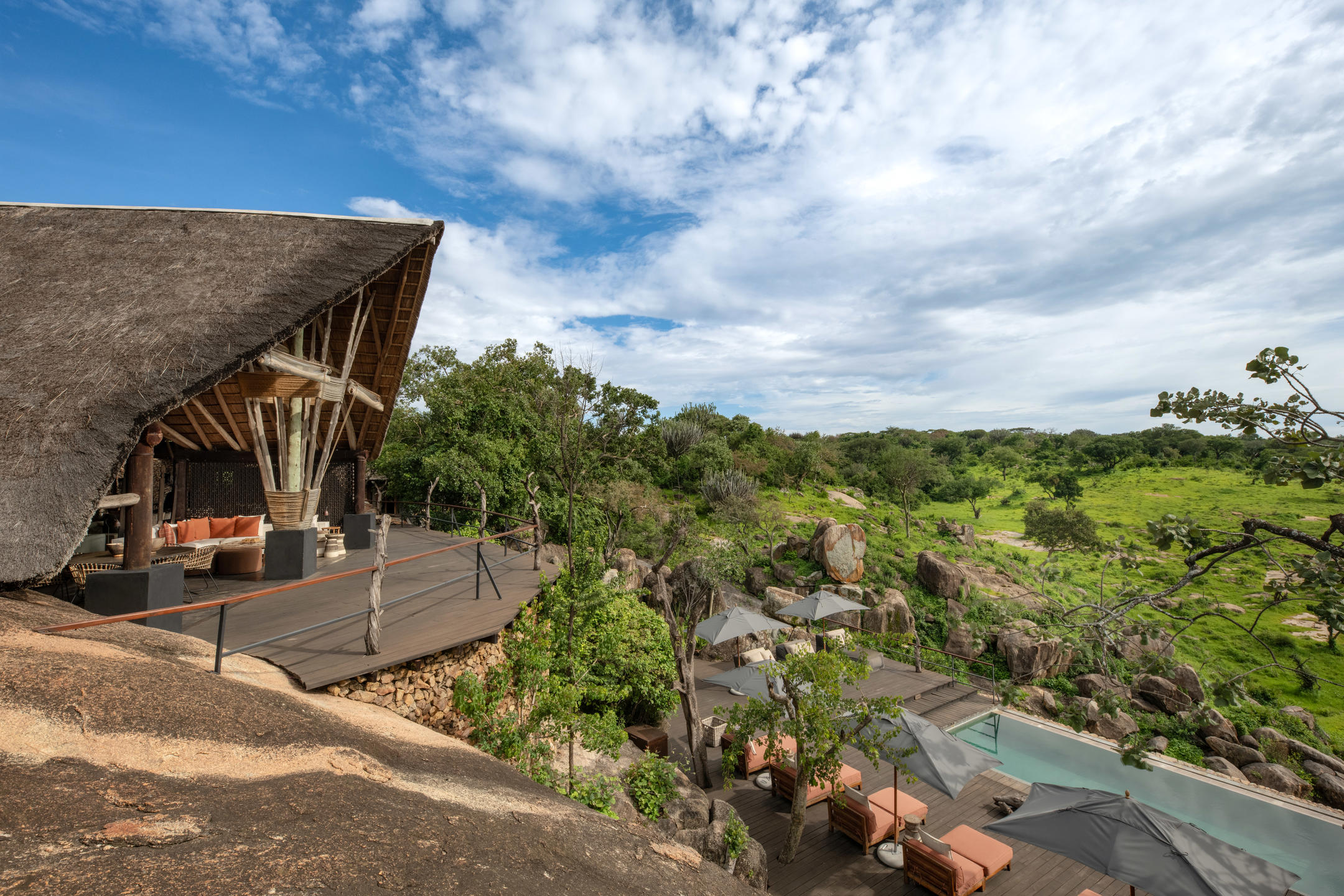
The wildlife corridor here connects the southern Serengeti to Lake Manyara and the Ngorongoro highlands, which means the diversity of what you’ll encounter is genuinely surprising. Elephant, lion, cheetah, wild dog — all on a reserve where the only tyre tracks in the road are probably yours.

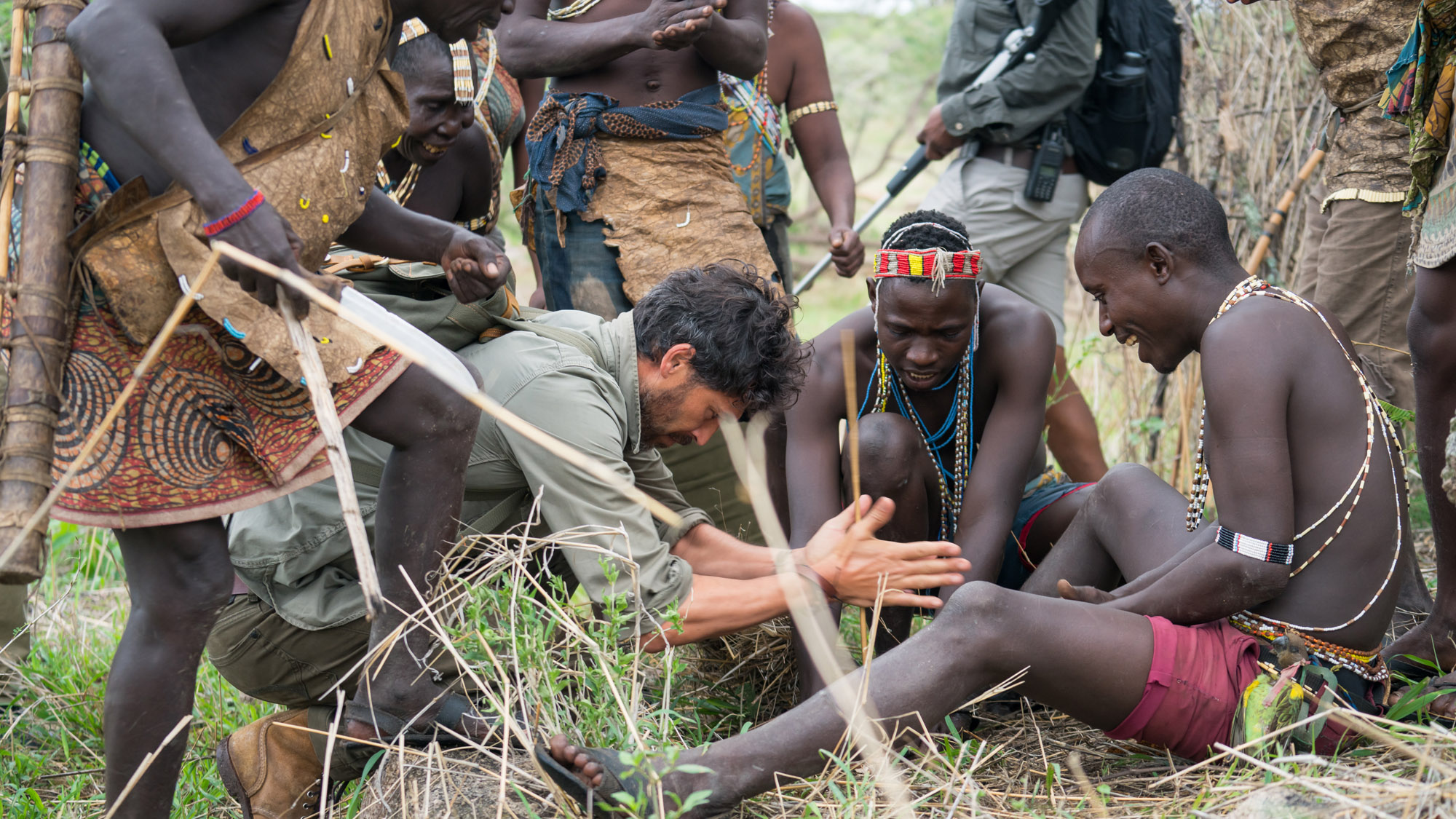
Then there’s the Hadzabe. One of the last remaining hunter-gatherer tribes in Africa, they’ve lived around Lake Eyasi — a short helicopter flight from the lodge — for tens of thousands of years. A morning spent with them, watching them hunt with handmade bows in the acacia scrub, has a way of quietly rearranging your priorities. It’s not a performance put on for tourists. It’s a way of life that has remained largely unchanged, and being invited into it, even briefly, is a privilege worth the journey alone.
The helicopter deserves its own mention. Mwiba is the only lodge in Tanzania with a permanent helicopter on site, which opens up a level of exploration most safari-goers never access — flights over the Serengeti plains, down into the Rift Valley, across to Lake Eyasi. It turns an already exceptional stay into something that feels almost unreasonably good.
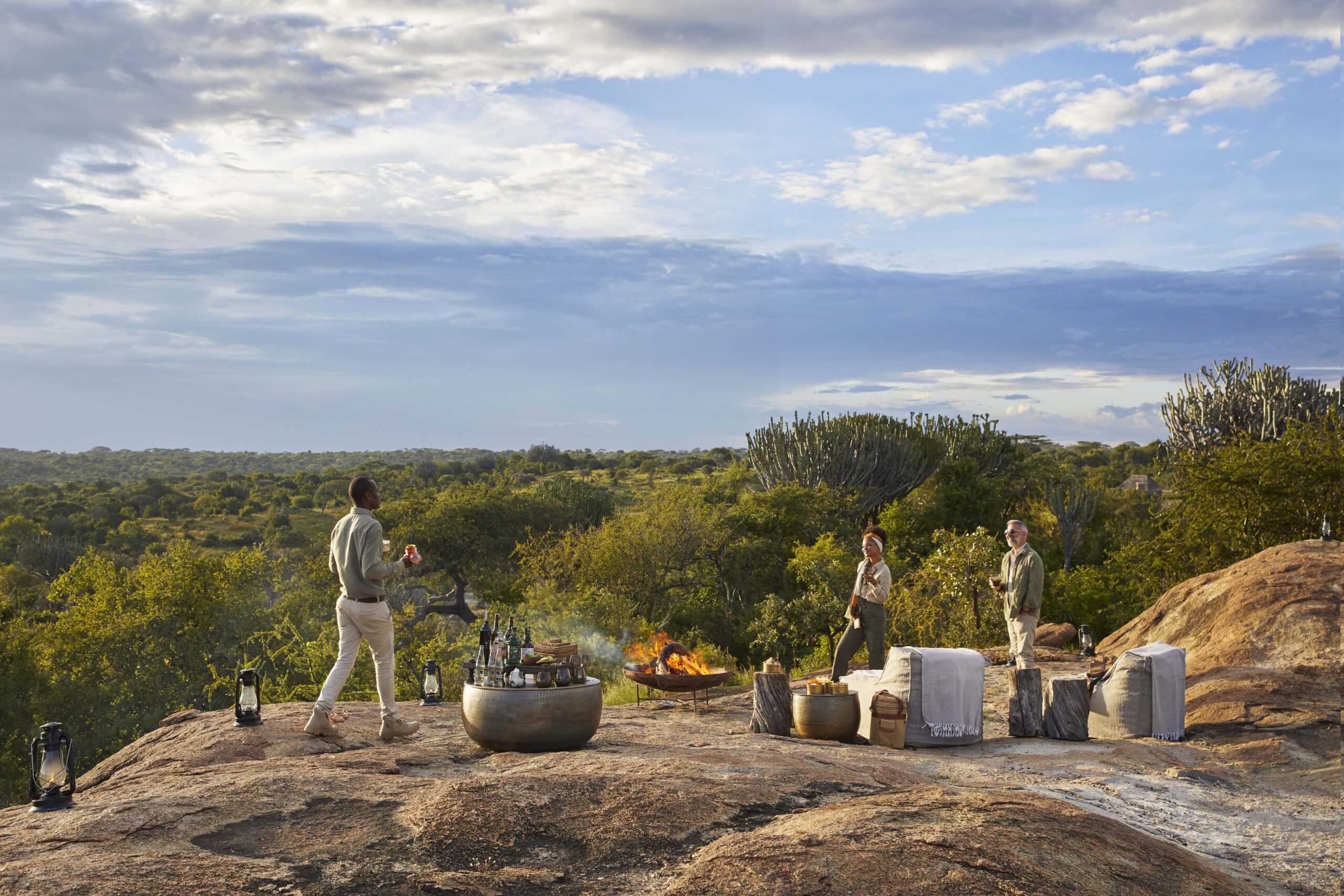
Mwiba recently joined the Auberge Collection alongside sister property Chem Chem, which makes combining the two lodges on a single Tanzania itinerary a seamless and logical exercise. Different ecosystems, complementary experiences, and a level of consistency across both properties that makes planning straightforward.

The honest question with any safari lodge is whether it lives up to what’s written about it. Mwiba does, and then some. It’s the kind of place that doesn’t need to shout about itself. The guests who find it tend to come back — and tend not to tell too many people about it either.

The River Knows — Old Mondoro, Zambia


The Zambezi is one of those rivers that demands your attention. Wide, dark, and perpetually purposeful, it moves through its valley with the unhurried authority of something that has been doing this for millions of years — and will continue long after everything else has changed. For those lucky enough to find themselves on its banks in the Lower Zambezi National Park, it becomes apparent very quickly that the river is not merely a backdrop to the experience. It is the experience.

Old Mondoro understands this instinctively. Tucked an hour further east into the Lower Zambezi National Park than most visitors ever reach, it is a camp that has stripped the safari back to its essentials: a handful of tents built from pole, canvas and reed, open bathrooms beneath the stars, and a stretch of riverbank where the boundary between camp and wilderness has been left, quite deliberately, unmarked. There are no fences here. Elephants walk through at night. Buffalo have been known to graze between the tents at dawn. The camp holds this not as a selling point, but as a simple statement of intent — that the wilderness is not something to be kept at a comfortable distance, but something to be lived alongside.

The safaris here are unlike those found at most other camps. Yes, there are game drives — and good ones, through thick mopane woodland and floodplains where elephant, buffalo and lion move as though the fences of the modern world have never been invented. But it is on the water, and on foot, where Old Mondoro truly earns its reputation. Canoe safaris allow guests to drift silently downriver at the level of the hippos, with crocodiles ancient and motionless on every sandbank, and fish eagles calling overhead in a way that seems almost theatrical. There is something profoundly levelling about being in a small boat on the Zambezi — something that no vehicle, however comfortable, can replicate. The river puts everyone on equal terms.

The walking safaris offer their own kind of revelation. Guided by a team whose knowledge of the bush feels almost geological in its depth, these walks are not an activity to tick off a list. They are an education in attention — the way a broken twig tells a story, the way silence itself becomes a diagnostic tool. In the Lower Zambezi’s dense vegetation, understanding the landscape on foot is the only way to truly read it, and there are very few camps better placed to teach that skill.

What makes Old Mondoro quietly extraordinary, beyond the activities and the setting, is its sense of priority. The camp belongs to the same family that pioneered this stretch of river — people who have spent decades insisting that the best safari is the one that gets out of its own way and lets the wilderness do the talking. Meals are taken together around a communal table. Guides speak about the Zambezi as though it were a living thing they know personally. And the conservation work that underpins every stay here runs quietly beneath the surface, as it always has.

At night, with the Zambezi sliding past in the darkness and hippos grumbling from the shallows, it is easy to understand why the Cumings family never left. The Zambezi doesn’t notice you leave. That indifference, somehow, is exactly what makes you want to come back.

Sussurro – the Ocean Sets the Pace

Some destinations arrive with energy. Others ask for it. Sussurro does neither. Instead, it quietly alters your pace before you have time to question it, easing you into a rhythm shaped less by itinerary than by wind, tide, and light.

Set along the mainland coast opposite the Bazaruto Archipelago, Sussurro occupies that rare space where landscape feels elemental rather than decorative. Sand, sea, dune grass, and sky do most of the work here. The result is not dramatic in an obvious way, but deeply absorbing. You begin to notice small shifts: the angle of morning light, the changing colour of the water, the wind moving differently through the grass as the day settles and then opens again.

That sense of natural rhythm extends into the way the lodge itself has been imagined. The villas are open, understated, and beautifully spare, using canvas, timber, texture, and airflow rather than excess to create comfort. Nothing feels overdesigned. Luxury is present, certainly, but it has been softened, stripped back, and allowed to breathe. It feels as though the architecture has stepped aside just enough to let the setting remain the main event.

Days here unfold with a kind of deliberate looseness. You might begin with coffee and an uninterrupted horizon, then drift into a dhow excursion through clear, shallow water. Sandbanks emerge and vanish with the tide. Islands appear less like destinations than temporary invitations. Further out, the sea deepens into richer blues, and the sheer space of it begins to alter the scale of your thoughts.

Snorkelling adds another layer. Beneath the surface, reefs pulse with detail and colour, creating a vivid contrast to the minimalist calm above the waterline. But even these experiences never feel compulsory. Sussurro is not a place that overwhelms you with options. Its real gift is permission: permission to move slowly, to leave gaps in the day, to sit still long enough for the landscape to become something more than a backdrop.


Meals, too, feel in step with that same philosophy: fresh, generous, unhurried, and shaped by place rather than performance.

And that is ultimately what makes it memorable. The quiet here is not empty. It is textured, changing, alive. You hear wind in canvas, distant water against sand, the subtle sounds of a place continuing perfectly well without performance.

Sussurro is not trying to impress you. It is doing something more difficult than that. It is allowing you to settle fully into a coastal world where very little is forced, and almost everything feels true.

Once that shift happens, leaving feels strangely unnatural, as though you are stepping out of a rhythm you had only just begun to understand.

Hoanib Skeleton Coast: Desert Lions, Distant Horizons, and the Luxury of Silence

Safari lovers often talk about sound — the roars, the rustles, the unending nighttime chorus. But Hoanib Skeleton Coast Camp flips the script with a different kind of sensory experience: profound, resonant silence. The kind that expands inside you. The kind that makes a single footstep feel like punctuation in an otherwise blank poem.

Set in one of Namibia’s most remote valleys, Hoanib lies at the intersection of desert, mountains, and the unseen pull of the Atlantic Ocean. At first glance, the landscape appears empty. Your eyes skim over pale dunes and ochre ridges, dismissing them as barren. But Hoanib rewards patience, not haste. Shapes resolve slowly: a lone elephant threading its way along a dry riverbed, a pair of oryx holding still in perfect desert camouflage, a fresh track hinting at the improbable wanderings of a desert-adapted lion.

Days here unfold with an exploratory rhythm. Drives trace ancient river systems carved by rains that may only come once in several years. You follow stories written in sand, piecing together the nomadic lives of animals that survive on astonishingly little. If conditions allow, the journey toward the Skeleton Coast is among the continent’s most surreal drives — a cinematic transition from shimmering dunes to the fog-laden wildness of the Atlantic, where shipwrecks tilt like abandoned punctuation on an unfinished sentence.

Inside camp, the minimalist architecture mirrors the desert: calm, tonal, grounded. Canvas, stone, and pale wood create a sanctuary that amplifies the surrounding quiet rather than competing with it. Meals are unhurried, evenings candlelit, and nights filled not with noise but with space.

Hoanib isn’t about abundance. It’s about revelation. It teaches you to look harder, listen deeper, and appreciate the astonishing resilience of life where it shouldn’t logically thrive. And in doing so, it reshapes your definition of wilderness itself.

Jao Camp: Let the Water Teach You to Slow Down

Most safaris begin with a map: roads, tracks, loops and river crossings. Jao Camp begins with a different philosophy — let the water decide. The Okavango Delta is famously unpredictable, rising and receding at its own whim, turning woodlands into lagoons and plains into mirror-smooth channels. Jao doesn’t fight this; it reveres it. And guests very quickly learn to do the same.

From the moment you arrive, elevated walkways signal the shift in perspective. You move through palm islands at tree-crown level, brushing past birdlife that seems only mildly surprised by your presence. Suites are generous to the point of indulgence — private decks, plunge pools, gauzy interiors that glow softly in Delta light — but nothing feels showy. Everything serves one quiet purpose: to invite you to unwind.

The rhythm here is governed entirely by water. When the flood is high, mokoro excursions become poetry in motion — a silent glide past lilies, reed frogs, jacanas stepping delicately across floating leaves. Boat outings open up the wider channels, sometimes revealing elephants swimming in slow motion, or a fish eagle perched in just the right shaft of light. When the waters pull back, game drives explore floodplains now etched with fresh tracks: lions, leopards, wild dogs, and the occasional sable giving you a regal once-over.

One of Jao’s most underrated luxuries is its sense of spaciousness — not in size, but in tempo. There’s permission here to move slowly. To linger in the hide while storm clouds bruise the horizon. To surrender to an afternoon spa treatment because thunder murmuring across the water feels like the day’s natural metronome. To enjoy dinner on the deck by lantern-light, listening to lechwe splashing distantly in the shallows.

Some camps help you see wildlife. Jao helps you feel the Delta. And in doing so, it becomes less a safari destination and more a gentle recalibration — a reminder that life is richer when you let nature set the pace.

San Camp: Kalahari Skies

Billowing white tents on the edge of the endless Makgadikgadi Pans. Desert palms cast their shade here, and you are surrounded by a thousand acres of shimmering, nothingness.
San Camp, a quintessentially romantic, seven-bedroom camp on the edge of the Nwetwe Pan in Botswana’s Makgadikgadi, is something straight out of Arabian Nights. The allure lies in the minimalism here, both within the camp itself and in the broader desert horizons.

Meerkats emerge from their desert burrows, if you’re lucky an Aardvark might emerge at sunset, and you’ll see red hartebeest, springbok and gemsbok scurrying between them. But San Camp isn’t just about wildlife-watching – it’s about the atmosphere and the ethereal surroundings. Disappear into a remote world, a million miles from glowing screens and fruit-themed devices, where the 360-degree panoramas are so vast, you can see the curvature of the earth.

The enormous salt pans are like something off the moon. They are the home of a host of unique desert animals which are for the most part completely different to those encountered to the north-west in the Okavango.Combining the two areas into a single itinerary is highly recommended.
Species to tick include the famed black-maned Kalahari lion as well as cheetah, plains game like wildebeest and zebra, elephant and brown hyaena almost exclusive to this region. The bird list here is extensive and highly localised within the habitat, and of course your trip would not be complete without an immersive interaction with one of the habituated troops meerkats that have delighted guests for years.

The safari experience here is truly remarkable. The stark setting is complemented by the minimalist camp design, and the ever-present Kalahari silence creates an ambience of peace.
The main canvas covered central area is open and wonderfully unencumbered by clutter, inviting you into a stylish dining room where delicious food makes sure you are never hungry.
Dark mahogany furniture and Persian carpets complement each other well and the bedouin feel simply adds to the elegance and romanticism…

The name of the game here is adventure.
Walk with the San Bushmen or go horse-riding across the plains. Take quad bikes out onto the salt flats or charter a helicopter down to see the ethereal and ancient Kubu Island, one of the most remarkable places on earth…
Wildlife aside, this is a safari experience like no other.

If you want to find out more about this incredible destination, and how best to include it into an itinerary, get in touch through info@iconicafrica.com, and let’s start a safari conversation…

Mbamba Lodge – Okavango Reimagined

Mbamba is set to be the latest addition to the Natural Selection portfolio, a charming explorer-style camp found in the north-western Okavango’s NG12 concession. With a mix of open grasslands, floodplains, forested islands and lagoons, Mbamba will offer a variety of diverse landscapes with ecosystem variations to support an incredible range of the Okavango’s wildlife.

Set to open in April 2025, Mbamba will be the new sister camp to Natural Selections Duke’s, Duke’s East and North Island, also located in the same NG12 concession, which borders that of Vumbura Plains and Duba Plains to the south.

The camp features twelve canvas tented rooms including two family units each with an ensuite bathroom, indoor shower, standing fan, overbed cooling system and private veranda. A simple, tasteful main area equipped with two lounges, a small library, pool and fire-pit completes the camp, providing a comfortable authentic safari feel at good value.

The camp lies in a beautifully open area where the Okavango River begins to spread out, creating the world’s largest inland delta. An impressive range of mammals, birds, and reptiles, can be spotted. Both lion and wild dog are in the area, and the seldom-sighted sable antelope is common. The endangered wattled crane and the highly sought Pel’s fishing owl are Okavango bird specialties that are often found here, along with a full diversity of birdlife.

Activities at Mbamba are designed to explore this wonderfully varied and beautiful area – game drives during the day and night as well as boating and mokoro safaris when water levels allow.

In line with Natural Selection’s focus on beautiful, characterful camps and safari experiences, Mbamba is set to  become a popular camp, offering a rich Okavango experience at very good value.

Designed in the iconic Kalahari safari style like the famous Jack’s and San Camps – also well known Natural Selection offerings, Mbamba sits on slightly raised wooden decks and revel in the much-loved safari aesthetic of plush fabrics, mahogany sideboards, Persian rugs and romantic four-poster beds, all infused with a yesteryear charm. 

The camp is in a superb setting where you’ll instantly be immersed into the Okavango Delta’s true wonder.  With some of the best safari guides in the business, and a variety of land and water-based activities,  you can look forward to a rewarding wildlife experience in this game-rich private concession. In-between action filled game viewing activities, relax around the camp pool or take a siesta in the comfort of your air-conditioned tent. This is an ideal camp for those seeking a deeper understanding of the natural world in a very relaxed environment.

The main mess area at Mbamba is a delight with its draped fabric and collections of ancient artefacts. Relax in the two lounges where you can spend your time perusing the cabinets or grabbing a drink from the well-stocked drinks cabinet, read a book from the small library or relaxing around the camp swimming pool. Meals are served family-style at the long table. Dine under the stars or under canvas, followed by stargazing around the firepit before saying goodnight.

With Duke’s and North Island already running on full occupancies, we predict Mbamba to do something similar, so don’t wait to enquire.
Get hold of us through info@iconicafrica.com if you’d like to be among the first to explore this relatively untouched part of the Okavango.

Adventure awaits…

Erebero Hills – The Best of Bwindi

The considered design of Erebero Hills – meaning “a place where you can see far” – takes creative inspiration from the surrounding landscape of rolling hills. Sweeping views across the forest will be on offer from all guest suites, or from the hillside swimming pool on warm afternoons. Combining sustainable luxury with the thrill of observing one of the world’s most endangered species in their natural habitat, Erebero Hills will provide a unique and rewarding safari experience.

Located on the northern edge of the Bwindi Impenetrable Forest, Erebero Hills holds an enviable position offering both privacy and convenient access to a preferred gorilla trekking location.

An AMAZING SPECIAL OFFER is currently on the go; due to high demand, Asilia are extending their exclusive opening special to offer ONE FREE GORILLA PERMIT PER PERSON for all new bookings confirmed by 28th February 2025.

Book now, and be one of the first to stay in what will likely prove to be a groundbreaking new lodge in this discreet corner of Uganda.

Driving an ambitious reforestation project, Asilia aims to create a forest buffer zone within the 45 acres surrounding the lodge. A long-term project, this will eventually deliver an accessible forest for the Batwa people who are no longer allowed in Bwindi Impenetrable Forest, and will create sustainable livelihood opportunities for local communities both now during the planting phase, and for many years to come.

Imagine yourself in a rare moment, crouched on the forest floor, respectfully avoiding eye contact while observing some of the last remaining eastern and mountain gorillas up close.

These majestic creatures are found only in three countries – Rwanda, Uganda, and the Democratic Republic of the Congo – and live in four national parks, including Bwindi Impenetrable National Park, Mgahinga Gorilla National Park, Volcanoes National Park, and Virunga National Park. Asilia’s gorilla trekking tours offer an exclusive opportunity, a privilege, to witness them in their natural habitat.

Erebero Hills is set to provide the service and attention to detail that Asilia is well-renowned for, alongside a meaningful and empowering positive impact commitment.

Eight forest-view suites tucked into the hillside – each with a private viewing deck and uninterrupted views of the forest across the valley – have been designed for style and luxury. The spacious, glass fronted interiors are filled with natural light, with a king-sized bed and both indoor and outdoor seating options designed to maximise the expansive views. A boot-room at the entrance to each suite offers a thoughtful design element, while the en suite bathroom applies the finishing touches with a free-standing bathtub and both an indoor and outdoor shower, all with breathtaking views of the forest. The main lounge and swimming pool offer additional areas for relaxation, while spa treatments can be enjoyed in-room to ease tired muscles.

In addition to housing more than half the world’s remaining population of mountain gorilla, Bwindi Impenetrable Forest plays home to staggeringly rich array of biodiversity. Over 350 species of bird, more than 200 species of butterfly, and more than 100 mammal species, of which 10 are primates. With convenient flights from Kenya, Erebero Hills combines easily with Asilia’s Kenya portfolio, allowing for an incredible East Africa adventure.

Gorillas live in family groups led by a dominant silverback male and are majestic, highly intelligent, and social creatures. They communicate through a repertoire of up to 25 distinct sounds. They share strong family bonds and are known to create and use tools. It’s fascinating to see them building nests on the ground or in trees using branches and leaves, which they use both during the day and at night. Sadly, they are critically endangered, according to the IUCN Red List. 

If you would like to be one of the vanguard to stay in what may prove to be Asilia’s flagship lodge, we’d just like to remind you about the special offer, with a free gorilla trekking permit for every booking confirmed before 28th February. That amounts to a saving of $600 per person.

Get in touch through info@iconicafrica.com to enquire…

Beach after Bush

An authentic African safari is one of the most thrilling experiences you can ever have.

Those whom the bug has bitten find themselves returning time and time again to revisit that sense of excitement, the tranquility of an Okavango sunrise, the thrill of a lion stalk or the sheer rawness of nature as ten thousand wildebeest come pouring over the Mara River in their desperate need to reach the other shore.
Safari can also simply be about getting in touch with yourself and family once more. No receiving message on drive, no police sirens in the distance, just you and the peace of the bush; birdsong, the soft trilling of cicadas and the whisper of the wind in the golden grass.

Yet in order to take full advantage of the environment and prime viewing conditions, early wake-ups are the norm, with a pre-dawn coffee on deck the order of the day as you wipe the sleep from your eyes and prepare to head out into the gloom, just before the sun peeks over the horizon.
A good few days of these early mornings, combined with some late nights around the fire and some excellent bottles of South Africa’s finest red wine, and you may well find yourself needing a holiday after your holiday. And that is where the beach comes in.

There are literally thousands of kilometres of pristine coastline from Cape Town up to Kenya, with golden sands, whales breaching, turtles laying eggs, and often miles and miles of emptiness stretching before you, with only the warm, turquoise waters of the Indian Ocean lapping against your feet.

If its genuine relaxation you are after on your holiday, look no further. The resorts and beach lodges we love will have you wanting for nothing. Pina coladas on call, boat excursions to remote sand bars, and snorkelling in the clearest water imaginable as the warm sun gently tans you.
An Indian Ocean getaway is – at least for us – the perfect ay to wind down after a safari. You won’t have anyone waking you up before it’s light, you make your own schedule, and you can be as indulgent as you like.

Our Top 3 choices for beach destinations would be:

Plettenberg Bay

It’s a no-brainer for us, with “Plett’” as South Africans call it, just having been nominated for World’s Leading Beach Destination.
The shores of this wonderful seaside town can get quite busy during the Christmas period when a lot of SA residents move into their summer homes, but for 90% of the year it is a wonderfully quiet town, with so much to do within such a short distance.
Explore the Robberg Peninsula or go hiking in the Knysna Forest. Take a canoe up the Keurbooms River in search of Knysna Turacos (even leopards have been sighted here) or look for pansy shells on some of the more remote beaches in the area.

Plett has it all, and with a convenient airport nearby (a major one at George or a local one practically in town), access is very easy.

Vilanculos & Surrounds

A short flight from Johannesburg will have you on the beach in Mozambique’s Vilanculos sipping a strawberry daquiri before lunchtime.
Flying in over the extensive sandbars, gazing down through the azure waters, is a landing you won’t be forgetting in a hurry.

Vilanculos is essentially the gateway to a multitude of incredible lodges – some on the mainland and some out on the islands – like Sussurro, Azura and Kisawa. All will leave you speechless at their simple charm and opulence, and all will have you immediately wanting to extend your stay.

The lodges around Vilnaculos are as close to paradise as you can find…

Maputaland, South Africa

One of South Africa’s last great stretches of untouched coastline, made up almost entirely of pristine beaches, and home to a vast array of land based and marine wildlife, Maputaland is the far northern section of South Africa, just south of the Mozambican border.

With a wonderful array of destinations like Black Rock Bay, Tonga Beach Lodge and Mabibi to choose from, as well as being in close proximity to wonderful game viewing areas like Phinda and iSiMangaliso Wetland Reserve, Maputaland is a region packed full of exciting options

If you want to tag on a relaxing beach option to your safari, get hold of us through info@iconciafrica.com com, and let’s see what stretch of coastline tickles your fancy the most…

Azura Benguerra: White Sand Paradise

The exceptional Azura resort rests on the idyllic shoreline of Benguerra Island. Built entirely by hand by the local community, Azura offers 18 splendid villas set amidst indigenous gardens only steps away from the beach. Each villa features a beautiful ensuite bathroom with an alfresco shower, a dressing area, a huge comfy bed, a private plunge pool, a beachside sala, a sundeck and day beds.

Guests are assigned a dedicated Mozambican host, who will attend to their every need for the duration of their stay. Dining is a delectable affair, with a superb seafood menu. Meals can be savoured in the restaurant, on the beach or at a picnic in a romantic and secluded spot. Azura houses a decadent and luxurious spa, as well as a water sports centre that offers adventures such as scuba diving, snorkelling, sailing, big game fishing and kayaking. Island drives and cultural excursions can also be arranged.

Compact villas offer the perfect balance of stylish comfort and elegant simplicity. Comfortable indoor lounge and living spaces flow into an outdoor seating and dining area with secluded beachside frontage.

Submerge into your private plunge pool that mirrors the colours of the ocean, or enjoy some R&R on the large, undercover deck with a daybed. All beach villas have a separate sundeck, as well as a private beach sala for seaside relaxation.

Hop aboard a traditional dhow, a wooden vessel with a triangular sail, used for fishing by the island’s locals. A welcoming local skipper will collect you from your casita or cabana in the late afternoon, embarking on an unforgettable cruise around the azure bay. The sailing adventure presents the Island and its surrounding waters in a unique light and thus offers excellent photographic opportunities of the wide horizon, the calm waters and the glowing horizon.

Watch the sun set over the islands of the Bazaruto Archipelago as you drift along the calm water, guided by ocean breezes. Witness the cerulean sky rapidly change colour, embracing hues of rose and violet spread over an amber canvas. Marvel at the illuminated water, dancing with gold shimmers, as it welcomes the sun’s descent beneath the distant horizon. The scene plays out beautifully and the ocean swallows the golden orb into its infinite depths. Travel back to the shore, accompanied by the quiet swoosh of the dhow’s sail, lost in the kaleidoscope of an African sunset.

Feel as though you have the island all to yourself as you indulge in a decadent picnic set in one of the most secluded sites on the Bazaruto Archipelago. Revel in magnificent sea views from the sand spit that daringly juts out into the ocean and lounge on the peak of soaring sand dunes, romantically set up for an idyllic picnic. Delight in fare that is sure to tantalise your taste buds with a vast assortment of hors d’oeuvres, appetisers and local delicacies.

Choose from South Point Bazaruto or North Point Benguerra, gently evoking feelings of being a castaway on a dreamy deserted island. Kick up your heels and lounge on satiny sands with 360 degree views of the ocean vista and the frolicking dolphins below. Relish a languid afternoon picnic in exquisite natural surroundings. South Point Bazaruto is an ideal spot to relax after thrilling dives or on a meandering sunset cruise. The North Point Benguerra Castaway Picnic will have you reclining on a sandy spit with unparalleled views of a wild, frothing ocean with short waves on one side and a calm bay with mirror-like waters on the other. Explore the clean coastline over miles, treasure hunt for rippled seashells, encounter the almost translucent ghost crab and marvel at the ebony and candy floss coloured wings of the elegant flamingo. Soak in the temperate, aquamarine waters of the Indian Ocean, brilliantly illuminated by the warmth of the African sun.

Snorkelling at Two-Mile Reef will suit every guest, regardless of age and expertise. The boat ride out to the reef can be bumpy as the outgoing and incoming tides converge in the channel between Bazaruto and Benguerra Island. Two-Mile Reef is a flat-topped barrier reef renowned for its brilliant snorkelling. Highlights include a variety of hard and soft corals and many schools of reef and pelagic fish passing through. On the boat trip you may be lucky enough to spot playful dolphins and the elusive, endangered dugong.  Under the water you may encounter harmless reef sharks and slumberous turtles that effortlessly glide past with their wise eyes. Embrace the unspoilt beauty of the reef and the kaleidoscopic colours of the tropical fish that move in droves along the exposed coral. Two-Mile Reef is faultless in its beauty, guaranteeing an unforgettable outing, and is ideal for those who want to confidently explore the Indian Ocean’s shallower coral reefs. Your snorkelling excursion goes out at low tide, so is determined by the timing of the sea.

Azura Benguerra is truly the perfect way to wind down at the end of your African sojourn.

Safaris are incredible, but a few days of the early wake-ups for morning drives and some late evenings around the fire sipping delicious red wine can leave one in need of some proper down time, and that’s where the tropical paradise of the Mozambican islands comes in…

Get in touch with us through info@iconicafrica.com to find out about rates and availability at Azura Benguerra or others like it…

Marataba Special Still Running

Marakele means “place of sanctuary” in the local Setswana language, and that is exactly what you feel like you are entering when you arrive at Marataba Private Reserve, which forms part of the greater Marakele National Park.

Marataba itself is 21 000ha of mixed thornveld and open woodland, flanked to the east and south by the utterly spectacular Waterberg mountains, which gather every last drop of golden light as the sun starts to sink and reflect it back over an environment brimming with wildlife.

Lion roars reverberate up the valleys from the plains below, whilst from the rocky crags the guttural rasp of a leopard is regularly heard through the hours of darkness. It is in this magnificent setting that the stunning Marataba Mountain Lodge part of the NJ More collection.

Not only is Mountain Lodge one of our favourite South African safari destinations, but it is currently on special at the unbelievable rate of R4995 pppn sharing. This offer is open until the end of September 2024, so do NOT wait to enquire…

Mountain lodge, tucked away in a rocky valley close to the escarpment features only 5 eco-suites. Mountain Lodge is completely solar, so as well as feeling a wonderful sense of isolation in such an intimate setting, guests can be happy in the knowledge that their stay is having the least possible impact on the environment.

For honeymooners and those who want ultimate tranquility and time to themselves, wishing to feel a complete sense of isolation, Mountain lodge should be your pick.

At no time at either camp will you feel anything but fully immersed in the wilderness. The subtle colour tones and layout of every aspect of both lodges has been carefully thought out, designed to feel like a simple extension of the African bush whilst retaining every element of luxury.

Marataba is only a few hours drive from Johannesburg, or easily accessible via a 45 minute charter flight. The area is malaria-free, so if you are travelling with small kids or have even the slightest concerns about malaria (which is extremely rare in South Africa), look no further than Marataba as your destination of choice.

Enquire now if you want to be able to visit Mountain Lodge at an absolute steal. Be sure not to miss out…

Mail us at info@iconicafrica.com, and let’s get the safari ball rolling…

Sussurro: Indian Ocean Whispers

Few places in the world can offer a true sense of peace.

Yet at Sussuro – Portugese for “whisper” – does just that, with the gentle lap of tiny lagoon ripples on its shoreline, birdsong in the trees around, and the soft creaking of ropes from the dhows moored just offshore all combining into a lovely susurration that fills one with a sense of calm.

The tropical breeze that ensures warm weather pretty much year round means this ocean paradise is a place of swimming costumes and bare feet, with the ever=present option of having a margharita in hand…

Sussurro’s private bungalows provide over a thousand square feet of personal space. Each suite includes indoor and outdoor bathing facilities and generous water front verandahs. Looking out over th lagoon sheltered by the Nhambue peninsula, it is not uncommon to see a school of dolphins moving by close inshore, and one feels completely immersed in nature.

Mozambican architecture weaves a natural canopy above billowing mosquito nets. Large apertures allow the colours of an ever changing landscape to permeate the space.

Rooms are dressed with furniture created and carved onsite and thoughtfully collected artisanal pieces from sub-saharan Africa.

As well as being a place of complete relaxation, where lounging sleepily with a book is the perfect way to pass the time before your next delicious seafood meal, Sussurro is also a place of activities.

Optional dhow trips into the bay or up the Govurha waterways can end in a snorkelling experience on a reef, or a cold Laurentina beer in an isolated cove.
A day trip to Santa Carolina Island in the Bazaruto Archipelago is also a wonderful cutural experience; as well as the thrill of the boat ride, and the natural beauty of the reef systems, one has the opportunity to wander into the Santa Carolina hotel ruin; a throwback to the days of the Portugese colonialists.

Beach picnics under a shaded tent, Stand-up paddleboards, simply lounging by the pool… Sussurro is a place where “urgency” is not part of the vernacular…

Whereas some resorts operate around set mealtimes, time tables and an idea of what they think should happen to make your stay that much better, Sussurro puts the decisions firmly in your hands.
They welcome you in, let you know what’s on offer, and leave it to you to how you want your tropical ocean resort experience play out…

Get hold of us if an idyllic warm-water ocean getaway is what you’re after (inder tip: it’s an amazing way to cap off an African safari…), then get hold of us on info@iconicafrica.com…


Disconnect to Reconnect

An African sunset makes you feel at peace.

There are few things on earth that can bring such a level of contentment into your life in one moment. It doesn’t matter what other stresses might be going on back home; mortgage, bills, business deals, impending board meetings… in that brief period of time, surrounded by beauty, likely with gin and tonic in hand and the sound of the African Bush shifting from day mode to night, everything seems right with the world…

Look around at who you’re with…

Wife, kids, friends… The ranger who you have bonded with so quickly over the course of your safari, he or she almost feels like an extension of your family…
The company is stellar, the view amazing. The fact that you haven’t read an email in hours, even better.

The feeling you have is one that may have been missing for a good long while. It’s the feeling of you as you were meant to be.
The authentic self can most easily be found in nature, far from any screens, wifi, advertising or media of any sort. This is where you can rekindle relationships, be at your most vulnerable and honest, and realise things about yourself that it took removing yourself completely from your normal environment to discover…

At Iconic Africa, we pride ourselves in the experiences we craft for our guests. We tailor-make itineraries that we know will reconnect people with the versions of themselves that they were meant to be. Through immersions in other cultures, deep dives into the ways of the wild and journeys into wildernesses most can only dream of, we seek to reawaken parts of peoples souls that have long lain dormant.
And through disconnecting from the fast-paced world that most of us inhabit, by switching off phones and leaving an ‘out-of-office’ response on our email, we get that much closer to true authenticity.

To quote J.R.R. Tolkein –

The world isn’t in your books or maps… It’s out there…

We’ve been out there in Africa and we’ve seen it. We encourage you with all our hearts to do the same…


The Best Treehouses in Africa

Counting sheep is one way to try and fall asleep.

Why not go one better though? Try to count a billion stars, have a lion roaring in the distance as a lullaby, and feel the cool night breeze of Africa on your face as it sussurates through the mosquito net… That’s the way to do it.

More and more safari lodges across Africa are offering a romantic sleep-out as an option, and their stunning treehouses are as opulent as one could desire.
No simple matress-and-sleeping-bag combinations are to be found here; instead guests are greeted by soft mattresses, expansive duvets, the warm glow of kerosene lanterns, and more than likely the subtle accompaniment of nightbirds trilling nearby.

Although the idea of a sleep-out can be intimidating to the inexperienced safari-goer, treehouse locations are as safe as any luxury lodge, and are an incredible way to experience raw nature. You will never sleep as deeply as you will when the night sounds of Africa are your personal bedtime story.

Here then are three of our favourite safari sleep-out offerings:

Wilderness Linkwasha, Zimbabwe

Tucked in the south-east corner of the Hwange National Park, the Linkwasha Concession plays host to four stunning lodges in the Wilderness portfolio: Linkwasha, Davison’s, Maokolo and Little Makololo. The area boasts a stunning variety of wildlife, and is particularly productive in the dry season when animals are entirely dependent on the few remaining surface water points.

It is next to one of these pans – which is kept topped up by the National Park – that the Linkwasha Sleepout platform is situated.
Tucked up against an ancient Leadwood tree, the treehouse enjoys stunning panoramic views over the surrounding plains, with prime viewing over the waterhole and whatever might be coming down to slake its thirst.
In the dry season one can be assured of a constant parade of elephants doen below, whose splashing and gurgling will be a gentle accompaniment to your snores through the night, and the grasslands will almost certainly reverberate to the call of a big cat during the evening.
Open skies all around mean that the star-gazing will be unsurpassed!

Xigera Lodge, Botswana

In the heart of the Okavango Delta – about as close to a wildlife eden as you can get on earth – Xigera Lodge offers unmatched opulence in the safari industry. Stunning architecture in a remote location with some of the best game viewing on the sub-continent really makes this destination hard to beat.

Throw in a treehouse built to resemble one of Africa’s most iconic trees – the baobab – and you have just about one of the most romantic sleep-out venues on the planet.

The sheer imagination used to design such a stunning creation will take your breath away; something like a treehouse standing by itself could be potentially incongruous, but the Xigera offering just fits.

A night out here will be one you will never forget…

Lion Sands, South Africa

The Sabi Sand Game Reserve is one of the best places to view predators in Africa, and Lion Sands ticks this box brilliantly.
Apart from boasting some of the most luxurious lodges and one of the densest leopard populations on the continent, they have three stunning treehouses to choose from if a sleep-out under the stars is what you’re after. Each of the Chalkley, Tinyeleti and Kingston treehouses has their own unique charm, but all have much in common at the same time – comfort, beauty, and a sense of place, almost as if the treehouses were always there.
The feeling you want from an experience like this is one of belonging, as if you are actually part of the environment. And you get that feeling in droves at the Lion Sands treehouses…

As rustic as they may sound, the treehouses on offer at the higher-end lodges are anything but. Bathroom facilities, their own dining experience, 24-hour communication with the lodge via radio, and a whole host of other make them incredibly comfortable, safe, and as user-friendly as one could wish.

A treehouse sleep-out is just about as authentic an experience that one can find in the African bush…

If this is the kind of adventurous night you’d be interested in, get in touch through info@iconicafrica.com, and let’s start looking for a treehouse for you…


Leopards of the Lower Zambezi

The Zambezi is truly one of Africa’s great rivers.

The fourth longest in the continent, it rises in the highlands of western Zambia, before cutting down into Angola, back into Zambia and then acting as a natural border with Namibia, then Zimbabwe before it finally flows into Mozambique, wending its way down to the Indian Ocean.

One specific section of it – the aptly named Zambezi Valley – is between Chirundu and the Mpata Gorge, and is absolutely teeming with wildlife! On the northern, Zambian side of the river, lies the Lower Zambezi National Park, and it is here that we shine our spotlight…

Although the park itself is over 4000 square kilometres, the vast majority of that is scrubby hill-land from the escarpment back away from the river; as a result over 95% of the wildlife viewing takes place down on the valley floor, in the few kilometres between the river itself and the escarpment. It is here that the camps of the Lower Zambezi are to be found, and it is here that you will find some of the best leopard viewing in Africa.

Stunning open forested areas made up of imposing Winterthorn trees provide an incredible backdrop through which the sly cats are consistently to be found moving, as they stalk their predominantly impala prey. The bark of a baboon is often the first indication that there is a leopard on the prowl.

Although in recent years it is the large pack of buffalo-hunting wild dogs in the central Jeki area that has truly put the park on the map, the reality is there is far more to it than a single pack of canids. The lion population is as healthy as ever, general game is prolific, and the elephant herds move their stately way under the Winterthorn canopy in such numbers as to almost be uncountable. The height of the dry season in particular is a spectacular time for a visit as there is scant grass cover and lovely soft light, so you are invariably viewing animals in the open and the photographic opportunities are prolific.

Accommodation-wise one is treated to an almost surfeit of spectacular camps. To the west of the park lie two of our favourites – Zambezi Grande and Time & Tide’s Chongwe House.

With our amazing 35% special currently running on Time & Tide’s camps, Chongwe House would be our obvious recommendation for now, although Zambezi Grande is no less stunning.

Moving east along the riverbank one gets to Chiawa Camp, and it’s sister camp Old Mondoro more centrally located in the park. Both are very similar in design and feel and share similar game viewing opportunities, with Old Mondor being a particular favourite with the elephants, and Chiawa being one of the leopard hotspots in the west of the reserve.

Jeki Airstrip (directly above of Old Mondoro camp on the map) is where most flights to Lower Zambezi will arrive, and is unofficially the centre of the park; it is here that the famous wild dog pack renowned for their buffalo hunting prowess have chosen to den over the past two or three years. Although the pack has split slightly, the larger group and their pups still number roughly 30 individuals, and they still hunt the big bovines in the dry season.

Just east of Jeki, down towards Anabezi Lodge, is the leopard area. For some reason the density here seems to be higher than in the rest of the park, and sightings are frequent. A mother and her two daughters have become regular features in the sightings logs, as well as two small cubs born towards the end of 2023 that are now wll on their way to sub-adulthood.

Anabezi is our favourite camp in the east. It provides superb access to the eastern section of the reserve, is as comfortable as one could wish, and best of all, each visiting party receives their own private vehicle, meaning game drives are yours to do with what you please.

Whilst it is the wild dogs that have taken centre stage over the last few years in the Lower Zambezi, it is the leopards that we believe will keep the park on the map.
Spread throughout the reserve (the wild dogs can disappear into the escarpment), the viewing of them is as consistent and spectacular as one could wish, and with some of the most stunning scenery in Africa on display, there is almost no better place to be viewing these cats in the wild.

The Time & Tide 35% special will be running for the next two months, but there are plenty of options to choose from in this, one of the continent’s most underrated destinations.

Get in touch now through info@iconicafrica.com to find out more…