Mwiba Lodge — Tanzania’s Best Kept Secret

There’s a particular kind of satisfaction that comes from knowing about a place most people don’t. Mwiba Lodge, tucked into a private wildlife reserve on the southern border of the Serengeti, is that place. Ten tented suites, 130,000 acres, and no other camps anywhere near it. If exclusivity is something safari operators throw around loosely, Mwiba earns the word.
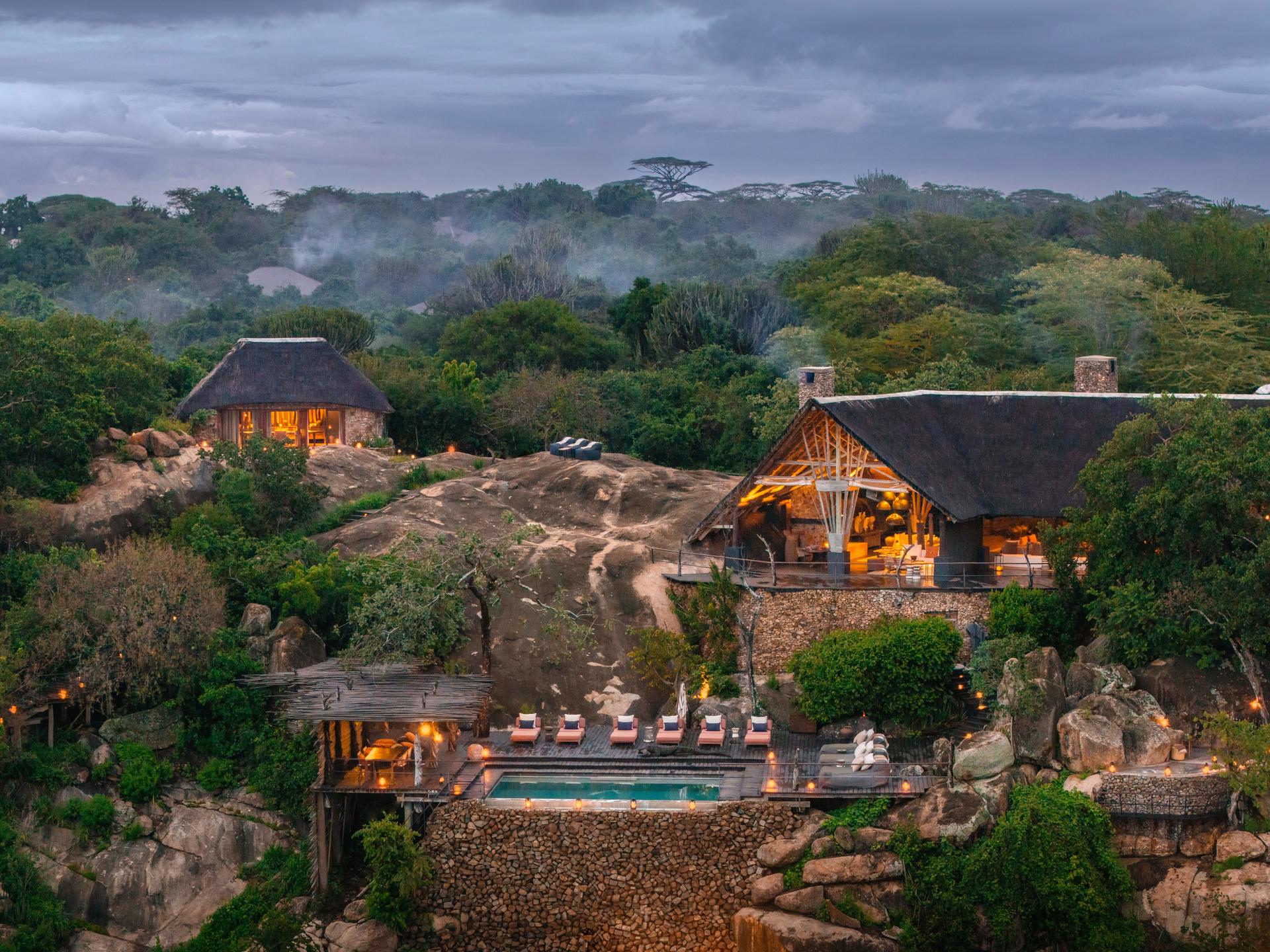
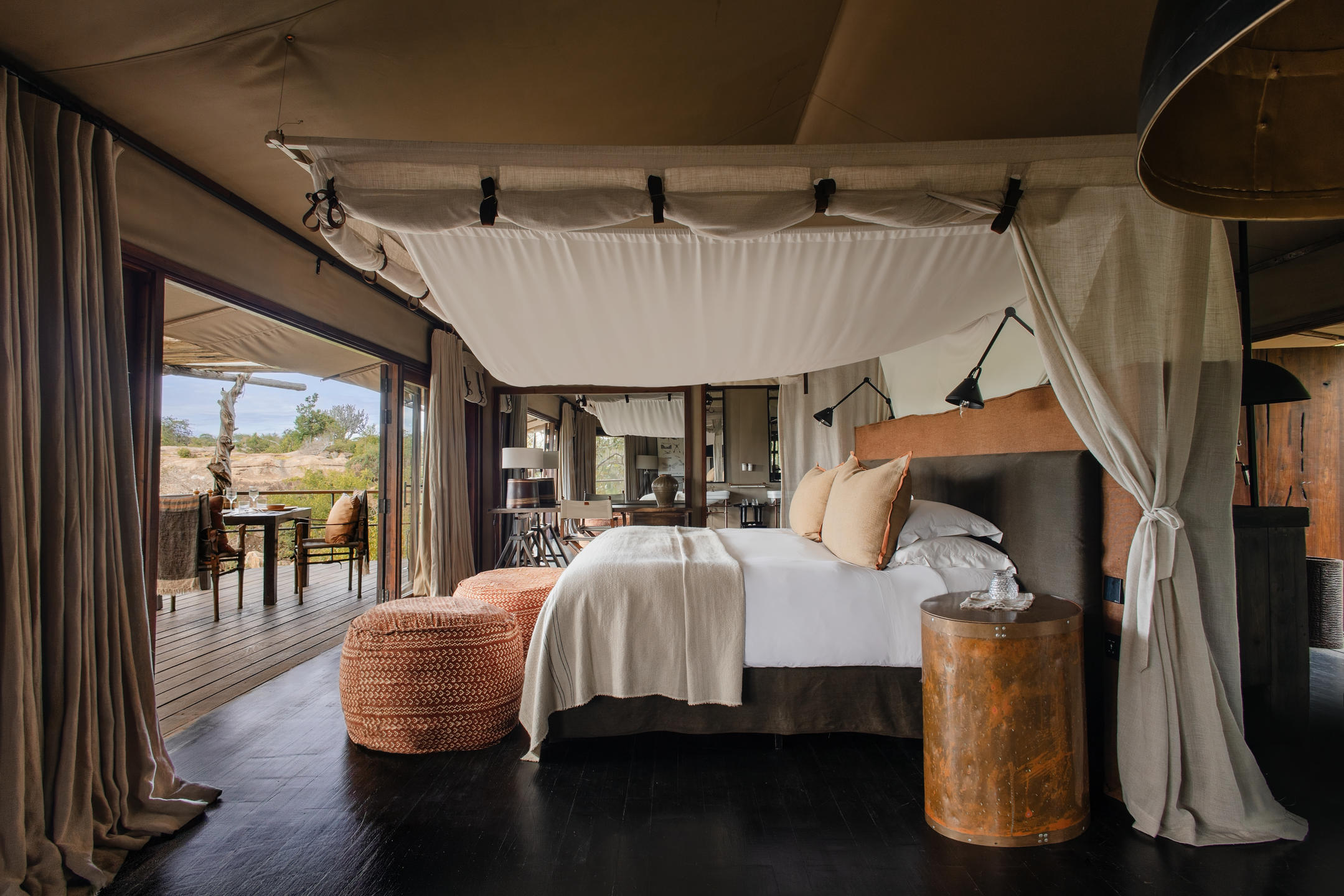
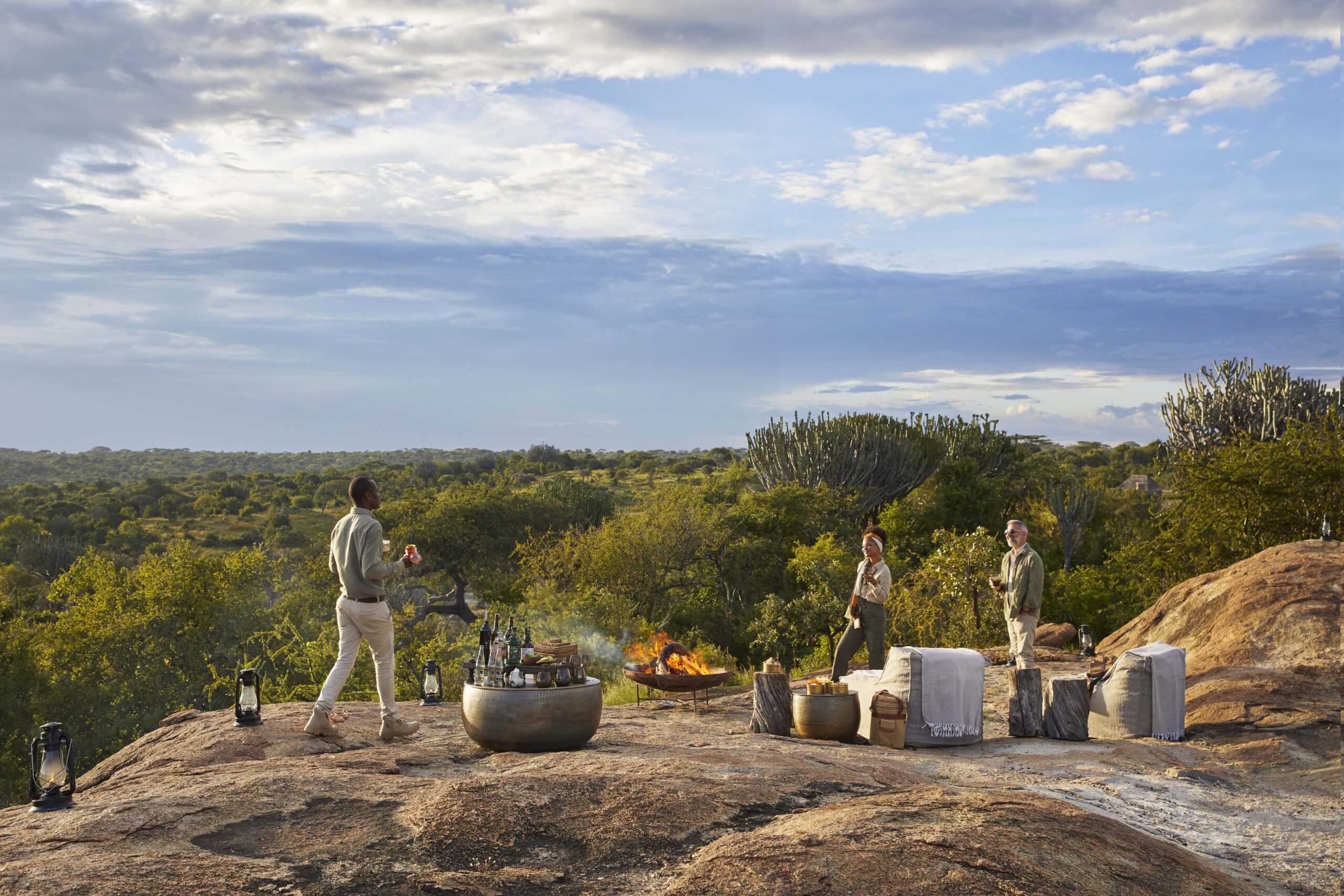
The lodge itself sits perched on granite boulders above the Arugusinyai River gorge, connected by winding wooden walkways that feel like they grew out of the landscape rather than were built on top of it. The suites are generous without being showy — expansive decks, soaking tubs positioned to face the bush, outdoor showers, the kind of beds you need a moment to commit to leaving. The design lets the setting do the talking, which is a smart call given the setting.

But what really separates Mwiba from the crowded northern circuit isn’t the hardware. It’s the freedom. Every guest gets their own private guide and vehicle. There are no set schedules, no convoy of Land Cruisers jostling for position at a kill. You go where you want, when you want, for as long as you want. For anyone who’s spent time trying to enjoy a leopard sighting with six other vehicles parked around it, that matters more than it sounds.
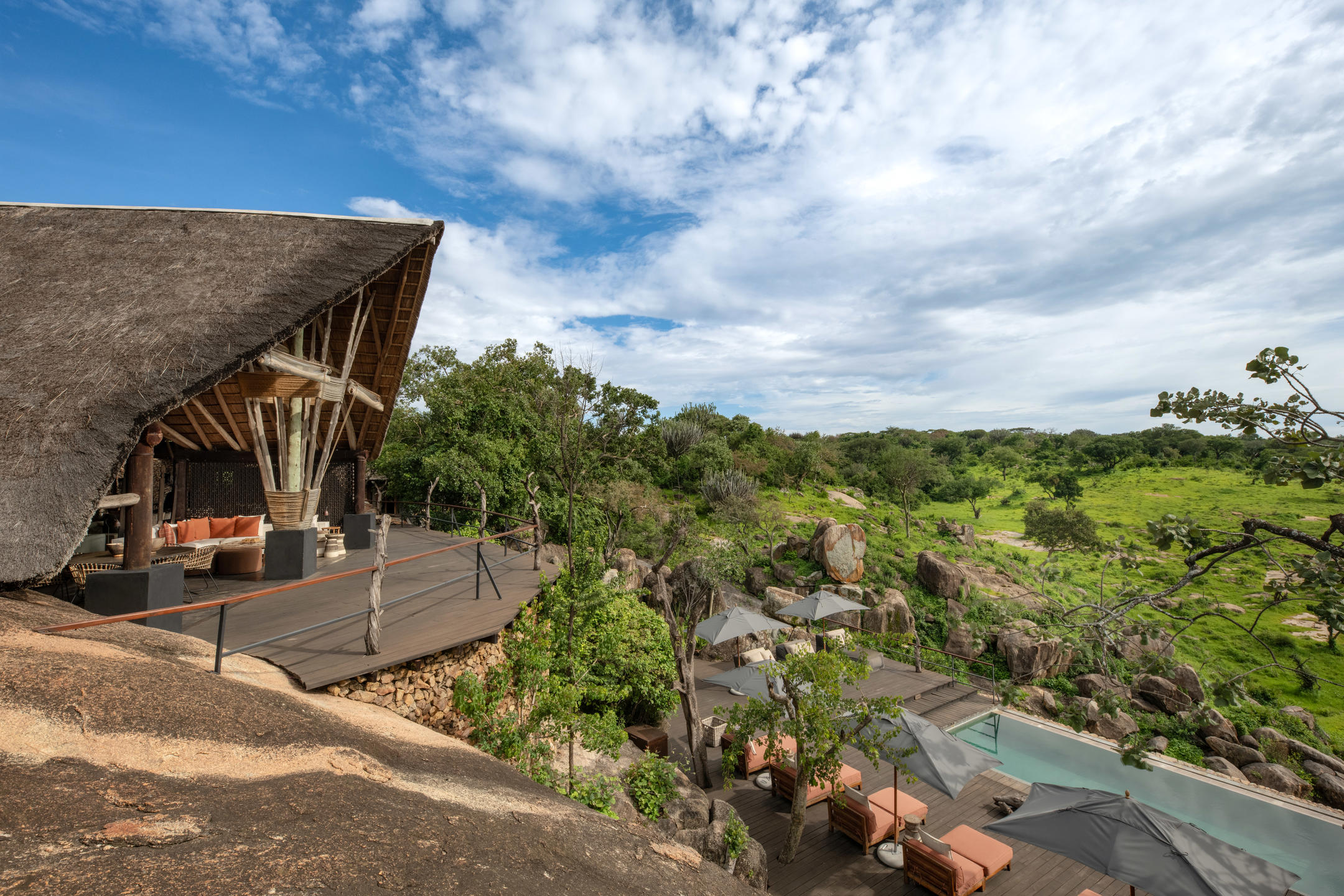
The wildlife corridor here connects the southern Serengeti to Lake Manyara and the Ngorongoro highlands, which means the diversity of what you’ll encounter is genuinely surprising. Elephant, lion, cheetah, wild dog — all on a reserve where the only tyre tracks in the road are probably yours.

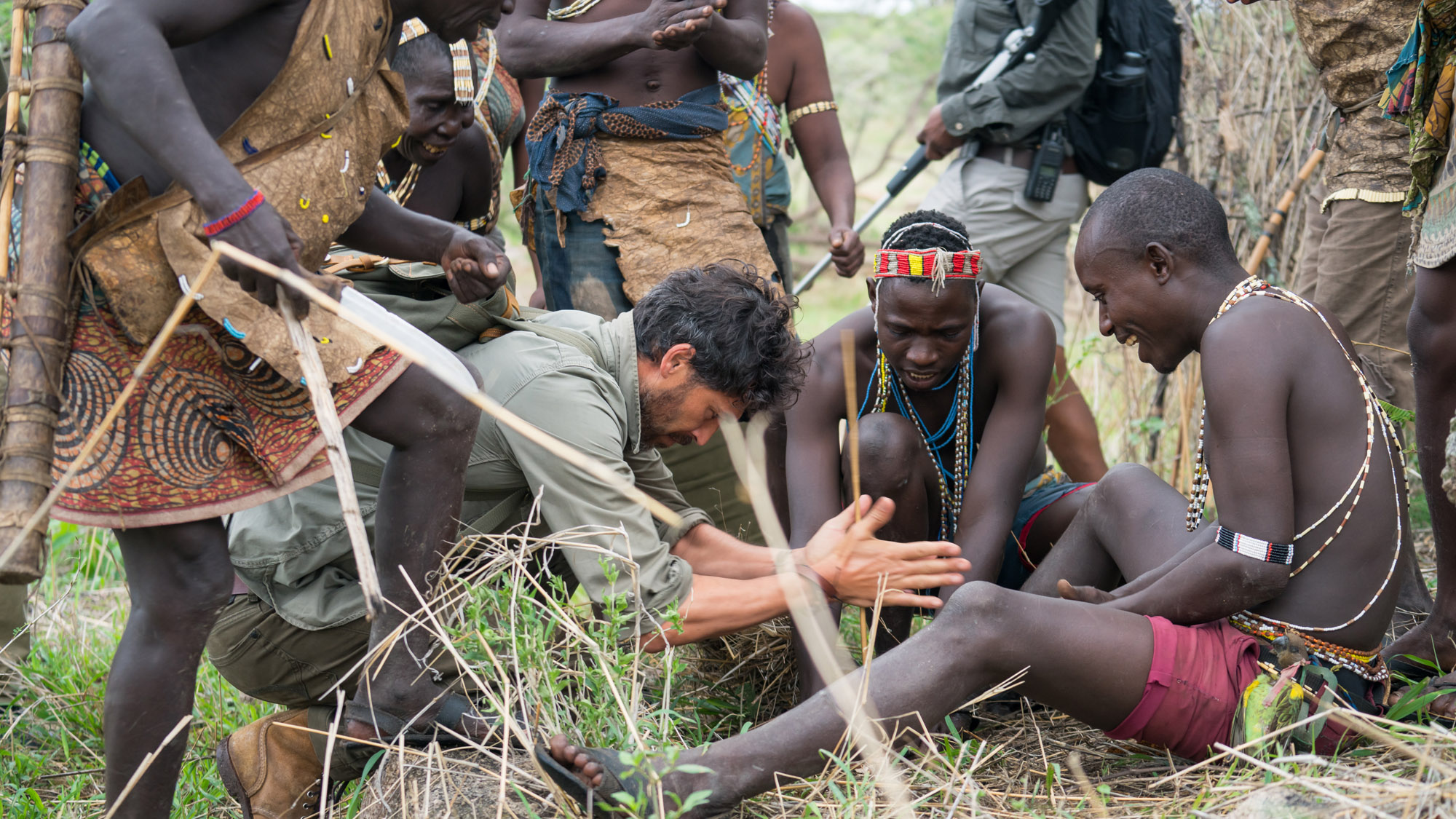
Then there’s the Hadzabe. One of the last remaining hunter-gatherer tribes in Africa, they’ve lived around Lake Eyasi — a short helicopter flight from the lodge — for tens of thousands of years. A morning spent with them, watching them hunt with handmade bows in the acacia scrub, has a way of quietly rearranging your priorities. It’s not a performance put on for tourists. It’s a way of life that has remained largely unchanged, and being invited into it, even briefly, is a privilege worth the journey alone.
The helicopter deserves its own mention. Mwiba is the only lodge in Tanzania with a permanent helicopter on site, which opens up a level of exploration most safari-goers never access — flights over the Serengeti plains, down into the Rift Valley, across to Lake Eyasi. It turns an already exceptional stay into something that feels almost unreasonably good.
Mwiba recently joined the Auberge Collection alongside sister property Chem Chem, which makes combining the two lodges on a single Tanzania itinerary a seamless and logical exercise. Different ecosystems, complementary experiences, and a level of consistency across both properties that makes planning straightforward.

The honest question with any safari lodge is whether it lives up to what’s written about it. Mwiba does, and then some. It’s the kind of place that doesn’t need to shout about itself. The guests who find it tend to come back — and tend not to tell too many people about it either.

On The Rock – Lamai Serengeti, Tanzania

The Serengeti needs no introduction. Its name alone is enough to conjure something — a golden expanse of grass, a sky stacked with cloud, the distant rumble of a million wildebeest moving as if the plains themselves had come briefly alive. Most people know the Serengeti before they’ve ever seen it, and most people experience it from somewhere in its vast and well-travelled centre.

The northern reaches are different. Quieter in vehicle traffic, bolder in topography, and framed to the north by the Mara River — the final barrier in the wildebeest’s annual circuit, where crocodiles the size of dining tables wait with a patience that can only be described as geological. The Kogatende region up here feels, in some important way, less curated than the rest. More indifferent. More itself.

Lamai Serengeti sits on the Kogakuria Kopje — an ancient granite outcrop that rises from the surrounding plains and offers, from its highest points, a view of the Serengeti that the ground simply cannot provide. The camp was designed to inhabit the kopje rather than conquer it, with massive boulders becoming walls and room dividers, the rock itself doing half the architect’s work. Sitting on a veranda here, with the Mara River valley spread below you and the horizon running uninterrupted in every direction, the effect is that of an accidental observatory — one that has been in place, in one form or another, since long before anyone thought to build on it.

Walking is central to the Lamai experience, and the kopje is ideal terrain for it. Between July and October, when the short grass plains are open and the wildebeest are moving north, guests on foot can work within surprisingly close range of animals that would bolt at the sound of an engine. The kopje itself, threaded with paths that wind through ancient granite formations and patches of shade, reveals a miniature world of lizards and birds and plant life that a vehicle would crush without noticing. Down on the plains below, the scale shifts entirely.


Those same months bring the Migration river crossings, twenty minutes from camp — one of the more extraordinary things that nature produces on a regular schedule. Tens of thousands of wildebeest gathering at the bank, surging forward in a wave of collective decision-making that seems both impossible and inevitable at once, the crocodiles below cutting through the chaos with a terrible efficiency. It is the kind of spectacle that stays with people for the rest of their lives, and Lamai’s position on the Kogakuria Kopje places guests closer to it than almost anywhere else in the Serengeti.


The furniture is locally made, the food sourced from within the country, the guiding among the finest in East Africa. These things matter. But what Lamai really offers is simpler than any of it: a rock, a view, and a landscape old enough to make even the Great Migration — that ancient, ceaseless turning of the wheel — feel like something happening right on schedule.


Singita Sasakwa Lodge – Where the Serengeti Wears a Silk Jacket

Some safari camps feel like they belong to the wilderness. Singita Sasakwa feels like the wilderness decided it deserved a manor house.

Set high on the Sasakwa Hill in Singita Grumeti, this is the Serengeti with its collar pressed, its shoes polished, and its Martini served at exactly the right temperature. But don’t let the elegance fool you — you’re still in one of Africa’s wildest theatres, and the action below is anything but refined.

From the moment you arrive, Sasakwa has a certain old-world confidence. The architecture nods to grand estates and colonial-era romance, but without the stiffness. It’s expansive, warm, and quietly indulgent: long verandas, wide views, and interiors that invite you to sprawl rather than perch. The infinity pool looks out over plains that seem to go on forever, and if you’ve ever wanted to watch a storm roll across the Serengeti while wrapped in luxury, this is the place to do it.

And then there’s the safari.

Singita Grumeti is private, which means the experience has a freedom to it that’s increasingly rare. No traffic jams of vehicles. No radio chatter chaos. Just your guide, your curiosity, and a landscape that reveals itself at its own pace. One moment you’re tracking lions through grass that looks like it’s been brushed into place; the next you’re watching a leopard melt into the shadows of a riverine thicket as if it was never there at all.

If you time it right, you also have the Great Migration in your orbit — the kind of spectacle that makes you realise nature is capable of excess. Thousands of wildebeest, zebra, dust, noise, urgency. And then, later, back at Sasakwa, everything slows again. A bath with a view. A drink on the lawn. A dinner that feels like a private event, even when it’s simply your own table under the stars.

Sasakwa is for travellers who love the romance of safari, but also appreciate the finer things: space, service, and the luxury of feeling entirely unhurried. It’s the Serengeti, yes — but it’s the Serengeti dressed for the occasion.

Mwiba Lodge: Where the Wild Moves Quietly Around You

There are lodges that place you in the bush, and then there are lodges that make you feel as though the bush has quietly rearranged itself to accommodate you. Mwiba Lodge, set on a private concession bordering the southern Serengeti, does exactly that. It’s a sanctuary of ancient granite boulders, desert-rose trees, and soft, effortless luxury — all suspended above a landscape where wildlife drifts past as naturally as weather.

Mwiba’s architecture is a masterclass in restraint. Timber decks stretch between giant boulders, suites float above the riverine canopy, and the interiors lean into earth tones that feel lifted from the soil itself. Nothing shouts. Nothing intrudes. It’s as if the designers asked the land for permission, and the land gave a gentle nod.

The concession is vast — 130,000 acres of rolling hills, rock outcrops, woodlands, and secret springs. This is the Serengeti without the rush, a private universe where lions pad through the acacia shadows, leopards slip between granite slabs, and elephants wander through the corridors of light that open at dawn. In season, migratory herds move across the reserve like shifting weather; even when the plains fall quiet, Mwiba’s year-round water sources pull life in from every direction.

Safari days here favour depth over speed. Walk with expert guides among ancient kopjes, sit quietly at natural springs as kudu and zebra approach, or follow the soft architecture of tracks along the sand. Drives feel unhurried, as though time itself has stretched to match the pace of the wilderness. And when you return to the lodge, there’s always a sense of calm waiting for you — cool stone, wide views, the hum of the breeze across your deck.

As night folds in, Mwiba becomes a symphony of small sounds: frogs in the riverbed, fire crackling softly, distant hyenas threading their laughter across the hills. Sundowners turn into lantern-lit dinners, and the sky spills more stars than seems mathematically reasonable.

Mwiba isn’t just a lodge; it’s a feeling — of space, of silence, of being held by a landscape older than memory. It’s the Serengeti softened, elevated, and distilled into something quietly magnificent.

Singita Sabora: Serengeti Theatre

Some places you check into. Others, you quite literally arrive. Singita Sabora is firmly in the latter camp. It doesn’t just sit in the Serengeti; it unfurls across it, like a lavish set design waiting for the curtain to rise.

Set in the private Grumeti Reserve, Sabora has all the cinematic grandeur you’d expect from Singita, but with a modern twist. Think sweeping canvas tents — though “tent” feels like a disservice when your suite has Persian rugs, curated antiques, and a four-poster bed that could comfortably accommodate a small wildebeest herd. Out front, the Serengeti plains stretch until they dissolve into a mirage. At night, the soundtrack is equal parts hyena cackles and the fizz of your G&T.

Where Sabora really excels is in its balance of indulgence and immersion. One minute you’re lounging in a leather campaign chair, thumbing through a design book you didn’t know you needed in your life. The next, you’re out on game drive, watching a cheetah test the limits of physics as it streaks across the golden grass. The lodge sits right on the migratory route, so if you time it right, you can sip your morning coffee as a column of wildebeest trundles by — a reminder that in this theatre, the extras number in the thousands.

Meals here are another performance. Candlelit dinners on the deck blur into starlit skies. The menu is a masterclass in contradiction: refined yet rooted, locally inspired yet globally polished. Even the wine cellar, improbably stocked with South Africa’s finest vintages, feels like a nod to the fact that luxury in the bush isn’t just about where you are, but how well you’re looked after while you’re there.

And yet, amidst all the design flourishes and high-thread-count whispers, Sabora manages not to lose its sense of place. Step outside your suite and you’re reminded quickly that this is still big wilderness. Giraffes drift like apparitions between acacias, lions call at dusk, and the Serengeti light — that ever-changing, golden wash — steals the show at every hour.

Sabora is proof that you can have it both ways: the romance of classic safari and the thrill of contemporary design. Here, the Serengeti isn’t just a backdrop. It’s the main character, and you, for a few days, are written into the script.

Lemala Osonjoi: Ngorongoro Reimagined

The Ngorongoro Conservation Area is one of Africa’s most iconic and unique wildlife havens. This extinct volcano crater in Tanzania boasts an incredible profusion of wildlife, with its ancient volcanic soils providing the nourishment that brings in the herbivores, which in turn attract the predators like lions, leopards and hyenas.
Some of the most densely-packed game viewing on the continent is to be found on the crater floor!

Scheduled to open in 2025, Lemala Osonjoi Lodge is the latest addition to the Lemala portfolio and being conveniently located close to the Lemala Gate of Ngorongoro, provides a more gradual access road with game viewing en route.

The eastern quadrant of the Crater sees fewer visitors than the west, especially first thing in the morning and last thing in the afternoon – those critical hours when game viewing is at its best.

Lemala Osonjoi stands to offer guests unparalleled access to the world’s largest intact volcanic caldera that is Ngorongoro.

Positioned just back from the crater rim, Lemala Osonjoi is ideally located for early morning and late afternoon game drives, allowing guests to enjoy the environment without the crowds. The quicker descent to the crater floor is perfect for early risers or photographers in search of ideal light conditions. In just 10 to 15 minutes, you can be in and amongst the abundant wildlife that roams here.
For those seeking adventure beyond game drives, guided nature walks along the crater rim and through the nearby forests are available, led by an expert ranger and a Maasai guide team who will share their deep knowledge of the land.

After a thrilling day on safari, return to the comforts of Lemala Osonjoi’s luxurious suites.
With twenty spacious accommodations, including two-bedroom suites ideal for families or groups, each room is designed to blend elegance with comfort.
Picture windows allow the highland light to flood into the suites, offering guests breathtaking views of the surrounding forests. In cooler evenings, cozy up by the wood stove, wrapped in a winter-weight duvet, or indulge in the warmth of hot water bottles.


En suite bathrooms feature double vanities, walk-in showers, and even outdoor bathing options, creating a spa-like experience in the wilderness. The lodge also boasts an indoor heated swimming pool and a dedicated spa suite where guests can unwind with treatments from expert therapists.

Osonjoi’s Best Points:

  • Its proximity to the quiet eastern access road to Ngorongoro means fewer crowds and better game viewing during peak wildlife hours. What’s more, one of the lodge’s most unique offerings is a full day catered safari lunch on the crater floor, a rare privilege in this protected area.
  • From the spacious, beautifully designed suites to the spa and heated pool, Osonjoi offers the perfect blend of wilderness and luxury.
  • Whether it’s the early morning game drives or the guided walks with Maasai guides, guests are guaranteed unforgettable encounters with Africa’s most iconic wildlife.

Singita Kilima – the Hill of Plenty

This exceptional exclusive-use property is uniquely situated on Sasakwa Hill in the 350,000 acre Grumeti Reserve, in Northern Tanzania. Grumeti is known for exceptional game viewing and is part of the ancient footpaths of the annual wildebeest migration.

The reserve was created by the Tanzanian government in 1994 in order to protect the path of the annual wildebeest migration and the indigenous biodiversity of this vast and important ecosystem.

In 2002, the Grumeti Community and Wildlife Conservation Fund (now known as the Grumeti Fund), a not-for-profit organisation, was granted the right to manage and conserve these 350,000 acres, for the benefit of Tanzania, Africa and the world. Four years later, Singita took over the management of the property to enhance low impact, luxury tourism.

With a surplus of big cats year-round, elephant and buffalo herds, and of course the spectacle of a million wildebeest moving through the area during June-September, the Grumeti Region provides some of the best game viewing in Tanzania.

Now with Singita Kilima added to the already stunning Singita portfolio in the region, one is spoiled for choice…

Offering meticulous service and effortless luxury, Kilima is ideal for shared experiences among groups of friends or extended family gatherings. Game drives in your own private vehicle and personalised wilderness adventures add moments of anticipation and exhilaration to the soft and steady pace of your day.

Kilima offers seclusion and privacy. Here, easing into tranquility and lightness-of-being comes naturally.

When not out on game drives or bush walks, guests can unwind in the various living spaces, watch movies in the media room, enjoy a wellness treatment or stay active in the fitness space.

Mealtimes are a relaxed affair, there are well-stocked ‘bar-delis’ with fresh and healthy snacks on offer throughout the day. Wine-tastings offer the opportunity to discover a fantastic selection of wines and your personal chef will provide delicious meals on request – with ingredients sourced locally and often with a definitive East African flair.

Each tailormade exploration with your personal Field Guide celebrates the freedom to spend unfiltered time in wide-open spaces and while no two Singita game drives are ever the same, you are bound to be enchanted by vivid encounters with Africa’s most iconic wildlife – which flourish and thrive through the tireless efforts of Singita’s non-profit conservation Funds & Trusts.

Embrace the quiet pace of an ancient landscape, far from the noise of the modern world.

An infinity swimming pool anchors the spacious outdoor areas, complimented by private heated pools in two of the suites. A range of wellness experiences are designed to align guests with the restorative power of nature, fostering a sense of harmony with the extraordinary landscape surrounding them.

The property accommodates a maximum of ten people in five suites that vary in décor, size and colour palette. A mix of indoor and outdoor areas create an easy sense of comfort while every aspect of the property celebrates the views of the magnificent grasslands below.

If you are interested in exploring this part of Africa, where the horizons seem infinite and you feel as if you are truly living the quintessential safari experience, get in touch with us through info@iconicafrica.com, and let’s start planning your Serengeti adventure…

Mobile Migration Tanzania: in the Thick of Things

First off, it’s important to understand what mobile camps actually are in the context of this post. Whilst some mobile camps are packing up and moving almost daily, the ones we are referring to here only change location twice a year, moving between north and south in the Serengeti Ecosystem in order to have front row seats to one of the greatest wildlife displays on earth, the migration of millions of wildebeest between grazing grounds.

The migration essentially follows a clockwise route from the calving grounds in the south around Ndutu Plains, heading up along the western corridor of the Serengeti through April and May and into the Grumeti area.
As more rain falls to the north, the herds continue towards the Mara River – the scene of the famous crossings – and surge through the Lamai wedge into the Mara Triangle of Kenya (this is around July/August), before moving east and then back south again, ending up in the southern end of the Serengeti to calve once more come January.

Now, if you’re a camp specifically in place for guests to be able to enjoy the majesty of the herds streaming past each day, you’re in a bit of a pickle once they’ve moved on and you’re left with… well… nothing.
Thankfully it’s never nothing in this part of the world as there is always a resident population of predators and general game, but given that the main reason so many people visit this part of the world is to witness the migration, it makes good sense to migrate with it.

A number of mobile camps base themselves in the southern Serengeti during the calving season and then shift to the northern Serengeti as the herds are approaching the Mara River and the crossings are in full swing. By moving operations, camps make sure they enjoy the best of both seasons, taking roughly a month to breakdown camps and move to the new locations whilst the herds are on the move.

A camp that can be fully broken down and set up again a few hundred kilometres away in only a few short weeks needs to be minimalistic by necessity, so we are not dealing with full-luxury affairs here. Rather, wonderfully comfortable canvas tents are there to cater for your needs exactly, without any unnecessary extravagance.

The approach for most safaris centred round the migration is that of a full-day affair, with breakfast and lunch eaten out in the bush while waiting for a river crossing or a calving event, so you are spending a minimal amount of time at camp anyway.

The reality though is that when you return, you have a wonderful sense of still very much being a part of the bush. Hearing a zebra chomping on grass only a few meters away through the thin canvas of your tent at night can be just as thrilling as watching a stalking pride of lions closing in on an unsuspecting buffalo!

Don’t expect ultimate bush opulence at a mobile camp. Hair dryers in the rooms and lightning fast wifi are so far from the reason you are there in the first place as to seem sacrilegious.
Instead you are treated to the rawest African experience. Paraffin lanterns and owls hooting overhead, lions roaring not far away as you zip up your tent flaps after dinner… the bleating of the wildebeest herds as they sometimes envelop camps completely.
And ultimately, the feeling that you are right where you should be.

Mobile camps are among the most authentic ways to experience the great migration.

Get in touch with us through info@iconicafrica.com to find out more about Entara Esirai, &Beyond’s Serengeti Under Canvas, or a number of others that we hold in very high regard…

Iconic Africa’s 3 Bucket List Safaris

From the Bale Mountains of Ethiopia to the roaring Atlantic Beaches of Cape Town… Africa has an almost endless variety of experiences on offer. It would take multiple lifetimes to do them all.
Yet if we were absolutely pushed to choose only THREE – an almost impossible task – we know which way we’d go.

After much internal deliberation, we settled on one safari to get you blood absolutely racing, one to make you feel an unbelievable connection to nature, and one to bring you utter peace…

Here then is Iconic Africa’s Bucket List Selection of 3 (at least for now):

1. The Great Migration

It’s one of the greatest wildlife spectacles on earth.

1.5 million wildebeest sweeping majestically over the great African plains is a sight that you won’t soon be forgetting. The annual circuit of this megaherd between the southern Serengeti of Tanzania and the Maasai Mara of Kenya is a sheer wonder to behold. The wildebeest – accompanied by half a million zebra – follow the seasonal rains and the good grazing they bring, moving in an never-ending clockwise ring.

From July through to September, the herds have been hitting the northern extent of their movements and have entered the Mara Triangle; a thin wedge of land between the Mara River in the east and the Oloololo Escarpment in the west. It is the Mara river and the crossing thereof that presents them with their greatest challenge on their already arduous journey.
Monster crocodiles lie in wait in the brown waters, and prides of lions line the banks, knowing how the herds will be funneled through very specific gulleys and exit points.
It is carnage as tens of thousands of wildebeest ford the river at once, and it is a glut for the predators.
A particularly wild crossing will leave you completely out of breath.

It seems almost impossible that there can be such an aggregation of wild animals in one place – or at least one area – yet the Great Migration as it is simply known will redefine what you previously imagined as abundance.
Seeing it first hand would be THE safari we would recommend, if you could only choose one…

2. Gorilla Trekking

Another safari to take your breath away, but in a total different manner…

Staring into the eyes of a great ape that but for its shaggy black coat and enormous size could be… you… will bridge the gap between human and nature in a profound way than any other experience you’ve ever had.
You will know – not suspect, but know – that this creature is working you out in exactly the same manner that you are working him or her out, and once you’ve encountered a sentient being like that in the wild, your whole perception of the word “wild” will change. As will your understanding of our human place in this world, and our responsibility to protect it.

The mountain gorillas of east/central Africa are confined to a very small area between Uganda, Rwanda and the DRC.
Uganda and Rwanda are where the infrastructure lies for gorilla trekking, and there are a number of excellent lodges to choose from, like Wilderness Bisate or Singita Kwitonda.
In reality, the lodge you stay in is secondary to the gorilla experience itself, but you do tend to find that the higher-end establishments prepare their guests far better for the treks on the mountain by providing things like gaiters, gloves and other handy equipment.

3. Boatride in the Okavango

Botswana’s Okavango Delta is a true eden. Plate tectonics under the Kalahari Basin have meant that the Okavango River never reaches the sea. Instead it flows out into the Kalahari sands, forming an unbelievably lush inland delta covering 16 000 square kilometres that are simply brimming with wildlife.

The Okavango is seasonal, in that the floodwaters are only around between the end of May and September, when the rain that has fallen far away in the Angolan highlands has flowed down through the catchment area and spread out into the myriad waterways of the Delta.

This is the time to go boating.

There are essentially two options; mokoro or motorboat.

A mokoro (plural mekoro) is the traditional dugout canoe of these parts and is still used extensively bby local fisherman to pole their way through the winding channels. A mokoro ride (multi-day trips are possible) is slow and serene, and allows one real intimacy with nature. You approach silently round corners so have every chance of hearing what’s up ahead of you, like a stately elephant bull crossing a channel.

You get to see the Delta at eye-level, and can appreciate its finer details like frogs and waterlillies and wading birds. It is one of the most tranquil experiences you can find on Safari.

The second option is to head out on a motorboat. You can still find the serenity in droves once you’ve cut the engine, and the beauty of this mode of transport is that you get to cover a whole lot more ground in a short space of time, so if you want to maximise your experience but only have a couple of days in the area, this is the option we’d recommend.

The Okavango is such an incredible body of water (during the flood) that it is a shame not to get the full potential out of your time there, and a boat excursion is definitely the way to do this!

Africa is vast and so is the diversity of safari offerings. No two experiences are the same, which is really the beauty of safari in the first place. Even the same activities in the same area will always differ.

The above three options we are supremely confident will move you in a profound way. If you want the safari bug to bite – and you are unlikely to have much control over the matter – then the Great Migration, a gorilla trek, and exploring the Okavango’s waterways are a sure way to let Africa into your soul…

Get in touch through info@iconicafrica.com to find out more about these and other experiences that are out there, just waiting for you…


When to See the Great Migration

A million wildebeest moving as one extended carpet of biomass is quite something to behold.

Throw in a quarter of a million zebras, thousands of Thompson’s gazelles, elephants moving through the throng and attending predators dotting the surrounding termite mounds, just waiting for an opportunity to strike, and you truly do have one of the greatest wildlife spectacles on earth.

Yet as the name suggests, this is a migration. The herds migrate. They travel long distances, following the rains and resultant good grazing. After giving birth in the southern Serengeti near the Ngorongoro Conservation Area, they journey on a clockwise loop through up the Serengeti to the Masai Mara in Kenya, before heading back south again and repeating the process.

Although there might be yearly variations in exactly what weeks the herds move in because of what rain has fallen, for the most part the migration is fairly predictable, and knowing where the wildebeest will be and when is obviously quite important if your safari is meant to be timed to see them. Arriving in the Ndutu Plains area in July will only get you a view of a couple of resident wildebeest bulls, while one million of them are fording the Mara River 150km to the north. Timing, it seems, is everything.

Here then, is where to expect the herds at what time of year…

January – March

At the start of each year, the migration will be ending its southward journey, moving along the Serengeti’s eastern edge and into the Ngorongoro Conservation Area. The grazing here is rich, providing the herds with the best conditions for raising their newborn calves.

Although the migration is essentially one continuous circuit, it seems reasonable to refer to the wildebeests’ birthing season as the start of the journey. Around late January or February, the herds occupy the short-grass plains that spread over the lower northern slopes of the Ngorongoro Crater highlands and around Olduvai Gorge. Almost half a million calves are born here within a period of two to three weeks, or nearly 8,000 each day.

The abundance of vulnerable calves provides a glut for the predators, so the action is non-stop as lions, cheetahs and hyenas all feast on the bounty.

April – May

After birthing their young, around April the wildebeest herds start to move north-west toward the newer grasses of the central Serengeti, accompanied by thousands of zebras and other antelope. By May, long columns of wildebeest stretch for several kilometres as the animals start to congregate near the Moru Koppies, a scenically stunning area of the park. Mating season begins toward the end of May and wildebeest bulls compete for rights to the females, all the while as the herds continue to drift northwards.

Gradually, the movement gathers momentum and the wildebeest start to mass in the Serengeti’s Western Corridor. A number of seasonal camps operate in this area, which open only at this time of year to take advantage of the great migration’s passing. The herds form in huge numbers along the pools and channels of the Grumeti River, which they have to cross in order to continue on their journey.

The Grumeti is much shallower than the Mara River so does not deliver quite the same spectacle, but the crossings are dramatic nevertheless. This can be a great time to visit the region as it is still deemed to be low-season, so generally offers excellent value for money.

June – July

As June moves into July, the hundreds of thousands of wildebeest and zebra continue to head north along the western edge of the park toward an even riskier barrier then the Grumeti: the Mara River in the north of the Serengeti. These river crossings are arguably one of the most exciting wildlife events on Earth. They usually begin at the onset of high season in July, but timing all depends on rainfall and when the herds arrive in the area. It can vary by a few weeks either way but in general, late July is prime.

The herds will typically be found in the Northern Serengeti and over the border into Kenya’s Masai Mara.

At this time of year, daily river crossings can be seen at both the Mara and Talek rivers,

August – October

Once the herds have negotiated the river crossings they are generally spread throughout the Masai Mara’s northern region, with plenty of them remaining in the northern Serengeti. Years with heavy rains that result in fast flowing rivers take their toll on wildebeest numbers, but even in years of relatively gently flowing water, the crocs have an impact, as well as the resident lion prides. There is no single crossing: at some spots, there are just a few individuals fording the river, while others see thousands of animals moving without break for hours.

By September to October, the main chaos has ended and the migrating columns have moved eastward.

November – December

After the East African short rains in late October and early November, the wildebeest head south from Kenya and into the eastern edge of the Serengeti past Namiri Plains, an area renowned for incredible cheetah sightings. By December, the herds are spread throughout the eastern and southern reaches of the Serengeti, back down towards the Ngornogoro area (although they don’t actually enter the crater itself).

In the early months of the new year, the grasses in the deep south of the Serengeti are lush after the rains. This attracts the wildebeest as well as countless other plains game. The cycle commences as the calving season starts once more.

That is the great migration in a nutshell. Although witnessing the crossings in the dry season is the spectacle it is renowned for, the truth is any time of year can be spectacular.

With multiple accommodation options to choose from – both permanent and mobile – there is something for everyone.

Don’t wait to start your enquiry. Get hold of us through info@iconicafrica.com, and let’s start planning your migration safari…

Singita Faru Faru: Serengeti Delight

Set in front of a busy waterhole alongside the Grumeti River in the heart of Tanzania’s Serengeti, Singita Faru Faru Lodge invites continuous connections with its breathtaking surrounds.

A relaxed approach to luxury forms a golden thread throughout this contemporary African lodge and allows guests to experience the deeply restorative power of nature. Décor & design includes airy bedroom suites, where every creature comfort is catered for with intuitive ease and oversized windows welcome the wilderness inside.

Expansive outdoor decks and multiple airy enclaves allow for intimate dining and drinks, while the café-style bar at the heart of the lodge hums with a subtle sparkle – spilling over to the pool area and firepit, and making for magical evenings under starlit skies, with satellites skimming by miles overhead.

Faru Faru is a mix of contemporary, organic style and the quirky practicality of a traditional botanist’s camp. With seven one-bedroom suites, one family suite, and one two-bedroom suite with a private pool, Faru Faru is able to cater to couples as well as large groups and families. Unlimited natural light and the rich, layered colours of the landscape flow into the living spaces and suites, captured in a pale-on-pale palette offset by hues of winter grasses and pink river clay.

Catering for every creature comfort, the relaxed luxury of Faru Faru’s large bedroom suites is subtly emphasised with cool, clean aesthetics and wide, oversized windows that open up to welcome the restorative natural surrounds inside. You’re going to love the outdoor showers and privacy offered by the thoughtful design of each accommodation. The outdoor seating area connected to each suite is also a huge bonus; it makes for the perfect space to read in between game drives.

The Singita wellness philosophy creates an environment for their urban-weary guests to reconnect to nature, revive their senses, restore their bodies and minds, and explore their African culture. The spa journey can be performed in the tranquility of the spa, out on a private deck or in the comfort of guest suites. The products used are carefully selected for the positive impact that they have on the guests and the environment

Set within Singita’s 350,000-acre private reserve in northern Tanzania, Faru Faru embodies a fresh take on African bush appeal and ushers in a new era of luxury wilderness safaris.

Singita Grumeti, situated adjacent to the Serengeti National Park in Tanzania, is an integral part of the Serengeti-Mara ecosystem, the home of the Great Migration.

The reserve was created by the Tanzanian government in 1994 in order to protect the path of the annual wildebeest migration and the indigenous biodiversity of this vast and important ecosystem.

In 2002, the Grumeti Community and Wildlife Conservation Fund (now known as the Grumeti Fund), a not-for-profit organisation, was granted the right to manage and conserve these 350,000 acres, for the benefit of Tanzania, Africa and the world. Four years later, Singita took over the management of the property to enhance low impact, luxury tourism, at the request of the concessionaire.

  • Guests have the opportunity to visit the Anti-Poaching Observation Post that situated atop a hill with an incredible sunset view over the vast grassy plains below. The experience for Singita guests includes meeting the Singita Grumeti Fund game scouts and seeing how they live and work.
  • If you’re eager to get in a run, chat with the team to see if game scouts are available to accompany you on a jog in the bush…it’s truly an epic way to exercise in the Serengeti and something the Singita team is uniquely trained to execute.


Whilst the great migration steals the limelight in the Serengeti ecosystem, the game viewing is phenomenal year round, with prides of lions roaming the plains, leopards skulking through woodlands, and the ever-present elephant herds constantly delighting visitors with their antics.

Faru Faru is yet another amazing lodge in the Singita portfolio that we simply love sending our guests to, so readily do we trust their brand and service levels.

If you want to enquire more about availability and pricing, get in touch through info@iconicafrica.com, and let’s start planning your safari…

Little Chem Chem: Quintessential Safari in East Africa

On the shores of Tanzania’s Lake Burunge, set amongst the acacia and baobab trees with the lip of the Great Rift Valley Escarpment sitting as a backdrop, lies Little Chem Chem; a camp where understated luxury is woven into every experience.

Little Chem Chem is the “sunrise camp” of the three Chem Chem lodges – the other two are Chem Chem Lodge itself and Forst Chem Chem – being the furthest east, and as such being situated the closest to Tarangire National Park, with which the concession on which the lodges are found share a contiguous border. With no fences around the park allowing the free movement of wildlife, the entire area shows an abundance of game for the wildlife enthusiast. Lions and elephants are regular visitors and during the migration season the fringes of the great wildebeest herds pass through, providing a glut for the predators.

The bird life is sensational, and the combination of savanna and lake shore habitats will keep the avid bird watcher enthralled for hours with its myriad of species.

The lodge itself is elegance in the true classic safari style.

Six luxury safari tents (including one family tent), each boasting indoor and outdoor showers, overlook an open gladed area that attracts an abundance of wildlife. Stately giraffes stroll by as you sit outside in the shade of your canvas awning, and superb starlings hop about looking for morsels amongst the grasses. The main lodge is spacious and cool (WiFi is available in both the rooms and the main area) and allows for fantastic views into the surrounding bush and open spaces. Being small in size, it retains a completely intimate feel, and is also readily available for exclusive occupancy…

Martial eagles soar above, and the bush sings to you constantly with its soft chirp of cicadas in summer, von der Decken’s hornbills in winter, and at night time the ambient sound is provided by the roar of the lion and the guttural rasp of the leopard slinking in the shadows.

Little Chem Chem has paced itself to the natural rhythm of Africa herself, and you will too upon arrival.

Walk with wildlife, marvel at ancient baobabs, embrace serenity and wellness, sip sundowners overlooking the Rift Valley, and discover the ancient culture of the Maasai people. Chem Chem is where you go to feel something with this ancient continent; belonging.


5 Things you MUST Know About the Great Migration

Although “great migration” sounds fairly generic and could refer to any mass of living creatures moving between areas in response to environmental change, in an African context, it refers to one thing specifically, and that is the wildebeest migration of Kenya and Tanzania.

Well over a million of these antelope (yes, they are antelope) move in a big clockwise circle through the year, following the rains between the southern Serengeti in Tanzania, up to the Mara Triangle in south-west Kenya, then swinging south again to calve once more near Lake Ndutu and the surrounding plains. It is truly one of nature’s greatest spectacles.

On many photographers’ and safari-goers buckets lists, the great migration is highly accessible to travellers, but before deciding where or when to go, there are a few things to consider:

It Moves

This first point may seem obvious, it being a migration and all, but the key thing to remember is that the huge herd/s is/are never in the same area for more than a couple of months. The cycle they follow, the depletion of resources and the renewal of resources elsewhere keeps them on the move, so that it is vital to know exactly at what point in their journey the wildebeest are at what time of year in order to plan your safari. There is no point booking a safari along the Mara River in Kenya when the herds are hundreds of miles away in Tanzania. Be informed as to where the herds are, and you are in for the experience of a lifetime.

It Has Specific Points of Interest

The river crossings tend to be the highlight of the migration, and the main reason people want to see it, but they certainly aren’t the only thing the migration offers. Specific times of the year offer specific behaviours; February for instance, sees the herds at the southern end of their migration, in the lush areas around Ndutu in the southern Serengeti, which is where the cows calve most of their young. An estimated 8000 calves are born a day during the peak of the birthing period, and as a result, predator encounters are rife at this time of year. You won’t see the dramatic river crossings during this period, but what you do see is in many ways equally spectacular.

It Changes Year to Year

Although one can say with a fair amount of certainty which part of the migration the wildebeest are going to be in in which month, seasonal variations in rainfall and grazing may well mean the herds are slightly ahead of or behind their projected location in any given year. Exact routes of the migration may also vary, and the great herd may well be further west in one year than it was the year before, and further east the next year.

It is an Emotional Experience

Few people witness the Great Migration and feel the same way about wildlife afterwards. It is an utterly breath-taking, awe-inspiring, moving experience that can leave you feeling completely drained after a prolonged sighting. Watching a group of 30 000 animals surging across the Mara River, fighting desperately to reach the other bank where a pride of lions may well be lying in wait, each wildebeest struggling – often in vain – to avoid the jaws of the enormous crocodiles that lie dormant for most of the year simply waiting for the annual return of the herds, is something no photograph or video can accurately capture the experience of.

It’s NOT the Only Reason to Visit

Whilst the wildebeests’ annual movements are certainly up there as most people’s main reason for visiting this part of the world, the beauty of the Serengeti/Masai Mara ecosystem is that it is a phenomenal wildlife destination whether the herds are around or not. The wildebeest migrate (accompanied by a quarter of a million zebra), but the large predators (who are largely territorial) and the rest of the antelope inhabitants do not, meaning there is a constant wildlife presence across the grasslands when the wildebeest have moved on. The big cats in particular are seemingly everywhere (over 3000 lions inhabit the Serengeti – reportedly Africa’s largest population), and each rocky outcrop or termite mound should be scrutinised for the tell-tale sign of a pair of ears sticking up above the skyline.
The open plains of East Africa is one of the greatest wildlife destinations on earth, even if there was no migration.

Our Iconic Africa consultants have a number of spectacular camps that we recommend in both Tanzania and Kenya from which you can gain access to the migration, so if this is a trip you are considering, or you just want to find out a bit more, be sure to visit our enquiries page…


The Best Lion Viewing Destinations in Africa

Lions are one of, if not the, main reason people travel from all around the world to partake in an African safari. Apex predators in every environment they inhabit, they are the epitome of the wild nature of the continent itself.
Sadly, the reality is that over the last century, lion numbers across Africa have dramatically declined, primarily because of human encroachment and the subsequent loss of habitat for the big cats. Yet in major game reserves in a number of countries, their populations are stable if not recovering.
And lion viewing in one part of Africa may be very different to another.
Here then are our 5 suggested lion viewing destinations, chosen for their variety…

A lioness in Tanzania’s Ngorongoro Crater

Serengeti/Masai Mara

For sheer numbers and scale, the great open plains of East Africa simply have no equal. Apart from the huge herds of wildebeest that make their way through the ecosystem as part of the Great Migration each year, every other animal seems dwarfed by vastness of these grasslands, the king of beasts included.

The scale of the landscape is what makes much of East Africa’s lion viewing special.

The contiguous Serengeti and Masai Mara ecosystems boast roughly 4000 lions between them, and unlike the wildebeest herds that move between the two in a great loop, the lions – being territorial – are around all year, meaning viewing is constant and incredibly varied depending on which season you are in.

You won’t ever forget viewing lions with the endless grasslands of Africa stretching out to infinity behind them…

Duba Plains

Situated right up in the north of Botswana’s Okavango Delta, Duba Plains became famous a few years ago for the specialised lion prides inhabiting the area, that had learnt the knack of using the Okavango’s myriad water channels to hunt buffalo.
Huge cats, developing much thicker than normal upper body muscles from wading through the water courses, these lions use special tactics to isolate individual buffalos – even the big bulls – and drive them into the water where the bovines’ manoeuvrability and ability to defend themselves is greatly reduced

Duba Plains lions face down their eternal enemy. Photograph courtesy Leigh Kemp
The lions of Botswana’s northern waterways have learnt to use the channels to their advantage. Photograph courtesy Ed French.

There is of course no guarantee of witnessing such amazing buffalo/lion interaction, but for idyllic habitat and lions that have the know-how, look no further than this destination for your lion fix.

Sabi Sand Reserve

South Africa’s world famous wildlife reserve in the north-east of the country is essentially the big cat viewing destination against which all others are measured.
Not only does it boast a particularly high density of both lions and leopards (the leopard population is reputedly the densest in Africa), but the guides have an intimate knowledge of the prides and the individuals they contain. This means that sightings take on a life of their own as it isn’t just lions you’re viewing; it’s these lions…
Individual life stories and entire family trees are accessible through the guides and trackers, so even a sleeping cat can become the most fascinating creature on earth as its trials and tribulations are revealed to you.

Cubs like this will be known to local guides and trackers, and descriptions of the complex make-up of the pride will all be part of the fascinating viewing.

As the Sabi Sand is all privately owned, off-roading is allowed (conditions depending), so one is able to get intimate views of all wildlife, not just the local lion population.

Incredible lion viewing at Londolozi Game Reserve.

Click here to view some of our favourite lodges in the Sabi Sand Reserve…

Ruaha National Park

South-centrally situated in Tanzania, Ruaha National Park is one of only six reserves that can boast a population of over 1000 lions. It is part of the greater Ruaha Landscape, a 50,000 square kilometre section of East Africa that serves as one of the continent’s most important wildlife areas.
Its rugged scenery, prominently featuring the iconic baboab tree, is a haven for predators, particularly in the dry season (May to October), when wildlife centres its activities around the Ruaha River where the remaining water supplies are, and the lions in particular take advantage of the weakened state of the herbivores to hunt along the river fringes.


Ruaha is defined by spectacular landscapes…

Although not as well known as its sister reserves further north, Ruaha’s wildlife viewing is just as spectacular in its own right, and a multitude of luxury safari options that generally fly below the radar are available to those wanting a safari a bit more off the beaten track.

North-West Namibia

You are less likely to see lions in this inhospitable part of Southern Africa, but if you do manage to get a sighting (and many of the specialised camps are masters at finding where the roaming prides of desert lions are to be found), it will be like no other you’ve ever had.
Lions plodding their way over soaring sand dunes; lions threading their way along long-dry desert watercourses; lions on the beach…
The uniquely adapted desert lion population of north-west Nambia is highly specialised for their environment.


A lioness reclines on a sand dune. An incredibly special sight. Photograph courtesy Wilderness Safaris.

Some hunt the giant desert giraffes, some have been known to hunt seals on the beaches of the aptly named Skeleton coast, and some lions have even been known to eat the desert-growing Tsama melons.

Just a chance to see these unique cats is well worth looking into Namibia as your next safari destination with a difference…


A lion pride in Tanzania’s Ngorongoro Crater

The beautiful thing about Africa is its sheer diversity of wildlife offerings. If lion viewing is your main reason for visiting, be sure to get in touch with our sales representatives, and we can start planning your dream lion-viewing safari…

Property of the Month: Singita Faru Faru

Surrounded by the Grumeti River and the riverine woodland is this month’s property of the month – Singita Faru Faru. One of Africa’s ultimate classic safari lodges, this seamlessly elegant and modern accommodation is set in one of the world’s most exquisite locations, offering guests access to prime game-viewing  and some of Tanzania’s finest hospitality.

The ultimate East African luxury

Faru Faru lodge is the pinnacle of luxurious safari, ensuring that you spend your time in East Africa living on your very own piece of paradise. Suitably located in the Grumeti Reserve inside the Serengeti – you can only vacation in this area with Singita. This means that you are guaranteed a private and exclusive experience, far removed from the crowds you’ll find in other parts of the area.

Here you are promised access to some of the best wildlife viewing in the country while indulging at a luxury stay. Boasting its own beach and natural waterhole, Singita Faru Faru makes sure that you never have to leave the lodge to experience romance, relaxation or adventure. The safari comes to you every day.

And if you’re looking for something to do in-between game drives, Faru Faru lodge has an endless list of activities for you to try. From archery and lawn croquet to dips in the rim-flow swimming pools, there is always a new experience waiting to be had. And while you are enjoying the best the Serengeti has to offer, why not take a hot-air balloon trip for an exhilarating balloon safari or wind down after a thrilling game drive at the spa. And in-case you thought game vehicles and hot-air balloons are the only way to see East Africa’smagnificent wildlife, try a horse-back safari or an adventurous night drive.

Classic yet contemporary

The location of this property is remarkable and the wildlife and activities are definitely alluring, but the main attraction is the lodge’s classic East African style architecture and décor. While the design creates an ambiance of authenticity, guests are offered all the luxurious comforts one could wish for.

The construction focuses on the waterhole, with the planning making a bold, but magical statement. This perfectly combines the living areas with nature creating a rustic and real bush appeal with a fresh and clean-lined modernity allowing animals and nature to take centre stage.

The nine stone, canvas and thatched suites have the character of a classic safari camp, yet the interiors offer the ultimate in contemporary luxury with panoramic glass windows and free-standing claw-foot baths. Each suite makes a statement with a botanical theme and all of them are outfitted with every conceivable comfort – including your very own Swarovski spotting scope.

Why wait for the most magical trip to happen… Start imagining lounging in the swimming pool overlooking the surrounding area awash with wildlife; recline on the Lodge’s elevated viewing decks, or relax unwind in your room and watch as predators and prey are drawn right up to the lodge.