Nyamatusi Camp: Where Mana Pools Casts Its Spell

Certain landscapes feel like they’ve drifted out of a dream, and Mana Pools is one of them — a place where blue-washed woodlands melt into slow water, where elephants stand on hind legs to reach ana pods, and where light behaves in ways photographers still can’t adequately explain. Nyamatusi Camp sits in the heart of this enchantment, offering front-row seats to one of Africa’s most atmospheric wildernesses.

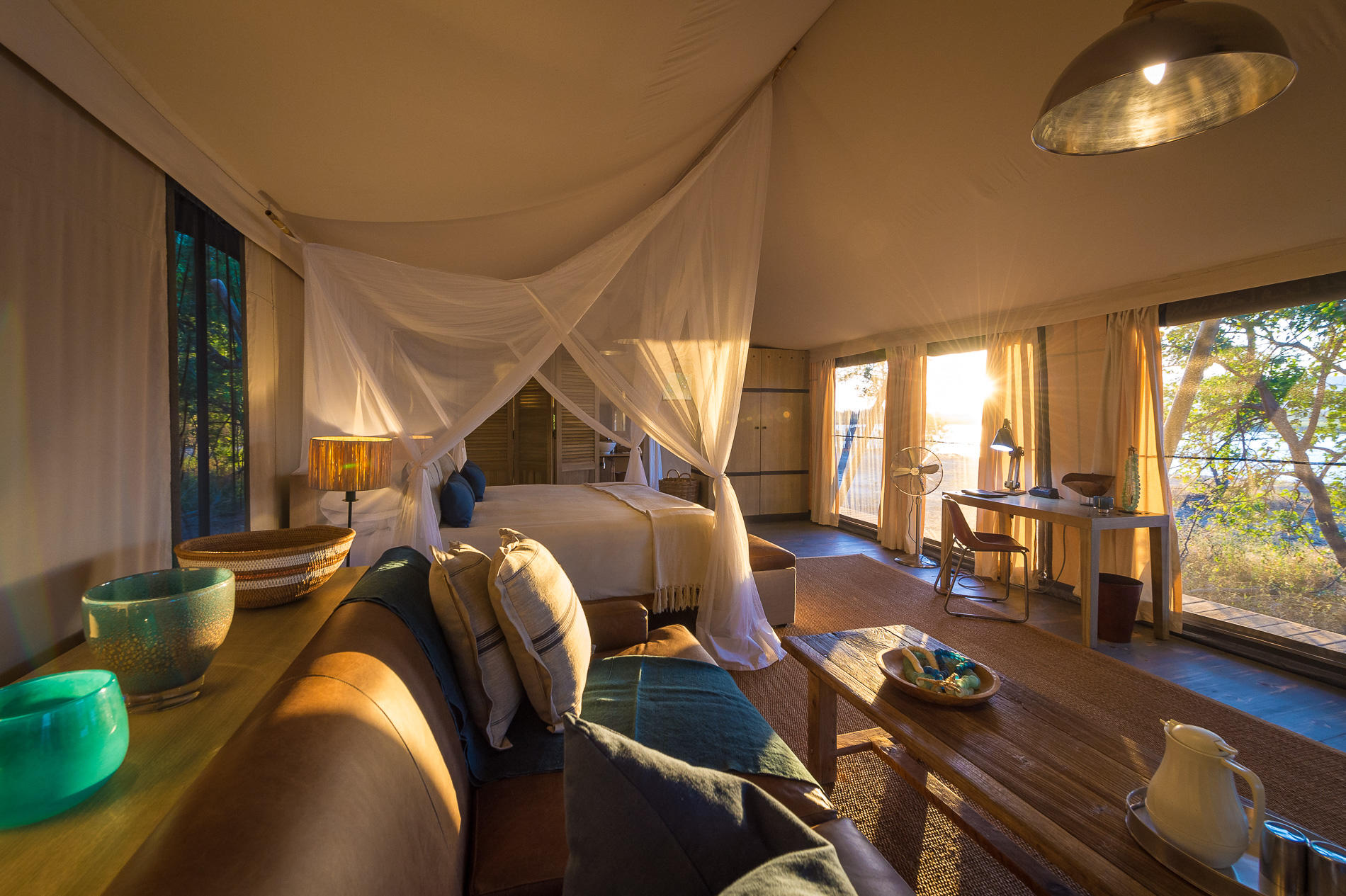
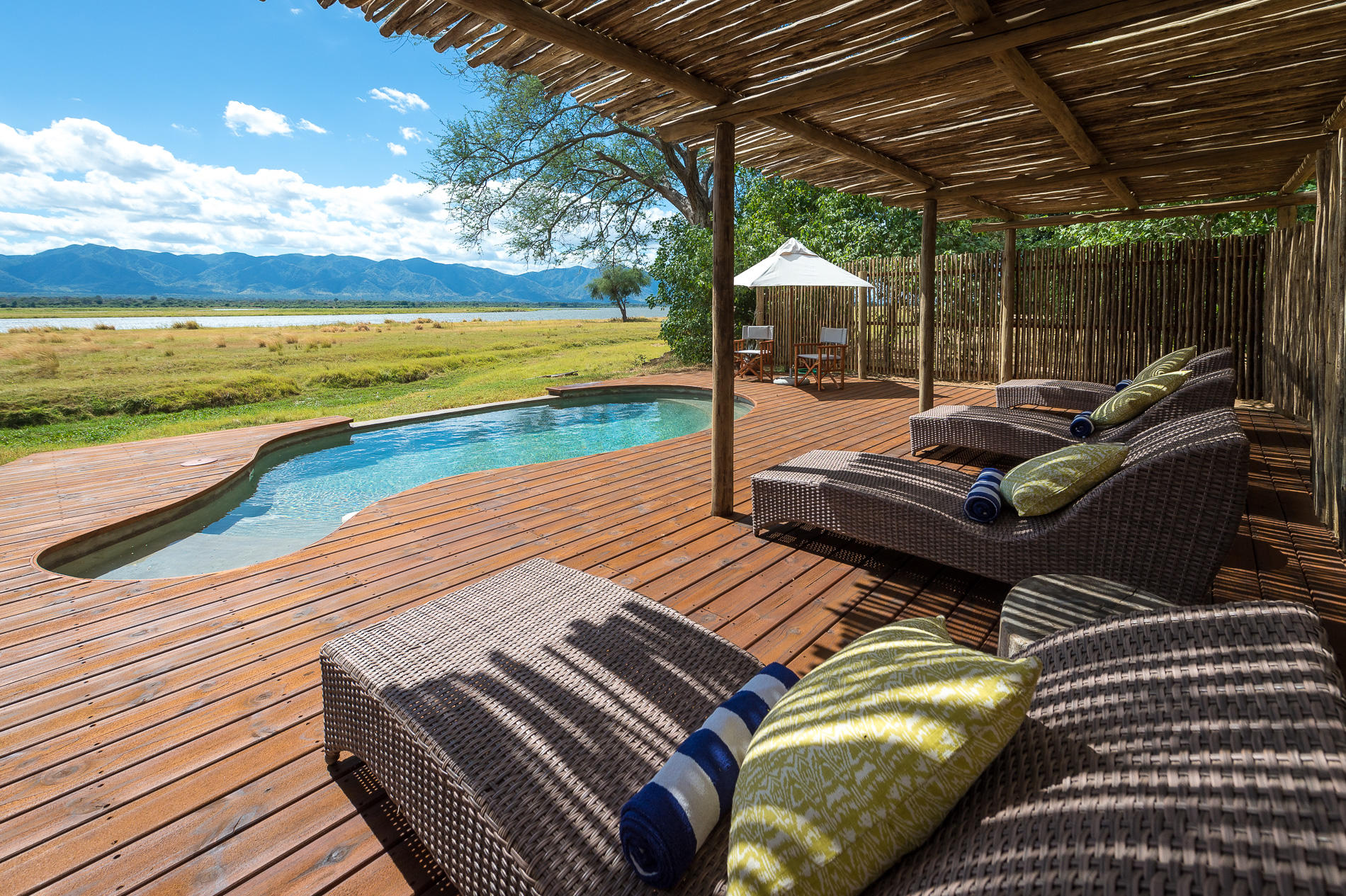
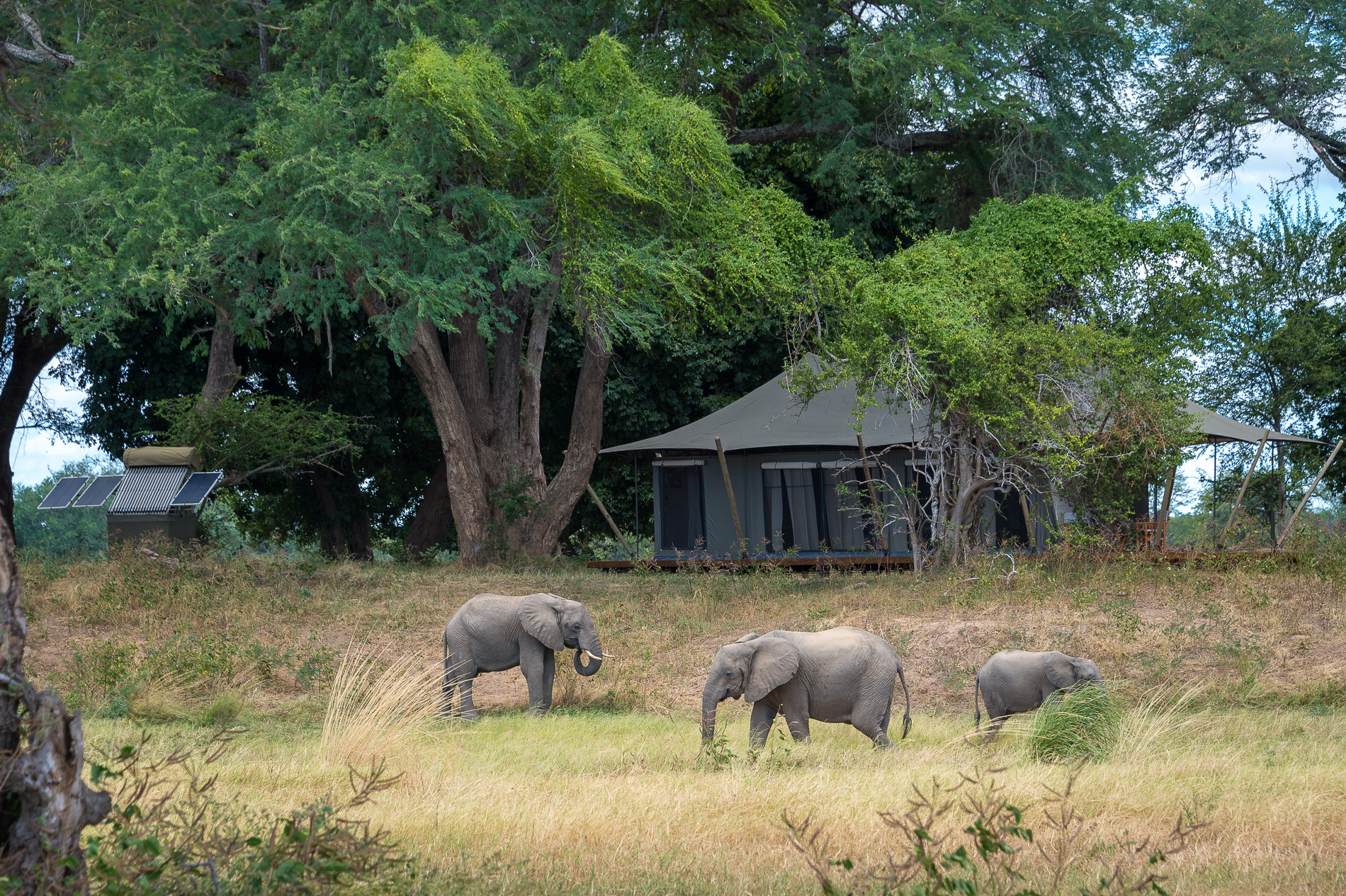
Set along a remote curve of the Zambezi River, Nyamatusi’s tented suites are luxurious in a way that never breaks the spell of the environment. Interiors are warm, rich and tactile — brass, canvas, leather — but always with the river in view, always with the forest whispering just beyond the deck. This is the kind of camp where wildlife walks through your field of vision rather than being something you go out to find.

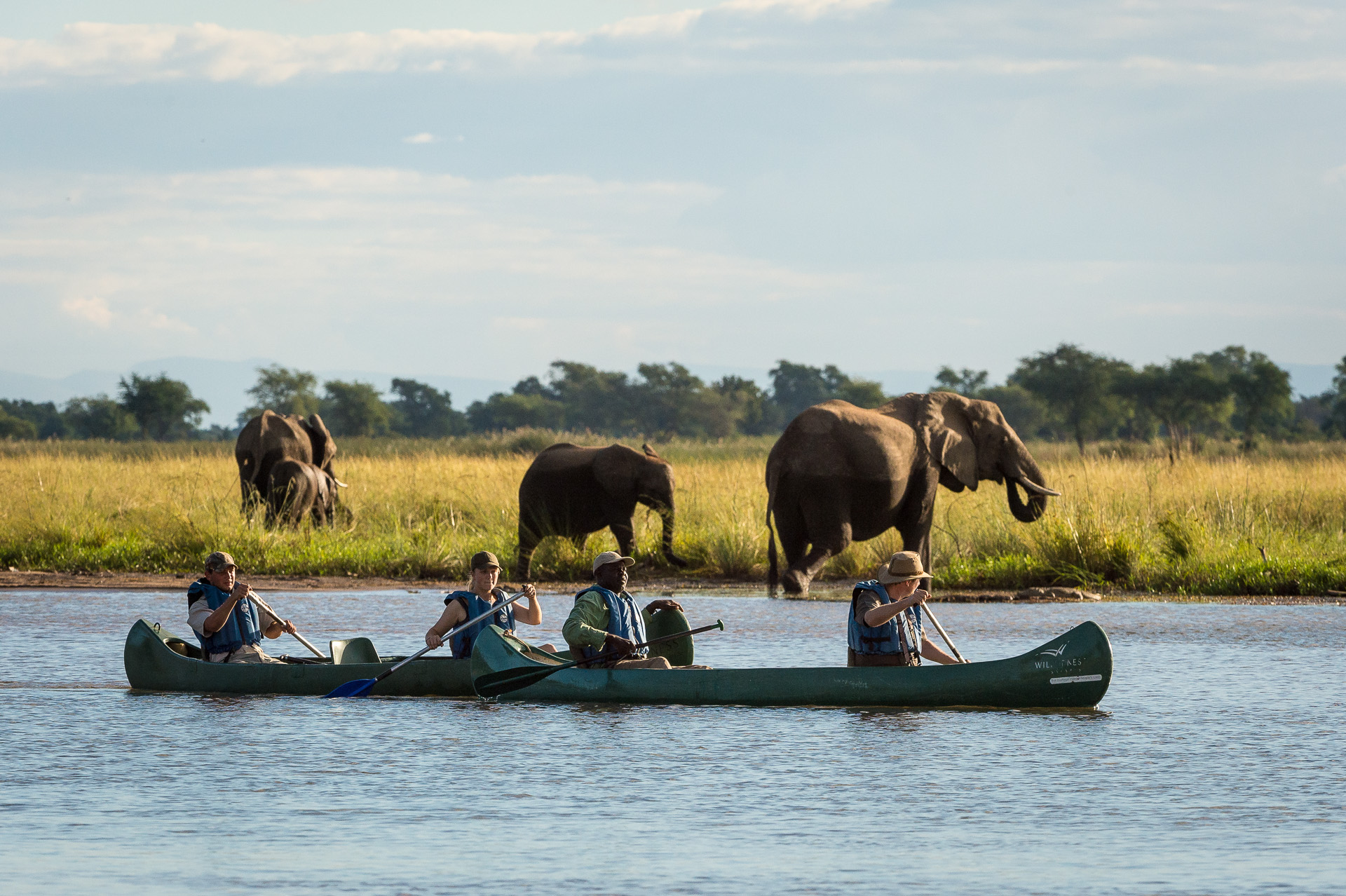
Activities lean into Mana’s slow, immersive energy. Walking safaris take you through cathedral-like woodlands where every shaft of light feels choreographed. It’s not unusual to round a grove and find an elephant calmly feeding at arm’s length, acknowledging you with the faintest ear-flick before returning to its breakfast. Canoeing is equally magical — drifting between hippo channels, listening to water lap against the bow, watching the shoreline shift like an unfolding watercolor.

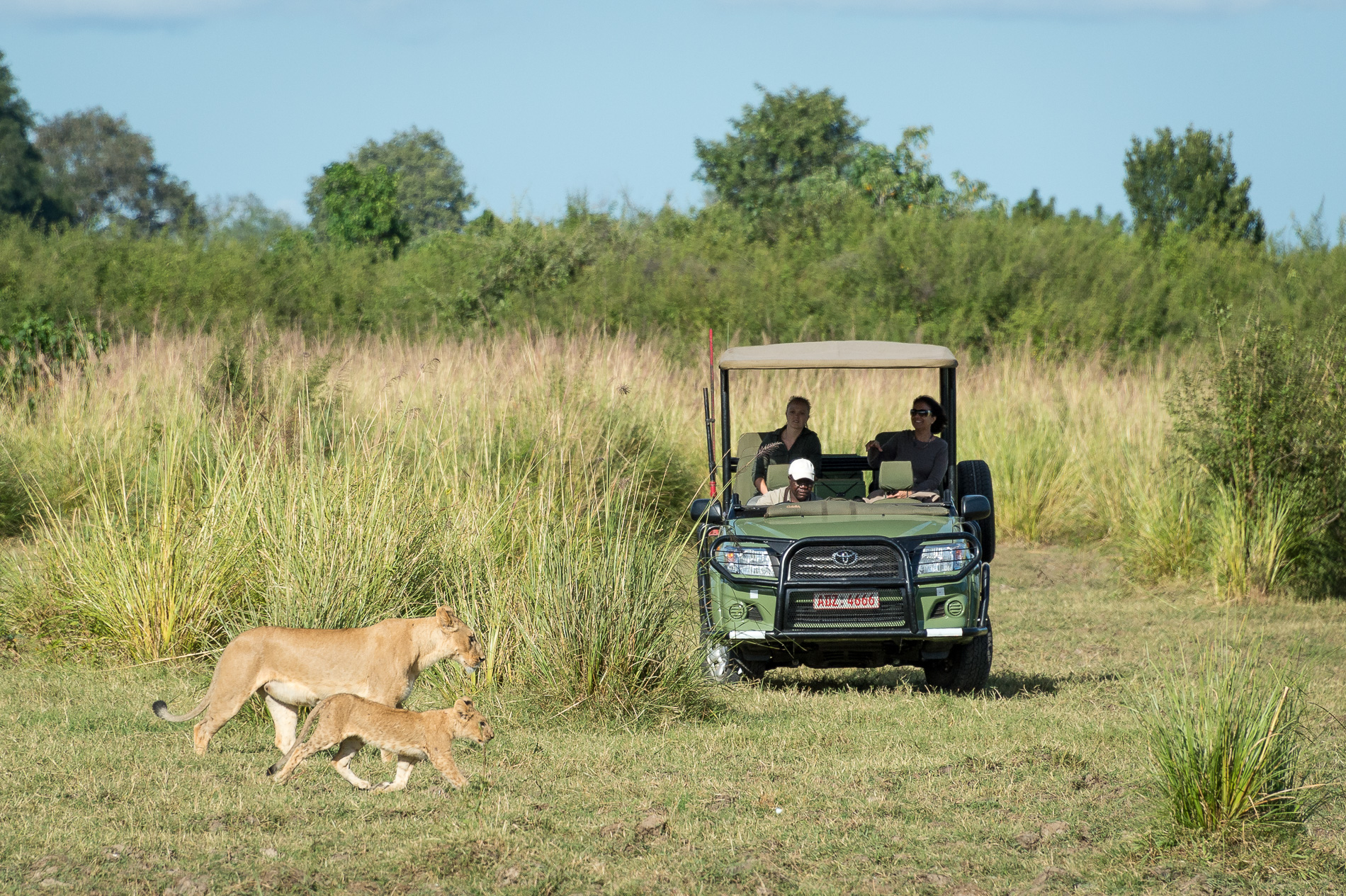
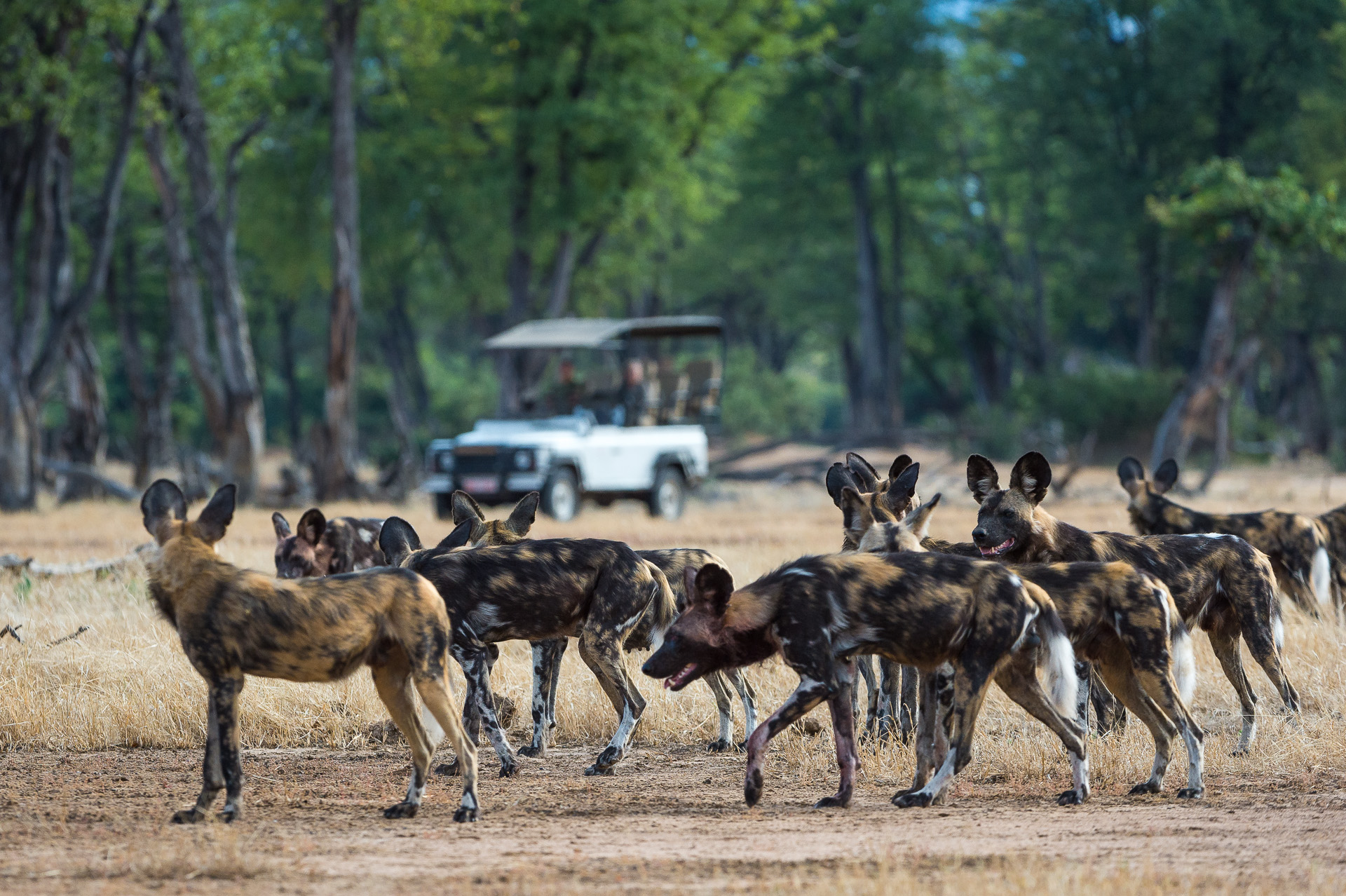
Game drives capture Mana at its most instinctively wild: painted wolves trotting along riverbeds, lions dozing in delicate shade, nyala moving like brushstrokes through the trees. Yet the mood here is never rushed. The forest encourages softness, attentiveness, breathing room.

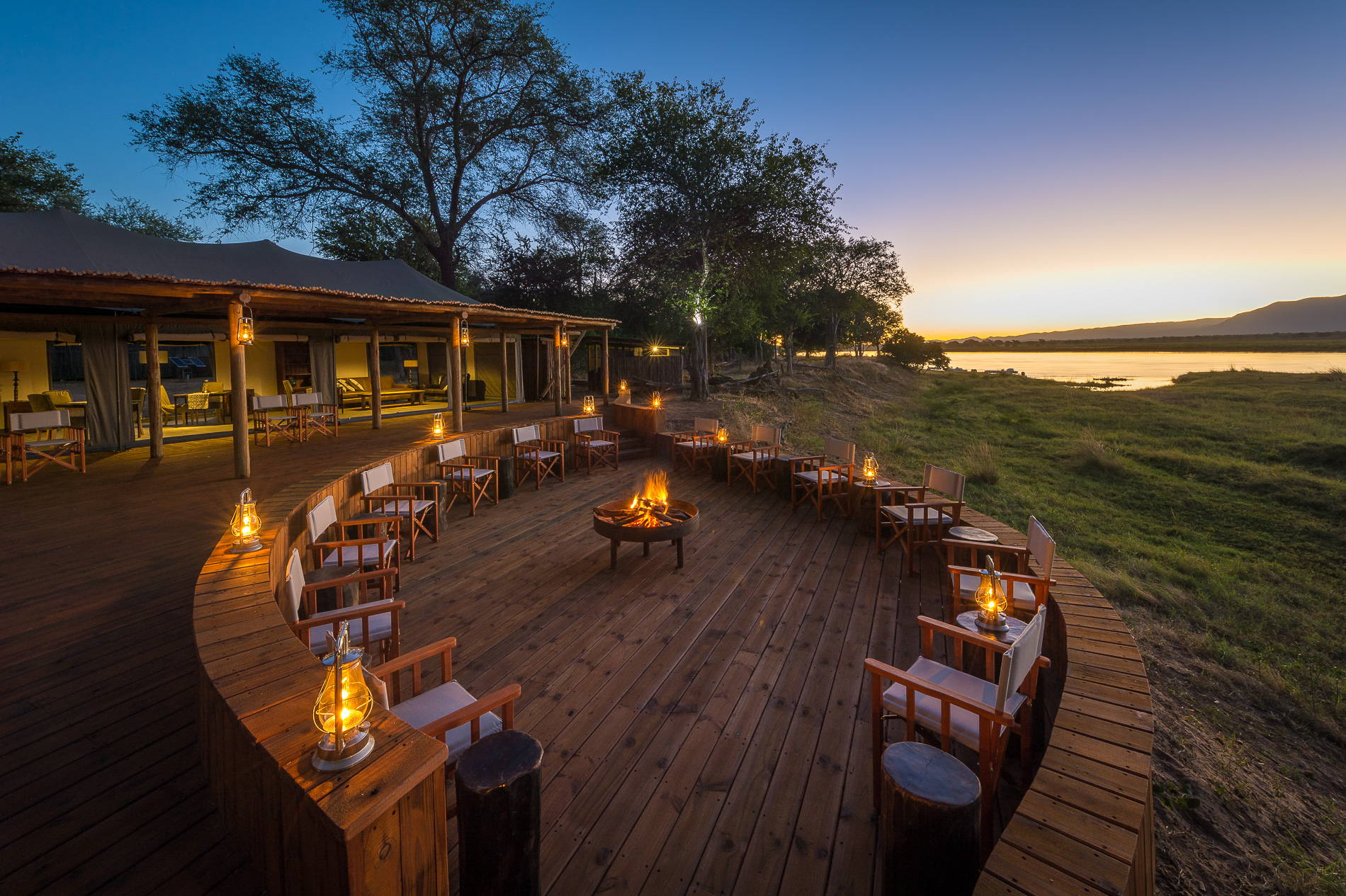
Evenings are all glow — lanterns, campfire sparks, the quiet hum of the river. It’s the kind of place where guests become loyalists, and loyalists become evangelists.

Nyamatusi doesn’t just show you Mana Pools. It lets the place seep into your bones.

Mpala Jena: Zambezi Luxury

When you combine the feel of a Mozambican beach side lodge with a classic safari camp, and throw in Africa’s mightiest waterfall just downstream, that’s Mpala Jena.

Part of the Great Plains portfolio, Mpala Jena is the epitome of Victoria Falls luxury accommodation and is an intimate safari lodge positioned along the beautiful tree-laden banks of the Zambezi River.

Zambezi National Park, in which the lodge is nestled, is little known, despite its proximity to the world famous Victoria Falls. Split off from the Victoria Falls National Park in 1979, the 56,000 hectares of pristine wilderness and wildlife habitat has been a National Park in its own right ever since.

It is home to a wide range of wildlife that can be enjoyed on safari drives, seen from the Zambezi River when on a boat cruise or the unique Dhow, walking trails or even while sipping cocktails from the camp’s swing chairs. Higher concentrations of buffalo and elephants are typical from June to October. There are more lions per km² here than in any other park in Zimbabwe.

In August 2025, two new, 3-bedroom Mpala Jena Private Villas will open. These two unique villas will be located five kilometres upstream from the current Mpala Jena.

the location of both camps allows easy access to Victoria Falls town by an exciting 40-minute boat or road transfer. Mpala Jena also offers guided tours of the Victoria Falls.

The sand floor in the main camp’s bar area and the adjacent swimming pool set the scene for guests to kick off their shoes and relax after their morning safari drive or river cruise. The pool lounge makes you feel that you are right on the river. Mpala Jena is highly sought after for those wanting the best Victoria Falls luxury accommodation.

Guests have a choice of three large double or twin bed configuration suites, plus two 2-bedroom family suites; are all under sand-coloured, flowing canvas, with canopy ceilings and open (yet netted) views of the river frontage.

Each suite has a shaded, private veranda area and en-suite bathroom facilities, including an indoor shower, separate loo, and double basins. The highlight of the suites is the outdoor bathrooms with a beautiful bathtub and outdoor shower. Decking in front of the tent leads to views of the Zambezi River’s calming and peaceful flowing waters.

Mpala Jena has a strong sustainability ethos. It is powered entirely by a solar plant and battery. Building materials and design elements were specified and sourced with a clear vision of minimising embodied energy and transportation miles.

Although there are plenty of fantastic accommodation options in and around Victoria Falls town itself, it can be nice to escape to somewhere a bit more sheltered, that moves at its own pace, away from the hustle closer to the falls.
The barefoot luxury of Mpala Jena ticks this box perfectly, where safari and rest combine into a magical sense of contentment.


Mana Sands: the Zambezi at its Best

Mana Pools National Park in Zimbabwe has long been associated with wild adventure.
It is a place where Africa still feels like its is moving at the same pace it did thousands of years ago, and the rhythm of nature is uninterrupted by human presence.
The epicentre of walking safaris in Southern Africa, Mana Pools is where you can literally go on foot to join a pack of wild dogs as they get on the hunt, or you can stand mere metres from a giant bull elephant as he stands on his back legs to retrieve seedpods from the upper branches.
It feels like anything is possible in this spectacular wilderness of the Zambezi Valley, and with the construction of Mana Sands, a new luxury lodge on the western side of the park, the envelope of what a true bush experience is, is about to be pushed even further…

Mana Sands represents the realisation of a dream; the owners all share a deep love of nature and in particular of this stretch of the Zambezi River, where they all spent holidays as children. The development of the lodge represents a way for them to find a way back to those simple times of wonder, and to be able to pass on a similar feeling to their own children.

That is ultimately what the lodge is aiming to create for those who visit; a way back to a time before emails and traffic and bills and the complications of day to day life. A visit here will get you in touch with the essence of what it is to feel human. Mana Sands will give guests a rare opportunity to be part of a world where natureʼs raw beauty and untamed spirit come alive in the most extraordinary way.

Mana Sands is in fact two lodges; Mana Sands Main Camp, featuring six private ensuite tents each with an expansive private deck and plunge pool, whilst Little Mana, just downstream, boasts four private ensuite tents, each with a private deck, as well as two extended family units allowing space for up to two extra beds to be added for children.

Both camps offer a full range of bush adventures, from guided walks to tiger fishing excursions, birding-focused expeditions and everything in between. All are facilitated through highly competent, professional local guides.

Little delights surprise you at every turn, from gin and tonic stops on the riverbank to stargazing under the brilliance of the southern skies.

Whilst Mana Pools has been on our radar for some years now, it has been a while since we were as excited about this iconic destination; Mana Sands certainly looks like being our top new lodge of 2025.
Although they are still in the final stages of the lodge build, they will be opening for bookings come the new year, so don’t wait to enquire if the archetypal safari adventure is what you are after.

Get in touch through info@iconicafrica.com to find out more about 2025’s most exciting new offering…

Victoria Falls Special

Victoria Falls isn’t just a destination—it’s an experience. From the powerful allure of the Falls to sundowners on the Zambezi, there’s an adventure for every taste. Stanley & Livingstone brings a touch of luxury to the Victoria Falls Private Game Reserve, home of the Big Five. Set amidst this incredible natural beauty, and just a 15-minute drive from the Falls and the vibrant town, our 16 Suite Boutique Hotel offers a seamless blend of comfort and adventure.
And with a current Iconic Africa special running at up to 55% off until the end of May, there has never been a better time to visit!

Enjoy culinary excellence with wildlife as your backdrop in our 1871 restaurant or watch game from your luxuriously large suite. Our attention to detail ensures you’re not just comfortable, you’ll genuinely feel at home whether in our welcoming lounges or the pool area that extends an invitation to relax and merges effortlessly with our thoughtfully designed gardens. As evening sets, our terrace presents the perfect spot to reflect on the day under the vast African sky.

The team of Africa Travel Specialists are on standby to curate unique experiences, be it a helicopter tour, game drives, a black rhino conservation outing, or even an exhilarating canopy swing. At Stanley & Livingstone, it’s all about creating a personalised African adventure.

At Stanley & Livingstone, the backyard is the vast 4,000ha (9 900ac) Victoria Falls Private Game Reserve, the only one of its kind so close to the Falls. There, the Big Five roam freely, side by side with rare creatures and birds aplenty. From open grasslands to dense forests and winding rivers, it is nature’s playground waiting for you to join – and yes, that includes spotting the elusive and critically endangered black rhino.
Enjoy authentic Africa safari adventures with game drives, bush walks and a rhino conservation experience. Your safari starts right at the lodge with a view over an active waterhole.

Victoria Falls is a sight to behold, and the team at S&L know all the best view spots. Their expert guide will lead you on a personalised journey through this UNESCO World Heritage Site, tailoring the experience to your preferences and interests. Whether you wish to admire the breath-taking vistas or learn about the fascinating history and geology of the Falls, the 3-hour tour promises heaps of fantastic photo opportunities.

When you stay at Stanley & Livingstone Boutique Hotel, Victoria Falls is yours to explore. Between adventures, you get to enjoy comfort, privacy and natural wonder on your doorstep. Every luxurious Suite, distinct yet uniformly elegant, offers a contemporary take on colonial style, inviting you to feel completely at ease. For families, they feature two sets of interconnected Suites, ensuring everyone has enough room.

Book now to take advantage of the special currently running. Bookings are only available until the end of May, so don’t wait.

Get in touch through info@iconicafrica.com to find out more…

Where to Safari This Winter

(Note: Winter in this post refers to the Southern Hemisphere winter; roughly May through to September)

The word “winter” doesn’t always conjour up exciting images of travel. More like pictures of cold, overcast days, likely some rain, not much happening, everyone sitting indoors reading a book.
Yet for those who know safari, winter sends ripples of excitement up and down their skin. It’s a time of clear skies in the southern hemisphere safari circuit, jackets and beanies at night, and action, action, action from the wildlife!

Ultimately winter is about water.

It’s the dry season over most of the African safari circuit, so any surface water becomes of prime importance in wildlife movement, be it in the form of a river, a pan left over from the rains or even an artificially pumped damn.

Almost all wildlife needs to drink every day, and so understanding what ecosystems have what water availability at different times of the year will certainly aid you in planning a world-class safari.

Here are three areas we absolutely love when the winter months settle in…

The Okavango Delta, Botswana

The Okavango can seem quite topsy-turvy when it comes to water, in that when the rains have stopped, the water levels rise. This is because the rain that feeds the Delta’s annual inundation don’t fall locally, but far away in the Angolan highlands. It takes these rains a good few months to flow downstream, so it is only in May that they are properly reaching the Delta itself, and the channels start to spill over into the floodplains.

The rains are quite variable which means the inundation itself is variable, but for those who are interested in water-based activities like dugout canoe excursions, fishing trips or water transfers between camps, winter is the time for you.

It’s also a fascinating time to see how the local wildlife adapts to very different conditions.
Elephants swim across channels to reach better grazing, lions use the waterways to hunt buffalo, chasing the big bovines into the deeper water to slow them down, then moving in en masse to finish the job, and everywhere you look you see shimmering signs of life-sustaining water.
There is magic to be found in the Okavango all year round, but to truly understand the ecosystem, the months of flood are our favourite.

Hwange National Park, Zimbabwe

The south-eastern corner of this, one of Africa’s oldest national parks, is particularly productive. The Wilderness-run Linkwasha concession boasts four stunning camps – Makololo, Little Makololo, Davison’s and Linkwasha Camp itself – all of which offer exclusive access to some of the best game-viewing the dry season can offer south of the Zambezi.
The closest permanent water is the Zambezi River, over 100 kilometres to the north, so Hwange choose to maintain some surface water through a series of pumped waterholes, evenly spaced across the reserve.

This prevents the wildlife – most notably elephants – dispersing outside of the park and into neighbouring community lands. Prime game viewing is therefore maintained for visitors and human-wildlife conflict in buffer zones is mitigated against.

The dry season also means shorter grass, so spotting animals is easier, and there is far less vegetation to get in the way of a potentially award-winning photo.

Things can get chilly though, here in what is essentially still part of the Kalahari basin, so make sure to bring a warm jacket to protect against the chill of the evening. Upon return to camp you’ll be greeted by a warm drink or a crisp glass of wine, and can gather round the fireside as the hyenas start to call.
Then it’ll be back out again before sunrise, checking the waterholes to see what has happened during the evening.

Hwange in the dry season is not to be missed!

North-west Namibia

The rolling gravel plains, stark mountains and seemingly barren wilderness of north-west Namibia may appear to be lifeless, but in fact is one of the most fascinating ecosystems on the planet.

Desert-adapted black-rhino, desert elephants, lions who almost never drink, giraffes that stand alone in an area that looks somewhat like the surface of Mars… all these and much, much more are to be found here, somehow eking out an existence where it hardly ever rains.

Given that water is still necessary for life, animals must still drink, and secreted in this vast wilderness are secret springs and seepages that the animals know of. Visit any one of them and you will find a myriad of tracks showing all kind of visitors; hyenas and kudus and mongoose and jackals and the elephants themselves.
Ancient pathways lead many kilometres between these hidden lifesprings, but the ancient knowledge the wildlife possesses leads them unfailingly to these points.

A number of stunning camps are tucked away in remote valleys in the wildlife concessions here, which allow unfettered access to this, one of the most remarkable ecosystems in the world. The winter months mean cooler temperatures in an area that can be scorchingly hot in summer, and clear skies and a panoply of stars come standard.


Both the Damaraland region and Kaokaveld to the north are cut through by ephemeral rivers that wind their sandy way down to the harsh but appropriately named Skeleton Coast, and theses river systems serve almost as oases, harbouring subterranean water for much of the year, which the elephants know to dig for, and the giant pachyderms can often be found along the watercourses as a result.
Seeing a herd emerge from a riverbed onto the gravel plains in a landscape that you would never imagine could support such creatures, is a sight you will never forget.

The southern hemisphere Winter is a magical time to be on safari, and we feel strongly that the three areas above will offer some of the most spectacular experiences out there.

If you want to know more about what’s available, reach out on info@iconicafrica.com, and let’s start planning your winter journey to Africa…

The Best Treehouses in Africa

Counting sheep is one way to try and fall asleep.

Why not go one better though? Try to count a billion stars, have a lion roaring in the distance as a lullaby, and feel the cool night breeze of Africa on your face as it sussurates through the mosquito net… That’s the way to do it.

More and more safari lodges across Africa are offering a romantic sleep-out as an option, and their stunning treehouses are as opulent as one could desire.
No simple matress-and-sleeping-bag combinations are to be found here; instead guests are greeted by soft mattresses, expansive duvets, the warm glow of kerosene lanterns, and more than likely the subtle accompaniment of nightbirds trilling nearby.

Although the idea of a sleep-out can be intimidating to the inexperienced safari-goer, treehouse locations are as safe as any luxury lodge, and are an incredible way to experience raw nature. You will never sleep as deeply as you will when the night sounds of Africa are your personal bedtime story.

Here then are three of our favourite safari sleep-out offerings:

Wilderness Linkwasha, Zimbabwe

Tucked in the south-east corner of the Hwange National Park, the Linkwasha Concession plays host to four stunning lodges in the Wilderness portfolio: Linkwasha, Davison’s, Maokolo and Little Makololo. The area boasts a stunning variety of wildlife, and is particularly productive in the dry season when animals are entirely dependent on the few remaining surface water points.

It is next to one of these pans – which is kept topped up by the National Park – that the Linkwasha Sleepout platform is situated.
Tucked up against an ancient Leadwood tree, the treehouse enjoys stunning panoramic views over the surrounding plains, with prime viewing over the waterhole and whatever might be coming down to slake its thirst.
In the dry season one can be assured of a constant parade of elephants doen below, whose splashing and gurgling will be a gentle accompaniment to your snores through the night, and the grasslands will almost certainly reverberate to the call of a big cat during the evening.
Open skies all around mean that the star-gazing will be unsurpassed!

Xigera Lodge, Botswana

In the heart of the Okavango Delta – about as close to a wildlife eden as you can get on earth – Xigera Lodge offers unmatched opulence in the safari industry. Stunning architecture in a remote location with some of the best game viewing on the sub-continent really makes this destination hard to beat.

Throw in a treehouse built to resemble one of Africa’s most iconic trees – the baobab – and you have just about one of the most romantic sleep-out venues on the planet.

The sheer imagination used to design such a stunning creation will take your breath away; something like a treehouse standing by itself could be potentially incongruous, but the Xigera offering just fits.

A night out here will be one you will never forget…

Lion Sands, South Africa

The Sabi Sand Game Reserve is one of the best places to view predators in Africa, and Lion Sands ticks this box brilliantly.
Apart from boasting some of the most luxurious lodges and one of the densest leopard populations on the continent, they have three stunning treehouses to choose from if a sleep-out under the stars is what you’re after. Each of the Chalkley, Tinyeleti and Kingston treehouses has their own unique charm, but all have much in common at the same time – comfort, beauty, and a sense of place, almost as if the treehouses were always there.
The feeling you want from an experience like this is one of belonging, as if you are actually part of the environment. And you get that feeling in droves at the Lion Sands treehouses…

As rustic as they may sound, the treehouses on offer at the higher-end lodges are anything but. Bathroom facilities, their own dining experience, 24-hour communication with the lodge via radio, and a whole host of other make them incredibly comfortable, safe, and as user-friendly as one could wish.

A treehouse sleep-out is just about as authentic an experience that one can find in the African bush…

If this is the kind of adventurous night you’d be interested in, get in touch through info@iconicafrica.com, and let’s start looking for a treehouse for you…


Linkwasha: Place of Elephants (and More!)

If you want to be simply blown away by a seemingly endless procession of elephants, Linkwasha in the dry season is for you.

Literally thousands of the world’s largest land mammal are in constant movement to and from the waterholes of Zimbabwe’s Hwange national park as the last rains become a distant memory and water resources become limited. Evenings see them move into the real forests to feed in comfort, but as the sun rises and temperatures rise, it’s back to the water they go

Drinking, wallowing, mud-bathing… you name it; it’s all on display here. And just when you think there couldn’t possible be more elephants around, yet more herds emerge from the bush to join their counterparts.

Hwange is a land of waterholes. With no permanent water sources available apart from the odd natural spring (although these one or two are widely separated), something had to be done to keep animals in the National Park, so a system of pumped waterholes was established by the national parks authority, which are maintained to this day.

The permanent water that they provide help anchor the large herds within the park’s boundaries and help mitigate against the inevitable human-wildlife conflict that would occur should elephants in particular start moving further afield to find a drink. 

This interconnected system of waterholes ensures that the game-viewing in Hwange National Park is exceptional, particularly in the dry season.

In the park’s south east is the exclusive Wilderness Concession, upon which four camps sit; Linkwasha, Davison’s Makololo Plains and Little Makololo.

All are amazing, all come with an attending waterhole out front and all are almost certain to provide an incredible experience.


Linkwasha, the most south-eastern of the camps, is the high-end offering. Offering slightly larger rooms and some amenities that aren’t found elsewhere, Linkwasha also lies closer to Ngamo Plains, the easternmost section of the park that offers unbeatable photographic opportunities, particularly for the big cats. The resident Ngamo pride is a mainstay of predator viewing down here, and cheetahs put in a regular appearance. And of course the waterholes attract the elephants!

The camp itself features nine deluxe tents, all widely spaced and facing outwards onto an open plain to maximise the wildlife viewing. Aiconditioning units keep the interiors nice and cool during the heat of the day, but during cooler times of the year one can lounge on your couch or deck with the screen doors open, enjoying the traipsing of the local fauna to and from the camp’s waterhole.

Just as one returns from morning game drive is when the first elephants are starting to move towards the water. The underground viewing hide at the water’s edge provides an amazing spot for close-up, low-angle photographs of everything from elephants to baboons to martial eagles that come to quench their thirst. Equipped with beanbags, comfy stools and it’s own refrigerator, it’s a wonderful option to consider instead of a game drive for an afternoon – you are almost sure to get visitors, and unique shots you wouldn’t have been able to get otherwise.

Hwange is not just about the dry season however. Well-drained Kalahari sands mean the area is navigable during the wetter summer. Migrant birds are everywhere, the bush is teeming with new life, and the verdant greens brought on by the rains indicate a world in full bloom!

All areas of the exclusive Wilderness concession are accessible from all the Wilderness camps, as well as parts of the park beyond the concession itself, so you won’t lack for options of places to explore.

Hwange is one of Zimbabwe’s flagship national parks, and it is a reputation richly deserved. 

Be sure to get in touch through info@iconicafrica.com to find out more about the camp options in this unique and flourishing ecosystem…

Glorious Wallowing in Victoria Falls

The Wallow Lodge is found in a private game reserve, peacefully nestled in the heart of the Victoria Falls National Park.

The tented camp is set along the banks of the Masuwe River, surrounded by 4,500 acres of wilderness that stretch into the horizon, where a cloud of mist from Mosi-oa-Tunya (the local name for the Victoria Falls, meaning The Smoke That Thunders) commands the skyline.

The falls themselves are a short twenty-minute transfer from the lodge, giving guests the freedom to tailor-make their experience and find a balance between the exclusivity of the bush and the excitement of Africa’s Adventure Capital.

The Wallow Lodge embodies the authentic essence of tented accommodation, reimagined from a luxury safari perspective. Panoramic views of the Masuwe River form the backdrop of the main area, seamlessly incorporating the gentle rhythm of nature into large, open-space interiors. The furniture is earthy and sophisticated, brought to life with splashes of colour. The effect is captivating yet calming and epitomises the inherent unpredictability of Africa.

Sixteen suites are thoughtfully placed to capture the best views of the riverbed below and its surrounding wilderness. The imaginative use of canvas evokes a classic safari atmosphere, accentuated by all the modern creature comforts. Each room is raised beneath the shade of ancient riverine trees, and from this elevated vantage point, guests can enjoy uninterrupted views of the river from their private balcony. The décor and attention to detail strike a perfect balance between contemporary, homely touches without detracting from the surrounding bush.

The imaginative use of canvas preserves the romance of yesteryear with a classic safari atmosphere, accentuated luxurious finishing touches. Each room has an ensuite bedroom, private sitting room and viewing deck with an outdoor shower overlooking the untouched woodland savannah, creating the perfect sanctuary for guests during their stay.

There is a touch of ‘bush bohemia’ in the vibrant chitenge cushion covers, ensuring an authentic translation of local culture in the decorative theme. The attention to detail strikes a perfect balance between contemporary, homely touches without detracting from the surrounding wilderness.

The Wallow Lodge is a retreat to the simplicity and authenticity of safari life with a modern freshness about it. The beautiful open space and wild surroundings will capture a piece of you and never let go.

The Victoria Falls themselves are one of the Seven Natural Wonders of the World and a UNESCO World Heritage site.

On your guided walking tour of the falls, you will have the opportunity to discover the many facets of the magnificent Victoria Falls. Explore the rainforest while learning about the history of the Falls, its geological significance and its flora and fauna.

You’ll have the opportunity to soak up the beautiful vistas, lush surroundings, impressive gorge, and the spray of the Falls.

The Wallow Lodge is owned and operated by Wild Horizons, the largest eco-tourism operator in Victoria Falls. Behind every Wild Horizons venture is a purpose aimed at creating an enriching travel experience for their guests while conserving Africa’s wildernesses and wildlife for the local communities and future generations. Their team works tirelessly to preserve and protect the environment in every dimension of their business, sharing ecotourism’s benefits with the communities that they work alongside.

All Wild Horizons lodges are uniquely and thoughtfully designed to have their own character, but the golden thread tying them together can be seen in the signature style that emphasizes sustainability and space.

The Wild Horizons Environmental Officer monitors soil erosion and vegetation at all our properties, rehabilitating areas with indigenous trees from our nursery and eradicating harmful alien plant species. Annually, the company bring over 1000 children to the Victoria Falls Wildlife Trust where the kids learn about conservation, wildlife and sustainability. With the revenue generated from tourism, Wild Horizons invests in conservation and provide support for organisations like Victoria Falls Anti Poaching Unit and the Wildlife Trust.

When you travel with Wild Horizons, know that a portion of the profits pays the school fees for local children, support Old Age homes, clinics and initiatives that empower the local people.

For more information about The Wallow, Victoria Falls or Zimbabwe in general, get in touch through info@iconicafrica.com, and let’s start planning YOUR Africa trip…

Kanga Camp: the Home of the Armchair Safari

Most safari lodges have you feeling like you should be out and about, exploring the area, wondering what might be going on around the next bend in the road.
But Kanga Camp, set on a private concession in Mana Pools National Park of Zimbabwe, offers such prolific wildlife viewing from the comfort of an armchair on the camp deck, the only place you’ll feel you need to go is to the charging station to replace your camera battery.

Kanga is a seasonal camp, open between the months of April and November. The wet season when it is closed features surface water everywhere, which means animals aren’t drawn to the Kanga Pan itself, which during the dry months is essentially the only standing water for miles in any direction.
Elephants in particular are an almost constant procession to the valuable drinking water of the pan (the Zambezi River itself is almost 20 kilometres away), and there are few places on earth that you will be able to get as close to these magnificent creatures, at eye level.

Kanga Pan is a photographer’s paradise in particular. The unique, close-up angles you can get of all manner of wildlife coming down to drink at all hours of the day means that both that long lens and wide-angle will get their fair share of use. Meal-times are regularly punctuated by the rumble of breeding elephant herds only a few feet away, and the nocturnal roar of the local lion coalitions forms the most authentic African serenade you can have.

In line with African Bush Camp’s sustainability approach, the camp is solar-powered. It comprises six tents all raised on individual wooden platforms for an elevated view over the Pan and surrounding bush. The Meru-styled tents are elegantly styled, featuring floor-to-ceiling mesh windows that allow for refreshing air flow and make you feel completely immersed in nature, whilst keeping out any bugs that may be buzzing around (although there are very few to be found during the dry season).

All tents are replete with fans, en-suite bathroom, flushing toilet, outdoor shower, hot running water and a secluded veranda. Kanga also has a family tent which boasts a wraparound terrace facing the pan with private seating and dining areas. Children over seven years old are welcome at the camp, although waling safaris are restricted to kids over the age of 16. The camp plunge pool offers respite from the heat during the warm days at the beginning and end of the season.

It’s not all about out the Pan itself though. Experienced rangers take insightful game drives to explore the wider park, including trips down to the Zambezi River itself, which offers a completely different experience to the inland terrain around Kanga. The Ana tree forests of the Zambezi floodplain and the multitude of wildlife it attracts will leave you speechless.

All in all, Kanga offers the same dedication to hospitality that we’ve come to expect from the African Bush Camps portfolio. It is as comfortable as you could wish, the experience is unique, and in the context of a wildlife destination, especially in an area like Mana Pools, there isn’t a much higher accolade than that.

Somalisa: the Elephant Heart of Zimbabwe

Hwange National Park in the west of Zimbabwe is a land of contrasts. From dense teak and acacia forest to vast open savannah, which offers visitors an exhibition of raw and diverse Africa.

Somalisa Camp, under the African Bush Camps umbrella, is tucked away within a quiet Acacia grove on a private concession in the heart of Hwange, and offers the ideal intimate base from which to explore the expansive ecosystem and varied ecosystem of which it forms a part.

Hwange is famous for its elephant herds, and Somalisa provides the perfect place from which to view these iconic African animals. The waterhole right in front of camp provides an oasis for them even during the dry winters, and herds flock down to drink daily. It is not uncommon to have multiple herds come to drink during the course of an afternoon, and their rumbles serve as a constant part of the wonderful African ambience filtering in from the open plain.
Game Drives provide access to the greater reserve, in which Africa’s large predators abound. Lions dominate the viewing and their roars can be heard most nights. Up to 700 of these majestic cats roam the Hwange ecosystem, and the area is in constant flux as prides vie for dominance. Wild Dogs are regularly encountered, and even unusual species like Roan antelope and Brown Hyena often form part of the game viewing.
Experienced Somalisa guides know exactly where the best viewing is to be found, so have your camera ready!

Back at camp, seven elegant and spacious sail tents provide simple luxury, and the small number of guests in camp ensures an intimate safari experience.
All tents are replete with a charging station for camera batteries and phones, a wood-burning fireplace (an amazing addition on those cold winter nights), and a private viewing deck from which you can observe any game that happens to come sauntering down for a drink.
The heat of the African day is rendered almost negligible by the carefully designed tents which are optimal for airflow, allowing a cool breeze to be a constant presence as you lounge in opulence.

Somalisa is leading the way in low-impact tourism and was the recipient of the first GOLD Green Tourism Certificate in Zimbabwe. With a full solar farm and water purity system, the camp is able to be off the grid whilst recycling about 80% of its water usage.

Nature and luxury intertwine seamlessly here, and with Hwange National Park being the largest natural reserve in Zimbabwe – and also one of the oldest, being established in 1928 – there are few places as good in which to fully immerse yourself in an African wildlife experience.

Hwange’s proximity to Victoria Falls means Somalisa is just a short charter flight from this centre of African adventure, so we strongly recommend including Victoria Falls in your itinerary.

With unbeatable specials currently running, particularly our Best of Zimbabwe, Zambia and Cape Town option, there’s no better time to book…

Ruckomechi Camp: Mana Magic

When half of the Southern African guiding fraternity view a destination as their own version of Mecca, you know something special must be happening there.

Mana Pools National Park in north Zimbabwe draws people in fo many reasons, but the main attraction is most certainly one’s ability to have close encounters with wildlife on foot. Walking safaris have been conducted in the park since 1963, and as a result of decades of being exposed to people on foot, a large proportion of the local wildlife has become used to people out of the vehicles, and ignore them completely.

Tag along behind African Wild Dogs as they go on the hunt or watch spellbound as an enormous elephant bull stretches up to snack on the pods of an Ana tree, barely thirty metres from you… the experiences one can have here are almost impossible to replicate anywhere else in Africa.

On the western fringes of Mana Pools NP one finds Ruckomechi Camp, nestled into a corner of a huge expanse of private conservation land.
The might Zambezi River flows in front of the camp, the surrounding woodlands are constantly alive with birdsong, and the Zambezi escarpment provides an amazing backdrop to your evening sundowners.

Ruckomechi was one Mana Pools’ pioneer camps, having entertained guests for over two decades.

Ten spacious and beautifully decorated en-suite rooms, including two family units, are unobtrusively placed beneath the spreading Ana trees, the seeds of which are heavily sought after by the local elephant population.
Interiors are peacefully earth-toned, with hints of blue, reflecting the flowing river. The camp’s main area include a fire-pit, for evening chats, delicious glasses of red wine and the awe-struck contemplation of the infinite stars above you. A pool overlooking a broad sweep of river invites swimmers during the heat of summer, as the river itself, with its countless hippos and crocs, is not recommended for bathing!

Ultimately though it’s the wildlife that draws people to Mana Pools and on that front Ruckomechi delivers in spades. The local pack of wild dogs are regular visitors to the camp area, the roar of a lion reverberates almost nightly through and past the guest suites, and huge herds of buffalo flock to the river more and more as the dry season sets in and they seek life-sustaining water.

Ruckomechi is a seasonal camp, only open between mid/late November. Long grass and sodden terrain during the wet season of December-March makes most land-based activities difficult.
As soon as the rains have stopped though, and animals become more and more dependent on the river as the ephemeral pans dry up one after the other, Ruckomechi and the rest of the Zambezi riverfront come alive.

With a more limited window during which guests can visit this slice of heaven, bookings at Ruckomechi are in demand, but don’t worry, as there are a number of other Mana Pools options for those wanting to experience this ultimate of parks.

Email us on info@iconicafcia.com to find out more and to start planning your safari…

Zambia: The Next Big Thing in Safari

Although boasting a long history of safari, Zambia has somehow managed to fly under the radar for most, with its cousin Zimbabwe just to the south, and the East African and gorilla safari scenes to the north-east generally taking home all the plaudits.
Recently though, with more and more focus being on exploratory travel, and hardened African visitors looking for a slightly different experience in the bush, the spotlight on Zambia has been shining ever brighter.

Victoria Falls has of course always received the attention it deserves, but is the slightly more remote destinations that are starting to come into their own, and the world-class wildlife viewing, combined with far lower vehicle densities than other countries, make Zambia something special.

The South Luangwa National Park in the east of the country is one of the better known reserves. With one of the highest leopard densities in Africa, open woodland perfect for photography and the Luangwa River itself with its uncountable hippos and crocs, this park is not one to be missed.
Visitors have a wide variety of safari options in Luangwa, from old school walking safaris to the more contemporary game drives in open vehicles, and a selection of camps scattered throughout the almost 10 000 square kilometre reserve provides a whole spectrum of experiences.

A quaint evening setting at Time and Tide’s Nsolo Camp
The open woodlands in South Luangwa are simply jaw-dropping.

Further south and west in the Kafue National Park one finds Busanga Bush Camp, a seasonal camp set on the edge of an enormous floodplain. Here the views stretch to the horizon, and with such limited human presence in the area, the visitor gets a sense of true remoteness. Cheetahs and lions are the apex predators, and the open grasslands provide the perfect habitats for them to pursue the plentiful wildebeest.
The unique habitat and open terrain is a photographer’s dream.

A lechwe at dawn on the Busanga Plains.

Even further west, almost as far as one can go in Zambia, is one of its least well known reserves, but one of its most exciting; Liuwa Plain. First protected in 1880 by King Lewanika of the Lozi people, the reserve is one of the oldest in Africa, and now, Time and Tide’s King Lewanika Camp sits as the only permanent camp in the park, ands therefore one of Zambia’s most exclusive.

Liuwa Plain is all about seasonality,  and the game viewing reflects this, focusing on the wildebeest calving towards the end of the year after the herds have moved south in the reserve, and continuing right the way through to the next winter at which point the herds retreat back north again.

King Lewanika Camp is about expansive African skies…
The seasonal wildebeest herds on the move across Liuwa Plain.

The Zambian wildlife havens are truly untouched, and the country’s lower profile on the international tourist radar has aided this significantly. However, the sheer diversity of landscapes, the wide selection of luxury camps and the feeling of being in true wilderness should put this astonishing country firmly on the bucket list of any ardent safari lover.

Get hold of us to find out more or to start booking your Zambian safari…

Singita Pamushana Lodge – Re-opening

Introducing the New Singita Pamushana Lodge – Re-opening Mid May 2018

Singita Pamushana is one of Zimbabwe’s best kept secrets found atop a hill overlooking the vast Malilangwe Wildlife Reserve. Resting beneath towering tree canopies, the lodge is integrated into the natural environment and the forest-like architecture allows for unrestricted views of the pool, the lush gardens and the lake below. The Malilangwe Wildlife Reserve is home to an abundance of birds and wildlife such as the black rhino and sable antelope. Also visible from the lodge is the cathedral Mopane forests and world-famous ‘upside-down’ Baobab trees. Singita Pamushana Lodge is currently closed while it undergoes a face-lift, but will be re-opening mid-May 2018 so that you may once again be privilege to these beautiful sights and sceneries.

Singita Pamushana’s transformation will offer guests the opportunity to not only take in the landscapes, but relax in ultra-luxurious traditional spaces that are both reminiscent of the Great Zimbabwe Ruins while signalling modern optimism with its style, interiors and architecture.

The refurbished Singita Pamushana is reflective of an African Palace. The majestic architecture has always been a signature of the lodge and will be further amplified with the main lodge decks and living spaces being extended to maximise the connection to the natural beauty of the surrounding area in the Malilangwe Reserve.

New interiors of the lodge will reflect original references to the local Shangaan culture and will be mixed with contemporary forms and styles inspired by these African patterns and shapes. Smart and refined details will set the tone against massive proportions and colour blocked palettes of ochre tan, ebony black, ivory white, gold and brass metals.

This small and intimate lodge will extend its accommodation with two additional, 2-bedroom suites. Singita Pamushana will now accommodate a total of 8 suits and 1 5-bedroomed villa.

The brand new suites will be more remote, offering privacy and exclusivity. Situated a distance from the main lodge, these two suites are perfectly suited for couple getaways and family vacations as it is charged on a per unit rate. The master bedrooms boast an outdoor shower, allowing guests’ unlimited freedom to be in and one with nature. Relax in your private plunge pool, or in front of the double-sided fireplace. No palatial accommodation is complete without royal amenities – set out on to the game viewing deck with the lodge’s Swarovski spotting scope.

Take a stroll back to the main lodge area for an evening meal in the open dining room, or visit Singita Pamushana’s library for an interesting read. There is no place here that won’t have you relaxing – whether it is the bar, open-air lounge, the wine cellar or one of the heated swimming pools, you’ll always be overlooking the Malilangwe dam and sandstone hills.