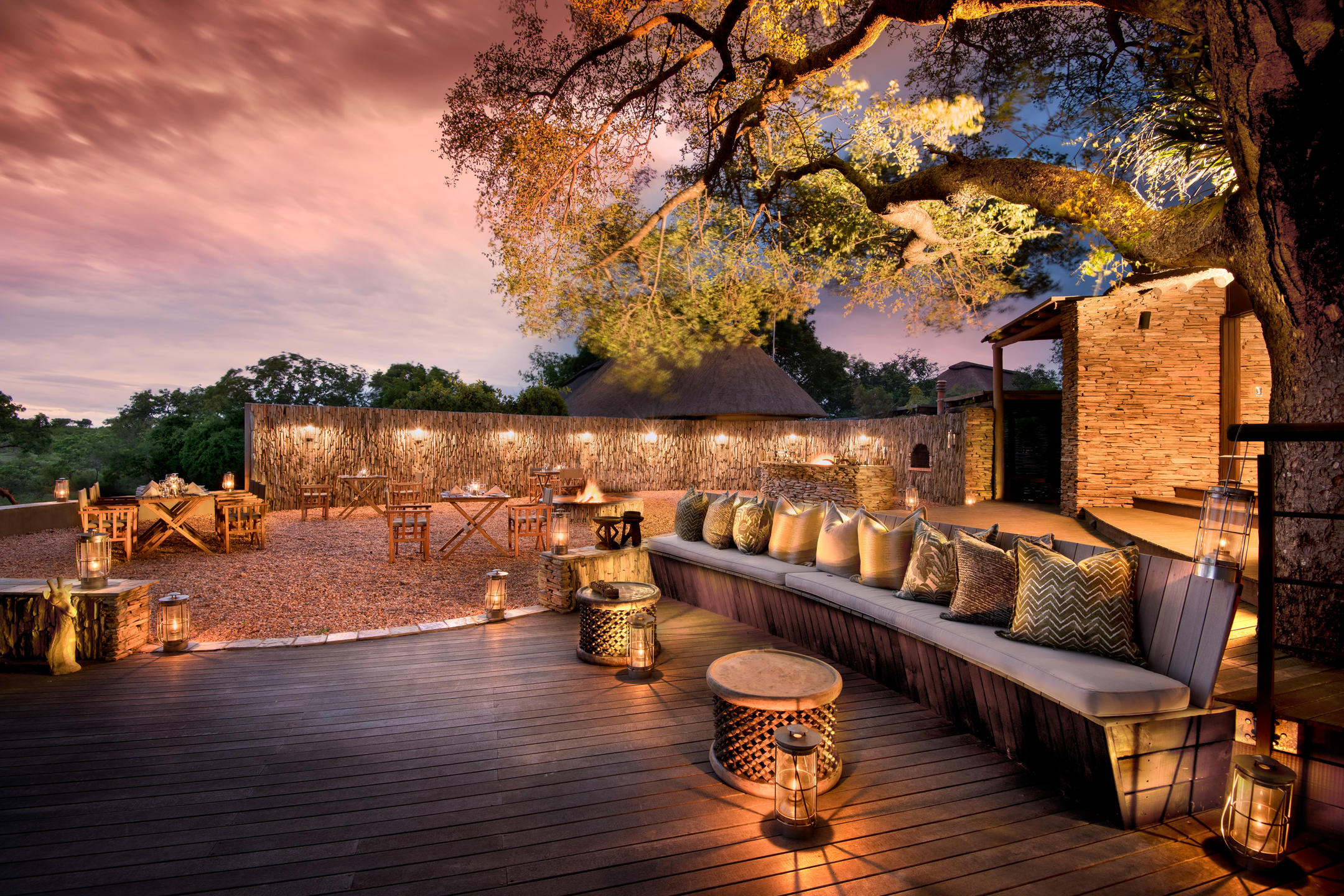
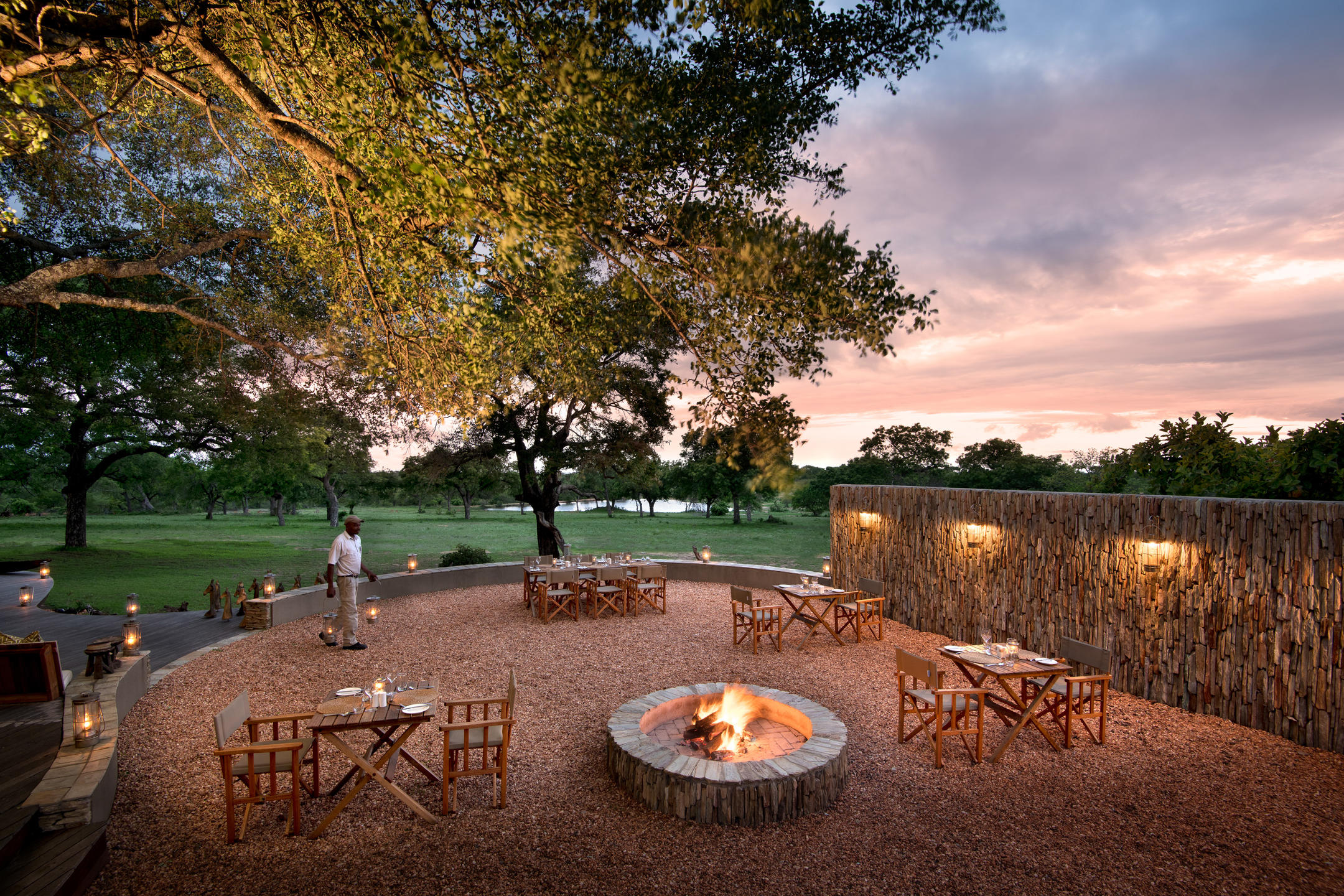
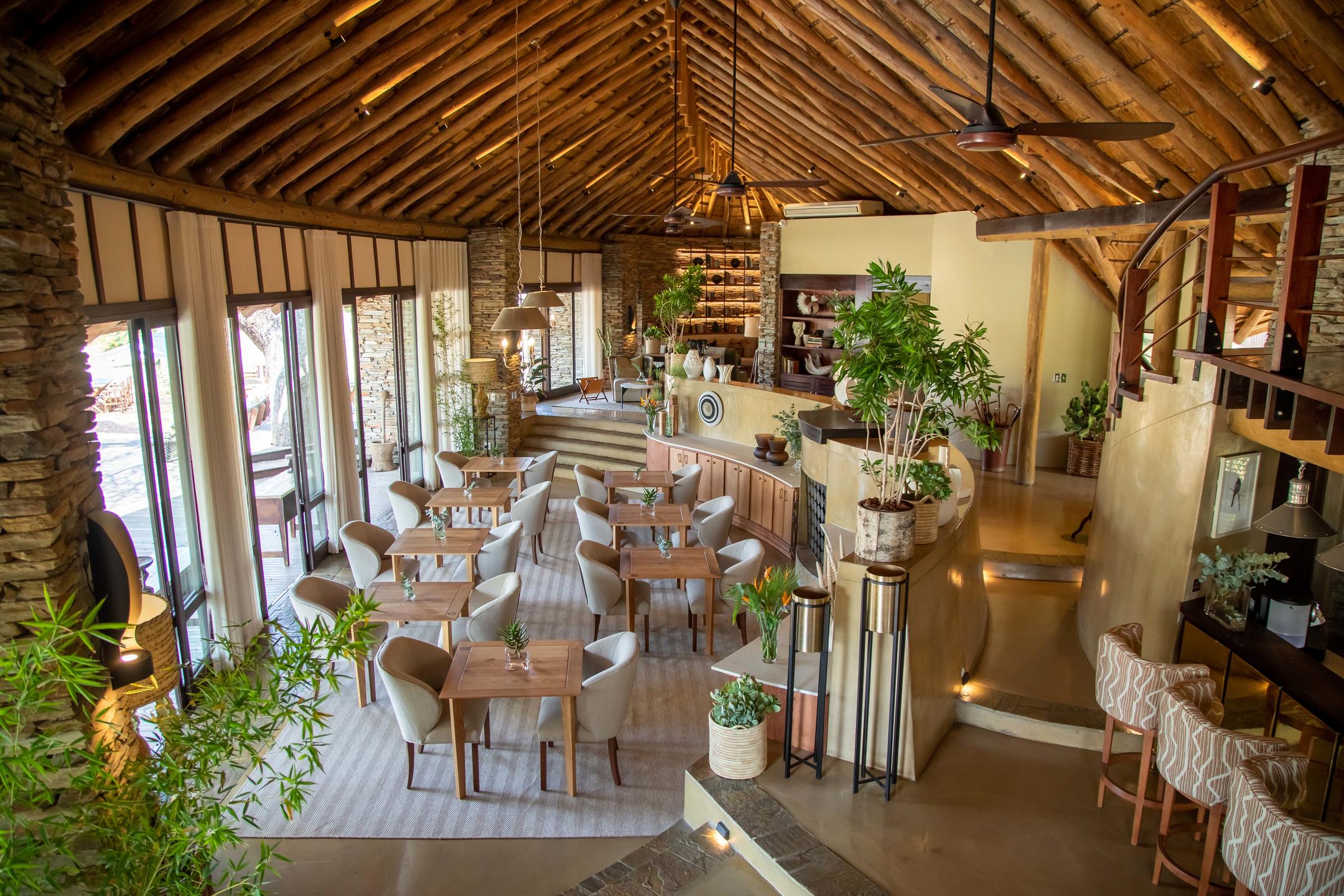
Somewhere in the southern sector of the Timbavati, on a section of reserve so private it shares the land with only a handful of private homes, there’s a lodge that was built entirely on conviction. In 2015, Jessica Gold left London, looked at a piece of the Timbavati, and decided she was going to build something she loved. No corporate backing, no established brand to shelter under. Just a very clear idea of what an exceptional safari lodge should feel like and the willingness to go and make it.
The result, eleven years later, is Makanyi. And it works in a way that’s slightly difficult to explain until you’ve been there.
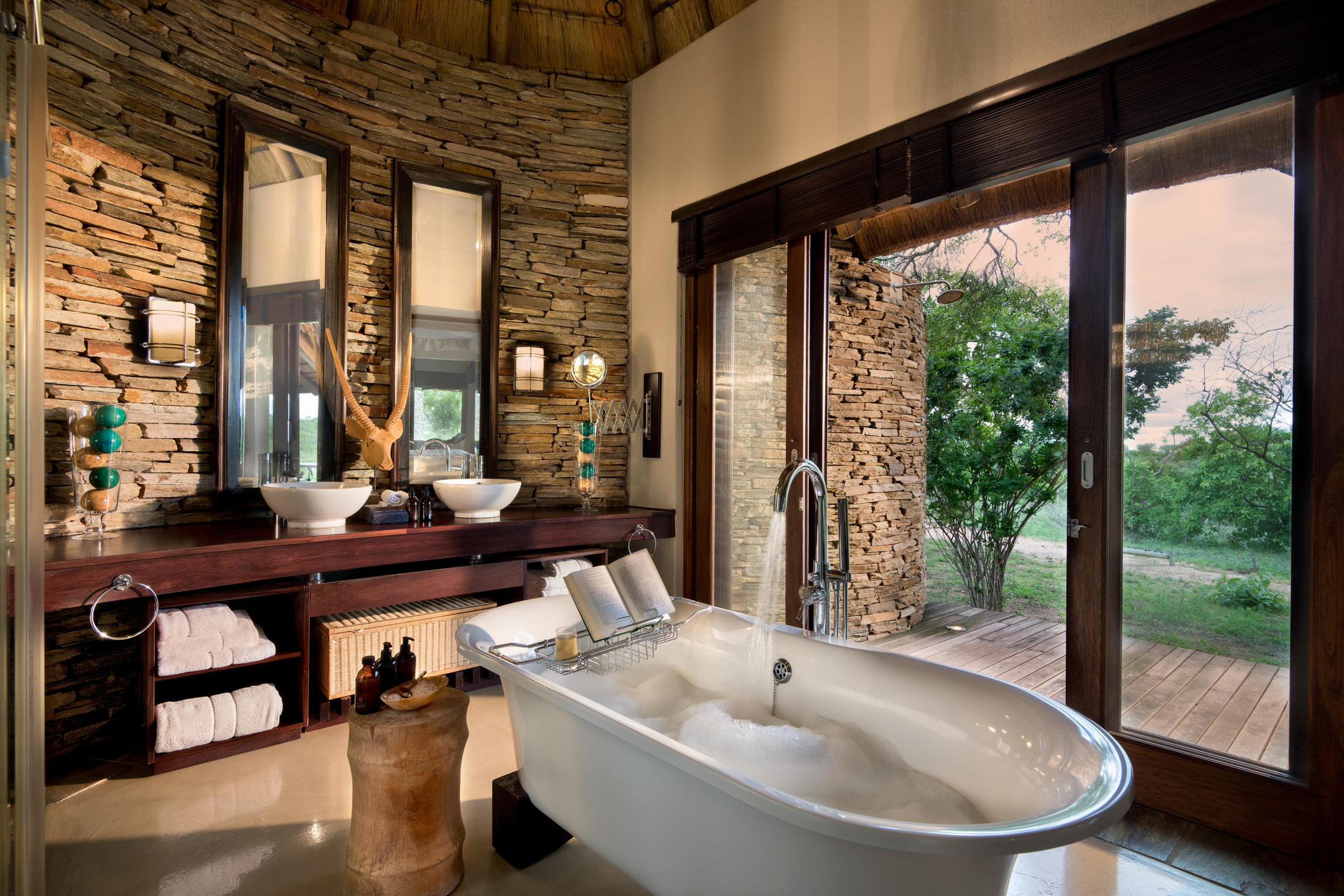
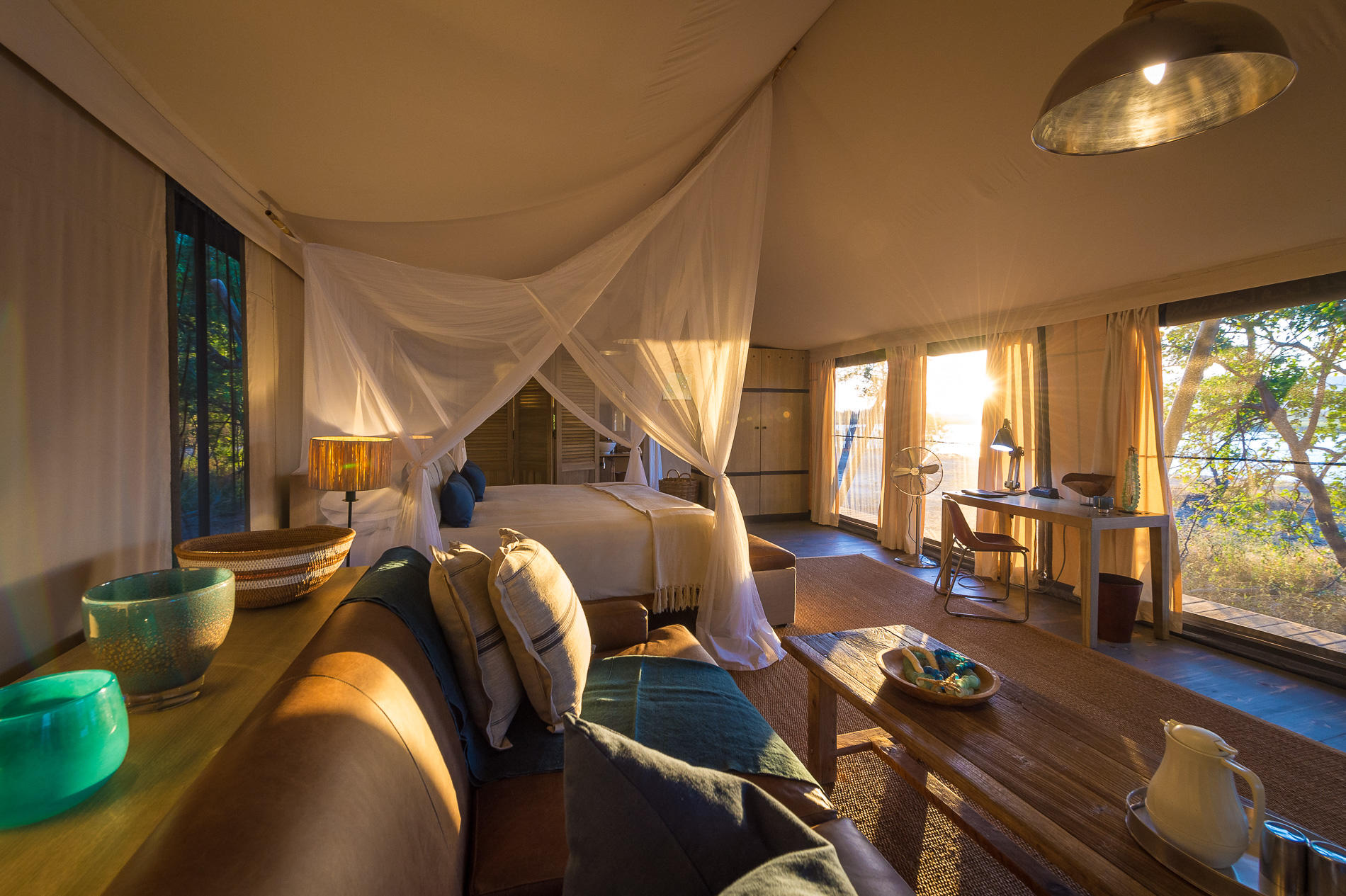
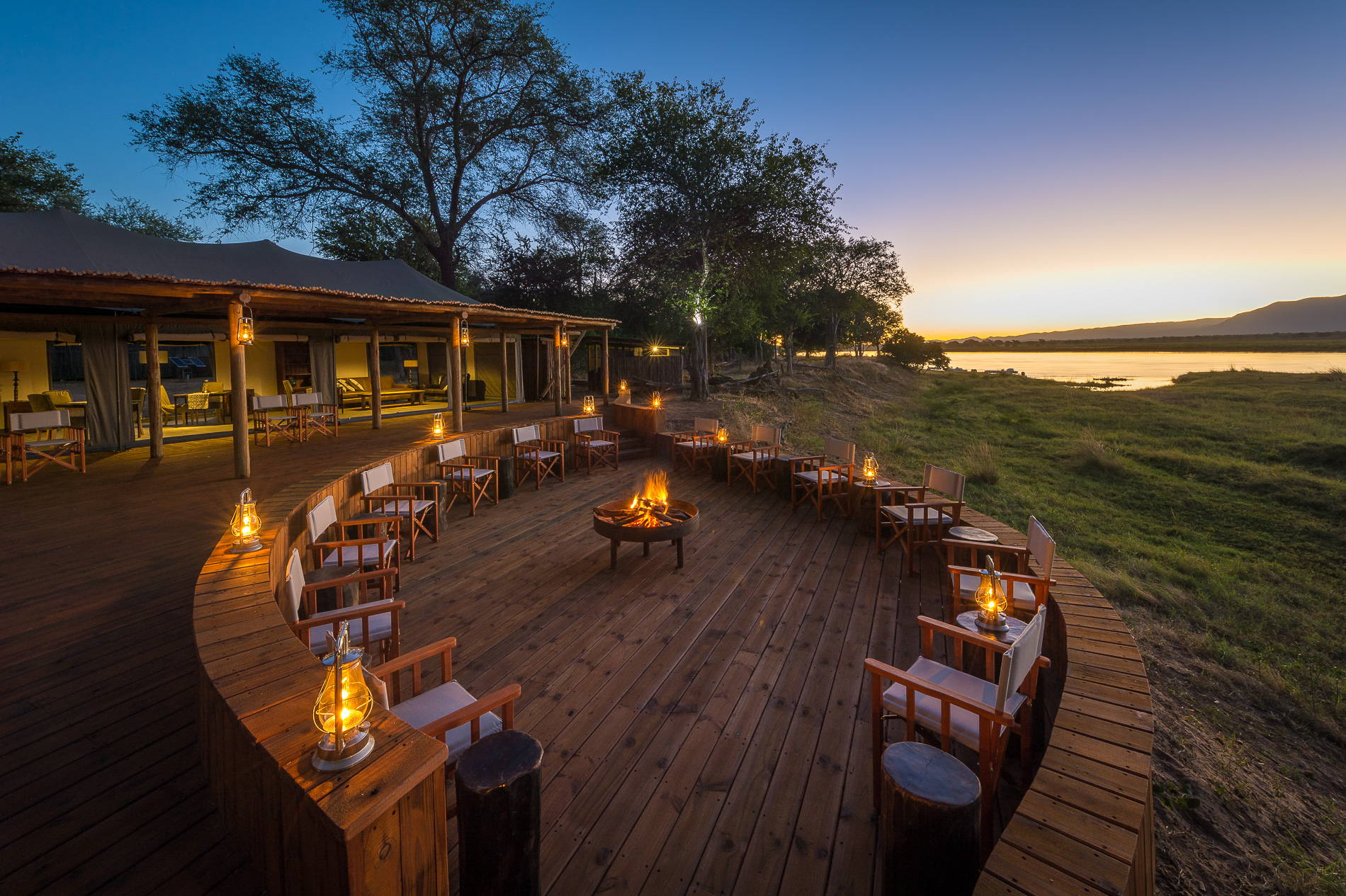
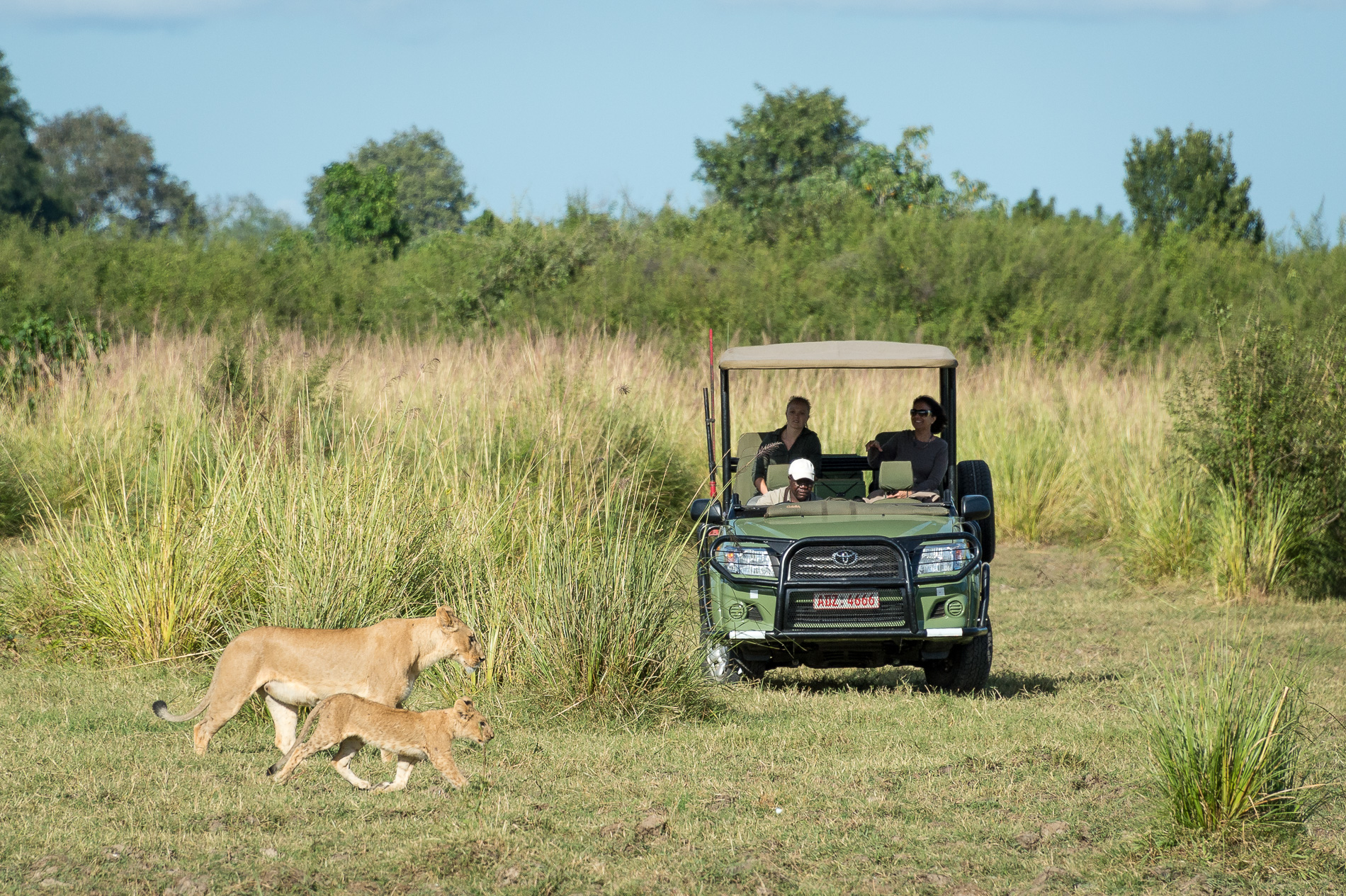
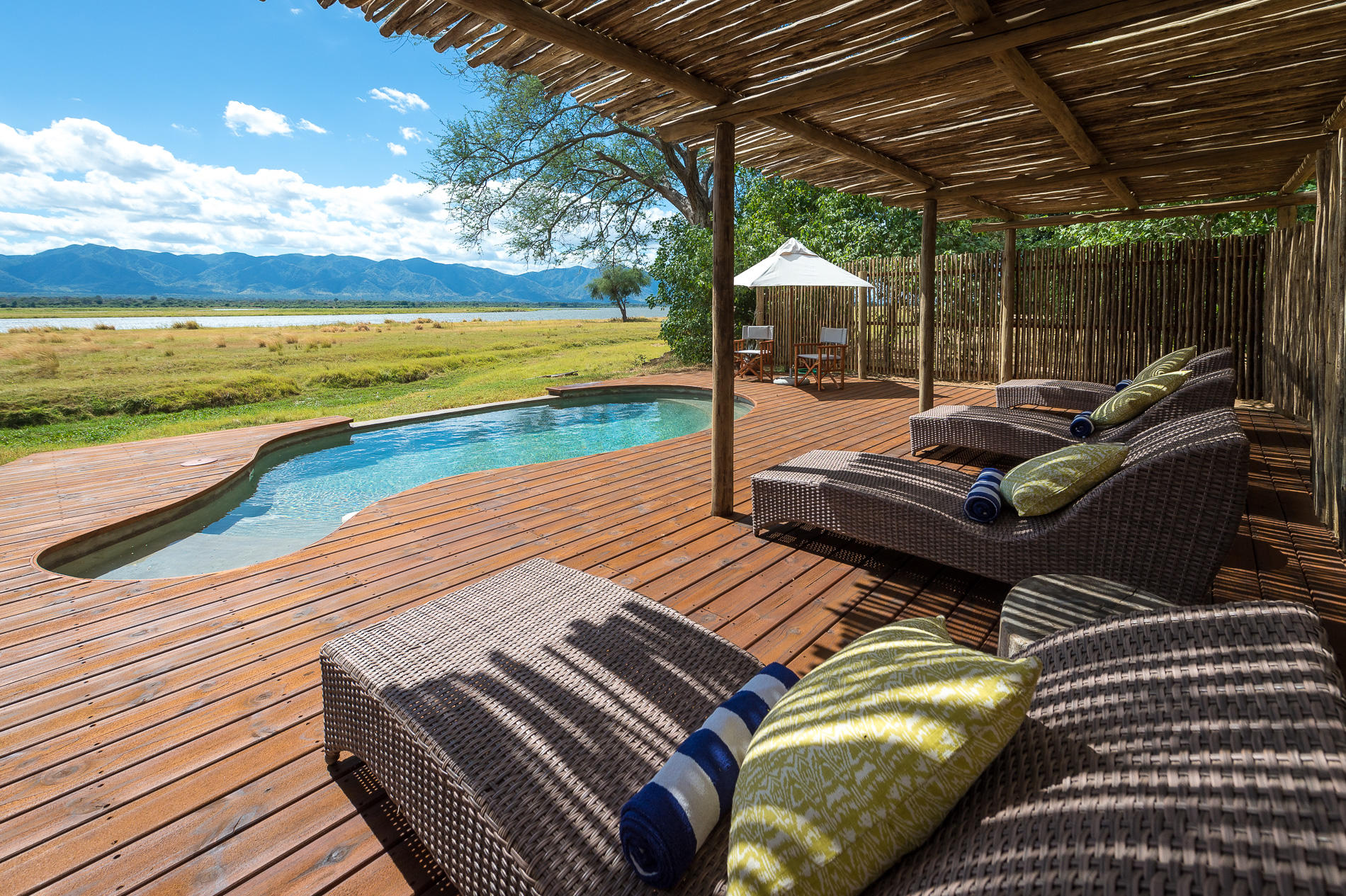
Eight luxury suites built from native wood, thatch and stone, each with a private deck looking out over a dam that serves as a permanent invitation to the wildlife of the reserve. Elephants, lion, leopard, wild dog, the full cast of the Greater Kruger — all seen without another vehicle in sight, because the section of Timbavati that Makanyi sits in is that private. The suites themselves are open-plan, light-filled and unhurried in their design — neutral tones, custom furnishings, gas fireplaces for the cool evenings, freestanding baths that you will absolutely use. Two honeymoon suites with private plunge pools for those who need no further encouragement.
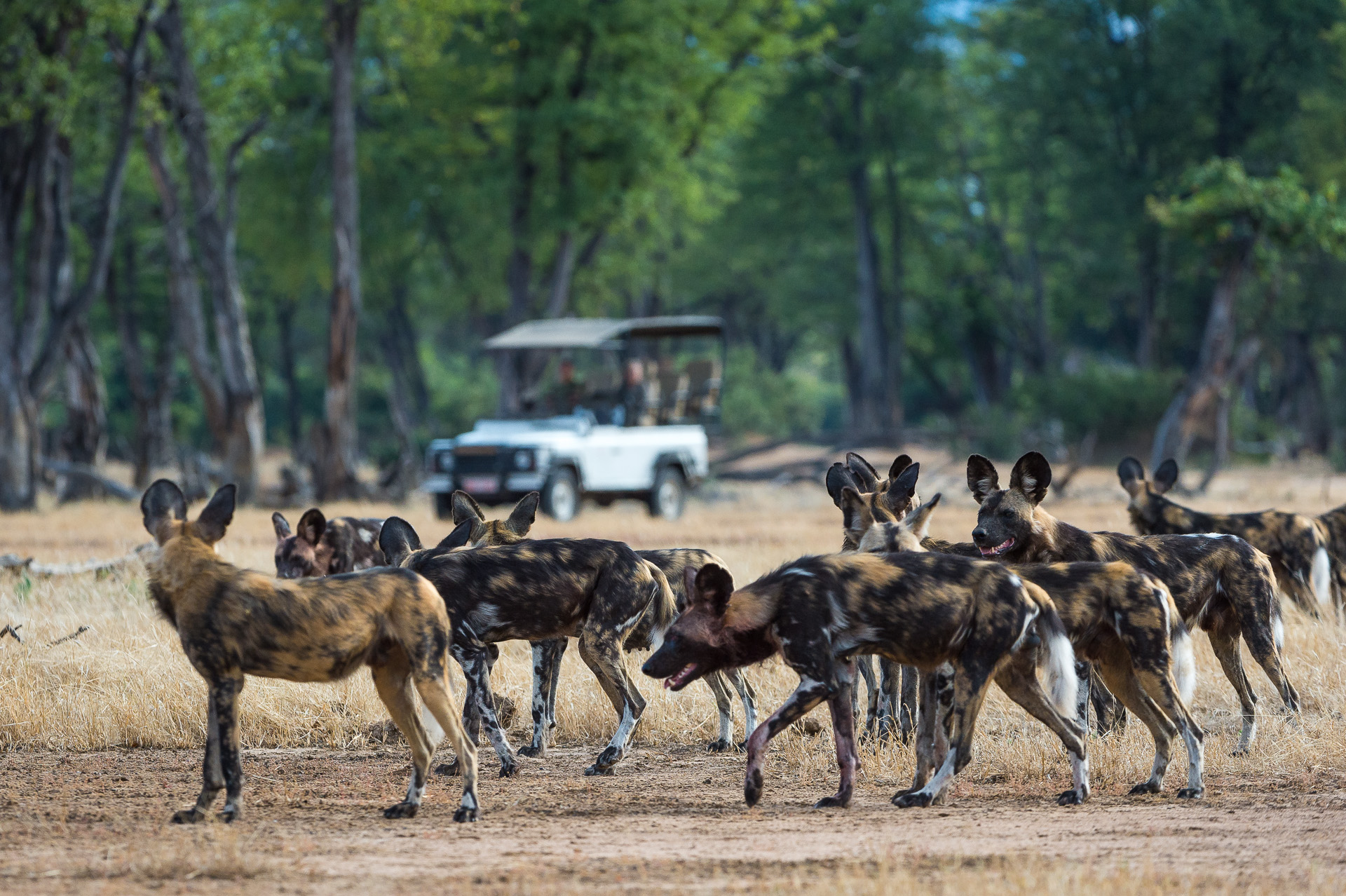
The guiding is the thing that serious safari travellers tend to come away talking about most. Guide Saki and tracker Robert have built a reputation in this part of the Timbavati for finding what other vehicles can’t — wild dog sightings in particular, which is a species that rewards patience and intimate reserve knowledge in equal measure. Off-road access on a private concession means you go where the animal is, not where the track permits. It sounds like a small thing until you’re the vehicle that follows a leopard into thick bush while everyone else watches from the road.
The wine cellar deserves its own mention because at Makanyi it has clearly been taken seriously by someone with strong opinions. South African wines, selected with actual care, served at sundowners that the rangers occasionally upgrade with a wine tasting stop in the bush — a detail that guests describe with a frequency that suggests it has become something of a signature.
Chef Amos runs a kitchen that has attracted the kind of reviews that lodge kitchens almost never get. Every meal — and guests are specific about this — is fresh, considered and genuinely good. He comes out of the kitchen to talk to guests at every meal, which tells you something about the culture of the place. It’s a lodge where the people who work there are invested in it in a way that tends only to happen when ownership cares.
Makanyi sits in a section of the Timbavati that the reserve itself describes as incomparable. Given what the Timbavati as a whole offers, that’s not nothing.
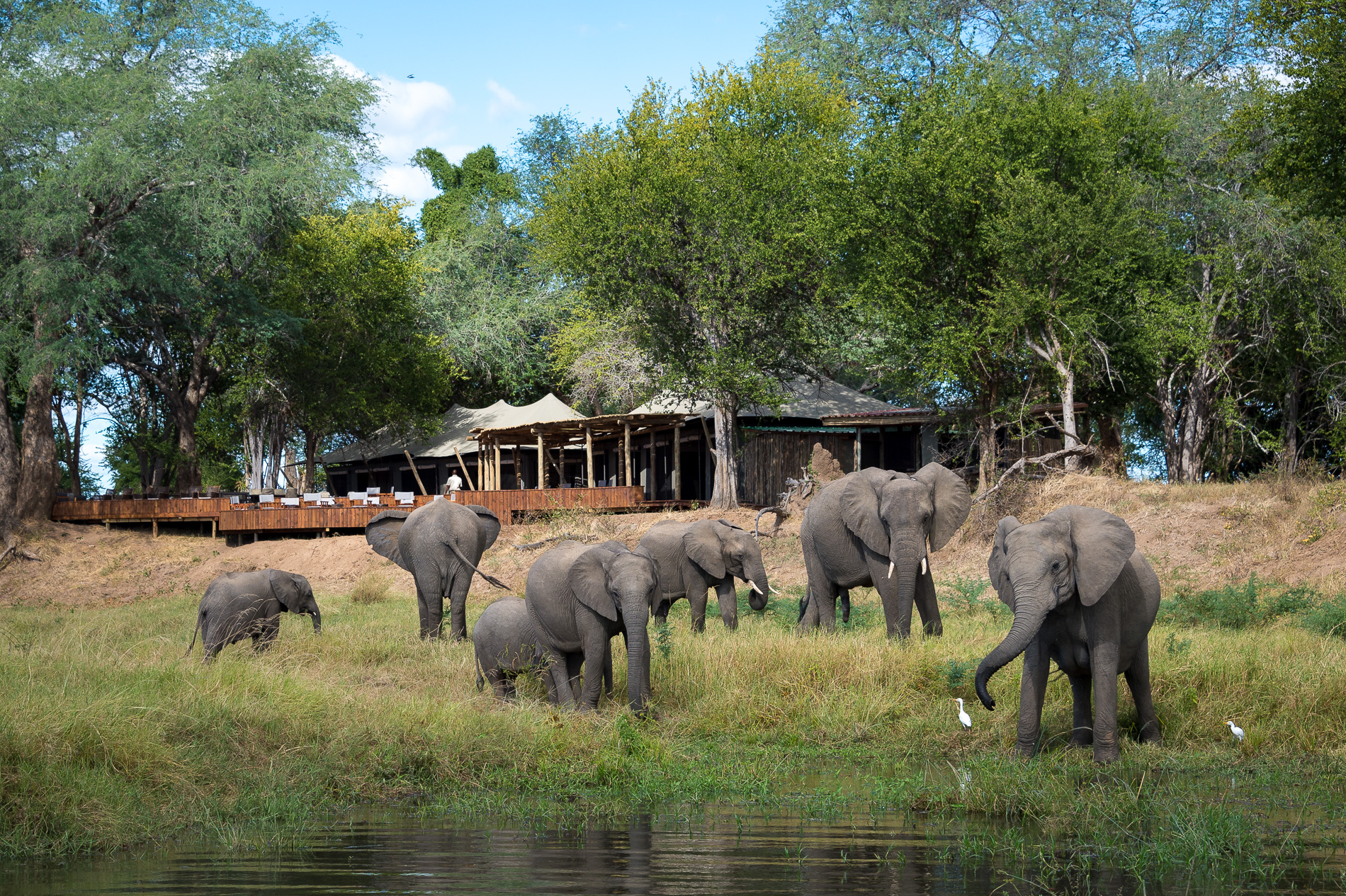
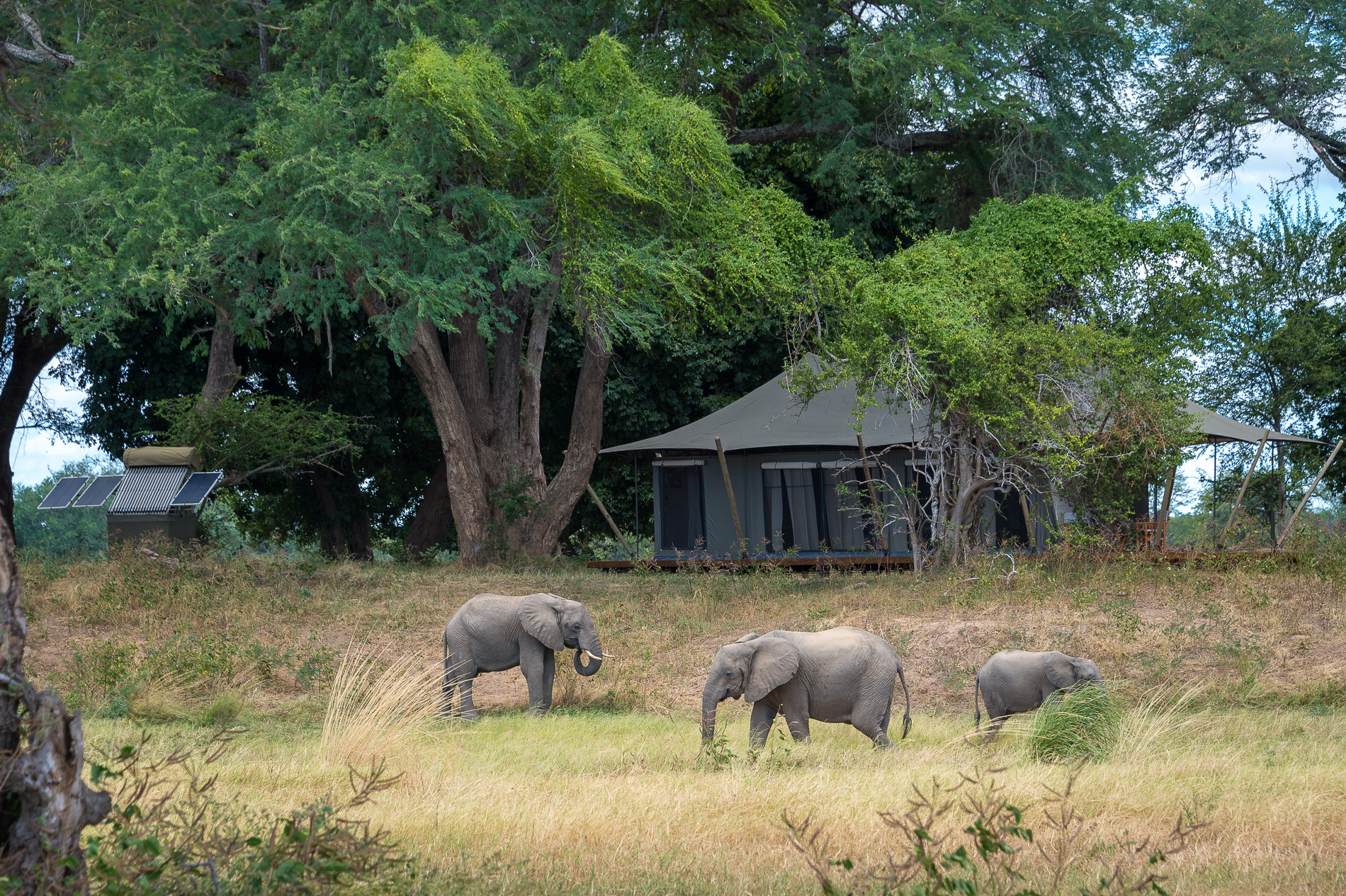
There is a particular tree along the Zambezi’s floodplain — the apple-ring acacia, known locally as the albida — that drops its seed pods in the dry season at precisely the moment the rest of the bush has nothing left to offer. Elephants have understood this for longer than anyone has been keeping records, and they organise entire days around it. Ruckomechi Camp, tucked into a private concession on the western edge of Zimbabwe’s Mana Pools National Park, happens to have been built beneath a particularly fine grove of them. Which means, in practice, that the elephants come to camp. Not occasionally, and not as a curiosity laid on for the cameras. As a matter of routine, the way one might call in at a regular café.
It takes most guests a day or two to stop being startled by this. A bull will wander between the tents at midday, entirely unbothered, working through a low branch with the unhurried focus of someone who has done this ten thousand times before. The camp’s answer is not to intervene but to make room — chairs angled politely out of the way, conversations paused mid-sentence, nobody especially alarmed. Mana Pools is one of the very few places in Africa where this kind of proximity is considered not reckless but simply how the wildlife works here, on its own terms, with people permitted to watch from close enough to feel the air move.
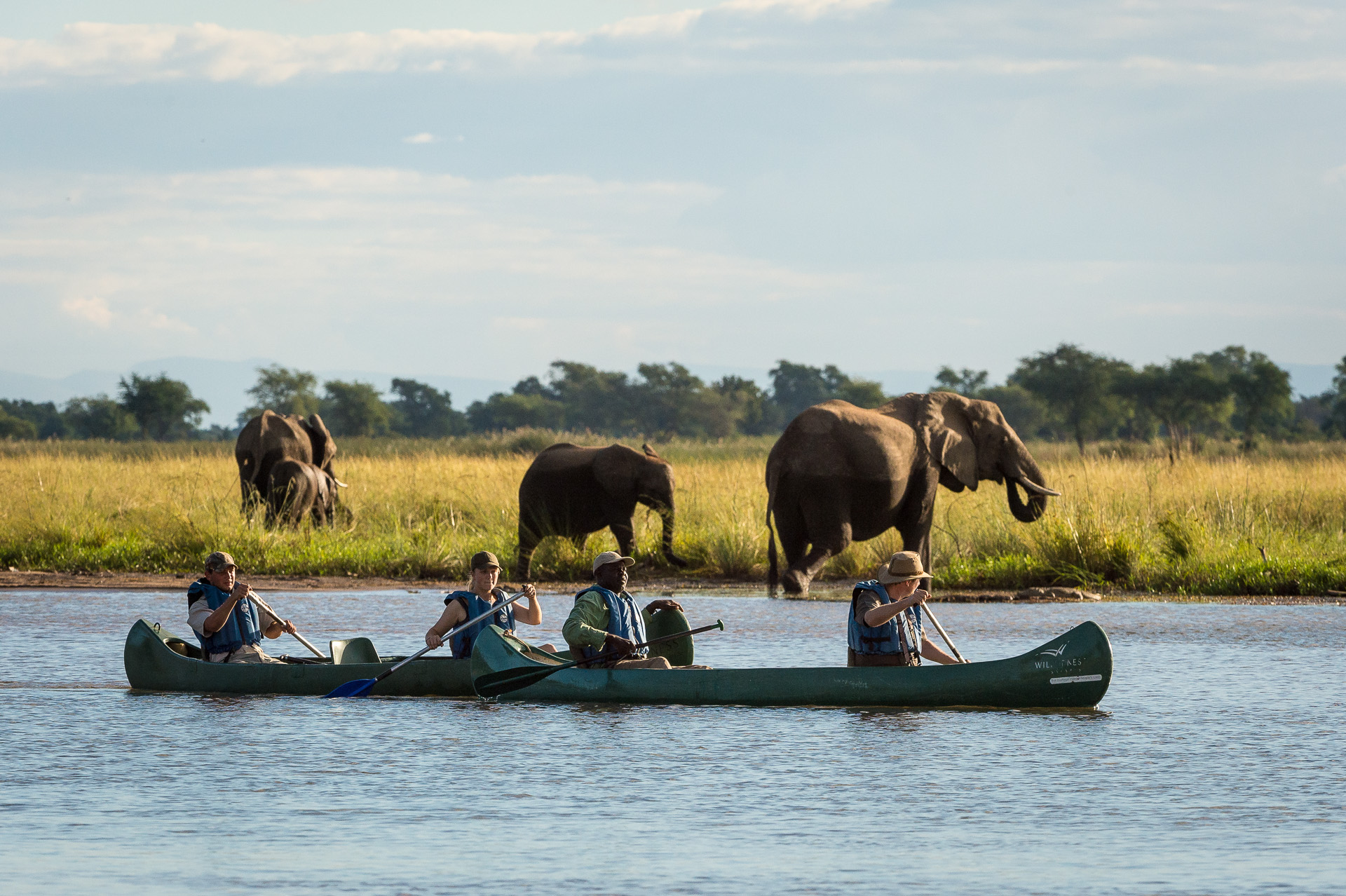
The wider floodplain is where Ruckomechi properly reveals itself. Wide, flat, threaded with the kind of ana forest that gives Mana Pools its particular green-gold light, it draws an unusual concentration of predators through the dry season — lion, leopard, and increasingly, African wild dog, which have found a stronghold here that has become one of the most reliable in the region. Walking safaris move through this landscape at the pace it deserves, led by guides trained to read a floodplain the way a sailor reads weather, while canoe safaris drift down a stretch of the Zambezi so still in places that the only ripples are the ones you’ve made yourself.
What separates Mana Pools from the rest of the Zambezi valley is its UNESCO World Heritage status, granted not for grandeur but for the specific, irreplaceable ecology of this floodplain system — and Ruckomechi’s private concession plays an active part in protecting it, funding the anti-poaching patrols and research that keep the wild dog population recovering rather than retreating. None of this is advertised loudly. It simply happens, the way the elephants simply arrive, as part of an arrangement that long predates the camp and will presumably outlast it.
In the late afternoon, with the heat finally loosening its grip and the floodplain turning the colour of weak tea, it becomes easy to forget that any of this required explaining. The elephants are not performing for anyone. They were here first, and they have simply allowed the camp to stay.
Anabezi Camp in the eastern section of the Lower Zambezi National Park, has always ranked among our favourite Zambezi River destinations. Modern comfort and authentic African luxury come together here in one of Africa’s finest game viewing destinations.
Now the camp has been incorporated into the Dulini portfolio, whose camps in the Sabi Sand Reserve, South Africa, we also love, so we anticipate a wonderful renewal of our your love affairs with both brands.
You feel wonderfully close to nature in all of the twelves tented suites, which come complete with either king or twin beds, and all of which overlook either the Zambezi River, Zambezi Floodplain or Kulefu Channel. Each tent features an indoor ensuite bathroom with Victorian style soaking bathtub, and an outdoor bathroom complete with outdoor shower.
Cool off in your private plunge pool during the warmer hours of the ay between game drives whilst buffalo, elephants and warthog feed down below and a host of bird species flit amongst the branches of the Albida trees that tower over the camp walkways.
All rooms are connected to the camp’s main areas by a raised wooden boardwalk and designed for maximum privacy, creating a personal haven amidst the Zambian wilderness. The family tent features two connected rooms, one king with en suite bathroom and outdoor bathroom, and one twin room with private bathroom, both of which share the same viewing deck and plunge pool.
Home to Anabezi’s second swimming pool, the Mushika Deck offers a full bar and sweeping views of the Mushika River floodplain. A nearby watering hole attracts wildlife like resident elephants and buffalos, warthogs bathing in the mud, antelope and the Anabezi troop of Baboons, making it an ideal spot for wildlife viewing.
As its namesake implies, the Zambezi Deck provides sweeping views of the Zambezi River and the floodplain, with daily visits from elephants, buffalo, impala, waterbuck and a variety of birds. Watch the wildlife from the swimming pool, while you’re having lunch or from one of the many lounging areas and take in the surrounding landscape. It’s not uncommon to get up close views of elephants drinking, bathing and crossing the Zambezi River to one of its many islands.
Anabezi is situated deep within the Lower Zambezi National Park, which forms part of the Lower Zambezi– Mana Pools Trans Frontier Conservation area, spanning 1,750,000-hectares of wilderness. The area is a big game mecca, an African Eden, and one of the world’s last remaining untouched natural landscapes. Exceptional game viewing is assured – the area is home to a host of high profile wildlife including lion, leopard, hyena as well as an abundance of other indigenous species.
We are supremely confident that the incorporation of Anabezi into the Dulini brand will do nothing to alter the allure of the place.
The rooms will remain just as comfortable, the service just as exceptional and the food just as delicious. And the wildlife will continue living its wildest life, unaware of any branding changes. And that is the main reason we visit destinations in the first place.
If you’d like to know more about Dulini Anabezi or even Dulini Sabi Sand, get in touch with us through info@iconicafrica.com, and let’s talk safari…
We recently ran a post on one of the best offerings in the Zambezi River Valley; Zambezi Grande on the Zambian side. This luxury lodge provides amazing access to the Lower Zambezi National Park and its incredible wildlife.
Safari Guide Robbie Ball was recently on a trip to Zambezi Grande, and tells us here of one of the wildest things he’s ever seen in the bush:
We’d heard stories of the huge pack of African Wild Dogs that were resident in the Lower Zambezi Park and asked our guide if we could try and find them one morning.
Zambezi Grande is literally on the water’s edge, and water activities form a huge part of the offering here, so in true Zambezi River style, we set off downstream before dawn in one of the lodge’s boats whilst our ranger drove the vehicle round to meet us in the area the dogs had been seen the day before.
We enjoyed a spectacular sunrise from the boat, passing fish eagles, pods of hippos and elephants ambling along the bank.
It was about a 45 minute boat ride to where we disembarked, and shortly after linking up with the vehicle, we were guided to where the pack of wild dogs were sleeping by the tell-tale signs of vultures in the trees nearby.
The pack numbered 46 at the time, which must surely make them one of the largest packs in Africa!
After sitting with them for 30 minutes or so, we noticed a large dust cloud billowing up from the winterthorn forest nearby, which signalled the approach of a herd of buffalo. We could hear their bellowing from a long way off, which meant the dogs could hear them too, but they pack stayed snoozing.
The buffalo came into view and still the dogs did nothing, when suddenly, with the herd only about 200 metres away, the dogs leapt up and raced towards them. There had been no signal that we could see, not greeting ritual that usually precedes a hunt, no sign whatsoever; they were just up and racing in as a pack.
We tried to keep up with them but the bush was too thick where they led us and the herd had fled to. By the time we caught up a few minutes later the pack had already grabbed hold of a buffalo cow and were in the process of bringing her down.
The rest of the herd was still bellowing nearby but they didn’t come to the aid of the old female.
Wild dog kills tend to be quite gory, but are usually mercifully quick when they involve small game. With a large buffalo cow, despite the number of dogs involved, things were drawn out and difficult to watch.
Eventually the buffalo cow had died from a combination of shock and bloodloss, and whilst the pack gorged themselves, one of the adults trotted back to where they had been resting, to call the pups – who don’t get involved in the hunt – to come and feed.
We were there for maybe an hour and a half, and it was certainly one of the craziest wildlife sightings I will probably ever have in my lifetime!
Visit our Facebook or instagram pages (@iconicafrica) to see some video footage of this sighting…
The Zambezi Grande offers fantastic access – both by river and land – to the wildlife of the Zambezi Valley and Lower Zambezi National Park. Although sightings like the one Robbie witnessed are certainly not the norm, this particular pack has become renowned for taking down adult buffalo.
If a wildlife adventure like this is something you would be interested in, get in touch through info@iconicafrica.com
It has been 26 years since I first journeyed to Londolozi Game Reserve, yet every time I visit I still feel the same sense of giddy excitement I did on that initial visit so long ago, the same sense of nostalgia when I climb up into the Land Rover for the opening game drive of the trip, and the same overwhelming sense of sadness when I leave.
It’s not just the amazing sightings of leopards in trees, lions wading through the Sand River, or being surrounded by the 7th herd of elephants for the morning. It’s far more than that.
This for me was where my true love for the bush began, as I began to see exactly what type of experience it could – and should – be.
My first visit to Londolozi, 26 years ago (I am standing centre). Ranger Julius Ngwenya (sitting in front) has his son now working as a tracker at Londolozi.And our latest trip, out on game drive waiting for lions to wake up in the evening.
This is what Londolozi does so well. There’s no formula. That went out the window long ago. Yes there is a framework within which the lodge operates – out before sunrise each morning to catch the dawn chorus, night drives following lions on the hunt, bush walks to make you touch, smell, and truly listen – but the reality is that each safari, each time you venture out of the camp gates in fact, is tapered to suit your specific needs.
One of the many herds that inhabit the reserve wade across the Sand River (Pioneer Camp is just out of picture to the left).The winter months are an especially good time to see elephants in the South African bush.
Birding is your thing? No problem; the focus shifts to the myriad different habitats that the reserve features, with the guide and tracker fully aware of which species are to be found where. Photographically inclined, wanting to capture that magical silhouette shot of a leopard outlined against the vivid reds of an African sunset? The tracking team will find that leopard, and – conditions permitting – the ranger will know exactly where to position the vehicle and what camera settings to use to make sure you nail the shot. There is no such thing as homogeneity in the Londolozi experience. It’s always unique and always special.
You never know what will be around the next corner at Londolozi…
I try to get back there once a year, except these days it’s not just me and my husband but my kids as well, and my brother and his wife regularly accompany us.
We try to stay in Pioneer Camp each year, the most westerly of the Londolozi camps. One of Londolozi’s three Relais and Chateaux camps, Pioneer only has three rooms, perfect for a family of our size. The adults go into two of them while the kids squeeze into the third (which is connected to ours by a discreet walkway).
And for a magical ten days, the camp becomes home.
The camp manager this year was Shannon Dawson, the most wonderful person you could ever wish to meet, and she shares a similar history with us in that she has also been visiting Londolozi with her family since she was small. And now she calls it home too.
Nothing was ever too much for Shannon, and her delightful smile was always there to welcome us home after game drive, morning and evening.
This leopard was waiting for us just off the edge of the Pioneer Camp deck as we returned from game drive one evening!
Travelling out from Atlanta, GA, where I live these days (having moved from South Africa in the 90s), it makes far more sense for us to come for a longer trip, so ten days is usually the least amount of time we will stay. I cannot emphasise enough the value of a longer stay. It allows one to truly sink into a place, to adjust to the flow of the African bush, and get to know the ranger, tracker and camp staff far better than one would in what would traditionally have been a three night adventure.
Our coffee stop one morning in a treehouse overlooking the Sand River.
A young leopard cub peers down nervously from the boughs of a marula tree, still uncertain of the best way to descend.
Particularly for those coming from further afield, long stay safaris are slowly starting to replace the three night visits, which travel trends are definitely starting to reflect. The idea it seems, is to go deeper, not broader. Rather than hopping between lodges, discerning travellers are preferring to remain in one place, getting the absolute most out of a visit that they can.
This is certainly what we try to accomplish each time we visit Londolozi.
Tiny wild dog pups emerge from their den as their mother calls them out.
This was our first time back in a couple of years, Covid-19 and other circumstances having prevented us visiting since July 2018.
The best thing for me was just how easy travel was in these times: flights were not a problem, covid-compliant and everything almost seemed easier than normal, especially given that airports are far less crowded. A hop, skip and a jump, and back in Londolozi we were…
And what a return it was.
Lions taking down a buffalo on our first morning, male leopards roaring back and forth at each other, a female leopard with her cubs just learning how to climb, wild dog pups emerging from their den for the first time… The sightings were incredibly varied and seemingly endless.
And in between them was the Londolozi fun; Wimbledon-themed dinners, soccer games for the kids, tracking lessons from Joy Mathebula… Whenever we least expected it, there was something new and exciting on the cards.
Tracker Andrea Sithole – who our family have known for years – celebrates a goal with my daughter Brodi in a soccer game organised for the kids staying in camp.One of the dominant male leopards that Londolozi is so famous for, drinking only a few feet from our vehicle.
Londolozi doesn’t just thrill with the wildlife. They take you into their world and open your eyes. You get to see what this one wild life we have all been given should really be about: fun, connection, intimacy with nature and ultimately finding the best version of yourself.
I know I find that person whenever I’m at Londolozi.
And you can too…
We use cookies to ensure that we give you the best experience on our website. By continuing to use our website, you are agreeing to our use of cookies.