
The great apes don’t know we’re coming — not really. The rangers and habituators do their best to prepare us, briefing us at the forest edge on what to expect, how to move, how to conduct ourselves in the presence of something that shares approximately 98.7% of our DNA. But when the moment actually arrives, when the canopy parts and a chimpanzee drops from a branch fifteen feet above your head and looks you directly in the eye, all the preparation in the world counts for very little. Nothing really readies you for that gaze.

Kibale Forest, rising in the foothills of Uganda’s Rwenzori Mountains, is home to the highest concentration of primates on the African continent. Thirteen species move through its shade, from the red colobus to the L’Hoest’s monkey and the grey-cheeked mangabey, but it is the chimpanzee — around 1,500 of them — that draws people here from across the world. The experience of following them on foot through this forest, tracking their calls through cathedral-sized trees, pushing through the undergrowth, then emerging into a clearing where an entire community is eating and playing and arguing and grooming, is one of the most disorienting and quietly profound things it is possible to do anywhere on the continent.
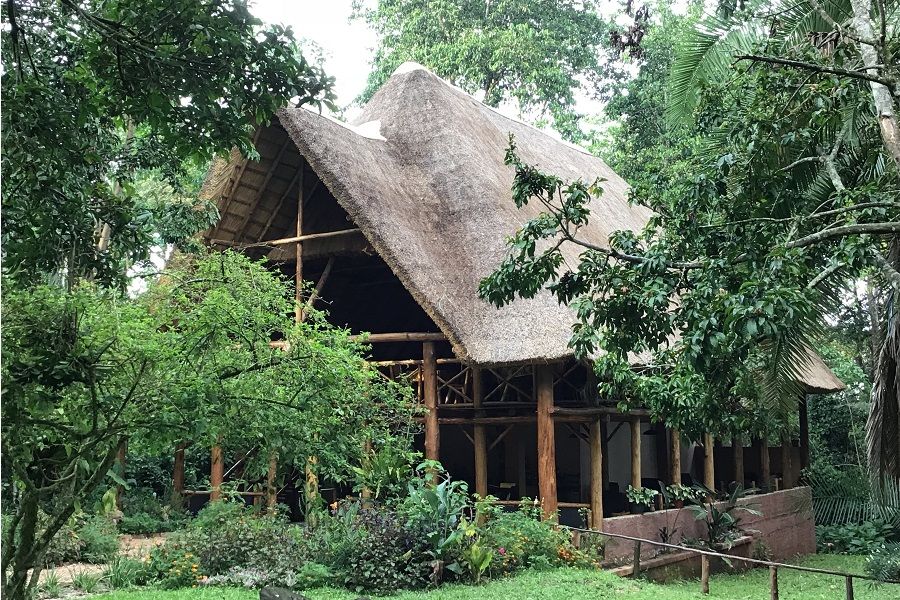
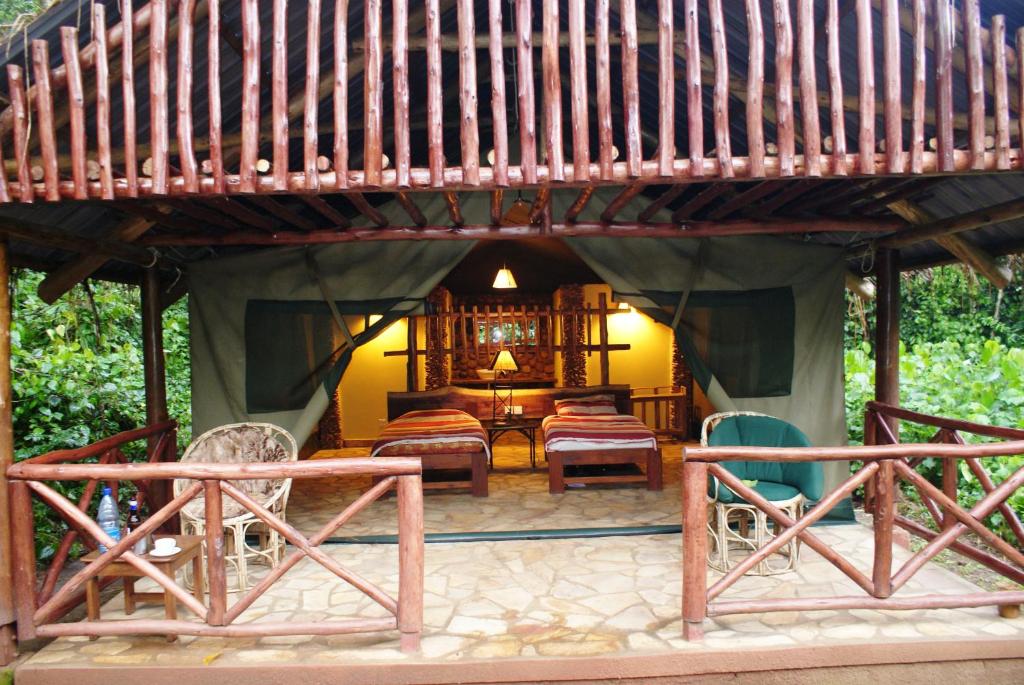
Kibale Forest Camp sits at the forest’s edge, close enough to the park boundary that the night sounds drift in unrestricted: the barking of baboons, the percussion of something large moving through undergrowth too thick to see, the metallic chorus of insects that seems to intensify the moment the light fades. It is a camp that feels deliberately unimposing, which is as it should be. The forest is the reason for being here, and the camp is wise enough not to compete with it.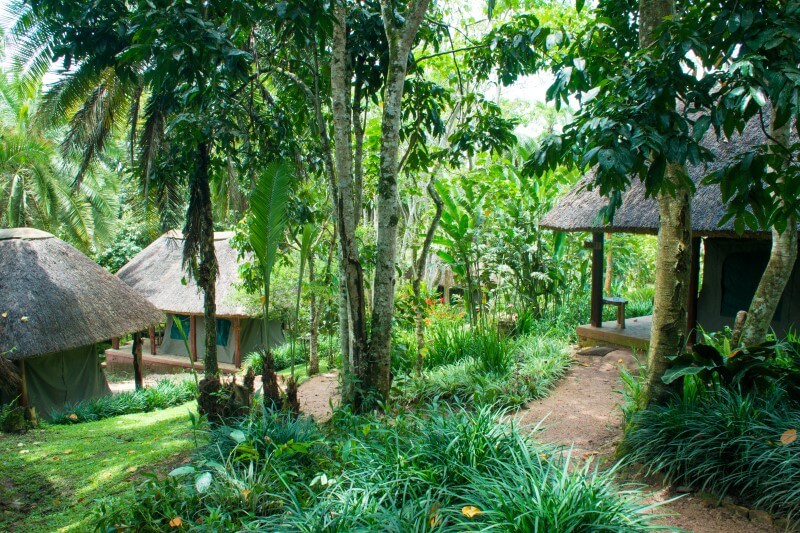
What surprises many first-time visitors to Kibale is how different this experience feels from the classic East African safari. There are no open plains and no game drives. Instead, there is shade and canopy and the smell of wet earth and the peculiar sensation of moving through a landscape on foot where you are emphatically not at the top of the food chain. It demands a different kind of attention — slower, lower, more instinctive. You stop not because something is in front of you, but because something may be above.
The one-hour rule — just a single hour per day, per group, in the presence of a chimpanzee community — is a reminder that what you are witnessing is a privilege, not an entitlement. Used well, sixty minutes is more than enough. The animals bicker and nurse their young and groom each other with a tenderness that is startling, and stare back at you with an intelligence that is unmistakable and faintly unsettling — then they are gone, back into the green dark of the forest.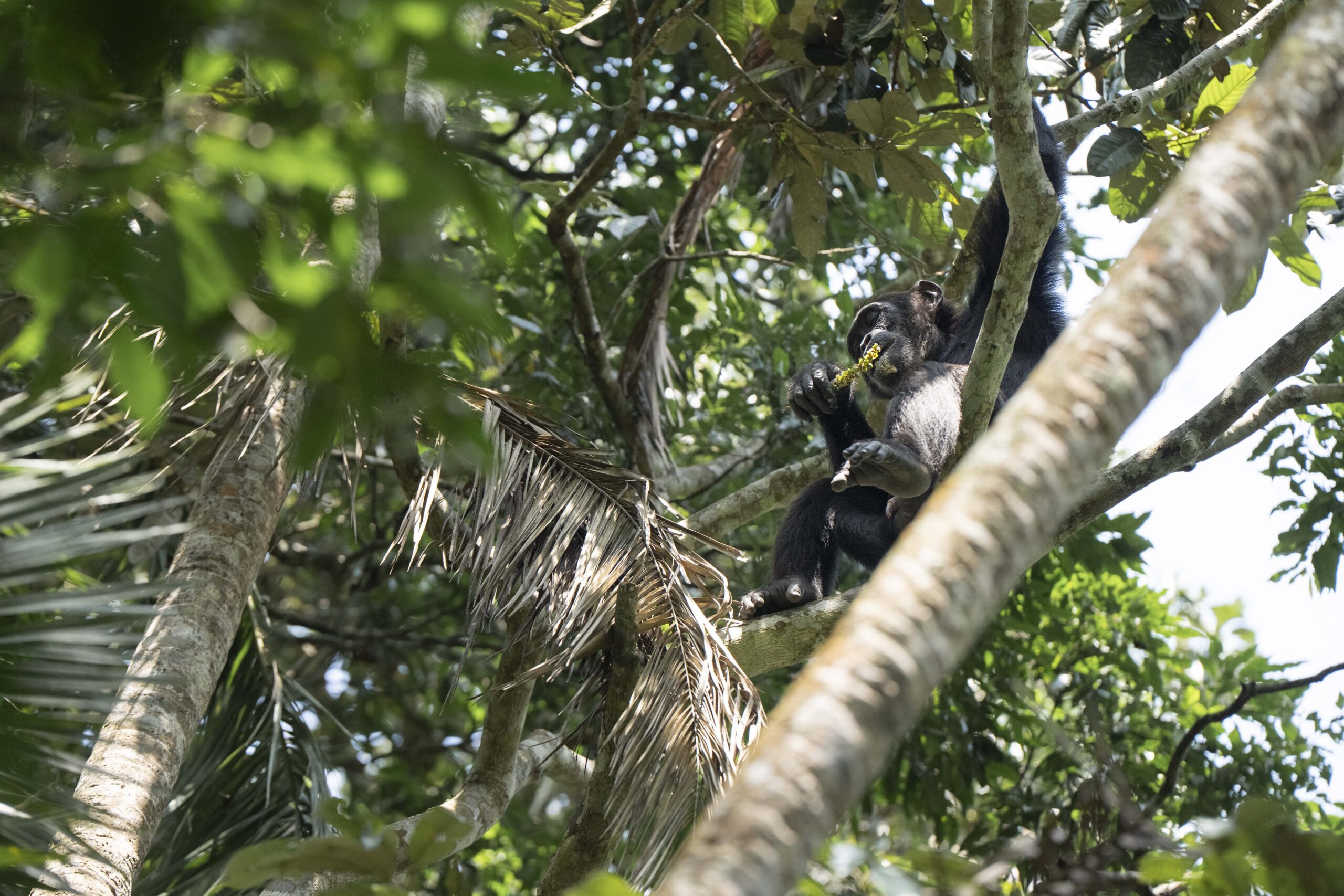
The walk back to camp tends to be quiet. Not because there is nothing to say, but because most people find that whatever they might say feels inadequate to what they have just seen. There is a particular kind of silence that follows an encounter like this — the silence of a perspective that has been, without warning, very gently rearranged.
Kibale does that to people. Uganda, more often than not, tends to.


