The River Knows — Old Mondoro, Zambia


The Zambezi is one of those rivers that demands your attention. Wide, dark, and perpetually purposeful, it moves through its valley with the unhurried authority of something that has been doing this for millions of years — and will continue long after everything else has changed. For those lucky enough to find themselves on its banks in the Lower Zambezi National Park, it becomes apparent very quickly that the river is not merely a backdrop to the experience. It is the experience.

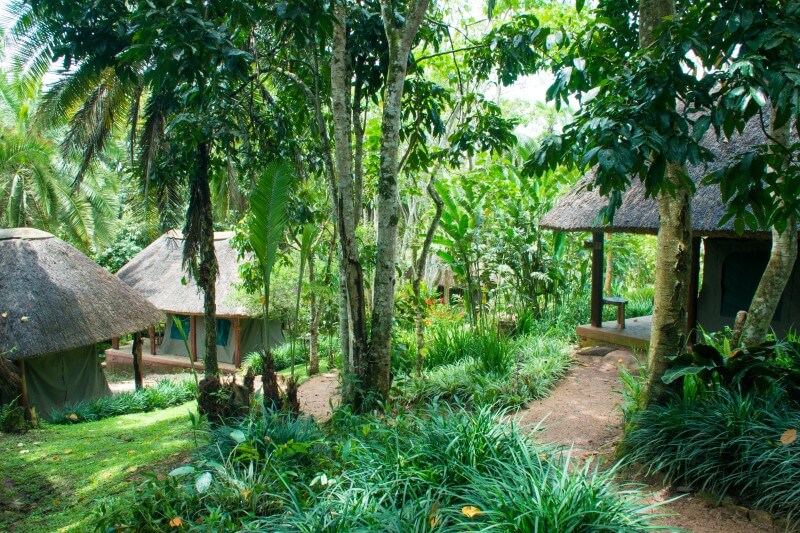
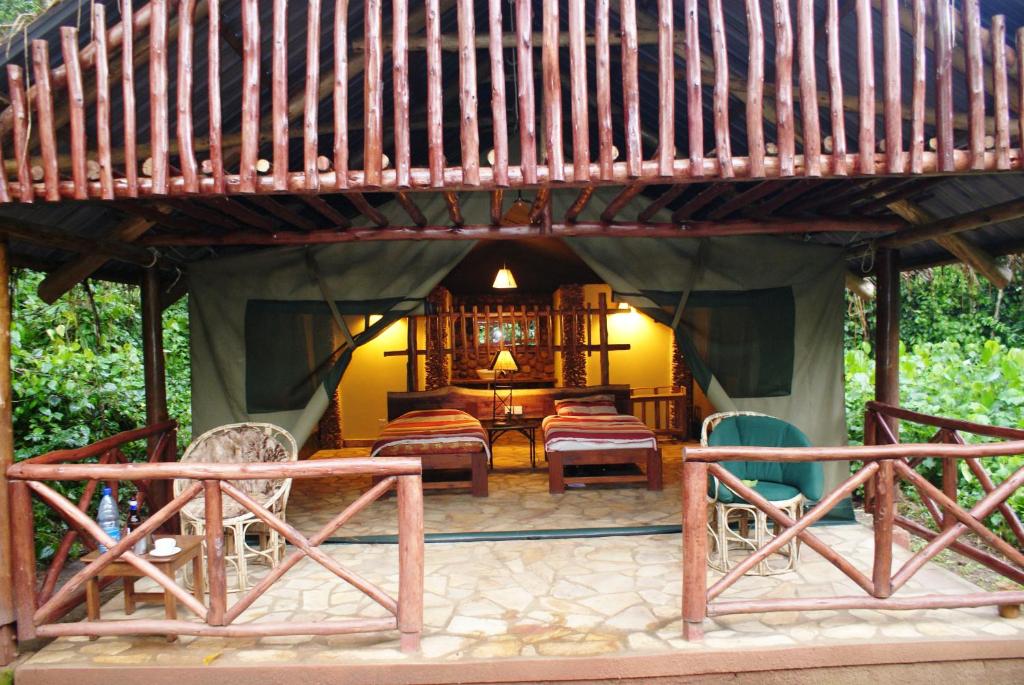
Old Mondoro understands this instinctively. Tucked an hour further east into the Lower Zambezi National Park than most visitors ever reach, it is a camp that has stripped the safari back to its essentials: a handful of tents built from pole, canvas and reed, open bathrooms beneath the stars, and a stretch of riverbank where the boundary between camp and wilderness has been left, quite deliberately, unmarked. There are no fences here. Elephants walk through at night. Buffalo have been known to graze between the tents at dawn. The camp holds this not as a selling point, but as a simple statement of intent — that the wilderness is not something to be kept at a comfortable distance, but something to be lived alongside.

The safaris here are unlike those found at most other camps. Yes, there are game drives — and good ones, through thick mopane woodland and floodplains where elephant, buffalo and lion move as though the fences of the modern world have never been invented. But it is on the water, and on foot, where Old Mondoro truly earns its reputation. Canoe safaris allow guests to drift silently downriver at the level of the hippos, with crocodiles ancient and motionless on every sandbank, and fish eagles calling overhead in a way that seems almost theatrical. There is something profoundly levelling about being in a small boat on the Zambezi — something that no vehicle, however comfortable, can replicate. The river puts everyone on equal terms.

The walking safaris offer their own kind of revelation. Guided by a team whose knowledge of the bush feels almost geological in its depth, these walks are not an activity to tick off a list. They are an education in attention — the way a broken twig tells a story, the way silence itself becomes a diagnostic tool. In the Lower Zambezi’s dense vegetation, understanding the landscape on foot is the only way to truly read it, and there are very few camps better placed to teach that skill.

What makes Old Mondoro quietly extraordinary, beyond the activities and the setting, is its sense of priority. The camp belongs to the same family that pioneered this stretch of river — people who have spent decades insisting that the best safari is the one that gets out of its own way and lets the wilderness do the talking. Meals are taken together around a communal table. Guides speak about the Zambezi as though it were a living thing they know personally. And the conservation work that underpins every stay here runs quietly beneath the surface, as it always has.

At night, with the Zambezi sliding past in the darkness and hippos grumbling from the shallows, it is easy to understand why the Cumings family never left. The Zambezi doesn’t notice you leave. That indifference, somehow, is exactly what makes you want to come back.

The Green Dark – Kibale Forest Camp, Uganda

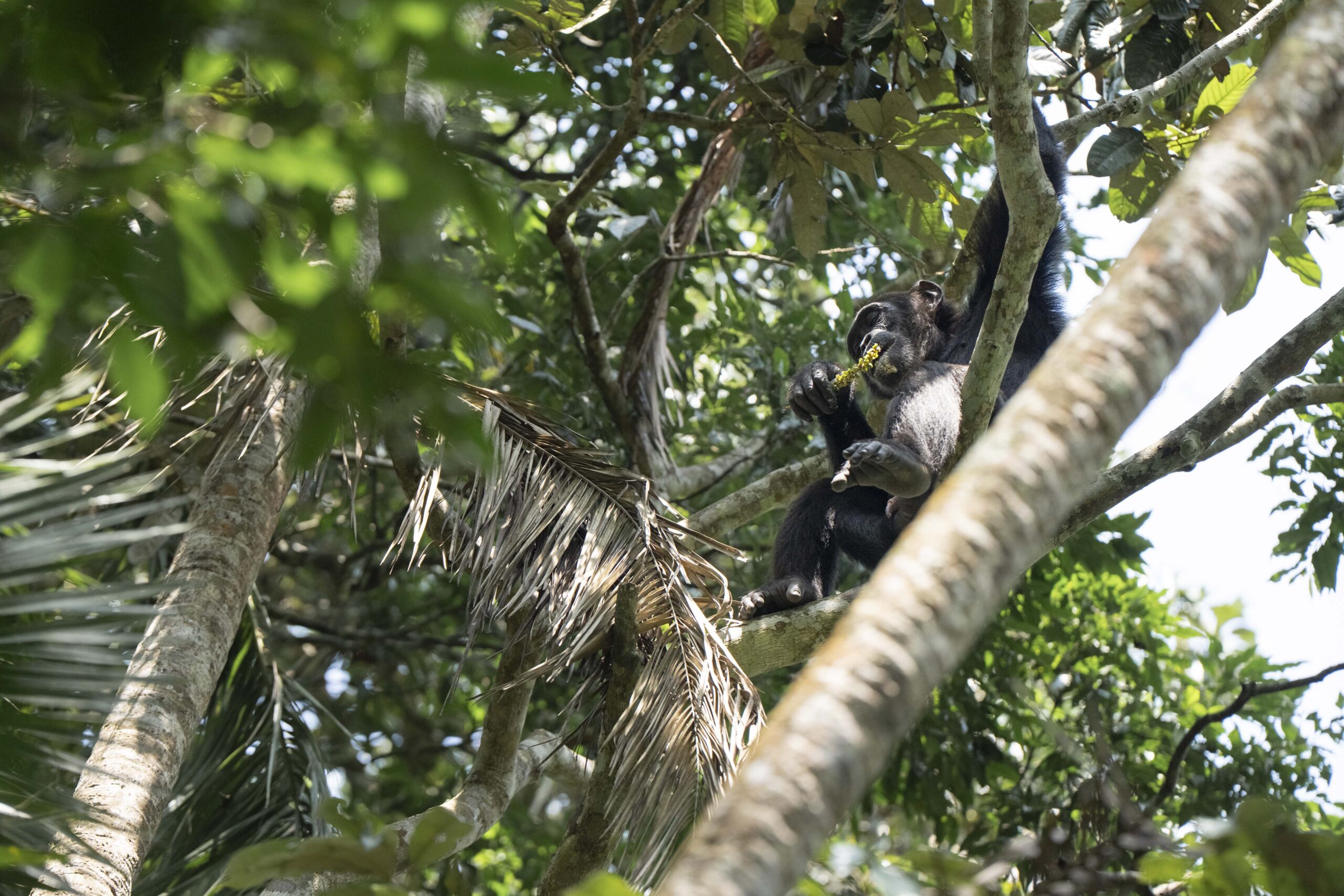
The great apes don’t know we’re coming — not really. The rangers and habituators do their best to prepare us, briefing us at the forest edge on what to expect, how to move, how to conduct ourselves in the presence of something that shares approximately 98.7% of our DNA. But when the moment actually arrives, when the canopy parts and a chimpanzee drops from a branch fifteen feet above your head and looks you directly in the eye, all the preparation in the world counts for very little. Nothing really readies you for that gaze.

Kibale Forest, rising in the foothills of Uganda’s Rwenzori Mountains, is home to the highest concentration of primates on the African continent. Thirteen species move through its shade, from the red colobus to the L’Hoest’s monkey and the grey-cheeked mangabey, but it is the chimpanzee — around 1,500 of them — that draws people here from across the world. The experience of following them on foot through this forest, tracking their calls through cathedral-sized trees, pushing through the undergrowth, then emerging into a clearing where an entire community is eating and playing and arguing and grooming, is one of the most disorienting and quietly profound things it is possible to do anywhere on the continent.

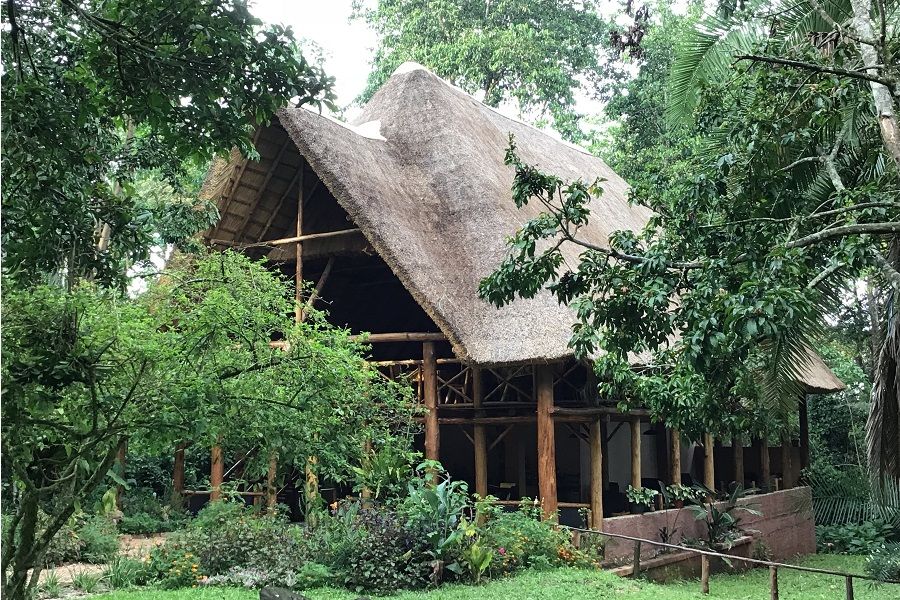
Kibale Forest Camp sits at the forest’s edge, close enough to the park boundary that the night sounds drift in unrestricted: the barking of baboons, the percussion of something large moving through undergrowth too thick to see, the metallic chorus of insects that seems to intensify the moment the light fades. It is a camp that feels deliberately unimposing, which is as it should be. The forest is the reason for being here, and the camp is wise enough not to compete with it.

What surprises many first-time visitors to Kibale is how different this experience feels from the classic East African safari. There are no open plains and no game drives. Instead, there is shade and canopy and the smell of wet earth and the peculiar sensation of moving through a landscape on foot where you are emphatically not at the top of the food chain. It demands a different kind of attention — slower, lower, more instinctive. You stop not because something is in front of you, but because something may be above.

The one-hour rule — just a single hour per day, per group, in the presence of a chimpanzee community — is a reminder that what you are witnessing is a privilege, not an entitlement. Used well, sixty minutes is more than enough. The animals bicker and nurse their young and groom each other with a tenderness that is startling, and stare back at you with an intelligence that is unmistakable and faintly unsettling — then they are gone, back into the green dark of the forest.

The walk back to camp tends to be quiet. Not because there is nothing to say, but because most people find that whatever they might say feels inadequate to what they have just seen. There is a particular kind of silence that follows an encounter like this — the silence of a perspective that has been, without warning, very gently rearranged.

Kibale does that to people. Uganda, more often than not, tends to.


Duba Plains – Turn the Wild Up a Notch

Some parts of the Okavango Delta feel calm, almost meditative. Channels drift quietly, birds skim the surface, and elephants move through water with an ease that feels timeless. And then there is Duba Plains Camp, where the same water seems to sharpen everything instead.

Set deep within a private concession in the northern Delta, Duba Plains sits in a landscape defined by seasonal flood. When the waters arrive, they spread wide across the plains, transforming dry ground into a shifting mosaic of channels, islands and open space. It is beautiful, unquestionably — but it is also functional. Because where the flood goes, the buffalo follow.

And where there are buffalo, lions are never far behind.

Duba has become quietly known for this relationship. Not in a way that feels staged or predictable, but in the sense that the ecosystem itself leans toward drama. Large herds move across open ground, bunching, spreading, testing the edges of safety. Lions watch, wait, and then commit with a level of intensity that feels very different to more casual encounters elsewhere in Africa.

Game drives here carry a particular kind of focus. You are not simply looking for sightings; you are stepping into a story that is already unfolding. Tracks matter. Direction matters. Behaviour matters. Everything feels connected, as if each movement is part of a wider narrative that began long before you arrived.

And yet, for all its intensity, Duba Plains is still very much a water-based safari.


Between moments of action, the landscape settles back into something softer. Elephants cross channels with slow, deliberate confidence. Lechwe move through flooded grasslands, their hooves adapted perfectly to terrain that would challenge almost anything else. Reflections stretch across the water, turning movement into something almost abstract.

The camp itself mirrors this balance. Elevated, elegant, and quietly luxurious, it offers comfort without separation. Wide decks open onto the floodplain, allowing you to watch the landscape shift throughout the day. Interiors are refined but never overbearing, keeping the focus where it belongs — outside.

There is a rhythm here that feels heightened. Stillness builds into movement. Calm gives way to intensity, then settles again. It is a place where contrast defines the experience as much as continuity.

Duba Plains is not a passive safari. It asks you to pay attention, to read the bush, to stay present in moments that can change quickly and without warning.

And when everything aligns — water, movement, predator and prey — you are reminded that the Delta is not just beautiful.

It is alive in a way that feels immediate, unpredictable, and entirely real.

Sable Alley – Where Water Shapes the Story

There are safari camps where you head out each morning with intent, following roads, tracks, and instinct in the hope that the bush reveals something memorable. And then there are places like Sable Alley, where the experience begins long before the vehicle ever leaves camp, and often continues long after it returns.

Set beside a permanent lagoon in Botswana’s Khwai Concession, Sable Alley sits in one of the most consistently productive pockets of the Okavango Delta. Water is the defining force here, and with it comes a steady, almost predictable flow of life that gathers at its edge throughout the day.

Elephants arrive in loose herds, easing themselves into the shallows with a sense of ownership that suggests they have done this countless times before. Red lechwe move differently, splashing and bounding through water that would slow almost anything else. And along the fringes, predators wait, watching the same patterns unfold, knowing that opportunity eventually follows movement.

Khwai itself is what gives Sable Alley its depth. It is not a single environment, but a convergence of several. Floodplains stretch outward into open light, woodland provides cover and contrast, and channels of water thread through it all, constantly reshaping how animals move and interact.

Game drives reflect this variety. One morning may be spent following a lion pride through damp earth, reading tracks and behaviour as a story in progress. Another may open onto wide plains filled with grazing herds, where scale and distance become part of the experience.

But it is often the stillness that defines the camp.

From the main deck and private rooms, the lagoon becomes a continuous source of quiet activity. Early light reveals silhouettes through mist, midday concentrates movement at the water’s edge, and late afternoon settles into long reflections and softer tones.

The design supports this without drawing attention to itself. Elevated walkways, open spaces, and clean lines ensure that nothing interrupts your connection to the landscape. Comfort is present, but it never competes with what lies beyond it.

Sable Alley is not about chasing sightings across distance. It is about proximity, patience, and the subtle shift that happens when the wild no longer feels separate from you.

And once that shift takes hold, the entire safari experience begins to feel more immediate, more immersive, and far more difficult to forget.

Perhaps that is what lingers most. Not a single sighting, but the accumulation of small, unscripted moments that build quietly over time. A glance, a sound, a shift in light. Together, they create something that feels less like a trip, and more like a lived experience.

Bisate Lodge – Volcanoes, Gorillas, and the Luxury of Doing It Properly

There are certain places that don’t feel like a destination so much as a pilgrimage. Bisate Lodge is one of them.

Perched on the edge of Rwanda’s Volcanoes National Park, Bisate looks out across misty slopes and ancient forest — the kind of landscape that makes you lower your voice without realising you’ve done it. It’s dramatic, moody, and intensely beautiful, and the lodge leans into that atmosphere with a sense of theatre and purpose.

The design is striking: thatched, nest-like villas tucked into the hillside, each one offering sweeping views of the volcanic peaks. It feels both futuristic and rooted — as if it belongs to another era, but also exactly here. Inside, everything is warm and tactile: rich textures, thoughtful details, and a sense of comfort that feels earned rather than flashy.

But Bisate isn’t only about aesthetics. It’s about intention.

This is luxury with a backbone — a lodge built with conservation at its core, deeply tied to reforestation and community impact. You feel it in the way the team speaks about the land, in the pride behind the experience, and in the sense that your presence here contributes to something that lasts beyond your stay.

And then there are the gorillas.

There is no truly adequate way to describe the moment you first see a mountain gorilla in the wild. It is humbling, electric, and oddly intimate — like being allowed into a world that has no need for you, yet tolerates your awe. The trek itself is part of the story: early mornings, boots and rain jackets, breath in your chest as you climb into the forest, and then… that moment.

Back at Bisate, the luxury lies in how well it holds you afterwards. A hot shower. A drink by the fire. A meal that feels restorative. It gives you space to process what you’ve just experienced, without rushing you into the next thing.

Bisate is for travellers who want their safari to mean something — not in a heavy, preachy way, but in a way that feels real. It’s extraordinary, not because it tries to impress you, but because it quietly does.

A mother and child, Titus Group, Bisate Lodge, Wilderness Safari, Rwanda

Iconic Africa Wins Again: Best Bespoke Luxury African Safari Specialists 2026

There are some things in life you don’t really chase. Not because they aren’t worth having, but because you know that if you do the work properly — quietly, consistently, obsessively — they tend to arrive on their own.

Awards are a bit like that.

So when Iconic Africa was named “Best Bespoke Luxury African Safari Specialists 2026” in LuxLife’s Annual Travel Awards, we didn’t immediately pop champagne and start practicing acceptance speeches in the mirror. We did what any travel-obsessed team would do: we smiled, took a breath, and then got back to building itineraries.

Because that’s the point.

This award isn’t just a pat on the back for having good taste in lodges (although, let’s be honest, that certainly helps). It’s recognition of something more meaningful: the art of getting it right for each guest, every single time. Not “right” in the sense of ticking boxes, but right in the way that matters — the right rhythm, the right feeling, the right level of adventure, the right amount of quiet.

At Iconic Africa, bespoke isn’t a buzzword. It’s a responsibility.

It’s knowing that two travellers can visit the same destination and walk away with completely different versions of Africa — one filled with big cat drama and early mornings, the other shaped by slow afternoons, beautiful food, and long, golden hours of nothing much at all. And it’s our job to build the safari that fits the person, not the trend.

After 11 years of crafting luxury journeys across the continent, we’ve learned that the real magic isn’t in the “wow moments” (although Africa has plenty of those). The magic is in the seamlessness — the way a trip feels effortless, even when it’s crossing borders, changing landscapes, and juggling flights that don’t always behave.

With teams based in both South Africa and the United States, we’re able to offer the best of both worlds: local expertise and global support, paired with an obsessive attention to detail and a love for the places we sell.

But perhaps what we’re proudest of is this: our guests come back. They return with friends, with family, with stories. That kind of loyalty can’t be bought, and it can’t be faked — it’s earned through trust, service, and the simple act of caring.

So yes, we’re honoured. And we’re grateful.

And then we’ll do what we always do: keep building the kind of safaris that feel like they were made for you — because they were.

Singita Sasakwa Lodge – Where the Serengeti Wears a Silk Jacket

Some safari camps feel like they belong to the wilderness. Singita Sasakwa feels like the wilderness decided it deserved a manor house.

Set high on the Sasakwa Hill in Singita Grumeti, this is the Serengeti with its collar pressed, its shoes polished, and its Martini served at exactly the right temperature. But don’t let the elegance fool you — you’re still in one of Africa’s wildest theatres, and the action below is anything but refined.

From the moment you arrive, Sasakwa has a certain old-world confidence. The architecture nods to grand estates and colonial-era romance, but without the stiffness. It’s expansive, warm, and quietly indulgent: long verandas, wide views, and interiors that invite you to sprawl rather than perch. The infinity pool looks out over plains that seem to go on forever, and if you’ve ever wanted to watch a storm roll across the Serengeti while wrapped in luxury, this is the place to do it.

And then there’s the safari.

Singita Grumeti is private, which means the experience has a freedom to it that’s increasingly rare. No traffic jams of vehicles. No radio chatter chaos. Just your guide, your curiosity, and a landscape that reveals itself at its own pace. One moment you’re tracking lions through grass that looks like it’s been brushed into place; the next you’re watching a leopard melt into the shadows of a riverine thicket as if it was never there at all.

If you time it right, you also have the Great Migration in your orbit — the kind of spectacle that makes you realise nature is capable of excess. Thousands of wildebeest, zebra, dust, noise, urgency. And then, later, back at Sasakwa, everything slows again. A bath with a view. A drink on the lawn. A dinner that feels like a private event, even when it’s simply your own table under the stars.

Sasakwa is for travellers who love the romance of safari, but also appreciate the finer things: space, service, and the luxury of feeling entirely unhurried. It’s the Serengeti, yes — but it’s the Serengeti dressed for the occasion.

Nyamatusi Camp: Where Mana Pools Casts Its Spell

Certain landscapes feel like they’ve drifted out of a dream, and Mana Pools is one of them — a place where blue-washed woodlands melt into slow water, where elephants stand on hind legs to reach ana pods, and where light behaves in ways photographers still can’t adequately explain. Nyamatusi Camp sits in the heart of this enchantment, offering front-row seats to one of Africa’s most atmospheric wildernesses.

Set along a remote curve of the Zambezi River, Nyamatusi’s tented suites are luxurious in a way that never breaks the spell of the environment. Interiors are warm, rich and tactile — brass, canvas, leather — but always with the river in view, always with the forest whispering just beyond the deck. This is the kind of camp where wildlife walks through your field of vision rather than being something you go out to find.

Activities lean into Mana’s slow, immersive energy. Walking safaris take you through cathedral-like woodlands where every shaft of light feels choreographed. It’s not unusual to round a grove and find an elephant calmly feeding at arm’s length, acknowledging you with the faintest ear-flick before returning to its breakfast. Canoeing is equally magical — drifting between hippo channels, listening to water lap against the bow, watching the shoreline shift like an unfolding watercolor.

Game drives capture Mana at its most instinctively wild: painted wolves trotting along riverbeds, lions dozing in delicate shade, nyala moving like brushstrokes through the trees. Yet the mood here is never rushed. The forest encourages softness, attentiveness, breathing room.

Evenings are all glow — lanterns, campfire sparks, the quiet hum of the river. It’s the kind of place where guests become loyalists, and loyalists become evangelists.

Nyamatusi doesn’t just show you Mana Pools. It lets the place seep into your bones.

Jao Camp: Let the Water Teach You to Slow Down

Most safaris begin with a map: roads, tracks, loops and river crossings. Jao Camp begins with a different philosophy — let the water decide. The Okavango Delta is famously unpredictable, rising and receding at its own whim, turning woodlands into lagoons and plains into mirror-smooth channels. Jao doesn’t fight this; it reveres it. And guests very quickly learn to do the same.

From the moment you arrive, elevated walkways signal the shift in perspective. You move through palm islands at tree-crown level, brushing past birdlife that seems only mildly surprised by your presence. Suites are generous to the point of indulgence — private decks, plunge pools, gauzy interiors that glow softly in Delta light — but nothing feels showy. Everything serves one quiet purpose: to invite you to unwind.

The rhythm here is governed entirely by water. When the flood is high, mokoro excursions become poetry in motion — a silent glide past lilies, reed frogs, jacanas stepping delicately across floating leaves. Boat outings open up the wider channels, sometimes revealing elephants swimming in slow motion, or a fish eagle perched in just the right shaft of light. When the waters pull back, game drives explore floodplains now etched with fresh tracks: lions, leopards, wild dogs, and the occasional sable giving you a regal once-over.

One of Jao’s most underrated luxuries is its sense of spaciousness — not in size, but in tempo. There’s permission here to move slowly. To linger in the hide while storm clouds bruise the horizon. To surrender to an afternoon spa treatment because thunder murmuring across the water feels like the day’s natural metronome. To enjoy dinner on the deck by lantern-light, listening to lechwe splashing distantly in the shallows.

Some camps help you see wildlife. Jao helps you feel the Delta. And in doing so, it becomes less a safari destination and more a gentle recalibration — a reminder that life is richer when you let nature set the pace.

Saseka Tented Camp: Where Light Learns to Behave

Some lodges borrow from the bush. Saseka seems to collaborate with it.

Sitting on the banks of the Monwana River in Thornybush, Saseka is one of those rare camps where architecture stops being a backdrop and starts participating in the safari itself. The tents — if one can call them tents without stretching the definition to its upper limit — are floating canopies of patterned shade, soft fabric, and impossibly photogenic angles. It’s as if someone stitched together dappled sunlight and suspended it overhead.

Step inside and you’re met with a design language that’s both bold and quiet. Monochrome palettes soften into warm wood textures; sculptural furniture curves in the same rhythms as the surrounding bushwillows. Your suite feels less like a room and more like a mood — one that shifts subtly throughout the day as the Klaserie light moves across the floor.

But for all its glamour, Saseka doesn’t forget where it is. Just beyond the glass, nyalas graze with the casual entitlement of animals who know they were here first. Elephants drift along the riverbed, pausing occasionally to give you a glance that feels mildly evaluative. The wilderness is close, unavoidable, and deeply grounding.

Game drives around Thornybush offer the classic Lowveld cast: lions on the prowl, leopards draped over the branches they pretend they chose purely for functionality, and rhinos that seem carved from the earth itself. The guiding teams weave expertise with ease — the kind of quiet professionalism that makes sightings feel earned rather than orchestrated.

Evenings at Saseka are a small study in atmosphere. Lantern-lit pathways, the hum of insects, dinner served beneath a sky that feels too generous with its stars. And, of course, that unmistakable sense of being wrapped in design without ever feeling removed from the wild.

Saseka is safari reimagined — an ode to clean lines, good light, and the gentle art of letting the wilderness take centre stage while still offering you a front-row seat.


Ngala Tented Camp: Where Silence Has a Shape

Some camps arrive with a flourish. Ngala Tented Camp doesn’t need to. Tucked beneath a line of ancient river trees along the banks of the Timbavati, it feels less like a lodge and more like something the landscape has been guarding for years — revealed only when you’re ready to notice it.

Ngala has always existed in that sweet spot between wild and minimalist. Canvas suites open directly onto the riverbed, where the daily cast of elephants, nyalas, and the occasional leopard drift past with the nonchalance of residents who pay no attention to human check-in times. The tents themselves are masterclasses in understatement: soft palettes, clean lines, and textures that let the wilderness do most of the talking.

And that’s Ngala’s quiet superpower — it knows when not to speak.

This is a camp that rewards the unhurried. Early mornings begin with the soft groan of branches stretching in the cool air, followed by coffee strong enough to stand up on its own. On game drive, the Timbavati reveals its subtler layers: the flick of a white tail through the thickets, a fresh drag mark across the sand, the unmistakable rasp of a leopard calling from somewhere just beyond the bend. The guides here have a knack for making the bush feel like a story unfolding rather than a checklist being ticked.

Afternoons stretch out in that dreamy, in-between way the Lowveld specialises in. You can sit on your deck and watch the river exhale as the heat deepens, or laze in the pool listening to the wind rehearsing through the jackalberries. Here, even doing nothing feels purposeful.

Evenings are lantern-lit and low tempo. Dinner might be under the fever trees or beside the water’s edge, each setting a reminder that Ngala’s real gift is the way it frames simplicity as luxury. No theatrics, no noise — just a deep, resonant sense of place.

Where some lodges make you feel pampered, Ngala makes you feel restored. The kind of refreshed that comes not from being entertained, but from being allowed to simply exist in a landscape that’s been doing fine for millennia without interruptions.

Ngala Tented Camp is safari distilled — quiet, thoughtful, and all the more powerful because of it.

What Would It Take for a Safari Lodge to Earn a Michelin Key?

Until now, Michelin has mostly told us where to eat, not where to sleep. But that’s changing. The famed guide has unfurled a new rating system for hotels and lodges — the Michelin Key — a sibling to the coveted Michelin Star, and a new yardstick for excellence in stays.

It’s an intriguing idea for the safari world, where barefoot luxury and wilderness don’t always fit neatly into the same tick-box criteria. How do you score a night filled with lion calls against a night filled with thread counts?

Michelin’s inspectors look for five things: architecture and design, consistency of service, personality, value for money, and connection to place. It’s that last one that feels most relevant to safari lodges. Connection to place is the heartbeat of the experience — the sense that the land, the wildlife, and the people aren’t just backdrops, but protagonists in the story.

By those standards, Africa already has its share of Michelin-worthy contenders. The design brilliance of Singita Sabora, the restraint and intimacy of Mara Nyika, the wild purity of Busanga Plains, and the playful luxury of Ulusaba all whisper the same thing: this is excellence defined by soul, not excess.

Of course, no one’s likely to find an inspector with a clipboard crouched beside a termite mound anytime soon. The Michelin Key isn’t just about imported standards — it’s about recognising that the best stays, like the best meals, create something intangible. A mood. A memory. A moment that lingers.

So, what would it take for a safari lodge to earn a Michelin Key? Probably the same things that make the bush unforgettable in the first place: an architecture that listens to its surroundings, service that anticipates without intruding, and a sense of belonging so strong it feels as though the land itself has checked you in.

If that’s the benchmark, Africa’s already set the table. Michelin just needs to find a way to reach it.

Tswalu Kalahari: The Luxury of Isolation

There’s a point somewhere between Upington and eternity where the Kalahari opens up and you start to feel very small. That’s usually the moment you realise you’re getting close to Tswalu.

South Africa’s largest privately protected reserve has never really played by anyone else’s rules. While other lodges might measure their worth in thread count or wine lists, Tswalu deals in something far rarer — space. Here, luxury isn’t about what’s added, but what’s absent: crowds, noise, clutter, deadlines. The silence is a currency all its own.

The new Loapi Camp, Tswalu’s most recent addition, continues this philosophy of elegant restraint — a collection of glass-fronted safari homes scattered like mirages across the dunes. Everything is deliberate yet unforced: natural materials, clean lines, textures that echo the desert itself. It’s architecture designed to defer to the landscape, not dominate it.

But what sets Tswalu apart isn’t just the design — it’s the depth of experience. Tracking pangolins under starlight with researchers. Following a coalition of cheetahs through the ochre grass. Sharing a breakfast of Kalahari truffles and poached eggs while the horizon hums with heat. The encounters here feel less like safaris and more like quiet collaborations with the wild.

Condé Nast’s readers regularly place Tswalu among Africa’s finest, yet its real brilliance is how little it seems to care about that. This is a place that hums to its own frequency — one of patience, purpose, and deep respect.

In a year when Michelin Keys and global accolades are reshaping how we define excellence, Tswalu stands as a gentle reminder: true luxury isn’t found in perfection, but in perspective. It’s the feeling of being utterly alone, yet completely connected — to the land, to the moment, to something far older than both.

Ulusaba: Safari, With a Wink

Most luxury lodges lean on hushed tones and reverence for the wilderness. Ulusaba, Richard Branson’s private slice of the Sabi Sand, does all that — but it also has a twinkle in its eye. It’s safari, yes, but safari that knows how to have a little fun.

The property is split between three lodges: Rock Lodge, perched high on a koppie with views that stretch forever, and Safari Lodge, tucked into the riverine forest where rope bridges link treehouse-style rooms. And then there’s the newest kid on the block: Cliff Lodge; just two ultra-private suites carved into the rock, perfect for families or friends who want the whole “this is OUR patch of Africa” feeling. Private pools, epic decks, and views so good you might forget to go on game drive (don’t worry, the rangers will remind you).
All three come with the sort of playful details Branson is famous for — think surprise champagne stops in the bush and the kind of storytelling that turns an ordinary sundowner into a small event.

Wildlife here is the main draw, of course. Ulusaba sits in the heart of the Sabi Sand, one of the best places on Earth to see leopards. Lions, rhinos, buffalo, and elephants make daily appearances, but it’s the frequency and intimacy of big cat sightings that has made this region legendary. The rangers and trackers here are sharp, and they know how to read the land with the kind of confidence that comes only from decades of experience.

Yet what sets Ulusaba apart is its refusal to take itself too seriously. The service is seamless, but never stiff. Staff banter with guests as though you’re part of the family, and evenings often end with laughter rising into the night alongside the distant roar of a lion. If other lodges are symphonies, Ulusaba is more like jazz: polished, but with a streak of improvisation that keeps it fresh.

For all its playfulness, the lodge doesn’t skimp on indulgence. Rock Lodge has a wine cellar and spa treatments with sweeping views. Safari Lodge offers shaded pools and private decks perfect for doing absolutely nothing. And when the day’s game drive is done, you can expect a dinner that balances serious culinary flair with a sense of occasion.

Ulusaba is proof that luxury can be lighthearted. That you can sip fine wine and watch the sunset, but also laugh when the resident vervet monkeys make a grab for your toast at breakfast. Because the best safaris aren’t just about what you see — they’re about how it all makes you feel. And Ulusaba makes you feel alive, in on the joke, and right at home.

Singita Sabora: Serengeti Theatre

Some places you check into. Others, you quite literally arrive. Singita Sabora is firmly in the latter camp. It doesn’t just sit in the Serengeti; it unfurls across it, like a lavish set design waiting for the curtain to rise.

Set in the private Grumeti Reserve, Sabora has all the cinematic grandeur you’d expect from Singita, but with a modern twist. Think sweeping canvas tents — though “tent” feels like a disservice when your suite has Persian rugs, curated antiques, and a four-poster bed that could comfortably accommodate a small wildebeest herd. Out front, the Serengeti plains stretch until they dissolve into a mirage. At night, the soundtrack is equal parts hyena cackles and the fizz of your G&T.

Where Sabora really excels is in its balance of indulgence and immersion. One minute you’re lounging in a leather campaign chair, thumbing through a design book you didn’t know you needed in your life. The next, you’re out on game drive, watching a cheetah test the limits of physics as it streaks across the golden grass. The lodge sits right on the migratory route, so if you time it right, you can sip your morning coffee as a column of wildebeest trundles by — a reminder that in this theatre, the extras number in the thousands.

Meals here are another performance. Candlelit dinners on the deck blur into starlit skies. The menu is a masterclass in contradiction: refined yet rooted, locally inspired yet globally polished. Even the wine cellar, improbably stocked with South Africa’s finest vintages, feels like a nod to the fact that luxury in the bush isn’t just about where you are, but how well you’re looked after while you’re there.

And yet, amidst all the design flourishes and high-thread-count whispers, Sabora manages not to lose its sense of place. Step outside your suite and you’re reminded quickly that this is still big wilderness. Giraffes drift like apparitions between acacias, lions call at dusk, and the Serengeti light — that ever-changing, golden wash — steals the show at every hour.

Sabora is proof that you can have it both ways: the romance of classic safari and the thrill of contemporary design. Here, the Serengeti isn’t just a backdrop. It’s the main character, and you, for a few days, are written into the script.